Newly discovered mechanism in the throats of mice works like a supersonic jet engine

by Bryan Nelson

Mice are known for their squeaks, but scientists have just discovered how these diminutive rodents are also capable of making ultrasonic vocalizations far beyond the human capacity to hear. And the secret songs they sing usually take the form of love ballads for their mates.

Though researchers have known for a while that a fair amount of mouse communication happens at ultrasonic frequencies, they’ve only just figured out how the rodents do it. Using ultra-high-speed video recording at a whopping 100,000 frames per second, the team was able to see that a mouse is capable of pointing a small air jet, which comes from the windpipe, to blow against the inner wall of the larynx. This causes a resonance and produces an ultrasonic whistle.

“Mice make ultrasound in a way never found before in any animal,” said study lead author Elena Mahrt, from Washington State University, in a press release.

The mechanism is so bizarre that its closest analogue might be in human technology. Namely, what’s happening in the throats of mice is akin to a jet engine.

“This mechanism is known only to produce sound in supersonic flow applications, such as vertical takeoff and landing with jet engines, or high-speed subsonic flows, such as jets for rapid cooling of electrical components and turbines,” said study co-author Dr. Anurag Agarwal. “Mice seem to be doing something very complicated and clever to make ultrasound.”

Humans can’t hear these sounds, and maybe that’s the point. Singing in ultrasound allows mice to communicate at frequencies that many other animals can’t hear. That’s a boon when you’re often on the menu for most other larger predators.

Scientists think that the ultrasound whistles are actually mating calls, often sung by males to attract females; a mouse version of a “cat call,” perhaps. The sounds are also likely used for signaling territorial boundaries to rivals, though the full extent and use of the songs is still being studied. It’s even possible that this ultrasound mechanism was a prerequisite for the echolocation abilities seen in bats.

“Even though mice have been studied so intensely, they still have some cool tricks up their sleeves,” said senior author Dr. Coen Elemans.

http://www.mnn.com/earth-matters/animals/stories/mice-sing-secret-ultrasonic-frequencies-their-mates
Bees Added To U.S. Endangered Species List For 1st Time

by Merrit Kennedy

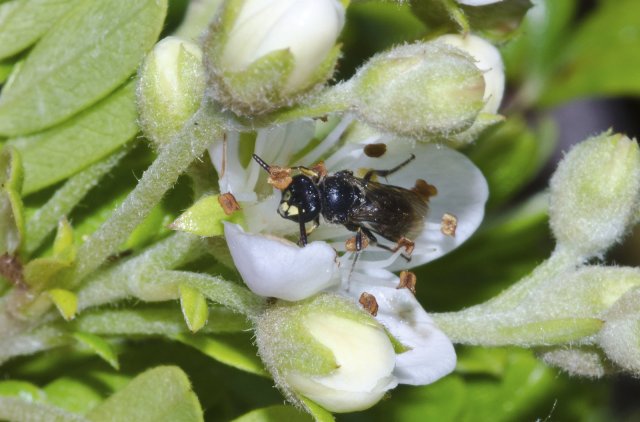
The U.S. Fish and Wildlife Service has given endangered status to seven species of yellow-faced bees native to the Hawaiian islands. These are “the first bees in the country to be protected under the Endangered Species Act,” according to the Xerces Society, which advocated for the new designation.

The new rule designating protections for the bees, published Friday in the Federal Register, states that yellow-faced bees are known “for their yellow-to-white facial markings.” They look like small wasps, according to the rule, except for their “plumose [branched] hairs on the body that are longest on the sides of the thorax, which readily distinguish them from wasps.”

The yellow-faced bee is the only bee native to Hawaii, meaning that it was able to reach the Hawaiian Islands on its own, according to a fact sheet provided by the University of Hawaii’s Master Gardner Program. “From that one original colonist they evolved into 63 known endemic species, about 10% of the world’s yellow-faced bees and more than are found in this genus in all of North America.”

But the populations of these seven species are getting smaller and smaller, according to Fish and Wildlife. For example, the Hylaeus anthracinus was once found in dozens of locations around Hawaii but is now in only 15 — while Hylaeus hilaris and Hylaeus kuakea are each found only in one location.

The seven endangered species are impacted by a wide variety of threats, including habitat destruction because of urbanization or nonnative animals, the introduction of nonnative plant species, wildfires, nonnative predators and natural events such as hurricanes, tsunamis and drought.

The protected status “will allow authorities to implement recovery programs, access funding and limit their harm from outside sources,” as Gregory Koob of the Fish and Wildlife Service told The Associated Press. He added that “all federal agencies must consult with the Fish and Wildlife Service when interacting with endangered species.”

The Xerces Society called the new rule “excellent news” but added that “there is much work that needs to be done to ensure that Hawaii’s bees thrive.”

“These bees are often found in small patches of habitat hemmed in by agricultural land or developments,” the group said. “Unfortunately, the [Fish and Wildlife Service] has not designated any ‘critical habitat’ areas of land of particular importance for the endangered bees.”

As we’ve reported, pollinators are under threat around the world. A U.N.-sponsored report released in February found that “about 40 percent of invertebrate pollinator species (such as bees and butterflies) are facing extinction.” This could have major implications for world food supply, because “about 75 percent of the world’s food crops … depend at least partly on pollination.”

Despite the threats, the University of Hawaii says these bees “have managed to persist with amazing tenacity.” While this group of species is now endangered, new species of the genus are discovered regularly — “11 new native species have been found in the past 15 years.”

The rule, which goes into effect at the end of the month, also gives the endangered designation to 39 plant species found on the islands and to three other animals native to Hawaii — the band-rumped storm-petrel, the orangeblack Hawaiian damselfly, and the anchialine pool shrimp.

The anchialine pool shrimp is known for its unusual longevity — according to the Hawaii Nature Journal, the shrimp can live for 10 to 15 years in the wild.

http://www.npr.org/sections/thetwo-way/2016/10/03/496402620/bee-species-added-to-u-s-endangered-species-list-for-1st-time

Dolphins may have a spoken language, new research suggests

By Ben Westcott

A conversation between dolphins may have been recorded by scientists for the first time, a Russian researcher claims.

Two adult Black Sea bottlenose dolphins, named Yasha and Yana, didn’t interrupt each other during an interaction taped by scientists and may have formed words and sentences with a series of pulses, Vyacheslav Ryabov says in a new paper.

“Essentially, this exchange resembles a conversation between two people,” Ryabov said.

Joshua Smith, a research fellow at Murdoch University Cetacean Research Unit, says there will need to be more research before scientists can be sure whether dolphins are chatting.

“I think it’s very early days to be drawing conclusions that the dolphins are using signals in a kind of language context, similar to humans,” he told CNN.

There are two different types of noises dolphins use for communication, whistles and clicks, also known as pulses.

Using new recording techniques, Ryabov separated the individual “non coherent pulses” the two dolphins made and theorized each pulse was a word in the dolphins’ language, while a collection of pulses is a sentence.

“As this language exhibits all the design features present in the human spoken language, this indicates a high level of intelligence and consciousness in dolphins,” he said in the paper, which was published in the St. Petersburg Polytechnical University Journal: Physics and Mathematics last month.

“Their language can be ostensibly considered a high developed spoken language.”

In his paper, Ryabov calls for humans to create a device by which human beings can communicate with dolphins.

“Humans must take the first step to establish relationships with the first intelligent inhabitants of the planet Earth by creating devices capable of overcoming the barriers that stand in the way of … communications between dolphins and people,” he said.

Smith said while the results were an exciting advance in the under-researched field of dolphin communication, the results first needed to be replicated in open water environments.

“If we boil it down we pretty much have two animals in an artificial environment where reverberations are a problem … It wouldn’t make much sense for animals (in a small area) to make sounds over each other because they wouldn’t get much (sonar) information,” he said.

“It would be nice to see a variety of alternate explanations to this rather than the one they’re settling on.”

http://www.cnn.com/2016/09/13/europe/dolphin-language-conversation-research/index.html

Ants trapped in nuclear bunker are developing a new form of ant society

122864_web

By Richa Malhotra

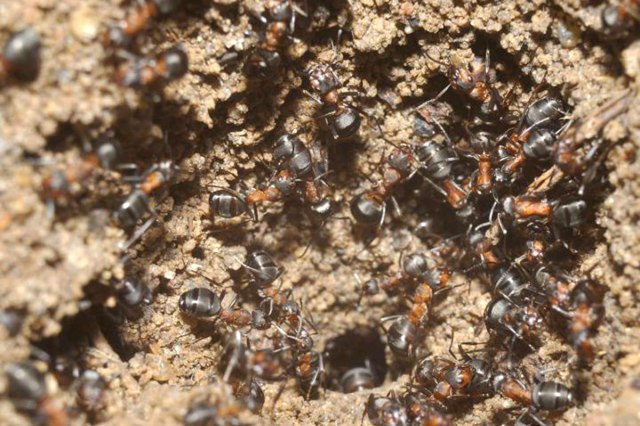
Keep calm and carry on building. That’s the motto of 100,000 or so wood ants stranded without food in a nuclear bunker until they starve.

Wood ants (Formica polyctena) typically build a cosy mound nest on the forest floor. They seek out the sugary secretions of aphids living on trees and supplement their diet with insects. Now, scientists have uncovered a population of wood ants that has sustained for years without food and light inside a bunker where temperatures are constantly low.

The ant population was discovered in 2013 by a group of volunteers counting bats overwintering in the bunker, which is part of an abandoned Soviet nuclear base near Templewo in western Poland.

Later, Wojciech Czechowski at the Museum and Institute of Zoology in Warsaw, Poland, and his colleagues, entered the bunker to study the ants more closely. They noticed that the wood ants had built a nest on the terracotta floor of the bunker – right below a ventilation pipe. Looking up through the five-metre-long pipe, they realised where the bunker ants come from.

A 60-centimetre-high wood ant nest sits on the forest floor directly on top of the ventilation pipe outlet. But because the metal cap over the ventilation pipe has rusted, ants can fall through from time to time.

It’s a one-way journey for any ant that falls into the bunker. They can scale its 2.3-metre-high walls but Czechowski and his colleagues realised that – for some reason – the ants never walk across the bunker ceiling and so are unable to reach the ventilation pipe to make it back home.

So, how did they respond? “These ants gathered together and did what ants do,” says Terry McGlynn, an entomologist at the California State University Dominguez Hills, who was not involved in the study. “They built a nest and eked out an existence.”

Today that nest covers most of the floor of a chamber that measures three metres by one metre.

Czechowski and his colleagues have looked for evidence of a food source that the bunker ants could use, but haven’t found one yet. Rather, the ants seemed to be doomed to starve to death in pitch-blackness. They found ant corpses carpeting the bunker floor in layers a few centimetres thick and estimated the number of dead ants to be about two million.

Without any food, the individual bunker ants are probably dying at a rate faster than at the surface, the researchers think. But because there is a steady stream of new arrivals falling into the bunker, the colony has grown to a reasonable size.

This explains one of the unusual features of this nest. When the researchers dug into it to look for an ant brood they found none – no larvae, pupae or empty cocoons. The “colony” was queenless and lacked any males. This fits with the idea that it is no ordinary nest, but a strange nest-like structure that the worker population has instinctively built.

“This is kind of fascinating that such a huge non-productive nest could exist on its own, built solely from the ants that got trapped in the bunker,” McGlynn says.

Journal reference: Journal of Hymenoptera Research, DOI: 10.3897/jhr.51.9096

https://www.newscientist.com/article/2104632-ants-trapped-in-nuclear-bunker-are-developing-their-own-society/

New species of whale discovered, previously legend as “The Raven”


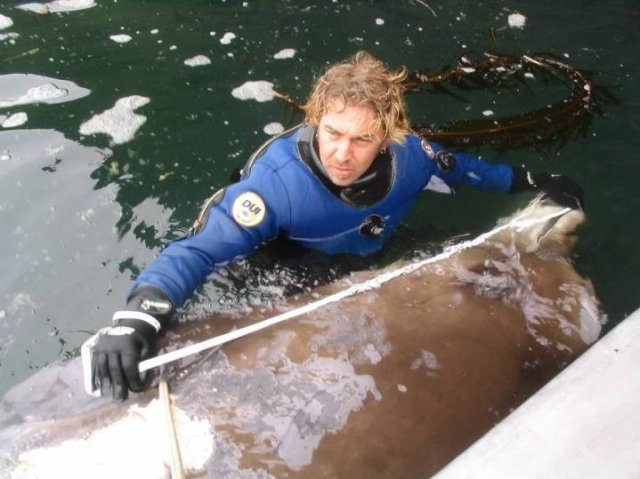
In 2004 Reid Brewer of the University of Alaska Southeast measured an unusual beaked whale that turned up dead in Alaska’s Aleutian Islands. A tissue sample from the carcass later showed that the whale was one of the newly identified species.

by MERRIT KENNEDY

For decades, Japanese fishermen have told stories about the existence of a dark, rare beaked whale that they called karasu — the “raven.”

But now, scientists say they have genetic proof to back up these tales. Long mistaken for its relative, the Baird’s beaked whale, scientists say it represents an entirely new species.

“There have been a lot of people out there surveying whales for a long time and never come across this in scientific research,” Phillip Morin, research molecular geneticist at the NOAA Southwest Fisheries Science Center, tells The Two-Way. “So it is a huge thing to discover this; it’s kind of baffling that we haven’t seen it before.” The team’s research was published Tuesday in Marine Mammal Science.

Japanese scientists published a paper in 2013 suggesting that three whales that washed ashore in Japan might represent a different species but concluding that the sample size was too small — that further research was needed. This got Morin’s attention.

What followed was an effort that involved people all over the world to find more samples of the mysterious new whale. It was “like a mystery, sleuthing out what these samples are and where they were,” he says.

Some samples were hidden in plain sight. A whale skull from the new species was on display at the Smithsonian, incorrectly identified as a Baird’s beaked whale. A Japanese scientist spotted it on a visit to the museum, Morin says. Also, a skeleton was found on display at an Alaska high school.


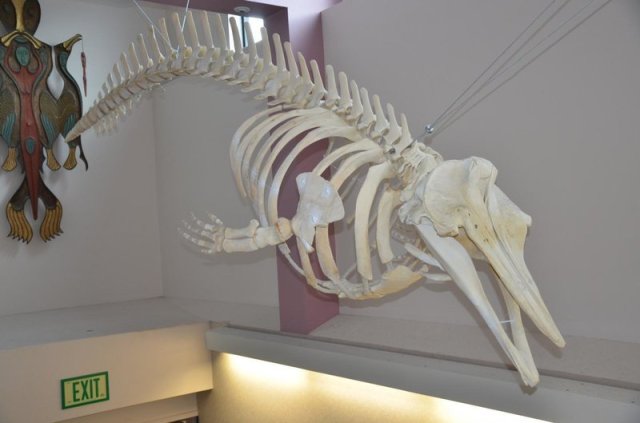
The only skeleton of the new species in the United States hangs on display in Unalaska High School, in Alaska’s Aleutian Islands. The whale was found dead in 2004, and recent tests on stored tissue samples revealed that it is one of the few known specimens of the new species.

Two others were found at the NOAA Southwest Fisheries Science Center’s collection, incorrectly labeled as Baird’s whales.

And fortuitously, a dead whale washed ashore on a remote island of St. George in Alaska’s Bering Sea after the search for new samples had already begun. National Geographic described that discovery, which happened in June 2014:

“A young biology teacher spotted the carcass half-buried in sand on a desolate windswept beach. He alerted a former fur seal researcher who presumed, at first, that she knew what they’d found: a Baird’s beaked whale, a large, gray, deep-diving creature that occasionally washes in dead with the tide.

“But a closer examination later showed that the flesh was too dark, the dorsal fin too big and floppy. The animal was too short to be an adult, but its teeth were worn and yellowed with age.”

Molin says the St. George specimen proved important because “the number of samples we have are very small.” And because it was a full-grown animal, it gave the researchers an idea about its length: only two-thirds the size of a Baird’s beaked whale as an adult.

Other differences: “It reportedly has a different shaped skull and maybe a shorter beak than a Baird’s beaked whale, relative to the shape of its head. And the dorsal fin is reported to be placed slightly differently, and differently shaped,” Morin says. They’re also “pretty cryptic” and spend a lot of time in very deep waters, he adds.


Illustration by Uko Gorter of the newly identified species of beaked whale, which is about two-thirds the size of and darker in color than the more common Baird’s beaked whale.

The mysterious whale has never been spotted alive by scientists. Traditionally, species identification involves “detailed measurements and description of a physical specimen,” Morin says. “But with whales, that’s a really difficult thing to do. And with a whale as rare as this, it’s even more difficult because we just don’t have those materials.” He explains that they’re using “genetics as a line of evidence” to prove the existence of a new species.

There were two previously known types of beaked whale — Baird’s, which resides in the Northern Hemisphere, and Arnoux’s, which lives in the Southern Hemisphere. The scientists said in their article that the two known species “share a common ancestor more recently than they do with the black form.”

And while it’s “pretty incredible” to be discovering a new animal that’s 24 feet long, it also hints at how much more in the deep ocean is left to be discovered, Morin says:

“We’re using more and more technologies to get us there — but as some people have said, we know more about the surface of the moon than we do about the bottom of the ocean. That’s a huge amount of space to investigate. … There’s all sorts of different ways we can use technologies to explore the oceans, but it’s still going to be a long process and we’re going to continue to discover things. Probably not a lot of large whales, but who knows? It wouldn’t surprise me if there were more whales that we’ve never documented before.”

http://www.npr.org/sections/thetwo-way/2016/07/27/487665728/mysterious-and-known-as-the-raven-scientists-identify-new-whale-species

Alaska whale-watchers rescue swimming deer in distress

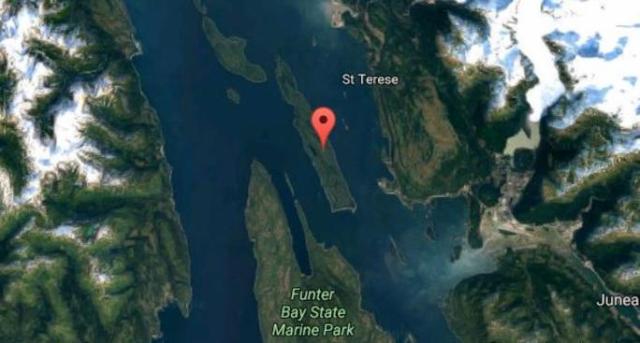
While passing the west side of Juneau’s Shelter Island on Wednesday, an 18-passenger tour vessel saw more than just whales.

Audrey Benson, a naturalist with Gastineau Guiding Co., was on the tour when the crew got some news over the radio.

“We heard that there were two deer that were swimming across in the water,” Benson said. “So after we watched the whales for a bit our passengers were curious and wanted to see the deer, and so we motored over to them and it turns out there was only one.”

And it was struggling to stay above water. After a larger tour boat tried to rescue the animal a few times, it gave up. But Benson, along with the passengers and crew, decided to keep trying. They were eventually able to lasso the deer and pull it onto the boat.

“The deer was immediately bewildered and disoriented and it was shaking a lot, it was shivering a lot,” she said. “Its teeth were chattering. It tried to stand up but collapsed because it was so weak.”
The crew was able to drop the deer off at Shelter Island—but not before it tried to swim back into the water again.

“It was the craziest thing I’ve ever seen on any of my tours,” Benson said. “I mean, you never know what’s going to happen but for a deer rescue—I’ve never even been that close to a deer, I’ve never touched one—and to have an opportunity to assist this struggling animal, it was very intense.”
The other deer disappeared before the group reached it, and is presumed to have drowned.

The Alaska Department of Fish and Game said it’s very uncommon for deer to drown, adding that deer regularly swim from island to island.

With a lasso and tourists, boat saves drowning deer

Why did a humpback whale just save this seal’s life?


This humpback whale protected a Weddell seal from killer whales by carrying it on its belly.

By Erik Stockstad

At first it seemed like the usual, deviously clever attack. Several killer whales were trying to catch a Weddell seal that had taken refuge atop a drifting patch of Antarctic ice. The orcas swam alongside each other, creating a wave that knocked the hapless pinniped into the water. Death seemed certain.

Then something amazing happened: A pair of humpback whales turned up. As the panicked seal swam toward them, a lucky wave tossed it onto the chest of the closer, upturned whale. The whale arched its chest out of the water, which kept the seal away from the charging killer whales. And when the seal started to fall off, the whale carefully pushed it back onto its chest with a flipper. Soon after that, the seal scrambled to safety on another ice floe.

“I was shocked,” recalls marine ecologist Robert Pitman, who witnessed the episode in 2009 and described it and another example in Natural History magazine that year. “It looked like they were trying to protect the seal.”

Humpback whales will vigorously defend their own calves when attacked by killer whales, of course. But after analyzing other encounters between the two species, Pitman and his colleagues conclude that humpback whales will also launch preemptive attacks on their predators. Sometimes the intent seemed to be protecting another whale’s calf. But more often, like with the Weddell seal, the humpbacks for some reason helped a different species.

When prey gang up and harass a predator, it’s known as mobbing. A flock of crows, for example, can drive away a hawk by repeatedly dive-bombing. The behavior is also known among fishes, insects, and terrestrial mammals, but it hadn’t been studied in marine mammals. Because of their large size, humpback whales don’t have to worry about many predators. Killer whales are the only species known to attack, and they target small calves. The mothers will try to scare them off with thunderous bellows. If that fails, they defend their young by smacking their massive tails or swinging their 5-meter-long, barnacle-encrusted fins.

To find out whether the seal rescue in Antarctica was unusual behavior for humpbacks, Pitman, who works for the National Oceanic and Atmospheric Administration’s (NOAA’s) Southwest Fisheries Science Center in San Diego, California, posted a request for information on a marine mammal listserv. He received 115 descriptions of encounters, many from commercial whale-watching trips, which sometimes included photos and videos. In 31 cases of mobbing, humpbacks approached killer whales that were already engaged in a fight. They would chase the killer whales, often bellow, and slap their fins and tails. “The humpbacks were definitely on the offense,” Pitman says. He and colleagues published their findings online this week in Marine Mammal Science.

The conclusions have convinced Phillip Clapham, a NOAA marine biologist in Seattle, Washington, who was not involved in the research. “They make a very good case that it’s a proactive response to killer whales,” he says. “I think they’re absolutely right.”

It’s not hard to imagine why humpbacks would rush to the rescue when another humpback whale is under attack. Because they migrate to and from the same breeding grounds where they were born, humpbacks are likely to encounter relatives. So a threatened calf might share some genes with a rescuer, making the apparently altruistic act of saving it somewhat self-interested.

But what about protecting other species? This happened in nearly 90% of attacks where the killer whales’ prey could be identified. “It’s pretty mysterious,” says Trevor Branch, a fisheries scientist at the University of Washington, Seattle, who has studied populations of large whales. “We tend to think of altruism as being reciprocal, but there’s no way these other species would come back and help the humpback whales.”

Pitman suspects that it is inadvertent altruism. The humpbacks might simply rush to the scene of a fight whenever they hear killer whales fighting. “I think they just have a simple rule,” Pitman says. “When you hear a killer whale attack, go break it up.” Clapham adds that the confrontations may teach the killer whales a lesson, making them think twice about messing with humpbacks.

http://www.sciencemag.org/news/2016/07/humpbacks-protect-seals-and-other-animals-killer-whales-why

Microbes in our guts have been with us for millions of years

By Ann Gibbons

Humans did not evolve alone. Tens of trillions of microbes have followed us on our journey from prehistoric ape, evolving with us along the way, according to a new study. But the work also finds that we’ve lost some of the ancient microbes that still inhabit our great ape cousins, which could explain some human diseases and even obesity and mental disorders.

Researchers have known for some time that humans and the other great apes harbor many types of bacteria, especially in their guts, a collection known as the microbiome. But where did these microbes come from: our ancient ancestors, or our environment? A study of fecal bacteria across all mammals suggested that the microbes are more likely to be inherited than acquired from the environment. But other studies have found that diet plays a major role in shaping the bacteria in our guts.

To solve the mystery, Andrew Moeller turned to wild apes. As part of his doctoral dissertation, the evolutionary biologist, now a postdoc at the University of California, Berkeley, studied gut bacteria isolated from fecal samples from 47 chimpanzees from Tanzania, 24 bonobos from the Democratic Republic of the Congo, 24 gorillas from Cameroon, and 16 humans from Connecticut. In these samples, he and colleagues at the University of Texas (UT), Austin, compared the DNA sequences of a single rapidly evolving gene that is common in the gut bacteria in apes, including humans. They then sorted the different DNA gene sequences into family trees.

It turns out that most of our gut microbes have been evolving with us for a long time. Moeller found that two of three major families of gut bacteria in apes and humans trace their origins to a common ancestor more than 15 million years ago, not primarily to bugs picked up from their environment. But as the different species of apes diverged from this ancestor, their gut bacteria also split into new strains, and coevolved in parallel (a process known as cospeciation) to adapt to differences in the diets, habitats, and diseases in the gastrointestinal tracts of their hosts, the team reports today in Science. Today, these microbes are finely adapted to help train our immune systems, guide the development of our intestines, and even modulate our moods and behaviors.

“It’s surprising that our gut microbes, which we could get from many sources in the environment, have actually been coevolving inside us for such a long time,” says project leader Howard Ochman, an evolutionary biologist at UT Austin.

After the ape species diverged, some also lost distinct strains of bacteria that persisted in other primates, likely another sign of adaptation in the host, the team found.

In a final experiment, the researchers probed deeper into the human microbiome. They compared the same DNA sequence they had analyzed in all of the apes, but this time between the people from Connecticut and people from Malawi. They found that the bacterial strains from these Africans diverged from those of the Americans about 1.7 million years ago, which corresponds with the earliest exodus of human ancestors out of Africa. This suggests that gut bacteria can be used to trace early human and animal migrations, Moeller says. Interestingly, the Americans lacked some of the strains of bacteria found in Malawians—and in gorillas and chimps—which fits with the general reduction in gut microbiome diversity that has been observed in people in industrialized societies, perhaps because of changes in diet and the use of antibiotics.

The work “represents a significant step in understanding human microbiota coevolutionary history,” says Justin Sonnenburg of Stanford University in Palo Alto, California, who was not involved with the research. “It elegantly shows that gut microbes are passed vertically, between generations over millions of years.” Microbiologist Martin Blaser of New York University in New York City agrees: “The path of transmission was from mom apes to baby apes for hundreds of thousands of generations at least.”

But the extinction of some strains of bacteria that persist in other apes but not humans raises a red flag for our health. “What happens if a human mom takes antibiotic when she’s pregnant? What happens if she takes it at the moment of delivery?” Blaser asks.

“We are coming to understand how fundamental our gut microbes are for health,” Sonnenburg says. “These findings have huge implications for how we should pursue understanding what a truly healthy microbiome looks like.”

http://www.sciencemag.org/news/2016/07/microbes-our-guts-have-been-us-millions-years

Thanks to Kebmodee for bringing this to the It’s Interesting community.

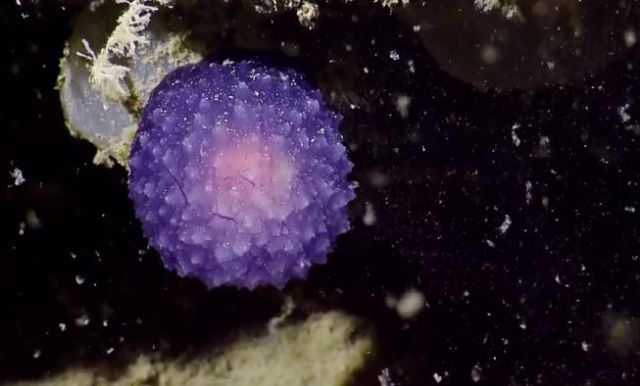
This beautiful deep sea purple orb has scientists baffled


While studying the ocean floor off California’s Channel Islands, researchers found this mysterious species.

By Michael d’Estries

While researching previously unmapped regions of the Channel Islands off the California coast, the research vessel Nautilus came across an unusual purple mass peeking out of a coral crevice. As the scientists zoomed in on the beautiful creature, they began wondering aloud what it could possibly be. After guesses of everything from a species of plankton to a colorful egg sack, the team decided to use their deep sea rover’s vacuum tube to grab the mystery species and bring it to the surface.

“This unidentified purple orb stumped our scientists onboard,” Nautilus posted to its website. “After sampling, it began to unfold to reveal two distinct lobes. This could possibly be a new species of nudibranch.”

Nudibranchs are a group of soft-shelled mollusk comprised of some 2,300 species and noted for their varied and striking colors. They can be found at nearly all depths and feature chemical defenses that make their bodies both distasteful to predators and, in the case of the acid-secreting variety, painful.

http://www.mnn.com/earth-matters/animals/blogs/beautiful-deep-sea-purple-orb-has-scientists-baffled

New fish species discovered in Alaska

Federal biologist Jay Orr never knows what’s going to come up in nets lowered to the ocean floor off Alaska’s remote Aleutian Islands, which separate the Bering Sea from the rest of the Pacific Ocean. Sometimes it’s stuff he has to name.

The National Oceanic and Atmospheric Administration biologist is part of a group that uses trawl nets to survey commercially important fish species such as cod in waters off Alaska. Sometimes those nets come up with things no one has seen before.

With co-authors, Orr has discovered 14 kinds of new snailfish, a creature that can be found in tide pools but also in the deepest parts of the ocean. A dozen more new snailfish are waiting to be named. Additional species are likely to be found as scientists expand their time investigating areas such as the Bering Sea Slope, in water 800 to 5,200 feet deep, or the 25,663-foot deep Aleutian Trench.

“I suspect we are just scraping the top of the distributions of some of these deep-water groups,” Orr said from his office in Seattle.

Orr and his colleagues measure the abundance of rockfish, flatfish and other “bottom fish” for the Alaska Fisheries Science Center, the research arm of the NOAA’s National Marine Fisheries Service. The center studies marine resources off Alaska and parts of the West Coast.

Five boats with six researchers each surveyed Alaska waters in late June. The teams trawl on the Bering Shelf every summer and in either Aleutian waters or the Gulf of Alaska every other year.

Their findings on fish abundance are fed into models for managing fish populations.

The scientists put down a 131-foot trawl net that captures whatever is along the ocean bottom. A ton of fish is a standard sample. Along with fish, they get clues to the seafloor habitat. Sponges, for example, indicate a hard seafloor, or substrate.

Fifteen years ago, research biologist Michael Martin suggested a small modification: a net just 2 to 3 feet wide at the front of the trawl net.

“We realized we didn’t have a really good picture of the substrate that we were trawling over, and we figured we were missing some things in the big meshes that the larger net had,” Orr said. “So one of the other guys here decided to put this little net on, mainly as a means to see what the substrate looked like.”

On one of the first hauls, the small net returned with a variety of small, soft-bodied fish, including snailfish, that likely would have fallen out or gotten mashed in the main net. Orr took a look and knew they had found something different.

As someone who studies fish, “I sort of knew what I was looking for and what was known out there,” he said. “The first ones that came up, I saw them right away and said, ‘We don’t know what these are. These haven’t been named.'”

Snailfish have no scales, feel gelatinous and look like fat tadpoles. Aristotle described a Mediteranean variety found in ancient Greece as “sea slugs.”

Many fish have pelvic fins on their bellies, just behind the gills. Most snailfish species, instead of pelvic fins, have a sucking disc that they use to cling to rocks.

Orr identified some new varieties that did not have a sucking disc. Another had a hardened bone in its head. Another had a projecting lower jaw. Others varied by shape, color or body parts, such as vertebrae.

“Nearly all of them have genetic characters that distinguish them, too,” Orr said.

He has wide latitude for giving new species both common and Latin names. A red, white and black snailfish with a big, bulbous nose struck him as funny-looking. He gave it the common name of “comic snailfish” and the Latin name Careproctus comus, after Comus, the god of comedy in Greek mythology.

Snailfish made headlines in 2014 when researchers recorded them swimming nearly 27,000 feet, or more than 4 miles, below the surface in the Marianas Trench, making them the deepest-dwelling vertebrate on the planet. The Marianas Trench is about 200 miles southwest of the Pacific island of Guam and is known as the deepest part of the world’s oceans.

A critical part of the work is on the species his agency actively manages. Orr helped distinguish the northern rock sole, which spawns and grows differently than other rock sole. Fishing at the wrong time could disrupt a population important to the seafood market.

“Ultimately we’re managing an ecosystem,” Orr said. “It’s really important to know what each of the elements are.”

http://bigstory.ap.org/6f677b05f94b4031b82b1c41aaab835b