First Full Face Transplant in the U.S.

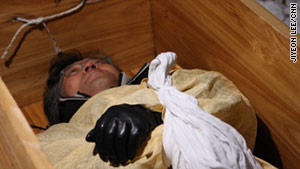
A 25 year old former construction worker from Dallas – Forth Worth who was horribly disfigured in a power line accident underwent the first full face transplant in the U.S. with a 15 hour operation at Brigham and Women’s Hospital in Boston last week.  He received a new nose, lips, skin, muscle and nerves from an unidentified dead person in an operation paid for by the U.S. military, which wants to use what is learned to help soldiers with severe facial wounds.  As the new tissue is molded onto his bone structure, he will not resemble either what he used to look like, or what the donor looked like. 

Read about it here:  http://news.yahoo.com/s/ap/20110321/ap_on_he_me/us_face_transplant


The Barbershop and Health Care

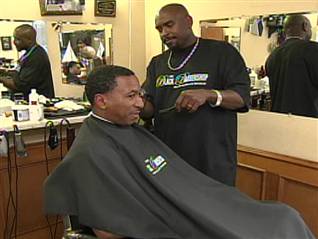
Researchers at UT Southwestern Medical Center in Dallas, Texas have found that neighborhood barbers can influence African-American men to seek blood pressure treatement. 

The study participants were patrons of 17 black-owned barbershops throughout Dallas County between March 2006 and December 2008.

Eight shops gave customers traditional pamphlets about hypertension.  In this group, the number of men who pursued medical care to control their hypertension increased from 40 percent at the start of the study to 51 percent at follow-up.

Nine shops put up posters with messages from other male clients about hypertension, checked patrons’ blood pressure and encouraged the men to see a physician if their numbers were elevated.  In this group, the number of men who controlled their hypertension increased from 33.8 percent at the start of the study to 53.7 percent at follow-up. .

Read more here:  http://www.utsouthwestern.edu/utsw/cda/dept353744/files/629749.html

This fascinating one hour HBO documentary illustrates a typical day in the life of a successful community barbershop on Harlem’s 125th street, showing the vital role community barbershops play in facilitating dicussion on a wide variety of important issues, including health care:  http://www.hbo.com/documentaries/cutting-edge/index.html

The creators of this documentary are interviewed here:  http://www.hbo.com/documentaries/cutting-edge/index.html#/documentaries/cutting-edge/interview/june-amani-martin-and-reggie-williams.html

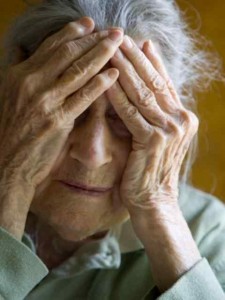
Half of all cases of Alzheimer’s disease may be misdiagnosed.


It’s currently impossible to definitively diagnosis Alzheimer’s disease while the patient is alive.  Researchers recently analyzed around 800 brains from Alzheimer’s patients after they died, and learned that only about half of them actually had the disease.  The other half suffered from other forms of dementia.  A reliable way to diagnose the specific type of dementia from which patients are suffering is critical to guiding treatment for patients and for researching the disease processes.

http://pagingdrgupta.blogs.cnn.com/2011/02/23/half-of-alzheimers-cases-misdiagnosed/?hpt=T2

A bionic arm controlled by the patient’s own nerves


After an amputation, the nerves are left like programmed data cables floating in space.  Dr. Todd Kuiken, director of the Center for Bionic Medicine and director of Amputee Services at The Rehabilitation Institute of Chicago, has led a team that has made prosthetic limbs that utilize the body’s own remaining limb-controlling nerves after an amputation to allow them to control prosthetics just by thinking.  The person thinks about what they want to move, which send impulses to the salvaged nerves that have been implanted into chest muscle.  The resulting tiny changes in chest muscle activity are then translated into electical impulses that move the limb in the same manner that the person was thinking to move it.

http://pagingdrgupta.blogs.cnn.com/2011/02/17/bionic-arm-gives-hope-for-amputees/?hpt=C1

What’s Happening to the Scientific Method?

All sorts of well-established, repeatedly-confirmed findings have started to look increasingly uncertain in a wide range of scientific fields, from psychology to ecology.  This phenomenon is particularly widespread in the field of medicine. 
To read more about this, click on this article by Jonathan Lehrer in the The New Yorker:

Mental Illness and the Sun

It’s l

It’s been known for a long time that winter-born babies are more likely to develop severe mental illness, including schizophrenia, depression and seasonal affective disorder.  Researchers at Vanderbilt and the University of Alabama may have identified clues as to how seasonal sunlight exposure could affect expression of clock genes that control our normal biological rhythms.

https://www.scientificamerican.com/article.cfm?id=blame-it-on-winter

The Placebo Response

 Originally discovered by an Allied forces Army nurse in WWII, the placebo response continues to mystify physicians, researchers, and pharmaceutical companies alike.  Our body’s physiological response to medicine is largely impacted by our interpretation of social cues, anticipation of reward, and our beliefs and expectations.  This complex constellation of factors in the mind can yield significant clinical improvement in patients taking nothing more than inert sugar pills.  As Steve Silberman describes, “The placebo response doesn’t care if the catalyst for healing is a triumph of pharmacology, a compassionate therapist, or a syringe of salt water.  All it requires is a reasonable expectation of getting better.  That’s potent medicine.”  Interestingly, it also works the other way – the ‘Nocebo Response.’

http://www.wired.com/medtech/drugs/magazine/17-09/ff_placebo_effect?currentPage=all

Fake Bus Stop


Pioneered at the Benrath Senior Centre in Düsseldorf, some treatment centers are now encouraging Alzheimer’s sufferers to wait at a fake bus stop as  part of pioneering treatment for the disease.

http://www.radiolab.org/blogs/radiolab-blog/2010/mar/23/the-bus-stop/

http://www.fastcompany.com/1598472/uncommon-act-of-design-fake-bus-stop-helps-alzheimers-patients

http://www.telegraph.co.uk/news/newstopics/howaboutthat/2071319/Fake-bus-stop-keeps-Alzheimers-patients-from-wandering-off.html

http://www.dailymail.co.uk/health/article-1187774/Alzheimers-sufferers-encouraged-wait-fake-bus-stop-sense-purpose.html