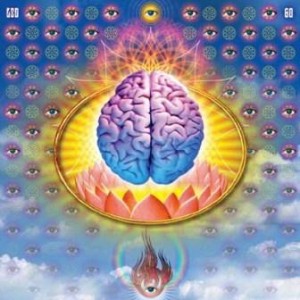
How LSD Makes Your Brain One With The Universe

lsd

by Angus Chen

Some users of LSD say one of the most profound parts of the experience is a deep oneness with the universe. The hallucinogenic drug might be causing this by blurring boundaries in the brain, too.

The sensation that the boundaries between yourself and the world around you are erasing correlates to changes in brain connectivity while on LSD, according to a study published Wednesday in Current Biology. Scientists gave 15 volunteers either a drop of acid or a placebo and slid them into an MRI scanner to monitor brain activity.

After about an hour, when the high begins peaking, the brains of people on acid looked markedly different than those on the placebo. For those on LSD, activity in certain areas of their brain, particularly areas rich in neurons associated with serotonin, ramped up.

Their sensory cortices, which process sensations like sight and touch, became far more connected than usual to the frontal parietal network, which is involved with our sense of self. “The stronger that communication, the stronger the experience of the dissolution [of self],” says Enzo Tagliazucchi, the lead author and a researcher at the Netherlands Institute for Neuroscience.

Tagliazucchi speculates that what’s happening is a confusion of information. Your brain on acid, flooded with signals crisscrossing between these regions, begins muddling the things you see, feel, taste or hear around you with you. This can create the perception that you and, say, the pizza you’re eating are no longer separate entities. You are the pizza and the world beyond the windowsill. You are the church and the tree and the hill.

Albert Hofmann, the discoverer of LSD, described this in his book LSD: My Problem Child. “A portion of the self overflows into the outer world, into objects, which begin to live, to have another, a deeper meaning,” he wrote. He felt the world would be a better place if more people understood this. “What is needed today is a fundamental re-experience of the oneness of all living things.”

The sensation is neurologically similar to synesthesia, Tagliazucchi thinks. “In synesthesia, you mix up sensory modalities. You can feel the color of a sound or smell the sound. This happens in LSD, too,” Tagliazucchi says. “And ego dissolution is a form of synesthesia, but it’s a synesthesia of areas of brain with consciousness of self and the external environment. You lose track of which is which.”

Tagliazucchi and other researchers also measured the volunteers’ brain electrical activity with another device. Our brains normally generate a regular rhythm of electrical activity called the alpha rhythm, which links to our brain’s ability to suppress irrelevant activity. But in a different paper published on Monday in the Proceedings of the National Academy of Sciences, he and several co-authors show that LSD weakens the alpha rhythm. He thinks this weakening could make the hallucinations seem more real.

The idea is intriguing if still somewhat speculative, says Dr. Charles Grob, a psychiatrist at the Harbor-UCLA Medical Center who was not involved with the work. “They may genuinely be on to something. This should really further our understanding of the brain and consciousness.” And, he says, the work highlights hallucinogens’ powerful therapeutic potential.

The altered state of reality that comes with psychedelics might enhance psychotherapy, Grob thinks. “Hallucinogens are a catalyst,” he says. “In well-prepared subjects, you might elicit powerful, altered states of consciousness. [That] has been predicative of positive therapeutic outcomes.”

In recent years, psychedelics have been trickling their way back to psychiatric research. LSD was considered a good candidate for psychiatric treatment until 1966, when it was outlawed and became very difficult to obtain for study. Grob has done work testing the treatment potential of psilocybin, the active compound in hallucinogenic mushrooms.

He imagines a future where psychedelics are commonly used to treat a range of conditions. “[There could] be a peaceful room attractively fixed up with nice paintings, objects to look at, fresh flowers, a chair or recliner for the patient and two therapists in the room,” he muses. “A safe container for that individual as they explore deep inner space, inner terrain.”

Grob believes the right candidate would benefit greatly from LSD or other hallucinogen therapy, though he cautions that bad experiences can still happen for some on the drugs. Those who are at risk for schizophrenia may want to avoid psychedelics, Tagliazucchi says. “There has been evidence saying what could happen is LSD could trigger the disease and turn it into full-fledged schizophrenia,” he says. “There is a lot of debate around this. It’s an open topic.”

Tagliazucchi thinks that this particular ability of psychedelics to evoke a sense of dissolution of self and unity with the external environment has already helped some patients. “Psilocybin has been used to treat anxiety with terminal cancer patients,” he says. “One reason why they felt so good after treatment is the ego dissolution is they become part of something larger: the universe. This led them to a new perspective on their death.”

http://www.npr.org/sections/health-shots/2016/04/13/474071268/how-lsd-makes-your-brain-one-with-the-universe

Chinese restaurants shut down after seasoning food with opium to ‘hook’ customers

35 restaurants across China have been found illegally using opium as seasoning in their food, state officials say.

Five restaurants are being prosecuted over the findings, whilst 30 more are under investigation, according to the China Food and Drug Administration.

The eateries include a popular chain of hot pot restaurants in Beijing.

It is unclear how the opium came to enter the food, however, previous cases in China have seen chefs try to ‘hook’ customers on their food through use of the narcotic which can cause serious addiction.

In 2014, a failed drugs test led Shaanxi provincial police to uncover a noodle seller deliberately lacing meals with opium.

In 2004, a string of 215 restaurants in the Guizhou region were closed down following similar charges.

According to the official news agency Xinhau, poppy powder is available to buy in China at $60 or approximately £42 per kilogram.

It is commonly mixed with chilli oil and powders, which make it difficult for authorities to detect.

http://www.independent.co.uk/news/world/asia/chinese-restaurants-shut-for-seasoning-food-with-opium-a6826971.html

New study shows that medical marijuana cuts average number of migraine headaches in half

Marijuana may give relief to migraine sufferers, according to research published online in Pharmacotherapy.

The research included 121 patients diagnosed with migraines and treated with medical marijuana between January 2010 and September 2014. Patients in the study used both inhaled marijuana and edible marijuana. The researchers said inhaled marijuana seemed to be preferred for treating current headaches, and edibles seemed to be favored for headache prevention.

The researchers found that 103 study participants said they had a decrease in their monthly migraines. Fifteen patients said they had the same number of migraines, and 3 reported an increase in headaches. Overall, the patients’ number of migraines fell from 10.4 to 4.6 per month, which is statistically and clinically significant.

“There was a substantial improvement for patients in their ability to function and feel better,” senior author Laura Borgelt, PharmD, a professor in the School of Pharmacy and Pharmaceutical Sciences at the University of Colorado Anschutz Medical Campus in Aurora, said in a university news release. “Like any drug, marijuana has potential benefits and potential risks. It’s important for people to be aware that using medical marijuana can also have adverse effects.”

Reference

Rhyne D, Anderson SL, Gedde M, Borgelt LM. Effects of Medical Marijuana on Migraine Headache Frequency in an Adult Population. Pharmacotherapy. 2016;

Bundle of marijuana worth $10,000 falls from the sky and crushes doghouse

Maya Donnelly awoke to what sounded like thunder in the early morning hours, but dismissed it as a typical monsoon storm and went back to sleep. Later that morning, she looked in the carport at her home in Nogales, near the US-Mexico border, and saw pieces of wood on the ground.

She found a bulky bundle wrapped in black plastic. Inside was roughly 26lbs of marijuana – a package that authorities say was worth $10,000 and was likely dropped there accidentally by a drug smuggler’s aircraft.

Police are now trying to determine whether the bundle was transported by an aircraft or a pilotless drone. Such runs usually occur at night.

“It’s all right on top of our dog’s house,” Donnelly said of the incident, which occurred on 8 September and was first reported by the Nogales International newspaper. “It just made a perfectly round hole through our carport.”

Living near the border, Donnelly said she assumed the object contained drugs. She immediately called her husband, Bill, who told her to call 911. The couple said officers who responded told them an ultralight aircraft smuggling marijuana from Mexico had probably let part of its load go early by accident before dropping the rest farther north, the newspaper reported.

Nogales police chief Derek Arnson said it was the first time in his three-year tenure that he had seen a load of drugs hit a building.

“Someone definitely made a mistake, and who knows what the outcome of that mistake might be for them,” Arnson said.

Maya Donnelly said she thought it unlikely someone would come looking for the drugs, which are now in police custody. Arnson agreed but said police had boosted patrols in the neighbourhood.

The family will have to pay the estimated $500 in repairs, as well as pay for a new home for their German Shepherd, Hulk. But the scenario could have been much worse for the couple and their three teenage daughters.

“Where it landed was clear on the other side of the house from the bedrooms,” Maya Donnelly said. “We were lucky in that sense.”

Friends and family also have gotten a laugh. Several joked that the couple could have profited from the surprise package.

“That’s what everybody says: ‘Why did you call 911?”’ Maya Donnelly said. “But how can you have a clear conscience, right? We could have made lots of home repairs with that.”

http://www.theguardian.com/world/2015/sep/27/10000-dollars-marijuana-falls-from-sky-arizona-dog-house?channel=us

Mystery surrounds hallucinatory chaos at German homeopathy conference


2C-E was one of the hundreds of drugs synthesised by Alexander Shulgin, who was known as the ‘godfather of ecstasy’. Photograph: Scott Houston/Corbis

Police investigating a mass intoxication of a homeopathy conference in Germany with psychedelic drugs have said they still do not know nearly a week later whether it was an accident or an experiment gone wrong.

Emergency services called to the meeting in Handeloh, south of Hamburg, found a group of 29 alternative healers hallucinating, staggering around, groaning and rolling on the grass.

Police spokesman Lars Nicklesen said on Thursday that investigators believe a psychedelic drug was to blame but remain unsure of how or why it was taken. The delegates are now all out out of physical danger, he said, but there may yet be legal consequences for the healers in the course of the ongoing criminal investigation.

“We’re now questioning the delegates and awaiting the results of blood and urine tests,” he said. “We still don’t know if they took the drugs on purpose. The question is whether they want to talk about it; they have the right to remain silent.”

Nicklesen added that police suspect the group took 2C-E, known in Germany as Aquarust, a drug which heightens perceptions of colours and sounds and in higher doses triggers hallucinations, psychosis and severe cramps.

Germany’s health ministry banned the drug last year due to its highly addictive nature and unknown side effects.

The homeopaths’ meeting – billed as a “further education seminar” – was suspended shortly after it started when delegates began experiencing psychotic hallucinations, cramps, racing heartbeats and shortage of breath. One of them alerted the emergency services.

Alarmed by the sight of so many grown men and women rolling around on the floor, the first fire crews on the scene called for backup, triggering a major incident response. A total of 160 police, fire crews, and ambulance staff and a helicopter were involved in the four hour operation to treat the group.

“It was great that none of the people were in mortal danger in the end”, said fire service spokesman Matthias Köhlbrandt. “The leading emergency doctor at the scene believed they would all recover without lasting damage.”

Unsure of what they had taken, medical staff gave the homeopaths oxygen on site before transferring them to seven different nearby hospitals.

The Hamburger Abendblatt newspaper reported that in one clinic, the Asklepios in Harburg, hallucinating patients had to be strapped down to a bed to prevent them causing danger to others. “They were completely off their heads,” a spokesman for the clinic said.

Staff at the conference centre were unable to shed light on the mystery as they had all gone home at the time of the incident. “We’re absolutely shocked, we’ve only had good experiences in the past with the group,” a spokeswoman for the Tanzheimat Inzmühlen conference centre told the Hamburger Abendblatt.

The Association of German Healing Practitioners was quick to distance itself from the incident and emphasised that hallucinogenic drugs had no place in the study of homeopathy. “If I find out that one of our members took part [in what happened in Handeloh] then they will be excluded from the association,” Heinz Kropmanns, the association president, told NDR.

The drug 2C-E was one of hundreds synthesised by the American chemist Alexander Shulgin. The scientist, who died in 2014, and had become known as the godfather of ecstasy after he introduced MDMA to psychotherapists on the US west coast in the late 1970s.

http://www.theguardian.com/science/2015/sep/10/homeopathy-conference-in-germany-goes-awry-as-delegates-take-lsd-like-drug

Thanks to Kebmodee for bringing this to the It’s Interesting community.

How LSD works in the brain

by Natalie Wolchover

The main theory of psychedelics, first fleshed out by a Swiss researcher named Franz Vollenweider, is that drugs like LSD and psilocybin, the active ingredient in “magic” mushrooms, tune down the thalamus’ activity. Essentially, the thalamus on a psychedelic drug lets unprocessed information through to consciousness, like a bad email spam filter. “Colors become brighter , people see things they never noticed before and make associations that they never made before,” Sewell said.

LSD, or acid, and its mind-bending effects have been made famous by pop culture hits like “Fear and Loathing in Las Vegas,” a film about the psychedelic escapades of writer Hunter S. Thompson. Oversaturated colors, swirling walls and intense emotions all supposedly come into play when you’re tripping. But how does acid make people trip?

Life’s Little Mysteries asked Andrew Sewell, a Yale psychiatrist and one of the few U.S.-based psychedelic drug researchers, to explain why LSD short for lysergic acid diethylamide does what it does to the brain.

His explanation begins with a brief rundown of how the brain processes information under normal circumstances. It all starts in the thalamus, a node perched on top of the brain stem, right smack dab in the middle of the brain. “Most sensory impressions are routed through the thalamus, which acts as a gatekeeper, determining what’s relevant and what isn’t and deciding where the signals should go,” Sewell said.

“Consequently, your perception of the world is governed by a combination of ‘bottom-up’ processing, starting … with incoming signals, combined with ‘top-down’ processing, in which selective filters are applied by your brain to cut down the overwhelming amount of information to a more manageable and relevant subset that you can then make decisions about.

“In other words, people tend to see what they’ve been trained to see, and hear what they’ve been trained to hear.”

The main theory of psychedelics, first fleshed out by a Swiss researcher named Franz Vollenweider, is that drugs like LSD and psilocybin, the active ingredient in “magic” mushrooms, tune down the thalamus’ activity. Essentially, the thalamus on a psychedelic drug lets unprocessed information through to consciousness, like a bad email spam filter. “Colors become brighter , people see things they never noticed before and make associations that they never made before,” Sewell said.

n a recent paper advocating the revival of psychedelic drug research, psychiatrist Ben Sessa of the University of Bristol in England explained the benefits that psychedelics lend to creativity. “A particular feature of the experience is … a general increase in complexity and openness, such that the usual ego-bound restraints that allow humans to accept given pre-conceived ideas about themselves and the world around them are necessarily challenged. Another important feature is the tendency for users to assign unique and novel meanings to their experience together with an appreciation that they are part of a bigger, universal cosmic oneness.”

But according to Sewell, these unique feelings and experiences come at a price: “disorganization, and an increased likelihood of being overwhelmed.” At least until the drugs wear off, and then you’re left just trying to make sense of it all.

http://www.livescience.com/33167-how-acid-lsd-make-people-trip.html?li_source=pm&li_medium=most-popular&li_campaign=related_test

Should psychedelics be declassified in order to examine their therapeutic potential in some forms of mental illness?

Psychedelics were highly popular hallucinogenic substances used for recreational purposes back in the 1950s and 1960s. They were also widely used for medical research looking into their beneficial impact on several psychiatric disorders, including anxiety and depression. In 1967, however, they were classified as a Class A, Schedule I substance and considered to be among the most dangerous drugs with no recognized clinical importance. The use of psychedelics has since been prohibited.

Psychiatrist and honorary lecturer at the Institute of Psychiatry, Psychology and Neuroscience, at Psychiatrist and honorary lecturer at the Institute of Psychiatry, Psychology and Neuroscience, at King’s College London, James Rucker, MRCPsych, is proposing to reclassify and improve access to psychedelics in order to conduct more research on their therapeutic benefits. He believes in the potential of psychedelics so much that late last month he took to the pages of the prestigious journal the BMJ to make his case. He wrote that psychedelics should instead be considered Schedule II substances which would allow a “comprehensive, evidence based assessment of their therapeutic potential.”

“The Western world is facing an epidemic of mental health problems with few novel therapeutic prospects on the horizon,” Rucker told Psychiatry Advisor, justifying why studying psychedelics for treating psychiatric illnesses is so important.

Rucker recognizes that the illicit substance may be harmful to some people, especially when used in a recreational and uncontrolled context. He cited anecdotal reports of the substance’s disabling symptoms, such as long-term emotionally charged flashbacks. However, he also believes that psychedelic drugs can have positive outcomes in other respects.

“The problem at the moment,” he argued, “is that we don’t know who would benefit and who wouldn’t. The law does a good job of preventing us from finding out.”

From a biological perspective, psychedelics act as an agonist, a substance that combines with a receptor and initiates a physiological response to a subtype of serotonin known as 5HT2a. According to Rucker, this process influences the balance between inhibitory and excitatory neurotransmitters.

“The psychedelics may invoke a temporary state of neural plasticity within the brain, as a result of which the person may experience changes in sensory perception, thought processing and self-awareness,” Rucker speculated. He added that psychedelic drugs can act as a catalyst that stirs up the mind to elicit insights into unwanted cycles of feelings, thoughts and behaviors.

“These cycles can then be faced, expressed, explored, interpreted, accepted and finally integrated back into the person’s psyche with the therapist’s help,” he explained. Reclassifying psychedelics could mean that the mechanism by which these substances can help with anxiety, depression and psychiatric symptoms could be studied and understood better.

Several experts in the field of drug misuse have disagreed strongly with Rucker’s proposals in this area, and are quick to refute his findings and recommendations. Nora Volkow, MD, director of the National Institute on Drug Abuse (NIDA), emphasized the fact that psychedelics can distort a person’s perception of time, motion, colors, sounds and self. “These drugs can disrupt a person’s ability to think and communicate rationally, or even to recognize reality, sometimes resulting in bizarre or dangerous behavior,” she wrote on a NIDA webpage dealing with hallucinogens and dissociative drugs.

“Hallucinogenic drugs are associated with psychotic-like episodes that can occur long after a person has taken the drug,” she added. Volkow also says that, despite being classified as a Schedule I substance, the development of new hallucinogens for recreational purposes remains of particular concern.

Rucker has several suggestions to help mediate the therapeutic action of the drug during medical trials, and thereby sets out to rebut the concerns of experts such as Volkow. When a person is administered a hallucinogen, they experience a changed mental state. During that changed state, Rucker points out, it is possible to control what he describes as a “context,” and thereby make use of the drug more safe.

According to Rucker, the term “context” is divided into the “set” and the “setting” of the drug experience. “By ‘set,’ I mean the mindset of the individual and by ‘setting’ I mean the environment surrounding the individual,” he explained.

To prepare the mindset of the person, Rucker said that a high level of trust between patient and therapist is essential. “A good therapeutic relationship should be established beforehand, and the patient should be prepared for the nature of the psychedelic experience,” he suggested. The ‘setting’ of the drug experience should also be kept closely controlled — safe, comfortable and low in stress.

It is also necessary to screen participants who undergo the drug experience in order to minimize the risk of adverse effects. Rucker suggested screening patients with an established history of severe mental illness, as well as those at high risk of such problems developing. It is also important to screen the medical and drug history of participants.

“The action of psychedelics is changed by many antidepressant and antipsychotic drugs and some medications that are available over the counter, so a full medical assessment prior to their use is essential,” he said.

In order to avoid the danger of addiction, psychedelics should be given at most on a weekly basis. Indeed, for many patients, very few treatments should be required. “The patient may need only one or two sessions to experience lasting benefits, so the course should always be tailored to the individual,” Rucker advised.

If there are any adverse effects during the psychedelic experience, a pharmacological antagonist or antidote to the drug can be administered to immediately terminate the experience. “This underlines the importance of medical supervision being available at all times,” Rucker noted.

Psychedelics are heavily influenced by the environment surrounding the drug experience. Rucker is proposing they be administered under a controlled setting and with a trusted therapist’s supervision. Together with a reclassification of the drug, medical research could generate a better understanding and application of the benefits of psychedelics to mental health.

1.Rucker JJH. Psychedelic drugs should be legally reclassified so that researchers can investigate their therapeutic potential. BMJ. 2015; 350:h2902.

http://www.bmj.com/content/350/bmj.h2902/related

Edible Marijuana Labels Often Have Potency Wrong, Study Says


An assortment of edible marijuana products. Most edibles in a recent study inaccurately described the amount of THC on their labels.

By CATHERINE SAINT LOUIS

An analysis of 75 edible marijuana products sold to patients in Seattle, San Francisco and Los Angeles found that labels on just 17 percent accurately described their levels of THC, the main psychoactive ingredient, researchers reported Tuesday.

Sixty percent of the products had less THC than their packages advertised, and 23 percent of them had more THC than claimed.

“We need a more accurate picture of what’s being offered to patients,” said Dr. Donald Abrams, the chief of hematology and oncology at San Francisco General Hospital. He was not involved in the new study, which was published in JAMA.

“What we have now in this country is an unregulated medical marijuana industry, due to conflicts between state and federal laws,” Dr. Abrams said.

After ingesting marijuana, patients experience the maximal high one to three hours later. (It is felt within minutes after smoking.) Inaccurate labels complicate the consumption of marijuana for medical purposes.

Products with too little THC, or tetrahydrocannabinol, may fail to deliver symptom relief to those with debilitating conditions like chronic pain, and those with too much may overwhelm users.

Some of Dr. Abrams’s older cancer patients have tried edibles, he said, because they do not want to smoke marijuana. But some have eaten too much THC, with unpleasant results such as severe anxiety.

In the new study, cannabis candy, drinks and baked goods from 47 brands were tested by the Werc Shop, a laboratory with outposts in California and Washington State.

The Johns Hopkins University School of Medicine paid for the study except for the cost of the testing, which was covered by the Werc Shop. The company’s chief executive, Jeffrey Raber, is a study author.

Some discrepancies were notably large: In one case, a product had just three milligrams of THC even though its label claimed 108, said Ryan Vandrey, the study’s lead author and an associate professor of psychiatry and behavioral sciences at the Johns Hopkins University School of Medicine.

The researchers declined to name specific manufacturers or products. “I didn’t want to get sued,” Dr. Vandrey said.

“The point is not to say, ‘Hey, X medical marijuana company, you’re bad,’ ” he added. The more serious issue is that “we don’t have the kind of quality assurance for edibles that we have for any other medicine.”

The analysis found some geographical differences: The likelihood of having edible medical marijuana with more THC than advertised was higher in Los Angeles, while the likelihood of having it with less THC than labeled was greater in Seattle.

The researchers also tested each product for cannabidiol, or CBD, a nonpsychoactive ingredient of marijuana that is being studied in purified form as a possible aid to children with intractable epilepsy.

Forty-four products had detectable levels of CBD, though only 13 disclosed CBD. Nine had less CBD than labeled; four had more.

One limitation was that just one laboratory performed the analysis, medical and lab experts cautioned. Methodologies and results vary from lab to lab.

Some variability in test results is routine in this sort of analysis, so the researchers classified labels as accurate if the THC content was within 10 percent of the claimed levels.

Still, Remy Kachadourian, a chemist who has analyzed edible marijuana, suggested that 10 percent variability was too narrow.

“Plus or minus 15 percent is acceptable, and not only in my lab, but other labs in Colorado,” said Dr. Kachadourian, a senior scientist at CMT Laboratories in Denver.

Even though 23 states and the District of Columbia have medical marijuana programs, the federal government does not recognize marijuana as medicine and considers it illegal.

“When that changes,” Dr. Abrams said, “we’ll see the industry rushing to standardize dosing, as well as laboratory testing of products.”

Thanks to Mike Moore for bringing this to the attention of the It’s Interesting community.

Columbia University neuroscientist​ gives new perspective on drug abuse and addiction

“I grew up in the hood in Miami in a poor neighborhood. I came from a community in which drug use was prevalent. I kept a gun in my car. I engaged in petty crime. I used and sold drugs. But I stand before you today also — emphasis on also — a professor at Columbia University who studies drug addiction.”

That’s how Dr. Carl Hart, a neuroscientist and professor of psychology and psychiatry, opened a recent TED talk he gave about his research into addiction. After his difficult youth, Hart said he toed the drug war line for a number of years: “I fully believed that the crime and poverty in my community was a direct result of crack cocaine.” He bought into the notion, pushed by policymakers in the 1980s and 1990s, that you could get hooked on crack and other drugs after just one hit.

But his research has disabused him of these notions. He recruited cocaine and meth users into his lab, and over a period of several days offered them some options: they could either receive hits of their drug of choice, or they could take payments of five dollars instead. Crucially, the payments offered were less than the value of the drugs they could consume.

Contrary to the notion of the craven drug fiend who will do literally anything for one more hit, Hart found that half of cocaine and meth users opted for the money over the drugs. And when he increased the payments to 20 dollars, closer to 80 percent of meth users chose the money. The lesson? “Attractive alternatives dramatically decrease drug use,” he said in his talk.

This speaks to another point Hart made, which is worth quoting at length:

80 to 90 percent of people who use illegal drugs are not addicts. They don’t have a drug problem. Most are responsible members of our society. They are employed. They pay their taxes. They take care of their families. And in some cases they even become president of the United States.

He’s right, of course. Among people who have ever used marijuana, only 9 percent become addicted. That rate is 11 percent for cocaine and 17 percent for stimulants like meth. Even the vast majority of people who use heroin — 77 percent of them — never get addicted to the drug.

When it comes to his own kids, Hart, who is black, is less worried about drugs and more worried about the people who enforce drug laws. He says that the effects of drugs at the individual-level are predictable and easy to understand: you smoke some weed, you will experience X effects after Y amount of time. But interactions with the police are a different story. “I don’t know how to keep my children safe with the police because, particularly when it comes to Black folks, interactions with police are not predictable,” he said in a recent Q&A hosted by the Drug Policy Alliance and reported in Ebony magazine.

Thanks to Kebmodee for bringing this to the It’s Interesting community.

New website informs whether you are living in a former meth house

No matter how safe Walter White may have made the cooking of meth look on Breaking Bad, the real life process is dangerous and potentially deadly, even to those not directly involved.

“Chemicals such as acetone, phosphine, hydrochloric acid, lye, sulfuric acid and ammonia are all released into the home during the cooking process,” said Jeremy Shelton, a Certified Microbial Consultant who routinely tests homes across America’s Southeast for exposure. “The chemicals used are extremely dangerous and can cause serious respiratory problems, cancer, and in some cases death.”

Unfortunately, state regulations vary when it comes to the requirements of disclosing the history of former meth houses, as well as the clean up of such homes, so those buying or renting in a residence formerly used as a meth lab might never know about its past.

“I’ve dealt with everything from the unsuspecting homeowner who has unexplained respiratory issues and migraines, to apartment complexes who have had a meth lab in a single unit where we test that unit and the surrounding units,” Shelton said.

But now there is a way for potential renters and buyers to glean some insight into the pasts of their current, or potential residences.

The founders of DiedinHouse.com, which provides reports to homeowners and renters who want to know if someone has died in their home, has now added a new report that allows renters and homeowners to find out if their home was formerly reported as a site for cooking meth.

“It’s important for buyers or renters to know what they are moving into,” said Roy Condrey, founder of DiedinHouse.com.

Consumers can visit the site, input their address and pay $11.99 to get a report that includes details of a death or meth activity having occurred in the home.

It’s still early and Condrey says he has less than 50,000 reports of former meth homes across the US, however, he expects the numbers to continue to grow due to the meth epidemic sweeping the country. From the data reported thus far, Condrey said the top number of reported meth homes are in the following states.

Missouri
Oklahoma
Indiana
Tennessee
Arkansas

The company is also providing a new service for renters and buyers who might want to get a bargain on a formerly “stigmatized” home.

“We can now provide a list of stigmatized addresses to buyers an renters who are looking for a bargain and claim to not care if the property is stigmatized,” Condrey said.

http://hotpads.com/blog/2015/04/living-meth-house/?utm_source=hotwire&utm_medium=email&utm_campaign=hotwire

Thanks to Jody Troupe for bringing this to the It’s Interesting community.