Facial width and human male aggression

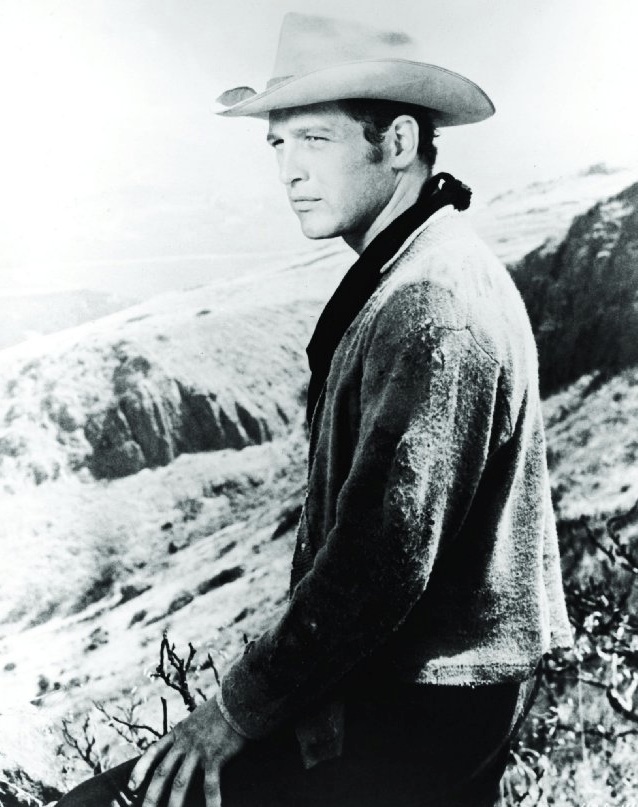
paul-newman-still-130327

Despite a known link between a masculine-looking face and aggression in men, macho-faced soldiers didn’t survive Finland’s World War II Winter War in greater numbers than recruits with less masculine faces.

The macho-looking men did, however, have more children in their lifetimes than thinner-faced guys, suggesting that face shape is a sign of evolutionary fitness.

The new findings, published today May 7 in the journal Biology Letters, reveal nuances in how hormones, genetics and societal structures might work together to influence evolution. For example, the technology of 20th-century warfare may have turned survival into a matter of luck rather than evolutionary fitness, said study leader John Loehr, an evolutionary ecologist at the University of Helsinki Lammi Biological Station.

“You have very little individual ability to change your fate,” Loehr told LiveScience. “You’re put in a situation where you and the 20 other people who are in your trench are hit by a shell, and it’s game over.”

High levels of testosterone during development are linked with a certain macho look: a broad face, strong jaw and narrow eyes. Any number of swaggering movie stars, from Paul Newman to Channing Tatum (“G.I. Joe”), has parlayed this face shape into successful onscreen careers.

Meanwhile, psychologists have found that guys with Newman’s squint or Tatum’s wide cheekbones tend to be higher in aggression than men with thinner faces. One study on Japanese baseball players, released in April, found that wider-faced players hit more home runs. And in 2008, Canadian researchers discovered that hockey players with wider faces spent more time in the penalty box than other players for aggressive behavior.

The hockey player finding got Loehr thinking about whether high testosterone (and thus, aggression) might confer a survival advantage on wider-faced guys.

“The obvious thing, for me, was, ‘Well, can we get some military data?'” he said.

Fortunately, he could. Finland is a country with meticulous record-keeping, and at the library for the Finnish National Defense in Helsinki, Loehr inquired of a librarian where he might find resources with photos of World War II soldiers (for facial width measurements) as well as personal data about those men.

“She sort of walked around the corner and there were rows of these books sitting there with all the pictures and an amazing amount of personal data,” Loehr said.

Over several months, Loehr pulled together other resources, including photo books of dead soldiers compiled during Finland’s three-and-a-half-month Winter War with the Soviet Union in 1939. Using these old books, he was able to measure facial widths of both surviving soldiers and men lost during the war. He also knew these men’s ranks and how many children they had during their lifetimes.

Military service was and still is mandatory in Finland, Loehr said, so World War II soldiers were a good representation of the male population.

Loehr focused on three WWII regiments, for a total of 795 soldiers. He and co-researcher Robert O’Hara of the Biodiversity and Climate Research Center in Germany found that wider-faced soldiers fathered more children than narrower-faced ones. The finding would have been expected by evolutionary researchers, given previous studies suggesting that fertile women are drawn to more masculine men.

The other findings were more surprising. For one, the wider-faced guys were actually less likely than narrow-faced men to rank higher in the military hierarchy. In other words, the higher the rank, the more likely the man was to have a narrow face.

“That’s a curious one,” Loehr said. Ecologically, he said, you’d expect the men who fathered more children in a community to be the socially dominant guys.

“For human species, it’s perhaps more nuanced,” Loehr said. For example, wide-faced guys have been shown in laboratory experiments to be less trustworthy. Trustworthiness might be more important for military leaders than dominance or aggression.

Another possibility is that the wider-faced guys could have moved up the military ranks during periods of conflict, Loehr said, as his findings were based on rank before the Winter War started. A study published in June 2012 found that in competitive situations, macho-faced guys are the most likely to work together to defeat a common enemy. If that’s the case, any testosterone advantage may not have come out until war began.

Second, Loehr and O’Hara found that face shape didn’t affect survival at all. A wider-faced man was equally as likely to die in battle as a man with a narrower face.

Technology may trump testosterone, Loehr said. One study, published in 2012 in the journal Evolution and Human Behavior, found that in fights involving hand-to-hand combat or other physical contact, narrow-faced men were more likely to die than wide-faced men. In conflicts where a gun, poison or other remote weapon was used, face shape made no difference.

The same could be true for Finnish soldiers, who fought and died with guns in the trenches, Loehr said.

“You would think that thousands of years ago, when combat would have been more hand-to-hand, without much use of tools, that you would have a different result,” he said. “It’s possible that humans have changed how selection can operate by developing this technology.”

http://www.livescience.com/29393-macho-faces-war-survival.html
Maya Blue Paint Recipe Deciphered

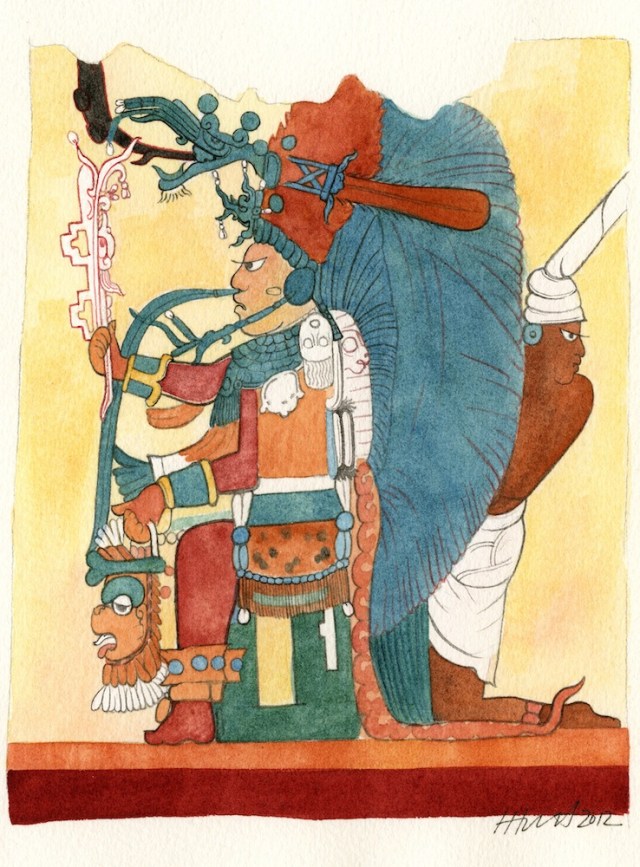
mayan-king-120510

The ancient Maya used a vivid, remarkably durable blue paint to cover their palace walls, codices, pottery and maybe even the bodies of human sacrifices who were thrown to their deaths down sacred wells. Now a group of chemists claim to have cracked the recipe of Maya Blue. Scientists have long known the two chief ingredients of the intense blue pigment: indigo, a plant dye that’s used today to color denim; and palygorskite, a type of clay. But how the Maya cooked up the unfading paint remained a mystery. Now Spanish researchers report that they found traces of another pigment in Maya Blue, which they say gives clues about how the color was made.

“We detected a second pigment in the samples, dehydroindigo, which must have formed through oxidation of the indigo when it underwent exposure to the heat that is required to prepare Maya Blue,” Antonio Doménech, a researcher from the University of Valencia, said in a statement.

“Indigo is blue and dehydroindigo is yellow, therefore the presence of both pigments in variable proportions would justify the more or less greenish tone of Maya Blue,” Doménech explained. “It is possible that the Maya knew how to obtain the desired hue by varying the preparation temperature, for example heating the mixture for more or less time or adding more of less wood to the fire.”

American researchers in 2008 claimed that copal resin, which was used for incense, may have been the third secret ingredient for Maya Blue. Their research was based on a study of a bowl that had traces of the pigment and was used to burn incense. But Doménech’s team didn’t buy those findings. “The bowl contained Maya Blue mixed with copal incense, so the simplified conclusion was that it was only prepared by warming incense,” Doménech said in a statement.

The Spanish researchers say they are now investigating the chemical bonds that bind the paint’s organic component (indigo) to the inorganic component (clay), which is key to Maya Blue’s resilience.

Among the more remarkable discoveries of the paint in context was a 14-foot thick (4 meters) layer of blue mud at the bottom of a naturally formed sinkhole, called the Sacred Cenote, at the famous Pre-Columbian Maya site Chichén Itzá in the Yucatán Peninsula of Mexico. When the Sacred Cenote was first dredged in 1904, it puzzled researchers, but some scientists now believe it was probably left over from blue-coated human sacrifices thrown into the well as part of a Maya ritual.

The research was detailed this year in the journal Microporous and Mesoporous Materials.

http://www.livescience.com/28381-maya-blue-paint-recipe-discovered.html

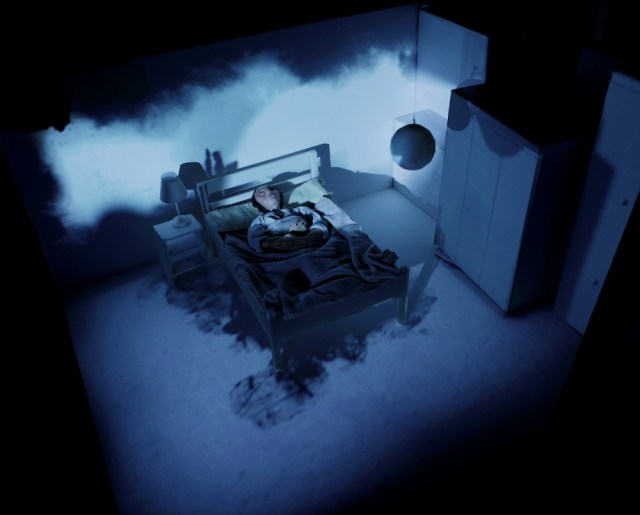
Documentary on Sleep Paralysis this May

sleep-paralysis-still-130329

Stephanie Pappas, LiveScience Senior Writer

When filmmaker Carla MacKinnon started waking up several times a week unable to move, with the sense that a disturbing presence was in the room with her, she didn’t call up her local ghost hunter. She got researching. Now, that research is becoming a short film and multiplatform art project exploring the strange and spooky phenomenon of sleep paralysis. The film, supported by the Wellcome Trust and set to screen at the Royal College of Arts in London, will debut in May.

Sleep paralysis happens when people become conscious while their muscles remain in the ultra-relaxed state that prevents them from acting out their dreams. The experience can be quite terrifying, with many people hallucinating a malevolent presence nearby, or even an attacker suffocating them. Surveys put the number of sleep paralysis sufferers between about 5 percent and 60 percent of the population. “I was getting quite a lot of sleep paralysis over the summer, quite frequently, and I became quite interested in what was happening, what medically or scientifically, it was all about,” MacKinnon said.

Her questions led her to talk with psychologists and scientists, as well as to people who experience the phenomenon. Myths and legends about sleep paralysis persist all over the globe, from the incubus and succubus (male and female demons, respectively) of European tales to a pink dolphin-turned-nighttime seducer in Brazil. Some of the stories MacKinnon uncovered reveal why these myths are so chilling.

One man told her about his frequent sleep paralysis episodes, during which he’d experience extremely realistic hallucinations of a young child, skipping around the bed and singing nursery rhymes. Sometimes, the child would sit on his pillow and talk to him. One night, the tot asked the man a personal question. When he refused to answer, the child transformed into a “horrendous demon,” MacKinnon said.

For another man, who had the sleep disorder narcolepsy (which can make sleep paralysis more common), his dream world clashed with the real world in a horrifying way. His sleep paralysis episodes typically included hallucinations that someone else was in his house or his room — he’d hear voices or banging around. One night, he awoke in a paralyzed state and saw a figure in his room as usual. “He suddenly realizes something is different,” MacKinnon said. “He suddenly realizes that he is in sleep paralysis, and his eyes are open, but the person who is in the room is in his room in real life.” The figure was no dream demon, but an actual burglar.

Sleep paralysis experiences are almost certainly behind the myths of the incubus and succubus, demons thought to have sex with unsuspecting humans in their sleep. In many cases, MacKinnon said, the science of sleep paralysis explains these myths. The feeling of suffocating or someone pushing down on the chest that often occurs during sleep paralysis may be a result of the automatic breathing pattern people fall into during sleep. When they become conscious while still in this breathing pattern, people may try to bring their breathing under voluntary control, leading to the feeling of suffocating. Add to that the hallucinations that seem to seep in from the dream world, and it’s no surprise that interpretations lend themselves to demons, ghosts or even alien abduction, MacKinnon said.

What’s more, MacKinnon said, sleep paralysis is more likely when your sleep is disrupted in some way — perhaps because you’ve been traveling, you’re too hot or too cold, or you’re sleeping in an unfamiliar or spooky place. Those tendencies may make it more likely that a person will experience sleep paralysis when already vulnerable to thoughts of ghosts and ghouls. “It’s interesting seeing how these scientific narratives and the more psychoanalytical or psychological narratives can support each other rather than conflict,” MacKinnon said.

Since working on the project, MacKinnon has been able to bring her own sleep paralysis episodes under control — or at least learned to calm herself during them. The trick, she said, is to use episodes like a form of research, by paying attention to details like how her hands feel and what position she’s in. This sort of mindfulness tends to make scary hallucinations blink away, she said. “Rationalizing it is incredibly counterintuitive,” she said. “It took me a really long time to stop believing that it was real, because it feels so incredibly real.”

http://www.livescience.com/28325-spooky-film-explores-sleep-paralysis.html