One striking chart shows why pharma companies are fighting legal marijuana

By Christopher Ingraham

There’s a body of research showing that painkiller abuse and overdose are lower in states with medical marijuana laws. These studies have generally assumed that when medical marijuana is available, pain patients are increasingly choosing pot over powerful and deadly prescription narcotics. But that’s always been just an assumption.

Now a new study, released in the journal Health Affairs, validates these findings by providing clear evidence of a missing link in the causal chain running from medical marijuana to falling overdoses. Ashley and W. David Bradford, a daughter-father pair of researchers at the University of Georgia, scoured the database of all prescription drugs paid for under Medicare Part D from 2010 to 2013.

They found that, in the 17 states with a medical-marijuana law in place by 2013, prescriptions for painkillers and other classes of drugs fell sharply compared with states that did not have a medical-marijuana law. The drops were quite significant: In medical-marijuana states, the average doctor prescribed 265 fewer doses of antidepressants each year, 486 fewer doses of seizure medication, 541 fewer anti-nausea doses and 562 fewer doses of anti-anxiety medication.

But most strikingly, the typical physician in a medical-marijuana state prescribed 1,826 fewer doses of painkillers in a given year.

These conditions are among those for which medical marijuana is most often approved under state laws. So as a sanity check, the Bradfords ran a similar analysis on drug categories that pot typically is not recommended for — blood thinners, anti-viral drugs and antibiotics. And on those drugs, they found no changes in prescribing patterns after the passage of marijuana laws.

“This provides strong evidence that the observed shifts in prescribing patterns were in fact due to the passage of the medical marijuana laws,” they write.

In a news release, lead author Ashley Bradford wrote, “The results suggest people are really using marijuana as medicine and not just using it for recreational purposes.”

One interesting wrinkle in the data is glaucoma, for which there was a small increase in demand for traditional drugs in medical-marijuana states. It’s routinely listed as an approved condition under medical-marijuana laws, and studies have shown that marijuana provides some degree of temporary relief for its symptoms.

The Bradfords hypothesize that the short duration of the glaucoma relief provided by marijuana — roughly an hour or so — may actually stimulate more demand in traditional glaucoma medications. Glaucoma patients may experience some short-term relief from marijuana, which may prompt them to seek other, robust treatment options from their doctors.

The tanking numbers for painkiller prescriptions in medical marijuana states are likely to cause some concern among pharmaceutical companies. These companies have long been at the forefront of opposition to marijuana reform, funding research by anti-pot academics and funneling dollars to groups, such as the Community Anti-Drug Coalitions of America, that oppose marijuana legalization.

Pharmaceutical companies have also lobbied federal agencies directly to prevent the liberalization of marijuana laws. In one case, recently uncovered by the office of Sen. Kirsten Gillibrand (D-N.Y.), the Department of Health and Human Services recommended that naturally derived THC, the main psychoactive component of marijuana, be moved from Schedule 1 to Schedule 3 of the Controlled Substances Act — a less restrictive category that would acknowledge the drug’s medical use and make it easier to research and prescribe. Several months after HHS submitted its recommendation, at least one drug company that manufactures a synthetic version of THC — which would presumably have to compete with any natural derivatives — wrote to the Drug Enforcement Administration to express opposition to rescheduling natural THC, citing “the abuse potential in terms of the need to grow and cultivate substantial crops of marijuana in the United States.”

The DEA ultimately rejected the HHS recommendation without explanation.

In what may be the most concerning finding for the pharmaceutical industry, the Bradfords took their analysis a step further by estimating the cost savings to Medicare from the decreased prescribing. They found that about $165 million was saved in the 17 medical marijuana states in 2013. In a back-of-the-envelope calculation, the estimated annual Medicare prescription savings would be nearly half a billion dollars if all 50 states were to implement similar programs.

“That amount would have represented just under 0.5 percent of all Medicare Part D spending in 2013,” they calculate.

Cost-savings alone are not a sufficient justification for implementing a medical-marijuana program. The bottom line is better health, and the Bradfords’ research shows promising evidence that medical-marijuana users are finding plant-based relief for conditions that otherwise would have required a pill to treat.

“Our findings and existing clinical literature imply that patients respond to medical marijuana legislation as if there are clinical benefits to the drug, which adds to the growing body of evidence suggesting that the Schedule 1 status of marijuana is outdated,” the study concludes.

One limitation of the study is that it only looks at Medicare Part D spending, which applies only to seniors. Previous studies have shown that seniors are among the most reluctant medical-marijuana users, so the net effect of medical marijuana for all prescription patients may be even greater.

The Bradfords will next look at whether similar patterns hold for Medicaid.

https://www.washingtonpost.com/news/wonk/wp/2016/07/13/one-striking-chart-shows-why-pharma-companies-are-fighting-legal-marijuana/

Thanks to Kebmodee for bringing this to the It’s Interesting community.
Smallest hard disk to date writes information atom by atom

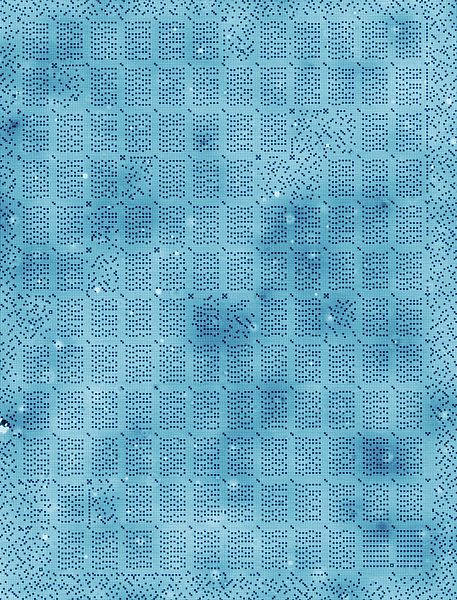
Every day, modern society creates more than a billion gigabytes of new data. To store all this data, it is increasingly important that each single bit occupies as little space as possible. A team of scientists at the Kavli Institute of Nanoscience at Delft University managed to bring this reduction to the ultimate limit: they built a memory of 1 kilobyte (8,000 bits), where each bit is represented by the position of one single chlorine atom.

“In theory, this storage density would allow all books ever created by humans to be written on a single post stamp”, says lead-scientist Sander Otte.

They reached a storage density of 500 Terabits per square inch (Tbpsi), 500 times better than the best commercial hard disk currently available. His team reports on this memory in Nature Nanotechnology on Monday July 18.

Feynman

In 1959, physicist Richard Feynman challenged his colleagues to engineer the world at the smallest possible scale. In his famous lecture There’s Plenty of Room at the Bottom, he speculated that if we had a platform allowing us to arrange individual atoms in an exact orderly pattern, it would be possible to store one piece of information per atom. To honor the visionary Feynman, Otte and his team now coded a section of Feynman’s lecture on an area 100 nanometers wide.


Sliding puzzle

The team used a scanning tunneling microscope (STM), in which a sharp needle probes the atoms of a surface, one by one. With these probes scientists cannot only see the atoms but they can also use them to push the atoms around. “You could compare it to a sliding puzzle”, Otte explains. “Every bit consists of two positions on a surface of copper atoms, and one chlorine atom that we can slide back and forth between these two positions. If the chlorine atom is in the top position, there is a hole beneath it — we call this a 1. If the hole is in the top position and the chlorine atom is therefore on the bottom, then the bit is a 0.” Because the chlorine atoms are surrounded by other chlorine atoms, except near the holes, they keep each other in place. That is why this method with holes is much more stable than methods with loose atoms and more suitable for data storage.

Codes

The researchers from Delft organized their memory in blocks of 8 bytes (64 bits). Each block has a marker, made of the same type of ‘holes’ as the raster of chlorine atoms. Inspired by the pixelated square barcodes (QR codes) often used to scan tickets for airplanes and concerts, these markers work like miniature QR codes that carry information about the precise location of the block on the copper layer. The code will also indicate if a block is damaged, for instance due to some local contaminant or an error in the surface. This allows the memory to be scaled up easily to very big sizes, even if the copper surface is not entirely perfect.

Datacenters

The new approach offers excellent prospects in terms of stability and scalability. Still, this type of memory should not be expected in datacenters soon. Otte: “In its current form the memory can operate only in very clean vacuum conditions and at liquid nitrogen temperature (77 K), so the actual storage of data on an atomic scale is still some way off. But through this achievement we have certainly come a big step closer”.

This research was made possible through support from the Netherlands Organisation for Scientific Research (NOW/FOM). Scientists of the International Iberian Nanotechnology Laboratory (INL) in Portugal performed calculations on the behavior of the chlorine atoms.

For more information, please contact dr. Sander Otte, Kavli Institute of Nanoscience, TU Delft: A.F.Otte@tudelft.nl, +31 15 278 8998

http://www.tudelft.nl/en/current/latest-news/article/detail/kleinste-harddisk-ooit-schrijft-informatie-atoom-voor-atoom/

Thanks to Kebmodee for bringing this to the It’s Interesting community.

Ancient humans may have made giant telescopes 6,000 years ago

Telescopes as we think of them date back 400 years to the Enlightenment. But astronomers studying huge tombs in Portugal believe ancient humans were making their own stargazing instruments 6,000 years ago, the Atlantic reports. Researchers, who presented their findings Wednesday at the National Astronomy Meeting in Britain, believe the tombs themselves were a type of massive lensless telescope, according to Live Science. The Guardian reports the long, narrow entrances to the tombs—which were the only source of light—would focus the eye on a single piece of sky, block out the sun’s rays at dawn, and make the eye more sensitive to low light. “This would allow enhanced observing, especially in the twilight hours of dusk and dawn,” astronomer Daniel Brown tells Live Science.

The tombs may “have been the first astronomical tools to support the watching of the skies, millennia before telescopes were invented,” the Royal Astronomical Society says in a statement. Ancient humans admitted inside the tombs may have been seen as having “secret knowledge or foresight” due to being able to see the rise of seasonal stars days before those outside the tombs could see them. They might use that information to declare when it was time to move herds to new grazing areas, for example. Researchers are now experimenting to see what stars might align with the entrances to the tombs.

http://www.newser.com/story/227434/ancient-humans-may-have-made-giant-telescopes-6000-years-ago.html?utm_source=rss&utm_medium=applenews&utm_campaign=main

Thanks to Kebmodee for bringing this to the It’s Interesting community.

Opioids might worsen chronic pain, study finds

Written by Honor Whiteman

Anew study has questioned the benefits of opioid painkillers, after finding the drugs might worsen chronic pain rather than ease it.

Study co-leader Prof. Peter Grace, of the University of Colorado at Boulder (CU-Boulder), and colleagues recently published their findings in the Proceedings of the National Academy of Sciences.

Opioids are among the most commonly used painkillers in the United States; almost 250 million opioid prescriptions were written in 2013 – the equivalent to one bottle of pills for every American adult.

Previous studies have suggested opioids – such as codeine, oxycodone, morphine, and fentanyl – are effective pain relievers. They bind to proteins in the brain, spinal cord, and gastrointestinal tract called opioid receptors, reducing pain perception.

Increasing use and abuse of opioids, however, has become a major public health concern in the U.S.; opioid overdoses are responsible for 78 deaths in the country every day.

Now, Prof. Grace and colleagues have questioned whether opioids really work for pain relief, after finding the opioid morphine worsened chronic pain in rats.

Just 5 days of morphine treatment increased chronic pain in rats
According to Prof. Grace, previous studies assessing morphine use have focused on how the drug affects pain in the short term.

With this in mind, the researchers set out to investigate the longer-term effects of morphine use for chronic pain.

For their study, the team assessed two groups of rats with chronic nerve pain. One group was treated with morphine, while the other was not.

Compared with the non-treatment group, the team found that the chronic pain of the morphine group worsened with just 5 days of treatment. What is more, this effect persisted for several months.

“We are showing for the first time that even a brief exposure to opioids can have long-term negative effects on pain,” says Prof. Grace. “We found the treatment was contributing to the problem.”

Another ‘ugly side’ to opioids
According to the authors, the combination of morphine and nerve injury triggered a “cascade” of glial cell signaling, which increased chronic pain.

Glial cells are the “immune cells” of the central nervous system, which support and insulate nerve cells and aid nerve injury recovery.

They found that this cascade activated signaling from a protein called interleukin-1beta (IL-1b), which led to overactivity of nerve cells in the brain and spinal cord that respond to pain. This process can increase and prolong pain.

The researchers say their findings have important implications for individuals with chronic pain – a condition that is estimated to affect around 100 million Americans.

“The implications for people taking opioids like morphine, oxycodone and methadone are great, since we show the short-term decision to take such opioids can have devastating consequences of making pain worse and longer lasting. This is a very ugly side to opioids that had not been recognized before.”

Study co-leader Prof. Linda Watkins, CU-Boulder

It is not all bad news, however. The researchers found they were able to reverse morphine’s pain-increasing effect using a technique called “designer receptor exclusively activated by designer drugs” (DREADD), which involves the use of a targeted drug that stops glial cell receptors from recognizing opioids.

“Importantly, we’ve also been able to block the two main receptors involved in this immune response, including Toll-Like receptor 4 (TLR4) and another one called P2X7R, which have both been separately implicated in chronic pain before,” notes Prof. Grace.

“By blocking these receptors, we’re preventing the immune response from kicking in, enabling the painkilling benefits of morphine to be delivered without resulting in further chronic pain.”

He adds that drugs that can block such receptors are currently in development, but it is likely to be at least another 5 years before they are available for clinical use.

http://www.medicalnewstoday.com/articles/310645.php

Thanks to Kebmnodee for bringing this to the attention of the It’s Interesting community.

Amino acid and phosphorous building blocks of life on Earth found in comet’s atmosphere

67p-jets
Instruments on the Rosetta spacecraft have detected compounds critical to life, including the amino acid glycine and the element phosphorus, in the shroud of gases surrounding Comet 67P/Churyumov-Gerasimenko

For the first time, scientists have directly detected a crucial amino acid and a rich selection of organic molecules in the dusty atmosphere of a comet, further bolstering the hypothesis that these icy objects delivered some of life’s ingredients to Earth.

The amino acid glycine, along with some of its precursor organic molecules and the essential element phosphorus, were spotted in the cloud of gas and dust surrounding Comet 67P/Churyumov-Gerasimenko by the Rosetta spacecraft, which has been orbiting the comet since 2014. While glycine had previously been extracted from cometary dust samples that were brought to Earth by NASA’s Stardust mission, this is the first time that the compound has been detected in space, naturally vaporized.

The discovery of those building blocks around a comet supports the idea that comets could have played an essential role in the development of life on early Earth, researchers said.

“With all the organics, amino acid and phosphorus, we can say that the comet really contains everything to produce life — except energy,” said Kathrin Altwegg of the University of Bern in Switzerland, the principal investigator for the Rosetta mission’s ROSINA instrument.

“Energy is completely missing on the comet, so on the comet you cannot form life,” Altwegg told Space.com. “But once you have the comet in a warm place — let’s say it drops into the ocean — then these molecules get free, they get mobile, they can react, and maybe that’s how life starts.”

Getting a glimpse

Glycine, one of the simplest amino acids, is usually bound up as a solid, which means it’s difficult to detect from afar, Altwegg said.

While scientists have searched for glycine through telescopes in star-forming regions of the sky, the newly reported detection marks the first sighting of the compound in space. In this case, the orbiting Rosetta was close enough to pick up the glycine released by the comet’s dust grains as they heated up in the sun.

The study is a powerful confirmation of earlier, earth-bound detections of life’s building blocks in comet and meteor material.

“We know the Earth was pretty heavily bombarded both with asteroidal material and cometary material,” said Michael A’Hearn, a comet researcher at the University of Maryland who was not involved in the new study.

“There have been various claims of amino acids in meteorites, but all of them have suffered from this problem of contamination on Earth. The Stardust [samples] — which are from a comet, not an asteroid — are probably the least susceptible to the terrestrial contamination problem, but even there the problem is severe,” A’Hearn told Space.com. “I think they [Stardust] really did have glycine, but this is a much cleaner detection in many ways.”

Cooking up life
Amino acids form the basis of proteins, which are complexly folded molecules that are critical to life on Earth. Altwegg’s team searched for other amino acids around the comet as well, but located only glycine — the only one that can form without liquid water (as in the frigid reaches of space).

The glycine probably didn’t form on the comet itself, Altwegg said, but rather in the broad stretches of dust and debris that made up the solar system before planetary bodies formed.

“The solar system was made out of material which formed in a disk, in a solar nebula,” Altwegg said. “In these clouds, it’s pretty cold, so the chemistry you do there is catalytic chemistry on the dust surfaces. And these very small dust grains [1 micron in size] are very good to lead to organic chemistry. This is also done in the lab.” Earth itself was far too hot for similar delicate amino acids to survive its formation, Altwegg said; only the smallest solar system bodies stayed cold.

So glycine formed during that time could have provided a boost to newly forming life if it was delivered to Earth by comets.

“It’s not that it couldn’t have formed on Earth — it certainly could — it’s just that it didn’t have to,” A’Hearn said. “Basically, the Earth got a head start.”

Other, more complex amino acids require liquid water, and so would have likely formed on Earth itself, Altwegg said. This idea is supported by the fact that Rosetta has not identified any amino acids other than glycine near Comet 67P.

Phosphorus is also vital to life as we know it. Among other things, the element is a key constituent of DNA and adenosine triphosphate (ATP), a molecule that stores the chemical energy used by cells.

See more at: http://www.space.com/33011-life-building-blocks-found-around-comet.html#sthash.47SrU6BY.dpuf

Thanks to Kebmodee for bringing this to the attention of the It’s Interesting community.

In Search For Cures, Scientists Create Embryos That Are Both Animal And Human

A handful of scientists around the United States are trying to do something that some people find disturbing: make embryos that are part human, part animal.

The researchers hope these embryos, known as chimeras, could eventually help save the lives of people with a wide range of diseases.

One way would be to use chimera embryos to create better animal models to study how human diseases happen and how they progress.

Perhaps the boldest hope is to create farm animals that have human organs that could be transplanted into terminally ill patients.

But some scientists and bioethicists worry the creation of these interspecies embryos crosses the line. “You’re getting into unsettling ground that I think is damaging to our sense of humanity,” says Stuart Newman, a professor of cell biology and anatomy at the New York Medical College.

The experiments are so sensitive that the National Institutes of Health has imposed a moratorium on funding them while officials explore the ethical issues they raise.

Nevertheless, a small number of researchers are pursuing the work with alternative funding. They hope the results will persuade the NIH to lift the moratorium.

“We’re not trying to make a chimera just because we want to see some kind of monstrous creature,” says Pablo Ross, a reproductive biologist at the University of California, Davis. “We’re doing this for a biomedical purpose.”

The NIH is expected to announce soon how it plans to handle requests for funding.

Recently, Ross agreed to let me visit his lab for an unusual look at his research. During the visit, Ross demonstrated how he is trying to create a pancreas that theoretically could be transplanted into a patient with diabetes.

The first step involves using new gene-editing techniques to remove the gene that pig embryos need to make a pancreas.

Working under an elaborate microscope, Ross makes a small hole in the embryo’s outer membrane with a laser. Next, he injects a molecule synthesized in the laboratory to home in on and delete the pancreas gene inside. (In separate experiments, he has done this to sheep embryos, too.)

After the embryos have had their DNA edited this way, Ross creates another hole in the membrane so he can inject human induced pluripotent stem cells, or iPS for short, into the pig embryos.

Like human embryonic stem cells, iPS cells can turn into any kind of cell or tissue in the body. The researchers’ hope is that the human stem cells will take advantage of the void in the embryo to start forming a human pancreas.

Because iPS cells can be made from any adult’s skin cells, any organs they form would match the patient who needs the transplant, vastly reducing the risk that the body would reject the new organ.

But for the embryo to develop and produce an organ, Ross has to put the chimera embryos into the wombs of adult pigs. That involves a surgical procedure, which is performed in a large operating room across the street from Ross’s lab.

The day Ross opened his lab to me, a surgical team was anesthetizing an adult female pig so surgeons could make an incision to get access to its uterus.

Ross then rushed over with a special syringe filled with chimera embryos. He injected 25 embryos into each side of the animal’s uterus. The procedure took about an hour. He repeated the process on a second pig.

Every time Ross does this, he then waits a few weeks to allow the embryos to develop to their 28th day — a time when primitive structures such as organs start to form.

Ross then retrieves the chimeric embryos to dissect them so he can see what the human stem cells are doing inside. He examines whether the human stem cells have started to form a pancreas, and whether they have begun making any other types of tissues.

The uncertainty is part of what makes the work so controversial. Ross and other scientists conducting these experiments can’t know exactly where the human stem cells will go. Ross hopes they’ll only grow a human pancreas. But they could go elsewhere, such as to the brain.

“If you have pigs with partly human brains you would have animals that might actually have consciousness like a human,” Newman says. “It might have human-type needs. We don’t really know.”

That possibility raises new questions about the morality of using the animals for experimentation. Another concern is that the stem cells could form human sperm and human eggs in the chimeras.

“If a male chimeric pig mated with a female chimeric pig, the result could be a human fetus developing in the uterus of that female chimera,” Newman says. Another possibility is the animals could give birth to some kind of part-human, part-pig creature.

“One of the concerns that a lot of people have is that there’s something sacrosanct about what it means to be human expressed in our DNA,” says Jason Robert, a bioethicist at Arizona State University. “And that by inserting that into other animals and giving those other animals potentially some of the capacities of humans that this could be a kind of violation — a kind of, maybe, even a playing God.”

Ross defends what his work. “I don’t consider that we’re playing God or even close to that,” Ross says. “We’re just trying to use the technologies that we have developed to improve peoples’ life.”

Still, Ross acknowledges the concerns. So he’s moving very carefully, he says. For example, he’s only letting the chimera embryos develop for 28 days. At that point, he removes the embryos and dissects them.

If he discovers the stem cells are going to the wrong places in the embryos, he says he can take steps to stop that from happening. In addition, he’d make sure adult chimeras are never allowed to mate, he says.

“We’re very aware and sensitive to the ethical concerns,” he says. “One of the reasons we’re doing this research the way we’re doing it is because we want to provide scientific information to inform those concerns.”

Ross is working with Juan Carlos Izpisua Belmonte from the Salk Intitute for Biological Studies in La Jolla, Calif., and Hiromitsu Nakauchi at Stanford University. Daniel Garry of the University of Minnesota and colleagues are conducting similar work. The research is funded in part by the Defense Department and the California Institute for Regenerative Medicine (CIRM).

http://www.npr.org/sections/health-shots/2016/05/18/478212837/in-search-for-cures-scientists-create-embryos-that-are-both-animal-and-human

Thanks to Kebmodee for bringing this to the attention of the It’s Interesting community.

15 year old William Gadoury draws a link between the location of Mayan cities and the civilization’s major constellations to discover a Mayan city in Central America using Google Earth

A 15-year-old boy believes he has discovered a forgotten Mayan city using satellite photos and Mayan astronomy.

William Gadoury, from Quebec, came up with the theory that the Maya civilization chose the location of its towns and cities according to its star constellations.

He found Mayan cities lined up exactly with stars in the civilization’s major constellations.

Studying the star map further, he discovered one city was missing from a constellation of three stars.

Using satellite images provided by the Canadian Space Agency and then mapped on to Google Earth, he discovered the city where the third star of the constellation suggested it would be.

William has named the yet-to-be explored city in the Yucatan jungle K’aak Chi, or Mouth of Fire.

Daniel De Lisle, from the Canadian Space Agency, said the area had been difficult to study because of its dense vegetation.

However, satellite scans of the area found linear features which “stuck out”.

“There are linear features that would suggest there is something underneath that big canopy,” he told The Independent.

“There are enough items to suggest it could be a man made structure.”

Doctor Armand La Rocque, from the University of New Brunswick, said one image showed a street network and a large square which could possibly be a pyramid.

He told The Independent: “A square is not natural, it is mostly artificial and can hardly be attributed to natural phenomena.

“If we add these together, we have a lot of indication there might be a Mayan city in the area.”

Dr La Rocque said William’s discovery could lead archaeologists to find other Mayan cities using similar techniques.

William’s discovery will be published in a scientific journal and he will present his findings at Brazil’s International Science fair in 2017.

http://www.independent.co.uk/news/world/americas/forgotten-mayan-city-discovered-in-central-america-by-15-year-old-a7021291.html

Thanks to Kebmodee for bringing this to the attention of the It’s Interesting community.

The driverless truck is coming, and it’s going to automate millions of jobs.

A convoy of self-driving trucks recently drove across Europe and arrived at the Port of Rotterdam. No technology will automate away more jobs — or drive more economic efficiency — than the driverless truck.

Shipping a full truckload from L.A. to New York costs around $4,500 today, with labor representing 75 percent of that cost. But those labor savings aren’t the only gains to be had from the adoption of driverless trucks.

Where drivers are restricted by law from driving more than 11 hours per day without taking an 8-hour break, a driverless truck can drive nearly 24 hours per day. That means the technology would effectively double the output of the U.S. transportation network at 25 percent of the cost.

And the savings become even more significant when you account for fuel efficiency gains. The optimal cruising speed from a fuel efficiency standpoint is around 45 miles per hour, whereas truckers who are paid by the mile drive much faster. Further fuel efficiencies will be had as the self-driving fleets adopt platooning technologies, like those from Peloton Technology, allowing trucks to draft behind one another in highway trains.

Trucking represents a considerable portion of the cost of all the goods we buy, so consumers everywhere will experience this change as lower prices and higher standards of living.

While the efficiency gains are too real to pass up, the technology will have tremendous adverse effects as well.
In addition, once the technology is mature enough to be rolled out commercially, we will also enjoy considerable safety benefits. This year alone more people will be killed in traffic accidents involving trucks than in all domestic airline crashes in the last 45 years combined. At the same time, more truck drivers were killed on the job, 835, than workers in any other occupation in the U.S.

Even putting aside the direct safety risks, truck driving is a grueling job that young people don’t really want to do. The average age of a commercial driver is 55 (and rising every year), with projected driver shortages that will create yet more incentive to adopt driverless technology in the years to come.

While the efficiency gains are real — too real to pass up — the technology will have tremendous adverse effects as well. There are currently more than 1.6 million Americans working as truck drivers, making it the most common job in 29 states.

The loss of jobs representing 1 percent of the U.S. workforce will be a devastating blow to the economy. And the adverse consequences won’t end there. Gas stations, highway diners, rest stops, motels and other businesses catering to drivers will struggle to survive without them.

The demonstration in Europe shows that driverless trucking is right around the corner. The primary remaining barriers are regulatory. We still need to create on- and off-ramps so human drivers can bring trucks to the freeways where highway autopilot can take over. We may also need dedicated lanes as slow-moving driverless trucks could be a hazard for drivers. These are big projects that can only be done with the active support of government. However, regulators will be understandably reluctant to allow technology with the potential to eliminate so many jobs.

Yet the benefits from adopting it will be so huge that we can’t simply outlaw it. A 400 percent price-performance improvement in ground transportation networks will represent an incredible boost to human well-being. Where would we be if we had banned mechanized agriculture on the grounds that most Americans worked in farming when tractors and harvesters were introduced in the early 20th century?

We often discuss the displacement of jobs by artificial intelligence and robots in the abstract, as something that we’ll have to eventually tackle in the far distant future. But the recent successful demonstration of the self-driving truck shows that we can’t afford to put off the conversation on how we’re going to adapt to this new reality.

The driverless truck is coming, and it’s going to automate millions of jobs

Thanks to Kebmodee for bringing this to the It’s Interesting community.

New irrigation methods mean veggies and fruits serve up used pharmaceuticals

Through vegetables and fruits, the drugs that we flush down the drain are returning to us.

In a randomized, single-blind pilot study, researchers found that anticonvulsive epilepsy drug carbamazepine, which is released in urine, can accumulate in crops irrigated with recycled water—treated sewage—and end up in the urine of produce-eaters not on the drugs. The study, published Tuesday in Environmental Science & Technology, is the first to validate the long-held suspicion that pharmaceuticals may get trapped in infinite pee-to-food-to-pee loops, exposing consumers to drug doses with unknown health effects.

While the amounts of the drug in produce-eater’s pee were four orders of magnitude lower than what is seen in the pee of patients purposefully taking the drugs, researchers speculate that the trace amounts could still have health effects in some people, such as those with a genetic sensitivity to the drugs, pregnant women, children, and those who eat a lot of produce, such as vegetarians. And with the growing practice of reclaiming wastewater for crop irrigation—particularly in places that face water shortages such as California, Israel, and Spain—the produce contamination could become more common and more potent, the authors argue.

“The potential for unwitting exposure of consumers to contaminants via this route is real,” the authors wrote, adding that their study provides real world data that proves exposure occurs.

For the study, researchers recruited 34 healthy adults—excluding vegetarians, vegans, and people who take carbamazepine. The participants were all from Israel, where farmers use reclaimed water for 50 percent of the country’s irrigation needs. California, which grows a large portion of US produce, currently uses reclaimed water for six percent of its irrigation needs, but is looking to increase its usage.

First, the researchers measured what was in each participant’s pee, then randomly assigned them to one of two groups. While each participant got a big basket of produce to eat over one week and another basket for a second week, the contents varied depending on their group. Those in group one unknowingly started off with produce irrigated with reclaimed water and then got a batch irrigated with fresh water for the second week. Group two started with produce irrigated with fresh water, then were switched to crops bought at a local grocery store. (The authors admit that they meant to switch the second group to produce grown with reclaimed water for that second week, but they ran out.) The researchers weren’t sure what type of water was used to grow the grocery store produce, but they assumed it was a mix.

Throughout the two weeks, researchers sampled each participant’s urine, looking for carbamazepine and its metabolites—forms of the drug that have been modified in the human body.

At the start, the participants had mixed levels of carbamazepine in their urine, with ~38 percent having undetectable amounts, ~35 percent having detectable amounts that were too little to quantify, and ~26 having low but quantifiable amounts. After the first week, all of the participants in the first group, which noshed on produce irrigated with reclaimed water, had quantifiable amounts of the drug and its metabolites in their urine—some of the amounts hiked up by more than ten-fold from the start. Those in group two, however, didn’t change from their initial measurements.

In the second week, after the veggie swap, the levels of carbamazepine dropped back down to baseline levels in group one participants. Drug levels in participants in group two stayed about the same in the second week, despite some of the grocery store produce testing positive for carbamazepine.

Both of those findings—that drug levels can quickly drop after exposure and the mixed supermarket food didn’t alter levels—is relatively good news for public health, the authors note. Still, the unintentional drug doses in food are a concern worth more attention by the public health community, the authors conclude. Previous studies have found a variety of drugs in crops, including cholesterol medications, caffeine, and triclosan.

Environmental Science & Technology, 2015. DOI: 10.1021/acs.est.5b06256 (About DOIs).

Thanks to Kebmodee for bringing this to the It’s Interesting community.
Google Unveils Neural Network with “Superhuman” Ability to Determine the Location of Almost Any Image

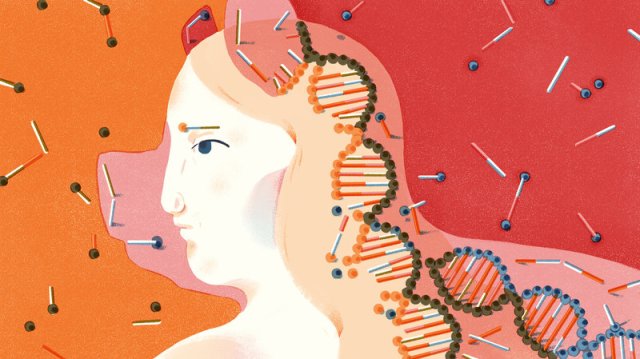
Here’s a tricky task. Pick a photograph from the Web at random. Now try to work out where it was taken using only the image itself. If the image shows a famous building or landmark, such as the Eiffel Tower or Niagara Falls, the task is straightforward. But the job becomes significantly harder when the image lacks specific location cues or is taken indoors or shows a pet or food or some other detail.

Nevertheless, humans are surprisingly good at this task. To help, they bring to bear all kinds of knowledge about the world such as the type and language of signs on display, the types of vegetation, architectural styles, the direction of traffic, and so on. Humans spend a lifetime picking up these kinds of geolocation cues.

So it’s easy to think that machines would struggle with this task. And indeed, they have.
Today, that changes thanks to the work of Tobias Weyand, a computer vision specialist at Google, and a couple of pals. These guys have trained a deep-learning machine to work out the location of almost any photo using only the pixels it contains.

Their new machine significantly outperforms humans and can even use a clever trick to determine the location of indoor images and pictures of specific things such as pets, food, and so on that have no location cues.

Their approach is straightforward, at least in the world of machine learning. Weyand and co begin by dividing the world into a grid consisting of over 26,000 squares of varying size that depend on the number of images taken in that location.

So big cities, which are the subjects of many images, have a more fine-grained grid structure than more remote regions where photographs are less common. Indeed, the Google team ignored areas like oceans and the polar regions, where few photographs have been taken.

Next, the team created a database of geolocated images from the Web and used the location data to determine the grid square in which each image was taken. This data set is huge, consisting of 126 million images along with their accompanying Exif location data.

Weyand and co used 91 million of these images to teach a powerful neural network to work out the grid location using only the image itself. Their idea is to input an image into this neural net and get as the output a particular grid location or a set of likely candidates.

They then validated the neural network using the remaining 34 million images in the data set. Finally they tested the network—which they call PlaNet—in a number of different ways to see how well it works.

The results make for interesting reading. To measure the accuracy of their machine, they fed it 2.3 million geotagged images from Flickr to see whether it could correctly determine their location.

“PlaNet is able to localize 3.6 percent of the images at street-level accuracy and 10.1 percent at city-level accuracy,” say Weyand and co. What’s more, the machine determines the country of origin in a further 28.4 percent of the photos and the continent in 48.0 percent of them.

That’s pretty good. But to show just how good, Weyand and co put PlaNet through its paces in a test against 10 well-traveled humans. For the test, they used an online game that presents a player with a random view taken from Google Street View and asks him or her to pinpoint its location on a map of the world.

Anyone can play at http://www.geoguessr.com. Give it a try—it’s a lot of fun and more tricky than it sounds.

Needless to say, PlaNet trounced the humans. “In total, PlaNet won 28 of the 50 rounds with a median localization error of 1131.7 km, while the median human localization error was 2320.75 km,” say Weyand and co. “[This] small-scale experiment shows that PlaNet reaches superhuman performance at the task of geolocating Street View scenes.”

An interesting question is how PlaNet performs so well without being able to use the cues that humans rely on, such as vegetation, architectural style, and so on. But Weyand and co say they know why: “We think PlaNet has an advantage over humans because it has seen many more places than any human can ever visit and has learned subtle cues of different scenes that are even hard for a well-traveled human to distinguish.”

They go further and use the machine to locate images that do not have location cues, such as those taken indoors or of specific items. This is possible when images are part of albums that have all been taken at the same place. The machine simply looks through other images in the album to work out where they were taken and assumes the more specific image was taken in the same place.

That’s impressive work that shows deep neural nets flexing their muscles once again. Perhaps more impressive still is that the model uses a relatively small amount of memory unlike other approaches that use gigabytes of the stuff. “Our model uses only 377 MB, which even fits into the memory of a smartphone,” say Weyand and co.

Ref: arxiv.org/abs/1602.05314 : PlaNet—Photo Geolocation with Convolutional Neural Networks

Thanks to Kebmodee for bringing this to the attention of the It’s Interesting community.