Google’s AI translation tool seems to have invented its own secret internal language

Google AI computers have created their own secret language, creating a fascinating and existentially challenging development.

In September, Google announced that its Neural Machine Translation system had gone live. It uses deep learning to produce better, more natural translations between languages.

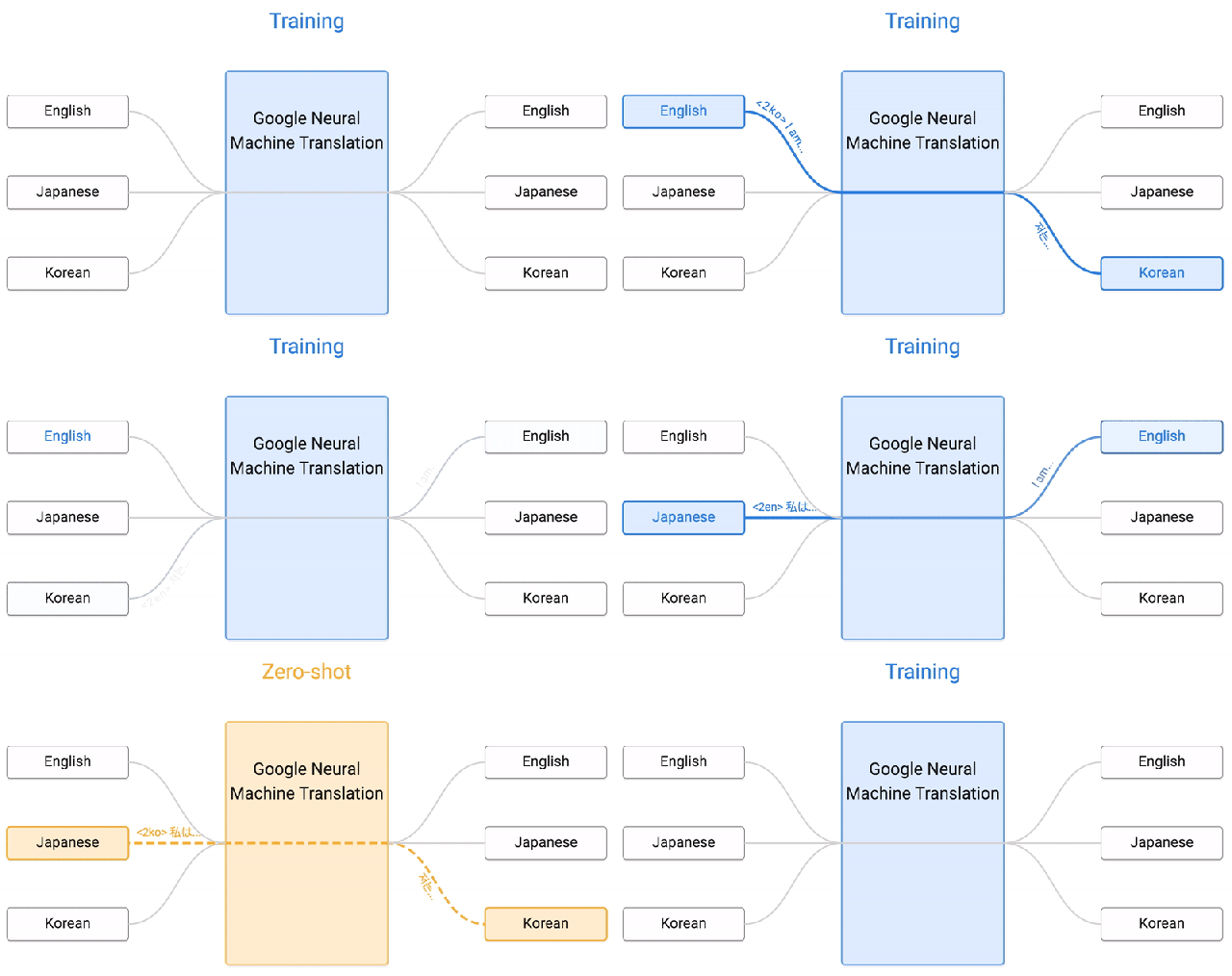
Following on this success, GNMT’s creators were curious about something. If you teach the translation system to translate English to Korean and vice versa, and also English to Japanese and vice versa… could it translate Korean to Japanese, without resorting to English as a bridge between them?

This is called zero-shot translation, illustrated below.

Indeed, Google’s AI has evolves to produce reasonable translations between two languages that it has not explicitly linked in any way.

But this raised a second question. If the computer is able to make connections between concepts and words that have not been formally linked… does that mean that the computer has formed a concept of shared meaning for those words, meaning at a deeper level than simply that one word or phrase is the equivalent of another?

n other words, has the computer developed its own internal language to represent the concepts it uses to translate between other languages? Based on how various sentences are related to one another in the memory space of the neural network, Google’s language and AI boffins think that it has.

This “interlingua” seems to exist as a deeper level of representation that sees similarities between a sentence or word in all three languages. Beyond that, it’s hard to say, since the inner processes of complex neural networks are infamously difficult to describe.

It could be something sophisticated, or it could be something simple. But the fact that it exists at all — an original creation of the system’s own to aid in its understanding of concepts it has not been trained to understand — is, philosophically speaking, pretty powerful stuff.

Google’s AI translation tool seems to have invented its own secret internal language

Thanks to Kebmodee for bringing this to the attention of the It’s Interesting community.

This island is powered entirely by solar panels and batteries thanks to SolarCity


Ta’u Island’s residents live off a solar power and battery storage-enabled microgrid.

by Amelia Heathman

SolarCity was applauded when it announced its plans for solar roofs earlier this year. Now, it appears it is in the business of creating solar islands.

The island of Ta’u in American Samoa, more than 4,000 miles from the United States’ West Coast, now hosts a solar power and battery storage-enabled microgrid that can supply nearly 100 per cent of the island’s power needs from renewable energy.

The microgrid is made up of 1.4 megawatts of solar generation capacity from SolarCity and Tesla and six-megawatt hours of battery storage from 60 Tesla Powerpacks. The whole thing took just a year to implement.

Due to the remote nature of the island, its citizens were used to constant power rationing, outages and a high dependency on diesel generators. The installation of the microgrid, however, provides a cost-saving alternative to diesel, and the island’s core services such as the local hospital, schools and police stations don’t have to worry about outages or rationing anymore.

“It’s always sunny out here, and harvesting that energy from the sun will make me sleep a lot more comfortably at night, just knowing I’ll be able to serve my customers,” said Keith Ahsoon, a local resident whose family owns one of the food stores on the island.

The power from the new Ta’u microgrid provides energy independence for the nearly 600 residents of the island. The battery system also allows the residents to use stored solar energy at night, meaning energy will always be available. As well as providing energy, the project will allow the island to significantly save on energy costs and offset the use of more than 109,500 gallons of diesel per year.

With concerns over climate change and the effects the heavy use of fossil fuels are having on the planet, more initiatives are taking off to prove the power of solar energy, whether it is SolarCity fueling an entire island or Bertrand Piccard’s Solar Impulse plane flying around the world on only solar energy.

Obviously Ta’u island’s location off the West Coast means it is in a prime location to harness the Sun’s energy, which wouldn’t necessarily work in the UK. Having said that, this is an exciting way to show where the future of solar energy could take us if it was amplified on a larger scale.

The project was funded by the American Samoa Economic Development Authority, the Environmental Protection Agency and the Department of Interior, whilst the microgrid is operated by the American Samoa Power Authority.

http://www.wired.co.uk/article/island-tau-solar-energy-solarcity

Thanks to Kebmodee for bringing this to the attention of the It’s Interesting community.

‘Brain wi-fi’ shown to be able to reverse leg paralysis in a primate.

By James Gallagher

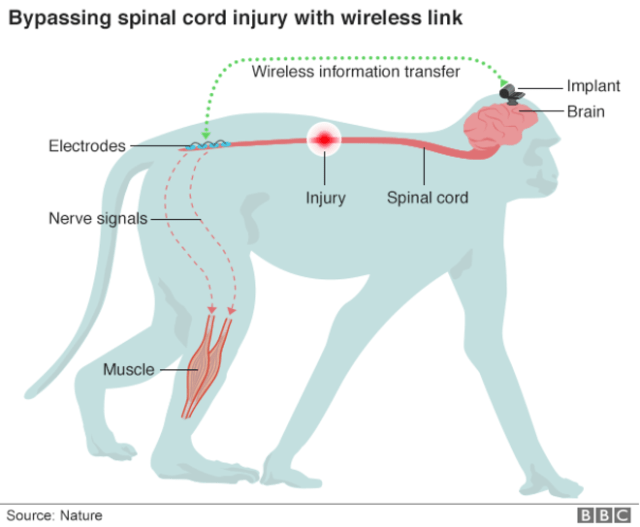
An implant that beams instructions out of the brain has been used to restore movement in paralysed primates for the first time, say scientists.

Rhesus monkeys were paralysed in one leg due to a damaged spinal cord. The team at the Swiss Federal Institute of Technology bypassed the injury by sending the instructions straight from the brain to the nerves controlling leg movement. Experts said the technology could be ready for human trials within a decade.

Spinal-cord injuries block the flow of electrical signals from the brain to the rest of the body resulting in paralysis. It is a wound that rarely heals, but one potential solution is to use technology to bypass the injury.

In the study, a chip was implanted into the part of the monkeys’ brain that controls movement. Its job was to read the spikes of electrical activity that are the instructions for moving the legs and send them to a nearby computer. It deciphered the messages and sent instructions to an implant in the monkey’s spine to electrically stimulate the appropriate nerves. The process all takes place in real time. The results, published in the journal Nature, showed the monkeys regained some control of their paralysed leg within six days and could walk in a straight line on a treadmill.

Dr Gregoire Courtine, one of the researchers, said: “This is the first time that a neurotechnology has restored locomotion in primates.” He told the BBC News website: “The movement was close to normal for the basic walking pattern, but so far we have not been able to test the ability to steer.” The technology used to stimulate the spinal cord is the same as that used in deep brain stimulation to treat Parkinson’s disease, so it would not be a technological leap to doing the same tests in patients. “But the way we walk is different to primates, we are bipedal and this requires more sophisticated ways to stimulate the muscle,” said Dr Courtine.

Jocelyne Bloch, a neurosurgeon from the Lausanne University Hospital, said: “The link between decoding of the brain and the stimulation of the spinal cord is completely new. “For the first time, I can image a completely paralysed patient being able to move their legs through this brain-spine interface.”

Using technology to overcome paralysis is a rapidly developing field:
Brainwaves have been used to control a robotic arm
Electrical stimulation of the spinal cord has helped four paralysed people stand again
An implant has helped a paralysed man play a guitar-based computer game

Dr Mark Bacon, the director of research at the charity Spinal Research, said: “This is quite impressive work. Paralysed patients want to be able to regain real control, that is voluntary control of lost functions, like walking, and the use of implantable devices may be one way of achieving this. The current work is a clear demonstration that there is progress being made in the right direction.”

Dr Andrew Jackson, from the Institute of Neuroscience and Newcastle University, said: “It is not unreasonable to speculate that we could see the first clinical demonstrations of interfaces between the brain and spinal cord by the end of the decade.” However, he said, rhesus monkeys used all four limbs to move and only one leg had been paralysed, so it would be a greater challenge to restore the movement of both legs in people. “Useful locomotion also requires control of balance, steering and obstacle avoidance, which were not addressed,” he added.

The other approach to treating paralysis involves transplanting cells from the nasal cavity into the spinal cord to try to biologically repair the injury. Following this treatment, Darek Fidyka, who was paralysed from the chest down in a knife attack in 2010, can now walk using a frame.

Neither approach is ready for routine use.

http://www.bbc.com/news/health-37914543

Thanks to Kebmodee for bringing this to the It’s Interesting community.

US military enhancing human skills with electrical brain stimulation


Study paves way for personnel such as drone operators to have electrical pulses sent into their brains to improve effectiveness in high pressure situations.

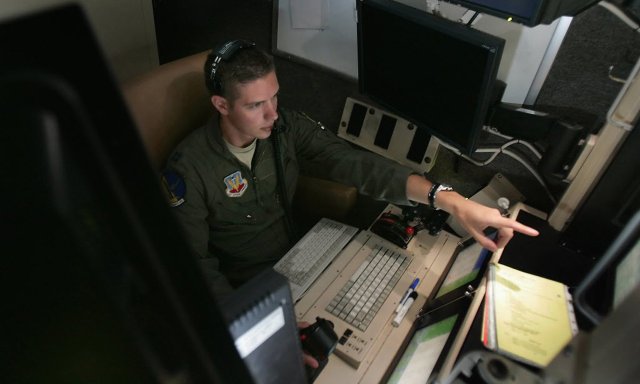
US military scientists have used electrical brain stimulators to enhance mental skills of staff, in research that aims to boost the performance of air crews, drone operators and others in the armed forces’ most demanding roles.

The successful tests of the devices pave the way for servicemen and women to be wired up at critical times of duty, so that electrical pulses can be beamed into their brains to improve their effectiveness in high pressure situations.

The brain stimulation kits use five electrodes to send weak electric currents through the skull and into specific parts of the cortex. Previous studies have found evidence that by helping neurons to fire, these minor brain zaps can boost cognitive ability.

The technology is seen as a safer alternative to prescription drugs, such as modafinil and ritalin, both of which have been used off-label as performance enhancing drugs in the armed forces.

But while electrical brain stimulation appears to have no harmful side effects, some experts say its long-term safety is unknown, and raise concerns about staff being forced to use the equipment if it is approved for military operations.

Others are worried about the broader implications of the science on the general workforce because of the advance of an unregulated technology.

In a new report, scientists at Wright-Patterson Air Force Base in Ohio describe how the performance of military personnel can slump soon after they start work if the demands of the job become too intense.

“Within the air force, various operations such as remotely piloted and manned aircraft operations require a human operator to monitor and respond to multiple events simultaneously over a long period of time,” they write. “With the monotonous nature of these tasks, the operator’s performance may decline shortly after their work shift commences.”

Advertisement

But in a series of experiments at the air force base, the researchers found that electrical brain stimulation can improve people’s multitasking skills and stave off the drop in performance that comes with information overload. Writing in the journal Frontiers in Human Neuroscience, they say that the technology, known as transcranial direct current stimulation (tDCS), has a “profound effect”.

For the study, the scientists had men and women at the base take a test developed by Nasa to assess multitasking skills. The test requires people to keep a crosshair inside a moving circle on a computer screen, while constantly monitoring and responding to three other tasks on the screen.

To investigate whether tDCS boosted people’s scores, half of the volunteers had a constant two milliamp current beamed into the brain for the 36-minute-long test. The other half formed a control group and had only 30 seconds of stimulation at the start of the test.

According to the report, the brain stimulation group started to perform better than the control group four minutes into the test. “The findings provide new evidence that tDCS has the ability to augment and enhance multitasking capability in a human operator,” the researchers write. Larger studies must now look at whether the improvement in performance is real and, if so, how long it lasts.

The tests are not the first to claim beneficial effects from electrical brain stimulation. Last year, researchers at the same US facility found that tDCS seemed to work better than caffeine at keeping military target analysts vigilant after long hours at the desk. Brain stimulation has also been tested for its potential to help soldiers spot snipers more quickly in VR training programmes.

Neil Levy, deputy director of the Oxford Centre for Neuroethics, said that compared with prescription drugs, electrical brain stimulation could actually be a safer way to boost the performance of those in the armed forces. “I have more serious worries about the extent to which participants can give informed consent, and whether they can opt out once it is approved for use,” he said. “Even for those jobs where attention is absolutely critical, you want to be very careful about making it compulsory, or there being a strong social pressure to use it, before we are really sure about its long-term safety.”

But while the devices may be safe in the hands of experts, the technology is freely available, because the sale of brain stimulation kits is unregulated. They can be bought on the internet or assembled from simple components, which raises a greater concern, according to Levy. Young people whose brains are still developing may be tempted to experiment with the devices, and try higher currents than those used in laboratories, he says. “If you use high currents you can damage the brain,” he says.

In 2014 another Oxford scientist, Roi Cohen Kadosh, warned that while brain stimulation could improve performance at some tasks, it made people worse at others. In light of the work, Kadosh urged people not to use brain stimulators at home.

If the technology is proved safe in the long run though, it could help those who need it most, said Levy. “It may have a levelling-up effect, because it is cheap and enhancers tend to benefit the people that perform less well,” he said.

https://www.theguardian.com/science/2016/nov/07/us-military-successfully-tests-electrical-brain-stimulation-to-enhance-staff-skills

Thanks to Kebmodee for bringing this to the It’s Interesting community.

The world’s knowledge is being buried in a salt mine: the Memory of Mankind project

By Richard Gray

Etched with strange pictograms, lines and wedge-shaped markings, they lay buried in the dusty desert earth of Iraq for thousands of years. The clay tablets left by the ancient Sumerians around 5,000 years ago provide what are thought to be the earliest written record of a long dead people.

Although it took decades for archaeologists to decipher the mysterious language preserved on the slabs, they have provided glimpses of what life was like at the dawn of civilisation.

Similar tablets and carved stones have been unearthed at the sites of other mighty cultures that have long since vanished – from the hieroglyphics of the Ancient Egyptians to the inscriptions of the Maya of Mesoamerica.

The stories and details they contain have stood the test of time, surviving through the millennia to be unearthed and deciphered by modern historians. But there are fears that future archaeologists may not benefit from the same sort of immutable record when they come to search for evidence of our own civilisation. We live in a digital world where information is stored as lists of tiny electronic ones and zeros that can be edited or even wiped clean by a few accidental strokes on a keyboard. “Unfortunately we live in an age that will leave hardly any written traces,” explained Martin Kunze.

Kunze’s solution is the Memory of Mankind project, a collaboration between academics, universities, newspapers and libraries to create a modern version of those first ancient Sumerian tablets discovered in the desert. Their plan is to gather together the accumulated knowledge of our time and store it underground in the caverns carved out in one of the oldest salt mines in the world, in the mountains of Austria’s picturesque Salzkammergut. “The main point of what we are doing is to store information in a way that it is readable in the future. It is a backup of our knowledge, our history and our stories,” says Kunze.

Creating a stone “time capsule” may seem archaic in the age where most of our knowledge now floats around the internet cloud, but a slide back into the technological dark ages is not beyond comprehension. The advent of the internet has seen people have more information at their fingertips than at any previous point in human history. Yet the huge repositories of knowledge we have built up are perilously vulnerable.

Ever more information is being stored digitally on remote computer servers and hard disks. How many of us have hard copies of the photographs we took on our last holiday, for example.

The situation gets more serious when we consider scientific papers that are now solely published online. Entire catalogues of video footage from news broadcasters, television and film are stored digitally. Official documents and government papers reside in digital libraries.

Yet a conference of space weather scientists, together with officials from Nasa and the US Government, earlier this year warned of the fragile nature of all this digital information. Charged particles thrown out by the sun in a powerful solar storm could trigger electromagnetic surges that could render our electronic devices useless and wipe data stored in memory drives.

Such storms are a real threat, and they happen relatively regularly. A report produced by the British Government last year highlighted that severe solar storms appear to happen every 100 years.

The last major coronal mass ejection to hit the Earth, known as the Carrington event, was in 1859 and is thought to have been the biggest in 500 years. It blew telegraph systems all over the world and pylons threw sparks. In the age of the internet, such an event would be catastrophic.

But there are other threats too – malicious hackers or even careless officials could tamper with these digital records or delete them altogether. And what if we simply lose the ability to read this information? Technology is changing so fast that media formats are quickly rendered obsolete. Minidiscs, VHS and the humble floppy disk have become outdated within decades.

Few computers even come with DVD drives now, while giving the current generation of teenagers a floppy disk would leave them flummoxed. If information is stored on one of these formats and the technology needed to access it disappears completely, then it could be lost forever.

Hence the desire to keep a hard copy of our most important documents. Unfortunately, even the more traditional forms of storing information are also unlikely to keep information safe for more than a few centuries. While we have some paper manuscripts that have survived for hundreds of years – and in the case of papyrus scrolls, for thousands – unless they are stored in the right conditions, most disintegrate to dust after a couple of hundred years. Newspaper can decompose within six weeks if it gets wet.

“It is very likely that in the long term the only traces of our present activities will be global warming, nuclear waste and Red Bull cans,” says Kunze. “The amount of data is inflating rapidly, so the real challenge becomes selecting what we want to keep for our grandchildren and those that come after them.”

Which is why Kunze and his colleagues are instead looking further back in time for inspiration, to those Sumerian stone tablets. The Memory of Mankind team hopes to create an indelible record of our way of life by imprinting official documents, details about our culture, scientific papers, biographies, popular novels, news stories and even images onto square ceramic plates measuring eight inches (20cm) across.

This hinges on a special process that Kunze describes as “ceramic microfilm”, which he says is the most durable data storage system in the world. The flat ceramic plates are covered with a dark coating and a high energy laser is then used to write into them.

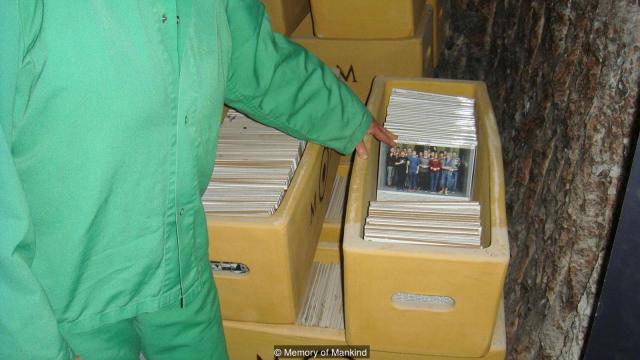
Each of these tablets can hold up to five million characters – about the same as a four-hundred-page book. They are acid- and alkali-resistant and can withstand temperatures of 1300C. A second type of tablet can carry colour pictures and diagrams along with 50,000 characters before being sealed with a transparent glaze.

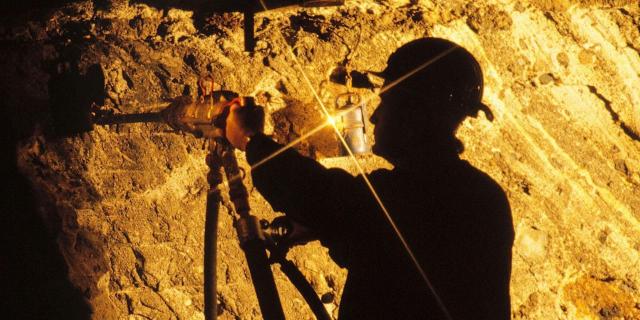
The plates are then stacked inside ceramic boxes and tucked into the dark caverns of a salt mine in Hallstatt, Austria. As a resting place for what could be described as the ultimate time capsule, it is impressive. In the right light the walls still glisten with the remnants of salt, which extracts moisture and desiccates the air.

The salt itself has a Plasticine-like property that helps to seal fractures and cracks, keeping the tomb watertight. Buried beneath millions of tonnes of rock, the records will be able to survive for millennia and perhaps even entire ice ages, Kunze believes.

In some distant future after our own civilisation has vanished, they could prove invaluable to any who find them. They could help resurrect forgotten knowledge for cultures less advanced than our own, or provide a wealth of historical information for more advanced civilisations to ensure our own achievements, and our mistakes, can be learned from.

But it could also have value in the shorter term too.

“We are trying to create something that will not only be a collection of information for a distant future, but it will also be a gift for our grandchildren,” says Kunze. “Memory of Mankind can serve as a backup of knowledge in case of an event like war, a pandemic or a meteorite that throws us back centuries within two or three generations. A society can lose skills and knowledge very quickly – in the 6th Century, Europe largely lost the ability to read and write within three generations.”

Already the Memory of Mankind archive contains an eclectic glimpse of our society. Among the information etched into the ceramic plates are books summarising the history of individual countries around the world. Towns and villages have also opted to include their own local histories. A thousand of the world’s most important books – chosen by combining published lists using an algorithm developed by the University of Vienna – will be cut into the coating on the ceramic plates.

Museums are including images of precious objects in their collections along with descriptions of what we have learned about them. The Krumau Madonna – a sculpture dating to the late 14th Century currently sitting in the Museum of Art History in Vienna – is already there, along with paintings by the Baroque artists Peter Paul Rubens and Anthony van Dyck.

There are plates featuring pictures of fossils – dinosaurs, prehistoric fish and extinct ammonites – alongside a description of what we know about them. Even our current understanding of our own origins are included, with pictures of one of the earliest examples of sculpture ever found – the Venus of Willendorf.
Much of the material included on the tablets is in German, but there are tablets in English, French and other languages.

A handful of celebrities have also found themselves immortalised in the salt-lined vaults. Baywatch star and singer David Hasselhoff has a particularly lengthy entry as does German singer Nena who had a hit with 99 Red Balloons in the 1980s. Nestled among them is a plate detailing the story of Edward Snowden and his leak of classified material from the US National Security Agency.

The University of Vienna has been placing prize winning PhD dissertations and scientific papers onto the tablets. Included in the archive are plates describing genetic modification and bioengineering patents, explaining what today’s scientists have achieved and how they managed it.

And alongside research, everyday objects like washing machines, smartphones and televisions are also being documented as a record of what life is like today.

The plates also serve as a warning for future generations – with sites of nuclear waste dumps pinpointed so future generations might know to avoid them or to clean them up if they have the technology. Newspapers have been asked to send their daily editorials to provide a repository of opinions as well as facts.

In many ways, the real problem is what not to include. “We probably have about 0.1% of the antique literature yet in the modern world publishing is as easy as posting something on the internet or sending a tweet,” explains Kunze. “Publications about science, space flight and medicine – the things we really spend money on – drown in the mass of data we produce. The Large Hadron Collider produces something like 30 Petabytes of data a year, but this is equal to just 0.003% of annual internet traffic. “A random fragment of 0.1% of our present day data will result in a very distorted view of our time.”

To tackle this, Kunze and his colleagues are organising a conference in November next year to bring scientists, historians, archaeologists, linguists and philosophers together to create a blueprint for selecting content for the project. The team also hope to immortalise glimpses of mundane, everyday life as members of the public are encouraged to create tablets of their own. “We are saving cooking recipes and stories of love and personal events,” adds Kunze. “On one plate, a little girl has included three photographs of her confirmation and written a short bit of text about it. They give a glimpse of everyday life that will be very valuable.”

Preserved tweets

Memory of Mankind is not the only project to face the daunting task of preserving humanity’s accumulated knowledge. Librarians around the world are also looking at the knotty problem of how to save the information from the modern age.

The University of California Los Angeles, for instance, is archiving tweets related to major events and preserving them in their own archives. “We are collecting tweets from Cairo on the day of the January 25th revolution for example,” explained Todd Grappone, associate university librarian. “We are then translating them into multiple languages and saving them in file formats that are likely to be robust for the future. We are only doing it digitally at the moment as we have something like 1,000 cellphone videos from that event alone, but the value of that is enormous.”

Another project, called the Human Document Project, is aiming to record information on wafers of tungsten/silicon nitride. Initially they have been etching them with dozens of tiny QR codes – a type of two-dimensional barcode – which can be read using smartphones, but they say the final disks will hold information written in a form that can be read using a microscope.

Leon Abelmann, a researcher at Twente University in Enschede, the Netherlands, is one of the driving forces behind the project. He says that they are hoping to produce something that will be able to survive for one million years and are now starting to collaborate with the Memory of Mankind. “We would be really happy if we found information left for us by an intelligence that has already been extinct for a million years,” he said. “So we think future intelligent beings will be too. The mere fact that we need to take a helicopter view of ourselves will hopefully make us realise that the differences between us are trivial.”

Buried under a mountain, it may seem unlikely that any future generations would be able to find these tablets. For this reason, Memory of Mankind will has engraved some small tokens with a map pinpointing the archives’ location, which they will then bury at strategic places around the world. Other tokens are being entrusted to 50 holders who will pass them onto the next generation.
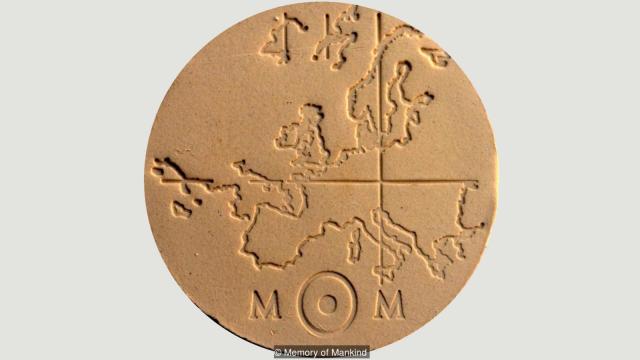
To ensure those who do find it can actually read what is in there, the Memory of Mankind team has been creating their own Rosetta Stone – thousands of images labelled with their names and meanings.

All of which gives a hint at the ambition of what they are trying to do. The individuals who unearth this gold-mine of knowledge could be very different from our own. In a few thousand years civilisation may have advanced beyond our reckoning or descended back to the dark ages. Perhaps it will not even be humans who end up uncovering our memories. “We could be looking at some other form of intelligent life,” adds Kunze.

We will never know what those future archaeologists will make of our civilisation when they wipe the dust away from the tablets in thousands of years’ time, but we can hope that like the ancient Sumarians, we will not be forgotten.

http://www.bbc.com/future/story/20161018-the-worlds-knowledge-is-being-buried-in-a-salt-mine

Thanks to Kebmodee for bringing this to the It’s Interesting community.

A hospital ward in Oregon has been quarantined after 5 people fall ill with mysterious hallucinations

An emergency room in Oregon has been quarantined after five people started experiencing hallucinations that appear to have been spread via touch.

The unidentified condition was first reported at around 3am last Wednesday, when a 54-year-old caregiver in North Bend Oregon phoned police complaining about seven or eight people trying to “take the roof off her vehicle”.

Police investigated her house and couldn’t find any evidence of the crime, but when the caregiver called about the incident again a few hours later, two Sheriff’s deputies escorted her to the nearby Bay Area hospital to be examined for symptoms of hallucinations.

The woman was declared healthy and sent home, but pretty soon, one of the deputies who’d helped out with the case started hallucinating himself.

And then the second deputy, a hospital worker, and the caregiver’s 78-year-old patient also began hallucinating, and were admitted to hospital.

All four had been in physical contact with the caregiver.

A Haz Mat team was deployed to both the hospital and the caregiver’s residence, while the emergency room was emptied and quarantined to check for the source of the unidentified illness. Experts have so far been unable to locate a common source of contamination.

Blood tests of the affected patients also haven’t turned up anything unusual.

Initially, police though that the hallucinations could have been caused by narcotic fentanyl patches, which are prescribed for chronic pain, and were worn by the caregiver’s 78-year-old patient.

But they’ve since ruled that explanation out.

“Investigation has found that all those patches and potential medications that may have caused the symptoms have been accounted for,” Coos County Sheriff’s Office spokesperson Patrick Downing told KVAL News.

“The vehicles, equipment, and uniforms have been checked with no contaminates identified or located on or about them.”

All patients have now been treated, released home, and have reportedly recovered – although the hospital worker is displaying some flu-like symptoms. The quarantine has also been lifted from the hospital.

But the investigation into the source of the hallucinations is ongoing, with police saying that the only thing they suspect for sure is that the illness was spread by direct contact.

However, it’s not yet been ruled out that this isn’t a case of mass hysteria – where many people in contact with each other all start to think they’re suffering from the same physical condition, symptoms, or threat. It’s possible that all these people who came in contact with the caregiver became so anxious that they also started hallucinating.

This is not the first time a mysterious illness has swept through a group of people, either – last year, dozens of children started fainting during a Remembrance Day ceremony in the UK. In that case, the suspected cause appears to have been a simple been a case of heating and widespread panic about children becoming ill.

http://www.sciencealert.com/a-hospital-ward-has-been-quarantined-after-5-people-fall-ill-with-mysterious-hallucinations

Thanks to Kebmodee for bringing this to the attention of the It’s Interesting community.

Teen dies after girlfriend gives fatal hickey

By Cimaron Neugebauer

A 17-year-old has died after a hickey reportedly took his life, according to a local news outlet in Mexico City, Mexico.

Doctors say the teen began having convulsions while at the dinner table eating with his family in Mexico City. Before dinner, Julio Macias Gonzalez had spent the evening with his 24-year-old girlfriend, who is now in hiding.

Medical professionals believe the suction of the hickey resulted in a blood clot for the teen. Doctors believe the blood clot traveled to his brain and caused the fatal stroke.

This isn’t the first time for a passionate kiss on the neck to land someone in the hospital.

In a 2010 case, was reported in a New Zealand Medical Journal where a 44-year-old woman was rushed to the hospital after losing movement in her arm due to a hickey on her neck, Doctors weren’t sure why the woman was having a stroke, but then noticed a bruise on her neck and realized the suction on a major artery created a blood clot, which traveled to her heart, causing a minor stroke.

http://wlos.com/news/offbeat/teen-dies-after-girlfriend-gives-fatal-hickey-lover-now-on-the-run

Thanks to Kebmodee for bringing this to the It’s Interesting community.
John Oliver makes ‘TV history’ by forgiving $15 million in medical debt

by David Goldman

As part of a scathing takedown of the debt-purchasing industry, late night comedian John Oliver forgave nearly $15 million of medical debt with a tap of a giant red button on Sunday night.

Oliver called the giveaway the “largest one-time giveaway in television history.” He just about doubled the value of Oprah Winfrey’s famous “You get a car! You get a car! Everybody gets a car!” giveaway to her entire studio audience in 2004.

The stunt followed a long look at debt collectors on his HBO show “Last Week Tonight,” in which Oliver sharply rebuked debt purchasers for unscrupulous behavior that is limited by hardly any regulatory oversight. (HBO is owned by CNNMoney’s parent company, Time Warner.)

The segment included a hidden camera brought into a Debt Buyers Association conference by “Last Week Tonight” staffers, which showed panelists appearing to scoff at how Americans don’t understand their legal rights about paying their debts.

To further illustrate the lack of regulation and ease at which debt collectors can harass people over money they owe, Oliver said “Last Week Tonight” spent $50 to create its own debt collection agency, based in Mississippi.

“Any idiot can get into it, and I can prove that to you, because I’m an idiot and I started a debt buying company and it was disturbingly easy,” Oliver said.

Oliver named the company “Central Asset Recovery Professionals,” or CARP, “after a bottom-feeding fish.” He appointed himself chairman of the board.

After setting up a bare-bones website, Oliver said CARP was offered a portfolio of nearly $15 million in medical debt for just $60,000. “Last Week Tonight” was able to pay less than half a cent on the dollar for all that debt.

Oliver said CARP could have received a file that included the names, personal addresses and Social Security numbers of nearly 9,000 people who owed the debt it had purchased. He called that fact “absolutely terrifying, because I could legally have CARP take possession of that debt and have employees start calling people turning their lives upside down over medical debt.”

“There would be absolutely nothing wrong with except for the fact that absolutely everything is wrong with that,” Oliver continued. “We need much clearer rules and oversight.”

In the end, Oliver said “Last Week Tonight,” decided to forgive all that debt — not just because “it’s the right thing to do,” but also because it would trump Oprah’s $8 million giveaway.

With the tap of a giant red button, streams of confetti, dramatic music and strobe lights, Oliver transferred the file with the 9,000 debtors’ personal information to RIP Medical Debt, a nonprofit that forgives medical debt with no tax consequences for the debtor.

“It seems to me the least we can do for debt I cannot f—ing believe we’re allowed to own is to give it away,” Oliver said to close his show. “F— you, Oprah. I am the new queen of daytime talk!”

http://money.cnn.com/2016/06/06/technology/john-oliver-medical-debt/

Thanks to Kebmodee for bringing this to the It’s Interesting community.
iPhone device designed by Snowden and Huang to reveal when your phone is secretly transmitting


A mockup of Edward Snowden and Bunnie Huang’s iPhone modification, showing the SIM card slot through which their hardware add-on would access the phone’s antennae to monitor them for errant signals.

By Andy Greenberg

When Edward Snowden met with reporters in a Hong Kong hotel room to spill the NSA’s secrets, he famously asked them put their phones in the fridge to block any radio signals that might be used to silently activate the devices’ microphones or cameras. So it’s fitting that three years later, he’s returned to that smartphone radio surveillance problem. Now Snowden’s attempting to build a solution that’s far more compact than a hotel mini-bar.

On Thursday at the MIT Media Lab, Snowden and well-known hardware hacker Andrew “Bunnie” Huang plan to present designs for a case-like device that wires into your iPhone’s guts to monitor the electrical signals sent to its internal antennas. The aim of that add-on, Huang and Snowden say, is to offer a constant check on whether your phone’s radios are transmitting. They say it’s an infinitely more trustworthy method of knowing your phone’s radios are off than “airplane mode,” which people have shown can be hacked and spoofed. Snowden and Huang are hoping to offer strong privacy guarantees to smartphone owners who need to shield their phones from government-funded adversaries with advanced hacking and surveillance capabilities—particularly reporters trying to carry their devices into hostile foreign countries without constantly revealing their locations.

“One good journalist in the right place at the right time can change history,” Snowden told the MIT Media Lab crowd via video stream. “This makes them a target, and increasingly tools of their trade are being used against them.”1

“They’re overseas, in Syria or Iraq, and those [governments] have exploits that cause their phones to do things they don’t expect them to do,” Huang elaborated to WIRED in an interview ahead of the MIT presentation. “You can think your phone’s radios are off, and not telling your location to anyone, but actually still be at risk.”

Huang’s and Snowden’s solution to that radio-snitching problem is to build a modification for the iPhone 6 that they describe as an “introspection engine.” Their add-on would appear to be little more than an external battery case with a small mono-color screen. But it would function as a kind of miniature, form-fitting oscilloscope: Tiny probe wires from that external device would snake into the iPhone’s innards through its SIM-card slot to attach to test points on the phone’s circuit board. (The SIM card itself would be moved to the case to offer that entry point.) Those wires would read the electrical signals to the two antennas in the phone that are used by its radios, including GPS, Bluetooth, Wi-Fi and cellular modem. And by identifying the signals that transmit those different forms of radio information, the modified phone would warn you with alert messages or an audible alarm if its radios transmit anything when they’re meant to be off. Huang says it could possibly even flip a “kill switch” to turn off the phone automatically.

“Our approach is: state-level adversaries are powerful, assume the phone is compromised,” Huang says. “Let’s look at hardware-related signals that are extremely difficult to fake. We want to give a you-bet-your-life assurance that the phone actually has its radios off when it says it does.”1

You might think you can achieve the same effect by simply turning your iPhone off with its power button, or placing it in a Faraday bag designed to block all radio signals. But Faraday bags can still leak radio information, Huang says, and clever malware can make an iPhone appear to be switched off when it’s not, as Snowden warned in an NBC interview in 2014. Regardless, Huang says their intention was to allow reporters to reliably disable a phone’s radio signals while still using the device’s other functions, like taking notes and photographs or recording audio and video.

Snowden, who performed the work in his capacity as a director of the Freedom of the Press Foundation, adds that their goal isn’t merely just protection for journalists. It’s also detection of otherwise stealthy attacks on phones, the better to expose governments’ use of hidden smartphone surveillance techniques. “You need to be able to increase the costs of getting caught,” Snowden said in a video call with WIRED following the presentation. “All we have to do is get one or two or three big cases where we catch someone red-handed, and suddenly the targeting policies at these intelligence agencies will start to change.”2

The problem, for Snowden, is personal. He tells WIRED he hasn’t carried a smartphone since he first began leaking NSA documents, for fear that its cellular signals could be used to locate him. (He notes that he still hasn’t “seen any indication” that the U.S. government has been able to determine his exact location in Russia.) “Since 2013, I haven’t been able to have a smartphone like normal people,” he says. “Wireless devices are kind of like kryptonite to me.”

Huang and Snowden’s iPhone modification, for now, is little more than a design. The pair has tested their method of picking up the electrical signals sent to an iPhone 6’s antennae to verify that they can spot its different radio messages. But they have yet to even build a prototype, not to mention a product. But on Thursday they released a detailed paper explaining their technique. They say they hope to develop a prototype over the next year and eventually create a supply chain in China of modified iPhones to offer journalists and newsrooms. To head off any potential mistrust of their Chinese manufacturers, Huang says the device’s code and hardware design will be fully open-source.

Huang, who lives in Singapore but travels monthly to meet with hardware manufacturers in Shenzhen, says that the skills to create and install their hardware add-on are commonplace in mainland China’s thriving iPhone repair and modification markets. “This is definitely something where, if you’re the New York Times and you want to have a pool of four or five of these iPhones and you have a few hundred extra dollars to spent on them, we could do that.” says Huang. “The average [DIY enthusiast] in America would think this is pretty fucking crazy. The average guy who does iPhone modifications in China would see this and think it’s not a problem.”
The two collaborators have never met face-to-face. Snowden says he first met Huang after recommending him to television producers at Vice, who were looking for hardware hacking experts. “He’s one of the hardware researchers I respect the most in the world,” Snowden says. In late 2015, they began talking via the encrypted communications app Signal about Snowden’s idea of building an altered phone to protect journalists from advanced attacks that could compromise their location.

Huang insists that Snowden’s focus for the project from the beginning has been protecting that breed of vulnerable reporters, not from the NSA, but from foreign governments that are increasingly able to buy zero-day vulnerability information necessary to compromise even hard-to-hack targets like the iPhone. As a case study, they point in their paper to the story of Marie Colvin, the recently murdered American war correspondent whose family is suing Syria’s government; Colvin’s family claims she was tracked based on her electronic communications and killed in a targeted bombing by the country’s brutal Assad regime for reporting on civilian casualties.

Huang says he’s tried to develop the most no-frills protection possible that still meets Snowden’s rightfully paranoid standards. “If it wasn’t for the fact that Snowden is involved, I think this would seem pretty mundane,” Huang says almost bashfully. “My solution is simple. But it helps an important group of people.”

https://www.wired.com/2016/07/snowden-designs-device-warn-iphones-radio-snitches/#slide-1

Thanks to Kebmodee for bringing this to the It’s Interesting community.

Microbes in our guts have been with us for millions of years

By Ann Gibbons

Humans did not evolve alone. Tens of trillions of microbes have followed us on our journey from prehistoric ape, evolving with us along the way, according to a new study. But the work also finds that we’ve lost some of the ancient microbes that still inhabit our great ape cousins, which could explain some human diseases and even obesity and mental disorders.

Researchers have known for some time that humans and the other great apes harbor many types of bacteria, especially in their guts, a collection known as the microbiome. But where did these microbes come from: our ancient ancestors, or our environment? A study of fecal bacteria across all mammals suggested that the microbes are more likely to be inherited than acquired from the environment. But other studies have found that diet plays a major role in shaping the bacteria in our guts.

To solve the mystery, Andrew Moeller turned to wild apes. As part of his doctoral dissertation, the evolutionary biologist, now a postdoc at the University of California, Berkeley, studied gut bacteria isolated from fecal samples from 47 chimpanzees from Tanzania, 24 bonobos from the Democratic Republic of the Congo, 24 gorillas from Cameroon, and 16 humans from Connecticut. In these samples, he and colleagues at the University of Texas (UT), Austin, compared the DNA sequences of a single rapidly evolving gene that is common in the gut bacteria in apes, including humans. They then sorted the different DNA gene sequences into family trees.

It turns out that most of our gut microbes have been evolving with us for a long time. Moeller found that two of three major families of gut bacteria in apes and humans trace their origins to a common ancestor more than 15 million years ago, not primarily to bugs picked up from their environment. But as the different species of apes diverged from this ancestor, their gut bacteria also split into new strains, and coevolved in parallel (a process known as cospeciation) to adapt to differences in the diets, habitats, and diseases in the gastrointestinal tracts of their hosts, the team reports today in Science. Today, these microbes are finely adapted to help train our immune systems, guide the development of our intestines, and even modulate our moods and behaviors.

“It’s surprising that our gut microbes, which we could get from many sources in the environment, have actually been coevolving inside us for such a long time,” says project leader Howard Ochman, an evolutionary biologist at UT Austin.

After the ape species diverged, some also lost distinct strains of bacteria that persisted in other primates, likely another sign of adaptation in the host, the team found.

In a final experiment, the researchers probed deeper into the human microbiome. They compared the same DNA sequence they had analyzed in all of the apes, but this time between the people from Connecticut and people from Malawi. They found that the bacterial strains from these Africans diverged from those of the Americans about 1.7 million years ago, which corresponds with the earliest exodus of human ancestors out of Africa. This suggests that gut bacteria can be used to trace early human and animal migrations, Moeller says. Interestingly, the Americans lacked some of the strains of bacteria found in Malawians—and in gorillas and chimps—which fits with the general reduction in gut microbiome diversity that has been observed in people in industrialized societies, perhaps because of changes in diet and the use of antibiotics.

The work “represents a significant step in understanding human microbiota coevolutionary history,” says Justin Sonnenburg of Stanford University in Palo Alto, California, who was not involved with the research. “It elegantly shows that gut microbes are passed vertically, between generations over millions of years.” Microbiologist Martin Blaser of New York University in New York City agrees: “The path of transmission was from mom apes to baby apes for hundreds of thousands of generations at least.”

But the extinction of some strains of bacteria that persist in other apes but not humans raises a red flag for our health. “What happens if a human mom takes antibiotic when she’s pregnant? What happens if she takes it at the moment of delivery?” Blaser asks.

“We are coming to understand how fundamental our gut microbes are for health,” Sonnenburg says. “These findings have huge implications for how we should pursue understanding what a truly healthy microbiome looks like.”

http://www.sciencemag.org/news/2016/07/microbes-our-guts-have-been-us-millions-years

Thanks to Kebmodee for bringing this to the It’s Interesting community.