Wife crashes her own funeral, horrifying her husband, who had paid to have her killed

By Sarah Kaplan

Noela Rukundo sat in a car outside her home in Melbourne, Australia, watching as the last few mourners filed out. They were leaving a funeral — her funeral.

Finally, she spotted the man she’d been waiting for. She stepped out of her car, and her husband put his hands on his head in horror.

“Is it my eyes?” she recalled him saying. “Is it a ghost?”

“Surprise! I’m still alive!” she replied.

Far from being elated, the man looked terrified. Five days earlier, he had ordered a team of hit men to kill Rukundo, his partner of 10 years. And they did — well, they told him they did. They even got him to pay an extra few thousand dollars for carrying out the crime.

Now here was his wife, standing before him. In an interview with the BBC on Thursday, Rukundo recalled how he touched her shoulder to find it unnervingly solid. He jumped. Then he started screaming.

“I’m sorry for everything,” he wailed.

But it was far too late for apologies; Rukundo called the police. The husband, Balenga Kalala, ultimately pleaded guilty and was sentenced to nine years in prison for incitement to murder.

The happy ending — or as happy as can be expected to a saga in which a man tries to have his wife killed — was made possible by three unusually principled hit men, a helpful pastor and one incredibly gutsy woman: Rukundo.

Here is how she pulled it off.

Rukundo’s ordeal began almost exactly a year ago, when she flew from her home in Melbourne with her husband, Kalala, to attend a funeral in her native Burundi. Her stepmother had died, and the service left her saddened and stressed. She retreated to her hotel room in Bujumbura, the capital, early in the evening; despondent after the events of the day, she lay down in bed. Then her husband called.

“He told me to go outside for fresh air,” she told the BBC.

But the minute Rukundo stepped out of her hotel, a man charged forward, pointing a gun right at her.

“Don’t scream,” she recalled him saying. “If you start screaming, I will shoot you. They’re going to catch me, but you? You will already be dead.”

Rukundo, terrified, did as she was told. She was ushered into a car and blindfolded so she couldn’t see where she was being taken. After 30 or 40 minutes, the car came to a stop, and Rukundo was pushed into a building and tied to a chair.

She could hear male voices, she told the ABC. One asked her, “You woman, what did you do for this man to pay us to kill you?”

“What are you talking about?” Rukundo demanded.

“Balenga sent us to kill you.”

They were lying. She told them so. And they laughed.

“You’re a fool,” they told her.

There was the sound of a dial tone, and a male voice coming through a speakerphone. It was her husband’s voice.

“Kill her,” he said.

And Rukundo fainted.

Rukundo had met her husband 11 years earlier, right after she arrived in Australia from Burundi, according to the BBC. He was a recent refugee from Congo, and they had the same social worker at the resettlement agency that helped them get on their feet. Since Kalala already knew English, their social worker often recruited him to translate for Rukundo, who spoke Swahili.

They fell in love, moved in together in the Melbourne suburb of Kings Park, and had three children (Rukundo also had five kids from a previous relationship). She learned more about her husband’s past — he had fled a rebel army that had ransacked his village, killing his wife and young son. She also learned more about his character.

“I knew he was a violent man,” Rukundo told the BBC. “But I didn’t believe he can kill me.”

But, it appeared, he could.

Rukundo came to in the strange building somewhere near Bujumbura. The kidnappers were still there, she told the ABC.

They weren’t going to kill her, the men then explained — they didn’t believe in killing women, and they knew her brother. But they would keep her husband’s money and tell him that she was dead. After two days, they set her free on the side of a road, but not before giving her a cellphone, recordings of their phone conversations with Kalala, and receipts for the $7,000 in Australian dollars they allegedly received in payment, according to Australia’s The Age newspaper.

“We just want you to go back, to tell other stupid women like you what happened,” Rukundo said she was told before the gang members drove away.

Shaken, but alive and doggedly determined, Rukundo began plotting her next move. She sought help from the Kenyan and Belgian embassies to return to Australia, according to The Age. Then she called the pastor of her church in Melbourne, she told the BBC, and explained to him what had happened. Without alerting Kalala, the pastor helped her get back home to her neighborhood near Melbourne.

Meanwhile, her husband had told everyone she had died in a tragic accident and the entire community mourned her at her funeral at the family home. On the night of Feb. 22, 2015, just as the widower Kalala waved goodbye to neighbors who had come to comfort him, Rukundo approached him, the very man whose voice she’d heard over the phone five days earlier, ordering that she be killed.

“I felt like somebody who had risen again,” she told the BBC.

Though Kalala initially denied all involvement, Rukundo got him to confess to the crime during a phone conversation that was secretly recorded by police, according to The Age.

“Sometimes Devil can come into someone, to do something, but after they do it they start thinking, ‘Why I did that thing?’ later,” he said, as he begged her to forgive him.

Kalala eventually pleaded guilty to the scheme. He was sentenced to nine years in prison by a judge in Melbourne.

“Had Ms. Rukundo’s kidnappers completed the job, eight children would have lost their mother,” Chief Justice Marilyn Warren said, according to the ABC. “It was premeditated and motivated by unfounded jealousy, anger and a desire to punish Ms. Rukundo.”

Rukundo said that Kalala tried to kill her because he thought she was going to leave him for another man — an accusation she denies.

But her trials are not yet over. Rukundo told the ABC she’s gotten backlash from Melbourne’s Congolese community for reporting Kalala to the police. Someone left threatening messages for her, and she returned home one day to find her back door broken. She now has eight children to raise alone and has asked the Department of Human Services to help her find a new place to live.

And lying in bed at night, Kalala’s voice still comes to her: “Kill her, kill her,” she told the BBC. “Every night, I see what was happening in those two days with the kidnappers.”

Despite all that, “I will stand up like a strong woman,” she said. “My situation, my past life? That is gone. I’m starting a new life now.”

https://www.washingtonpost.com/news/morning-mix/wp/2016/02/05/wife-crashes-her-own-funeral-horrifying-her-husband-who-had-paid-have-her-killed/

Risk of suicide increases 3X after a concussion

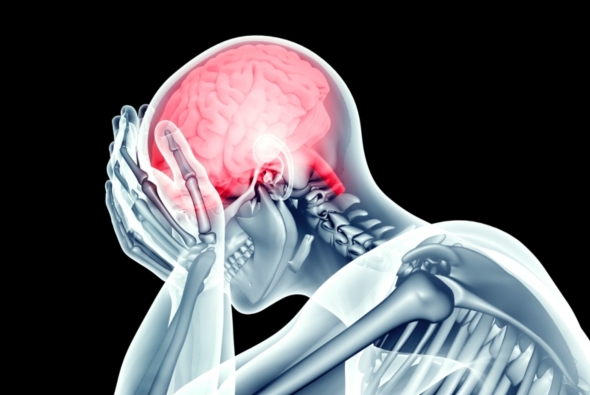
New research published in the Canadian Medical Association Journal shows that even mild concussions sustained in ordinary community settings might be more detrimental than anyone anticipated; the long-term risk of suicide increases threefold in adults if they have experienced even one concussion. That risk increases by a third if the concussion is sustained on a weekend instead of a weekday—suggesting recreational concussions are riskier long-term than those sustained on the job.

“The typical patient I see is a middle-aged adult, not an elite athlete,” says Donald Redelmeier, a senior scientist at the University of Toronto and one of the study’s lead authors. “And the usual circumstances for acquiring a concussion are not while playing football; it is when driving in traffic and getting into a crash, when missing a step and falling down a staircase, when getting overly ambitious about home repairs—the everyday activities of life.”

Redelmeier and his team wanted to examine the risks of the concussions acquired under those circumstances. They identified nearly a quarter of a million adults in Ontario who were diagnosed with a mild concussion over a timespan of 20 years—severe cases that resulted in hospital admission were excluded from the study—and tracked them for subsequent mortality due to suicide. It turned out that more than 660 suicides occurred among these patients, equivalent to 31 deaths per 100,000 patients annually—three times the population norm. On average, suicide occurred almost six years after the concussion. This risk was found to be independent of demographics or previous psychiatric conditions, and it increased with additional concussions.

For weekend concussions, the later suicide risk increased to four times the norm. Redelmeier and his fellow researchers had wondered whether the risk would differ between occupational and recreational concussions. They did not have information about how the concussions happened, so they used day of the week as a proxy. Although they do not know why weekend risk is indeed higher, they suspect it may be because on weekends medical staff may not be as available or accessible or people may not seek immediate care.

Although the underlying causes of the connection between concussion and suicide are not yet known, Redelmeier says that there were at least three potential explanations. A concussion may be a marker but not necessarily a mechanism of subsequent troubles—or, in other words, people who sustain concussions may already have baseline life imbalances that increase their risks for depression and suicide. “But we also looked at the subgroup of patients who had no past psychiatric history, no past problems, and we still found a significant increase in risk. So I don’t think that’s the entire story,” he notes. One of the more likely explanations, he says, is that concussion causes brain injury such as inflammation (as has been found in some studies) from which the patient may never fully recover. Indeed, a study conducted in 2014 found that sustaining a head injury leads to a greater risk of mental illness later in life. The other possibility is that some patients may not give themselves enough time to get better before returning to an ordinary schedule, leading to strain, frustration and disappointment—which, in turn, may result in depression and ultimately even suicide.

Lea Alhilali, a physician and researcher at the Barrow Neurological Institute who did not participate in this study, uses diffusion tensor imaging (an MRI technique) to measure the integrity of white matter in the brain. Her team has found similarities between white matter degeneration patterns in patients with concussion-related depression and noninjured patients with major depressive disorder—particularly in the nucleus accumbens, or the “reward center” of the brain. “It can be difficult to tease out what’s related to an injury and what’s related to the circumstances surrounding the trauma,” Alhilali says. “There could be PTSD, loss of job, orthopedic injuries that can all influence depression. But I do believe there’s probably an organic brain injury.”

Alhilali points to recent studies on chronic traumatic encephalopathy (CTE), a progressive degenerative brain disease associated with repeated head traumas. Often linked to dementia, depression, loss of impulse control and suicide, CTE was recently diagnosed in 87 of 91 deceased NFL players. Why, then, she says, should we not suspect that concussion causes other brain damage as well?

This new study may only represent the tip of the iceberg. “We’re only looking at the most extreme outcomes, at taking your own life,” Redelmeier says. “But for every person who dies from suicide, there are many others who attempt suicide, and hundreds more who think about it and thousands more who suffer from depression.”

More research needs to be done; this study was unable to take into account the exact circumstances under which the concussions were sustained. Redelmeier’s research examined only the records of adults who sought medical attention, it did not include more severe head injuries that required hospitalization or extensive emergency care. To that extent, his findings may have underestimated the magnitude of the absolute risks at hand.

Yet many people are not aware of these risks.

Redelmeier is adamant that people should take concussions seriously. “We need to do more research about prevention and recovery,” he says. “But let me at least articulate three things to do: One, give yourself permission to get some rest. Two, when you start to feel better, don’t try to come back with a vengeance. And three, even after you’re feeling better, after you’ve rested properly, don’t forget about it entirely. If you had an allergic reaction to penicillin 15 years ago, you’d want to mention that to your doctor and have it as a permanent part of your medical record. So, too, if you’ve had a concussion 15 years ago.”

http://www.scientificamerican.com/article/a-single-concussion-may-triple-the-long-term-risk-of-suicide1/

Why do older white men have higher risk of suicide?

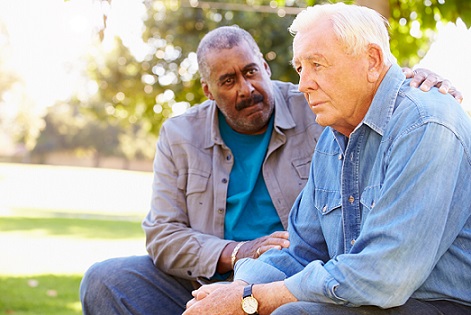
Older men of European descent (white men) have significantly higher suicide rates than any other demographic group in the United States, including older women across ethnicities and older men of African, Latino, or Indigenous decent, according to research published in Men and Masculinities.

In her latest addition to suicide research, Silvia Sara Canetto, PhD, professor in the Department of Psychology at Colorado State University, has found that older white men have higher suicide rates yet fewer burdens associated with aging. They are less likely to experience widowhood, have better physical health and fewer disabilities than older women, and have more economic resources than older women across ethnicities and ethnic minority older men.

Rather than being due to physical aging adversities, therefore, increased suicide rates among older white men in the United States may be because they are less psychologically equipped to deal with the normal challenges of aging; likely because of their privilege until late adulthood, Dr Canetto asserted.
Another important factor in white men’s vulnerability to suicide once they reach late life may be dominant cultural scripts of masculinity, aging, and suicide, Dr Canetto said. A particularly damaging cultural script may be the belief that suicide is a masculine response to “the indignities of aging.” This idea implies that suicide is justified or even glorified among men.

To illustrate these cultural scripts, Dr Canetto examined two famous suicide cases and their accompanying media coverage. The founder of Kodak, George Eastman, died of suicide at age 77. His biographer said that Eastman was “unprepared and unwilling to face the indignities of old age.”

American journalist and author Hunter S. Thompson died of suicide in 2005 at age 67, and was described by friends as having triumphed over “the indignities of aging.” Both of these suicides were covered in the press through scripts of conventional “white” masculinity, Dr Canetto stated. “The dominant story was that their suicide was a rational, courageous, powerful choice,” she said in a statement.

Canetto’s research challenges the idea that high suicide rates are inevitable among older white men. Canetto notes that older men are not the most suicide-prone group everywhere in the world; in China, for example, women at reproductive age are the demographic with the highest rate of suicide. This is additional evidence that suicide in older white men is culturally determined and thus preventable.

Dr Canetto’s research shows that cultural scripts may offer a new way of understanding and preventing suicide. The “indignities of aging” suicide script and the belief that suicide is a masculine, powerful response to aging can and should be challenged, Dr Canetto said.

Canetto SS. Suicide: Why Are Older Men So Vulnerable? Men Masc. 2015; doi:10.1177/1097184X15613832.

Direct brain to brain communication

By Jerry Adler
SMITHSONIAN MAGAZINE

Telepathy, 2015: At the Center for Sensorimotor Neural Engineering of the University of Washington, a young woman dons an electroencephalogram cap, studded with electrodes that can read the minute fluctuations of voltage across her brain. She is playing a game, answering questions by turning her gaze to one of two strobe lights labeled “yes” and “no.” The “yes” light is flashing at 13 times a second, the “no” at 12, and the difference is too small for her to perceive, but sufficient for a computer to detect in the firing of neurons in her visual cortex. If the computer determines she is looking at the “yes” light, it sends a signal to a room in another building, where another woman is sitting with a magnetic coil positioned behind her head. A “yes” signal activates the magnet, causing a brief disturbance in the second subject’s visual field, a virtual flash (a “phosphene”) that she describes as akin to the appearance of heat lightning on the horizon. In this way, the first woman’s answers are conveyed to another person across the campus, going “Star Trek” one better: exchanging information between two minds that aren’t even in the same place.

For nearly all of human history, only the five natural senses were known to serve as a way into the brain, and language and gesture as the channels out. Now researchers are breaching those boundaries of the mind, moving information in and out and across space and time, manipulating it and potentially enhancing it. This experiment and others have been a “demonstration to get the conversation started,” says researcher Rajesh Rao, who conducted it along with his colleague Andrea Stocco. The conversation, which will likely dominate neuroscience for much of this century, holds the promise of new technology that will dramatically affect how we treat dementia, stroke and spinal cord injuries. But it will also be about the ethics of powerful new tools to enhance thinking, and, ultimately, the very nature of consciousness and identity.

That new study grew out of Rao’s work in “brain-computer interfaces,” which process neural impulses into signals that can control external devices. Using an EEG to control a robot that can navigate a room and pick up objects—which Rao and his colleagues demonstrated as far back as 2008—may be commonplace someday for quadriplegics.

In what Rao says was the first instance of a message sent directly from one human brain to another, he enlisted Stocco to help play a basic “Space Invaders”-type game. As one person watched the attack on a screen and communicated by using only thought the best moment to fire, the other got a magnetic impulse that caused his hand, without conscious effort, to press a button on a keyboard. After some practice, Rao says, they got quite good at it.

“That’s nice,” I said, when he described the procedure to me. “Can you get him to play the piano?”

Rao sighed. “Not with anything we’re using now.”

For all that science has studied and mapped the brain in recent decades, the mind remains a black box. A famous 1974 essay by the philosopher Thomas Nagel asked, “What Is It Like to Be a Bat?” and concluded that we will never know; another consciousness—another person’s, let alone a member of another species—can never be comprehended or accessed. For Rao and a few others to open that door a tiny crack, then, is a notable achievement, even if the work has mostly underscored how big a challenge it is, both conceptually and technologically.

The computing power and the programming are up to the challenge; the problem is the interface between brain and computer, and especially the one that goes in the direction from computer to brain. How do you deliver a signal to the right group of nerve cells among the estimated 86 billion in a human brain? The most efficient approach is an implanted transceiver that can be hard-wired to stimulate small regions of the brain, even down to a single neuron. Such devices are already in use for “deep brain stimulation,” a technique for treating patients with Parkinson’s and other disorders with electrical impulses. But it’s one thing to perform brain surgery for an incurable disease, and something else to do it as part of an experiment whose benefits are speculative at best.

So Rao used a technique that does not involve opening the skull, a fluctuating magnetic field to induce a tiny electric current in a region of the brain. It appears to be safe—his first volunteer was his collaborator, Stocco—but it is a crude mechanism. The smallest area that can be stimulated in this way, Rao says, is not quite half an inch across. This limits its application to gross motor movements, such as hitting a button, or simple yes-or-no communication.

Another way to transmit information, called focused ultrasound, appears to be capable of stimulating a region of the brain as small as a grain of rice. While the medical applications for ultrasound, such as imaging and tissue ablation, use high frequencies, from 800 kilohertz up to the megahertz range, a team led by Harvard radiologist Seung-Schik Yoo found that a frequency of 350 kilohertz works well, and apparently safely, to send a signal to the brain of a rat. The signal originated with a human volunteer outfitted with an EEG, which sampled his brainwaves; when he focused on a specific pattern of lights on a computer screen, a computer sent an ultrasound signal to the rat, which moved his tail in response. Yoo says the rat showed no ill effects, but the safety of focused ultrasound on the human brain is unproven. Part of the problem is that, unlike magnetic stimulation, the mechanism by which ultrasound waves—a form of mechanical energy—creates an electric potential isn’t fully understood. One possibility is that it operates indirectly by “popping” open the vesicles, or sacs, within the cells of the brain, flooding them with neurotransmitters, like delivering a shot of dopamine to exactly the right area. Alternatively, the ultrasound could induce cavitation—bubbling—in the cell membrane, changing its electrical properties. Yoo suspects that the brain contains receptors for mechanical stimulation, including ultrasound, which have been largely overlooked by neuroscientists. Such receptors would account for the phenomenon of “seeing stars,” or flashes of light, from a blow to the head, for instance. If focused ultrasound is proven safe, and becomes a feasible approach to a computer-brain interface, it would open up a wide range of unexplored—in fact, barely imagined—possibilities.

Direct verbal communication between individuals—a more sophisticated version of Rao’s experiment, with two connected people exchanging explicit statements just by thinking them—is the most obvious application, but it’s not clear that a species possessing language needs a more technologically advanced way to say “I’m running late,” or even “I love you.” John Trimper, an Emory University doctoral candidate in psychology, who has written about the ethical implications of brain-to-brain interfaces, speculates that the technology, “especially through wireless transmissions, could eventually allow soldiers or police—or criminals—to communicate silently and covertly during operations.” That would be in the distant future. So far, the most content-rich message sent brain-to-brain between humans traveled from a subject in India to one in Strasbourg, France. The first message, laboriously encoded and decoded into binary symbols by a Barcelona-based group, was “hola.” With a more sophisticated interface one can imagine, say, a paralyzed stroke victim communicating to a caregiver—or his dog. Still, if what he’s saying is, “Bring me the newspaper,” there are, or will be soon, speech synthesizers—and robots—that can do that. But what if the person is Stephen Hawking, the great physicist afflicted by ALS, who communicates by using a cheek muscle to type the first letters of a word? The world could surely benefit from a direct channel to his mind.

Maybe we’re still thinking too small. Maybe an analog to natural language isn’t the killer app for a brain-to-brain interface. Instead, it must be something more global, more ambitious—information, skills, even raw sensory input. What if medical students could download a technique directly from the brain of the world’s best surgeon, or if musicians could directly access the memory of a great pianist? “Is there only one way of learning a skill?” Rao muses. “Can there be a shortcut, and is that cheating?” It doesn’t even have to involve another human brain on the other end. It could be an animal—what would it be like to experience the world through smell, like a dog—or by echolocation, like a bat? Or it could be a search engine. “It’s cheating on an exam if you use your smartphone to look things up on the Internet,” Rao says, “but what if you’re already connected to the Internet through your brain? Increasingly the measure of success in society is how quickly we access, digest and use the information that’s out there, not how much you can cram into your own memory. Now we do it with our fingers. But is there anything inherently wrong about doing it just by thinking?”

Or, it could be your own brain, uploaded at some providential moment and digitally preserved for future access. “Let’s say years later you have a stroke,” says Stocco, whose own mother had a stroke in her 50s and never walked again. “Now, you go to rehab and it’s like learning to walk all over again. Suppose you could just download that ability into your brain. It wouldn’t work perfectly, most likely, but it would be a big head start on regaining that ability.”

Miguel Nicolelis, a creative Duke neuroscientist and a mesmerizing lecturer on the TED Talks circuit, knows the value of a good demonstration. For the 2014 World Cup, Nicolelis—a Brazilian-born soccer aficionado—worked with others to build a robotic exoskeleton controlled by EEG impulses, enabling a young paraplegic man to deliver the ceremonial first kick. Much of his work now is on brain-to-brain communication, especially in the highly esoteric techniques of linking minds to work together on a problem. The minds aren’t human ones, so he can use electrode implants, with all the advantages that conveys.

One of his most striking experiments involved a pair of lab rats, learning together and moving in synchrony as they communicated via brain signals. The rats were trained in an enclosure with two levers and a light above each. The left- or right-hand light would flash, and the rats learned to press the corresponding lever to receive a reward. Then they were separated, and each fitted with electrodes to the motor cortex, connected via computers that sampled brain impulses from one rat (the “encoder”), and sent a signal to a second (the “decoder”). The “encoder” rat would see one light flash—say, the left one—and push the left-hand lever for his reward; in the other box, both lights would flash, so the “decoder” wouldn’t know which lever to push—but on receiving a signal from the first rat, he would go to the left as well.

Nicolelis added a clever twist to this demonstration. When the decoder rat made the correct choice, he was rewarded, and the encoder got a second reward as well. This served to reinforce and strengthen the (unconscious) neural processes that were being sampled in his brain. As a result, both rats became more accurate and faster in their responses—“a pair of interconnected brains…transferring information and collaborating in real time.” In another study, he wired up three monkeys to control a virtual arm; each could move it in one dimension, and as they watched a screen they learned to work together to manipulate it to the correct location. He says he can imagine using this technology to help a stroke victim regain certain abilities by networking his brain with that of a healthy volunteer, gradually adjusting the proportions of input until the patient’s brain is doing all the work. And he believes this principle could be extended indefinitely, to enlist millions of brains to work together in a “biological computer” that tackled questions that could not be posed, or answered, in binary form. You could ask this network of brains for the meaning of life—you might not get a good answer, but unlike a digital computer, “it” would at least understand the question. At the same time, Nicolelis criticizes efforts to emulate the mind in a digital computer, no matter how powerful, saying they’re “bogus, and a waste of billions of dollars.” The brain works by different principles, modeling the world by analogy. To convey this, he proposes a new concept he calls “Gödelian information,” after the mathematician Kurt Gödel; it’s an analog representation of reality that cannot be reduced to bytes, and can never be captured by a map of the connections between neurons (“Upload Your Mind,” see below). “A computer doesn’t generate knowledge, doesn’t perform introspection,” he says. “The content of a rat, monkey or human brain is much richer than we could ever simulate by binary processes.”

The cutting edge of this research involves actual brain prostheses. At the University of Southern California, Theodore Berger is developing a microchip-based prosthesis for the hippocampus, the part of the mammal­ian brain that processes short-term impressions into long-term memories. He taps into the neurons on the input side, runs the signal through a program that mimics the transformations the hippocampus normally performs, and sends it back into the brain. Others have used Berger’s technique to send the memory of a learned behavior from one rat to another; the second rat then learned the task in much less time than usual. To be sure, this work has only been done in rats, but because degeneration of the hippocampus is one of the hallmarks of dementia in human beings, the potential of this research is said to be enormous.

Given the sweeping claims for the future potential of brain-to-brain communication, it’s useful to list some of the things that are not being claimed. There is, first, no implication that humans possess any form of natural (or supernatural) telepathy; the voltages flickering inside your skull just aren’t strong enough to be read by another brain without electronic enhancement. Nor can signals (with any technology we possess, or envision) be transmitted or received surreptitiously, or at a distance. The workings of your mind are secure, unless you give someone else the key by submitting to an implant or an EEG. It is, however, not too soon to start considering the ethical implications of future developments, such as the ability to implant thoughts in other people or control their behavior (prisoners, for example) using devices designed for those purposes. “The technology is outpacing the ethical discourse at this time,” Emory’s Trimper says, “and that’s where things get dicey.” Consider that much of the brain traffic in these experiments—and certainly anything like Nicolelis’ vision of hundreds or thousands of brains working together—involves communicating over the Internet. If you’re worried now about someone hacking your credit card information, how would you feel about sending the contents of your mind into the cloud?There’s another track, though, on which brain-to-brain communication is being studied. Uri Hasson, a Princeton neuroscientist, uses functional magnetic resonance imaging to research how one brain influences another, how they are coupled in an intricate dance of cues and feedback loops. He is focusing on a communication technique that he considers far superior to EEGs used with transcranial magnetic stimulation, is noninvasive and safe and requires no Internet connection. It is, of course, language.

Read more: http://www.smithsonianmag.com/innovation/why-brain-brain-communication-no-longer-unthinkable-180954948/#y1xADWfAk1VkKIJc.99

Alligator eats burglary suspect hiding from cops


Investigators have identified the remains of a suspected burglar who was killed by an alligator. Police say it appears 22-year-old Matthew Riggins was hiding from law enforcement when the incident occurred.

Brevard County deputies have determined that Matthew Riggins, 22, was killed by an alligator in Barefoot Bay lake on Nov. 23 while possibly hiding to avoid law enforcement.

Investigators say that Riggins had told his girlfriend he would be in Barefoot Bay to commit burglaries with another suspect who is now in custody but not cooperating with officials, according to Maj. Tod Goodyear with BCSO.

Deputies responded to calls in Barefoot Bay on Nov. 13 that there were two men dressed in black walking behind area houses, who ran from responding officers. Later that day, Riggins was reported missing to the Palm Bay Police Department.

Police searching the area reported hearing “yelling” but could not determine the source that night, Goodyear said. Ten days later, Riggins’ body was found in the lake.

Sheriff’s dive team members encountered an 11-foot alligator behaving aggressively while recovering the body, according to BCSO.

“When the body was found, it had injuries that were consistent with an alligator attack,” Goodyear said. “We had trappers euthanize the gator and when we opened it up, there were some remains inside that were consistent with injuries found on the body.”

Riggins died from drowning and bites were discovered along his legs and body that led investigators to determine he had been dragged underwater by the massive animal.

http://www.usatoday.com/story/news/nation-now/2015/12/08/alligator-kills-florida-burglary-suspect-hiding-cops/76966512/

New research suggests that male brains may be wired to prioritize sex over food.

According to a new study, the male brain contains two extra cells that can cause men to seek out sex as a priority, even over food. Female brains do not contain these cells.

The research, conducted by scientists at University College London, may have been carried out on tiny transparent worms, but co-author Professor Scott Emmons has insisted the findings offer an insight into human sex habits.

“Though the work is carried out in a small worm, it nevertheless gives us a perspective that helps us appreciate and possibly understand the variety of human sexuality, sexual orientation, and gender identification,” he said, according to The Telegraph.

“Although we have not looked in humans, it is plausible that the male human brain has types of neurons that the female brain doesn’t, and vice versa. This may change how the two sexes perceive the world and their behavioural priorities.”

The researchers studied the brains and behaviours of Caenorhabditis elegans – small soil-dwelling worms that grow to 1mm long – to draw their conclusions.

The worm species is made up of two sexes: males and hermaphrodites. Scientists consider the latter “modified females” that do not need to have sex in order to reproduce.

Caenorhabditis elegans are often used in studies relevant to human biology and disease as they contain many of the same genes that humans do.

After recently discovering that the male worms contained two extra brain cells, the researchers wanted to find out what impact this could have on their behaviour.

They conditioned the worms in a controlled environment so that they would associate the appearance of salt with starvation.

Over the course of the experiment, the worms began to move away from the salt.

However, when salt was present at the same time as a potential mate, the male worms risked getting close to the salt in order to advance sexually.

In contrast the hermaphrodite worms continued to move away from the salt.

The study, published in the online journal Nature, concludes that male brains may be genetically wired to prioritise sex over food.

This isn’t the first study to suggest men and women’s brains may be wired differently.

In 2013, a study from the University of Pennsylvania found that men generally have more connections within each hemisphere of the brain, while in women the two halves of the brain are much more interlinked.

The scientists concluded that male brains are mainly configured to co-ordinate perception and action, while women’s are more geared up to integrate “heart and mind” thought processes, linking analytical and intuitive reasoning.

http://www.huffingtonpost.co.uk/2015/10/15/male-brain-prioritise-sex-over-food_n_8300240.html

Man gets married an hour after receiving 40 year prison sentence.

By Rich Cholodofsky

A Monessen man convicted of the robbery and assault of a 91-year-old Rostraver woman was sentenced Thursday to serve up to 40 years in prison. About an hour later, Greg Howard appeared in another Westmoreland County courtroom to marry his girlfriend.

Howard, 47, had nothing to say standing before Judge Rita Hathaway as she ordered that he spend at least 20 years behind bars for the October 2014 home invasion that left Frances Tekavec severely injured and her savings stolen. He was given credit for the time he has served in jail since early November.

“Thank God she is here today and didn’t die in the incident,” Hathaway said.

Howard’s silence was in sharp contrast to his demeanor during the three-day trial in July in which he served as his own lawyer. Howard gave a rambling closing argument during the trial, referencing Santa Claus, the tooth fairy, the Easter bunny and other cultural icons. It took jurors 43 minutes to convict Howard of robbery, aggravated assault and conspiracy.

During the trial, prosecutors said Howard and two other men broke into Tekavec’s home. The men used a Levin’s furniture truck as a ruse to get into the home by asking her to sign a fake delivery receipt, according to trial testimony. Witnesses said they took $13,000 and jewelry and left Tekavec lying on her bed with her ankles and wrists bound.

Tekavec identified Howard as one of her attackers. She made no comment in court on Thursday, but Hathaway read a letter she wrote about the impact of the crime.

In the letter, Tekavec said she is now confined to a wheelchair, and because of the injuries she suffered in the attack, she is in constant pain and is restricted from performing basic personal chores, such as brushing her hair.

“Certainly there are very serious effects she has suffered because of the crime committed against her,” Hathaway said.

Defense attorney Tim Dawson asked that Howard receive concurrent sentences because two other men were more responsible for the violence.

Charges are pending against co-defendants Lamont Dixon, 35, and Branddon Danilchak, 28.

Howard was allowed to wear civilian clothing in court instead of a prison jumpsuit. Deputies said Howard remained shackled during a brief wedding ceremony later in the afternoon presided over by Judge Richard E. McCormick Jr.

The ceremony was attended by five deputies and the bride’s baby, who was born last month.

Read more: http://triblive.com/news/westmoreland/9191589-74/howard-gets-prison#ixzz3nbzLDYFm

German woman who was thought to be a murder victim after a man confessed to killing her decades ago has turned up alive and well.

by Stephanie McNeal

Petra Pazsitka was living in the city of Braunschweig when she disappeared without a trace on July 26, 1984.

According to The Telegraph, who quoted an unnamed friend, Pazsitka was studying computer science and had just finished her thesis paper.

She had gone to the dentist the last day she was seen, and had planned on going to visit her parents afterward. But she never made it there, sparking a huge manhunt, The Telegraph said.

Pazsitka’s disappearance initially stumped investigators, and her case was featured on a German true-crime show called Aktenzeichen XY.

Police suspected that her disappearance was connected to the case of a 14-year-old girl who had been raped and murdered near where Pazsitka vanished, NBC News reported, citing Joachim Grande, a spokesman for the police in Braunschweig.

However, a few years later there was a breakthrough in the case. A 19-year-old man identified as Günter K. confessed to killing the 14-year-old in 1985.

In 1987, he confessed to also killing Pazsitka – and authorities closed the case in 1989. The young woman’s body was never found.

But now, police said, Pazsitka’s “disappearance” appears to have been a carefully orchestrated plot to start a new life.

Pazsitka had been saving money for months before she vanished, and spent the next few decades living in different German cities, police said. She eventually settled in Düsseldorf, where she has been living for 11 years, according to The Telegraph, citing police.

She was able to evade notice because she never opened a bank account or had a social security card, a driver’s license, or a passport.

An official told NBC News the now–55-year-old paid for everything in cash and made money doing “illicit work.”

A woman claimed to be Pazsitka when she reported a burglary at her home and police arrived, according to NBC News.

When first asked who she was, the woman allegedly gave a fake name. But she then claimed to be Pazsitka.

She has remained mum on why she vanished, and said she wants no contact with the public or her living family members.

“We asked her if there was violence or sexual assault in the family, but she has clearly ruled that out,” an official said according to the The Telegraph.

According to NBC News, the woman’s brother and mother were “in shock and tears when they heard the news.”

It is unlikely the woman will face any charges – but if it is determined she is Pazsitka, she will have to be declared to be alive, The Telegraph reported.

http://www.buzzfeed.com/stephaniemcneal/murder-victim-alive#.yclKLwgxq

Ethical and legal questions arising from developing sex robot technology

by Peter Mellgard

Back in the 80s there was a student at the Massachusetts Institute of Technology who confessed to a professor that he hadn’t quite figured out “this sex thing,” and preferred to spend time on his computer rather than with girls. For “Anthony,” computers were safer and made more sense; romantic relationships, he said, usually led to him “getting burned in some way.”

Years later, Anthony’s story made a big impression on David Levy, an expert in artificial intelligence, who was amazed that someone as educated as Anthony was developing an emotional attachment to his computer so long ago. Levy decided he wanted to give guys like Anthony a social and sexual alternative to real girls. The answer, he thinks, is sexbots. And he’s not talking about some blow-up doll that doesn’t talk.

Levy predicts that a lot of us, mostly but not exclusively shy guys like Anthony, will be having sex with robots sometime around the 2040s. By then, he says, robots will be so hot, human-like and mind-blowing under the sheets that a lot of people will find them sexually enjoyable. What’s more, Levy believes they will be able to engage and communicate with people in a meaningful, emotional way, so that guys like Anthony won’t need to worry about real girls if they don’t want to.

To give a robot the ability to communicate and provide the kind of emotional satisfaction someone would normally get from a human partner, Levy is improving an award-winning chat program called Do-Much-More that he built a few years ago. His aim is for it to become “a girlfriend or boyfriend chatbot that will be able to conduct amorous conversations with a user,” he told The WorldPost. “I’m trying to simulate the kind of conversation that two lovers might have.”

Levy admits that “this won’t come about instantly.” Eventually he wants his advanced conversation software embedded in a sexbot so that it becomes more than just a sexual plaything — a companion, perhaps. But it won’t be for everyone. “I don’t believe that human-robot relationships are going to replace human-human relationships,” he said.

There will be people, however, Levy said, people like Anthony maybe, for whom a sexbot holds a strong appeal. “I’m hoping to help people,” he said, then elaborated:

People ask me the question, ‘Why is a relationship with a robot better than a relationship with a human?’ And I don’t think that’s the point at all. For millions of people in the world, they can’t make a good relationship with other humans. For them the question is not, ‘Why is a relationship with a robot better?’ For them the question is, would it be better to have a relationship with a robot or no relationship at all?

The future looks bright if you’re into relationships with robots and computers.

Neil McArthur, a professor of philosophy and ethics at the University of Manitoba in Canada, imagines that in 10 to 15 years, “we will have something for which there is great consumer demand and that people are willing to say is a very good and enjoyable sexbot.”

For now, the closest thing we have to a genuine sexbot is the RealDoll. A RealDoll is the most advanced sex doll in the world — a sculpted “work of art,” in the words of Matt McMullen, the founder of the company, Abyss Creations, that makes them. For a few thousand dollars a pop, customers can customize the doll’s hair color, skin tone, eyes, clothing and genitalia (removable, exchangeable, flaccid, hard) — and then wait patiently for a coffin-sized box to arrive in the mail. For some people, that box contains a sexual plaything and an emotional companion that is preferable to a human partner.

“The goal, the fantasy, is to bring her to life,” McMullen told Vanity Fair.

Others already prefer virtual “people” to living humans as emotional partners. Love Plus is a hugely popular game in Japan that is played on a smartphone or Nintendo. Players take imaginary girls on dates, “kiss” them, buy them birthday cakes.

“Well, you know, all I want is someone to say good morning to in the morning and someone to say goodnight to at night,” said one gamer who has been dating one of the imaginary girls for years, according to TIME Magazine.

And there’s Invisible Girlfriend and Invisible Boyfriend, apps that connects you with a real, paid human who will text you so that you can prove you have a girlfriend or boyfriend to nosy relatives or disbelieving buddies. At least one user, a culture critic for the Washington Post, confessed she might actually being in love with the person on the other side who, remember, is being paid to satisfy customers’ desires. They’d never even met.

McArthur and others suspect that there might be people for whom a sexbot is no mere toy but a way to access something — sex — that for one reason or another was previously unattainable.

When it comes to the disabled, McArthur explained, there are two barriers to sexual activity: an external — “they’re not seen as valuable sexual partners” — and an internal anxiety. “Sexbots can give them access to partners. And they are sort of a gateway as well: disabled people could use a sexbot to build confidence and to build a sense of sexuality.”

“When it comes to sex,” he concluded, “more is better.”

It’s a new and emerging technology, but let’s nip in the bud,” Kathleen Richardson, a senior research fellow in the ethics of robotics at De Montfort University in England, told the Washington Post. Richardson released a paper this month titled “The Asymmetrical ‘Relationship’: Parallels Between Prostitution and the Development of Sex Robots.”

“I propose that extending relations of prostitution into machines is neither ethical, nor is it safe,” the paper reads.

And the ethical questions extend beyond machine “prostitution.” RealDoll, the sex doll company, refuses to make child-like dolls or animals. But what if another company does?

“It’s really a legal, moral, societal debate that we need to have about these systems,” said Matthias Scheutz, the director of the human-robot interaction laboratory at Tufts University. “We as a society need to discuss these questions before these products are out there. Because right now, we aren’t.”

If, in the privacy of your own home, you want to have sex with a doll or robot that looks like a 10-year-old boy or virtual children in porn apps, is that wrong? In most though not all countries in the world, it’s illegal to possess child pornography, including when it portrays a virtual person that is “indistinguishable” from a real minor. But some artistic representations of naked children are legal even in the U.S. Is a sexbot art? Is what a person does to a sexbot, no matter what it looks like, a legal question?

Furthermore, the link between viewing child pornography and child abuse crimes is unclear. Studies have been done on people incarcerated for those crimes that found that child pornography fueled the desire to abuse a real child. But another study on self-identified “boy-attracted pedosexual males” found that viewing child pornography acted as a substitute for sexual molestation.

“I think the jury is out on that,” said McArthur. “It depends on an empirical question: Do you think that giving people access to satisfaction of that kind is going to stimulate them to move on to actual contact crimes, or do you think it will provide a release valve?”

Scheutz explained: “People will build all sorts of things. Some people have made arguments that for people who otherwise would be sex offenders, maybe a child-like robot would be a therapeutic thing. Or it could have exactly the opposite effect.”
McArthur is most worried about how sexbots will impact perceptions about gender, body image and human sexual behavior. Sexbots will “promote unattainable body ideals,” he said. Furthermore, “you just aren’t going to make a robot that has a complicated personality and isn’t always in the mood. That’s going to promote a sense that, well, women should be more like an idealized robot personality that is a pliant, sexualized being.”

As sexbots become more popular and better at what they’re built to do, these questions will become more and more important. We, as a society and a species, are opening a door to a new world of sex. Social taboos will be challenged; legal questions will be raised.

And there might be more people — maybe people like Anthony — who realize they don’t need to suffer through a relationship with a human if they don’t want to because a robot provides for their emotional and sexual needs without thinking, contradicting, saying no or asking for much in return.

http://www.huffingtonpost.com/entry/robot-sex_55f979f2e4b0b48f670164e9

Thanks to Dr. Lutter for bringing this to the attention of the It’s Interesting community.

People tell more convincing lies when their bladder is full

David Cameron’s full-bladder technique really does work – but perhaps not in a way that the UK prime minister intends. Before important speeches or negotiations, Cameron keeps his mind focused by refraining from micturating. The technique may be effective – but it also appears to help people to lie more convincingly.

Iris Blandón-Gitlin of California State University in Fullerton and her colleagues asked 22 students to complete a questionnaire on controversial social or moral issues. They were then interviewed by a panel, but instructed to lie about their opinions on two issues they felt strongly about. After completing the questionnaire, and 45 minutes before the interview, in what they were told was an unrelated task, half drank 700 ml of water and the other half 50 ml.

The interviewers detected lies less accurately among those with a full bladder. Subjects who needed to urinate showed fewer signs that they were lying and gave longer, more detailed answers than those who drank less.

The findings build on work by Mirjam Tuk of Imperial College London, whose study in 2011 found that people with full bladders were better able to resist short-term impulses and make decisions that led to bigger rewards in the long run. These findings hinted that different activities requiring self-control share common mechanisms in the brain, and engaging in one type of control could enhance another.

Other research has suggested that we have a natural instinct to tell the truth which must be inhibited when we lie. Blandón-Gitlin was therefore interested to see whether the “inhibitory spillover effect” identified by Tuk would apply to deception.

Although we think of bladder control and other forms of impulse control as different, they involve common neural resources, says Blandón-Gitlin. “They’re subjectively different but in the brain they’re not. They’re not domain-specific. When you activate the inhibitory control network in one domain, the benefits spill over to other tasks.”

Blandón-Gitlin stresses that her study does not suggest that David Cameron would be more deceitful as a consequence of his full bladder technique. But she says that deception might be made easier using the approach – as long as the desire to urinate isn’t overwhelming. “If it’s just enough to keep you on edge, you might be able to focus and be a better liar,” she says.

https://www.newscientist.com/article/dn28199-the-lies-we-tell-are-more-convincing-when-we-need-to-pee/