A simple jogging test in middle age predicts risk of heart attack and stroke.

Researchers at Ut Southwestern Medical Center in Dallas have found that how fast a middle-aged man can run a mile may determine his risk of heart attack or stroke over the next 10 years.

For the study, researchers collected information from 11,000 men who underwent a clinical exam and a treadmill exercise test at Cooper Clinic in Dallas between 1970 and 1990.

They found that 1,106 of them died of heart attack or stroke before 2006. After analysing the data they were able to predict a man’s risk of developing heart disease based on his running time.

The study found a 55-year-old man who took 15 minutes to run a mile had a 30% lifetime risk of dying from heart disease. In contrast , a 55-year-old who could run a mile in eight minutes had a risk of less than 10%.

The researchers found that a higher fitness level lowered the lifetime risk of heart disease even in people with other risk factors in their study.

http://timesofindia.indiatimes.com/home/science/Simple-jogging-test-may-reveal-risk-of-heart-attack/articleshow/8480784.cms

http://www.utsouthwestern.edu/utsw/cda/dept353744/files/639605.html

Cell Phone Radiation

It will likely be decades until we know whether or not cell phone radiation is hurting users. 

Here is the latest on the possible effects of cell phone radiation on our body.  

http://www.nytimes.com/2011/03/31/technology/personaltech/31basics.html?_r=2&nl=todaysheadlines&emc=tha26

Thanks to Parfit for bringing this to the attention of the It’s Interesting community.

Food Inflation Disguised in Smaller Portions at the Grocery Store

As an expected increase in the cost of raw materials for food looms for late summer 2011, consumers are beginning to encounter shrinking food packages.

Companies in recent months have tried to camouflage price increases by selling their products in smaller packages.

At the grocery store, shoppers are paying the same amount, but getting less.

http://www.nytimes.com/2011/03/29/business/29shrink.html?_r=2

Thanks to Kebmodee for bringing this to the attention of the It’s Interesting community.

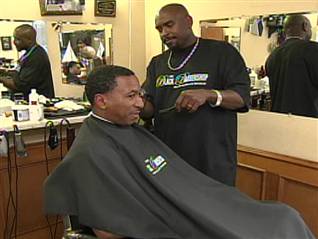
The Barbershop and Health Care

Researchers at UT Southwestern Medical Center in Dallas, Texas have found that neighborhood barbers can influence African-American men to seek blood pressure treatement. 

The study participants were patrons of 17 black-owned barbershops throughout Dallas County between March 2006 and December 2008.

Eight shops gave customers traditional pamphlets about hypertension.  In this group, the number of men who pursued medical care to control their hypertension increased from 40 percent at the start of the study to 51 percent at follow-up.

Nine shops put up posters with messages from other male clients about hypertension, checked patrons’ blood pressure and encouraged the men to see a physician if their numbers were elevated.  In this group, the number of men who controlled their hypertension increased from 33.8 percent at the start of the study to 53.7 percent at follow-up. .

Read more here:  http://www.utsouthwestern.edu/utsw/cda/dept353744/files/629749.html

This fascinating one hour HBO documentary illustrates a typical day in the life of a successful community barbershop on Harlem’s 125th street, showing the vital role community barbershops play in facilitating dicussion on a wide variety of important issues, including health care:  http://www.hbo.com/documentaries/cutting-edge/index.html

The creators of this documentary are interviewed here:  http://www.hbo.com/documentaries/cutting-edge/index.html#/documentaries/cutting-edge/interview/june-amani-martin-and-reggie-williams.html

Half of all cases of Alzheimer’s disease may be misdiagnosed.


It’s currently impossible to definitively diagnosis Alzheimer’s disease while the patient is alive.  Researchers recently analyzed around 800 brains from Alzheimer’s patients after they died, and learned that only about half of them actually had the disease.  The other half suffered from other forms of dementia.  A reliable way to diagnose the specific type of dementia from which patients are suffering is critical to guiding treatment for patients and for researching the disease processes.

http://pagingdrgupta.blogs.cnn.com/2011/02/23/half-of-alzheimers-cases-misdiagnosed/?hpt=T2