Only 22 Gobi Bears Remain on Earth


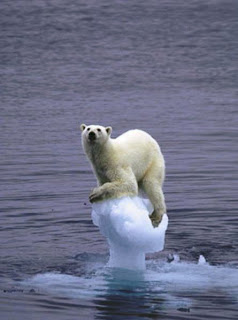
Even as the ice-dwelling polar bear is threatened by climate change, so, too, is another bear that lives in a completely different habitat. In this case it’s the critically endangered Gobi bear (Ursus arctos gobiensis), the only bear species that has adapted to desert life. The last 22 members of this brown bear subspecies (known in Mongolian as mazaalai) live near three oases in the Gobi Desert, where the golden-colored animals subsist on a mostly vegetarian diet of hardy desert roots and other plants. But rising temperatures appear to have already started reducing the available water in the Gobi, making those plants harder to find and threatening the future of the bear.

Access to food is essential for the bears, because they must build up high levels of fat reserves for winter hibernation and gestation. According to a 2010 report (pdf) from the Gobi Bear Project, winter temperatures in that desert can fall to –34 degrees Celsius as well as climb to 46 degrees C in summer. No other bears have adapted to living in such extreme and variable conditions. The animals dine on “roots, berries, other vegetation, insects and occasionally rodents,” all of which can be scarce when the bears emerge from hibernation.

Food has actually been scarcer than usual for at least the past decade. Average annual rainfall in the region fell from 100 to 50 millimeters during a 14-year drought between 1993 and 2007. The Gobi Bear Project says this extended drought “may have affected body condition and reproductive success of bears.” Supplemental feeding stations have been made available in the desert for decades and were expanded during the later years of the drought to help the bears get through the months of lean vegetation. Even though that dry spell ended a few years ago, a report last year from Eurasianet.org indicates that precipitation has again dropped to 50 millimeters per annum. The director of the Great Gobi Strictly Protected Area blames this rainfall decline on climate change.

Although the Gobi bears may never have been plentiful, their decline started in the 1960s when the Mongolian government, then dominated by the Soviet Union, encouraged an increase in livestock production in and around the desert. This policy took a toll on the already sparse vegetation and led to some poaching of bears, which were likely seen as a threat to the domesticated animals. In a sad irony scientists have found no evidence that the bears attack or eat any of the other large animals that live in the desert, such as ibex or camels.

Just a few years ago estimates put the number of Gobi Bears at as many as 50; the recent figure of 22 survivors comes from a population survey just completed by the Mongolian government and wildlife experts. Mongolia, which banned Gobi bear hunting in 1953, has now declared 2013 the “Year of Protecting the Gobi Bear.” The Chinese media agency Xinhua reports that the Ministry of Environment and Green Development of Mongolia has also formed a working group to explore ways of boosting the bears’ population, and will establish a new nature reserve to protect their habitat.

Meanwhile, scientists continue to study the shy and elusive bears whenever they can. Some have been briefly captured and fitted with GPS radio collars, which has helped to map the animals’ habitat use. The Gobi Bear Project has also used hair traps at feeder sites to collect samples, allowing DNA analysis, which has revealed that the bears have low genetic diversity but shows no evidence of inbreeding-based disorders. Future efforts, including both scientific studies and supplemental feeding stations, will rely on adequate funding, some of which may come from international organizations such as Vital Ground, which established its own Gobi Bear Initiative in 2011.

http://blogs.scientificamerican.com/extinction-countdown/2012/11/20/last-22-gobi-bears-endangered-climate-change-mongolia/

What will ice-free Arctic summers bring?


On Sunday, September 16, the sun did not rise above the horizon in the Arctic. Nevertheless enough of the sun’s heat had poured over the North Pole during the summer months to cause the largest loss of Arctic sea ice cover since satellite records began in the 1970s. The record low 3.41 million square kilometers of ice shattered the previous low—4.17 million square kilometers—set in 2007. All told, since 1979, the Arctic sea ice minimum extent has shrunk by more than 50 percent—and even greater amounts of ice have been lost in the corresponding thinning of the ice, according to the U.S. National Snow and Ice Data Center (NSIDC).

“There is much more open ocean than there used to be,” says NSIDC research scientist Walt Meier. “The volume is decreasing even faster than the extent [of surface area] as best as we can tell,” based on new satellite measurements and thickness estimates provided by submarines. Once sea ice becomes thin enough, most or all of it may melt in a single summer.

Some ice scientists have begun to think that the Arctic might be ice-free in summer as soon as the end of this decade—leaving darker, heat-absorbing ocean waters to replace the bright white heat-reflecting sea ice. The question is: Then what happens? Although the nature and extent of these rapid changes are not yet fully understood by researchers, the impacts could range from regional weather-pattern changes to global climate feedbacks that exacerbate overall warming. As Meier says: “We expect there will be some effect…but we can’t say exactly what the impacts have been or will be in future.”

On thin ice
Arctic ice influences atmospheric circulation and, hence, weather and climate. Take away the ice and impacts seem sure to follow. There’s more warming to come, as well, particularly in the Arctic, which is warming faster than the rest of the globe. Given cumulative greenhouse gas emissions, there’s likely at least as much warming to come as has occurred to date—a rise of 0.8 degree Celsius in global average temperatures, most of that in the past 30 years.

The biggest impacts of the loss of Arctic sea ice, of course, will be felt locally: from the potential for more snowfall (which can act like an insulating blanket keeping the ice warm and incapable of growing) to more storms with stronger winds. These will also whip up waves to pound the shore, eroding it, as well as bringing warmer temperatures to thaw the permafrost—leading to “drunken” trees and buildings as well as villages slipping into the sea. A loss of sea ice will also affect the largest animals in the Arctic: seals, walruses and polar bears. “My people rely on that ocean and we’ve seen some dramatic changes,” said Inupiat leader Caroline Cannon at a Greenpeace event on the Arctic in New York City on September 19. “We are the gatekeepers of the ocean. We speak for the animals. They provide for us so it’s our time to speak for them,” by arguing to ameliorate climate change.

Noting the climate change in Cannon’s backyard, the rest of the globe is indeed taking action—just not the type that could reduce greenhouse gas emissions. “The world is looking at the Arctic as a new ocean to be developed and exploited,” notes Arctic system scientist David Barber of the University of Manitoba, most particularly oil as evidenced by Shell’s bid to drill the first offshore well in the Chukchi Sea. The U.S. Geological Survey estimates that the Arctic holds an oil and gas bonanza—and companies from Russia to the U.S. are lining up to start exploiting it.

But the dwindling sea ice may actually interfere with that effort. Shell’s bid to drill this year had to be halted due to the dangers of drifting ice. In fact, the reduction in sea ice actually makes the Arctic Ocean more hazardous for oil exploration, not less, thanks to massive chunks floating free and much more speedily than in the past. “Overall, sea ice is becoming much more mobile,” Barber says. On the other hand, shipping across the Arctic Ocean has become viable for the first time—and weak or rotten ice, as it is called, suggests a path across the topmost part of the planet is already open for at least a short period of time. “We have already reached that point,” Barber argues, based on three decades of field experiments on the ice.

The warmer Arctic waters and land have also begun to release methane, a short-lived but potent greenhouse gas that is also the primary hydrocarbon in natural gas fuel. The Arctic Ocean alone contains more methane than the rest of the world’s oceans combined—though when and even if such a thawing would contribute a massive methane release remains a “known unknown” in the words of former Defense Secretary Donald Rumsfeld and oceanographer Wieslaw Maslowski of the Naval Postgraduate School in Monterey. “If we release that methane, we will amplify global warming by an unknown amount,” Maslowski says. “We have no idea.”

Global impacts
On a larger scale, the biggest impact may be the changes in the Arctic’s ability to function as a cooling system for the global ocean. Both the Pacific and Atlantic now have warmer waters from the top to the bottom, based on measurements from computerized floats. The Arctic has been functioning as a global air conditioner, losing roughly 350 watts of heat per square meter of open ocean to the atmosphere during the fall storm season as well as the early part of the winter. A warmer Arctic may not be able to shed those greater amounts of heat.

That inability, in turn, will affect the temperature differences between the northern polar region and areas further south. In the atmosphere, it is that temperature gradient that creates and sustains the jet stream—a band of high winds at altitude flowing from west to east that typically steers weather systems in the Northern Hemisphere. “The jet stream becomes more kinked,” NSIDC’s Meier notes, which allows cold air to spill further south or warm air to penetrate further north.

The loss of this temperature gradient may also stall weather patterns within the jet stream, allowing particular weather systems to park for a while in one place. That may, in turn, create stronger heat waves and droughts or precipitation. “If it’s a rain pattern that gets stuck in place, you get flooding that becomes a problem,” Meier says.

Understanding these so-called “teleconnections” is an urgent area of scientific rsearch, given the potential impacts on farming and other vital pursuits. “Our society depends on stable agriculture,” Barber notes. It is also likely to be the one that people notice. As climate scientists Jennifer Francis of Rutgers University and Stephen Vavrus of the University of Wisconsin–Madison wrote in a paper laying out how Arctic warming might stall weather patterns via the jet stream: “Gradual warming of the globe may not be noticed by most, but everyone—either directly or indirectly—will be affected to some degree by changes in the frequency and intensity of extreme weather events as greenhouse gases continue to accumulate in the atmosphere.”

Warming oceans globally will also allow for more thermal expansion of the waters themselves—the distance between liquid water molecules rises as the water grows warmer. That will raise sea levels further than the current roughly three millimeters per year.

Those warmer ocean waters are already lapping at the icy shores of Greenland, speeding the melt of outlet glaciers for the massive ice sheet. Combined with weather anomalies, like a heat wave that hit central Greenland this July and temporarily melted nearly the entire ice sheet surface, this could presage a more precipitous meltdown in the North. “Extreme melting from past years is preconditioning this year’s melt,” says ice melt researcher Marco Tedesco of the City College of New York, by melting away any accumulated snowfall from the winter sooner. “It’s like putting money in a bank account. If you start spending more money than you put in, you go negative. That is what is happening on the ice sheet.”

If Greenland were to melt entirely—which is still a distant prospect according to most glaciologists’ estimates—the ice sheet contains enough water to raise sea level by six meters globally. “How many people live within six meter sea level rise of the coast?” Barber asks. “The answer is: too many.”

Not all is lost
The seasonal loss of all “Arctic sea ice is one of those tipping points and unfortunately we’re going to pass that tipping point,” said climate scientist James Hansen, director of the NASA Goddard Institute for Space Studies in New York City, at the same Greenpeace event. “I think we’re going to lose that sea ice. The good news is: this tipping point is reversible.” Should local conditions change, for whatever reason, however, it is possible the ice could regrow.

After all, the ice spreads anew each cold, dark Arctic winter. Some scientists and environmentalists have even suggested it might be time to attempt geoengineering of one form or another to restore the Arctic’s cooler temperatures. “We need to look at the possibility of [solar radiation management], which some people call geoengineering,” which could be an option to control or reverse the Arctic meltdown, argues environmentalist Rafe Pomerance, former Deputy Assistant Secretary of State for Environment and Development. “Effectiveness and downsides and what the risks are, we need to know all that.” Cutting back on emissions of greenhouse gases other than carbon dioxide—such as methane or black carbon—might also have a bigger impact in the Arctic than elsewhere, given the role that soot plays in melting ice.

There are potential positives to the loss of sea ice to consider as well. Open ocean might permit more carbon-absorbing plankton to bloom, much as happens in the Southern Ocean around Antarctica. “At this time, the Arctic Ocean is a biological desert,” notes ecologist Louis Fortier of Laval University in Quebec City. If the plankton blooms, the tiny photosynthesizers pull carbon dioxide out of the air and can serve as the bottom of a food chain that could create new and productive fisheries. Plus, if the plankton die without being eaten or decomposed, they could bury CO2 with them as the tiny corpses fall to the seafloor. In fact, artificially fertilizing such plankton blooms has been tried as a geoengineering technique in the Southern Ocean, with some success.

But that success is unlikely to be repeated in a more watery Arctic Ocean. The northerly sea is “already more productive [in terms of plankton] than the ice-covered ocean of the near-past,” says marine biologist Victor Smetacek of the Alfred Wegener Institute for Polar and Marine Research in Germany, who helped lead those biological sequestration experiments in the Southern Ocean. But local conditions, such as a lack of nutrients and a lack of deep- and shallow-ocean water mixing, suggest that the newly open waters of the Arctic Ocean are unlikely to produce massive blooms, large fisheries or sequester CO2. “The CO2 sequestration potential of the Arctic is very limited,” Smetacek says. The Arctic will not save itself.

Model failure
Regardless of what the Arctic meltdown reveals, what is increasingly clear is that the computer models that scientists rely upon to make predictions have failed to capture the rapid pace of change in the far north. The problem stems from spatial resolutions that are too large—a single grid in a typical computer model encompasses 100 square kilometers—to “see” small but important features such as warm ocean water currents or ice export. And the computing capacity is insufficient to render Arctic cyclones and the role they play in breaking up the ice. “Are the models still too conservative or not?” Maslowski asks of the computer simulations that underpin future predictions. “If this present trend continues, we might be having almost no ice by the end of this decade.”

Such a total summer loss of sea ice remains speculative at this point. “I wouldn’t expect it to keep going straight down,” NSIDC’s Meier says. “The ice that is remaining may continue to stay thick even with more melt and that may be harder to get rid of. The melt could plateau.” At the very least, the sea ice is likely to rebound next year, as has happened after every previous ice melt record. “That wouldn’t surprise me at all,” Meier says.

What may surprise, however, are the global impacts of the already far advanced loss of Arctic sea ice, particularly on the weather. “We need a few more years of empirical evidence to give a confident answer,” Hansen says of the challenge of figuring out how the Arctic meltdown will affect the rest of the globe. Thanks to ever increasing greenhouse gas emissions trapping more and more heat, the world will find out this winter—and for many years to come.

“There’s evidence in the paleo-climate record that the climate system is capable of changing quite rapidly,” Barber notes. “We’re moving into new territory and the impacts of that are unknown scientifically.”
http://www.scientificamerican.com/article.cfm?id=arctic-sea-ice-loss-implications&WT.mc_id=MND_20121022

Primary amebic meningoencephalitis: brain-eating parasite in southwestern Indiana


If hantavirus wasn’t enough to freak you out, the Associated Press reported on Tuesday that the autopsy report for a 30-year-old man in southwestern Indiana indicates that a brain-eating amoeba was responsible for his death. If confirmed by the Centers for Disease Control and Prevention, this would be the fourth death this year from primary amebic meningoencephalitis, which is caused by a parasite known as Naegleria fowleri

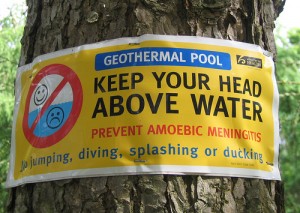
Naegleria fowleri is a single-celled living organism that lives in warm, fresh water, according to the CDC. (It’s not actually an amoeba, despite the colloquial term for it.) It can travel up your nose while swimming in a lake or stream, multiply, and proceed to eat your brain. It has a 99 percent fatality rate, since only one person in the United States has ever been documented surviving the infection. (There have also been several incidents in the US in recent years of people getting the parasite from using a neti pot.) 

Still, it’s a rare occurrence—between 2002 and 2011, there were only 32 infections in the US. Four deaths in a year is well within the recent average.

But as the CDC points out, the organism “grows best at higher temperatures.” That might be a good reason to worry about whether higher temperatures caused by climate change will make it worse, as a CDC scientist warned a few years ago:

“This is definitely something we need to track,” said Michael Beach, a specialist in recreational waterborne illnesses for the Centers for Disease Control and Prevention.

“This is a heat-loving amoeba. As water temperatures go up, it does better,” Beach said. “In future decades, as temperatures rise, we’d expect to see more cases.”

The CDC notes that “assessing the potential for climate-related changes to the geographical range of the organism and associated infections” is one of the areas the agency is working on.

http://www.motherjones.com/blue-marble/2012/09/brain-eating-amoebas-climate-change

Record High Ice-Thaw In Arctic and Greenland this year


The Northern Hemisphere’s largest expanses of ice have thawed faster and more extensively this year than scientists have previously recorded. And the summer isn’t over.

Studies suggest that more of the massive Greenland ice cap has melted than at any time since satellite monitoring began 33 years ago, while the Arctic sea’s ice is shrinking to its smallest size in modern times.

“This year’s melting season is a Goliath,” said geophysicist Marco Tedesco, director of the Cryospheric Processes Laboratory at City University of New York. “The ice is being lost at a very strong pace.”

Scientists monitor the annual thaw closely because changes in the ice of the far North can raise sea levels and affect weather throughout the hemisphere by altering wind currents, heat distribution and precipitation.

Shrinkage of the Arctic sea ice since 2006, for instance, helped lead to seasons of severe snow across Europe, China and North America, researchers at Columbia University, the Georgia Institute of Technology and the Chinese Academy of Sciences reported earlier this year.

As the seasonal ice abates more each year, new polar shipping lanes also open up, as do opportunities for mineral exploration. By some estimates, as much as 25% of the world’s oil and natural-gas reserves are under the Arctic seafloor. Russia, Denmark, Norway and Canada are vying to control these assets.

The giant ice cap at the top of the world partly melts every summer and refreezes every winter. In recent years, the thaw has become progressively more extensive, NASA and European satellite observations suggest. At the same, the refreeze has been smaller—adding up to long-term shrinkage in the ice cover.

This year’s unusual summer thaw was spurred partly by natural variations in weather, but also reflected rising levels of heat-trapping carbon dioxide and methane in the air, amplified by carbon soot from widespread wildfires and the burning of fuels, said scientists at Stanford University and the National Snow and Ice Data Center.

Carried north across the Arctic by winds, soot not only darkens snow and ice, making it absorb more heat from sunlight, but also interferes with the formation of clouds that might otherwise providing cooling shade.

“They all cause enhanced warming in the Arctic,” said Stanford University atmospheric scientist Mark Jacobson, who advocates for renewable energy. “Soot can double the warming.”

In many ways, the Arctic ice pack and Greenland ice cap are mirror opposites. The ice pack is a vast layer of frozen salt water, a few yards thick at most, floating atop an open sea, like ice cubes in a highball. Changes in the size of the Arctic ice can alter weather patterns globally, though the melting doesn’t raise sea levels since the ice displaces the same amount of ocean water when frozen as when liquid.

The Greenland ice sheet is a land-based formation of frozen fresh water up to two miles thick. The water runoff from Greenland ice dilutes the salinity of ocean water, changing its density and altering currents. The runoff that doesn’t refreeze adds to rising ocean levels.

Despite their differences, their fates are linked. “There is little doubt that in terms of warming, things are coming together in the Arctic,” said glaciologist Paul Mayewski, director of the Climate Change Institute at the University of Maine. “Without a doubt, warming in the Arctic is very, very strong,”

In fact, more melting occurred across the Greenland ice cap—the world’s second-largest ice sheet after Antarctica—in June and July than in any year since at least 1979, when satellite monitoring of the island’s ice began, Dr. Tedesco and his colleagues reported earlier this month. The Greenland thaw began in May, a month earlier than usual.

On average, about half of the surface of Greenland’s ice sheet naturally melts during the summer, and then mostly refreezes with the approach of winter. This year, nearly the entire ice cover, from its thin, low-lying coastal edges to its two-mile-thick center, experienced some melting at its surface, according to measurements from three independent satellites analyzed by NASA and university scientists.

“This summer, we have seen melting at the very highest elevations of the Greenland ice sheet, which we have not seen before in the satellite record,” said climatologist Thomas Mote of the University of Georgia, who studies snow cover. Researchers expect much of it to refreeze.

By Wednesday, the Arctic sea ice had shrunk to 1.54 million square miles, about 70,000 square miles smaller than the previous modern low set in September 2007, according to the satellite readings compiled by NASA and the National Snow and Ice Data Center in Boulder, Colo. By that measure, the six lowest Arctic sea ice levels on record all occurred in the past six years.

Even when the Arctic ice refreezes, the new ice is often thinner, making it more vulnerable to storms and seasonal temperature variations, said climate scientist Julienne Stroeve at the Snow and Ice Data Center.

About a week remains in the melt season. Researchers won’t know the full extent of this year’s melting until the end of September.

http://online.wsj.com/article/SB10000872396390444772804577621470127844642.html?mod=googlenews_wsj#articleTabs%3Darticle

Floating seascrapers of the future?

Touted as an eco-friendly floating city, the Seascraper (pictured in an artist’s conception) is among a raft of concepts for  sustainable offshore settlements. With more than seven billion people on  the planet, mass migrations to cities, and increased risks of flooding  and sea level rise, more and more architects and innovators seem to be  weighing anchor.

(Related: “Sea Levels Rising Fast on U.S. East Coast.'”)

The  Seascraper—a self-sufficient community of homes, offices, and  recreational space—was designed with the intention of slowing urban  sprawl, according to its designers.

The  vessel’s energy independence would come from underwater turbines  powered by deep-sea currents as well as from a photovoltaic skin that could  collect solar energy. The concave hull would collect rainwater and  allow daylight to reach lower levels. Fresh water would come from  treated and recycled rainwater via an onboard desalination plant.

This  green machine would also help keep marine populations afloat, so to  speak, with a buoyant base that serves as a reef and discharges fish  food in the form of nutrients pumped from the deep sea, the U.S. design  team says.

http://news.nationalgeographic.com/news/2012/07/pictures/120730-future-floating-cities-science-green-environment/

Huge algal bloom discovered by NASA under melting arctic ice


Scientists in the Arctic have discovered the largest ever under-ice bloom of phytoplankton, likening the discovery to “finding the Amazon rainforest in the middle of the Mojave Desert.”

Researchers were amazed to discover a colossal 100 kilometer (62 miles) stretch of phytoplankton blooming under Arctic ice, north of Alaska, in July last year.

It had previously been assumed that sea ice blocked the sunlight necessary for the growth of marine plants. But four times more phytoplankton was found under the ice than in ice-free waters nearby.

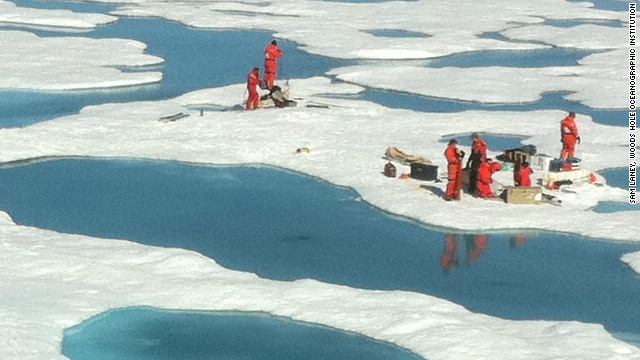
Scientists now believe that pools of melting ice actually function like skylights and magnifying glasses, focusing sunlight into sea water, providing the perfect conditions for the intense phytoplankton bloom, which makes the water look like pea soup.

Undiscovered until the 1970s, the ocean’s phytoplankton is now understood to be responsible for about as much of the oxygen in our atmosphere as plants on land.

The ecological consequences of the polar bloom are not yet fully understood but given phytoplankton’s position at the base of the food chain, it is expected to have implications for ocean animals that feed in the area.

It was a serendipitous discovery for scientists who, as part of NASA’s ICESCAPE program, were studying the impact of climate change in the Chukchi sea, where melt season changes are pronounced.

Making their way through meter-thick ice aboard the U.S. Coast Guard’s largest icebreaker Healy in July last year, scientists observed surprising amounts of fluorescing chlorophyll, indicating the presence of photosynthesizing plant life.

Tide turns towards undersea energy

“If someone had asked me before the expedition whether we would see under-ice blooms, I would have told them it was impossible,” said ICESCAPE mission leader Kevin Arrigo of Stanford University, at a press conference announcing the publication of findings in “Science” this month. “This discovery was a complete surprise.”

Donald Perovich, a U.S. Army geophysicist who studied the ice’s optical properties, described the under-ice area as looking “like a photographic negative”.

“Beneath the bare-ice areas that reflect a lot of sunlight, it was dark. Under the melt ponds, it was very bright,” he said.

The melt pools were found to let in four times as much light as snow-covered ice. Protected from ultraviolet rays, phytoplankton grows twice as fast under-ice as in the open ocean.

Using an automated microscope system called an Imaging FlowCytobot, Woods Hole Oceanographic Institution biologist Sam Laney took millions of photographs of the phytoplankton organisms, some of which he also found in brine channels inside the ice.

Antarctic ice shelves ‘tearing apart’, says study

The type of phytoplankton found near coasts can bloom rapidly when there are changes to the amounts of light and nutrients available. Some blooms are toxic for humans and marine life.

If the Arctic sea ice continues to thin, blooms might become more widespread and appear earlier, which could pose problems for migrating birds and whales, said Arrigo.

“It could make it harder and harder for migratory species to time their life cycles to be in the Arctic when the bloom is at its peak,” he said. “If their food supply is coming earlier, they might be missing the boat.”

“At this point we don’t know whether these rich phytoplankton blooms have been happening in the Arctic for a long time, and we just haven’t observed them before,” he said.

http://www.cnn.com/2012/06/10/world/phytoplankton-mega-bloom-eco-solutions/index.html?hpt=hp_c1

Dating Websites to Help You Find Your ‘Doomsday Partner’


Does your partner roll their eyes at your drums of water and cache of gas masks? Do you long for someone to share the last adrenaline-filled months before the apocalypse, as predicted by the ancient Mayan calendar? Look no further than Survivalist Singles, PrepperDats or Kwink, new dating sites specifically for those preparing for life after the world comes crashing down. You can look for fellow members of a post-apocalyptic tribal commune that scavenges the land in a marauding band, or that perfect partner who is savvy about water filtration, yet strong enough to protect your young from said scavenging hordes. And even if the Mayans were wrong about 2012, or your conspiracy theories don’t pan out, at least you’ll be dating someone who shares your interests. Your crazy, crazy interests.

http://now.msn.com/now/0408-dating-sites-apocalypse.aspx

Next Great Depression? MIT researchers predict ‘global economic collapse’ by 2030


A new study from researchers at Jay W. Forrester’s institute at MIT says that the world could suffer from “global economic collapse” and “precipitous population decline” if people continue to consume the world’s resources at the current pace.

Smithsonian Magazine writes that Australian physicist Graham Turner says “the world is on track for disaster” and that current evidence coincides with a famous, and in some quarters, infamous, academic report from 1972 entitled, “The Limits to Growth.

Produced for a group called The Club of Rome, the study’s researchers created a computing model to forecast different scenarios based on the current models of population growth and global resource consumption. The study also took into account different levels of agricultural productivity, birth control and environmental protection efforts. Twelve million copies of the report were produced and distributed in 37 different languages.

Most of the computer scenarios found population and economic growth continuing at a steady rate until about 2030. But without “drastic measures for environmental protection,” the scenarios predict the likelihood of a population and economic crash.

However, the study said “unlimited economic growth” is still possible if world governments enact policies and invest in green technologies that help limit the expansion of our ecological footprint.


The Smithsonian notes that several experts strongly objected to “The Limit of Growth’s” findings, including the late Yale economist Henry Wallich, who for 12 years served as a governor of the Federal Research Board and was its chief international economics expert. At the time, Wallich said attempting to regulate economic growth would be equal to “consigning billions to permanent poverty.”

Turner says that perhaps the most startling find from the study is that the results of the computer scenarios were nearly identical to those predicted in similar computer scenarios used as the basis for “The Limits to Growth.”

“There is a very clear warning bell being rung here,” Turner said. “We are not on a sustainable trajectory.”

http://news.yahoo.com/blogs/sideshow/next-great-depression-mit-researchers-predict-global-economic-190352944.html

Thanks to Ray Gaudette for bringing this to the attention of the It’s Interesting community.

U.S. Security Will Be Put at Risk With Future Water Shortages


Water shortages, polluted water and floods will increase the risk of instability in nations important to U.S. national security interests, according to a new U.S. intelligence community assessment released Thursday.

“During the next 10 years, many countries important to the United States will almost certainly experience water problems – shortages, poor water quality, or floods – that will contribute to the risk of instability and state failure and increase regional tensions,” the report from the office of the director of national intelligence states.


The assessment focused on seven key river basins located in the Middle East, Asia and Africa that are considered strategically important to the United States: the Indus, Jordan, Mekong, Nile, Tigris-Euphrates, Amu Darya and Brahmaputra basins.

The intelligence report indicates conflict between nations over water problems is unlikely in the next 10 years, but after that, water in shared basins will increasingly be used by some nations as leverage over their neighbors, the report says.

A senior U.S. intelligence official who briefed reporters on the report said, “It’s very difficult to be specific about where because it depends upon what individual states do and what actions are taken on water issues between states.”

The study also warns of the potential for water to be used as a weapon, “with more powerful upstream nations impeding or cutting off downstream flow.”

Water could also become a terrorist tool, according to the report. The U.S. official said that, “because terrorists are seeking more high visibility items to attack, in some cases we identified fragile water infrastructure that could potentially be a target for terrorism activity.” A likely target would be dams.

The official also said terrorist groups could take advantage of large movements of people displaced by water issues in vulnerable nations.

The report indicates water supplies will not keep up with the increasing demand posed by a growing world population.

Climate change will further aggravate the water problems in many areas, as will continued economic development, the report says.

“The lack of adequate water,” it says, “will be destabilizing factor in some countries because they do not have the financial resources or the technical ability to solve their internal water problems.”

Food markets are threatened by depletion of ground water in some agriculture areas of the world. Unless corrective steps are taken, food production will decline, increasing the stress on global markets, the report predicts.

The intelligence community assessed that by 2040, water shortages and pollution will harm the economic performance of important trading partners.

The study does not name specific countries, because it is based on a classified national intelligence estimate.

But the report indicates that increasing populations, industrial development and climate change in South Asia, the Middle East and North Africa will make it difficult for those regions to deal with water problems.

The report does say that improved water management and investment in water-related sectors, such as agriculture, hydroelectric power and water treatment, could compensate for increased demand over next 30 years.

Since agriculture uses nearly 70% of all ground water, the report states it has the most potential to provide relief if technological changes are implemented such as large-scale drip irrigation systems.

The intelligence study suggests developing countries are likely to turn to the United States to lead the effort to resolve water problems, because of its technological capabilities.

Secretary of State Hillary Clinton, who was concerned about how global water problems could affect U.S. security interests over the next 30 years, requested the study on global water security. The National Intelligence Council prepared the assessment with contributions from 10 intelligence organizations.  

At a World Water Day event at the State Department on Thursday,  Clinton labeled the report “sobering,” and called on everyone to read it to “see how imperative clean water and access to water is to future peace, security, and prosperity, globally.” 

The Secretary also used the occasion to announce a new effort called the U.S. Water Partnership which bring together experts in the private sector and government to find system wide solutions to water problems.

http://security.blogs.cnn.com/2012/03/22/u-s-security-at-risk-over-water/?hpt=hp_t3