German law change to recognize third sex

herm

Germans will soon be legally divided into three genders – those born as hermaphrodites have the right to not identify as male or female. It has been described as a revolution, effectively creating legal recognition of a third sex.

The Süddeutsche Zeitung reported on Friday that a change due to come into effect in November would give legal recognition to the fact that intersexual people were not clearly either male or female.

Although the law change stops short of actually creating a third sex, it will allow birth certificates to be left blank and for those concerned to make a decision later whether to identify as male, female or neither.

“If the child cannot be identified as female or male, the personal gender is to be left blank and to be so entered into the births register,” the new law due to take effect in November states, the Süddeutsche Zeitung said.

This small but crucial difference in the law will have knock-on effects in a whole range of other registration rules such as those for ID cards and passports, the paper said. Currently passports have to carry an F for female or an M for male.

Having nothing could create difficulties for intersexual people travelling to some countries, the Magazine for Family Law (FamRZ) said, suggesting that an X be used, as was decided in Australia earlier this year.

The background to the German law change is a ruling from the Federal Constitutional Court which said the “deeply felt and lived” gender was a function of personal rights and must apply to unclear gender.

The new law will apply to intersexuals, or hermaphrodites – people born with gender-indeterminate bodies, rather than transsexuals, who are born with a specific sex but feel they are members of the other gender.

Brussels-based lawyer Wolf Sieberich told the FamRZ transsexuals should also get the right to determine their own legally recognized gender.

Marriage law may also have to be altered as a result he said. Currently a marriage in Germany is only allowed between a man and a woman and a legally recognized life partnership is allowed for members of the same gender. Sieberich questioned what that would mean for someone whose gender is not specified.

Justice Minister Sabine Leuthheusser-Schnarrenberger told the Süddeutsche Zeitung “comprehensive reform” would be necessary.

http://www.thelocal.de/society/20130816-51439.html

Thanks to Jody Troupe for bringing this to the attention of the It’s Interesting community.

German police stunned to find car with built-in pool

pool car
The photo provided by the police in Chemnitz on June 23, 2013 shows a car that has been converted into a driveable pool in Eibenstock, eastern Germany. Young people from the Erzgebirge mountains have converted their car into a pool. Four people fled from the car when it was stopped by a police officer.

A car caught cruising the streets of a sleepy east German village on a sweltering summer’s day sported a decidedly unorthodox feature: a pool filled to the brim with water.

German police say a motorcycle cop couldn’t believe his eyes when he saw four men, including the driver, splashing about in the open-top BMW as they passed him Sunday afternoon near Blauenthal, about 155 miles (250 kilometres) south of Berlin.

Chemnitz police spokesman Frank Fischer says the men pulled over and jumped into a nearby river as soon as they saw the officer, but one later returned to claim his clothes.

Fischer said Thursday that police were still investigating which of the men drove and whether he was drunk. He said the vehicle itself “probably didn’t have a road permit.”

http://www.theprovince.com/news/world/Making+splash+German+police+stunned+find+with+builtin+pool/8706243/story.html

Germany Eliminates 63-Letter Word “Rindfleischetikettierungsüberwachungsaufgabenübertragungsgesetz”

Steak-640x425

The word – which refers to the “law for the delegation of monitoring beef labelling”, has been repealed by a regional parliament after the EU lifted a recommendation to carry out BSE tests on healthy cattle.

German is famous for its compound nouns, which frequently become so cumbersome they have to be reduced to abbreviations. The beef labelling law, introduced in 1999 to protect consumers from BSE, was commonly transcribed as the “RkReÜAÜG”, but even everyday words are shortened to initials so Lastkraftwagen – lorry – becomes Lkw.

The law was considered a legitimate word by linguists because it appears in official texts, but it never actually appeared in the dictionaries, because compilers of the standard German dictionary Duden judge words for inclusion based on their frequency of use.

The longest word with a dictionary entry, according to Duden is at 36 letters, Kraftfahrzeug-Haftpflichtversicherung, motor vehicle liability insurance.

However a 39-letter word, Rechtsschutzversicherungsgesellschaften, insurance companies providing legal protection, is considered the longest German word in everyday use by the Guinness Book of World Records.

In theory, a German word can be infinitely long. Unlike in English, an extra concept can simply be added to the existing word indefinitely. Such extended words are sometimes known as Bandwurmwörter – “tapeworm words”. In an essay on the Germany language, Mark Twain observed: “Some German words are so long that they have a perspective.”

The Teutonic fondness for sticking nouns together has resulted in other famous tongue-twisters such as: Donaudampfschifffahrtsgesellschaftskapitän – Danube steamship company captain – which clocks in at 42 letters. It has become a parlour game to lengthen the steamship captain’s name, by creating new words such as Donaudampfschifffahrtsgesellschaftskapitänswitwe, the captain’s widow. And, Donaudampfschifffahrtskapitänsmütze – the captain’s hat.

At 80 letters, the longest word ever composed in German is Donaudampfschifffahrtselektrizitätenhauptbetriebswerkbauunterbeamtengesellschaft, the “Association for Subordinate Officials of the Head Office Management of the Danube Steamboat Electrical Services”.

The longest word in the Oxford Dictionary of English is pneumonoultramicroscopicsilicovolcanoconiosis – at 45 letters. Its definition is “an artificial long word said to mean a lung disease casued by inhaling very fine ash and sand dust.

The longest word to be found in Britain is the Welsh place name Llanfairpwllgwyngyllgogerychwyrndrobwllllantysiliogogogoch.

http://www.telegraph.co.uk/news/worldnews/europe/germany/10095976/Germany-drops-its-longest-word-Rindfleischeti….html

German man spends 15 years with pencil in head

483047-130530-pencil-in-head

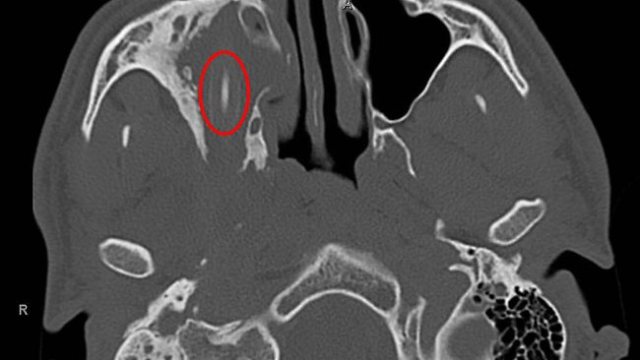
Aachen University Hospital says the 24-year-old man sought help in 2011 after suffering for years from headaches, constant colds and worsening vision in one eye. A scan showed that a four-inch pencil was lodged from his sinus to his pharynx and had injured his right eye socket.

The unnamed man said he did not know how the pencil got there but recalled that he once fell badly as a child.

The German doctors removed the pencil and say the man has recovered.

Hospital spokesman Mathias Brandstaedter said that the case was presented for the first time at a medical conference this week.

In 2007, a German woman plagued by headaches and nosebleeds had a pencil removed from inside her head after more than 50 years.

Margret Wegner, 59, fell over carrying the pencil in her hand when she was four.

“The pencil went right through my skin – and disappeared into my head,” she said at the time.

http://www.telegraph.co.uk/news/worldnews/europe/germany/10086679/German-man-spends-15-years-with-pencil-in-head.html

German railways to test anti-graffiti drones

drone

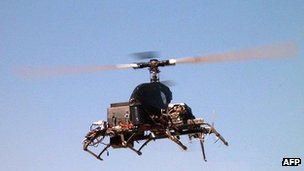
Germany’s national railway company, Deutsche Bahn, plans to test small drones to try to reduce the amount of graffiti being sprayed on its property. The idea is to use airborne infra-red cameras to collect evidence, which could then be used to prosecute vandals who deface property at night.

A company spokesman said drones would be tested at rail depots soon. But it is not yet clear how Germany’s strict anti-surveillance laws might affect their use.

Graffiti is reported to cost Deutsche Bahn about 7.6m euros (£6.5m; $10m) a year. German media report that each drone will cost about 60,000 euros and fly almost silently, up to 150m (495ft) above ground. The BBC’s Stephen Evans in Berlin says using cameras to film people surreptitiously is a sensitive issue in Germany, where privacy is very highly valued.

When Google sent its cameras through the country three years ago to build up its “Street View” of 20 cities, many people objected to their houses appearing online. Even Foreign Minister Guido Westerwelle said: “I will do all I can to prevent it”.

Such was the opposition that Google was compelled to give people an opt-out. If householders indicated that they did not want their homes shown online, then the fronts of the buildings would be blurred. More than 200,000 householders said that they did want their homes blanked out on Street View.

A Deutsche Bahn spokesman told the BBC that its drones would be used in big depots where vandals enter at night and spray-paint carriages. The drones would have infra-red sensors sophisticated enough for people to be identified, providing key evidence for prosecutions.

But it seems the cameras would be tightly focused within Deutsche Bahn’s own property – people or property outside the depots would not be filmed, so easing any privacy concerns.

The drone issue is also sensitive in Germany because earlier this month the defence ministry halted an expensive project to develop Germany’s own surveillance drone, called Euro Hawk. The huge unmanned aircraft would be used abroad but would need to be able to fly in German airspace, if only to take off and land on their way to and from the land to be watched, our correspondent reports.

But it became clear that the air traffic authorities were not going to grant that permission. The reasoning was that Germany’s military drones would be unable to avoid collisions with other, civilian aircraft.

Small drones on private land do not need permission from air traffic controllers – big drones do.

So Germany seems to be entering a legal grey area – it is not clear when the flight of a drone may become so extensive that the wider authorities need to intervene, Stephen Evans reports.

http://www.bbc.co.uk/news/world-europe-22678580

Topless protest disrupts opening of Barbie house in Berlin

barbie 1

barbie 2

Women’s rights protesters disrupted the opening of a giant pink doll’s house in Berlin on Thursday, saying the Barbie “Dreamhouse Experience” objectified women.

Promoting the doll made by Mattel Inc, the house allows paying visitors to try on Barbie’s clothes, play in her kitchen and have a go on her pink piano. The exhibition will be open until Aug. 25.

A handful of protesters gathered outside the shocking pink house that has been erected in one of central Berlin’s greyest areas.

A topless woman, a member of the Femen protest group, who had the slogan “Life in plastic is not fantastic” scrawled across her chest, set fire to a Barbie doll tied to a mini crucifix.

“There’s too much emphasis on becoming more beautiful and on being pretty and that puts an awful lot of pressure on girls as well as wasting capacities which they could use to simply be happy or for school,” said Stevie Meriel Schmiedel, a founding member of the “Pink Stinks” protest group.

“We’re protesting because Barbie would not be able to survive with her figure and yet she is an idol for many girls and that’s not healthy,” she said.

One placard read: “Dear Barbie – don’t just bake cupcakes, eat them too!”

A male protester in a wig, pink shirt and shimmering skirt held a poster reading: “Do you like me now?”

Christoph Rahofer, chief executive of Event Marketing Services, which organised the exhibition, similar to one that recently opened in Sunrise, Florida, said the Dreamhouse Experience was a positive thing.

“It’s basically about playing, being amazed and discovering – there’s lots of hidden things to be found and it’s an interactive exhibition.”

The Barbie doll made its debut in 1959, and is named after the daughter, Barbara, of its inventor Ruth Handler, according to Mattel’s website.

http://cnews.canoe.ca/CNEWS/WeirdNews/2013/05/16/20828031.html

Facial width and human male aggression

paul-newman-still-130327

Despite a known link between a masculine-looking face and aggression in men, macho-faced soldiers didn’t survive Finland’s World War II Winter War in greater numbers than recruits with less masculine faces.

The macho-looking men did, however, have more children in their lifetimes than thinner-faced guys, suggesting that face shape is a sign of evolutionary fitness.

The new findings, published today May 7 in the journal Biology Letters, reveal nuances in how hormones, genetics and societal structures might work together to influence evolution. For example, the technology of 20th-century warfare may have turned survival into a matter of luck rather than evolutionary fitness, said study leader John Loehr, an evolutionary ecologist at the University of Helsinki Lammi Biological Station.

“You have very little individual ability to change your fate,” Loehr told LiveScience. “You’re put in a situation where you and the 20 other people who are in your trench are hit by a shell, and it’s game over.”

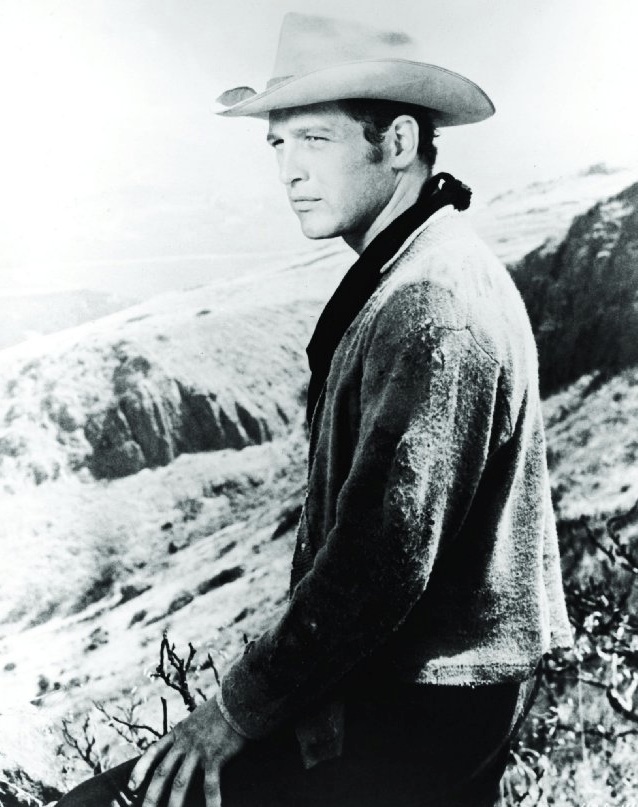
High levels of testosterone during development are linked with a certain macho look: a broad face, strong jaw and narrow eyes. Any number of swaggering movie stars, from Paul Newman to Channing Tatum (“G.I. Joe”), has parlayed this face shape into successful onscreen careers.

Meanwhile, psychologists have found that guys with Newman’s squint or Tatum’s wide cheekbones tend to be higher in aggression than men with thinner faces. One study on Japanese baseball players, released in April, found that wider-faced players hit more home runs. And in 2008, Canadian researchers discovered that hockey players with wider faces spent more time in the penalty box than other players for aggressive behavior.

The hockey player finding got Loehr thinking about whether high testosterone (and thus, aggression) might confer a survival advantage on wider-faced guys.

“The obvious thing, for me, was, ‘Well, can we get some military data?'” he said.

Fortunately, he could. Finland is a country with meticulous record-keeping, and at the library for the Finnish National Defense in Helsinki, Loehr inquired of a librarian where he might find resources with photos of World War II soldiers (for facial width measurements) as well as personal data about those men.

“She sort of walked around the corner and there were rows of these books sitting there with all the pictures and an amazing amount of personal data,” Loehr said.

Over several months, Loehr pulled together other resources, including photo books of dead soldiers compiled during Finland’s three-and-a-half-month Winter War with the Soviet Union in 1939. Using these old books, he was able to measure facial widths of both surviving soldiers and men lost during the war. He also knew these men’s ranks and how many children they had during their lifetimes.

Military service was and still is mandatory in Finland, Loehr said, so World War II soldiers were a good representation of the male population.

Loehr focused on three WWII regiments, for a total of 795 soldiers. He and co-researcher Robert O’Hara of the Biodiversity and Climate Research Center in Germany found that wider-faced soldiers fathered more children than narrower-faced ones. The finding would have been expected by evolutionary researchers, given previous studies suggesting that fertile women are drawn to more masculine men.

The other findings were more surprising. For one, the wider-faced guys were actually less likely than narrow-faced men to rank higher in the military hierarchy. In other words, the higher the rank, the more likely the man was to have a narrow face.

“That’s a curious one,” Loehr said. Ecologically, he said, you’d expect the men who fathered more children in a community to be the socially dominant guys.

“For human species, it’s perhaps more nuanced,” Loehr said. For example, wide-faced guys have been shown in laboratory experiments to be less trustworthy. Trustworthiness might be more important for military leaders than dominance or aggression.

Another possibility is that the wider-faced guys could have moved up the military ranks during periods of conflict, Loehr said, as his findings were based on rank before the Winter War started. A study published in June 2012 found that in competitive situations, macho-faced guys are the most likely to work together to defeat a common enemy. If that’s the case, any testosterone advantage may not have come out until war began.

Second, Loehr and O’Hara found that face shape didn’t affect survival at all. A wider-faced man was equally as likely to die in battle as a man with a narrower face.

Technology may trump testosterone, Loehr said. One study, published in 2012 in the journal Evolution and Human Behavior, found that in fights involving hand-to-hand combat or other physical contact, narrow-faced men were more likely to die than wide-faced men. In conflicts where a gun, poison or other remote weapon was used, face shape made no difference.

The same could be true for Finnish soldiers, who fought and died with guns in the trenches, Loehr said.

“You would think that thousands of years ago, when combat would have been more hand-to-hand, without much use of tools, that you would have a different result,” he said. “It’s possible that humans have changed how selection can operate by developing this technology.”

http://www.livescience.com/29393-macho-faces-war-survival.html

New study links first-person singular pronouns to relationship problems and higher rates of depression

me

Researchers in Germany have found that people who frequently use first-person singular words like “I,” “me,” and “myself,” are more likely to be depressed and have more interpersonal problems than people who often say “we” and “us.”

In the study, 103 women and 15 men completed 60- to 90-minute psychotherapeutic interviews about their relationships, their past, and their self-perception. (99 of the subjects were patients at a psychotherapy clinic who had problems ranging from eating disorders to anxiety.) They also filled out questionnaires about depression and their interpersonal behavior.

Then, researchers led by Johannes Zimmerman of Germany’s University of Kassel counted the number of first-person singular (I, me) and first-person plural (we, us) pronouns used in each interview. Subjects who said more first-personal singular words scored higher on measures of depression. They also were more likely to show problematic interpersonal behaviors such as attention seeking, inappropriate self-disclosure, and an inability to spend time alone.

By contrast, the participants who used more pronouns like “we” and “us” tended to have what the researches called a “cold” interpersonal style. But, they explained, the coldness functioned as a positive way to maintain appropriate relationship boundaries while still helping others with their needs.

“Using first-person singular pronouns highlights the self as a distinct entity,” Zimmermann says, “whereas using first-person plural pronouns emphasizes its embeddedness into social relationships.” According to the study authors, the use of more first-person singular pronouns may be part of a strategy to gain more friendly attention from others.

Zimmerman points out that there’s no evidence that using more “I” and “me” words actually causes depression—instead, the speaking habit probably reflects how people see themselves and relate to others, he says.

The study appears in the June 2013 issue of the Journal of Research in Personality.

http://www.popsci.com/science/article/2013-05/people-who-often-say-me-myself-and-i-are-more-depressed?src=SOC&dom=tw

Supernova left its mark in ancient bacteria

1_12797_Cass-A-NASA
Radioactive iron may be first fossil imprint of a nearby cosmic explosion.

by Alexandra Witze

Sediment in a deep-sea core may hold radioactive iron spewed by a distant supernova 2.2 million years ago and preserved in the fossilized remains of iron-loving bacteria. If confirmed, the iron traces would be the first biological signature of a specific exploding star.

Shawn Bishop, a physicist at the Technical University of Munich in Germany, reported preliminary findings on 14 April at a meeting of the American Physical Society in Denver, Colorado.

In 2004, scientists reported finding the isotope iron-60, which does not form on Earth, in a piece of sea floor from the Pacific Ocean. They calculated how long ago this radioactive isotope had arrived by using the rate at which it decays over time. The culprit, they concluded, was a supernova in the cosmic neighbourhood.

Bishop wondered if he could find signs of that explosion in the fossil record on Earth. Some natural candidates are certain species of bacteria that gather iron from their environment to create 100-nanometre-wide magnetic crystals, which the microbes use to orient themselves within Earth’s magnetic field so that they can navigate to their preferred conditions. These ‘magnetotactic’ bacteria live in sea-floor sediments.

So Bishop and his colleagues acquired parts of a sediment core from the eastern equatorial Pacific Ocean, dating to between about 1.7 million and 3.3 million years ago. They took sediment samples from strata corresponding to periods roughly 100,000 years apart, and treated them with a chemical technique that extracts iron-60 but not iron from nonbiological sources, such as soil washing off the continents. The scientists then ran the samples through a mass spectrometer to see if any iron-60 was present.

And it was. “It looks like there’s something there,” Bishop told reporters at the Denver meeting. The levels of iron-60 are minuscule, but the only place they seem to appear is in layers dated to around 2.2 million years ago. This apparent signal of iron-60, Bishop said, could be the remains of magnetite (Fe3O4) chains formed by bacteria on the sea floor as radioactive supernova debris showered on them from the atmosphere, after crossing inter-stellar space at nearly the speed of light.

No one is sure what particular star might have exploded at this time, although one paper points to suspects in the Scorpius–Centaurus stellar association, at a distance of about 130 parsecs (424 light years) from the Sun3.

“I’m really excited about this,” says Brian Thomas, an astrophysicist at Washburn University in Topeka, Kansas, who was not involved in the work. “The nice thing is that it’s directly tied to a specific event.”

“For me, philosophically, the charm is that this is sitting in the fossil record of our planet,” Bishop says. He and his team are now working on a second core, also from the Pacific, to see if it too holds the iron-60 signal.

http://www.nature.com/news/supernova-left-its-mark-in-ancient-bacteria-1.12797

Retired Porn Star to Become First Adult Actress in Space

cocp2cocp

Coco Brown, who hasn’t made an adult film in a decade, has been training for her flight.

By Jason Koebler

Yuri Gagarin was the first man in space. Sally Ride was the first woman in space. Dennis Tito was the first tourist in space. And sometime next year, the human race will eclipse another benchmark, with Coco Brown possibly becoming the first porn star in space.

Brown made headlines earlier this year when Space Expedition Corporation, a German company, announced that the retired porn star had signed up to be on one of its first sub-orbital spaceflights in March 2014. Brown, who hasn’t starred in an adult film since 2003, says she’s quit the industry and is entirely focused on her mission.

“Performing in space isn’t something I ever thought about when I was deciding to do this. I just thought, ‘Oh my gosh, this is something really cool.’ I didn’t think ‘I’m going to try to have sex in space or perform in space,'” she says.

Brown says the opportunity arose when she was invited to a “space lunch” in Berlin, but she quickly discovered that the meeting was being held to discuss the possibility of space tourism.

“I thought they were going to be talking about the universe or something with astronomy or whatever, but then they started talking about flights to space,” she says. “I spent four months deciding whether or not I wanted to do this. The company called me a few times and finally I decided to do it.”

Brown has already completed a zero gravity flight and has begun training in Cape Canaveral. She has several more training missions coming up over the next few weeks. Since agreeing to take the trip, which costs $100,000, Brown says she may be in for more than she bargained for.

“I’m not worried about the fact of actually going to space, but when we come back, NASA wants to do a lot of observations and studies and things,” she says. “We’re some of the first people who are going to space without a specific job to do, so they were telling us all these [emergency contingency plans] and things like that, that made me wonder, ‘Why are they telling us this stuff?’ That kind of thing makes me worry.”

A spokesperson with NASA says they have not worked with Brown and have no plans to train her or conduct experiments on her when she returns.

“NASA does not fly space tourists and does not train them. Nor is NASA involved in postflight studies and observations,” the agency says.

Because she hasn’t performed in a decade, Brown says she wasn’t ready for the media blitz that has followed the announcement. Perhaps predictably, a lot of media focus has been put on whether she’ll make the world’s first porno movie filmed in space. That, she says, depends on what type of space suit she’s given. “They’re always giving us a new suit—I assume the one we use to go to space will be different. I haven’t asked about a special suit,” she says.

Despite the attention, she says she’s focused on being the best astronaut she can be.

“I haven’t done a movie since 2003, so when I decided to do this, the thought of performing in space didn’t even cross my mind. I have nothing against performing and would do it if the right offer comes along,” she says. “But now, my job is to train to be an astronaut.”

http://www.usnews.com/news/articles/2013/02/14/retired-porn-star-to-become-first-adult-actress-in-space

Thanks to Dr. Lutter for bringing this to the attention of the It’s Interesting community.