Diving Pigs


Diving helps pigs improve their immunity against disease and improves the quality of the pork — at least according to a farmer in Central China’s Hunan province, said a report from News.163.com—the NetEase website.

Huang Demin has built a 3-meter-tall wooden diving platform close to his pigsty in Ningxiang county so his livestock can dive on a daily basis.

Huang has to push his pigs hard to jump from the platform, as most do not seem to enjoy the airborne experience, he said. But he added that he believes diving can help the pigs eat more food and grow faster.

Huang also has an economic motivation — he sells the pork from his diving pigs at three times the price of normal pigs at market. His handmade platform is also now a tourist attraction.

http://europe.chinadaily.com.cn/china/2012-11/14/content_15929283.htm


Chinese Man Sues Wife for Giving Birth to ‘Incredibly Ugly’ Child, Wins $120,000


A Chinese wife has been sued by her husband for giving birth to what he calls an ‘incredibly ugly’ child.

Jian Feng from northern China filed a suit against his wife and was awarded $120,000  in a court settlement.

Jian argued that his wife tricked him into the marriage by undergoing plastic surgery to make her beautiful. He said he realised this only when she gave birth to their daughter.

“I married my wife out of love, but as soon as we had our first daughter, we began having marital issues. Our daughter was incredibly ugly, to the point where it horrified me,” Jian said.

The truth of the matter surfaced only when Jian went on to accuse his wife of cheating, as the child looked like neither of its parents.

At that point, the wife admitted to having undergone cosmetic surgery worth $100,000 which had modified her appearance considerably. Jian was not aware of the surgery before their marriage, his wife conceded.

Jian was also granted a divorce, saying the woman married him under false pretences.

http://www.ibtimes.co.uk/articles/398913/20121027/chinese-man-divorce-sues-wife-ugly-child.htm

Fossils reveal that prehistoric people ate panda bears


China’s beloved national symbol — the panda — may have been seen quite differently by ancient humans: as food.

Scientist Wei Guangbiao says prehistoric man ate pandas in an area that is now part of the city of Chongqing in southwest China.

Wei, head of the Institute of Three Gorges Paleoanthropology at a Chongqing museum, says many excavated panda fossils “showed that pandas were once slashed to death by man.”

The Chongqing Morning Post quoted him Friday as saying: “In primitive times, people wouldn’t kill animals that were useless to them” and therefore the pandas must have been used as food.

But he says pandas were much smaller then.

Wei says wild pandas lived in Chongqing’s high mountains 10,000 to 1 million years ago.

The Chinese government invests greatly in studying the native species and trying to ensure its survival. Pandas number about 1,600 in the wild, where they are critically endangered due to poaching and development. More than 300 live in captivity, mostly in China’s breeding programs.

http://www.thestar.com/news/world/article/1271592–prehistoric-man-ate-pandas-fossils-show

Citizen mob in China pummels bag snatchers

Two criminals riding a motorcycle snatched a woman’s purse in broad daylight. When surrounded by a crowd, one of them brandished a long blade, but unfazed residents attacked them broomsticks, rods, cardboard boxes, chairs, and other makeshift weapons. Some of the participants were reward with official recognition for their actions and display of bravery that day.

http://www.weirdasianews.com/2012/09/05/citizen-mob-china-pummels-bag-snatchers/?utm_source=dlvr.it&utm_medium=twitter

Spider removed from woman’s ear canal

A woman who went to China’s Changsha Central Hospital complaining of itching in the left side of her head was told by doctors that the source of irritation was a spider that had been living inside her ear canalfor five days.

Doctors reportedly used a saline solution to flush out the spider in order to avoid having the spider burrow deeper inside the canal or bite her.

The flushing technique was successful and the woman reportedly wept with gratitude after being told the spider was removed. Doctors say they believe the spider entered the woman’s home while the home was undergoing renovations, and crawled into her ear while she was sleeping.

A report by CNN states that spiders and other bugs are appearing in greater numbers this summer due to warm weather and drought conditions across the U.S.

“All insects are cold-blooded, so in extreme heat they develop quicker, which results in more generations popping up now compared to previous summers,” Jim Fredericks, an entomologist and wildlife ecology expert with the National Pest Management Association, told the network.

http://news.yahoo.com/blogs/sideshow/doctors-remove-spider-hiding-woman-ear-canal-195029859.html

Thanks to A.N., R.G., and P.C. for bringing this to the attention of the It’s Interesting community.

Fei Lin’s penis stolen by thieves


The 41-year old Fei Lin told police that he was sleeping when thieves burst into his room and put a bag over his head: “They put something over my head and pulled down my trousers and then they ran off,” Lin said. “I was so shocked I didn’t feel a thing—then I saw I was bleeding and my penis was gone.”

While nobody has been apprehended yet, a report in the Austrian Times stated that police believe the assailants were jealous or slighted lovers of several local women whom Lin was involved with romantically or sexually. Lin, for his part, denied taking part in any infidelity.

TNT Magazine claims that emergency workers and police conducted a search for Lin’s anatomy but were unable to find the missing penis. The thieves have not yet been located, but police said they were beginning a search for the men and their female lovers.

http://www.ibtimes.com/articles/367155/20120726/fei-lin-s-penis-stolen-man-china.htm

Thanks to Dr. Nakamura for bringing this to the attention of the It’s Interesting community.

Zookeeper licks monkey’s butt to help it defecate

50-year-old Zhang Bangsheng used warm water to clean a small Francois’ Leaf Monkey’s buttocks, then began using his mouth to lick it, not stopping for over an hour, until the little monkey defecated a single peanut. Only after the peanut was defecated did Zhang Bangsheng laugh with satisfaction.

As it is understood, this small Francois’ langur is only 3 months old, and is the first Francois’ Leaf Monkey to be born in nearly 10 years at this animal park. The Francois’ langur is a rare primate from Guangxi and Guizhou and is amongst the nation’s most protected animals. Because it is so precious, the zoo gave it to model worker and high-level expert Zhang Bangsheng to care for and raise.

On the first day of the “May 1st” short holiday, Zhang Bangsheng let the small Francois langur enter the monkey exhibit for the first time to meet visitors so it can see more of the world. The next day, Old Zhang discovered that the little monkey had indigestion and difficulty defecating, and immediately became worried. Seeing peanut shells on the ground, Old Zhang immediately understood that visitors had definitely tossed peanuts to the small monkey, and the toothless monkey swallowed the peanut whole. If it does not quickly defecate it, it would endanger the little monkey’s life.

Because the monkey is too small, it wasn’t suitable to use medicine to let it defecate. The only way was to lick its butt, to prompt it to defecate the peanut.

http://bossip.com/581209/did-you-hear-the-one-about-the-zookeeper-that-licked-a-monkeys-butt-to-make-it-poo/

Generating Power from Pig Feces


China’s love of pork presents a mountain of a problem for the environment, 1.4 million metric tons (1.5 million tons) of pig poo a year to be precise, but an Australian company believes it has part of the answer.

Why not turn the pig poo into power?

Using a bioreactor called “PooCareTM” and other technology, the pig manure is converted into biofuel for cooking and heating while the residual goes to farmers as nutrient-rich fertilizers.

“The benefits are energy and fuel for farmers as well as preventing further contamination of the environment,” said Ravi Naidu, chief scientist at CRC for Contamination Assessment and Remediation of the Environment (CRC Care), a South Australian-based firm involved in drawing up the technology.

“So it’s really a green technology from that perspective,” Naidu, a University of South Australia professor, told Reuters.

The process involves a bioreactor 30 m (98 ft) long, 10 m (33 ft) high and 4 m (13 ft) wide. It is set below ground and waste is fed through it slowly at a pre-determined temperature.

This converts solid waste into a biogas that is then pumped through gas tanks that can be delivered to the local community. The entire process takes about a month, with the first biogenerator already running at a farm in Wuhan, central China.

China has an estimated 700 million pigs, producing some two-thirds of the meat consumed there annually, so the scale of the problem can’t be underestimated.

Only one tenth of pig waste is used now as manure. It is estimated the nutrients lost in the waste of one pig alone are worth about A$50 ($52) per year. There is a vast disparity in rural and urban incomes with farmers earning around $75 per month.

The potential health hazards are worse.

“Pig waste contains a high level of nitrate, which in liquid form can contaminate ground water and in flake form can contaminate lakes, posing human health risks,” Naidu said.

Chinese scientists and Hong Kong-based technology firm HLM Asia Ltd also took part in developing the technology, which costs roughly A$35,000 ($36,400) for one bioreactor. Mass production would bring costs down, Naidu said.

http://news.yahoo.com/pig-poo-power-answer-chinas-porky-poser-053248474–finance.html

More Than 30 Million People in China Live in Caves


Reporting from Yanan, China—

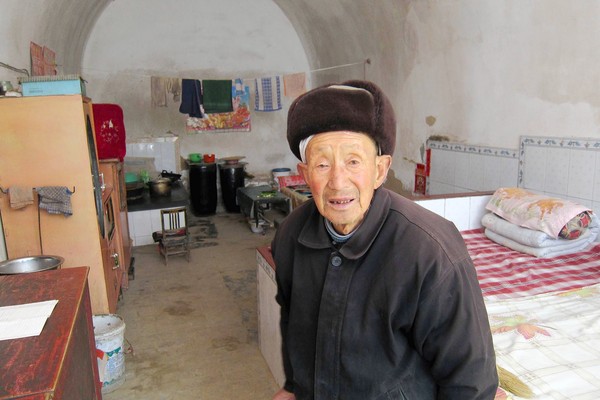
Like many peasants from the outskirts of Yanan, China, Ren Shouhua was born in a cave and lived there until he got a job in the city and moved into a concrete-block house.

His progression made sense as he strove to improve his life. But there’s a twist: The 46-year-old Ren plans to move back to a cave when he retires.

“It’s cool in the summer and warm in the winter. It’s quiet and safe,” said Ren, a ruddy-faced man with salt-and-pepper hair who moved to the Shaanxi provincial capital, Xian, in his 20s. “When I get old, I’d like to go back to my roots.”

More than 30 million Chinese people live in caves, many of them in Shaanxi province where the Loess plateau, with its distinctive cliffs of yellow, porous soil, makes digging easy and cave dwelling a reasonable option.

Each of the province’s caves, yaodong, in Chinese, typically has a long vaulted room dug into the side of a mountain with a semicircular entrance covered with rice paper or colorful quilts. People hang decorations on the walls, often a portrait of Mao Tse-tung or a photograph of a movie star torn out of a glossy magazine.

The better caves protrude from the mountain and are reinforced with brick masonry. Some are connected laterally so a family can have several chambers. Electricity and even running water can be brought in.

“Most aren’t so fancy, but I’ve seen some really beautiful caves: high ceilings and spacious with a nice yard out front where you can exercise and sit in the sun,” said Ren, who works as a driver and is the son of a wheat and millet farmer.

The caves have an important role in modern Chinese history. The Long March, the famous retreat of the Communist Party in the 1930s, ended near Yanan, where Mao took refuge in caves. In “Red Star Over China,” writer Edgar Snow described a Red Army university that “was probably the world’s only seat of ‘higher learning’ whose classrooms were bombproof caves, with chairs and desks of stone and brick, and blackboards and walls of limestone and clay.”

Chinese Vice President Xi Jinping, who is expected to succeed Hu Jintao next year as president, lived for seven years in a cave when he was exiled to Shaanxi province during the Cultural Revolution.

“The cave topology is one of the earliest human architectural forms; there are caves in France, in Spain, people still living in caves in India,” said David Wang, an architecture professor at Washington State University in Spokane who has written widely on the subject. “What is unique to China is the ongoing history it has had over two millenniums.”

In recent years, architects have been reappraising the cave in environmental terms, and they like what they see.

“It is energy efficient. The farmers can save their arable land for planting if they build their houses in the slope. It doesn’t take much money or skill to build,” said Liu Jiaping, director of the Green Architecture Research Center in Xian and perhaps the leading expert on cave living. “Then again, it doesn’t suit modern complicated lifestyles very well. People want to have a fridge, washing machine, television.”

Liu helped design and develop a modernized version of traditional cave dwellings that in 2006 was a finalist for a World Habitat Award, sponsored by a British foundation dedicated to sustainable housing. The updated cave dwellings are built against the cliff in two levels, with openings over the archways for light and ventilation. Each family has four chambers, two on each level.

“It’s like living in a villa. Caves in our villages are as comfortable as posh apartments in the city,” said Cheng Wei, 43, a Communist Party official who lives in one of the cave houses in Zaoyuan village on the outskirts of Yanan. “A lot of people come here looking to rent our caves, but nobody wants to move out.”

The thriving market around Yanan means a cave with three rooms and a bathroom (a total of 750 square feet) can be advertised for sale at $46,000. A simple one-room cave without plumbing rents for $30 a month, with some people relying on outhouses or potties that they empty outside.

Many caves, however, are not for sale or rent because they are handed down from one generation to another, though for just how many generations, people often can’t say.

Ma Liangshui, 76, lives in a one-room cave on a main road south of Yanan. It is nothing fancy, but there is electricity — a bare bulb dangling from the ceiling. He sleeps on a kang, a traditional bed that is basically an earthen ledge, with a fire underneath that is also used for cooking. His daughter-in-law has tacked up photographs of Fan Bingbing, a popular actress.

The cave faces west, which makes it easy to bask in the late afternoon sun by pulling aside the blue-and-white patchwork quilt that hangs next to drying red peppers in the arched entrance.

Ma said his son and daughter-in-law have moved to the city, but he doesn’t want to leave.

“Life is easy and comfortable here. I don’t need to climb stairs. I have everything I need,” he said. “I’ve lived all my life in caves, and I can’t imagine anything different.”

Thanks to Kedmobbe for bringing this to the attention of the It’s Interesting community: http://kebmodee.blogspot.com/2012/03/in-china-millions-make-themselves-at.html?utm_source=feedburner&utm_medium=email&utm_campaign=Feed%3A+Kebmodee+%28kebmodee%29

Interviews Before Execution: Chinese Reality Television Show

With her silk scarves and immaculate make-up, Ding Yu looks every inch the modern television presenter. Indeed, for the past five years she has hosted a hugely successful prime-time show in China which has a devoted following of 40 million viewers every Saturday night.

But while in Britain the weekend evening entertainment will be The X Factor or Strictly Come Dancing, Ms Ding’s show features harrowing – some would say voyeuristic – footage of prisoners confessing their crimes and begging forgiveness before being led away to their executions.

The scenes are recorded sometimes minutes before the prisoners are put to death, or in other cases when only days of their life remain.

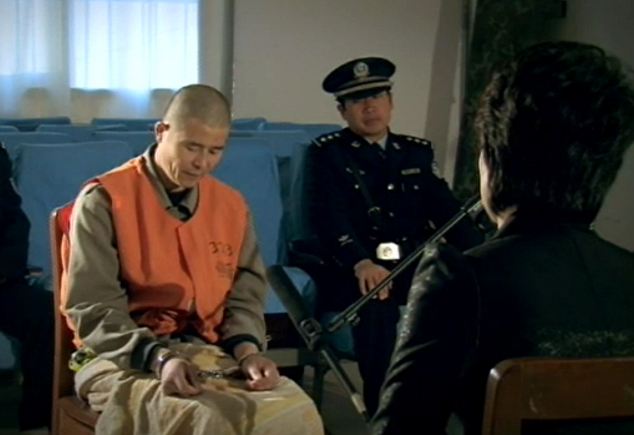
The glamorous Ms Ding conducts face-to-face interviews with the prisoners, who have often committed especially gruesome crimes. Her subjects sit in handcuffs and leg chains, guarded by warders. She warms up with anodyne questions about favourite films or music, but then hectors the prisoners about the violent details of their crimes and eventually wrings apologies out of them.

She promises to relay final messages to family members, who are usually not allowed to visit them on death row. The cameras keep rolling as the condemned say a farewell message and are led away to be killed by firing squad or lethal injection.

Having begun life five years ago on a TV channel in Henan province in central China, Interviews Before Execution quickly became a hit with viewers and was given a prime-time Saturday night slot.

Scenes from the series will be shown in Britain for the first time next week in a BBC 2 documentary. The BBC describes the Chinese series as an ‘extraordinary chat show’ which has made Ms Ding a national celebrity.

Ms Ding has covered more than 250 cases in Interviews Before Execution. She told a child killer: ‘Everyone should hate you.’ Her interviewees also included a jealous divorcé who stabbed his ex-wife in front of her parents.

In one scene, a prisoner in his 20s falls to his knees before his parents, who have been allowed to see him. He pleads: ‘Father, I was wrong. I’m sorry.’

Moments later, his parents see him about to be led away to his death. His distraught mother apologises for beating him once as a child and implores her son: ‘Go peacefully. It’s following government’s orders.’

Prison officers then push her aside and drag him away.

In another scene, a firing squad of about 20 men is briefed by a senior officer before executing condemned prisoners. ‘Some criminals will be very tough and difficult. That means they’ll be dangerous,’ the officer tells them.

Officials in the ruling Communist Party regard the series as a propaganda tool to warn citizens of the  consequences of crime.

Inmates are selected for Ms Ding by judiciary officials who pick out what they consider suitable cases to ‘educate the public’. So far, the show’s makers claim, only five condemned prisoners who were asked have refused to be interviewed.

Convicted criminals in China can be put to death for 55 capital crimes, ranging from theft to crimes against the state. However, the show focuses exclusively on murder cases, conspicuously avoiding any crimes that might have political elements.

The case that has drawn the largest number of viewers so far is that of Bao Rongting, an openly gay man who was condemned to death for murdering his mother and then violating her dead body.

Three extra episodes were devoted to his story as viewing figures soared. Homosexuality is still regarded as taboo in most of China, and the sensational trailers described his interviews as ‘shining a light on a mysterious group of people in our country’.

When Bao was executed, no family members turned up to say farewell. His final conversation before being led to his death was on camera with a decidedly wary Ms Ding, who admitted to being unsettled by his sexuality. In a remarkable scene, he asks if she will do him a last favour by shaking his hand before he dies. She hesitates, before lightly touching his hand with her finger and then pulling it away.

She later confessed to being unsure if she should have shaken his hand, saying with obvious distaste: ‘There was a lot of dirt under his nails. For a long time there was a feeling in this finger. I can’t describe that feeling.’

The series has made a household name of Ms Ding, who is married and has a young son. She is often recognised in the street while doing her shopping with her family.

Denying her show is exploitative, she said: ‘Some viewers might consider it cruel to ask a criminal to do an interview when they are about to be executed. On the contrary, they want to be heard.

‘When I am face-to-face with them I feel sorry and regretful for them. But I don’t sympathise with them, for they should pay a heavy price for their wrongdoing. They deserve it.’

However, she admits to being haunted by those she has interviewed. She once woke on a train in the middle of the night and, looking out of her  window, saw a vision of the executed prisoners she had interviewed standing in a line beside her carriage.

‘Their faces were so real and all of them were standing there looking at me,’ she said. ‘I was horrified – I have heard so many cases. It is really not good for me at all. I have too much rubbish in my heart.’

Lu Peijin, the boss of TV Legal Channel in Henan province, said Ms Ding came up with the concept for the show and he agreed immediately, but that getting approval from officials was a long process.

‘I thought it was a great idea right away,’ said Mr Lu, who said that the stated aim of the show was not to entertain but to ‘inform and educate according to government policy’.

‘We want the audience to be warned,’ he said. ‘If they are warned, tragedies might be averted. That is good for society.’

China is believed to kill more prisoners every year than the rest of the world combined, and the communist state has been widely criticised over its use of the death penalty.

There is no presumption of innocence under Chinese law. The condemned are often put to death as little as seven days after their convictions are confirmed by the Supreme Court.

The exact number of executions is a state secret, but it has been estimated that about 2,000 prisoners a year are executed in China, although rates are believed to have fallen in recent years.

Read more: http://www.dailymail.co.uk/news/article-2109756/The-Execution-Factor-Interviews-death-row-Chinas-new-TV-hit.html#ixzz1oK3J1hdA