
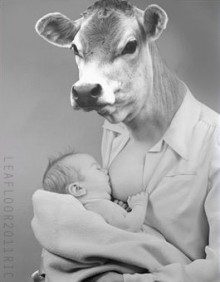
Professor Ning Li of China Agriculture University has successfully led a team that introduced the human gene for breast milk into cows.
Human genes were inserted in the DNA of Holstein dairy cows, and modified embryos were implanted into surrogate cows.
The offspring contained lysozyme, an anti-bacterial protein found in human breast milk that protects infants from infection during their first days of life.
They also created cattle containing lactoferrin, an immune system booster for babies that is found in human milk.
Fat content was raised by about 20% as well, and the level of milk solids was altered to make the final product as close to human milk as possible.
300 of these cattle have been produced.
Professor Li Ning, the director of the project, stated: “There are 1.5 billion people in the world who don’t get enough to eat. It’s our duty to develop science and technology, not to hold it back. We need to feed people first, before we consider ideals and convictions.”
The ultimate goal is to sell the milk as an alternative to cow milk, which is less nutritious than human milk. The modified milk is currently undergoing safety tests, but those who have tasted the milk say it is stronger tasting and sweeter than cow’s milk.
This isn’t the first genetically engineered food China has created. Known for having a more liberal approach toward genetically modified food, China has already created modified fruits and vegetables such as papayas and tomatoes, as well as insect-resistant rice and corn.
 It's Interesting