A new third set of gravitational waves could show hints of extra dimensions

By Leah Crane

HIDDEN dimensions could cause ripples through reality by modifying gravitational waves – and spotting such signatures of extra dimensions could help solve some of the biggest mysteries of the universe.

Physicists have long wondered why gravity is so weak compared with the other fundamental forces. This may be because some of it is leaking away into extra dimensions beyond the three spatial dimensions we experience.

Some theories that seek to explain how gravity and quantum effects mesh together, including string theory, require extra dimensions, often with gravity propagating through them. Finding evidence of such exotic dimensions could therefore help to characterise gravity, or find a way to unite gravity and quantum mechanics – it could also hint at an explanation for why the universe’s expansion is accelerating.

But detecting extra dimensions is a challenge. Any that exist would have to be very small in order to avoid obvious effects on our everyday lives. Hopes were high (and still are) that they would show up at the Large Hadron Collider, but it has yet to see any sign of physics beyond our four dimensions.

In the last two years, though, a new hope has emerged. Gravitational waves, ripples in space-time caused by the motion of massive objects, were detected for the first time in 2015. Since gravity is likely to occupy all the dimensions that exist, its waves are an especially promising way to detect any dimensions beyond the ones we know.

“If there are extra dimensions in the universe, then gravitational waves can walk along any dimension, even the extra dimensions,” says Gustavo Lucena Gómez at the Max Planck Institute for Gravitational Physics in Potsdam, Germany.

Lucena Gómez and his colleague David Andriot set out to calculate how potential extra dimensions would affect the gravitational waves that we are able to observe. They found two peculiar effects: extra waves at high frequencies, and a modification of how gravitational waves stretch space.

As gravitational waves propagate through a tiny extra dimension, the team found, they should generate a “tower” of extra gravitational waves with high frequencies following a regular distribution.

But current observatories cannot detect frequencies that high, and most of the planned observatories also focus on lower frequencies. So while these extra waves may be everywhere, they will be hard to spot.

The second effect of extra dimensions might be more detectable, since it modifies the “normal” gravitational waves that we observe rather than adding an extra signal.

“If extra dimensions are in our universe, this would stretch or shrink space-time in a different way that standard gravitational waves would never do,” says Lucena Gómez.

As gravitational waves ripple through the universe, they stretch and squish space in a very specific way. It’s like pulling on a rubber band: the ellipse formed by the band gets longer in one direction and shorter in the other, and then goes back to its original shape when you release it.

But extra dimensions add another way for gravitational waves to make space shape-shift, called a breathing mode. Like your lungs as you breathe, space expands and contracts as gravitational waves pass through, in addition to stretching and squishing.

“With more detectors we will be able to see whether this breathing mode is happening,” says Lucena Gómez.

“Extra dimensions have been discussed for a long time from different points of view,” says Emilian Dudas at the École Polytechnique in France. “Gravitational waves could be a new twist on looking for extra dimensions.”

But there is a trade-off: while detecting a tower of high-frequency gravitational waves would point fairly conclusively to extra dimensions, a breathing mode could be explained by a number of other non-standard theories of gravity.

“It’s probably not a unique signature,” says Dudas. “But it would be a very exciting thing.”
https://www.newscientist.com/article/mg23431244-200-gravitational-waves-could-show-hints-of-extra-dimensions/

Nasa partner Robert Bigelow says he is ‘absolutely convinced’ aliens are currently living on Earth

One of Nasa’s partners has said that he is “absolutely convinced” aliens exist – and that they are living on Earth right now.

Robert Bigelow, an entrepreneur who is working closely with Nasa on future space missions, has suggested that he knows that our planet has an alien presence that is “right under our noses”.

Mr Bigelow made the announcement during an episode of the show 60 Minutes that focused on his work with the space agency.

His company, Bigelow Aerospace, is developing an expendable craft for humans that can inflate and might provide the space habitats of the future.

They have already been tested out in journeys to the International Space Station. And the two organisations are working on further co-operation.

But during that episode Mr Bigelow began to talk about his belief in aliens – and his claim that UFOs have come to Earth and extraterrestrials have an “existing presence” here.

“I’m absolutely convinced [that aliens exist],” he told reporter Lara Logan. “That’s all there is to it.”

Asked by Ms Logan whether he also thought that UFOs had come to Earth, he said he did.

“There has been and is an existing presence, an ET presence,” Mr Bigelow said. “And I spent millions and millions and millions – I probably spent more as an individual than anybody else in the United States has ever spent on this subject.”

Ms Logan then asked if Mr Bigelow thought it was “risky” to say that he believes such things. He said that he doesn’t care what people think because it wouldn’t “change the reality of what I know”.

Mr Bigelow didn’t give any details about whether the research and private space travel that he is funding had revealed anything about aliens to him.

But he said that the hugely expensive work his company and Nasa are doing won’t be required to meet them – he said that people “don’t have to go anywhere”, because the aliens are “right under people’s noses”.

https://www.independent.co.uk/news/science/nasa-robert-bigelow-aliens-extraterrestrials-earth-aerospace-space-international-station-a7763441.html

Thanks to Kebmodee for bringing this to the It’s Interesting community.

Deep-space photo reveals thousands of supermassive black holes

A new deep-space study by NASA shows the vast void beyond our home is dotted not only with countless galaxies and stars, but also a stunning number of supermassive black holes.

Using data collected over 80 days of observations by NASA’s Chandra X-ray Observatory spacecraft, the agency released an image that shows the largest concentration of black holes ever seen. According to scientists, the density as viewed from Earth would be equivalent to about 5,000 objects that would fit into the area of the sky covered by the full moon.

“With this one amazing picture, we can explore the earliest days of black holes in the Universe and see how they change over billions of years,” study leader Niel Brandt of Pennsylvania State University in University Park, said in a statement.

The image above shows black holes emitting x-ray energy at a variety of intensities. Red indicates low energy, medium is green, and the highest-energy x-rays observed by Chandra are blue. About 70 percent of the objects in the image are supermassive black holes, with masses estimated to range anywhere from 100,000 to 10 billion times the mass of our sun. Many date back billions of years, forming just after the Big Bang.

While invisible to the naked eye, black holes emit x-rays due to captured matter heating up as it spins faster and faster towards the object’s all-consuming center or event horizon.

http://www.mnn.com/earth-matters/space/blogs/deep-space-photo-reveals-thousands-supermassive-black-holes

‘Strong signal’ from sun-like star sparks alien speculation

By James Griffiths

Astronomers engaged in the search for extraterrestrial intelligence (SETI) are training their instruments on a star around 94 light years from Earth after a very strong signal was detected by a Russian telescope.

An international team of researchers is now examining the radio signal and its star, HD 164595 — described in a paper by Italian astronomer Claudio Maccone and others as a “strong candidate for SETI” — in the hopes of determining its origin.

“The signal from HD 164595 is intriguing, because it comes from the vicinity of a sun-like star, and if it’s artificial, its strength is great enough that it was clearly made by a civilization with capabilities beyond those of humankind,” astronomer Douglas Vakoch, president of METI International, which searches for life beyond Earth, tells CNN.

Whenever a strong signal is detected, “it’s a good possibility for some nearby civilization to be detected,” Maccone tells CNN.

Paul Gilster of the Tau Zero Foundation, which conducts interstellar research, said that if the signal was artificial, its strength suggested it would have to come from a civilization more advanced than our own.

Such a civilization would likely be Type II on the Kardashev scale, an attempt by the Soviet astronomer of the same name to categorize various technological stages of civilizations.

“The Kardashev scale is based basically on the energy that that civilization might be able to funnel for its own use,” says Maccone.

At present, our own species is somewhere near Type I on the scale, whereby a civilization is able to harness all the energy available to it on its own planet, including solar, wind, earthquakes, and other fuels.

A Type II civilization would be able to harness the entirety of the energy emitted by its star, billions of billions of watts.

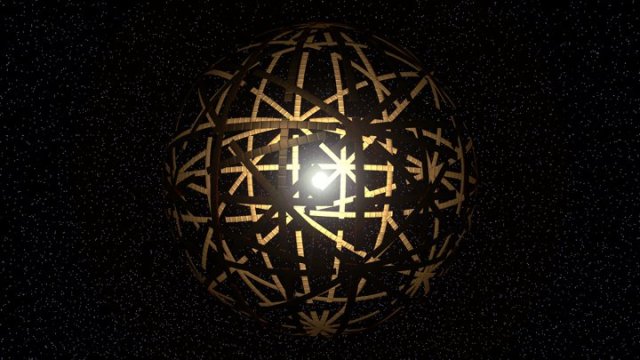
Doing so would require a colossal undertaking, likely the construction of some kind of superstructure, such as a giant sphere or swarm of super-advanced solar panels popularized by astronomer Freeman Dyson that could catch and store all radiation put out by the sun.

Scientists believe superstructures are probably our best chance of detecting alien life unless they are actively trying to communicate with us.

A Dyson sphere was one of the solutions suggested to the peculiar light fluctuations detected around Tabby’s Star, which caused great excitement when they were detected last year.

Maccone is working on developing an alternative mathematical measure of how advanced civilizations are, based on the amount of knowledge and information available to them, that “might help us in the future classify alien civilizations” that we detect.

What’s happening at HD 164595?

In a statement, Seth Shostak, a senior astronomer with the SETI Institute, said that “it’s hard to understand why anyone would want to target our solar system with a strong signal.”

“This star system is so far away they won’t have yet picked up on any TV or radar that would tell them that we’re here,” he added.

METI International will be observing the star from the Boquete Optical SETI Observatory in Panama, Vakoch says, “searching for any brief laser pulses that might be sent as a beacon from advanced extraterrestrials.”

He stressed the importance of all of the SETI community following up on a signal detected by any single member.

“Without corroboration from an independent observatory, a putative signal from extraterrestrials doesn’t have a lot of credibility.”

The SETI Institute is also examining HD 164595, using the Allen Telescope Array in California.

So far, the team has not found any signals to match those originally detected by the Russian telescope, but Shostak notes that “we have not yet covered the full range of frequencies in which the signal could be located.”

“A detection, of course, would immediately spur the SETI and radio astronomy communities to do more follow-up observations.”

According to Vakoch, “if this were really a signal from extraterrestrials, we’d want to survey the target star across as much of the electromagnetic spectrum as we could.”

So is it aliens?

Probably not, says Vakoch, pointing to potential technological interference or amplification through gravitational lensing, where a signal behind a planet or other large object appears to be far stronger than it actually is, as potential causes.

Maccone says gravitational lensing is “an important possibility that should be taken into account for future SETI research.”

“We should learn how to discriminate that against real extraterrestrial signals,” he added.

Vakoch says “the greatest limitation of the May 2015 signal is that it hasn’t been replicated. Before we can give any credence to a signal as coming from extraterrestrials, we need to see it repeatedly to make sure it wasn’t just a transient phenomenon.”

“It deserves at least a few hours of observing time by SETI researchers at other locations to make sure we don’t miss an opportunity to make first contact, however remote.”

If it does prove to be transient and unexplained, HD 164595 could become another “Wow! signal,” frustratingly tantalizing and mysterious in equal measures.

Shostak writes that “of course (it’s) possible” the signal could be from an extraterrestrial civilization, but without confirmation, “we can only say that it’s ‘interesting’.”

http://www.cnn.com/2016/08/30/health/seti-signal-hd-164595-alien-civilization/index.html

Venus could have been habitable while life evolved on Earth

By Aviva Rutkin

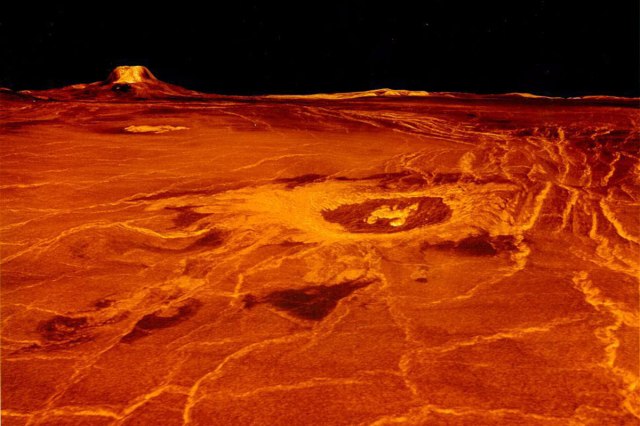
Nicknamed Earth’s evil twin, Venus seems like everything our planet is not: scorching hot, dried out and covered in toxic clouds.

But a mere one or two billion years ago, these two wayward siblings might have been more alike. New computer simulations suggest that early Venus might have looked a lot like our home planet – and it might even have been habitable.

“It’s one of the big mysteries about Venus. How did it get so different from Earth when it seems likely to have started so similarly?” says David Grinspoon at the Planetary Science Institute in Tucson, Arizona. “The question becomes richer when you consider astrobiology, the possibility that Venus and Earth were very similar during the time of the origin of life on Earth.”

Grinspoon and his colleagues aren’t the first to imagine that Venus was once hospitable. It’s similar to Earth in size and density, and the fact that the two planets formed so close together suggests that they’re made of the same bulk materials. Venus also has an unusually high ratio of deuterium to hydrogen atoms, a sign that it once housed a substantial amount of water, mysteriously lost over time.

Venus, but snowy
To simulate early Venus, the researchers turned to a model of environmental conditions often used to study climate change here on Earth. They created four versions for Venus, each varying slightly in details such as the amount of energy the planet received from the sun, or the length of a Venusian day. Where information was scant about Venus’s climate, the team filled in educated guesses. They also added a shallow ocean, 10 per cent the volume of Earth’s ocean, covering about 60 per cent of the planet’s surface.

Looking at how each version might have evolved over time, the researchers say they were encouraged to believe that the planet might have looked much like an early Earth, and remained habitable for a substantial portion of its lifetime. The most promising of the four Venuses enjoyed moderate temperatures, thick cloud cover and even the occasional light snowfall.

Could life have emerged on this early Venus? If it did, it’s certainly no more, thanks to the oceans later boiling away and volcanoes drastically reshaping the landscape around 715 million years ago. But the team is not ruling it out.

“There’s great uncertainties in understanding Earth, not only its climate history but the history of how life began,” says Michael Way at the NASA Goddard Institute for Space Studies in New York City. If it began in oceans on Earth – a theory we’ve yet to confirm – the same could be true on a waterlogged Venus. “There’s no reason that life on this world would not have existed in these oceans. But that’s about all you can say.”

Alternative histories
“Both planets probably enjoyed warm liquid water oceans in contact with rock and with organic molecules undergoing chemical evolution in those oceans,” says Grinspoon. “As far as we understand at present, those are the requirements for the origin of life.”

To bolster their findings, the team suggests a future mission to Venus should look out for signs of water-related erosion near the equator, which would provide evidence for the oceans detailed in their simulation. Such signs have already been detected by missions at Mars. NASA is currently weighing up two potential Venus projects, although neither has been confirmed. One mission would drop a probe through the clouds down to the surface, while another would orbit around the planet and image its surface.

The researchers would also like to run simulations of further alternative pasts for Venus – perhaps one where it was a desert world, or submerged in as much water as Earth, to find out which scenario is most likely to lead to the Venus we see today.

The study could also aid astronomers in their search for exoplanets, says James Kasting at Pennsylvania State University. If Venus might have once been habitable, then it suggests that other planets close to their stars might be, too. “If you make the habitable zone really wide, that raises the probability of finding an Earth.”

Reference: arxiv.org/abs/1608.00706

https://www.newscientist.com/article/2100191-venus-could-have-been-habitable-while-life-evolved-on-earth/

Science Keeps Not Debunking the Alien Dyson Sphere Idea

by Robby Berman

All the scientific studies in the world of this one mysterious star have so far ruled out every theory except one, and it’s the wildest one. The whole thing started when Yale astronomer Tabetha Boyajian located star KIC 8462852, unofficially known as “Tabby’s star,” after Boyajian. Tabby’s star is doing something very strange.

In 2009, NASA launched its Kepler probe to keep a close watch on a small section of the sky — the idea was to learn more about a smaller area than less about a larger one. The probe tracks how light reflected from stars dims and grows brighter. Generally, when a star dims, a planet has passed in front of it, and will again and again as it travels its orbital path.

Kepler’s found some 2,000+ planets orbiting stars and published its data to allow citizen scientists to confirm their findings. A group of people affiliated with Yale called Planet Finders started going over the data, and Boyajian found her star.

To start with, it’s unexpectedly dim for a star of its its size and age. But what really got her attention was this chart.

Each vertical dip represents a holy-cow reduction in the star’s brightness, more than 10 times the dimming that astronomers would expect from a planet even as big as Jupiter crossing in front of the star. So it appears it’s not a planet causing Tabby’s star to dim, which is why it’s also called the “WTF star,” after the paper they published about it titled “Where’s the Flux?”

The data suggests something huge is orbiting the star, but what?

The reason the WTF star is famous is the hypothesis put forward to explain the dimming by Penn State astronomer Jason Wright: That what’s orbiting the star could be a “swarm of megastructures,” alien-built energy collectors, much like terrestrial solar panels. Wright told The Atlantic, “When Boyajian showed me the data, I was fascinated by how crazy it looked. Aliens should always be the very last hypothesis you consider, but this looked like something you would expect an alien civilization to build.” He was imagining something like a Dyson sphere.

Crazy, right? Well, since then scientists have been frantically pushing out other hypotheses to explain the anomaly.

Here are some of the more normal theories, and why they’re probably wrong:
•Kepler was malfunctioning — Nope.
•It’s a cloud of dust from star formation — But the star isn’t young. It shows no sign of the infrared light that indicates a new star.
•It’s a swarm of comets — But the dimming is too extreme to be caused by comets.
•It’s debris from colliding planets — But that matter would get sucked into the star so quickly it would be unlikely to linger long enough for us to see it.

http://bigthink.com/robby-berman/science-keeps-not-debunking-the-alien-dyson-sphere-idea?utm_source=Big+Think+Weekly+Newsletter+Subscribers&utm_campaign=344e51650c-Newsletter_081716&utm_medium=email&utm_term=0_6d098f42ff-344e51650c-41106061

Scientists find ‘closest ever’ second Earth outside our solar system – but won’t talk about it until the end of the month.


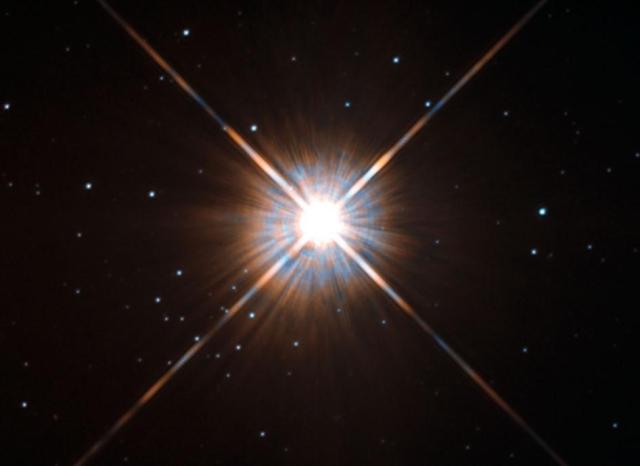
An image from Hubble of Proxima Centauri, which is our nearest neighbour and could be the home of another Earth ESA/Hubble & NASA

Scientists might have found the closest ever candidate for another Earth that could support life, according to reports. But nobody will say whether it’s true.

The new-found planet orbits around a now well-investigated star in Proxima Centauri, near us, according to reports. It is similar to Earth and could support life, it is claimed.

The researchers that found the planet are expected to show it off at the end of this month. But until then they are saying nothing.

One report said the planet will be the closest ‘second Earth’ ever found. The Proxima Centauri star is part of the Alpha Centauri system, which includes our solar system.

“The still nameless planet is believed to be Earth-like and orbits at a distance to Proxima Centauri that could allow it to have liquid water on its surface — an important requirement for the emergence of life,” German newspaper Der Spiegel reported.

The report didn’t give any more details on the planet itself.

A spokesperson for the European Southern Observatory has refused to comment on the report, but said that he was aware of it.

Nasa revealed a second Earth to much fanfare last year. That planet was called Kepler 452b, and is just 60 per cent larger than Earth and in many other ways is almost identical to our planet.

But since it is so far away – 1,400 light years – the chance of ever getting there or learning much more about it is limited. The new discovery is far, far nearer, at just 4.24 light years from us.

http://www.independent.co.uk/news/science/second-earth-discovery-nasa-esa-space-solar-system-scientists-a7192341.html

Mystery object found in weird orbit beyond Neptune

By Shannon Hall

“I hope everyone has buckled their seatbelts because the outer solar system just got a lot weirder.” That’s what Michele Bannister, an astronomer at Queens University, Belfast tweeted on Monday.

She was referring to the discovery of a TNO or trans-Neptunian object, something which sits beyond Neptune in the outer solar system. This one is 160,000 times fainter than Neptune, which means the icy world could be less than 200 kilometres in diameter. It’s currently above the plane of the solar system and with every passing day, it’s moving upwards – a fact that makes it an oddity.

The TNO orbits in a plane that’s tilted 110 degrees to the plane of the solar system. What’s more, it swings around the sun backwards unlike most of the other objects in the solar system. With this in mind, the team that discovered the TNO nicknamed it “Niku” after the Chinese adjective for rebellious.

To grasp how truly rebellious it is, remember that a flat plane is the signature of a planetary system, as a star-forming gas cloud creates a flat disk of dust and gas around it. “Angular momentum forces everything to have that one spin direction all the same way,” says Bannister. “It’s the same thing with a spinning top, every particle is spinning the same direction.”

That means anything that doesn’t orbit within the plane of the solar system or spins in the opposite direction must have been knocked off course by something else. “It suggests that there’s more going on in the outer solar system than we’re fully aware of,” says Matthew Holman at the Harvard-Smithsonian Center for Astrophysics, part of the team that discovered Niku using the Panoramic Survey Telescope and Rapid Response System 1 Survey (Pan-STARRS 1) on Haleakala, Maui.

Planet Nine

He should know – Batygin was one of two astronomers who earlier this year announced that the presence of another highly inclined group of objects could be pointing toward a large undiscovered world, perhaps 10 times as massive as Earth, lurking even further away – the so-called Planet Nine.

Upon further analysis, the new TNO appears to be part of another group orbiting in a highly inclined plane, so Holman’s team tested to see if their objects could also be attributed to the gravitational pull of Planet Nine.

It turns out Niku is too close to the solar system to be within the suggested world’s sphere of influence, so there must be another explanation. The team also tried to see if an undiscovered dwarf planet, perhaps similar to Pluto, could supply an explanation, but didn’t have any luck. “We don’t know the answer,” says Holman.

Bannister couldn’t be more thrilled. “It’s wonderful that it’s so confusing,” she says. “I’m looking forward to seeing what the theoretical analysists do once they get their hands on this one.”

But Batygin isn’t jumping up and down just yet. “As they say in the paper, what they have right now is a hint,” he says. “If this hint develops into a complete story that would be fantastic.”

https://www.newscientist.com/article/2100700-mystery-object-in-weird-orbit-beyond-neptune-cannot-be-explained/

New Dwarf planet discovered out past Neptune

A new dwarf planet has been discovered in the icy realms of space beyond Neptune, researchers said Monday.

An international team of astronomers spotted the tiny world using the Canada-France-Hawaii Telescope as part of the ongoing Outer Solar System Origins Survey.

“The icy worlds beyond Neptune trace how the giant planets formed and then moved out from the Sun. They let us piece together the history of our Solar System,” Michele Bannister of the University of Victoria in British Columbia said in a statement.

“But almost all of these icy worlds are painfully small and faint: it’s really exciting to find one that’s large and bright enough that we can study it in detail.”

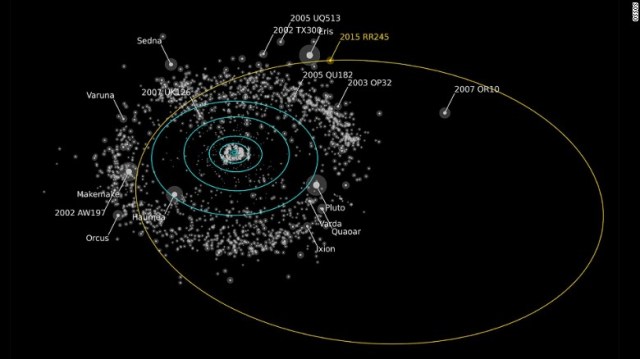
Planet RR245 is around 435 miles wide, just over 5% the width of the Earth, and has one of the largest orbits of any dwarf planet, taking an estimated 700 years to travel around the sun.

There are believed to be as many as 200 dwarf planets in the Kuiper Belt, the huge mass of comets, frozen rocks and other objects orbiting the sun beyond Neptune.

However, only five objects — Ceres, Pluto, Haumea, Makemake, and Eris — had previously been observed well enough to be sure they fit the classification for dwarf planet (and weren’t, say, mere planetoids, or moons of other trans-Neptunian objects).

“Worlds of this size are fascinating because they can potentially tell us about what makes an object go from being an unchanging lumpy mashed-together structure of ice and rock to having geological processes that separate and rearrange its material, as happens on Pluto,” says Bannister.

“The size of RR245 is not yet exactly known, as its surface properties need further measurement. It’s either small and shiny, or large and dull.”

http://www.cnn.com/2016/07/12/health/dwarf-planet-rr245-neptune-pluto/index.html?campaign_id=A100&campaign_type=Email

Move over, Tatooine: Planet discovered orbiting three suns

By James Griffiths

Astronomers have discovered a planet with three suns, where an observer would experience either constant daylight or triple sunrises and sunsets depending on the seasons, which last longer than a human lifetime.

The planet, HD 131399Ab, is the first discovered in a stable orbit in a triple-star system; previously, it had been assumed that the unstable gravity would result in any planet being quickly flung out.

“If the planet was further away from the most massive star in the system, it would be kicked out of the system,” Daniel Apai of the University of Arizona said in a statement.

“Our computer simulations have shown that this type of orbit can be stable, but if you change things around just a little bit, it can become unstable very quickly.”

Kevin Wagner, who discovered the planet and led follow-up observations, said that “for about half of the planet’s orbit, which lasts 550 Earth years, three stars are visible in the sky.”

“It is not clear how this planet ended up on its wide orbit in this extreme system, and we can’t say yet what this means for our broader understanding of the types of planetary systems, but it shows that there is more variety out there than many would have deemed possible.”

The planet — reminiscent of Luke Skywalker’s twin-starred homeworld of Tatooine in “Star Wars” — is located in the Centaurus constellation, about 320 light-years from Earth.

It was found using the SPHERE instrument on the European Southern Observatory’s Very Large Telescope, which is sensitive to infrared light, allowing it to detect the heat signatures of young planets.

About 16 million years old, HD 131399Ab is one of the youngest exoplanets discovered to date, the observatory said in a statement.

By comparison, Earth is about 4.5 billion years old.

With an average temperature of about 580 degrees Celsius (1,076 degrees Fahrenheit) and an estimated mass of four Jupiters, it is also one of the coldest and smallest directly imaged exoplanets.

“HD 131399Ab is one of the few exoplanets that have been directly imaged, and it’s the first one in such an interesting dynamical configuration,” Apai said.

http://www.cnn.com/2016/07/07/health/planet-orbits-three-suns/index.html