
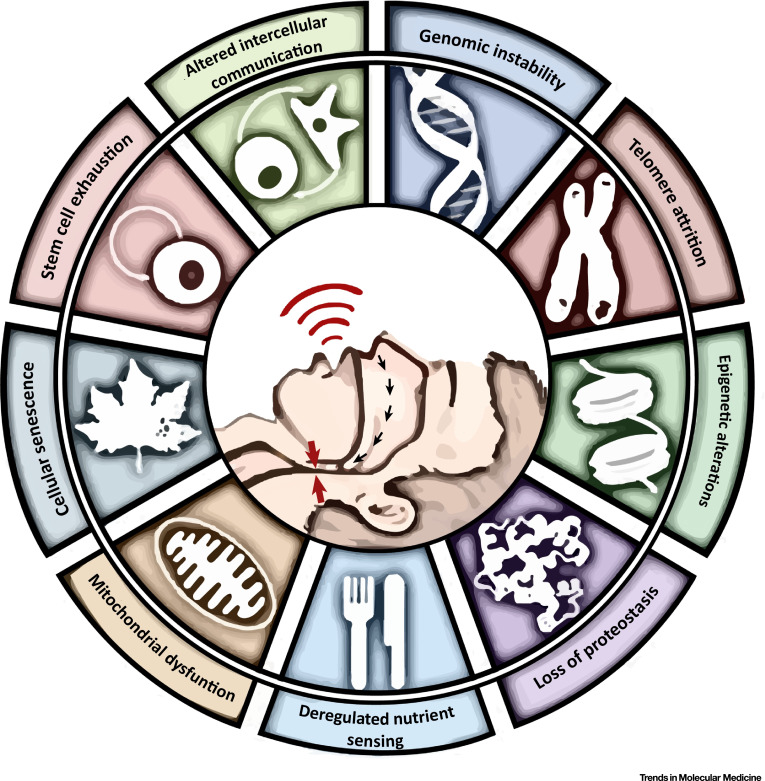
A heightened oxygen desaturation index was significantly linked to epigenetic age acceleration determined via two epigenetic clocks, according to a presentation at the American Thoracic Society International Conference.
“OSA severity is associated with positive epigenetic age acceleration or premature aging,” Ilia Ostrovski, respirology fellow from University of British Columbia, said during his presentation. “We also conclude that the association between obstructive sleep apnea and positive epigenetic age acceleration is better demonstrated by second generation epigenetic clocks likely due to their calibration with physiologic outcomes rather than chronological age.”
In a large, cross-sectional study, Ostrovski and colleagues evaluated epigenetic age, a biologic age biomarker, of 1,254 adults (mean age, 53 years; 43% women) from the 2016 to 2019 Canadian Sleep and Circadian Network biobank who underwent sleep testing to find out if OSA severity is linked to premature aging, or epigenetic age acceleration.
Researchers utilized blood samples to extract DNA and four validated epigenetic clocks to find epigenetic age estimations.
“Levels of DNA methylation at certain sites in the genome are associated with chronological age; thus, epigenetic or biological age can be predicted exploiting this feature of the DNA methylome,” Ostrovski and colleagues wrote in the study abstract.
Ostrovski noted during his presentation that first generation clocks (Horvath pan-tissue and Hannum) are calibrated to chronologic age, whereas second generation clocks (PhenoAge and GrimAge) are calibrated to physiologic outcomes and mortality.
“It’s becoming increasingly recognized that these [second generation clocks] capture age-related decline better than first generation clocks,” he said.
The total cohort included 325 controls (median age, 54 years; 54% women; median BMI, 28 kg/m2) and 929 individuals with OSA.
Of those with OSA, most had severe OSA (n = 387; median age, 56 years; 34% women; median BMI, 37 kg/m2), followed by moderate OSA (n = 297; median age, 56 years; 36% women; median BMI, 33 kg/m2) and mild OSA (n = 245; median age, 58 years; 51% women; median BMI, 31 kg/m2).
Baseline characteristics with a greater proportion of those with severe or moderate OSA vs. those with mild OSA or controls included current smoking status (14% vs. 12% vs. 9% vs. 7.4%), diabetes (28% vs. 18% vs. 17% vs. 9.3%), hypertension (51% vs. 55% vs. 42% vs. 32%) and cardiovascular disease (14% vs. 15% vs. 13% vs. 9%).
The proportion of individuals with alcohol use disorder was similar among controls, those with mild OSA and those with moderate OSA (63% vs. 62% vs. 63%) but lower among those with severe OSA (52%).
Further, median oxygen desaturation index (ODI) at baseline increased as OSA became more severe, starting at two desaturation episodes per hour in the control group and escalating to 10 episodes per hour in the mild OSA group, 21 episodes per hour in the moderate group and 50 episodes per hour in the severe group.
To find the relationship between epigenetic age acceleration and ODI for each clock, researchers used linear regression adjusted for blood cell type proportions, age, sex, ethnicity, smoking, alcohol use, BMI, chip ID and chip position/row.
Using the GrimAge clock, each rise in ODI by 10 corresponded to epigenetic age acceleration of 0.16 years (P = .004). The same increase in ODI was also linked to epigenetic age acceleration of 0.11 years in the PhenoAge clock (P = .039).
No significant relationship was found between the two factors when using each of the first-generation clocks, and Ostrovski highlighted that the link became nonsignificant after factoring in BMI.
“We feel that future work should prioritize prospective evaluation of the impact of OSA severity on aging-related outcomes and also determine whether treatment of OSA reverses its effect on epigenetic age acceleration,” Ostrovski said.

 It's Interesting