Bursts of brain activity linked to memory reactivation

By Hilary Hurd Anyaso

Leading theories propose that sleep presents an opportune time for important, new memories to become stabilized. And it’s long been known which brain waves are produced during sleep. But in a new study, researchers set out to better understand the brain mechanisms that secure memory storage.

The team from Northwestern and Princeton universities set out to find more direct and precisely timed evidence for the involvement of one particular sleep wave — known as the “sleep spindle.”

In the study, sleep spindles, described as bursts of brain activity typically lasting around one second, were linked to memory reactivation. The paper, “Sleep spindle refractoriness segregates periods of memory reactivation,” published today in the journal Current Biology.

“The most novel aspect of our study is that we found these spindles occur rhythmically — about every three to six seconds — and this rhythm is related to memory,” said James W. Antony, first author of the study and a postdoctoral fellow in Princeton’s Computational Memory Lab.

Three experiments explored how recent memories are reactivated during sleep. While volunteers took an afternoon nap, sound cues were surreptitiously played. Each was linked to a specific memory. The researchers’ final experiment showed that if cues were presented at opportune times such that spindles could follow them, the linked memories were more likely to be retained. If they were presented when a spindle was unlikely to follow, the linked memories were more likely to be forgotten.

“One particularly remarkable aspect of the study was that we were able to monitor spindles moment by moment while people slept,” said Ken A. Paller, senior author of the study and professor of psychology at Northwestern’s Weinberg College of Arts and Sciences. “Therefore, we could know when the brain was most ready for us to prompt memory reactivation.”
If the researchers reminded people of a recently learned fact, a spindle would likely be evident in the cerebral cortex, and memory for that information would be improved, added Paller, also director of Northwestern’s Cognitive Neuroscience Program.

“In memory research, we know it’s important to segregate experiences while you’re awake so that everything doesn’t just blend together,” said Antony, who worked in Paller’s lab at Northwestern as a doctoral student. “If that happens, you may have difficulty retrieving information because so many things will come to mind at once. We believe the spindle rhythmicity shown here might play a role in segregating successive memory reactivations from each other, preventing overlap that might cause later interference between memories.”

Ultimately, the researchers’ goal is to understand how sleep affects memory under natural conditions and how aging or disease can impact these functions.

“With that goal in mind, we’ve helped elucidate the importance of sleep spindles more generally,” Antony said.

Paller said they are on the trail of the physiology of memory reactivation.

“Future work will be needed to see how spindles fit together with other aspects of the physiology of memory and will involve other types of memory testing and other species,” Paller said.

In addition to Antony and Paller, co-authors are Luis Piloto, Margaret Wang, Paula Pacheco and Kenneth A. Norman, all of Princeton.

https://news.northwestern.edu/stories/2018/may/bursts-of-brain-activity-linked-to-memory-reactivation/

Jellyfish, which don’t have brains, found to have what may be an early form of sleep

The purpose and evolutionary origins of sleep are among the biggest mysteries in neuroscience. Every complex animal, from the humblest fruit fly to the largest blue whale, sleeps — yet scientists can’t explain why any organism would leave itself vulnerable to predators, and unable to eat or mate, for a large portion of the day. Now, researchers have demonstrated for the first time that even an organism without a brain — a kind of jellyfish — shows sleep-like behaviour, suggesting that the origins of sleep are more primitive than thought.

Researchers observed that the rate at which Cassiopea jellyfish pulsed their bell decreased by one-third at night, and the animals were much slower to respond to external stimuli such as food or movement during that time. When deprived of their night-time rest, the jellies were less active the next day.

“Everyone we talk to has an opinion about whether or not jellyfish sleep. It really forces them to grapple with the question of what sleep is,” says Ravi Nath, the paper’s first author and a molecular geneticist at the California Institute of Technology (Caltech) in Pasadena. The study was published in Current Biology.

“This work provides compelling evidence for how early in evolution a sleep-like state evolved,” says Dion Dickman, a neuroscientist at the University of Southern California in Los Angeles.

Mindless sleep
Nath is studying sleep in the worm Caenorhabditis elegans, but whenever he presented his work at research conferences, other scientists scoffed at the idea that such a simple animal could sleep. The question got Nath thinking: how minimal can an animal’s nervous system get before the creature lacks the ability to sleep? Nath’s obsession soon infected his friends and fellow Caltech PhD students Michael Abrams and Claire Bedbrook. Abrams works on jellyfish, and he suggested that one of these creatures would be a suitable model organism, because jellies have neurons but no central nervous system. Instead, their neurons connect in a decentralized neural net.

Cassiopea jellyfish, in particular, caught the trio’s attention. Nicknamed the upside-down jellyfish because of its habit of sitting on the sea floor on its bell, with its tentacles waving upwards, Cassiopea rarely moves on its own. This made it easier for the researchers to design an automated system that used video to track the activity of the pulsing bell. To provide evidence of sleep-like behaviour in Cassiopea (or any other organism), the researchers needed to show a rapidly reversible period of decreased activity, or quiescence, with decreased responsiveness to stimuli. The behaviour also had to be driven by a need to sleep that increased the longer the jellyfish was awake, so that a day of reduced sleep would be followed by increased rest.

Other researchers had already documented a nightly drop in activity in other species of jellyfish, but no jellyfish had been known to display the other aspects of sleep behaviour. In a 35-litre tank, Nath, Abrams and Bedbrook tracked the bell pulses of Cassiopea over six days and nights and found that the rate, which was an average of one pulse per second by day, dropped by almost one-third at night. They also documented night-time pulse-free periods of 10–15 seconds, which didn’t occur during the day.

Restless night
Without an established jellyfish alarm clock, the scientists used a snack of brine shrimp and oyster roe to try to rouse the snoozing Cassiopea. When they dropped food in the tank at night, Cassiopea responded to its treat by returning to a daytime pattern of activity. The team used the jellyfish’s preference for sitting on solid surfaces to test whether quiescent Cassiopea had a delayed response to external stimuli. They slowly lifted the jellyfish off the bottom of the tank using a screen, then pulled it out from under the animal, leaving the jelly floating in the water. It took longer for the creature to begin pulsing and to reorient itself when this happened at night than it did during the day. If the experiment was immediately repeated at night, the jellyfish responded as if it were daytime. Lastly, when the team forced Cassiopea to pull an all-nighter by keeping it awake with repeated pulses of water, they found a 17% drop in activity the following day.

“This work shows that sleep is much older than we thought. The simplicity of these organisms is a door opener to understand why sleep evolved and what it does,” says Thomas Bosch, an evolutionary biologist at Kiel University in Germany. “Sleep can be traced back to these little metazoans — how much further does it go?” he asks.

That’s what Nath, Abrams and Bedbrook want to find out. Amid the chaos of finishing their PhD theses, they have begun searching for ancient genes that might control sleep, in the hope that this might provide hints as to why sleep originally evolved.

https://www.nature.com/news/jellyfish-caught-snoozing-give-clues-to-origin-of-sleep-1.22654

“Noisy” Neurons May Repeatedly Disrupt Your Sleep

You don’t remember it, but you woke up at least 100 times last night. These spontaneous arousals, lasting less than 15 seconds each, occur roughly every five minutes and don’t seem to affect how well-rested you feel. They are unrelated to waking up from a bad dream or your partner tossing and turning. Instead, they seem to be linked to some internal biological mechanism.

Frequently waking up throughout the night may have protected early humans from predators by increasing their awareness of their surroundings during sleep. “The likelihood someone would notice an animal is higher [if they] wake up more often,” says Ronny Bartsch, a senior lecturer in the Department of Physics at Bar-Ilan University in Israel. “When you wake up, you’re more prone to hear things. In deep sleep, you’re completely isolated.”

Sleep scientists, however, have been stumped as to what triggers these nocturnal disruptions. In a new Science Advances paper Bartsch proposes an innovative hypothesis that spontaneous arousals are due to random electrical activity in a specific set of neurons in the brain—aptly named the wake-promoting neurons.

Even when you are asleep your brain cells continuously buzz with a low level of electrical activity akin to white noise on the radio. Occasionally, this electrical clamor reaches a threshold that triggers the firing of neurons. The new paper suggests that when random firing occurs in the wake-promoting neurons, a person briefly jerks awake. But this is countered by a suite of sleep-promoting neurons that helps one quickly fall back to sleep.

Low-level electrical activity in neurons increases in colder temperatures whereas warmer temperatures flatten it. As a result, there should be fewer spontaneous arousals in hot weather. To test this theory, the researchers created computer models that mapped how neuronal noise should act at different temperatures and how the varying electrical activity could affect spontaneous arousals. They also measured sleep in zebra fish, which have similar day/night cycles to humans but are ectothermic, meaning their body temperature is controlled by the environment rather than by internal processes.

The researchers compared the fish’s sleep rates at four different water temperatures: 77, 82 (ideal for zebra fish), 84 and 93 degrees Fahrenheit. Across the board, the colder the water the more often the zebra fish woke up and the longer they stayed awake. The data from the zebra fish and the models of temperature, neuronal noise and arousal matched perfectly. “I think their theory is a perfectly good one and may even be correct,” says Clifford Saper, a neuroscientist at Harvard Medical School’s Division of Sleep Medicine and head of Neurology at Beth Israel Deaconess Medical Center who was not involved with the study. “But the experiment they did doesn’t test that hypothesis.”

The zebra fish experiment shows the fish wake up more frequently and stay awake for longer in colder temperatures but reveals nothing about these animals’ neuronal noise—or humans’, for that matter. Bartsch says that, so far, no studies have figured out how to measure neuronal noise in a sleeping animal.

The idea that warm temperatures cause fewer nocturnal disruptions also seemingly flies in the face of conventional wisdom that a colder bedroom leads to better sleep. But waking up because you are hot and uncomfortable is different from these brief spontaneous arousals. In fact, our bodies are pretty good at regulating their core brain and body temperatures, so the difference of a few degrees outside would not alter neuronal activity. In contrast, zebra fish’s temperature varies quite a bit. Saper says because of this zebra fish “are probably the last animal that I would use to try to make this point.”

Bartsch emphasizes the study is not trying to make a claim about thermoregulation in adults but he says it may have implications for newborn babies. “Because very young infants are more ectothermic than endothermic, their arousability could scale similarly to fish for different ambient temperatures.”

Infants are not as good at regulating their own temperature and so are more vulnerable to changes in the environment. (This is why premature babies have to be kept in incubators.) Consequently, the researchers think newborns may be more susceptible to heat-related fluctuations in neuronal noise.

The theory may have important implications for infant sleep. Although they may be disruptive to parents, spontaneous arousals could help save a baby’s life. Sudden infant death syndrome (SIDS) has been a leading cause of mortality in children between one month and one year of age and yet largely remains a mystery. One idea is that SIDS is caused by a stoppage in breathing, often through accidental suffocation. Waking up during the night can prompt babies to shift or cry out, helping to ensure that they do not have anything obstructing their airways and are still breathing. “We came up again with a theory that the babies with SIDS have low neuronal noise and therefore they have lower arousals,” says Hila Dvir, a physicist at Bar-Ilan. “Because they have low arousals, they are less protected from any hypoxic event—a shortage of oxygen.”

Not everyone is convinced, though. “Over the years, people have come up with ideas to explain SIDS, like a single explanation for it, and they just keep hitting dead ends with it because it’s probably a complex, heterogeneous situation,” says Rafael Pelayo, a clinical professor at the Stanford Center for Sleep Sciences and Medicine “It is a cool idea that this neuronal noise is explaining the arousals. I just think they jumped a little bit when they got into SIDS. It has to be more complicated than that.”

https://www.scientificamerican.com/article/sound-awake-noisy-neurons-may-repeatedly-disrupt-your-sleep1/

Midday naps improve teenagers’ grades

Teenagers and sleep. It’s certainly a passionate subject for many American parents … and those in China. University of Delaware’s Xiaopeng Ji is investigating the relationship between midday-napping behaviors and neurocognitive function in early adolescents. In a study funded by the National Institutes of Health, the School of Nursing assistant professor and principal investigator Jianghong Liu (University of Pennsylvania) turned to the Chinese classroom. With participants from schools in Jintan, she measured midday napping, nighttime sleep duration and sleep quality, and performance on multiple neurocognitive tasks.

Ji is interested in the relationship between sleep and cognition. Because of the intensive learning and education demands, the adolescent population is key. Neurocognitive functioning is essential for learning, emotion and behavior control. Her findings suggest that an association between habitual midday napping and neurocognitive function, especially in China, where midday napping is a cultural practice.

“Daytime napping is quite controversial in the United States. In Western culture, the monophasic sleep pattern is considered a marker of brain maturation,” Ji said. “In China, time for napping is built into the post-lunch schedule for many adults in work settings and students at schools.”

Ji has studied the circadian rhythm of sleep (a person’s 24-hour cycle). A developmental change takes place in circadian rhythm during adolescence; teenagers’ rhythm shifts one to two hours later than the preadolescent period.

“This phase delay is biologically driven in adolescents,” Ji said. “Think about that in a school schedule. Teenagers have to get up early for school. And, with this phase delay of going to bed later, they are at-risk for chronic sleep deprivation.”

Ji explained that these adolescents may experience impaired neurocognitive function, which makes paying attention in school even more difficult. Memory and reasoning ability also suffer.

A circadian dip occurs daily from 12 to 2 p.m. During that period, adolescents are more likely to fall asleep. In a U.S. school, a student does not have a formal opportunity to do so.

“Throughout childhood, U.S. kids experience decreases in napping tendencies. Kids are trained to remove their midday napping behavior,” said Ji. “Conversely in China, the school schedule allows children to maintain it.”

Researchers have taken a friend or foe mentality towards napping. Many consider a midday snooze as needed compensation for nighttime sleep deprivation; another faction believes daytime napping continually interferes with nighttime sleep. Many studies invite people to a lab setting — experimentally imposing the nap — and find the aforementioned cognitive benefits. But Ji said that’s difficult to correlate with habitual sleep at home.

“The results from lab studies may be different from what the population is habitually doing at home — sleeping in their own bed,” Ji said.

Lots of research exists on adults, but that’s not the case for adolescents. This lack of literature motivated Ji to take on the task. And since the American school schedule was a barrier to finding more information, researchers used Chinese data in the University of Delaware and University of Pennsylvania collaborative study.

Key findings

Ji investigated two dimensions of nap behavior — frequency and duration. Routine nappers, who napped five to seven days in a week, had sustained attention, better nonverbal reasoning ability and spatial memory. How long to nap is also an important question? The sweet spot is between 30 to 60 minutes. A nap longer than one hour interferes with circadian rhythm. Participants who slept between 30 to 60 minutes produced better accuracy in attention tasks as well as faster speed. She recommends not to nap after 4 p.m., nor over-nap.

Researchers were surprised to find a positive relationship between midday napping and nighttime sleep, which is different than the literature. Habitual nappers (who napped more often) tended to have a better nighttime sleep.

“That’s different than the findings in the United States, where napping may serve as a function to replace sleep lost from the previous night. Consequently, that may interfere with the following night’s sleep,” Ji said. “In China, a midday nap is considered a healthy lifestyle. Routine nappers are more likely to experience healthy nighttime sleep. So routine nappers are essentially trained to sleep well and sleep more at night.”

Ji was clear that this study was observational. At this point, she cannot conclude causality. She hopes this line of research can inform future studies and public health policy.

http://www.udel.edu/udaily/2018/april/xiaopeng-ji-napping-neurocognitive-function/

Humans sleep much less than other primates

BY BRUCE BOWER

People have evolved to sleep much less than chimps, baboons or any other primate studied so far.

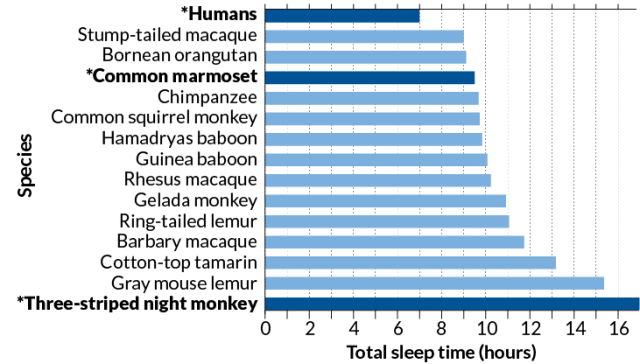
A large comparison of primate sleep patterns finds that most species get somewhere between nine and 15 hours of shut-eye daily, while humans average just seven. An analysis of several lifestyle and biological factors, however, predicts people should get 9.55 hours, researchers reported recently in the American Journal of Physical Anthropology. Most other primates in the study typically sleep as much as the scientists’ statistical models predict they should.

Two long-standing features of human life have contributed to unusually short sleep times, argue evolutionary anthropologists Charles Nunn of Duke University and David Samson of the University of Toronto Mississauga. First, when humans’ ancestors descended from the trees to sleep on the ground, individuals probably had to spend more time awake to guard against predator attacks. Second, humans have faced intense pressure to learn and teach new skills and to make social connections at the expense of sleep.

As sleep declined, rapid-eye movement, or REM — sleep linked to learning and memory (SN: 6/11/16, p. 15) — came to play an outsize role in human slumber, the researchers propose. Non-REM sleep accounts for an unexpectedly small share of human sleep, although it may also aid memory (SN: 7/12/14, p. 8), the scientists contend.

“It’s pretty surprising that non-REM sleep time is so low in humans, but something had to give as we slept less,” Nunn says.

Humans may sleep for a surprisingly short time, but Nunn and Samson’s sample of 30 species is too small to reach any firm conclusions, says evolutionary biologist Isabella Capellini of the University of Hull in England. Estimated numbers of primate species often reach 300 or more.

If the findings hold up, Capellini suspects that sleeping for the most part in one major bout per day, rather than in several episodes of varying durations as some primates do, substantially lessened human sleep time.

Nunn and Samson used two statistical models to calculate expected daily amounts of sleep for each species. For 20 of those species, enough data existed to estimate expected amounts of REM and non-REM sleep.

Estimates of all sleep times relied on databases of previous primate sleep findings, largely involving captive animals wearing electrodes that measure brain activity during slumber. To generate predicted sleep values for each primate, the researchers consulted earlier studies of links between sleep patterns and various aspects of primate biology, behavior and environments. For instance, nocturnal animals tend to sleep more than those awake during the day. Species traveling in small groups or inhabiting open habitats along with predators tend to sleep less.

Based on such factors, the researchers predicted humans should sleep an average of 9.55 hours each day. People today sleep an average of seven hours daily, and even less in some small-scale groups (SN: 2/18/17, p. 13). The 36 percent shortfall between predicted and actual sleep is far greater than for any other primate in the study.

Nunn and Samson estimated that people now spend an average of 1.56 hours of snooze time in REM, about as much as the models predict should be spent in that sleep phase. An apparent rise in the proportion of human sleep devoted to REM resulted mainly from a hefty decline in non-REM sleep, the scientists say. By their calculations, people should spend an average of 8.42 hours in non-REM sleep daily, whereas the actual figure reaches only 5.41 hours.

One other primate, South America’s common marmoset (Callithrix jacchus), sleeps less than predicted. Common marmosets sleep an average of 9.5 hours and also exhibit less non-REM sleep than expected. One species sleeps more than predicted: South America’s nocturnal three-striped night monkey (Aotus trivirgatus) catches nearly 17 hours of shut-eye every day. Why these species’ sleep patterns don’t match up with expectations is unclear, Nunn says. Neither monkey departs from predicted sleep patterns to the extent that humans do.

Citations
C.L. Nunn and D.R. Samson. Sleep in a comparative context: Investigating how human sleep differs from sleep in other primates. American Journal of Physical Anthropology. Published online February 14, 2018. doi:10.1002/ajpa.23427.

Humans don’t get enough sleep. Just ask other primates.

Improper childhood sleep can increase the chance of obesity and later-life cancer

Is your child having a tough time sleeping properly? You may need to keep a check on his/her body mass index (BMI) as a new research suggests that there is a co-relation between the two and can lead to cancer in adulthood.

“Childhood obesity very often leads to adult obesity. This puts them at greater risk of developing obesity-related cancers in adulthood,” said study lead author Bernard Fuemmeler, Professor and Associate Director for Cancer Prevention and Control at the Virginia Commonwealth University.

For the study, researchers enrolled 120 children, with an average age of eight, whose mothers had participated in the Newborn Epigenetic Study both pre-birth and during early childhood.

To track the sleep-wake cycle, the children wore accelerometers continuously for 24 hours a day for a period of at least five days.

They found that shorter sleep duration, measured in hours, was associated with a higher BMI z-score (body mass index adjusted for age and sex).

Each additional hour of sleep was associated with a .13 decrease in BMI z-score and with a 1.29 cm decrease in waist circumference.

More fragmented rest-activity rhythms and increased intradaily variability — a measure of the frequency and extent of transitions between sleep and activity — were also associated with greater waist circumferences.

The study results, to be presented at Obesity and Cancer: Mechanisms Underlying Etiology and Outcomes, indicate that while sleep duration is important, examining markers of sleep quality may also be useful in designing childhood obesity prevention strategies.

“Today, many children are not getting enough sleep. There are a number of distractions, such as screens in the bedroom, that contribute to interrupted, fragmented sleep. This, perpetuated over time, can be a risk factor for obesity,” Fuemmeler said.

“Because of the strong links between obesity and many types of cancer, childhood obesity prevention is cancer prevention.”

http://indianexpress.com/article/lifestyle/health/proper-sleep-in-children-may-prevent-cancer-later-5040630/

Pupil size changes with different stages of sleep, getting smaller as sleep gets deeper, in mice

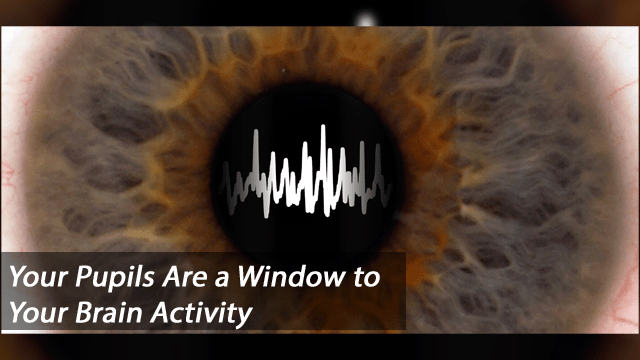
When people are awake, their pupils regularly change in size. Those changes are meaningful, reflecting shifting attention or vigilance, for example. Now, researchers reporting in Current Biology on January 18 have found in studies of mice that pupil size also fluctuates during sleep. They also show that pupil size is a reliable indicator of sleep states.

“We found that pupil size rhythmically fluctuates during sleep,” says Daniel Huber of the University of Geneva in Switzerland. “Intriguingly, these pupil fluctuations follow the sleep-related brain activity so closely that they can indicate with high accuracy the exact stage of sleep—the smaller the pupil, the deeper the sleep.”

Studies of pupil size had always been a challenge for an obvious reason: people and animals generally sleep with their eyes closed. Huber says that he and his colleagues were inspired to study pupil size in sleep after discovering that their laboratory mice sometimes sleep with their eyes open. They knew that pupil size varies strongly during wakefulness. What, they wondered, happened during sleep?

To investigate this question, they developed a novel optical pupil-tracking system for mice. The device includes an infrared light positioned close to the head of the animal. That invisible light travels through the skull and brain to illuminate the back of the eye. When the eyes are imaged with an infrared camera, the pupils appear as bright circles. Thanks to this new method, it was suddenly possible to track changes in pupil size accurately, particularly when the animals snoozed naturally with their eyelids open.

Their images show that mouse pupils rhythmically fluctuate during sleep and that those fluctuations are not at all random; they correlate with changes in sleep states.

Further experiments showed that changes in pupil size are not just a passive phenomenon, either. They are actively controlled by the parasympathetic autonomic nervous system. The evidence suggests that in mice, at least, pupils narrow in deep sleep to protect the animals from waking up with a sudden flash of light.

“The common saying that ‘the eyes are the window to the soul’ might even hold true behind closed eyelids during sleep,” Özge Yüzgeç, the student conducting the study, says. “The pupil continues to play an important role during sleep by blocking sensory input and thereby protecting the brain in periods of deep sleep, when memories should be consolidated.”

Huber says they would like to find out whether the findings hold in humans and whether their new method can be adapted in the sleep clinic. “Inferring brain activity by non-invasive pupil tracking might be an interesting alternative or complement to electrode recordings,” he says.

Reference:

Yüzgeç, Ö., Prsa, M., Zimmermann, R., & Huber, D. (2018). Pupil Size Coupling to Cortical States Protects the Stability of Deep Sleep via Parasympathetic Modulation. Current Biology. doi:10.1016/j.cub.2017.12.049

https://www.technologynetworks.com/neuroscience/news/pupil-size-couples-to-cortical-states-to-protect-deep-sleep-stability-296519?utm_campaign=NEWSLETTER_TN_Neuroscience_2017&utm_source=hs_email&utm_medium=email&utm_content=60184122&_hsenc=p2ANqtz-_uyMIjTK1pmq-79zMcyJIvQNsa8i7gH9l8Tn-_75Taz2opCD4t1otYN6OBmeI-iAKoenGO8wKWNZ7VV6E_JcYum4fHlA&_hsmi=60184122

Different dreams with different cheese

By Chris Mercer

Eating cheese before you go to bed will not give you nightmares but different varieties could help you choose the dreams you do want to have, says a study by the British Cheese Board.

Not one of the 200 volunteers who took part in the British Cheese Board’s ‘cheese & dreams’ study reported having nightmares after eating 20g of cheese 30 minutes before bed.

The industry body said 72 per cent of participants slept very well and 67 per cent remembered their dreams.

The study, believed to be the first of its kind, serves to dispel the old wives’ tale that eating cheese before bed means a restless night in-store. It was endorsed by Neil Stanley of the Sleep Research HPRU Medical Research Centre at the University of Surrey.

Dr. Judith Bryans, a nutrition scientist at Britain’s Dairy Council, added the science bit: “One of the amino acids in cheese – tryptophan – has been shown to reduce stress and induce sleep.”

The research, in an intriguing twist, also found that different cheeses appeared to give participants different kinds of dreams.

Cheddar, officially Britain’s most popular cheese with 55 per cent of the market, enhanced dreams about celebrities. One girl said she dreamt of helping to form a human pyramid under the supervision of film star Johnny Depp.

Stilton was the wild card, especially for women. Around 85 per cent of women experienced bizarre dreams after eating Britain’s iconic blue cheese, including talking soft toys, dinner party guests being traded for camels and a vegetarian crocodile upset because it could not eat children.

Of the others, Red Leicester is likely to have you dwelling on the past and Lancashire will get you focused on the future.

The boring award goes to crumbly Cheshire, which gave more than half its consumers dreamless nights. Cheshire and Red Leicester, however, gave the best nights’ sleep.

So there it is, although with more than 700 varieties of British cheese it seems there is much left to discover.

The British Cheese Board said it hoped to use the results to encourage more cheese eating before bed. Britons currently eat 30g of cheese every day on average, yet continental Europeans eat twice as much.

The Cheese Board says 30g of cheddar contains around 30 per cent of the recommended daily calcium intake for adults.

http://mobile.dairyreporter.com/R-D/Cheese-unlocks-your-wildest-dreams-says-study

With Polyphasic Sleep, You Can Thrive on as Little as Two Hours per Night

by Philip Perry

According to the National Institutes of Health, we spend about 26 years of our life asleep, one-third of the total. The latest research states that between 6.4 and 7.5 hours of sleep per night is ideal for most people. But some need more and others less. A contingent out there, mostly women, who do surprisingly well on just six hours.

There is even some data to suggest that a slim minority, around three percent of the population, thrive on just three hours sleep per night, with no ill effects. Of course, most people need much more. Even though in general, Americans are getting far less sleep today than in the past.

Cutting out needful rest could damage your health, long-term. A recent study showed that sleep is essential to clearing the brain of toxins that build up over the course of the day. It also helps in memory formation and allows other organs to repair themselves. Our professional lives and our natural cycles don’t always mesh. Often, they are at odds.

What if you are insanely busy, like ten times the norm? Say you are going to medical school, earning your PhD, or are trying to get a business off the ground. There may not be enough hours in the day for what you have to do.

One thing you can do is rearrange your sleep cycle to give yourself more time. Paleoanthropologists espouse that our ancestors probably didn’t sleep for seven hours at a clip, as it would make them easy prey. Instead, they probably slept at different periods throughout the day and night, and you can too.

What we consider a “normal” sleep cycle is called monophasic. This is sleeping for one long period throughout the night. In some Southern European and Latin American countries, the style is biphasic. They sleep five to six hours per night, with a 60-90 minute siesta during midday. There is a historical precedent too. Before the advent of artificial light, most people slept in two chunks each night of four hours each, with an hour of wakefulness in-between. That’s also a biphasic system. Then there is polyphasic sleep. This is sleeping for different periods and amounts of time throughout the day.

Certain paragons of history slept this way including Leonardo Da Vinci, Nikola Tesla, Franz Kafka, Winston Churchill, and Thomas Edison, among others. The idea gained popularity in the 1970’s and 80’s among the scientific community. Buckminster Fuller, a famous American inventor, architect, and philosopher of the 1900’s, championed this kind of slumber. He branded his version Dymaxion sleep.

Here, you take a half hour nap every six hours and sleep a total of just two hours per night. Swiss artist Francesco Jost practiced it for 49 days straight once, while observed by Italian neurologist Claudio Stampi. At first, Jost had trouble adjusting. But soon after, he was able to make it work with few side effects. He did have trouble waking at times, however. But the artist gained five more hours each day.

Do a quick search of polyphasic sleep and you find that many people around the world are experimenting with it. There are different ways of doing it. Some try the Uberman schedule. Here, one takes six 30 minute naps throughout the day at 2 P.M., 6 P.M., 2 A.M., and 10 A.M. That’s three hours of sleep total. Another way to do it is the Everyman Schedule. Here, a three hour chunk of sleep takes place between 1 A.M. and 4 A.M. Then, three 20 minute naps occur throughout the day at 9 A.M., 2 P.M., and 9 P.M. That’s around 4.5 hours of sleep daily.

So what’s the science behind this radical system? Unfortunately, no long-term research has been conducted, yet. One 2007 study, published in the Journal of Sleep Research, found that most animals sleep on a polyphasic schedule, rather getting their sleep all at once. This also begs the question, how much sleep does the human brain need to function properly? The answer is unknown.

Sleep is broken into three cycles. There is light sleep, deep sleep, and rapid eye movement (REM) sleep. The last one is considered the most important and restful of phases. We don’t stay in any one phase for long. Instead, we cycle through these constantly throughout the night. So with polyphasic sleep, the idea is to experience these three phases in shorter amounts of time, and wake up rested.

We don’t know the exact purpose of these phases. Sleep is still something of a mystery. Without a good understanding, it’s difficult to quantify the impact a polyphasic schedule has. One question is whether such a schedule allows for enough REM sleep. Polyphasic practitioners say they are able to enter the REM phase quickly, more so than with a monophasic style. Jost for example, claimed he could enter REM sleep immediately. This quick entry into the REM state is known as “repartitioning.” The deprivation of sleep may help the body enter REM quickly, as an adaptation.

So what are the downsides of this altered sleep cycle? Boredom and a limited social life. For those who want to go out drinking with friends, stay up late watching movies, or spend time with the kids, the drastic schedule change can cause problems. It has to be rigidly kept to work. Another concern, some studies have shown that those who sleep under five or six hours per night may have a higher risk of cardiovascular disease and lower immune system functioning.

Some argue that sleep theories just don’t account for human diversity in needs. For instance, some insomniacs have praised a polyphasic style for helping them regain the ability to sleep. At issue is the lack of data. But of course, anyone who is considering seriously taking part in such a style should consult a physician and keep in touch with him or her regularly, throughout the process.

How people sleep and how much they need varies widely. This may or may not have a genetic component. More research on sleep may help us to determine what our brain and body needs, and how we can adjust our sleep patterns to get the most out of our day, without sacrificing our health.

http://bigthink.com/philip-perry/want-more-hours-in-the-day-heres-how-to-thrive-on-as-little-as-two-hours-sleep-per-night

Brain scan research shows that lack of sleep severely alters brain function

BY DANIEL REED

Sleep deprivation majorly impacts the brain’s connectivity and function, according to a recent study published in NeuroImage. As well as affecting many important networks, sleep deprivation prevented normal changes to brain function between the morning and evening.

Sleep is an essential human state which is necessary for maintaining healthy function throughout the body. Therefore, lack of sleep has severe health-related consequences, with the brain being the most affected organ.

Lack of sleep can negatively affect memory, emotional processing and attentional capacities. For example, sleep deprivation has been shown to disrupt functional connectivity in hippocampal circuits (important for memory), and between the amygdala (important for emotion regulation) and executive control regions (involved in processes such as attention, planning, reasoning and cognitive flexibility). The emotional effects of sleep deprivation can be to both alter response patterns to negative things but also enhance reactivity toward positive things.

The study, led by Tobias Kaufmann of University of Oslo, involved 60 young men who completed three resting state functional magnetic resonance imaging (fMRI) scans – this is used to evaluate connectivity between brain regions when a person is not performing a task.

They were scanned in the morning and evening of the same day – this was to account for changes from morning to evening in normal brain function (diurnal variability). 41 men then underwent total sleep deprivation, whereas the remainder had another night of regular sleep, before they were scanned again the following morning. Finally, behavioural assessments of vigilance and visual attention were assessed.

The findings revealed that sleep deprivation strongly altered the connectivity of many resting-state networks; most clearly affected were networks important for memory (hippocampal networks) and attention (dorsal attention networks), as well as the default mode network (an interconnected set of brain regions active when a person is daydreaming or their mind is wandering).

In fact, they identified a set of 17 brain network connections showing altered brain connectivity. Furthermore, correlation analysis suggested that morning-to-evening connectivity changes returned the next day in the group that had slept the night, but not in the sleep-deprivation group.

The study emphasizes the major impact of sleep deprivation on the brain’s connectivity and function, as well as providing evidence that normal morning-to-evening connectivity changes do not occur after a night without sleep.

http://www.psypost.org/2016/07/brain-scan-research-shows-lack-sleep-severely-alters-brain-function-43977#prettyPhoto