Researchers report startling inflammasome discovery in Alzheimer’s study

1-alzheimersdi
Diagram of the brain of a person with Alzheimer’s Disease.

In recent years, researchers have largely converged on the role of inflammation in the development and progression of Alzheimer’s disease (AD). Studies over the past decade have revealed unexpected interactions between the brain and the immune system, and metabolic conditions such as obesity and diabetes may activate inflammatory responses that contribute to the development and progression of AD.

The activation of the inflammatory response is controlled by the inflammasome, a multi-protein oligomer that promotes the release of several pro-inflammatory cytokines including interleukin 1β (IL-1β) and interleukin 18 (IL-18). In an earlier study, a group of researchers with the University of Massachusetts Medical School, the University of Tokyo and the University of Bonn reported that mice with a cognate of Alzheimer’s disease that were additionally bred to knock out the NLRP3 gene encoding the inflammasome were completely protected from neurodegenerative effects of the disease. The researchers presumed that this was the result of their inability to produce IL-1β and IL-18.

This finding was quite promising, suggesting that targeting components of the inflammasome might be a path to Alzheimer’s treatments. In their new study, they sought to determine the effect of IL-18 by breeding IL-18 knockout mice. The researchers considered IL-18 to be a promising target, because levels are elevated in the cerebrospinal fluid of AD patients with mild cognitive impairment. Additionally, it is known to increase the production of amyloid peptide.

But the result of the new mouse study was startling, and completely unprecedented in Alzheimer’s research. The IL-18 knockout mice developed a lethal seizure disorder that the researchers attribute to an increase in neuronal network transmission. The authors write, “… the effects of IL-18 deletion were so dramatic that we were unable to identify previous evidence to help understand the phenomena.”

The finding that a proinflammatory cytokine might in some way ameliorate seizure-inducing neural activity seems counterintuitive, since inflammation is theorized to promote neurodegenerative symptoms in AD. The researchers believe that epilepsy is understudied in AD patients, even though it is a common complication; they point out that two-thirds of AD patients experience both motor and non-motor seizures. Additionally, AD patients with epilepsy are more likely to develop memory loss and other cognitive symptoms, and experience a more widespread loss of brain cells than AD patients without epilepsy, according to the researchers.

They theorize that IL-18 may be counteracting seizure-promoting effects of IL-1β, and suppressing IL-18 thus induced seizures in the test mice. “In fact,” they write, “the countereffect of IL-18 and IL-1β has been documented in a mouse model of cerebellar ataxia. Importantly, we found that the acute application of IL-18 protein reduced excitatory synaptic transmission in the hippocampus, providing evidence that IL-18 has a protective function in neuronal excitability. Thus, we speculate that IL-18 directly suppresses these proepileptogenic effects of IL-1β in APP/PS1 mice.”

However, the most important implication of the study may be that, while the inflammasome is a promising therapeutic target for Alzheimer’s, inhibiting specific cytokines could negatively affect people with the disease.

More information: Inflammasome-derived cytokine IL18 suppresses amyloid-induced seizures in Alzheimer-prone mice. Proceedings of the National Academy of Sciences (2018). doi.org/10.1073/pnas.1801802115

Abstract
Alzheimer’s disease (AD) is characterized by the progressive destruction and dysfunction of central neurons. AD patients commonly have unprovoked seizures compared with age-matched controls. Amyloid peptide-related inflammation is thought to be an important aspect of AD pathogenesis. We previously reported that NLRP3 inflammasome KO mice, when bred into APPswe/PS1ΔE9 (APP/PS1) mice, are completely protected from amyloid-induced AD-like disease, presumably because they cannot produce mature IL1β or IL18. To test the role of IL18, we bred IL18KO mice with APP/PS1 mice. Surprisingly, IL18KO/APP/PS1 mice developed a lethal seizure disorder that was completely reversed by the anticonvulsant levetiracetam. IL18-deficient AD mice showed a lower threshold in chemically induced seizures and a selective increase in gene expression related to increased neuronal activity. IL18-deficient AD mice exhibited increased excitatory synaptic proteins, spine density, and basal excitatory synaptic transmission that contributed to seizure activity. This study identifies a role for IL18 in suppressing aberrant neuronal transmission in AD.
Journal reference: Proceedings of the National Academy of Sciences

A new map of the brain’s serotonin system

anewmapofthe
A 3-D rendering of the serotonin system in the left hemisphere of the mouse brain reveals two groups of serotonin neurons in the dorsal raphe that project to either cortical regions (blue) or subcortical regions (green) while rarely crossing into the other’s domain.

As Liqun Luo was writing his introductory textbook on neuroscience in 2012, he found himself in a quandary. He needed to include a section about a vital system in the brain controlled by the chemical messenger serotonin, which has been implicated in everything from mood to movement regulation. But the research was still far from clear on what effect serotonin has on the mammalian brain.

“Scientists were reporting divergent findings,” said Luo, who is the Ann and Bill Swindells Professor in the School of Humanities and Sciences at Stanford University. “Some found that serotonin promotes pleasure. Another group said that it increases anxiety while suppressing locomotion, while others argued the opposite.”

Fast forward six years, and Luo’s team thinks it has reconciled those earlier confounding results. Using neuroanatomical methods that they invented, his group showed that the serotonin system is actually composed of at least two, and likely more, parallel subsystems that work in concert to affect the brain in different, and sometimes opposing, ways. For instance, one subsystem promotes anxiety, whereas the other promotes active coping in the face of challenges.

“The field’s understanding of the serotonin system was like the story of the blind men touching the elephant,” Luo said. “Scientists were discovering distinct functions of serotonin in the brain and attributing them to a monolithic serotonin system, which at least partly accounts for the controversy about what serotonin actually does. This study allows us to see different parts of the elephant at the same time.”

The findings, published online on August 23 in the journal Cell, could have implications for the treatment of depression and anxiety, which involves prescribing drugs such as Prozac that target the serotonin system – so-called SSRIs (selective serotonin reuptake inhibitors). However, these drugs often trigger a host of side effects, some of which are so intolerable that patients stop taking them.

“If we can target the relevant pathways of the serotonin system individually, then we may be able to eliminate the unwanted side effects and treat only the disorder,” said study first author Jing Ren, a postdoctoral fellow in Luo’s lab.

Organized projections of neurons

The Stanford scientists focused on a region of the brainstem known as the dorsal raphe, which contains the largest single concentration in the mammalian brain of neurons that all transmit signals by releasing serotonin (about 9,000).

The nerve fibers, or axons, of these dorsal raphe neurons send out a sprawling network of connections to many critical forebrain areas that carry out a host of functions, including thinking, memory, and the regulation of moods and bodily functions. By injecting viruses that infect serotonin axons in these regions, Ren and her colleagues were able to trace the connections back to their origin neurons in the dorsal raphe.

This allowed them to create a visual map of projections between the dense concentration of serotonin-releasing neurons in the brainstem to the various regions of the forebrain that they influence. The map revealed two distinct groups of serotonin-releasing neurons in the dorsal raphe, which connected to cortical and subcortical regions in the brain.

“Serotonin neurons in the dorsal raphe project to a bunch of places throughout the brain, but those bunches of places are organized,” Luo said. “That wasn’t known before.”

Two parts of the elephant

In a series of behavioral tests, the scientists also showed that serotonin neurons from the two groups can respond differently to stimuli. For example, neurons in both groups fired in response to mice receiving rewards like sips of sugar water but they showed opposite responses to punishments like mild foot shocks.

“We now understand why some scientists thought serotonin neurons are activated by punishment, while others thought it was inhibited by punishment. Both are correct – it just depends on which subtype you’re looking at,” Luo said.

What’s more, the group found that the serotonin neurons themselves were more complex than originally thought. Rather than just transmitting messages with serotonin, the cortical-projecting neurons also released a chemical messenger called glutamate – making them one of the few known examples of neurons in the brain that release two different chemicals.

“It raises the question of whether we should even be calling these serotonin neurons because neurons are named after the neurotransmitters they release,” Ren said.

Taken together, these findings indicate that the brain’s serotonin system is not made up of a homogenous population of neurons but rather many subpopulations acting in concert. Luo’s team has identified two groups, but there could be many others.

In fact, Robert Malenka, a professor and associate chair of psychiatry and behavioral sciences at Stanford’s School of Medicine, and his team recently discovered a group of serotonin neurons in the dorsal raphe that project to the nucleus accumbens, the part of the brain that promotes social behaviors.

“The two groups that we found don’t send axons to the nucleus accumbens, so this is clearly a third group,” Luo said. “We identified two parts of the elephant, but there are more parts to discover.”

https://medicalxpress.com/news/2018-08-brain-serotonin.html

Scientists Have Discovered a Brand New ‘Micro-Organ’ in The Human Immune System: subcapsular proliferative foci

LymphSlide_web_1024

Researchers have identified a brand new ‘micro-organ’ inside the immune system of mice and humans – the first discovery of its kind for decades – and it could put scientists on the path to developing more effective vaccines in the future.

Vaccines are based on centuries of research showing that once the body has encountered a specific type of infection, it’s better able to defend against it next time. And this new research suggests this new micro-organ could be key to how our body ‘remembers’ immunity.

The researchers from the Garvan Institute of Medical Research in Australia spotted thin, flat structures on top of the immune system’s lymph nodes in mice, which they’ve dubbed “subcapsular proliferative foci” (or SPFs for short).

These SPFs appear to work like biological headquarters for planning a counter-attack to infection.

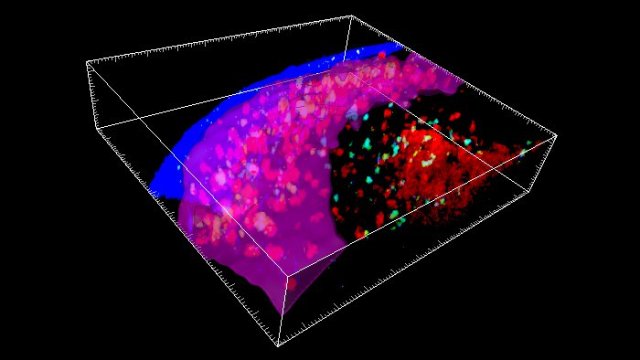
lymph-node-spf-2
Immune cells gathering at the SPF, with the purple band showing the SPF surface.

These SPFs only appear when the mice immune systems are fighting off infections that have been encountered before.

What’s more, the researchers detected SPFs in human lymph nodes too, suggesting our bodies react in the same way.

“When you’re fighting bacteria that can double in number every 20 to 30 minutes, every moment matters,” says senior researcher Tri Phan. “To put it bluntly, if your immune system takes too long to assemble the tools to fight the infection, you die.”

“This is why vaccines are so important. Vaccination trains the immune system, so that it can make antibodies very rapidly when an infection reappears. Until now we didn’t know how and where this happened.”

Traditional microscopy approaches analyse thin 2D slices of tissue, and the researchers think that’s why SPFs haven’t been spotted before – they themselves are very thin, and they only appear temporarily.

In this case the team made the equivalent of a 3D movie of the immune system in action, which revealed the collection of many different types of immune cell in these SPFs. The researchers describe them as a “one-stop shop” for fighting off remembered infections, and fighting them quickly.

Crucially, the collection of immune cells spotted by the researchers included Memory B type cells – cells which tell the immune system how to fight off a particular infection. Memory B cells then turn into plasma cells to produce antibodies and do the actual work of tackling the threat.

“It was exciting to see the memory B cells being activated and clustering in this new structure that had never been seen before,” says one of the team, Imogen Moran.

“We could see them moving around, interacting with all these other immune cells and turning into plasma cells before our eyes.”

According to the researchers, the positioning of the SPF structures on top of lymph nodes makes them perfectly positioned for fighting off infections – and fast.

They’re strategically placed at points where bacteria would invade, and contain all the ingredients required to keep the infection at bay.

Now we know how the body does it, we might be able to improve vaccine techniques – vaccines currently focus on making memory B cells, but this study suggests the process could be made more efficient by also looking at how they transform into plasma cells through the inner workings of an SPF.

“So this is a structure that’s been there all along, but no one’s actually seen it yet, because they haven’t had the right tools,” says Phan.

“It’s a remarkable reminder that there are still mysteries hidden within the body – even though we scientists have been looking at the body’s tissues through the microscope for over 300 years.”

The research has been published in Nature Communications.

https://www.sciencealert.com/researchers-identify-new-lymph-node-structures-powering-immunity

Our Galaxy Has Already Died Once. Now We Are in Its Second Life.

milky-way-died-once-reborn-noguchi_1024

The Milky Way is a zombie. No, not really, it doesn’t go around eating other galaxies’ brains. But it did “die” once, before flaring back to life. That’s what a Japanese scientist has ascertained after peering into the chemical compositions of our galaxy’s stars.

In a large section of the Milky Way, the stars can be divided into two distinct populations based on their chemical compositions. The first group is more abundant in what is known as α elements – oxygen, magnesium, silicon, sulphur, calcium and titanium. The second is less abundant in α elements, and markedly more abundant in iron.

The existence of these two distinct populations implies that something different is happening during the formation stages. But the precise mechanism behind it was unclear.

Astronomer Masafumi Noguchi of Tohoku University believes his modelling shows the answer. The two different populations represent two different periods of star formation, with a quiescent, or “dormant” period in between, with no star formation.

Based on the theory of cold flow galactic accretion proposed back in 2006, Noguchi has modelled the evolution of the Milky Way over a 10 billion-year period.

Originally, the cold flow model was suggested for much larger galaxies, proposing that massive galaxies form stars in two stages. Because of the chemical composition dichotomy of its stars, Noguchi believes this also applies to the Milky Way.

That’s because the chemical composition of stars is dependent on the gases from which they are formed. And, in the early Universe, certain elements – such as the heavier metals – hadn’t yet arrived on the scene, since they were created in stars, and only propagated once those stars had gone supernova.

In the first stage, according to Noguchi’s model, the galaxy is accreting cold gas from outside. This gas coalesces to form the first generation of stars.

After about 10 million years, which is a relatively short timescale in cosmic terms, some of these stars died in Type II supernovae. This propagated the α elements throughout the galaxy, which were incorporated into new stars.

But, according to the model, it all went a bit belly-up after about 3 billion years.

“When shock waves appeared and heated the gas to high temperatures 7 billion years ago, the gas stopped flowing into the galaxy and stars ceased to form,” a release from Tohoku University says.

During a hiatus of about 2 billion years, a second round of supernovae took place – the much longer scale Type Ia supernova, which typically occur after a stellar lifespan of about 1 billion years.

It’s in these supernovae that iron is forged, and spewed out into the interstellar medium. When the gas cooled enough to start forming stars again – about 5 billion years ago – those stars had a much higher percentage of iron than the earlier generation. That second generation includes our Sun, which is about 4.6 billion years old.

Noguchi’s model is consistent with recent research on our closest galactic neighbour, Andromeda, which is thought to be in the same size class as the Milky Way. In 2017, a team of researchers published a paper that found Andromeda’s star formation also occurred in two stages, with a relatively quiescent period in between.

If the model holds up, it may mean that the evolution models of galaxies need to be revised – that, while smaller dwarf galaxies experience continuous star formation, perhaps a “dead” period is the norm for massive ones.

If future observations confirm, who’s up for renaming our galaxy Frankenstein?

Noguchi’s paper has been published in the journal Nature.

https://www.sciencealert.com/milky-way-star-formation-two-generations-cold-flow-accretion-model-noguchi

New major study shows that there is no healthy level of alcohol consumption

5121

Even the occasional drink is harmful to health, according to the largest and most detailed research carried out on the effects of alcohol, which suggests governments should think of advising people to abstain completely.

The uncompromising message comes from the authors of the Global Burden of Diseases study, a rolling project based at the University of Washington, in Seattle, which produces the most comprehensive data on the causes of illness and death in the world.

Alcohol, says their report published in the Lancet medical journal, led to 2.8 million deaths in 2016. It was the leading risk factor for premature mortality and disability in the 15 to 49 age group, accounting for 20% of deaths.

Current alcohol drinking habits pose “dire ramifications for future population health in the absence of policy action today”, says the paper. “Alcohol use contributes to health loss from many causes and exacts its toll across the lifespan, particularly among men.”

Most national guidelines suggest there are health benefits to one or two glasses of wine or beer a day, they say. “Our results show that the safest level of drinking is none.”

The study was carried out by researchers at the Institute of Health Metrics and Evaluation (IHME), who investigated levels of alcohol consumption and health effects in 195 countries between 1990 to 2016. They used data from 694 studies to work out how common drinking was and from 592 studies including 28 million people worldwide to work out the health risks.

Moderate drinking has been condoned for years on the assumption that there are some health benefits. A glass of red wine a day has long been said to be good for the heart. But although the researchers did find low levels of drinking offered some protection from heart disease, and possibly from diabetes and stroke, the benefits were far outweighed by alcohol’s harmful effects, they said.

Drinking alcohol was a big cause of cancer in the over-50s, particularly in women. Previous research has shown that one in 13 breast cancers in the UK were alcohol-related. The study found that globally, 27.1% of cancer deaths in women and 18.9% in men over 50 were linked to their drinking habits.

In younger people globally the biggest causes of death linked to alcohol were tuberculosis (1.4% of deaths), road injuries (1.2%), and self-harm (1.1%).

In the UK, the chief medical officer Sally Davies has said there is no safe level of drinking, but the guidance suggests that drinkers consume no more than 14 units a week to keep the risks low. Half a pint of average-strength lager contains one unit and a 125ml glass of wine contains around 1.5 units.

While the study shows that the increased risk of alcohol-related harm in younger people who have one drink a day is small (0.5%), it goes up incrementally with heavier drinking: to 7% among those who have two drinks a day (in line with UK guidance) and 37% for those who have five.

One in three, or 2.4 billion people around the world, drink alcohol, the study shows. A quarter of women and 39% of men drink. Denmark has the most drinkers (95.3% of women, and 97.1% of men). Pakistan has the fewest male drinkers (0.8%) and Bangladesh the fewest women (0.3%). Men in Romania and women in Ukraine drink the most (8.2 and 4.2 drinks a day respectively), while women in the UK take the eighth highest place in the female drinking league, with an average of three drinks a day.

“Alcohol poses dire ramifications for future population health in the absence of policy action today. Our results indicate that alcohol use and its harmful effects on health could become a growing challenge as countries become more developed, and enacting or maintaining strong alcohol control policies will be vital,” said the report’s senior author, Prof Emmanuela Gakidou.

“Worldwide we need to revisit alcohol control policies and health programmes, and to consider recommendations for abstaining from alcohol. These include excise taxes on alcohol, controlling the physical availability of alcohol and the hours of sale, and controlling alcohol advertising. Any of these policy actions would contribute to reductions in population-level consumption, a vital step toward decreasing the health loss associated with alcohol use.”

Dr Robyn Burton, of King’s College London, said in a commentary in the Lancet that the conclusions of the study were clear and unambiguous. “Alcohol is a colossal global health issue and small reductions in health-related harms at low levels of alcohol intake are outweighed by the increased risk of other health-related harms, including cancer,” she wrote.

“There is strong support here for the guideline published by the Chief Medical Officer of the UK who found that there is ‘no safe level of alcohol consumption’.”

Public health policy should be to prioritise measures to reduce the numbers who drink through price increases, taxation, or setting the price according to the strength of the drink (minimum unit pricing), followed by curbs on marketing and restricting the places where people can buy alcohol.

“These approaches should come as no surprise because these are also the most effective measures for curbing tobacco-related harms, another commercially mediated disease, with an increasing body of evidence showing that controlling obesity will require the same measures,” she wrote.

Ben Butler, a Drinkaware spokesperson, said: “This new study supports existing evidence about the harms associated with alcohol. Our research shows that over a quarter of UK adults typically exceed the low risk drinking guidelines and are running the risk of serious long term illnesses.”

But David Spiegelhalter, Winton professor for the public understanding of risk at the University of Cambridge, said the data showed only a very low level of harm in moderate drinkers and suggested UK guidelines were very low risk.

“Given the pleasure presumably associated with moderate drinking, claiming there is no ‘safe’ level does not seem an argument for abstention,” he said. “There is no safe level of driving, but government do not recommend that people avoid driving. Come to think of it, there is no safe level of living, but nobody would recommend abstention.”

https://www.theguardian.com/society/2018/aug/23/no-healthy-level-of-alcohol-consumption-says-major-study

How restricting calories might offer protection against age-related diseases

20120917-restriction

Instead of survival of the fittest, evolution might actually be about survival of the laziest.

That’s according to a new study published Tuesday in the journal The Royal Society. Researchers from the University of Kansas studied fossils of ancient mollusks and gastropods, and found that organisms with higher metabolic rates were more likely to go extinct.

Animals that required less energy to power their daily lives and maintain their bodily functions were more likely to win in the long run, the results showed.

While metabolism isn’t the only factor that determines whether a species goes extinct, the researchers suggest that it’s a very important component of long-term survival.

That new finding adds to a growing body of evidence that links lower metabolism with longevity. (Naked mole rats, for example, are the longest living rodents thanks to a quirk in their metabolism.)

Rozalyn Anderson, an associate professor at the University of Wisconsin’s School of Medicine and Public Health, told Business Insider that her work in monkeys also suggests metabolism is at the center of the aging process.

“I think it’s all about energy: energy use, energy storage and the type of pathways that are being engaged to derive energy,” she said.

Restricting calories in monkeys
Anderson’s most recent research has been on the impacts of restricting caloric intake in Rhesus monkeys.

In a study of 76 monkeys published in the journal Science in 2009, Anderson and her colleagues found that restricting how many calories the animals consumed by 25% over a span of 20 years made them age differently, compared to a group of control monkeys that ate however much they wanted.

The monkeys who ate less were 2.5 times less likely to have an age-related disease like cancer or heart disease.

“The calorically restricted animals age differently,” Anderson said. “They don’t age slower, they age differently, and the way they age is associated with less disease risk. And that difference is in terms of their metabolism.”

She added that restricting a body’s caloric intake — the fuel it takes in — alters how the body produces and consumes energy, making it more energetically efficient.

Anderson also noted that the monkeys that underwent caloric restriction maintained their level of physical activity as they aged, whereas the control animals’ physical activity levels decreased. She explained at a conference in 2014 that for calorically restricted animals, there’s a lower metabolic cost associated with movement — more “bang for your buck” when it comes to trading nutrients for usable energy units.

When humans restrict their calories, researchers have seen similar outcomes. A two-year-long, NIH-supported study published in The Journals of Gerontology in 2015 found that participants who restricted their calories by 12% on average saw decreases in risk factors that contribute to age-related heart disease and diabetes. The experiment did not significantly alter their metabolism, though.

Connecting the dots between factors in the aging process
Anderson said that in her various studies of different facets of aging, she’s most fascinated when her research uncovers pathways that converge and overlap. This is happening more and more in the field of aging, and it’s helping her piece together why caloric restriction seems to alter parts of the aging process.

“I think it’s all completely connected, and these are just different ways of looking at the same phenomenon, which is the things that change with age that makes older people more vulnerable to disease than young people,” Anderson said. “How could you imagine a machine as complicated as a person or a monkey or a mouse, and not have it massively interconnected?”

For example, she found that a specific group of microRNAs — molecules that control gene expression — that she studied in relation to aging a while back plays an active role in the body’s response to caloric restriction. Anderson also found links between caloric restriction and her previous studies on NAD, a molecule that’s tied to energy metabolism and mitochondria. Putting these cellular-level studies into a bigger picture allows Anderson to gauge how all the moving parts come together when calories are limited.

“There’s this idea that the constellation of cells in a tissue are performing different tasks and different ones are creating vulnerability in different ways,” Anderson said. “It’s becoming more nuanced, for sure, it’s becoming more complicated. But it’s also making more sense. Which is why I think it’s kind of cool.”

Aging is inevitable, Anderson said, but her work is suggesting that how you age is flexible and manipulatable.

Understanding the relationship between metabolism and aging will allow scientists to better design studies on longevity. And as more research reveals how and why animals with lower metabolisms live longer and survive better, scientists may be able to figure out ways to mimic those effects in humans.

https://www.thisisinsider.com/restricting-calories-could-protect-against-aging-2018-8

Surprising new way to treat obesity

new-way-to-target-high-rates-of-obesity-307945
A UNSW-led team researching a drug to avoid insulin resistance was greeted with an unexpected result that could have implications for the nation’s rising rates of obesity and associated disease.

A novel drug is being touted as a major step forward in the battle against Australia’s escalating rates of obesity and associated metabolic diseases.

Two in three adults in Australia are overweight or obese. A long-term study between researchers at the Centenary Institute and UNSW Sydney has led to the creation of a drug which targets an enzyme linked to insulin resistance – a key contributor of metabolic diseases, such as type 2 diabetes.

The project has been a collaboration between the Centenary Institute’s Associate Professor Anthony Don, UNSW’s Metabolic research group and its leader Associate Professor Nigel Turner, and UNSW Professor Jonathan Morris’ synthetic chemistry group. Together, they set out to create a drug that targeted enzymes within the Ceramide Synthase family, which produce lipid molecules believed to promote insulin resistance in skeletal muscle, as well as liver and fat tissue.

The study has been published in the highly-regarded scientific journal Nature Communications. Surprisingly, although the drug was very effective at reducing the lipids of interest in skeletal muscle, it did not prevent mice (which had been fed a high-fat diet to induce metabolic disease) from developing insulin resistance. Instead, it prevented the mice from depositing and storing fat by increasing their ability to burn fat in skeletal muscle.

“We anticipated that targeting this enzyme would have insulin-sensitising, rather than anti-obesity, effects. However, since obesity is a strong risk factor for many different diseases including cardiovascular disease and cancer, any new therapy in this space could have widespread benefits,” says UNSW Associate Professor Nigel Turner.

While the study produced some unexpected results, it’s the first time scientists have been able to develop a drug that successfully targets a specific Ceramide Synthase enzyme in metabolic disease, making it a significant advancement in the understanding and prevention of a range of chronic health conditions.

“From here, I would like to develop drugs which target both the Ceramide Synthase 1 and 6 enzymes together, and see whether it produces a much stronger anti-obesity and insulin sensitising response. Although these drugs need more work before they are suitable for use in the clinic, our work so far has been a very important step in that direction,” says Centenary Institute’s Associate Professor Anthony Don.

https://newsroom.unsw.edu.au/news/health/surprise-result-researchers-targeting-high-rates-obesity

Gut Bacteria Hold the Key to Creating Universal Blood

gut-bacteria-hold-the-key-to-creating-universal-blood-307955


In January, raging storms caused medical emergencies along the U.S. East Coast, prompting the Red Cross to issue an urgent call for blood donations. The nation’s blood supply was especially in need of O-type blood that can be universally administered in an emergency. Now, scientists say they have identified enzymes — from the human gut — that can turn type A and B blood into O, as much as 30 times more efficiently than previously studied enzymes.

The researchers will present their results today at the 256th National Meeting & Exposition of the American Chemical Society (ACS). ACS, the world’s largest scientific society, is holding the meeting here through Thursday. It features more than 10,000 presentations on a wide range of science topics.

A brand-new video on the research is available at http://bit.ly/acsblood.

“We have been particularly interested in enzymes that allow us to remove the A or B antigens from red blood cells,” Stephen Withers, Ph.D., says. “If you can remove those antigens, which are just simple sugars, then you can convert A or B to O blood.” He says scientists have pursued the idea of adjusting donated blood to a common type for a while, but they have yet to find efficient, selective enzymes that are also safe and economical.

To assess potential enzyme candidates more quickly, Withers collaborated with a colleague at his institution, the University of British Columbia (UBC), who uses metagenomics to study ecology. “With metagenomics, you take all of the organisms from an environment and extract the sum total DNA of those organisms all mixed up together,” Withers explains. Casting such a wide net allows Withers’ team to sample the genes of millions of microorganisms without the need for individual cultures. The researchers then use E. coli to select for DNA containing genes that code for enzymes that can cleave sugar residues. So instead of using metagenomics as a means of learning about microbial ecology, Withers uses it to discover new biocatalysts. “This is a way of getting that genetic information out of the environment and into the laboratory setting and then screening for the activity we are interested in,” he says.

Withers’ team considered sampling DNA from mosquitoes and leeches, the types of organisms that degrade blood, but ultimately found successful candidate enzymes in the human gut microbiome. Glycosylated proteins called mucins line the gut wall, providing sugars that serve as attachment points for gut bacteria while also feeding them as they assist in digestion. Some of the mucin sugars are similar in structure to the antigens on A- and B-type blood. The researchers homed in on the enzymes the bacteria use to pluck the sugars off mucin and found a new family of enzymes that are 30 times more effective at removing red blood cell antigens than previously reported candidates.

Withers is now working with colleagues at the Centre for Blood Research at UBC to validate these enzymes and test them on a larger scale for potential clinical testing. In addition, he plans to carry out directed evolution, a protein engineering technique that simulates natural evolution, with the goal of creating the most efficient sugar-removing enzyme.

“I am optimistic that we have a very interesting candidate to adjust donated blood to a common type,” Withers says. “Of course, it will have to go through lots of clinical trails to make sure that it doesn’t have any adverse consequences, but it is looking very promising.”

The researchers acknowledge support and funding from the Canadian Institutes of Health Research.

https://www.acs.org/content/acs/en/pressroom/newsreleases/2018/august/gut-bacteria-provide-key-to-making-universal-blood-video.html

Creationists and conspiracy theorists share the same core process of teleological thinking.

It’s not uncommon to hear someone espouse the idea that “everything happens for a reason” or that something that happened was “meant to be.” Now, researchers reporting in Current Biology on August 20 have found that this kind of teleological thinking is linked to two seemingly unrelated beliefs: creationism, the belief that life on Earth was purposely created by a supernatural agent, and conspiracism, the tendency to explain historical or current events in terms of secret conspiracies or conspiracy theories.

“We find a previously unnoticed common thread between believing in creationism and believing in conspiracy theories,” says Sebastian Dieguez of the University of Fribourg. “Although very different at first glance, both these belief systems are associated with a single and powerful cognitive bias named teleological thinking, which entails the perception of final causes and overriding purpose in naturally occurring events and entities.”

A teleological thinker, for example, will accept as true propositions such as “the sun rises in order to give us light” or “the purpose of bees is to ensure pollination,” he says. “This type of thinking is anathema to scientific reasoning, and especially to evolutionary theory, and was famously mocked by Voltaire, whose character Pangloss believed that ‘noses were made to wear spectacles.’ Yet it is very resilient in human cognition, and we show that it is linked not only to creationism, but also to conspiracism.”

In previous work, Dieguez and colleagues showed that conspiracism wasn’t explained by the tendency to assume that “nothing happens by accident.” They realized that conspiracism isn’t driven by a rejection of the idea that the world is random and complex, but that it still could be linked to the notion that events in the world are actively and purposely fabricated. They also noticed that this looked “striking similar” to creationism. If correct, they reasoned, then conspiracism, like creationism, should be associated with teleological thinking, and both types of beliefs should be correlated with each other.

To find out whether this was the case, the researchers asked more than 150 college students in Switzerland to complete a questionnaire including teleological claims and conspiracist statements, as well as measures of analytical thinking, esoteric and magical beliefs, and a randomness perception task. The survey data showed that the tendency to ascribe function and meaning to natural facts and events was significantly, though modestly, correlated with conspiracist belief scales. Drawing on a large-scale survey of people in France, the researchers also found a strong association between creationism and conspiracism.

To look more closely at this pattern, the researchers next recruited more than 700 people to complete questionnaires online. Those data again confirmed associations among teleological thinking, creationism, and conspiracism. The data also show that those relationships are partly distinct from other variables, including gender, age, analytical thinking, political orientation, education, and agency detection.

“By drawing attention to the analogy between creationism and conspiracism, we hope to highlight one of the major flaws of conspiracy theories and therefore help people detect it, namely that they rely on teleological reasoning by ascribing a final cause and overriding purpose to world events,” Dieguez says. “We think the message that conspiracism is a type of creationism that deals with the social world can help clarify some of the most baffling features of our so-called ‘post-truth era.'”

The researchers say the findings have important implications for science educators and communicators. They may also help in formulating policies to “discourage the endorsement of socially debilitating and sometimes dangerous beliefs and belief systems.”

The researchers are now in the process of assessing the effectiveness of ongoing attempts to educate kids and adolescents about the nature of conspiracy theories and other types of misinformation. They say what’s ultimately needed is a thorough understanding of the factors that contribute to a conspiracist mindset, which is relevant to many beliefs, including global warming denialism and vaccine rejection, and they are developing a general framework to help disentangle the relevant factors.

The findings may help to explain how certain types of misinformation spread so easily aided by social media channels. “It’s possible that content framed in teleological terms are easier to process and spread faster than other types of information, and this could be tested on a much larger scale,” Dieguez says.

https://medicalxpress.com/news/2018-08-core-error-underlies-belief-creationism.html

New Research Suggests It’s all About the Bass

When we listen to music, we often tap our feet or bob our head along to the beat – but why do we do it? New research led by Western Sydney University’s MARCS Institute suggests the reason could be related to the way our brain processes low-frequency sounds.

The study, published in PNAS, recorded the electrical activity of volunteers’ brains while they listened to rhythmic patterns played at either low or high-pitched tones. The study found that while listening, volunteer’s brain activities and the rhythmic structure of the sound became synchronized – particularly at the frequency of the beat.

Co-author of the paper, Dr Sylvie Nozaradan from the MARCS Institute, say these findings strongly suggest that the bass exploits a neurophysiological mechanism in the brain – essentially forcing it to lock onto the beat.

“There is mounting evidence supporting the hypothesis that selective synchronization of large pools of neurons of the brain to the beat frequency may support perception and movement to the musical beat”, says Dr Nozaradan.

While this research is an important step in answering the mystery of why we ‘dance to the beat of the drum’, according to co-author Dr Peter Keller from the MARCS Institute, these findings could also prove important in clinical rehabilitation.

“Music is increasingly being used in clinical rehabilitation of cognitive and motor disorders caused by brain damage and these findings, and a better understanding of the relationship between music and movement, could help develop such treatments,” says Dr Keller.

The research team – also comprising of co-authors Dr Manuel Varlet and Tomas Lenc – suggests that while this research is an important step in understanding the relationship between bass and movement, there are still many open questions about the mechanisms behind this phenomenon.

“Future research is needed to clarify what networks of brain areas are responsible for this synchronization to the beat and how it develops from early in infancy” says Dr Nozaradan.

https://www.westernsydney.edu.au/newscentre/news_centre/more_news_stories/new_research_suggests_its_all_about_the_bass