Jellyfish, which don’t have brains, found to have what may be an early form of sleep

The purpose and evolutionary origins of sleep are among the biggest mysteries in neuroscience. Every complex animal, from the humblest fruit fly to the largest blue whale, sleeps — yet scientists can’t explain why any organism would leave itself vulnerable to predators, and unable to eat or mate, for a large portion of the day. Now, researchers have demonstrated for the first time that even an organism without a brain — a kind of jellyfish — shows sleep-like behaviour, suggesting that the origins of sleep are more primitive than thought.

Researchers observed that the rate at which Cassiopea jellyfish pulsed their bell decreased by one-third at night, and the animals were much slower to respond to external stimuli such as food or movement during that time. When deprived of their night-time rest, the jellies were less active the next day.

“Everyone we talk to has an opinion about whether or not jellyfish sleep. It really forces them to grapple with the question of what sleep is,” says Ravi Nath, the paper’s first author and a molecular geneticist at the California Institute of Technology (Caltech) in Pasadena. The study was published in Current Biology.

“This work provides compelling evidence for how early in evolution a sleep-like state evolved,” says Dion Dickman, a neuroscientist at the University of Southern California in Los Angeles.

Mindless sleep
Nath is studying sleep in the worm Caenorhabditis elegans, but whenever he presented his work at research conferences, other scientists scoffed at the idea that such a simple animal could sleep. The question got Nath thinking: how minimal can an animal’s nervous system get before the creature lacks the ability to sleep? Nath’s obsession soon infected his friends and fellow Caltech PhD students Michael Abrams and Claire Bedbrook. Abrams works on jellyfish, and he suggested that one of these creatures would be a suitable model organism, because jellies have neurons but no central nervous system. Instead, their neurons connect in a decentralized neural net.

Cassiopea jellyfish, in particular, caught the trio’s attention. Nicknamed the upside-down jellyfish because of its habit of sitting on the sea floor on its bell, with its tentacles waving upwards, Cassiopea rarely moves on its own. This made it easier for the researchers to design an automated system that used video to track the activity of the pulsing bell. To provide evidence of sleep-like behaviour in Cassiopea (or any other organism), the researchers needed to show a rapidly reversible period of decreased activity, or quiescence, with decreased responsiveness to stimuli. The behaviour also had to be driven by a need to sleep that increased the longer the jellyfish was awake, so that a day of reduced sleep would be followed by increased rest.

Other researchers had already documented a nightly drop in activity in other species of jellyfish, but no jellyfish had been known to display the other aspects of sleep behaviour. In a 35-litre tank, Nath, Abrams and Bedbrook tracked the bell pulses of Cassiopea over six days and nights and found that the rate, which was an average of one pulse per second by day, dropped by almost one-third at night. They also documented night-time pulse-free periods of 10–15 seconds, which didn’t occur during the day.

Restless night
Without an established jellyfish alarm clock, the scientists used a snack of brine shrimp and oyster roe to try to rouse the snoozing Cassiopea. When they dropped food in the tank at night, Cassiopea responded to its treat by returning to a daytime pattern of activity. The team used the jellyfish’s preference for sitting on solid surfaces to test whether quiescent Cassiopea had a delayed response to external stimuli. They slowly lifted the jellyfish off the bottom of the tank using a screen, then pulled it out from under the animal, leaving the jelly floating in the water. It took longer for the creature to begin pulsing and to reorient itself when this happened at night than it did during the day. If the experiment was immediately repeated at night, the jellyfish responded as if it were daytime. Lastly, when the team forced Cassiopea to pull an all-nighter by keeping it awake with repeated pulses of water, they found a 17% drop in activity the following day.

“This work shows that sleep is much older than we thought. The simplicity of these organisms is a door opener to understand why sleep evolved and what it does,” says Thomas Bosch, an evolutionary biologist at Kiel University in Germany. “Sleep can be traced back to these little metazoans — how much further does it go?” he asks.

That’s what Nath, Abrams and Bedbrook want to find out. Amid the chaos of finishing their PhD theses, they have begun searching for ancient genes that might control sleep, in the hope that this might provide hints as to why sleep originally evolved.

https://www.nature.com/news/jellyfish-caught-snoozing-give-clues-to-origin-of-sleep-1.22654

New Inherited Neurodevelopmental Disease Discovered

Writing in the journal eLife, the team reveals that this disease is caused by a recessive mutation in CAMK2A – a gene that is well known for its role in regulating learning and memory in animals. The findings suggest that dysfunctional CAMK2 genes may contribute to other neurological disorders, such as epilepsy and autism, opening up potential new avenues for treating these conditions.

“A significant number of children are born with growth delays, neurological defects and intellectual disabilities every year across the world,” explains senior author Bruno Reversade, Research Director at the Institute of Medical Biology and Institute of Molecular and Cell Biology, A*STAR, Singapore, who supervised the study. “While specific genetic mutations have been identified for some patients, the cause remains unknown in many cases. Identifying novel mutations would not only advance our understanding of neurological diseases in general, but would also help clinicians diagnose children with similar symptoms and/or carry out genetic testing for expecting parents.”

The team’s research began when they identified a pair of siblings who demonstrated neurodevelopmental delay with frequent, unexplained seizures and convulsions. While the structure of their bodies developed normally, they did not gain the ability to walk or speak. “We believed that the children had novel mutations in CAMK2A, and we wanted to see if this were true,” says Reversade.

The fully functional CAMK2A protein consists of multiple subunits. Using a genomic technique called exome sequencing, the team discovered a single coding error affecting a key residue in the CAMK2A gene that prevents its subunits from assembling correctly.

Moving their studies into the roundworm Caenorhabditis elegans, the scientists saw that this mutation disrupts the ability of CAMK2A to ensure proper neuronal communication and normal motor function. This suggests that the mutation is indeed the cause of the neurodevelopmental defects seen in the siblings.

To the best of the team’s knowledge, this new disorder represents the first human disease caused by inherited mutations on both copies of the CAMK2A gene. In addition, another report* published recently identified single-copy mutations on both CAMK2A and CAMK2B that caused intellectual disabilities as soon as the mutations occurred. “We would like to bring these findings to the attention of those working in the area of paediatric genetics, such as clinicians and genetic counsellors, as there are likely more undiagnosed children with similar symptoms who have mutations in their CAMK2A gene,” explains co-first author Franklin Zhong, Research Scientist in Reversade’s lab at A*STAR.

“Neuroscientists working to understand childhood brain development, neuronal function and memory formation also need to consider this new disease, since CAMK2A is associated with these processes. In future, it would be interesting to test whether restoring CAMK2A activity can bring therapeutic benefit to patients with this condition, as well as those with related neurological disorders.”

The paper ‘A homozygous loss-of-function CAMK2A mutation causes growth delay, frequent seizures and severe intellectual disability‘ can be freely accessed online at https://doi.org/10.7554/eLife.32451. Contents, including text, figures and data, are free to reuse under a CC BY 4.0 license.

*Küry, S., van Woerden, G.M., Besnard, T., Proietti Onori, M., Latypova, X., Towne, M.C., Cho, M.T., Prescott, T.E., Ploeg, M.A., Sanders, S., et al. (2017). De Novo Mutations in Protein Kinase Genes CAMK2A and CAMK2B Cause Intellectual Disability. The American Journal of Human Genetics 101, 768-788.

https://www.technologynetworks.com/neuroscience/news/new-inherited-neurodevelopmental-disease-discovered-303233?utm_campaign=Newsletter_TN_BreakingScienceNews&utm_source=hs_email&utm_medium=email&utm_content=63149617&_hsenc=p2ANqtz-_AJri5fciUzcysqtDye56dm2VpMIbIwRqkV2di9BmqZhzk9xuPEv5CWgKF24BpT8_OB1uWAjitxNXhmduWHyW2XKGlhw&_hsmi=63149617

Could a Dose of Sunshine Make You Smarter?

By Ruth Williams

The sun’s ultraviolet (UV) radiation is a major cause of skin cancer, but it offers some health benefits too, such as boosting production of essential vitamin D and improving mood. A recent report in Cell adds enhanced learning and memory to UV’s unexpected benefits.

Researchers have discovered that, in mice, exposure to UV light activates a molecular pathway that increases production of the brain chemical glutamate, heightening the animals’ ability to learn and remember.

“The subject is of strong interest, because it provides additional support for the recently proposed theory of ultraviolet light’s regulation of the brain and central neuroendocrine system,” dermatologist Andrzej Slominski of the University of Alabama who was not involved in the research writes in an email to The Scientist.

“It’s an interesting and timely paper investigating the skin-brain connection,” notes skin scientist Martin Steinhoff of University College Dublin’s Center for Biomedical Engineering who also did not participate in the research. “The authors make an interesting observation linking moderate UV exposure to . . . [production of] the molecule urocanic acid. They hypothesize that this molecule enters the brain, activates glutaminergic neurons through glutamate release, and that memory and learning are increased.”

While the work is “fascinating, very meticulous, and extremely detailed,” says dermatologist David Fisher of Massachusetts General Hospital and Harvard Medical School, “it does not imply that UV is actually good for you. . . . Across the board, for humanity, UV really is dangerous.”

Wei Xiong of the University of Science and Technology of China who led the research did not set out to investigate the effects of UV light on the brain or the skin-brain connection. He stumbled upon his initial finding “almost accidentally,” he explains in an email to The Scientist. Xiong and his colleagues were using a mass spectrometry technique they had recently developed for analyzing the molecular contents of single neurons, when their results revealed the unexpected presence of urocanic acid—a little-known molecule produced in the skin in response to UV light.

“It was a surprise because we checked through all the literature and found no reports of the existence of this small molecule in the central nervous system,” writes Xiong.

With little information to go on, Xiong and his colleagues decided to see whether UV light could also boost levels of urocanic acid in the brain. They exposed shaved mice to a low-dose of UVB—responsible for sunburn in humans—for 2 hours, then performed mass spectrometry on the animals’ individual brain cells. Sure enough, levels of urocanic acid increased in neurons of the animals exposed to the light, but not in those of control animals.

Urocanic acid can absorb UV rays and, as a result, may be able to protect skin against the sun’s harmful effects. But in the liver and other peripheral tissues, the acid is also known to be an intermediate molecule generated in the metabolic pathway that converts histidine to glutamate. Given glutamate’s role in the brain as an excitatory neurotransmitter, Xiong and his colleagues were interested to test whether the observed UV-dependent increase in urocanic acid in neurons might be coupled with increased glutamate production. It was.

Next, the team showed that UV light enhanced electrical transmission between glutaminergic neurons in brain slices taken from animals exposed to UV, but not in those from control animals. This UV-induced effect was prevented when the researchers inhibited activity of the enzyme urocanase, which converts urocanic acid to glutamate, indicating that the acid was indeed the mediator of the UV-induced boost in glutaminergic activity.

Lastly, the team showed that mice exposed to UV performed better in motor learning and recognition memory tasks than their unexposed counterparts. And, as before, treating the animals with a urocanase inhibitor prevented the UV-induced improvements in learning and memory. Administering urocanic acid directly to animals not exposed to ultraviolet light also spurred similar learning and memory improvements to those achieved with UV exposure.

Whether the results obtained in mice, which are nocturnal and rarely see the sun, will hold true in humans is yet to be determined. But, Fisher says, if the results do hold, the finding that urocanic acid alone can enhance learning and memory might suggest “a way to utilize this information to benefit people without exposing them to the damaging effects of UV.”

H. Zhu et al., “Moderate UV exposure enhances learning and memory by promoting a novel glutamate biosynthetic pathway in the brain,” Cell, doi: 10.1016/j.cell.2018.04.014, 2018.

https://www.the-scientist.com/?articles.view/articleNo/54603/title/Could-a-Dose-of-Sunshine-Make-You-Smarter-/

Drug target for curing the common cold

UK scientists believe they may have found a way to combat the common cold.

Rather than attacking the virus itself, which comes in hundreds of versions, the treatment targets the human host.

It blocks a key protein in the body’s cells that cold viruses normally hijack to self-replicate and spread.

This should stop any cold virus in its tracks if given early enough, lab studies suggest. Safety trials in people could start within two years.

The Imperial College London researchers are working on making a form of the drug that can be inhaled, to reduce the chance of side-effects.

In the lab, it worked within minutes of being applied to human lung cells, targeting a human protein called NMT, Nature Chemistry journal reports.

All strains of cold virus need this human protein to make new copies of themselves.

Researcher Prof Ed Tate said: “The idea is that we could give it to someone when they first become infected and it would stop the virus being able to replicate and spread.

“Even if the cold has taken hold, it still might help lessen the symptoms.

“This could be really helpful for people with health conditions like asthma, who can get quite ill when they catch a cold.”

He said targeting the host rather than the infection was “a bit radical” but made sense because the viral target was such a tricky one.

Cold viruses are not only plentiful and diverse, they also evolve rapidly, meaning they can quickly develop resistance to drugs.

The test drug completely blocked several strains of cold virus without appearing to harm the human cells in the lab. Further studies are needed to make sure it is not toxic in the body though.

Dr Peter Barlow of the British Society for Immunology said: “While this study was conducted entirely in vitro – using cells to model Rhinovirus infection in the laboratory – it shows great promise in terms of eventually developing a drug treatment to combat the effects of this virus in patients.”

Fighting a cold
Colds spread very easily from person to person. And the viruses that cause the infections can live on hands and surfaces for 24 hours.

Painkillers and cold remedies might help ease the symptoms. But currently there is nothing that will halt the infection.

You can catch a cold by:

– inhaling tiny droplets of fluid that contain the cold virus – these are launched into the air when an infected person coughs or sneezes
– touching an object or surface contaminated by infected droplets and then touching your mouth, nose or eyes
– touching the skin of someone who has the infected droplets on their skin and then touching your mouth, nose or eyes

Symptoms – a runny or blocked nose, sneezing and sore throat – usually come on quickly and peak after a couple of days. Most people will feel better after a week or so. But a mild cough can persist for a few weeks.

http://www.bbc.com/news/health-44107481

Deep brain stimulation may help children with Rett syndrome


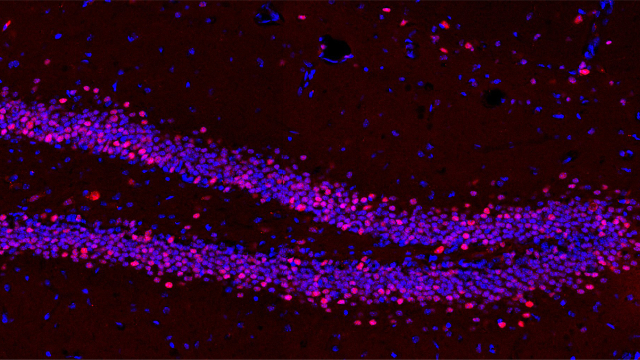
The dentate gyrus of a mouse that received deep brain stimulation, with cell nuclei in blue and expression of the gene c-Fos in red.

By Shawna Williams

Even as patients with Parkinson’s disease, obsessive-compulsive disorder, and other conditions turn to deep brain stimulation (DBS) to keep their symptoms in check, it’s been unclear to scientists why the therapy works. Now, researchers in Texas report that in mice, the treatment dials the activity of hundreds of genes up or down in brain cells. Their results, published in eLife March 23, hint that DBS’s use could be expanded to include improving learning and memory in people with intellectual disabilities.

“The paper is very well done. . . . It’s really a rigorous study,” says Zhaolan “Joe” Zhou, a neuroscientist at the University of Pennsylvania’s Perelman School of Medicine who reviewed the paper for eLife. Now that the genes and pathways DBS affects are known, researchers can home in on ways to improve the treatment, or perhaps combine the therapy with pharmacological approaches to boost its effect, he says.

In DBS, two electrodes are surgically implanted in a patient’s brain (the area depends on the disorder being treated), and connected to generators that are placed in the chest. Gentle pulses of electricity are then passed continuously through the electrodes. The treatment reduces motor symptoms in many people with Parkinson’s, and allows some patients to reduce their use of medications, but it does not eliminate symptoms or slow the disease’s progression.

In addition to its use in movement disorders, DBS is being explored as a potential therapy for a range of other brain-related disorders. For instance, as a way to boost learning and memory in people with Alzheimer’s disease, researchers are looking into stimulating the fimbria-fornix, a brain region thought to regulate the activity of the memory-storing hippocampus.

Such studies made Huda Zoghbi, a neurogeneticist at Baylor College of Medicine, wonder what effect DBS might have on learning- and memory-related disorders that strike earlier in life. “We rationalized that maybe in Alzheimer’s, many of the neurons are already gone, but perhaps in a healthier brain, like that of a Rett syndrome model, we can test the idea if stimulation of the fornix can improve learning and memory,” she explains. Rett syndrome, a genetic disease that almost exclusively strikes girls, includes intellectual disability, autism-like deficits in social interactions, and a loss of motor function. Several years ago, Zoghbi and colleagues tried zapping the fimbria-fornix, a C-shape bundle of nerves adjacent to the hippocampus in the brain, in mouse models of Rett syndrome. Published in 2015, their results showed that after two weeks of daily, one-hour DBS sessions, the mice with an intellectual disability performed like their peers without the disorder on a range of hippocampus-dependent tasks.

“We were struck that everything became indistinguishable after deep brain stimulation from a baseline normal,” Zoghbi says. This prompted her team to ask, “How does it work at a molecular level?” The answer, she thought, could determine whether DBS of the fimbria-fornix has the potential to serve as a multipurpose tool, treating not just Rett syndrome but other childhood-onset intellectual disabilities with a variety of causes. “It’s going to be really tough, perhaps, to solve these diseases one gene at a time, so that learning can be corrected,” she says. “You could eventually consider an intervention that can be broadly applicable, irrespective of the molecular cause of the defect.”

For the latest study, the research team analyzed baseline differences in gene activity between mice with and without the Rett syndrome–like condition in a part of the hippocampus called the dentate gyrus. They also treated the mice with the intellectual disability once with 45 minutes of DBS. Of the many genes with marked differences in initial activity between the two groups of mice, one-quarter (39 genes) became normal in the Rett mice after treatment, they report.

Zoghbi’s group also tested the effects of DBS in normal mice; in addition to changing the activity levels of thousands of genes, the researchers found, the treatment prompted alternative splicing of the RNA copies of other genes, which would result in differences in the resulting proteins. Many of the genes affected by the alternative splicing are known to be involved in the growth of new neurons or in maintaining the synapses through which brain cells communicate. In the 2015 study, the group had found that DBS enhances some hippocampus-related abilities in wildtype mice, such as spatial learning.

For hints as to whether DBS might have the potential to treat intellectual disabilities other than Rett syndrome, the researchers compared their list of genes whose activity levels changed after DBS in normal mice with existing data on genes known to have abnormal expression levels in mouse models of several such disorders. As with Rett syndrome, DBS in wildtype mice altered the activity levels of about one-quarter of the genes involved in each of the disorders.

The fact that a short period of stimulation had such profound effects on gene expression is interesting, says Svjetlana Miocinovic, a movement-disorders neurologist at Emory University who was not involved in the study. Most research on the mechanism of DBS has focused on changes it induces in the electrical or physical properties of the brain, she tells The Scientist. “I think this kind of study, where they actually look at the molecular environment in these neurons that are exposed to stimulation . . . is really the way to figure out what exactly is going on and how is that neural plasticity accomplished.”

Now that they have a way to measure such molecular effects, Zoghbi and her collaborators plan to optimize DBS for models of intellectual disabilities—figuring out how long the current needs to be on, for example, and how often. Another question they’d like to address is whether stimulating other brain areas in addition to the fimbria-fornix could add to the benefits seen in the mice.

Zoghbi emphasizes that even if DBS turns out to be safe and effective for children with Rett syndrome, it won’t be a silver bullet, because patients will have missed out on some important developmental milestones. “To really get the full benefit,” she says, “we’re going to have to combine any intervention with intensive physical and behavioral therapy.”

A. Pohodish et al., “Forniceal deep brain stimulation induces gene expression and splicing changes that promote neurogenesis and plasticity,” eLife, doi:10.7554/eLife.34031, 2018.

https://www.the-scientist.com/?articles.view/articleNo/54581/title/Deep-Brain-Stimulation-Affects-the-Activity-of-Hundreds-of-Genes/&utm_campaign=TS_DAILY%20NEWSLETTER_2018&utm_source=hs_email&utm_medium=email&utm_content=62919749&_hsenc=p2ANqtz-_Wc4T-kVW-WjClgnxcSv-OaWmpr8r7DtQJQRRztFWWATkUzGmgHVi5RLo74kNAO-J2872OymH-_uX0WKTVquRF4v7QAw&_hsmi=62919749

University of Calgary scientists discover a new way to battle multiple sclerosis that challenges conventional thinking about its root cause


The Dr. Peter Stys lab within the Hotchkiss Brain Institute at the Cumming School of Medicine, University of Calgary, is equipped with highly specialized microscopes used for researching multiple sclerosis, Alzheimer’s and other neurodegenerative disease. In this customized lab, the researchers can’t wear white lab coats, they have to wear dark clothing. Photons could reflect off light clothing and interfere with the experiments. From left: Megan Morgan, research assistant, and Craig Brideau, engineering scientist. Photo by Pauline Zulueta, Cumming School of Medicine

By Kelly Johnston, Cumming School of Medicine

Ridiculous. That’s how Andrew Caprariello says his colleagues described his theory about multiple sclerosis (MS) back when he was doing his PhD in Ohio.

Caprariello’s passion to explore controversial new theories about MS propelled him to seek out a postdoctoral fellowship with a like-minded thinker, whom he found in University of Calgary’s Dr. Peter Stys, a member of the Hotchkiss Brain Institute at the Cumming School of Medicine (CSM).

The collaboration paid off. Caprariello, Stys and their colleagues have scientific proof published in the Proceedings of the National Academy of Sciences (PNAS) that their somewhat radical theory has merit. “I’ve always wondered ‘what if’ MS starts in the brain and the immune attacks are a consequence of the brain damage,” says Caprariello, PhD, and lead author on the study.

Currently, MS is considered to be a progressive autoimmune disease. Brain inflammation happens when the body’s immune system attacks a protective material around nerve fibers in the brain called myelin. Conventional thinking is that rogue immune cells initially enter the brain and cause myelin damage that starts MS.

“In the field, the controversy about what starts MS has been brewing for more than a decade. In medical school, I was taught years ago that the immune attack initiates the disease. End of story,” says Stys, a neurologist and professor in the Department of Clinical Neurosciences at the CSM. “However, our findings show there may be something happening deeper and earlier that damages the myelin and then later triggers the immune attacks.”

To test the theory, the research team designed a mouse model of MS that begins with a mild myelin injury. In this way, researchers could mirror what they believe to be the earliest stages of the disease.

“Our experiments show, at least in this animal model, that a subtle early biochemical injury to myelin secondarily triggers an immune response that leads to additional damage due to inflammation. It looks very much like an MS plaque on MRI and tissue examination,” says Stys. “This does not prove that human MS advances in the same way, but provides compelling evidence that MS could also begin this way.”

With that result, the researchers started to investigate treatments to stop the degeneration of the myelin to see if that could reduce, or stop, the secondary autoimmune response.

“We collaborated with researchers at the University of Toronto and found that by targeting a treatment that would protect the myelin to stop the deterioration, the immune attack stopped and the inflammation in the brain never occurred,” says Stys. “This research opens a whole new line of thinking about this disease. Most of the science and treatment for MS has been targeted at the immune system, and while anti-inflammatory medications can be very effective, they have very limited benefit in the later progressive stages of the disease when most disability happens.”

It can be very hard to find funding to investigate an unconventional theory. The research team was funded by the Brain and Mental Health Strategic Research Fund, established by the Office of the Vice-President (Research) at UCalgary to support innovative, interdisciplinary studies within the Brain and Mental Health research strategy.

“We chose high-risk, novel projects for these funds to support discoveries by teams who did not have the chance to work together through conventional funding sources,” said Ed McCauley, PhD, vice-president (research). “The MS study shows the potential of brain and mental health scholars to expand capacity by tapping into new approaches for conducting research. Their work also exemplifies the type of interdisciplinary research that is propelling the University of Calgary as an international leader in brain and mental health research.”

http://www.ucalgary.ca/utoday/issue/2018-05-04/ucalgary-scientists-discover-new-way-battle-multiple-sclerosis

Organic printing inks may restore sight to blind people


An array of semitransparent organic pixels on top of a ultrathin sheet of gold. The thickness of both the organic islands and the underlying gold is more than one-hundred times thinner than a single neuron.

SUMMARY: A simple retinal prosthesis is under development. Fabricated using cheap and widely-available organic pigments used in printing inks and cosmetics, it consists of tiny pixels like a digital camera sensor on a nanometric scale. Researchers hope that it can restore sight to blind people.

Researchers led by Eric Glowacki, principal investigator of the organic nanocrystals subgroup in the Laboratory of Organic Electronics, Linköping University, have developed a tiny, simple photoactive film that converts light impulses into electrical signals. These signals in turn stimulate neurons (nerve cells). The research group has chosen to focus on a particularly pressing application, artificial retinas that may in the future restore sight to blind people. The Swedish team, specializing in nanomaterials and electronic devices, worked together with researchers in Israel, Italy and Austria to optimise the technology. Experiments in vision restoration were carried out by the group of Yael Hanein at Tel Aviv University in Israel. Yael Hanein’s group is a world-leader in the interface between electronics and the nervous system.

The results have recently been published in the scientific journal Advanced Materials.

The retina consists of several thin layers of cells. Light-sensitive neurons in the back of the eye convert incident light to electric signals, while other cells process the nerve impulses and transmit them onwards along the optic nerve to an area of the brain known as the “visual cortex.” An artificial retina may be surgically implanted into the eye if a person’s sight has been lost as a consequence of the light-sensitive cells becoming degraded, thus failing to convert light into electric pulses.

The artificial retina consists of a thin circular film of photoactive material, and is similar to an individual pixel in a digital camera sensor. Each pixel is truly microscopic — it is about 100 times thinner than a single cell and has a diameter smaller than the diameter of a human hair. It consists of a pigment of semi-conducting nanocrystals. Such pigments are cheap and non-toxic, and are commonly used in commercial cosmetics and tattooing ink.

“We have optimised the photoactive film for near-infrared light, since biological tissues, such as bone, blood and skin, are most transparent at these wavelengths. This raises the possibility of other applications in humans in the future,” says Eric Glowacki.

He describes the artificial retina as a microscopic doughnut, with the crystal-containing pigment in the middle and a tiny metal ring around it. It acts without any external connectors, and the nerve cells are activated without a delay.

“The response time must be short if we are to gain control of the stimulation of nerve cells,” says David Rand, postdoctoral researcher at Tel Aviv University. “Here, the nerve cells are activated directly. We have shown that our device can be used to stimulate not only neurons in the brain but also neurons in non-functioning retinas.”

https://www.sciencedaily.com/releases/2018/05/180502104043.htm

“Noisy” Neurons May Repeatedly Disrupt Your Sleep

You don’t remember it, but you woke up at least 100 times last night. These spontaneous arousals, lasting less than 15 seconds each, occur roughly every five minutes and don’t seem to affect how well-rested you feel. They are unrelated to waking up from a bad dream or your partner tossing and turning. Instead, they seem to be linked to some internal biological mechanism.

Frequently waking up throughout the night may have protected early humans from predators by increasing their awareness of their surroundings during sleep. “The likelihood someone would notice an animal is higher [if they] wake up more often,” says Ronny Bartsch, a senior lecturer in the Department of Physics at Bar-Ilan University in Israel. “When you wake up, you’re more prone to hear things. In deep sleep, you’re completely isolated.”

Sleep scientists, however, have been stumped as to what triggers these nocturnal disruptions. In a new Science Advances paper Bartsch proposes an innovative hypothesis that spontaneous arousals are due to random electrical activity in a specific set of neurons in the brain—aptly named the wake-promoting neurons.

Even when you are asleep your brain cells continuously buzz with a low level of electrical activity akin to white noise on the radio. Occasionally, this electrical clamor reaches a threshold that triggers the firing of neurons. The new paper suggests that when random firing occurs in the wake-promoting neurons, a person briefly jerks awake. But this is countered by a suite of sleep-promoting neurons that helps one quickly fall back to sleep.

Low-level electrical activity in neurons increases in colder temperatures whereas warmer temperatures flatten it. As a result, there should be fewer spontaneous arousals in hot weather. To test this theory, the researchers created computer models that mapped how neuronal noise should act at different temperatures and how the varying electrical activity could affect spontaneous arousals. They also measured sleep in zebra fish, which have similar day/night cycles to humans but are ectothermic, meaning their body temperature is controlled by the environment rather than by internal processes.

The researchers compared the fish’s sleep rates at four different water temperatures: 77, 82 (ideal for zebra fish), 84 and 93 degrees Fahrenheit. Across the board, the colder the water the more often the zebra fish woke up and the longer they stayed awake. The data from the zebra fish and the models of temperature, neuronal noise and arousal matched perfectly. “I think their theory is a perfectly good one and may even be correct,” says Clifford Saper, a neuroscientist at Harvard Medical School’s Division of Sleep Medicine and head of Neurology at Beth Israel Deaconess Medical Center who was not involved with the study. “But the experiment they did doesn’t test that hypothesis.”

The zebra fish experiment shows the fish wake up more frequently and stay awake for longer in colder temperatures but reveals nothing about these animals’ neuronal noise—or humans’, for that matter. Bartsch says that, so far, no studies have figured out how to measure neuronal noise in a sleeping animal.

The idea that warm temperatures cause fewer nocturnal disruptions also seemingly flies in the face of conventional wisdom that a colder bedroom leads to better sleep. But waking up because you are hot and uncomfortable is different from these brief spontaneous arousals. In fact, our bodies are pretty good at regulating their core brain and body temperatures, so the difference of a few degrees outside would not alter neuronal activity. In contrast, zebra fish’s temperature varies quite a bit. Saper says because of this zebra fish “are probably the last animal that I would use to try to make this point.”

Bartsch emphasizes the study is not trying to make a claim about thermoregulation in adults but he says it may have implications for newborn babies. “Because very young infants are more ectothermic than endothermic, their arousability could scale similarly to fish for different ambient temperatures.”

Infants are not as good at regulating their own temperature and so are more vulnerable to changes in the environment. (This is why premature babies have to be kept in incubators.) Consequently, the researchers think newborns may be more susceptible to heat-related fluctuations in neuronal noise.

The theory may have important implications for infant sleep. Although they may be disruptive to parents, spontaneous arousals could help save a baby’s life. Sudden infant death syndrome (SIDS) has been a leading cause of mortality in children between one month and one year of age and yet largely remains a mystery. One idea is that SIDS is caused by a stoppage in breathing, often through accidental suffocation. Waking up during the night can prompt babies to shift or cry out, helping to ensure that they do not have anything obstructing their airways and are still breathing. “We came up again with a theory that the babies with SIDS have low neuronal noise and therefore they have lower arousals,” says Hila Dvir, a physicist at Bar-Ilan. “Because they have low arousals, they are less protected from any hypoxic event—a shortage of oxygen.”

Not everyone is convinced, though. “Over the years, people have come up with ideas to explain SIDS, like a single explanation for it, and they just keep hitting dead ends with it because it’s probably a complex, heterogeneous situation,” says Rafael Pelayo, a clinical professor at the Stanford Center for Sleep Sciences and Medicine “It is a cool idea that this neuronal noise is explaining the arousals. I just think they jumped a little bit when they got into SIDS. It has to be more complicated than that.”

https://www.scientificamerican.com/article/sound-awake-noisy-neurons-may-repeatedly-disrupt-your-sleep1/

Merck study failure may signal doom for a broad group of pivotal Alzheimer’s studies focused on the amyloid theory of treatment.

by John Carroll

You need a license to cut-and-paste this copyrighted news content.
Use this link to purchase your paid subscription ($200/year for individuals and $1,000/year for companies of every size): https://endpts.com/subscribe
Already a paid subscriber? Sign in to Endpoints News to remove this message.

The BACE theory in Alzheimer’s R&D is simple. Cut off the flow of amyloid beta to the brain and you can eliminate what is widely believed — though not proven — to be a cause of the disease. Do that, and you could bend the course of this devastating illness in millions of people with mild to moderate forms of the disease.

And Merck $MRK just spent a fortune to demonstrate that it may well be completely wrong.

To be sure, Merck ran a clean study for verubecestat, the leading BACE drug in the clinic, and displayed the data on 1,958 patients for all to see today in the New England Journal of Medicine. Investigators carefully tracked amyloid beta flows in cerebrospinal cords and found that the drug did what it was intended to do, with a dramatic reduction of the toxic protein. 

It had no effect, with patients in the two dosage groups tracking in parallel decline on both cognition and function, the two classic measures for Alzheimer’s. 

The conclusion they reached is that the damage already present in the brains of patients with Alzheimer’s may be too extensive to treat with any BACE drug. And they also concede that the amyloid theory itself may be just flat wrong.

This suggests that once dementia is present, disease progression may be independent of Aβ production or, alternatively, that the amyloid hypothesis of Alzheimer’s disease may not be correct. Because Aβ deposition takes place years before clinical symptoms become apparent, it has been proposed that treatments targeting amyloid should be implemented early in the disease process, before the onset of clinical symptoms.

Soon after this study failed, Merck also threw in the towel on their second pivotal trial, noting it too was a flop. Those data are still being evaluated, but it underscores the belief that all of the BACE studies — including those at Eli Lilly $LLY, partnered with AstraZeneca $AZN, or Biogen $BIIB, allied with Eisai — are headed straight to failure.

Biogen is also rolling the dice on aducanumab, which the company has touted as a leading amyloid beta therapy. But with investigators in the field openly wondering whether the amyloid theory has lured a long lineup into a clinical disaster zone, it’s likely to face growing skepticism that it can develop a safe, effective therapy with just one drug.

This doesn’t by any means eliminate work in the area. True, Pfizer recently pulled out after spending hundreds of millions of dollars on their programs. But startups like Denali believe that new and better technology can give them better odds at success, while Celgene is jumping in with its own new pipeline. Others want to see if combination approaches using tau and amyloid beta together could work. 

Merck’s suggestion about going even earlier in the disease process has also prompted a range of studies in pre-symptomatic patients, while the FDA has signaled its interest in coming up with biomarkers to help speed new studies.

After more than 200 R&D projects ended in disaster, though, Alzheimer’s is looking like an increasingly daunting challenge, with no clear path forward that would inspire confidence among patients with the disease.

Merck study may signal doom for a broad group of pivotal Alzheimer’s studies

Brain folds may indicate risk of schizophrenia

By Bahar Gholipour

Schizophrenia may have a special fingerprint in the brain, even before its symptoms fully emerge. Now, a new method of analyzing this fingerprint — found within the folds of the brain — could help predict which young adults at high risk for schizophrenia will go on to develop the illness, a new study suggests.

The method, which was based on MRI scans of the brain, looked at the correlation between the amount of folding in different brain areas, which can reflect the strength of underlying connections between those areas. Using this method, the researchers could predict the outcome of 79 high-risk individuals with 80 percent accuracy, they reported yesterday (April 25) in the journal JAMA Psychiatry.

These findings need to be confirmed in larger future studies before the method can be used to in the clinic, the researchers said. And even then, a simple brain scan on its own won’t be enough to predict the future — it has to be used in conjunction with other symptoms for which a person is seeking help. But the goal is to find what clues from the brain’s structure could help clinicians better identify and treat patients before they experience full-blown schizophrenia and drop out of schools or lose their jobs due to a psychotic episode, said study investigator Dr. Lena Palaniyappan, an associate professor of psychiatry at Western University in Ontario, Canada.

Partner Series
What the Folds of Your Brain Could Tell You About Schizophrenia Risk
A simplified representation of the folds in different brain regions.
Credit: University Psychiatric Clinics Basel
Schizophrenia may have a special fingerprint in the brain, even before its symptoms fully emerge. Now, a new method of analyzing this fingerprint — found within the folds of the brain — could help predict which young adults at high risk for schizophrenia will go on to develop the illness, a new study suggests.

The method, which was based on MRI scans of the brain, looked at the correlation between the amount of folding in different brain areas, which can reflect the strength of underlying connections between those areas. Using this method, the researchers could predict the outcome of 79 high-risk individuals with 80 percent accuracy, they reported yesterday (April 25) in the journal JAMA Psychiatry.

These findings need to be confirmed in larger future studies before the method can be used to in the clinic, the researchers said. And even then, a simple brain scan on its own won’t be enough to predict the future — it has to be used in conjunction with other symptoms for which a person is seeking help. But the goal is to find what clues from the brain’s structure could help clinicians better identify and treat patients before they experience full-blown schizophrenia and drop out of schools or lose their jobs due to a psychotic episode, said study investigator Dr. Lena Palaniyappan, an associate professor of psychiatry at Western University in Ontario, Canada. [10 Things You Didn’t Know About the Brain]

Schizophrenia is a mental disorder characterized by psychotic episodes involving delusional thoughts and distorted perception. It is often preceded by subtle symptoms: A teenager who is withdrawn and suspicious, has anxiety, depression or sleep problems, and who experiences subtle changes in thinking and perception may be deemed by a doctor to be at high risk for developing schizophrenia in the next two or three years. But having these symptoms, which overlap with those of many other mental health conditions, doesn’t mean one will surely go on to develop schizophrenia — in fact, just about a third of individuals with these symptoms do.

“It’s really hard to know who is going to develop schizophrenia and who is not,” Palaniyappan told Live Science.

A wrinkle in the brain

Compared with other animals, the surface of the human brain is especially wrinkly — likely as a solution to fit a large brain inside a small skull. The patterns of folds in the brain’s surface, called the cortex, are determined before birth and change very little after the first or second year of life.

Previous studies of people with conditions such as schizophrenia and autism have detected local differences in folding patterns. For example, they have found a smoother surface in one brain region or a more wrinkled one in another, when comparing people with these conditions to the general population.

Palaniyappan and his colleagues examined all the brain regions and the relationship between their folding patterns. The idea is that the degree of folding would be similar between two brain areas if they are strongly interconnected. So, if an individual doesn’t show the same folding patterns as everyone else, it may suggest a problem in the wiring beneath the brain’s surface.

“Imagine two brain regions have a strong wire between them. If you cut the wire off, both of these regions would not be properly folded,” Palaniyappan said.

Sorting through scans

The team collected MRI brain scans from a group of people in Switzerland, who were on average 24 years old. The participants included 79 people with symptoms suggesting a high risk of schizophrenia and 44 healthy control subjects.

Then, the researchers followed the participants for four years and found 16 people in the high-risk group developed schizophrenia.

Looking back at the brain scans, the researchers found that 80 percent of the time, the relationship between folding patterns could correctly identify who developed schizophrenia and who didn’t. Those who did seemed to have a disorganized brain network — the folds of their cortical regions didn’t go hand in hand as much as the folds in the controls and in the high-risk people who didn’t develop the illness.

The earlier patients with schizophrenia receive psychotherapy or medication, the better they fare, according to a 2005 review of 30 studies published in the American Journal of Psychiatry. Early intervention may even change the course of the illness. One study published last year in Nature Neuropsychopharmacology, for instance, found a longer period of untreated symptoms was associated with weaker connectivity in the brain, especially in areas associated with responding to antipsychotic medications.

https://www.livescience.com/62414-brain-folds-schizophrenia.html