Pathways linking body and brain health and impacts to mental health revealed

The interconnectedness of the brain, body and lifestyle factors and how they collectively influence mental health has been demonstrated by new research.

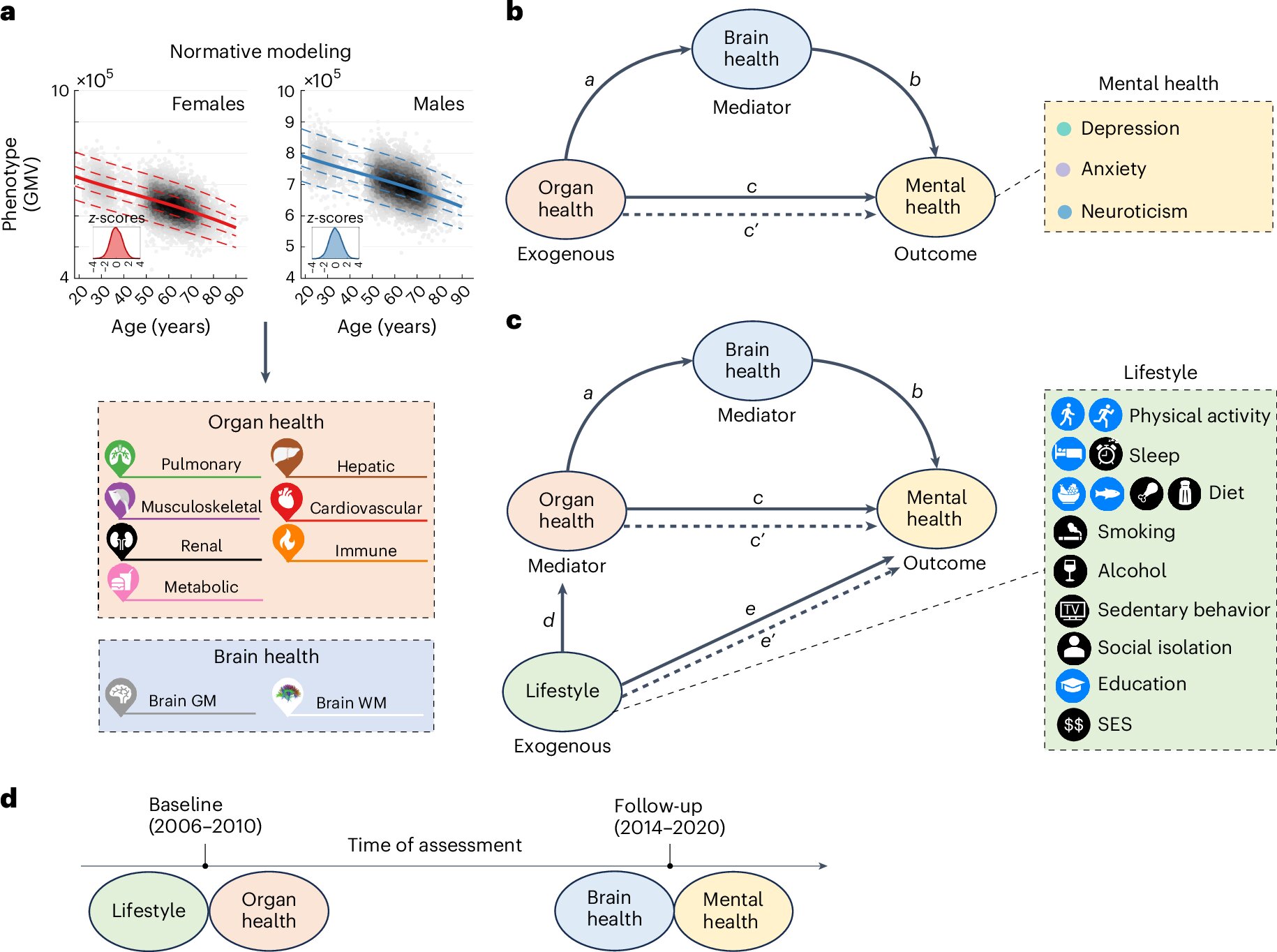
Researchers from the University of Melbourne, University College London and the University of Cambridge have identified multiple biological pathways involving organs and the brain that play a key part in physical and mental health.

The study, published today in Nature Mental Health, used UK Biobank data from more than 18,000 people—7,749 people in the study had no major clinically diagnosed medical or mental health conditions, while 10,334 reported a diagnosis of either schizophrenia, bipolar disorder, depression or anxiety.

Using advanced statistical models, the researchers found poorer organ health was significantly associated with higher depressive symptoms, and that the brain plays an important role in linking body health and depression.

The organ systems studied included the lungs, muscles and bones, kidneys, liver, heart, and the metabolic and immune systems.

“Overall, we found multiple significant pathways through which poor organ health may lead to poor brain health, which may in turn lead to poor mental health,” lead author Dr. Ye Ella Tian, research fellow in the Department of Psychiatry, said.

“By integrating clinical data, brain imaging and a wide array of organ-specific biomarkers in a large population-based cohort, we were able to establish for the first time multiple pathways involving the brain as a mediating factor and through which poor physical health of body organ systems may lead to poor mental health.

“We identified modifiable lifestyle factors that can potentially lead to improved mental health through their impact on these specific organ systems and neurobiology.

“Our work provides a holistic characterization of brain, body, lifestyle and mental health.”

Physical health was also taken into account as well as lifestyle factors such as sleep quality, diet, exercise, smoking, and alcohol consumption.

“This is a significant body of work because we have shown the link between physical health and depression and anxiety and how that is partially influenced by individual changes in brain structure,” Professor Andrew Zalesky from the Departments of Psychiatry and Biomedical Engineering said.

“Our results suggest that poor physical health across multiple organ systems, such as liver and heart, the immune system and muscles and bones, may lead to subsequent alterations in brain structure.

“These structural changes of the brain may lead to or exacerbate symptoms of depression and anxiety as well as neuroticism.”

Professor James Cole, an author of the study from UCL Computer Science, said, “While it’s well-known in health care that all the body’s organs and systems influence each other, it’s rarely reflected in research studies. So, it’s exciting to see these results, as it really emphases the value in combining measures from different parts of the body together.”

More information: Ye Ella Tian et al, Brain, lifestyle and environmental pathways linking physical and mental health, Nature Mental Health (2024). DOI: 10.1038/s44220-024-00303-4

https://medicalxpress.com/news/2024-08-pathways-linking-body-brain-health.html

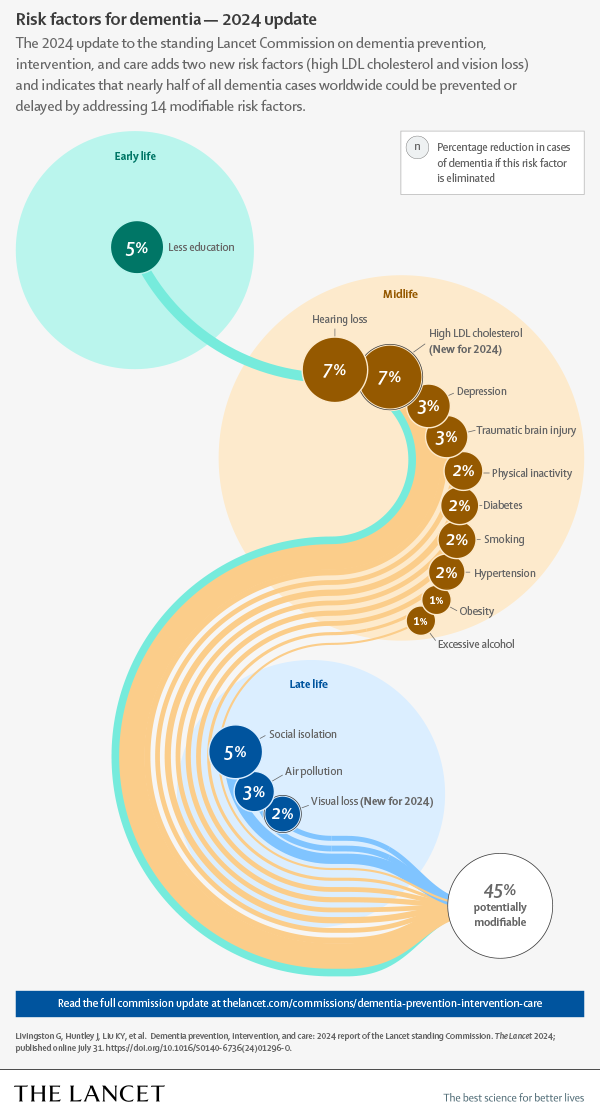
Eliminating these 14 risk factors may prevent nearly half of dementia cases

Key takeaways:

  • The Lancet Commission identified high cholesterol and vision loss as new risk factors for dementia.
  • The commission outlined 13 recommendations for individuals and governments to prevent dementia.

PHILADELPHIA — Tackling 14 risk factors for dementia beginning in childhood could prevent or delay nearly half of cases worldwide, according to a report from the Lancet Commission presented at the Alzheimer’s Association International Conference.

These include two risk factors — high cholesterol and vision loss — newly identified by the commission on dementia prevention, intervention and care.

An estimated 57 million people were living with dementia in 2019, Gill Livingston, MD, a professor of psychiatry at University College London, and colleagues wrote in the report. This number is expected to increase to 153 million by 2050, highlighting the need for risk reduction strategies.

The new report is an update to the commission’s 2020 report. Members of the commission adopted a triangulation framework that prioritized systematic reviews and meta-analyses. They also conducted new meta-analyses when necessary.

The researchers said their review supports the 12 potentially modifiable risk factors that were identified in the 2020 report: air pollution (RR = 1.1; 95% CI, 1.1-1.1); depression (RR = 2.2; 95% CI, 1.7-3); diabetes (RR = 1.7; 95% CI, 1.6-1.8); excessive alcohol use (RR = 1.2; 95% CI, 1-1.5); hearing loss (RR = 1.4; 95% CI, 1-1.9); hypertension (RR = 1.2; 95% CI, 1.1-1.4); lower education level (RR = 1.6; 95% CI, 1.3-2); obesity (RR = 1.3; 95% CI, 1-1.7); physical inactivity (RR = 1.2; 95% CI, 1.2-1.3); smoking (RR = 1.3; 95% CI, 1.2-1.4); social isolation (RR = 1.6; 95% CI, 1.3-1.8); and traumatic brain injury (RR = 1.7; 95% CI, 1.4-1.9).

The evidence also supports the addition of high LDL cholesterol (RR = 1.3; 95% CI, 1.3-1.4) and vision loss (RR = 1.5; 95% CI, 1.4-1.6).

If these 14 risk factors are eliminated, “nearly half of dementias could theoretically be prevented,” Livingston and colleagues wrote.

This has important implications for physicians, particularly family physicians, Livingston told Healio. She noted that diabetes, excessive alcohol use, hearing impairment, high LDL, hypertension, obesity, vision loss and smoking account for about one-quarter of all dementias.

“If we add depression, traumatic brain injury and physical inactivity, which family physicians also advise on, then it is a third of dementias,” she said. “Their active vigilance and advice potentially make a huge difference.”

Based on their findings, the researchers outlined 13 recommendations for individuals and governments to prevent dementia:

  • ensure children have access to good-quality education and encourage individuals in midlife to participate in “cognitively stimulating activities;”
  • reduce harmful noise exposure and make hearing aids accessible to those with hearing impairment;
  • treat depression;
  • promote helmets and other head protection during contact sports and when riding bicycles;
  • encourage exercise;
  • reduce smoking through education and by implementing policies that aim to control the cost of cigarettes;
  • prevent or reduce high blood pressure;
  • diagnose and treat high LDL;
  • maintain a healthy weight and treat obesity early;
  • reduce excessive alcohol use through price control and raising awareness about the risks of overconsumption;
  • reduce social isolation by encouraging activities and living with other people, prioritizing an “age-friendly and supportive community, environments and housing”;
  • ensure access to vision loss screening and treatment; and
  • decrease air pollution exposure.

“Although addressing risk factors at an early stage of life is desirable, there is also benefit from tackling risk throughout life; it is never too early or too late to reduce dementia risk,” Livingston and colleagues wrote.

References:

  • Livingston G, et al. Lancet standing commission on dementia prevention, intervention and care. Scientific advances in the 2024 commission. Presented at: Alzheimer’s Association International Conference; July 28-Aug. 1, 2024; Philadelphia.
  • The Lancet: Nearly half of dementia cases could be prevented or delayed by tackling 14 risk factors starting in childhood, including two new risks — high cholesterol and vision loss. www.eurekalert.org/news-releases/1052982. Published July 31, 2024. Accessed July 31, 2024.

Perspective

Back to Top 

Claire Sexton, DPhil

Dementia risk reduction is an important area of research. In this latest Lancet Commission report, they’re adding two more risk factors — high cholesterol and vision loss — to the list and calculating that, together, these 14 factors could account for around half of all worldwide cases of dementia. This illustrates the importance of our awareness of these types of risk factors.

It’s important for our understanding that these reports are not just informed by epidemiological studies, but further interventional studies. One of those, which is ongoing, is the U.S. POINTER study. Recruiting is complete, but evaluating the results of the study is still underway. They will be reported next year at AAIC 2025 in Toronto. This study is looking at multiple risk factors, including modifying diet, exercise, cognitive activities, social engagement and the management of heart health status, and whether these factors in combination can protect cognitive health.

Of note, for right now, the Alzheimer’s Association provides 10 Healthy Habits for Your Brain, which is a great resource for anybody who is thinking about their risk.

Claire Sexton, DPhil

Senior director of scientific programs and outreach

Alzheimer’s Association

Disclosures: Sexton reports no relevant financial disclosures.

Sources/Disclosures

Collapse

Source: 

Livingston G, et al. Lancet. 2024;doi:10.1016/S0140-6736(24)01296-0.

Your brain on shrooms — how psilocybin resets neural networks

The psychedelic drug causes some lasting changes to the communication pathways that connect distinct brain regions. This heat map shows how patterns of resting brain activity (blue and green) change when psilocybin is taken (red and yellow), then return to normal as the drug wears off. Credit: Sara Moser/Washington University

Taking psilocybin, the hallucinogenic compound found in magic mushrooms, temporarily resets entire networks of neurons in the brain that are responsible for controlling a person’s sense of time and self, finds a study that repeatedly imaged the brains of seven volunteers before, during and after they took a massive dose of the drug.

The findings, published in Nature on 17 July1, could offer insights into why the compound might have a therapeutic effect on some neurological conditions.

Researchers “saw such massive changes induced by psilocybin” that some study participants’ brain-network patterns resembled those of a different person entirely, says Shan Siddiqi, a psychiatric neuroscientist at Harvard School of Medicine in Boston, Massachusetts. “I’ve never seen an effect this strong.”

Most of these changes lasted for a few hours, but one key link between different parts of the brain remained disrupted for weeks.

Psychedelic medicine

Psilocybin is one of several psychedelic drugs, including LSD, ketamine and MDMA (also known as ecstasy), that are being investigated as therapies for conditions such as depression and post-traumatic stress disorder. Despite promising data that have sped treatments towards approval, researchers still don’t fully understand the mechanism that underlies their therapeutic effects.

Many studies have investigated how psychedelics affect individual cells, but Joshua Siegel, a systems neuroscientist at the Washington University School of Medicine in St. Louis, Missouri, took a broader approach to look at how psilocybin affects networks of neurons across the whole brain.

Siegel and his colleagues tracked activity in the brains of seven healthy adults before, during and after they took a high dose of psilocybin. The researchers used functional magnetic resonance imaging (fMRI) to obtain images of blood-flow changes in different parts of the brain — a proxy used to measure how groups of neurons across the brain communicate with one another.

The researchers compared these fMRI scans with images of the same participants’ brains when they did not take any drug or when they took a stimulant. They found that psilocybin caused groups of neurons that normally fire together to become desynchronized. These effects were localized to a group of brain regions called the default mode network, which is usually active when the brain is at ‘wakeful rest’ — for example, during daydreaming — rather than focusing on a task. Although most of the neurons in this network seemed to get back in sync once the acute effects of the drug had worn off, the communication between the default mode network and a brain region called the anterior hippocampus — which is involved in creating our senses of space, time and self — was diminished for weeks.

The researchers also found that a mental exercise called ‘grounding’, which is commonly used in psychedelic therapy to dampen the unpleasant effects of a drug by diverting the recipient’s attention to their surroundings, diminished psilocybin’s effects on the brain. This suggests there could be a neurological signal that grounding techniques can influence, Siegel says.

Deeper insights

Although past experiments have also found that psilocybin disrupts brain networks2,3, this study “provides a deeper resolution and insight into the nature of that disruption”, says Brian Mathur, a systems neuroscientist at the University of Maryland School of Medicine in Baltimore.

The approach was unusual: the researchers homed in on a smaller number of participants than are typically recruited for brain-imaging studies, instead opting to scan each participant about 18 times, creating a mountain of data that the authors could use to support their conclusions.

Mathur cautions that these data cannot show what precisely causes the potential therapeutic benefit of psilocybin — but they offer tantalizing clues. “It’s possible psilocybin is directly causing” the brain-network changes, he says — or perhaps it is creating a psychedelic experience that in turn causes parts of the brain to behave differently, he says.

Siddiqi agrees, adding that it will be useful to untangle whether psilocybin’s blood-flow changes in the brain, which is measured by fMRI, or its direct effects on neurons — or both — are responsible for the brain-network disruptions. Siegel hopes to conduct further experiments to investigate the effects of psilocybin on the brains of people with conditions such as depression.

“The best part of this work is that it’s going to provide a means forward for the field to develop further hypotheses that can and should be tested,” Mathur says.

doi: https://doi.org/10.1038/d41586-024-02275-y

The serotonin-boosting action of antidepressants relieves depression by restoring normal communication and connections in the brain

Scott Thompson, PhD 

Professor, Department of Psychiatry
Director, Center for Novel Therapeutics
University of Colorado School of Medicine
Anschutz Medical Campus

Researchers from the University of Colorado Anschutz Medical Campus have established a new framework for understanding how classic antidepressants work in treating major depressive disorder (MDD), reemphasizing their importance and aiming to reframe clinical conversation around their role in treatment.

The nature of the dysfunction at the root of MDD has been under investigation for decades. Classic antidepressants, like SSRIs (selective serotonin reuptake inhibitors, such as Prozac) cause an elevation in the levels of the brain chemical messenger, serotonin. This observation led to the idea that antidepressants work because they restore a chemical imbalance, such as a lack of serotonin. However, subsequent years of research showed no significant decrease in serotonin in people with depression. While experts have moved away from this hypothesis due to lack of concrete evidence, this has led to a shift in public opinion on the effectiveness of these medications.

Antidepressants, such as SSRIs and serotonin and norepinephrine reuptake inhibitors (SNRIs) are still effective in alleviating depressive episodes in many patients, however. In a paper published in Molecular Psychiatry, researchers outline a new framework for understanding how antidepressants are efficacious in treating MDD. This framework helps clarify how antidepressants like SSRIs are still be helpful, even if MDD isn’t caused by a lack of serotonin.

“The best evidence of changes in the brain in people suffering from MDD is that some brain regions are not communicating with each other normally,” says Scott Thompson, PhD, professor in the department of psychiatry at the University of Colorado School of Medicine and senior author. “When the parts of the brain responsible for reward, happiness, mood, self-esteem, even problem solving in some cases, are not communicating with each other properly, then they can’t do their jobs properly.

“There is good evidence that antidepressants that increase serotonin, like SSRIs, all work by restoring the strength of the connections between these regions of the brain. So do novel therapeutics such as esketamine and psychedelics. This form of neuroplasticity helps release brain circuits from being ‘stuck’ in a pathological state, ultimately leading to a restoration of healthy brain function,” said Thompson.

Thompson and colleagues liken this theory to a car running off the road and getting stuck in a ditch, requiring the help of a tow truck to pull the car out of its stuck state, allowing it to move freely down the road again.

Researchers are hoping health care providers will use their examples to bolster conversations with apprehensive patients about these treatments, helping them better understand their condition and how to treat it.

“We are hoping this framework provides clinicians new ways to communicate the way these treatments work in combating MDD,” said C. Neill Epperson, MD, Robert Freedman endowed professor and chair of the department of psychiatry in the University of Colorado School of Medicine and co-author on the paper. “Much of the public conversation around the effectiveness of antidepressants, and the role serotonin plays in diagnosis and treatment, has been negative and largely dangerous. While MDD is a heterogenous disorder with no one fits all solution, it is important to emphasize that if a treatment or medication is working for you, then they are lifesaving. Understanding how these medications promote neuroplasticity can help strengthen that message.”

Story Source:

Materials provided by University of Colorado Anschutz Medical Campus. Original written by Kelsea Pieters. Note: Content may be edited for style and length.


Journal Reference:

  1. Chloe E. Page, C. Neill Epperson, Andrew M. Novick, Korrina A. Duffy, Scott M. Thompson. Beyond the serotonin deficit hypothesis: communicating a neuroplasticity framework of major depressive disorderMolecular Psychiatry, 2024; DOI: 10.1038/s41380-024-02625-2

https://www.sciencedaily.com/releases/2024/06/240605162707.htm

Lithium in drinking water linked to negative effects on human health

Key takeaways:

  • Increased risk for autism spectrum disorder was associated with 7.36 µg/L lithium exposure.
  • Increased risk for schizophrenia spectrum disorder was associated with 5.8 µg/L lithium exposure.

NEW YORK — Lithium exposure in drinking water was associated with potentially detrimental effects on human health, including increased risk for autism spectrum disorder and schizophrenia spectrum disorder, according to researchers.

“At the state hospital we deal with a lot of the sickest patients,” Sonja M. Johnson, DO, a fourth-year psychiatry resident at Indiana University Health, told Healio at the American Psychiatric Association annual meeting. “Lithium is an awesome medication, and it does a lot of great things. We always hear the phrase, ‘That’s so good. Put it in the water!’ I mean, they did it with fluoride, right?”

Andrea Patterson, MD, also a fourth-year resident in psychiatry, and colleagues at Indiana University School of Medicine performed a systematic review of 26 studies with data from five continents to determine whether higher levels of environmental lithium in the water supply poses a risk to human health.

Sonja M. Johnson

“Mental health is still kind of taboo in our area, but water is important, and people drink water,” Johnson said. “The question was, can we help everyone without making everyone take medicine?”

Of the reviewed studies, 12 showed that lithium exposure through drinking water had the potential for negative effects on the nervous, cardiovascular, endocrine, lymphatic, urinary and integumentary systems and could affect newborns to adults and pregnant women.

Although researchers reported that at 7 µg/L, lithium begins to have protective factors against suicide, they noted that at 7.36 µg/L it was associated with autism spectrum disorder, and at 5.8 µg/L with schizophrenia.

“Given this information, any lithium added to the U.S. water supply for protective reasons would inevitably increase the risk of harm,” researchers wrote.

“When you ask a question, sometimes the answer is no,” Johnson said. “That’s still an answer, and that’s still pretty awesome, because if you don’t ask you don’t know.”

Sources/Disclosures

Collapse

Source: 

Patterson A, et al. Too much of a good thing? Detrimental health effects linked to environmental lithium exposure through drinking water: A systematic review. Presented at: American Psychiatric Association annual meeting; May 4-8, 2024; New York.

Disclosures: Johnson reported no relevant financial disclosures. Please see the study for all other authors’ relevant financial disclosures.

Single-dose drug to quash anxiety in trials

By Bronwyn Thompson

An effective single-dose, long-term treatment for anxiety could be within reach, with the phase 2b clinical trial of MM-120 reported to have passed the stage with flying colors. The makers, MindMed, now plan to hold an end-of-phase meeting with the US Food and Drug Administration (FDA) in early 2024, and then get a phase 3 trial under way.

MM-120 is essentially lysergide D-tartrate, which is best known by its abbreviation, LSD. A synthetic tryptamine, this serotonergic hallucinogen acts as a partial agonist at serotonin (5-hydroxytryptamine [5-HT]) 5-HT2A receptors. MindMed has developed a tartrate form of lysergide to treat generalized anxiety disorder (GAD) and, in a separate trial, attention-deficit hyperactivity disorder (ADHD).

The company has reported that the phase 2b clinical trial of 200 participants with GAD symptoms had met its primary endpoint with “positive topline results,” paving the way for taking it to the next trial stage and closer to therapeutic approval.

“Clinically meaningful improvements,” compared to a placebo, were noted in groups on 100 µg and 200 µg doses. MM-120 was reportedly well tolerated, with side effects such as hallucinations and euphoric mood only occurring on dose day.

Not surprisingly, given its one-off dose and it being a standalone drug – so with no psychotherapy aspect to the trial – 90% of the 200 participants completed the four-week trial and 97.5% in the high-dose groups saw it through to the end.

“We are excited by the strong positive results for MM-120 in GAD, particularly given that this is the first study to assess the standalone drug effects of MM-120 in the absence of any psychotherapeutic intervention,” said MindMed director Robert Barrow in a statement. “These promising findings represent a major step forward in our goal to bring a paradigm-shifting treatment to the millions of patients who are profoundly impacted by GAD.”

GAD, which can be a hugely debilitating subtype of anxiety disorder, is hallmarked by chronic excessive worry that can impact work, health and relationships. Of the estimated 6.8 million Americans who have GAD, less than half are receiving any treatment for it.

It’s also notoriously difficult to treat, with around half of those who do seek medical intervention not responding to initial treatment.

In the study, 100 µg of MM-120 administered once, showed remarkable results four weeks later. Using the Hamilton Anxiety Rating Scale (HAM-A), remission rates and Clinical Global Impressions – Severity (CGI-S) scores, the drug’s performance shows great promise.

Looking at clinical response, with a 50% or greater improvement in HAM-A scores after the fourth week, 78% of the participants had significant GAD relief compared to the placebo, while clinical remission – a HAM-A score below seven – was shown in a massive 50% of participants who had received the 100-µg dose.

Overall, participants receiving 100 µg or 200 µg experienced a two-unit improvement in the CGI-S score at the four-week assessment.

“Generalized anxiety disorder is a common condition associated with significant impairment that adversely affects millions of people and there remains a serious unmet need for this patient population,” said Daniel Karlin, Chief Medical Officer of MindMed. “The pharmaceutical industry has largely ignored GAD over recent decades as it has proved extremely difficult to target. Few new treatment options have shown robust activity in GAD since the last new drug approval in 2004, making the strong, rapid, and durable clinical activity of a single dose of MM-120 observed in the trial particularly notable.

“We believe this study is the first to rigorously assess the efficacy of a drug candidate in this class in the absence of a concurrent therapeutic intervention, which brings hope to the millions of people suffering from GAD and provides additional evidence that MM-120 may play an important role in revolutionizing the treatment of brain health disorders,” he added in the statement.

https://newatlas.com/medical/single-dose-drug-quash-anxiety-trial

A new blood test may predict the onset of psychotic disorders years in advance, during childhood

By Rich Haridy

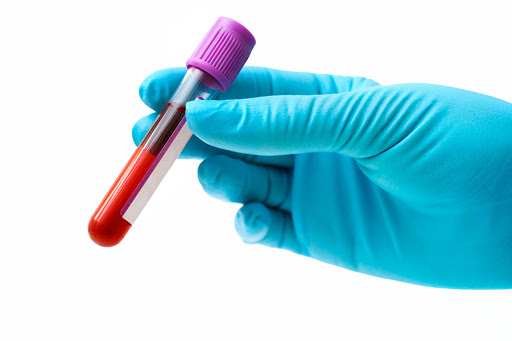
An international team of researchers has used machine learning to produce a novel blood test that can predict a young person’s risk of developing a psychotic disorder, such as schizophrenia, years before the condition develops.

Only around a quarter of young people who display mild, transitory psychotic symptoms at an early age ultimately go on to develop a serious psychotic disorder. Schizophrenia, for example, is generally not clinically diagnosed until a person reaches their twenties. However, the condition is known to present a number of signs and symptoms than can precede the full-blown psychotic episodes often needed for clinical diagnosis.

This early pre-clinical phase of a psychotic disorder is often referred to as the prodromal stage. In the case of schizophrenia, prodromal symptoms appear in nearly three quarters of patients up to five years before the first episode of psychosis occurs.

David Cotter, a molecular psychiatrist from the Royal College of Surgeons in Ireland and senior author on the new study, suggests early detection of those most at risk of developing psychotic disorders is vital for administering preventative treatments.

“Ideally, we would like to prevent psychotic disorders, but that requires being able to accurately identify who is most at risk,” says Cotter.

The new study first looked at blood samples from a number of 12-year-olds classified as at a clinically high-risk of psychosis. Over recent years several tools have been developed to identify adolescent subjects at the highest risk of developing psychosis.

The 12-year-old subjects were followed until around the age of 18, so the researchers were able to differentiate blood samples between those who went on to suffer a psychotic episode and those who didn’t. Using machine learning, the researchers homed in on a unique pattern of proteins that distinguished those who ultimately went on to develop a psychotic disorder.

Ten particular proteins were identified as most predictive, and the test was subsequently validated in a separate dataset. Using the most accurate protein pattern, the researchers were able to correctly determine which high-risk subjects would go on to develop a psychotic disorder by the age of 18 with a 93-percent accuracy.

The test was less accurate in predicting those high-risk 12-year-olds that did not go on to develop a psychosis by the age of 18. However, considering only between 16 and 35 percent of young people considered at clinical high risk ultimately transition to a full psychotic disorder, even this low level of accuracy could be useful in stratifying those younger patients more likely to develop psychosis.

“Our research has shown that, with help from machine learning, analysis of protein levels in blood samples can predict who is at truly at risk and could possibly benefit from preventive treatments,” says Cotter. “We now need to study these markers in other people at high risk of psychosis to confirm these findings.”

Another compelling insight offered by this new study is the finding that many of these protein markers predicting psychosis are linked with inflammatory processes. There is a small, but burgeoning, body of study finding links between psychosis and autoimmune conditions, suggesting systemic inflammation can influence a number of psychiatric illnesses.

The new research was published in the journal JAMA Psychiatry.

https://www.eurekalert.org/pub_releases/2020-08/r-sub082620.php

‘Zoom fatigue’ is taxing the brain. Here’s why that happens.


The unprecedented explosion of video calling in response to the pandemic has launched an unofficial social experiment.

BY JULIA SKLAR

JODI EICHLER-LEVINE FINISHED teaching a class over Zoom on April 15, and she immediately fell asleep in the guest bedroom doubling as her office. The religion studies professor at Lehigh University in Pennsylvania says that while teaching is always exhausting, she has never “conked out” like that before.

Until recently, Eichler-Levine was leading live classes full of people whose emotions she could easily gauge, even as they navigated difficult topics—such as slavery and the Holocaust—that demand a high level of conversational nuance and empathy. Now, like countless people around the world, the COVID-19 pandemic has thrust her life into a virtual space. In addition to teaching remotely, she’s been attending a weekly department happy hour, an arts-and-crafts night with friends, and a Passover seder—all over the videoconferencing app Zoom. The experience is taking a toll.

“It’s almost like you’re emoting more because you’re just a little box on a screen,” Eichler-Levine says. “I’m just so tired.”

So many people are reporting similar experiences that it’s earned its own slang term, Zoom fatigue, though this exhaustion also applies if you’re using Google Hangouts, Skype, FaceTime, or any other video-calling interface. The unprecedented explosion of their use in response to the pandemic has launched an unofficial social experiment, showing at a population scale what’s always been true: virtual interactions can be extremely hard on the brain.

“There’s a lot of research that shows we actually really struggle with this,” says Andrew Franklin, an assistant professor of cyberpsychology at Virginia’s Norfolk State University. He thinks people may be surprised at how difficult they’re finding video calls given that the medium seems neatly confined to a small screen and presents few obvious distractions.

Zoom gloom

Humans communicate even when they’re quiet. During an in-person conversation, the brain focuses partly on the words being spoken, but it also derives additional meaning from dozens of non-verbal cues, such as whether someone is facing you or slightly turned away, if they’re fidgeting while you talk, or if they inhale quickly in preparation to interrupt.

These cues help paint a holistic picture of what is being conveyed and what’s expected in response from the listener. Since humans evolved as social animals, perceiving these cues comes naturally to most of us, takes little conscious effort to parse, and can lay the groundwork for emotional intimacy.

However, a typical video call impairs these ingrained abilities, and requires sustained and intense attention to words instead. If a person is framed only from the shoulders up, the possibility of viewing hand gestures or other body language is eliminated. If the video quality is poor, any hope of gleaning something from minute facial expressions is dashed.

“For somebody who’s really dependent on those non-verbal cues, it can be a big drain not to have them,” Franklin says. Prolonged eye contact has become the strongest facial cue readily available, and it can feel threatening or overly intimate if held too long.

Multi-person screens magnify this exhausting problem. Gallery view—where all meeting participants appear Brady Bunch-style—challenges the brain’s central vision, forcing it to decode so many people at once that no one comes through meaningfully, not even the speaker.

“We’re engaged in numerous activities, but never fully devoting ourselves to focus on anything in particular,” says Franklin. Psychologists call this continuous partial attention, and it applies as much to virtual environments as it does to real ones. Think of how hard it would be to cook and read at the same time. That’s the kind of multi-tasking your brain is trying, and often failing, to navigate in a group video chat.

This leads to problems in which group video chats become less collaborative and more like siloed panels, in which only two people at a time talk while the rest listen. Because each participant is using one audio stream and is aware of all the other voices, parallel conversations are impossible. If you view a single speaker at a time, you can’t recognize how non-active participants are behaving—something you would normally pick up with peripheral vision.

For some people, the prolonged split in attention creates a perplexing sense of being drained while having accomplished nothing. The brain becomes overwhelmed by unfamiliar excess stimuli while being hyper-focused on searching for non-verbal cues that it can’t find.

That’s why a traditional phone call may be less taxing on the brain, Franklin says, because it delivers on a small promise: to convey only a voice.

Zoom boon

By contrast, the sudden shift to video calls has been a boon for people who have neurological difficulty with in-person exchanges, such as those with autism who can become overwhelmed by multiple people talking.

John Upton, an editor at the New Jersey-based news outlet Climate Central, recently found out he is autistic. Late last year, he was struggling with the mental load of attending packed conferences, engaging during in-person meetings, and navigating the small-talk that’s common in work places. He says these experiences caused “an ambiguous tension, a form of anxiety.”

As a result, he suffered a bout of autistic burnout and struggled to process complicated information—which he says is normally his strength—leading to feelings of helplessness and futility. To combat the issue, he began transitioning to working mostly from home and stacking all in-person meetings on Thursdays, to get them out of the way.

Now that the pandemic has pushed his coworkers to be remote as well, he has observed their video calls lead to fewer people talking and less filler conversation at the beginning and end of each meeting. Upton says his sense of tension and anxiety has been reduced to the point of being negligible.

This outcome is supported by research, says the University of Québec Outaouais’s Claude Normand, who studies how people with developmental and intellectual disabilities socialize online. People with autism tend to have difficulty understanding when it’s their turn to speak in live conversations, she notes. That’s why the frequent lag between speakers on video calls may actually help some autistic people. “When you’re Zooming online, it’s clear whose turn it is to talk,” Normand says.

However, other people on the autism spectrum may still struggle with video chatting, as it can exacerbate sensory triggers such as loud noise and bright lights, she adds.

On the whole, video chatting has allowed human connections to flourish in ways that would have been impossible just a few years ago. These tools enable us to maintain long-distance relationships, connect workrooms remotely, and even now, in spite of the mental exhaustion they can generate, foster some sense of togetherness during a pandemic.

It’s even possible Zoom fatigue will abate once people learn to navigate the mental tangle video chatting can cause. If you’re feeling self-conscious or overstimulated, Normand recommends you turn off your camera. Save your energy for when you absolutely want to perceive the few non-verbal cues that do come through, such as during the taxing chats with people you don’t know very well, or for when you want the warm fuzzies you get from seeing someone you love. Or if it’s a work meeting that can be done by phone, try walking at the same time.

“Walking meetings are known to improve creativity, and probably reduce stress as well,” Normand says.

https://www.nationalgeographic.com/science/2020/04/coronavirus-zoom-fatigue-is-taxing-the-brain-here-is-why-that-happens/

20 minutes in nature a day is your ticket to feeling better

Nature soothes our stressed-out souls. We instinctively know nature is the best prescription, but research is revealing how little time we need to set aside to reap the benefits.

In one study, published in the journal Frontiers in Psychology, researchers tried to identify the most effective “dose” of nature within the context of normal daily life. As more doctors prescribe nature experiences for stress relief and other health benefits — sometimes referred to as a “nature pill” — the study’s authors hoped to clarify the details of these treatments. More biophilia is generally better for us, but since not everyone can spend all day in deep wilderness, the study looked for a sweet spot.

“We know that spending time in nature reduces stress, but until now it was unclear how much is enough, how often to do it, or even what kind of nature experience will benefit us,” says lead author MaryCarol Hunter, an associate professor at the University of Michigan’s School for Environment and Sustainability, in a statement. “Our study shows that for the greatest payoff, in terms of efficiently lowering levels of the stress hormone cortisol, you should spend 20 to 30 minutes sitting or walking in a place that provides you with a sense of nature.”

A nature pill can be a low-cost, low-risk way to curb the negative health effects of urbanization and indoor lifestyles. To find the most efficient dosage, Hunter and her co-authors asked 36 city dwellers to have nature experiences of at least 10 minutes three times per week over eight weeks. (A nature experience was defined as “anywhere outside that, in the opinion of the participant, made them feel like they’ve interacted with nature,” Hunter explains.) Every two weeks, the researchers collected saliva samples to measure levels of the stress hormone cortisol, both before and after the participants took their nature pill.

The data showed that just a 20-minute nature experience was enough to significantly reduce cortisol levels. The effect was most efficient between 20 to 30 minutes, after which benefits continued to accrue but at a slower rate. Researchers in the United Kingdom who analyzed the routines of roughly 20,000 people came up with a similar prescription: 2 hours a week total spent in a park or woodland setting will improve your health.

Nature time doesn’t have to mean exercise, either

Those results dovetail with the findings of other studies, one of which found that spending 20 minutes in an urban park can make you happier, regardless of whether you use that time to exercise. That study was published in the International Journal of Environmental Health Research,

“Overall, we found park visitors reported an improvement in emotional well-being after the park visit,” lead author and University of Alabama at Birmingham professor Hon K. Yuen said in a statement. “However, we did not find levels of physical activity are related to improved emotional well-being. Instead, we found time spent in the park is related to improved emotional well-being.”

For this study, 94 adults visited three urban parks in Mountain Brook, Alabama, completing a questionnaire about their subjective well-being before and after their visit. An accelerometer tracked their physical activity. A visit lasting between 20 and 25 minutes demonstrated the best results, with a roughly 64 percent increase in the participants’ self-reported well-being, even if they didn’t move a great deal in the park. That last point is particularly positive, since it means most anyone can benefit from visiting a nearby park, regardless of age or physical ability.

The study’s co-author and another UAB professor, Gavin Jenkins, acknowledges the study pool was small, but its findings illustrate the importance of urban parks.

“There is increasing pressure on green space within urban settings,” Jenkins said in the statement. “Planners and developers look to replace green space with residential and commercial property. The challenge facing cities is that there is an increasing evidence about the value of city parks but we continue to see the demise of theses spaces.”

In another review published in Frontiers in Psychology, researchers at Cornell University examined the results of 14 studies that focused on the impact of nature on college students. They found that you might not even need the full 20 minutes to reap the benefits of some outdoor time. The studies showed that as little as 10–20 minutes of sitting or walking in nature can help college students feel happier and less stressed.

“It doesn’t take much time for the positive benefits to kick in,” said lead author Gen Meredith, associate director of the Master of Public Health Program and lecturer at the College of Veterinary Medicine, in a statement. “We firmly believe that every student, no matter what subject or how high their workload, has that much discretionary time each day, or at least a few times per week.”

https://www.mnn.com/health/fitness-well-being/blogs/urban-park-20-minutes-feel-better-study

AI is learning how to use brain scans to predict the right antidepressant for patients

By Jason Arunn Murugesu

An AI can predict from people’s brainwaves whether an antidepressant is likely to help them. The technique may offer a new approach to prescribing medicines for mental illnesses.

Antidepressants don’t always work, and we aren’t sure why. “We have a central problem in psychiatry because we characterise diseases by their end point, such as what behaviours they cause,” says Amit Etkin at Stanford University in California. “You tell me you’re depressed, and I don’t know any more than that. I don’t really know what’s going on in the brain and we prescribe medication on very little information.”

Etkin wanted to find out if a machine-learning algorithm could predict from the brain scans of people diagnosed with depression who was most likely to respond to treatment with the antidepressant sertraline. The drug is typically effective in only a third of the people who take it.

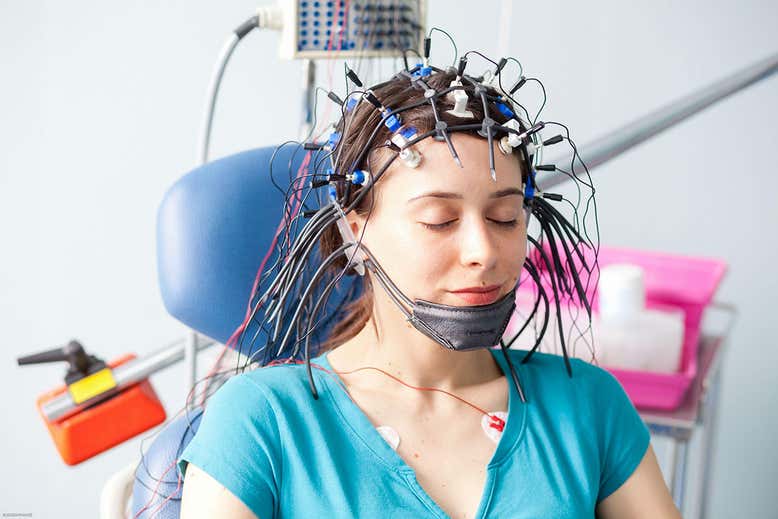
He and his team gathered electroencephalogram (EEG) recordings showing the brainwaves of 228 people aged between 18 and 65 with depression. These individuals had previously tried antidepressants, but weren’t on such drugs at the start of the study.

Roughly half the participants were given sertraline, while the rest got a placebo. The researchers then monitored the participants’ mood over eight weeks, measuring any changes using a depression rating scale.

Brain activity patterns
By comparing the EEG recordings of those who responded well to the drug with those who didn’t, the machine-learning algorithm was able to identify a specific pattern of brain activity linked with a higher likelihood of finding sertraline helpful.

The team then tested the algorithm on a different group of 279 people. Although only 41 per cent of overall participants responded well to sertraline, 76 per cent of those the algorithm predicted would benefit did so.

Etkin has founded a company called Alto Neuroscience to develop the technology. He hopes it results in more efficient sertraline prescription by giving doctors “the tools to make decisions about their patients using objective tests, decisions that they’re currently making by chance”, says Etkin.

This AI “could have potential future relevance to patients with depression”, says Christian Gluud at the Copenhagen Trial Unit in Denmark. But the results need to be replicated by other researchers “before any transfer to clinical practice can be considered”, he says.

Journal reference: Nature Biotechnology, DOI: 10.1038/s41587-019-0397-3

Read more: https://www.newscientist.com/article/2232792-brain-scans-can-help-predict-wholl-benefit-from-an-antidepressant/#ixzz6DeyTJYpK