Faulty Gene Leads to Alcohol-Induced Heart Failure

Scientists have revealed a new link between alcohol, heart health and our genes.

The researchers investigated faulty versions of a gene called titin which are carried by one in 100 people or 600,000 people in the UK.

Titin is crucial for maintaining the elasticity of the heart muscle, and faulty versions are linked to a type of heart failure called dilated cardiomyopathy.

Now new research suggests the faulty gene may interact with alcohol to accelerate heart failure in some patients with the gene, even if they only drink moderate amounts of alcohol.

The research was carried out by scientists from Imperial College London, Royal Brompton Hospital, and MRC London Institute of Medical Sciences, and published this week in the latest edition of the Journal of the American College of Cardiology.

The study was supported by the Department of Health and Social Care and the Wellcome Trust through the Health Innovation Challenge Fund.

In the first part of the study, the team analysed 141 patients with a type of heart failure called alcoholic cardiomyopathy (ACM). This condition is triggered by drinking more than 70 units a week (roughly seven bottles of wine) for five years or more. In severe cases the condition can be fatal, or leave patients requiring a heart transplant.

The team found that the faulty titin gene may also play a role in the condition. In the study 13.5 per cent of patients were found to carry the mutation – much higher than the proportion of people who carry them in the general population.

These results suggest this condition is not simply the result of alcohol poisoning, but arises from a genetic predisposition – and that other family members may be at risk too, explained Dr James Ware, study author from the National Heart and Lung Institute at Imperial.

“Our research strongly suggests alcohol and genetics are interacting – and genetic predisposition and alcohol consumption can act together to lead to heart failure. At the moment this condition is assumed to be simply due to too much alcohol. But this research suggests these patients should also be checked for a genetic cause – by asking about a family history and considering testing for a faulty titin gene, as well as other genes linked to heart failure,” he said.

He added that relatives of patients with ACM should receive assessment and heart scans – and in some cases have genetic tests – to see if they unknowingly carry the faulty gene.

In a second part of the study, the researchers investigated whether alcohol may play a role in another type of heart failure called dilated cardiomyopathy (DCM). This condition causes the heart muscle to become stretched and thin, and has a number of causes including viral infections and certain medications. The condition can also be genetic, and around 12 per cent of cases of DCM are thought to be linked to a faulty titin gene.

In the study the team asked 716 patients with dilated cardiomyopathy how much alcohol they consumed.

None of the patients consumed the high-levels of alcohol needed to cause ACM. But the team found that in patients whose DCM was caused by the faulty titin gene, even moderately increased alcohol intake (defined as drinking above the weekly recommended limit of 14 units), affected the heart’s pumping power.

Compared to DCM patients who didn’t consume excess alcohol (and whose condition wasn’t caused by the faulty titin gene), excess alcohol was linked to reduction in heart output of 30 per cent.

More research is now needed to investigate how alcohol may affect people who carry the faulty titin gene, but do not have heart problems, added Dr Paul Barton, study co-author from the National Heart and Lung Institute at Imperial:

“Alcohol and the heart have a complicated relationship. While moderate levels may have benefits for heart health, too much can cause serious cardiac problems. This research suggests that in people with titin-related heart failure, alcohol may worsen the condition.

“An important wider question is also raised by the study: do mutations in titin predispose people to heart failure when exposed to other things that stress the heart, such as cancer drugs or certain viral infections? This is something we are actively seeking to address.”

The research was supported by the Department of Health and Social Care and Wellcome Trust through the Health Innovation Challenge Fund, the Medical Research Council, the NIHR Cardiovascular Biomedical Research Unit at Royal Brompton & Harefield NHS Foundation Trust and the British Heart Foundation.

Reference: Ware, J. S., Amor-Salamanca, A., Tayal, U., Govind, R., Serrano, I., Salazar-Mendiguchía, J., … Garcia-Pavia, P. (2018). Genetic Etiology for Alcohol-Induced Cardiac Toxicity. Journal of the American College of Cardiology, 71(20), 2293–2302. https://doi.org/10.1016/j.jacc.2018.03.462

https://www.technologynetworks.com/genomics/news/faulty-gene-leads-to-alcohol-induced-heart-failure-304365?utm_campaign=Newsletter_TN_BreakingScienceNews&utm_source=hs_email&utm_medium=email&utm_content=63228690&_hsenc=p2ANqtz-9oqDIw3te1NPoj51s94kxnA1ClK8Oiecfela6I4WiITEbm_-SWdmw6pjMTwm2YP24gqSzRaBvUK1kkb2kZEJKPcL5JtQ&_hsmi=63228690

An explanation of blood sugar

By Alina Bradford

Blood sugar, or glucose, is the main sugar found in blood. The body gets glucose from the food we eat. This sugar is an important source of energy and provides nutrients to the body’s organs, muscles and nervous system. The absorption, storage and production of glucose is regulated constantly by complex processes involving the small intestine, liver and pancreas.

Glucose enters the bloodstream after a person has eaten carbohydrates. The endocrine system helps keep the bloodstream’s glucose levels in check using the pancreas. This organ produces the hormone insulin, releasing it after a person consumes protein or carbohydrates. The insulin sends excess glucose in the liver as glycogen.

The pancreas also produces a hormone called glucagon, which does the opposite of insulin, raising blood sugar levels when needed. The two hormones work together to keep glucose balanced.

When the body needs more sugar in the blood, the glucagon signals the liver to turn the glycogen back into glucose and release it into the bloodstream. This process is called glycogenolysis.

When there isn’t enough sugar to go around, the liver hoards the resource for the parts of the body that need it, including the brain, red blood cells and parts of the kidney. For the rest of the body, the liver makes ketones , which breaks down fat to use as fuel. The process of turning fat into ketones is called ketogenesis. The liver can also make sugar out of other things in the body, like amino acids, waste products and fat byproducts.

Glucose vs. dextrose
Dextrose is also a sugar. It’s chemically identical to glucose but is made from corn and rice, according to Healthline. It is often used as a sweetener in baking products and in processed foods. Dextrose also has medicinal purposes. It is dissolved in solutions that are given intravenously to increase a person’s blood sugar levels.

Normal blood sugar
For most people, 80 to 99 milligrams of sugar per deciliter before a meal and 80 to 140 mg/dl after a meal is normal. The American Diabetes Association says that most nonpregnant adults with diabetes should have 80 to 130 mg/dl before a meal and less than 180 mg/dl at 1 to 2 hours after beginning the meal.

These variations in blood-sugar levels, both before and after meals, reflect the way that the body absorbs and stores glucose. After you eat, your body breaks down the carbohydrates in food into smaller parts, including glucose, which the small intestine can absorb.

Problems
Diabetes happens when the body lacks insulin or because the body is not working effectively, according to Dr. Jennifer Loh, chief of the department of endocrinology for Kaiser Permanente in Hawaii. The disorder can be linked to many causes, including obesity, diet and family history, said Dr. Alyson Myers of Northwell Health in New York.

“To diagnose diabetes, we do an oral glucose-tolerance test with fasting,” Myers said.

Cells may develop a tolerance to insulin, making it necessary for the pancreas to produce and release more insulin to lower your blood sugar levels by the required amount. Eventually, the body can fail to produce enough insulin to keep up with the sugar coming into the body.

It can take decades to diagnose high blood-sugar levels, though. This may happen because the pancreas is so good at its job that a doctor can continue to get normal blood-glucose readings while insulin tolerance continues to increase, said Joy Stephenson-Laws, founder of Proactive Health Labs (pH Labs), a nonprofit that provides health care education and tools. She also wrote “Minerals – The Forgotten Nutrient: Your Secret Weapon for Getting and Staying Healthy” (Proactive Health Labs, 2016).

Health professionals can check blood sugar levels with an A1C test, which is a blood test for type 2 diabetes and prediabetes, according to the U.S. National Library of Medicine. This test measures your average blood glucose, or blood sugar, level over the previous three months.

Doctors may use the A1C alone or in combination with other diabetes tests to make a diagnosis. They also use the A1C to see how well you are managing your diabetes. This test is different from the blood sugar checks that people with diabetes do for themselves every day.

In the condition called hypoglycemia, the body fails to produce enough sugar. People with this disorder need treatment when blood sugar drops to 70 mg/dL or below. According to the Mayo Clinic, symptoms of hypoglycemia can be:

Tingling sensation around the mouth
Shakiness
Sweating
An irregular heart rhythm
Fatigue
Pale skin
Crying out during sleep
Anxiety
Hunger
Irritability


Keeping blood sugar in control

Stephenson-Laws said healthy individuals can keep their blood sugar at the appropriate levels using the following methods:

Maintaining a healthy weight

Talk with a competent health care professional about what an ideal weight for you should be before starting any kind of weight loss program.

Improving diet

Look for and select whole, unprocessed foods, like fruits and vegetables, instead of highly processed or prepared foods. Foods that have a lot of simple carbohydrates, like cookies and crackers, that your body can digest quickly tend to spike insulin levels and put additional stress on the pancreas. Also, avoid saturated fats and instead opt for unsaturated fats and high-fiber foods. Consider adding nuts, vegetables, herbs and spices to your diet.

Getting physical

A brisk walk for 30 minutes a day can greatly reduce blood sugar levels and increase insulin sensitivity.

Getting mineral levels checked

Research also shows that magnesium plays a vital role in helping insulin do its job. So, in addition to the other health benefits it provides, an adequate magnesium level can also reduce the chances of becoming insulin-tolerant.

Get insulin levels checked

Many doctors simply test for blood sugar and perform an A1C test, which primarily detects prediabetes or type 2 diabetes. Make sure you also get insulin checks.

https://www.livescience.com/62673-what-is-blood-sugar.html#?utm_source=ls-newsletter&utm_medium=email&utm_campaign=05272018-ls

Rapamycin lotion reduces facial tumors caused by tuberous sclerosis


Researching tuberous sclerosis from the left are Adelaide Hebert, M.D.; John Slopis, M.D.; Mary Kay Koenig, M.D.; Joshua Samuels, M.D., M.P.H.; and Hope Northrup, M.D. PHOTO CREDIT Maricruz Kwon, UTHealth

Addressing a critical issue for people with a genetic disorder called tuberous sclerosis complex (TSC), doctors at The University of Texas Health Science Center at Houston (UTHealth) reported that a skin cream containing rapamycin significantly reduced the disfiguring facial tumors affecting more than 90 percent of people with the condition.

Findings of the multicenter, international study involving 179 people with tuberous sclerosis complex appear in the journal JAMA Dermatology.

“People with tuberous sclerosis complex want to look like everyone else,” said Mary Kay Koenig, M.D., the study’s lead author, co-director of the Tuberous Sclerosis Center of Excellence and holder of the Endowed Chair of Mitochondrial Medicine at McGovern Medical School at UTHealth. “And, they can with this treatment.”

Tuberous sclerosis complex affects about 50,000 people in the United States and is characterized by the uncontrolled growth of non-cancerous tumors throughout the body.

While benign tumors in the kidney, brain and other organs pose the greater health risk, the tumors on the face produce a greater impact on a patient’s daily life by making them look different from everyone else, Koenig said.

Koenig’s team tested two compositions of facial cream containing rapamycin and a third with no rapamycin. Patients applied the cream at bedtime for six months.

“Eighty percent of patients getting the study drug experienced a significant improvement compared to 25 percent of those getting the mixture with no rapamycin,” she said.

“Angiofibromas on the face can be disfiguring, they can bleed and they can negatively impact quality of life for individuals with TSC,” said Kari Luther Rosbeck, president and CEO of the Tuberous Sclerosis Alliance.

“Previous treatments, including laser surgery, have painful after effects. This pivotal study and publication are a huge step toward understanding the effectiveness of topical rapamycin as a treatment option. Further, it is funded by the TSC Research Program at the Department of Defense. We are so proud of this research,” Rosbeck said.

Rapamycin is typically given to patients undergoing an organ transplant. When administered by mouth, rapamycin suppresses the immune system to make sure the organ is not rejected.

Rapamycin and tuberous sclerosis complex are linked by a protein called mTOR. When it malfunctions, tuberous sclerosis complex occurs. Rapamycin corrects this malfunction.

Rapamycin was initially used successfully to treat brain tumors caused by tuberous sclerosis complex, so researchers decided to try it on TSC-related facial tumors. Building on a 2010 pilot study on the use of rapamycin to treat TSC-related facial tumors, this study confirmed that a cream containing rapamycin shrinks these tumors.

As the drug’s toxicity is a concern when taken by mouth, researchers were careful to check for problems tied to its use on the skin. “It looks like the medication stays on the surface of the skin. We didn’t see any appreciable levels in the bloodstreams of those participating in the study,” Koenig said.

The Topical Rapamycin to Erase Angiofibromas in TSC – Multicenter Evaluation of Novel Therapy or TREATMENT trial involved 10 test sites including one in Australia.

Koenig said additional studies are needed to gauge the long-term impact of the drug, the optimal dosage and whether the facial cream should be a combined with an oral treatment.

Koenig’s coauthors include Adelaide Hebert, M.D.; Joshua Samuels, M.D., M.P.H.; John Slopis, M.D.; Cynthia S. Bell; Joan Roberson, R.N.; Patti Tate; and Hope Northrup, M.D. All are from McGovern Medical School at UTHealth with the exception of Slopis, who is with The University of Texas MD Anderson Cancer Center. Hebert is also on the faculty of the MD Anderson Cancer Center and Northrup on the faculty of The University of Texas MD Anderson Cancer Center UTHealth Graduate School of Biomedical Sciences.

The study was supported in part by the United States Department of Defense grant DOD TSCRP CDMRP W81XWH-11-1-0240 and by the Tuberous Sclerosis Alliance of Australia.

“The face is our window to the world and when you look different from everyone else, it impacts your confidence and your ability to interact with others. This treatment will help those with TSC become more like everyone else,” Koenig said.

https://www.uth.edu/media/story.htm?id=37af25df-14a2-4c5e-b1ee-ac9585946aa0

Researchers 3D Print on Skin for Breakthrough Applications


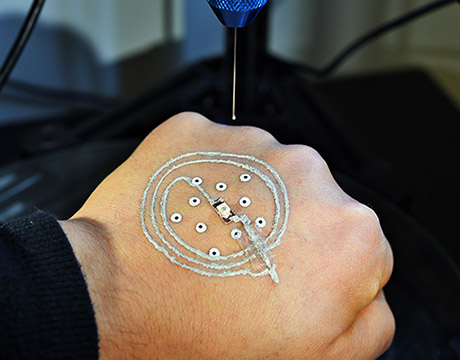
Researchers at the University of Minnesota use a customized 3D printer to print electronics on a real hand. Image: McAlpine group, University of Minnesota

Soldiers are commonly thrust into situations where the danger is the unknown: Where is the enemy, how many are there, what weaponry is being used? The military already uses a mix of technology to help answer those questions quickly, and another may be on its way. Researchers at the University of Minnesota have developed a low-cost 3D printer that prints sensors and electronics directly on skin. The development could allow soldiers to directly print temporary, disposable sensors on their hands to detect such things as chemical or biological agents in the field.

The technology also could be used in medicine. The Minnesota researchers successfully used bioink with the device to print cells directly on the wounds of a mouse. Researchers believe it could eventually provide new methods of faster and more efficient treatment, or direct printing of grafts for skin wounds or conditions.

“The concept was to go beyond smart materials, to integrate them directly on to skin,” says Michael McAlpine, professor of mechanical engineering whose research group focuses on 3D printing functional materials and devices. “It is a biological merger with electronics. We wanted to push the limits of what a 3D printer can do.”

McAlpine calls it a very simple idea, “One of those ideas so simple, it turns out no one has done it.”

Others have used 3D printers to print electronics and biological cells. But printing on skin presented a few challenges. No matter how hard a person tries to remain still, there always will be some movement during the printing process. “If you put a hand under the printer, it is going to move,” he says.

To adjust for that, the printer the Minnesota team developed uses a machine vision algorithm written by Ph.D. student Zhijie Zhu to track the motion of the hand in real time while printing. Temporary markers are placed on the skin, which then is scanned. The printer tracks the hand using the markers and adjusts in real time to any movement. That allows the printed electronics to maintain a circuit shape. The printed device can be peeled off the skin when it is no longer needed.

The team also needed to develop a special ink that could not only be conductive but print and cure at room temperature. Standard 3D printing inks cure at high temperatures of 212 °F and would burn skin.

In a paper recently published in Advanced Materals, the team identified three criteria for conductive inks: The viscosity of the ink should be tunable while maintaining self-supporting structures; the ink solvent should evaporate quickly so the device becomes functional on the same timescale as the printing process; and the printed electrodes should become highly conductive under ambient conditions.

The solution was an ink using silver flakes to provide conductivity rather than particles more commonly used in other applications. Fibers were found to be too large, and cure at high temperatures. The flakes are aligned by their shear forces during printing, and the addition of ethanol to the mix increases speed of evaporation, allowing the ink to cure quickly at room temperature.

“Printing electronics directly on skin would have been a breakthrough in itself, but when you add all of these other components, this is big,” McAlpine says.

The printer is portable, lightweight and cost less than $400. It consists of a delta robot, monitor cameras for long-distance observation of printing states and tracking cameras mounted for precise localization of the surface. The team added a syringe-type nozzle to squeeze and deliver the ink

Furthering the printer’s versatility, McAlpine’s team worked with staff from the university’s medical school and hospital to print skin cells directly on a skin wound of a mouse. The mouse was anesthetized, but still moved slightly during the procedure, he says. The initial success makes the team optimistic that it could open up a new method of treating skin diseases.

“Think about what the applications could be,” McAlpine says. “A soldier in the field could take the printer out of a pack and print a solar panel. On the cellular side, you could bring a printer to the site of an accident and print cells directly on wounds, speeding the treatment. Eventually, you may be able to print biomedical devices within the body.”

In its paper, the team suggests that devices can be “autonomously fabricated without the need for microfabrication facilities in freeform geometries that are actively adaptive to target surfaces in real time, driven by advances in multifunctional 3D printing technologies.”

Besides the ability to print directly on skin, McAlpine says the work may offer advantages over other skin electronic devices. For example, soft, thin, stretchable patches that stick to the skin have been fitted with off-the-shelf chip-based electronics for monitoring a patient’s health. They stick to skin like a temporary tattoo and send updates wirelessly to a computer.

“The advantage of our approach is that you don’t have to start with electronic wafers made in a clean room,” McAlpine says. “This is a completely new paradigm for printing electronics using 3D printing.”

http://www.asme.org/engineering-topics/articles/bioengineering/researchers-3d-print-skin-breakthrough

How brown fat keeps us warm


Adipose Connective Tissue Stores Fat in Our Body. Credit: Berkshire Community College Bioscience Image Library

A new technique to study fat stores in the body could aid efforts to find treatments to tackle obesity.

The approach focuses on energy-burning tissues found deep inside the body – called brown fat – that help to keep us warm when temperatures drop.

Experts are aiming to find it this calorie-burning power can be harnessed to stop weight gain, but little is known about how the process works.

Previous studies have mainly relied on a medical imaging technique called PET/CT to watch brown fat in action deep inside the body. But the method is unable to directly measure the chemical factors in the tissue.

Scientists at the University of Edinburgh developed a technique called microdialysis to measure how brown fat generates heat in people.

The approach involves inserting a small tube into an area of brown fat in the body and flushing it with fluid to collect a snapshot of the tissues’ chemical make-up.

The team tested the technique in six healthy volunteers, using PET/CT to guide the tube to the right location.

They discovered that in cold conditions, brown fat uses its own energy stores and other substances to generate heat.

Brown fat was active under warm conditions too, when the body does not need to generate its own heat, an outcome that had not been seen before.

Researchers hope the technique will help them to analyse the specific chemicals involved, so that they can better understand how brown fat works.

Most of the fat in our body is white fat, which is found under the skin and surrounding internal organs. It stores excess energy when we consume more calories than we burn.

Brown fat is mainly found in babies and helps them to stay warm. Levels can decrease with age but adults can still have substantial amounts of it, mainly in the neck and upper back region. People who are lean tend to have more brown fat.

The study, published in Cell Metabolism, was funded by the Medical Research Council and Wellcome.

Lead researcher Dr Roland Stimson, of the British Heart Foundation Centre for Cardiovascular Science at the University of Edinburgh, said: “Understanding how brown fat is activated could reveal potential targets for therapies that boost its energy-burning power, which could help with weight loss.”

This article has been republished from materials provided by the University of Edinburgh. Note: material may have been edited for length and content. For further information, please contact the cited source.

Reference: Weir, G., Ramage, L. E., Akyol, M., Rhodes, J. K., Kyle, C. J., Fletcher, A. M., … Stimson, R. H. (2018). Substantial Metabolic Activity of Human Brown Adipose Tissue during Warm Conditions and Cold-Induced Lipolysis of Local Triglycerides. Cell Metabolism, 0(0). https://doi.org/10.1016/j.cmet.2018.04.020

https://www.technologynetworks.com/proteomics/news/how-brown-fat-keeps-us-warm-304351?utm_campaign=Newsletter_TN_BreakingScienceNews&utm_source=hs_email&utm_medium=email&utm_content=63228690&_hsenc=p2ANqtz-9oqDIw3te1NPoj51s94kxnA1ClK8Oiecfela6I4WiITEbm_-SWdmw6pjMTwm2YP24gqSzRaBvUK1kkb2kZEJKPcL5JtQ&_hsmi=63228690

UMass Amherst Chemists Develop New Blood Test to Detect Liver Damage in Under an Hour

Chemist Vincent Rotello at the University of Massachusetts Amherst, with colleagues at University College London (UCL), U.K., announce today that they have developed a “quick and robust” blood test that can detect liver damage before symptoms appear, offering what they hope is a significant advance in early detection of liver disease. Details appear in Advanced Materials.

Their new method can detect liver fibrosis, the first stage of liver scarring that can lead to fatal disease if left unchecked, from a blood sample in 30-45 minutes, the authors note. They point out that liver disease is a leading cause of premature mortality in the United States and U.K., and is rising. It often goes unnoticed until late stages of the disease when the damage is irreversible.

For this work, Rotello and his team at UMass Amherst’s Institute of Applied Life Sciences (IALS) designed a sensor that uses polymers coated with fluorescent dyes that bind to blood proteins based on their chemical processes. The dyes change in brightness and color, offering a different signature or blood protein pattern.

He says, “This platform provides a simple and inexpensive way of diagnosing disease with potential for both personal health monitoring and applications in developing parts of the world.” Rotello and colleagues hope the new test can be used routinely in medical offices, clinics and hospitals to screen people with elevated liver disease risk so they can be treated “before it’s too late.”

The UCL team tested the sensor by comparing results from small blood samples equivalent to finger-prick checks from 65 people, in three balanced groups of healthy patients and among those with early-stage and late-stage fibrosis. This was determined using the Enhanced Liver Fibrosis (ELF) test, the existing benchmark for liver fibrosis detection. They found that the sensor identified different protein-level patterns in the blood of people in the three groups. The ELF test requires samples to be sent away to a lab.

Co-author William Peveler, a chemist now at the University of Glasgow, adds, “By comparing the different samples, the sensor array identified a ‘fingerprint’ of liver damage. It’s the first time this approach has been validated in something as complex as blood, to detect something as important as liver disease.”

The investigators report that the test distinguished fibrotic samples from healthy blood 80 percent of the time, reaching the standard threshold of clinical relevance on a widely-used metric and comparable to existing methods of diagnosing and monitoring fibrosis. The test distinguished between mild-moderate fibrosis and severe fibrosis 60 percent of the time. The researchers plan further tests with larger samples to refine the method’s effectiveness.

Peter Reinhart, director of UMass Amherst’s IALS says, “These exciting findings epitomize the mission of IALS to translate excellent basic science into diagnostics, therapeutic candidates and personalized health monitoring devices to improve human health and well-being.”

Peveler adds, “This may open the door to a cost-effective regular screening program thanks to its simplicity, low cost and robustness. We’re addressing a vital need for point-of-care diagnostics and monitoring, which could help millions of people access the care they need to prevent fatal liver disease.”

Rotello explains that the sensing strategy uses a “signature-based” approach that is highly versatile and should be useful in other areas. “A key feature of this sensing strategy is that it is not disease-specific, so it is applicable to a wide spectrum of conditions, which opens up the possibility of diagnostic systems that can track health status, providing both disease detection and monitoring wellness.”

In addition to UMass Amherst, UCL and the University of Glasgow, the U.K.-based research and development firm iQur Ltd. took part in the study. The work was supported by the U.K. Royal Society, the U.K. Engineering and Physical Sciences Research Council, the U.S. National Institutes of Health and the U.K. National Institute for Health Research UCLH Biomedical Research Centre.

http://www.umass.edu/newsoffice/article/umass-amherst-chemists-international-team

Depression speeds up brain ageing

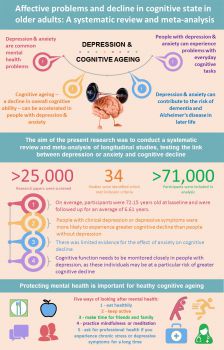
Psychologists at the University of Sussex have found a link between depression and an acceleration of the rate at which the brain ages. Although scientists have previously reported that people with depression or anxiety have an increased risk of dementia in later life, this is the first study that provides comprehensive evidence for the effect of depression on decline in overall cognitive function (also referred to as cognitive state), in a general population.

For the study, published today, Thursday 24 May 2018, in the journal Psychological Medicine, researchers conducted a robust systematic review of 34 longitudinal studies, with the focus on the link between depression or anxiety and decline in cognitive function over time. Evidence from more than 71,000 participants was combined and reviewed. Including people who presented with symptoms of depression as well as those that were diagnosed as clinically depressed, the study looked at the rate of decline of overall cognitive state – encompassing memory loss, executive function (such as decision making) and information processing speed – in older adults.

Importantly, any studies of participants who were diagnosed with dementia at the start of study were excluded from the analysis. This was done in order to assess more broadly the impact of depression on cognitive ageing in the general population. The study found that people with depression experienced a greater decline in cognitive state in older adulthood than those without depression. As there is a long pre-clinical period of several decades before dementia may be diagnosed, the findings are important for early interventions as currently there is no cure for the disease.

Lead authors of the paper, Dr Darya Gaysina and Amber John from the EDGE (Environment, Development, Genetics and Epigenetics in Psychology and Psychiatry) Lab at the University of Sussex, are calling for greater awareness of the importance of supporting mental health to protect brain health in later life.

Dr Gaysina, a Lecturer in Psychology and EDGE Lab Lead, comments: “This study is of great importance – our populations are ageing at a rapid rate and the number of people living with decreasing cognitive abilities and dementia is expected to grow substantially over the next thirty years.

“Our findings should give the government even more reason to take mental health issues seriously and to ensure that health provisions are properly resourced. We need to protect the mental wellbeing of our older adults and to provide robust support services to those experiencing depression and anxiety in order to safeguard brain function in later life.”

Researcher Amber John, who carried out this research for her PhD at the University of Sussex adds: “Depression is a common mental health problem – each year, at least 1 in 5 people in the UK experience symptoms. But people living with depression shouldn’t despair – it’s not inevitable that you will see a greater decline in cognitive abilities and taking preventative measures such as exercising, practicing mindfulness and undertaking recommended therapeutic treatments, such as Cognitive Behaviour Therapy, have all been shown to be helpful in supporting wellbeing, which in turn may help to protect cognitive health in older age.”

The research paper, ‘Affective problems and decline in cognitive state in older adults’ will be available at: https:// doi.org/10.1017/S0033291718001137 from Thursday 24 May 2018.

http://www.sussex.ac.uk/broadcast/read/44977

Drug target for curing the common cold

UK scientists believe they may have found a way to combat the common cold.

Rather than attacking the virus itself, which comes in hundreds of versions, the treatment targets the human host.

It blocks a key protein in the body’s cells that cold viruses normally hijack to self-replicate and spread.

This should stop any cold virus in its tracks if given early enough, lab studies suggest. Safety trials in people could start within two years.

The Imperial College London researchers are working on making a form of the drug that can be inhaled, to reduce the chance of side-effects.

In the lab, it worked within minutes of being applied to human lung cells, targeting a human protein called NMT, Nature Chemistry journal reports.

All strains of cold virus need this human protein to make new copies of themselves.

Researcher Prof Ed Tate said: “The idea is that we could give it to someone when they first become infected and it would stop the virus being able to replicate and spread.

“Even if the cold has taken hold, it still might help lessen the symptoms.

“This could be really helpful for people with health conditions like asthma, who can get quite ill when they catch a cold.”

He said targeting the host rather than the infection was “a bit radical” but made sense because the viral target was such a tricky one.

Cold viruses are not only plentiful and diverse, they also evolve rapidly, meaning they can quickly develop resistance to drugs.

The test drug completely blocked several strains of cold virus without appearing to harm the human cells in the lab. Further studies are needed to make sure it is not toxic in the body though.

Dr Peter Barlow of the British Society for Immunology said: “While this study was conducted entirely in vitro – using cells to model Rhinovirus infection in the laboratory – it shows great promise in terms of eventually developing a drug treatment to combat the effects of this virus in patients.”

Fighting a cold
Colds spread very easily from person to person. And the viruses that cause the infections can live on hands and surfaces for 24 hours.

Painkillers and cold remedies might help ease the symptoms. But currently there is nothing that will halt the infection.

You can catch a cold by:

– inhaling tiny droplets of fluid that contain the cold virus – these are launched into the air when an infected person coughs or sneezes
– touching an object or surface contaminated by infected droplets and then touching your mouth, nose or eyes
– touching the skin of someone who has the infected droplets on their skin and then touching your mouth, nose or eyes

Symptoms – a runny or blocked nose, sneezing and sore throat – usually come on quickly and peak after a couple of days. Most people will feel better after a week or so. But a mild cough can persist for a few weeks.

http://www.bbc.com/news/health-44107481

A drug originally developed for treating osteoporosis may also help fight baldness


Immunofluorescence of β-catenin protein (red) and cell nuclei (blue) in the human hair follicle bulb, the command center for maintaining hair growth.

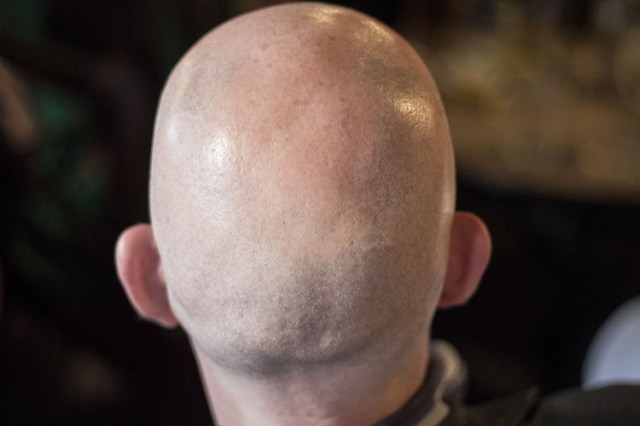
A new drug could ease the distress of men and women who suffer from baldness, according to researchers from The University of Manchester’s Centre for Dermatology Research.

The study from the laboratory of Prof Ralf Paus, is published last week in the open access journal PLOS Biology

It shows that a drug originally designed as a treatment for osteoporosis has a dramatic stimulatory effect on human hair follicles donated by patients undergoing hair transplantation surgery.

Currently only two drugs – minoxidil and finasteride – are available for treatment of male-pattern balding (androgenetic alopecia).

However, both agents have moderate side effects and often produce disappointing hair regrowth results. The only other option available to patients is hair transplantation surgery.

The PhD project, led by Dr Nathan Hawkshaw and colleagues, sought to develop new ways to promote human hair growth with the hope of finding novel, well-tolerated agents for treating androgenetic alopecia.

The approach was to first identify the molecular mechanisms of an old immunosuppressive drug, Cyclosporine A (CsA).

Cyclosporine A has been commonly used since the 1980s as a crucial drug that suppresses transplant rejection and autoimmune diseases.

However, it often has severe side-effects, the least serious – but most interesting – of which is that it enhances cosmetically unwanted hair growth.

The team carried out a full gene expression analysis of isolated human scalp hair follicles treated with CsA. This revealed that CsA reduces the expression of SFRP1, a protein that inhibits the development and growth of many tissues, including hair follicles.

This identifies a completely novel mechanism of action of this old and widely used immunosuppressant.

The research also explanains why CsA so often induces undesired hair growth in patients as it removes an inbuilt and potent molecular brake on human hair growth.

The inhibitory mechanism is completely unrelated to CsA’s immunosuppressive activities, making SFRP1 a new and highly promising therapeutic target for anti-hair loss strategies.

After some detective work, Dr Hawkshaw found that a compound originally developed to treat osteoporosis, called WAY-316606, targets the same mechanism as CsA by specifically antagonising SFRP1.

When he then treated hair follicles with WAY-316606, the unrelated agent also effectively enhanced human hair growth like CsA.

The external application of WAY-316606 or similar compounds to balding human scalp, he argued, may promote hair growth to the same magnitude as CsA or even better, but without its side effects.

“The fact this new agent, which had never even been considered in a hair loss context, promotes human hair growth is exciting because of its translational potential: it could one day make a real difference to people who suffer from hair loss
Dr Nathan Hawkshaw

Dr Hawkshaw said: “Thanks to our collaboration with a local hair transplant surgeon, Dr Asim Shahmalak, we were able to conduct our experiments with scalp hair follicles that had generously been donated by over 40 patients and were then tested in organ cultures.

“This makes our research clinically very relevant, as many hair research studies only use cell culture.”

He added: “When the hair growth-promoting effects of CsA were previously studied in mice, a very different molecular mechanism of action was suggested; had we relied on these mouse research concepts, we would have been barking up the wrong tree.

“The fact this new agent, which had never even been considered in a hair loss context, promotes human hair growth is exciting because of its translational potential: it could one day make a real difference to people who suffer from hair loss.

“Clearly though, a clinical trial is required next to tell us whether this drug or similar compounds are both effective and safe in hair loss patients.”

http://www.manchester.ac.uk/discover/news/fringe-benefits-drug-side-effects-could-treat-human-hair-loss/

University of Calgary scientists discover a new way to battle multiple sclerosis that challenges conventional thinking about its root cause


The Dr. Peter Stys lab within the Hotchkiss Brain Institute at the Cumming School of Medicine, University of Calgary, is equipped with highly specialized microscopes used for researching multiple sclerosis, Alzheimer’s and other neurodegenerative disease. In this customized lab, the researchers can’t wear white lab coats, they have to wear dark clothing. Photons could reflect off light clothing and interfere with the experiments. From left: Megan Morgan, research assistant, and Craig Brideau, engineering scientist. Photo by Pauline Zulueta, Cumming School of Medicine

By Kelly Johnston, Cumming School of Medicine

Ridiculous. That’s how Andrew Caprariello says his colleagues described his theory about multiple sclerosis (MS) back when he was doing his PhD in Ohio.

Caprariello’s passion to explore controversial new theories about MS propelled him to seek out a postdoctoral fellowship with a like-minded thinker, whom he found in University of Calgary’s Dr. Peter Stys, a member of the Hotchkiss Brain Institute at the Cumming School of Medicine (CSM).

The collaboration paid off. Caprariello, Stys and their colleagues have scientific proof published in the Proceedings of the National Academy of Sciences (PNAS) that their somewhat radical theory has merit. “I’ve always wondered ‘what if’ MS starts in the brain and the immune attacks are a consequence of the brain damage,” says Caprariello, PhD, and lead author on the study.

Currently, MS is considered to be a progressive autoimmune disease. Brain inflammation happens when the body’s immune system attacks a protective material around nerve fibers in the brain called myelin. Conventional thinking is that rogue immune cells initially enter the brain and cause myelin damage that starts MS.

“In the field, the controversy about what starts MS has been brewing for more than a decade. In medical school, I was taught years ago that the immune attack initiates the disease. End of story,” says Stys, a neurologist and professor in the Department of Clinical Neurosciences at the CSM. “However, our findings show there may be something happening deeper and earlier that damages the myelin and then later triggers the immune attacks.”

To test the theory, the research team designed a mouse model of MS that begins with a mild myelin injury. In this way, researchers could mirror what they believe to be the earliest stages of the disease.

“Our experiments show, at least in this animal model, that a subtle early biochemical injury to myelin secondarily triggers an immune response that leads to additional damage due to inflammation. It looks very much like an MS plaque on MRI and tissue examination,” says Stys. “This does not prove that human MS advances in the same way, but provides compelling evidence that MS could also begin this way.”

With that result, the researchers started to investigate treatments to stop the degeneration of the myelin to see if that could reduce, or stop, the secondary autoimmune response.

“We collaborated with researchers at the University of Toronto and found that by targeting a treatment that would protect the myelin to stop the deterioration, the immune attack stopped and the inflammation in the brain never occurred,” says Stys. “This research opens a whole new line of thinking about this disease. Most of the science and treatment for MS has been targeted at the immune system, and while anti-inflammatory medications can be very effective, they have very limited benefit in the later progressive stages of the disease when most disability happens.”

It can be very hard to find funding to investigate an unconventional theory. The research team was funded by the Brain and Mental Health Strategic Research Fund, established by the Office of the Vice-President (Research) at UCalgary to support innovative, interdisciplinary studies within the Brain and Mental Health research strategy.

“We chose high-risk, novel projects for these funds to support discoveries by teams who did not have the chance to work together through conventional funding sources,” said Ed McCauley, PhD, vice-president (research). “The MS study shows the potential of brain and mental health scholars to expand capacity by tapping into new approaches for conducting research. Their work also exemplifies the type of interdisciplinary research that is propelling the University of Calgary as an international leader in brain and mental health research.”

http://www.ucalgary.ca/utoday/issue/2018-05-04/ucalgary-scientists-discover-new-way-battle-multiple-sclerosis