Daily step counts between 5,000 to 10,000 or more reduced depression symptoms across 33 studies.
The associations may be due to several mechanisms, like improvement in sleep quality and inflammation.
Daily step counts of 5,000 or more corresponded with fewer depressive symptoms among adults, results of a systematic review and meta-analysis published in JAMA Network Open suggested.
The results are consistent with previous studies linking exercise to various risk reductions for mental health disorders and show that setting step goals “may be a promising and inclusive public health strategy for the prevention of depression,” the researchers wrote.
According to Bruno Bizzozero-Peroni, PhD, MPH, from Universidad De Castilla-La Mancha in Spain, and colleagues, daily step counts are a “simple and intuitive objective measure” of physical activity, while tracking such counts has become increasingly feasible for the general population thanks to the availability of fitness trackers.
“To our knowledge, the association between the number of daily steps measured
with wearable trackers and depression has not been previously examined through a meta-analytic approach,” they wrote.
The researchers searched multiple databases for analyses assessing the effects of daily step counts on depressive symptoms, ultimately including a total of 27 cross-sectional studies and six longitudinal studies comprising 96,173 adults aged 18 years or older.
They found that in the cross-sectional studies, daily step counts of 10,000 or more (standardized mean difference [SMD] = 0.26; 95% CI, 0.38 to 0.14), 7,500 to 9,999 (SMD = 0.27; 95% CI, 0.43 to 0.11) and 5,000 to 7,499 (SMD = 0.17; 95% CI, 0.3 to 0.04) corresponded with reduced depressive symptoms vs. daily step counts less than 5,000.
In the prospective cohort studies, people with 7,000 or more steps a day had a reduced risk for depression vs. with people with fewer than 7,000 daily steps (RR = 0.69; 95% CI, 0.62-0.77), whereas an increase of 1,000 steps a day suggested an association with a lower risk for depression (RR = 0.91; 95% CI, 0.87-0.94).
There were a couple study limitations. The researchers noted that reverse associations are possible, while they could not rule out residual confounders.
They also pointed out that there are some remaining questions, such as whether there is a ceiling limit after which further step counts would no longer reduce the risk for depression.
Bizzozero-Peroni and colleagues highlighted several possible biological and psychosocial mechanisms behind the associations, like changes in sleep quality, inflammation, social support, self-esteem, neuroplasticity and self-efficacy.
They concluded that “a daily active lifestyle may be a crucial factor in regulating and reinforcing these pathways” regardless of the exact combination of mechanisms responsible for the positive link.
“Specifically designed experimental studies are still needed to explore whether there are optimal and maximal step counts for specific population subgroups,” they wrote.
University at Buffalo neuroscientists have identified the binding site of low-dose ketamine, providing critical insight into how the medication, often described as a wonder drug, alleviates symptoms of major depression in as little as a few hours with effects lasting for several days.
Published in Molecular Psychiatry, the UB discovery will also help scientists identify how depression originates in the brain, and will stimulate research into using ketamine and ketamine-like drugs for other brain disorders.
A lifesaving drug
Ketamine has been used since the 1960s as an anesthetic, but in 2000, the first trial of far lower doses of ketamine proved its rapid efficacy in treating major depression and suicidal ideation.
“Due to its fast and long-lasting effects, low-dose ketamine proved to be literally a lifesaving medicine,” says Gabriela K. Popescu, Ph.D., senior author on the research and professor of biochemistry in the Jacobs School of Medicine and Biomedical Sciences at UB.
Traditional antidepressants take months to kick in, which increases the risk for some patients to act on suicidal thoughts during the initial period of treatment. Ketamine provides almost instant relief from depressive symptoms and remains effective for several days and up to a week after administration. Since this observation was published in the early 2000s, ketamine clinics, where the drug is administered intravenously to treat depression, have been established in cities nationwide.
But just how ketamine achieves such a dramatic antidepressive effect so quickly has been poorly understood at the molecular level. This information is critical to understanding not only how best to use ketamine, but also to developing similar drugs.
Selective effects on NMDA receptors
Ketamine binds to a class of neurotransmitter receptors called N-methyl-D-aspartate (NMDA) receptors. Popescu is an expert on how these receptors produce electrical signals that are essential for cognition, learning and memory, and how these signals, when dysregulated, result in psychiatric symptoms.
“We demonstrate in this article how ketamine at very low concentrations can affect the activity of only select populations of NMDA receptors,” says Popescu
NMDA receptors are present throughout the brain and are essential for maintaining consciousness. For this reason, she explains, drugs that act indiscriminately on all NMDA receptors have unacceptable psychiatric side effects.
“We believe that the selectivity we uncovered in our research explains how low-dose ketamine can treat major depression and prevent suicides in people with depression,” Popescu says.
The research was sparked by an observation in her lab by co-author Sheila Gupta, then a UB undergraduate. “Sheila noticed that when applied onto NMDA receptors that were chronically active, ketamine had a stronger inhibitory effect than expected based on the literature,” Popescu explains. “We were curious about this discrepancy.”
Back when ketamine’s antidepressant effects first became known, researchers tried to find out how it worked by applying it onto synaptic currents produced by NMDA receptors, but the drug produced little or no effect.
“This observation caused many experts to turn their attention to receptors located outside synapses, which might be mediating ketamine’s antidepressive effects,” Popescu says.
“Sheila’s observation that ketamine is a stronger inhibitor of receptors that are active for longer durations inspired us to look for mechanisms other than the direct current block, which was assumed to be the only effect of ketamine on NMDA receptors.”
Few labs with this NMDA expertise
Popescu’s lab is among a handful in the world with the expertise to quantify the process by which NMDA receptors become active. This allowed Popescu and her colleagues to identify and measure what exactly changed during the NMDA activations when ketamine was present at very low doses versus when it was present at high (anesthetic) doses.
“Because we track activity from a single receptor molecule over an extended period of time, we can chart the entire behavioral repertoire of each receptor and can identify which part of the process is altered when the receptor binds a drug or when it harbors a mutation,” Popescu explains.
“The mechanism we uncovered suggests that at low doses, ketamine will only affect the current carried by receptors that had been active in the background for a while, but not by synaptic receptors, which experience only brief, intermittent activations,” she continues.
“This results in an immediate increase in excitatory transmission, which in turn lifts depressive symptoms. Moreover, the increase in excitation initiates the formation of new or stronger synapses, which serve to maintain higher excitatory levels even after ketamine has cleared from the body, thus accounting for the long-term relief observed in patients.”
The UB research helps explain why such low doses of ketamine are effective.
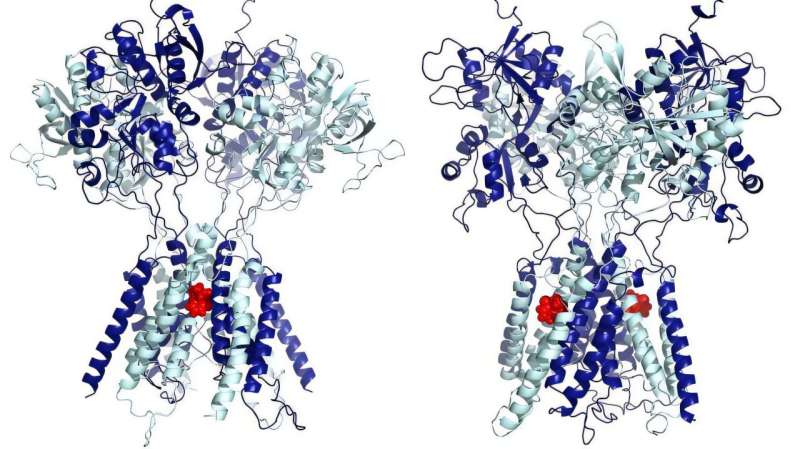
“Our results show that very low levels of ketamine, on the nanoscale, are sufficient to fill two lateral grooves of the NMDA receptors to selectively slow down extra-synaptic receptors, alleviating depression. Increasing the dose causes ketamine to spill over from the grooves into the pore and begin to block synaptic currents, initiating the anesthetic effect,” says Popescu.
Popescu’s co-authors in the Department of Physics in the College of Arts and Sciences simulated the three-dimensional structure of the NMDA receptor and predicted the exact residues to which ketamine binds in the lateral sites.
“These interactions are strong and account for the high affinity of the receptor for low doses of ketamine,” she says.
“The simulations show that at high concentrations, which is how it is used as an anesthetic, ketamine indeed lodges itself in the central ion-conducting pore of the receptors, where it stops ionic current from flowing through the receptor,” says Popescu.
In contrast, at low concentrations, ketamine functions very differently, attaching to two symmetrical sites on the sides of the pore, such that instead of stopping the current, ketamine makes receptors slower to open, reducing the current only a little bit.
“Finding the exact binding site on the receptor offers the perfect template for developing ketamine-like drugs that could be administered orally and may lack the addictive potential of ketamine,” says Popescu.
The natural next step is to screen existing drugs that can fit in the lateral grooves of NMDA receptors, first computationally and then experimentally.
More information: Jamie A. Abbott et al, Allosteric inhibition of NMDA receptors by low dose ketamine, Molecular Psychiatry (2024). DOI: 10.1038/s41380-024-02729-9
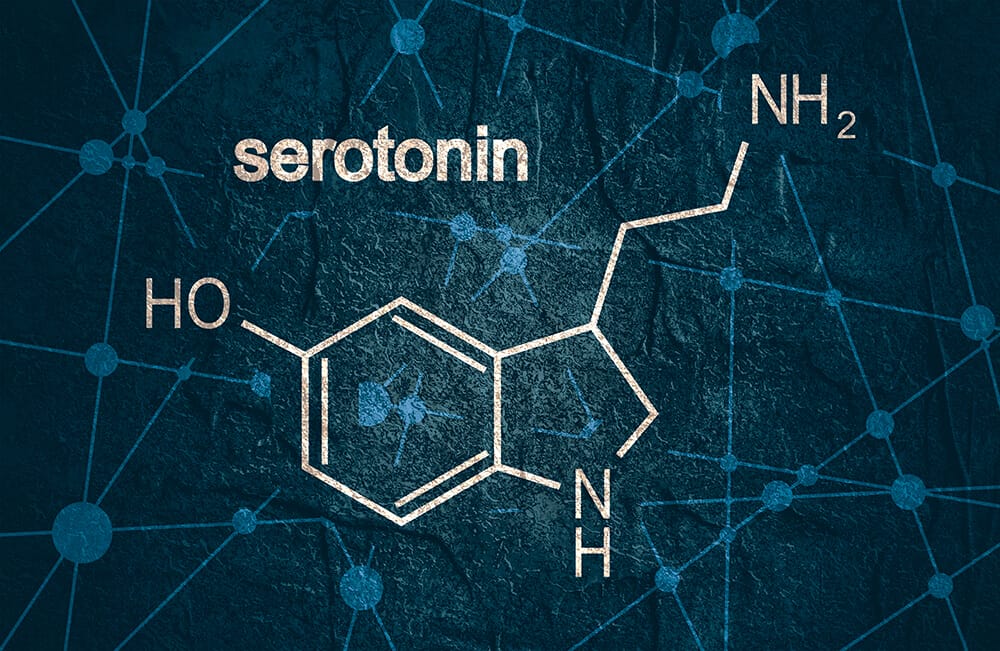
Serotonin is often referred to as the “happiness molecule.” It plays a critical role in affecting mood levels and is also a neurotransmitter that sends signals within the brain and the body.
Researchers have generally thought that the chemical plays a global role in modulating brain states by acting over a longer timescale than dopamine, which signals reward but operates on a much shorter timeframe.
Now, a Dartmouth study published in The Journal of Neuroscience reports that serotonin increases in anticipation of a reward and scales with the value of that reward.
For decades, prior research has looked at the release of dopamine levels in encoding the value of rewards at a subsecond timescale using a technique that enabled scientists to monitor it throughout different areas in the mouse brain.
Techniques for monitoring serotonin at this timescale did not previously exist, leaving many unknowns about when serotonin is released in the brain because of its widespread projections. Serotonin is an extraordinarily complex system, with the cells located in one small region of the brain, which then send their messages to pretty much every other area of the brain.
There are 14 serotonin receptors, which are like 14 different locks and the key, serotonin, can fit into any one of those locks, unlocking a different message depending on the door. This explains why past studies have focused on targeting those receptors before it was possible to examine serotonin itself.
“In this research we used a new biosensor called GRAB-serotonin, for short, that could, for the first time, measure the molecule by ‘grabbing’ serotonin released in the brain, while the mouse was running around receiving a tasty treat,” says senior author Kate Nautiyal, an assistant professor of psychological and brain sciences at Dartmouth.
Using a technique called fiber photometry, light can be used to trigger and then measure fluorescence fluctuations from a biosensor like GRAB, whenever serotonin is detected. The team was able to study the release of serotonin in mice while they received rewards, which in this case were varied concentrations of evaporated milk, which mice love. The researchers were then able to look at how serotonin levels changed depending on how good the reward was.
“We had a pretty good understanding that if you alter serotonin signaling by targeting receptors or manipulating reuptake such as with selective serotonin reuptake inhibitors, which are used in antidepressants, you get these broad impacts on mood and can change the way that animals or individuals seem to regulate behavior,” says co-author Mitchell Spring, a postdoctoral researcher who worked on this project in the Nautiyal Lab, a behavioral neuroscience lab in the Department of Psychological and Brain Sciences at Dartmouth.
The results showed that consumption of higher concentrations of the reward was associated with greater serotonin release. When the mice were thirsty and were given water, there was a big serotonin signal, and when they were satiated with a good reward and were full, the serotonin signal was not as strong.
The findings also showed that if you give mice a cue that predicts the reward, serotonin levels rise during the cue, or anticipation, of the reward.
“We found that you can modulate the serotonin signal with the subjective value of the reward,” says Nautiyal. “Our results tell us that serotonin is really a signal in the brain monitoring how good a reward is.”
In measuring the release of serotonin, the team focused on one brain region, the dorsomedial striatum, which has previously been associated very strongly with dopamine, decision-making, and impulsivity.
The researchers say that selective serotonin reuptake inhibitors are widely prescribed and generally effective but we don’t fully understand how they work or what serotonin is doing to address the behaviors that these antidepressants are treating.
“A better understanding of how serotonin is operating at baseline or in healthy individuals during a positive experience could be used to develop more targeted treatments for psychiatric disorders like depression and addiction,” says Nautiyal.
More information: Mitchell G. Spring et al, Striatal serotonin release signals reward value, The Journal of Neuroscience (2024). DOI: 10.1523/JNEUROSCI.0602-24.2024
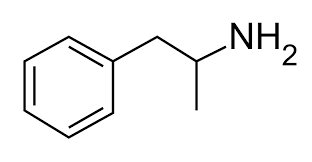
Prescribing rates for stimulants that treat attention-deficit/hyperactivity disorder (ADHD) have increased significantly over the past decade, with some of the largest increases reported during the COVID-19 pandemic. A new study of adult emergency department admissions at Mass General Brigham, led by McLean Hospital researchers, found that individuals who are taking high doses of amphetamine (e.g. Adderall) face more than a five-fold increased risk for developing psychosis or mania. Findings were published September 12th in the American Journal of Psychiatry.
Overall, individuals with past-month prescription amphetamine use had a greater likelihood of new-onset psychosis or mania than individuals without past-month use. The risk was highest in those taking 30 mg or more of dextroamphetamine (which corresponds to 40 mg of Adderall), according to the study.
Previous studies have linked stimulants to psychosis and mania risk; however, information had been lacking on whether dosing impacted risk.
“Stimulant medications don’t have an upper dose limit on their labels, and our results show that it is clear that dose is a factor in psychosis risk and should be a chief consideration when prescribing stimulants,” said lead study author Lauren Moran, MD, a pharmacoepidemiology researcher at McLean Hospital. “This is a rare but serious side effect that should be monitored by both patients and their doctors whenever these medications are prescribed.”
Moran said the study was born out of her past clinical observations as an inpatient psychiatrist. She and her McLean colleagues would regularly see patients coming in experiencing first episodes of psychosis, and their medical records would reveal they were prescribed high doses of stimulants by their doctors.
Researchers reviewed electronic health records of Mass General Brigham patient encounters between 2005 and 2019, focusing on adults aged 16 to 35, the typical age of onset for psychosis and schizophrenia. All patients were admitted to McLean Hospital following referrals from other hospitals in the Mass General Brigham healthcare system. The researchers identified 1,374 cases of individuals presenting with first-episode psychosis or mania, compared to 2,748 control patients with a psychiatric hospitalization for other conditions like depression or anxiety. They conducted a comparison analysis of stimulant use over the preceding month and accounted for other factors, including substance use, in order to isolate the effects of stimulants.
They found the attributable risk percentage among those exposed to any prescription amphetamine was nearly 63% and for high dose amphetamine was 81%. These findings suggest that among people who take prescription amphetamine, 81% of cases of psychosis or mania could have been eliminated if they were not on the high dose. While a significant dose-related risk increase was seen in patients taking high doses of amphetamine, no significant risk increase was seen with methylphenidate (Ritalin) use, which is consistent with previous research, including a 2019 study led by Moran.
While the study does not prove causality, the researchers note there is a plausible biological mechanism in neurobiological changes that include a release of higher levels of the neurotransmitter dopamine from amphetamines, that parallel dopaminergic changes observed in psychosis.
Limitations of the study include inconsistencies with how electronic health records are kept. Additionally, with the research taking place in a psychiatric hospital in the Boston area that sees many patients with psychosis, it may make these findings less generalizable to other parts of the country.
Moran said the findings need not create alarm but should lead to extra caution when these medications are prescribed, especially for those who have risk factors for psychosis and mania.
“There’s limited evidence that prescription amphetamines are more effective in high doses,” said Moran. “Physicians should consider other medications our study found to be less risky, especially if a patient is at high risk for psychosis or mania.”
Authorship: In addition to Moran, Mass General Brigham co-authors included Joseph P. Skinner, BA (BWH), Ann K. Shinn MD, MPH (McLean), Kathryn Nielsen (McLean), Vinod Rao, MD, PhD (MGH), Trevor Taylor, MD, MPH (MGH), Talia R. Cohen (McLean), Cemre Erkol, MD (McLean), Jaisal Merchant, MA (McLean), Christin A. Mujica, MA (McLean), Roy H. Perlis, MD, MSc, (MGH) and Dost Ongur, MD, PhD (McLean).
Funding: This work was funded by a grant from the National Institute of Mental Health (NIMH), R01 MH122427.
Disclosures: Perlis received personal fees from Genomind, Burrage Capital, Psy Therapeutics Inc, Circular Genomics Inc, and Vault Health unrelated to the submitted work. Dr. Ongur received honorariums for scientific presentations to Neumora Inc. and Guggenheim LLC unrelated to the submitted work. Dr. Moran is employed by Sage Therapeutics (unrelated to this work and after study completed and submitted for publication). All other authors report no financial relationships with commercial interests.
Paper cited: Moran, LV et al. “Risk of Incident Psychosis and Mania with Prescription Amphetamines,” American Journal of Psychiatry. DOI: 10.1176/appi.ajp.20230329
New data revealed that health insurance coverage, internet access and income level can influence suicide risk.
PCPs should create a comfortable environment to address these factors and reduce suicide risk.
By addressing factors like health insurance coverage, internet access and income level, primary care providers can play an important role in suicide prevention, according to experts.
“September is Suicide Prevention Month and today is World Suicide Prevention Day, a day where we raise awareness and attention to this issue, emphasizing the message that suicide is preventable,” Debra Houry, MD, MPH, CDC’s Chief Medical Officer, said in a media briefing on Sept. 10. “Suicide rates have increased over the last 20 years and remain high: more than 49,000 people died by suicide in 2022, and provisional data indicate a similar number of people died by suicide in 2023.”
By addressing factors like health insurance coverage, internet access and income level, PCPs can play an important role in suicide prevention, according to experts. Image: CDC
Brent Smith, MD, MSc, MLS, FAAFP, a family physician in Mississippi and member of the American Academy of Family Physicians board of directors, told Healio that PCPs “play a really underappreciated, undervalued role in all mental health care, but specifically suicide prevention.”
“Family physicians often become the de facto treatment for mental health because they’re the ones that are already established with the patient, that are available, and that have established a patient’s trust, and therefore kind of have a unique window,” he said.
Although suicide prevention often focuses on helping patients in crisis, Houry said it is also vital to reduce factors that lead to increased suicide risk and actively address factors that promote resilience, “to keep people from ever getting to a crisis.”
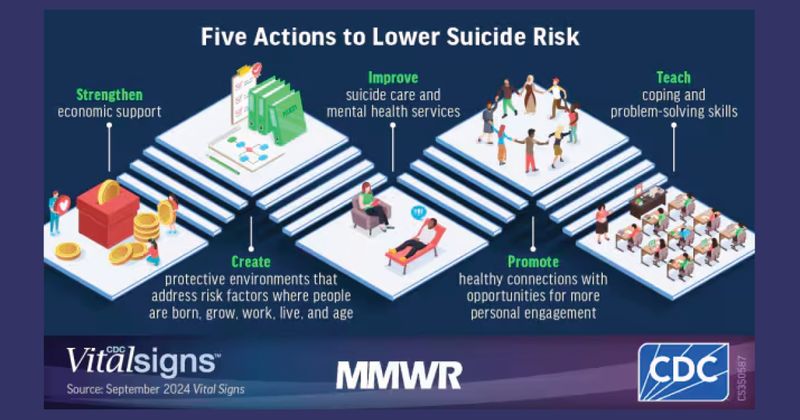
In that vein, a new CDC vital signs report highlighted the importance of exploring community factors — particularly, health insurance coverage, household income levels and broadband internet access — that could be improved to help prevent suicides.
“We all likely know someone who has struggled with suicidal thoughts,” Houry said. “I lost two medical school classmates to suicide and know how this crisis can truly impact anyone and everyone.”
The new data
Alison Cammack, PhD, MPH, lead author of the new vital signs report, and colleagues found that suicide rates were lowest for counties with higher levels of household income, broadband internet access and health insurance coverage.
More specifically, when compared with the counties that had the lowest levels of these factors, suicide rates were:
13% lower in counties with the most household income;
26% lower in counties with the highest health insurance coverage; and
44% lower in counties where most of the homes have broadband internet access.
Cammack said there could be many reasons as to why this may be the case.
“We know that these three factors are linked with protective factors that have been shown to help reduce the risk of suicide,” Cammack, who is also health scientist of the CDC Suicide Prevention Team, said. “Health insurance coverage can help [patients] access mental health and primary care services and treatment; high-speed Internet access connects people to prevention resources, job opportunities, telehealth services and friends and family; and household financial resources such as income and economic support put in place by local state and federal governments can help families secure food, housing, health care and other basic needs.”
The report also found some groups continue to face higher suicide rates, Cammack added, including men, people in rural areas, white people and American Indian/Alaskan Native people.
“It is important to note that many barriers challenge a person’s ability to access health insurance, broadband internet and higher income,” she said. “For example, tribal and rural communities may lack the infrastructure to obtain internet access. It’s imperative that our nation works toward a comprehensive suicide prevention approach focused on programs, practices and policies designed to prevent suicide crises before they happen.”
For patients who are already stressed by these community-level factors, “it does not take much other stress to really put you in a bad place from a mental health standpoint,” Smith said.
“All of the things that we can’t control with medicine … Those social determinants play as much of a role as anything else,” he said. “And you can throw medicine [at symptoms] all you want, but we still have to treat the other things that the patients deal with.”
Importance for PCPs
Better understanding factors that influence suicide risk can improve prevention efforts and ultimately save more lives, Houry said.
“Suicide is preventable, and we know what works to stop it and to spare families and friends from losing loved ones,” she said.
PCPs must prioritize evaluating and treating these and other social factors that can impact patient health, Smith said.
“Move social determinants of health higher up in your priority list when you’re dealing with mental health, suicide and other issues,” he said. “Come to it sooner, address it quicker, and make it as much of a priority as you can in your treatment plans, in order to have a more lasting impact and more success in treating these types of things.”
That can start with creating a positive environment where patients feel safe in talking about mental health, he said.
“The biggest thing for you to do is just make the environment comfortable for people to talk about the things that are really bothering them, and then you’ll start to see some actual impact on this,” Smith said. “The problem is just making sure we’re putting it into perspective. We often undervalue how much these social stressors drive their other issues.”
Smith acknowledged that PCPs are often unable to address social determinants of health until they have tried therapy, medicine and other treatment modalities. If they do prioritize addressing these factors, “they’ll find that they’re more successful getting not only their mental health issues under control, but also their chronic medical problems,” he added.
“Our work to make patients healthy has to go beyond just a clinical room, just the exam room,” Smith said. “It’s got to go back into their communities.”
Anyone in crisis can seek confidential and free help by contacting the 988 Suicide & Crisis Lifeline by texting or calling 988 or reaching out online at 988lifeline.org.
The interconnectedness of the brain, body and lifestyle factors and how they collectively influence mental health has been demonstrated by new research.
Researchers from the University of Melbourne, University College London and the University of Cambridge have identified multiple biological pathways involving organs and the brain that play a key part in physical and mental health.
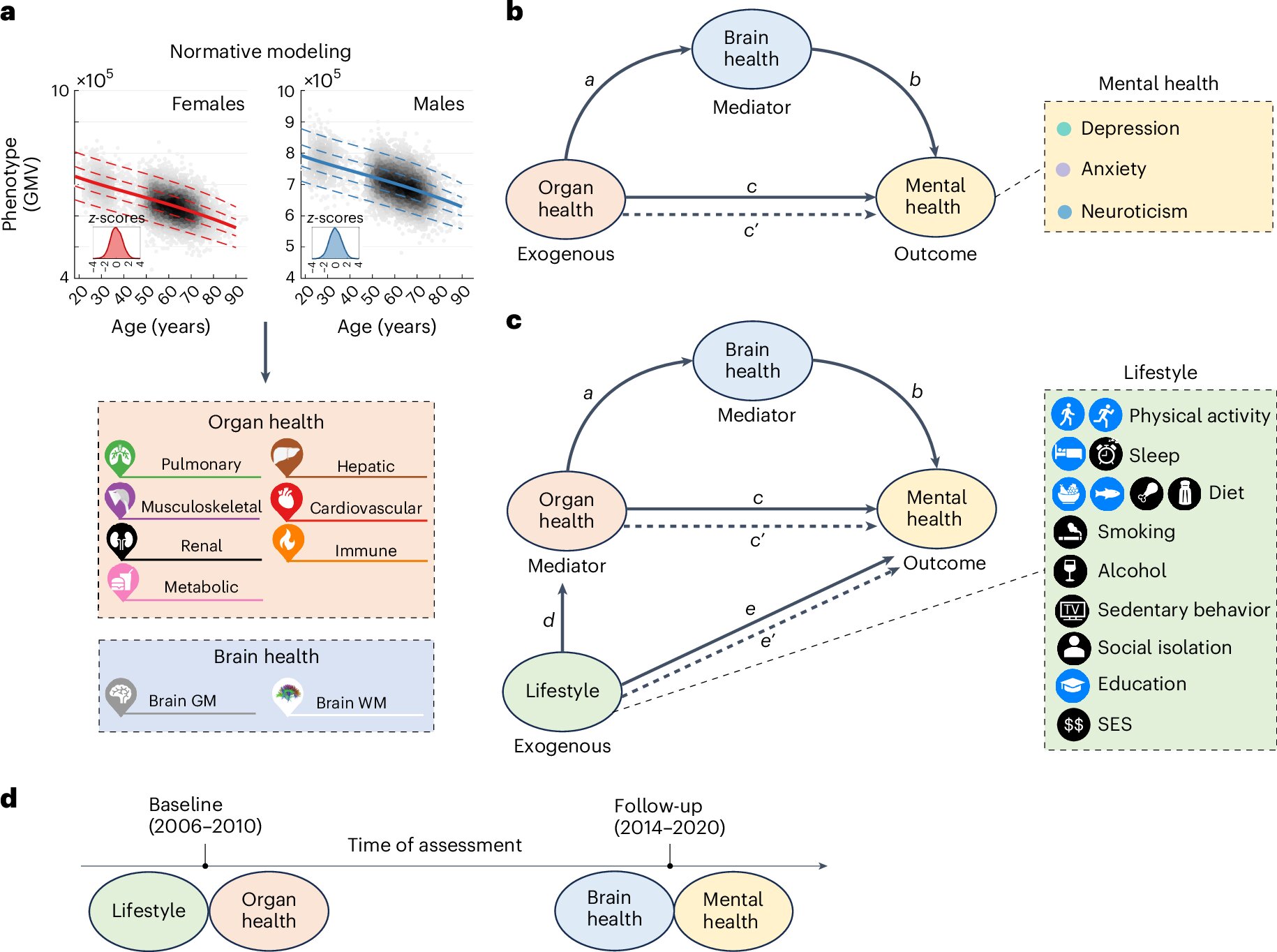
The study, published today in Nature Mental Health, used UK Biobank data from more than 18,000 people—7,749 people in the study had no major clinically diagnosed medical or mental health conditions, while 10,334 reported a diagnosis of either schizophrenia, bipolar disorder, depression or anxiety.
Using advanced statistical models, the researchers found poorer organ health was significantly associated with higher depressive symptoms, and that the brain plays an important role in linking body health and depression.
The organ systems studied included the lungs, muscles and bones, kidneys, liver, heart, and the metabolic and immune systems.
“Overall, we found multiple significant pathways through which poor organ health may lead to poor brain health, which may in turn lead to poor mental health,” lead author Dr. Ye Ella Tian, research fellow in the Department of Psychiatry, said.
“By integrating clinical data, brain imaging and a wide array of organ-specific biomarkers in a large population-based cohort, we were able to establish for the first time multiple pathways involving the brain as a mediating factor and through which poor physical health of body organ systems may lead to poor mental health.
“We identified modifiable lifestyle factors that can potentially lead to improved mental health through their impact on these specific organ systems and neurobiology.
“Our work provides a holistic characterization of brain, body, lifestyle and mental health.”
Physical health was also taken into account as well as lifestyle factors such as sleep quality, diet, exercise, smoking, and alcohol consumption.
“This is a significant body of work because we have shown the link between physical health and depression and anxiety and how that is partially influenced by individual changes in brain structure,” Professor Andrew Zalesky from the Departments of Psychiatry and Biomedical Engineering said.
“Our results suggest that poor physical health across multiple organ systems, such as liver and heart, the immune system and muscles and bones, may lead to subsequent alterations in brain structure.
“These structural changes of the brain may lead to or exacerbate symptoms of depression and anxiety as well as neuroticism.”
Professor James Cole, an author of the study from UCL Computer Science, said, “While it’s well-known in health care that all the body’s organs and systems influence each other, it’s rarely reflected in research studies. So, it’s exciting to see these results, as it really emphases the value in combining measures from different parts of the body together.”
More information: Ye Ella Tian et al, Brain, lifestyle and environmental pathways linking physical and mental health, Nature Mental Health (2024). DOI: 10.1038/s44220-024-00303-4
The psychedelic drug causes some lasting changes to the communication pathways that connect distinct brain regions. This heat map shows how patterns of resting brain activity (blue and green) change when psilocybin is taken (red and yellow), then return to normal as the drug wears off. Credit: Sara Moser/Washington University
Taking psilocybin, the hallucinogenic compound found in magic mushrooms, temporarily resets entire networks of neurons in the brain that are responsible for controlling a person’s sense of time and self, finds a study that repeatedly imaged the brains of seven volunteers before, during and after they took a massive dose of the drug.
The findings, published in Nature on 17 July1, could offer insights into why the compound might have a therapeutic effect on some neurological conditions.
Researchers “saw such massive changes induced by psilocybin” that some study participants’ brain-network patterns resembled those of a different person entirely, says Shan Siddiqi, a psychiatric neuroscientist at Harvard School of Medicine in Boston, Massachusetts. “I’ve never seen an effect this strong.”
Most of these changes lasted for a few hours, but one key link between different parts of the brain remained disrupted for weeks.
Psychedelic medicine
Psilocybin is one of several psychedelic drugs, including LSD, ketamine and MDMA (also known as ecstasy), that are being investigated as therapies for conditions such as depression and post-traumatic stress disorder. Despite promising data that have sped treatments towards approval, researchers still don’t fully understand the mechanism that underlies their therapeutic effects.
Many studies have investigated how psychedelics affect individual cells, but Joshua Siegel, a systems neuroscientist at the Washington University School of Medicine in St. Louis, Missouri, took a broader approach to look at how psilocybin affects networks of neurons across the whole brain.
Siegel and his colleagues tracked activity in the brains of seven healthy adults before, during and after they took a high dose of psilocybin. The researchers used functional magnetic resonance imaging (fMRI) to obtain images of blood-flow changes in different parts of the brain — a proxy used to measure how groups of neurons across the brain communicate with one another.
The researchers compared these fMRI scans with images of the same participants’ brains when they did not take any drug or when they took a stimulant. They found that psilocybin caused groups of neurons that normally fire together to become desynchronized. These effects were localized to a group of brain regions called the default mode network, which is usually active when the brain is at ‘wakeful rest’ — for example, during daydreaming — rather than focusing on a task. Although most of the neurons in this network seemed to get back in sync once the acute effects of the drug had worn off, the communication between the default mode network and a brain region called the anterior hippocampus — which is involved in creating our senses of space, time and self — was diminished for weeks.
The researchers also found that a mental exercise called ‘grounding’, which is commonly used in psychedelic therapy to dampen the unpleasant effects of a drug by diverting the recipient’s attention to their surroundings, diminished psilocybin’s effects on the brain. This suggests there could be a neurological signal that grounding techniques can influence, Siegel says.
Deeper insights
Although past experiments have also found that psilocybin disrupts brain networks2,3, this study “provides a deeper resolution and insight into the nature of that disruption”, says Brian Mathur, a systems neuroscientist at the University of Maryland School of Medicine in Baltimore.
The approach was unusual: the researchers homed in on a smaller number of participants than are typically recruited for brain-imaging studies, instead opting to scan each participant about 18 times, creating a mountain of data that the authors could use to support their conclusions.
Mathur cautions that these data cannot show what precisely causes the potential therapeutic benefit of psilocybin — but they offer tantalizing clues. “It’s possible psilocybin is directly causing” the brain-network changes, he says — or perhaps it is creating a psychedelic experience that in turn causes parts of the brain to behave differently, he says.
Siddiqi agrees, adding that it will be useful to untangle whether psilocybin’s blood-flow changes in the brain, which is measured by fMRI, or its direct effects on neurons — or both — are responsible for the brain-network disruptions. Siegel hopes to conduct further experiments to investigate the effects of psilocybin on the brains of people with conditions such as depression.
“The best part of this work is that it’s going to provide a means forward for the field to develop further hypotheses that can and should be tested,” Mathur says.
Professor, Department of Psychiatry Director, Center for Novel Therapeutics University of Colorado School of Medicine Anschutz Medical Campus
Researchers from the University of Colorado Anschutz Medical Campus have established a new framework for understanding how classic antidepressants work in treating major depressive disorder (MDD), reemphasizing their importance and aiming to reframe clinical conversation around their role in treatment.
The nature of the dysfunction at the root of MDD has been under investigation for decades. Classic antidepressants, like SSRIs (selective serotonin reuptake inhibitors, such as Prozac) cause an elevation in the levels of the brain chemical messenger, serotonin. This observation led to the idea that antidepressants work because they restore a chemical imbalance, such as a lack of serotonin. However, subsequent years of research showed no significant decrease in serotonin in people with depression. While experts have moved away from this hypothesis due to lack of concrete evidence, this has led to a shift in public opinion on the effectiveness of these medications.
Antidepressants, such as SSRIs and serotonin and norepinephrine reuptake inhibitors (SNRIs) are still effective in alleviating depressive episodes in many patients, however. In a paper published in Molecular Psychiatry, researchers outline a new framework for understanding how antidepressants are efficacious in treating MDD. This framework helps clarify how antidepressants like SSRIs are still be helpful, even if MDD isn’t caused by a lack of serotonin.
“The best evidence of changes in the brain in people suffering from MDD is that some brain regions are not communicating with each other normally,” says Scott Thompson, PhD, professor in the department of psychiatry at the University of Colorado School of Medicine and senior author. “When the parts of the brain responsible for reward, happiness, mood, self-esteem, even problem solving in some cases, are not communicating with each other properly, then they can’t do their jobs properly.
“There is good evidence that antidepressants that increase serotonin, like SSRIs, all work by restoring the strength of the connections between these regions of the brain. So do novel therapeutics such as esketamine and psychedelics. This form of neuroplasticity helps release brain circuits from being ‘stuck’ in a pathological state, ultimately leading to a restoration of healthy brain function,” said Thompson.
Thompson and colleagues liken this theory to a car running off the road and getting stuck in a ditch, requiring the help of a tow truck to pull the car out of its stuck state, allowing it to move freely down the road again.
Researchers are hoping health care providers will use their examples to bolster conversations with apprehensive patients about these treatments, helping them better understand their condition and how to treat it.
“We are hoping this framework provides clinicians new ways to communicate the way these treatments work in combating MDD,” said C. Neill Epperson, MD, Robert Freedman endowed professor and chair of the department of psychiatry in the University of Colorado School of Medicine and co-author on the paper. “Much of the public conversation around the effectiveness of antidepressants, and the role serotonin plays in diagnosis and treatment, has been negative and largely dangerous. While MDD is a heterogenous disorder with no one fits all solution, it is important to emphasize that if a treatment or medication is working for you, then they are lifesaving. Understanding how these medications promote neuroplasticity can help strengthen that message.”
Chloe E. Page, C. Neill Epperson, Andrew M. Novick, Korrina A. Duffy, Scott M. Thompson. Beyond the serotonin deficit hypothesis: communicating a neuroplasticity framework of major depressive disorder. Molecular Psychiatry, 2024; DOI: 10.1038/s41380-024-02625-2
An effective single-dose, long-term treatment for anxiety could be within reach, with the phase 2b clinical trial of MM-120 reported to have passed the stage with flying colors. The makers, MindMed, now plan to hold an end-of-phase meeting with the US Food and Drug Administration (FDA) in early 2024, and then get a phase 3 trial under way.
MM-120 is essentially lysergide D-tartrate, which is best known by its abbreviation, LSD. A synthetic tryptamine, this serotonergic hallucinogen acts as a partial agonist at serotonin (5-hydroxytryptamine [5-HT]) 5-HT2A receptors. MindMed has developed a tartrate form of lysergide to treat generalized anxiety disorder (GAD) and, in a separate trial, attention-deficit hyperactivity disorder (ADHD).
The company has reported that the phase 2b clinical trial of 200 participants with GAD symptoms had met its primary endpoint with “positive topline results,” paving the way for taking it to the next trial stage and closer to therapeutic approval.
“Clinically meaningful improvements,” compared to a placebo, were noted in groups on 100 µg and 200 µg doses. MM-120 was reportedly well tolerated, with side effects such as hallucinations and euphoric mood only occurring on dose day.
Not surprisingly, given its one-off dose and it being a standalone drug – so with no psychotherapy aspect to the trial – 90% of the 200 participants completed the four-week trial and 97.5% in the high-dose groups saw it through to the end.
“We are excited by the strong positive results for MM-120 in GAD, particularly given that this is the first study to assess the standalone drug effects of MM-120 in the absence of any psychotherapeutic intervention,” said MindMed director Robert Barrow in a statement. “These promising findings represent a major step forward in our goal to bring a paradigm-shifting treatment to the millions of patients who are profoundly impacted by GAD.”
GAD, which can be a hugely debilitating subtype of anxiety disorder, is hallmarked by chronic excessive worry that can impact work, health and relationships. Of the estimated 6.8 million Americans who have GAD, less than half are receiving any treatment for it.
It’s also notoriously difficult to treat, with around half of those who do seek medical intervention not responding to initial treatment.
In the study, 100 µg of MM-120 administered once, showed remarkable results four weeks later. Using the Hamilton Anxiety Rating Scale (HAM-A), remission rates and Clinical Global Impressions – Severity (CGI-S) scores, the drug’s performance shows great promise.
Looking at clinical response, with a 50% or greater improvement in HAM-A scores after the fourth week, 78% of the participants had significant GAD relief compared to the placebo, while clinical remission – a HAM-A score below seven – was shown in a massive 50% of participants who had received the 100-µg dose.
Overall, participants receiving 100 µg or 200 µg experienced a two-unit improvement in the CGI-S score at the four-week assessment.
“Generalized anxiety disorder is a common condition associated with significant impairment that adversely affects millions of people and there remains a serious unmet need for this patient population,” said Daniel Karlin, Chief Medical Officer of MindMed. “The pharmaceutical industry has largely ignored GAD over recent decades as it has proved extremely difficult to target. Few new treatment options have shown robust activity in GAD since the last new drug approval in 2004, making the strong, rapid, and durable clinical activity of a single dose of MM-120 observed in the trial particularly notable.
“We believe this study is the first to rigorously assess the efficacy of a drug candidate in this class in the absence of a concurrent therapeutic intervention, which brings hope to the millions of people suffering from GAD and provides additional evidence that MM-120 may play an important role in revolutionizing the treatment of brain health disorders,” he added in the statement.
Long-term treatment with certain antidepressants appeared associated with reduced dementia incidence, according to results of a case-control study published in Journal of Clinical Psychiatry.
“Depression could represent one of these potentially modifiable risk factors for all-cause dementia,” Claudia Bartels, PhD, of the department of psychiatry and psychotherapy at University Medical Center Goettingen in Germany, and colleagues wrote. “Numerous studies have concordantly demonstrated a strong association between depression and an increased risk [for] subsequent dementia. Selective serotonin reuptake inhibitors (SSRIs) are commonly used to treat depressive symptoms in [Alzheimer’s disease] dementia.
“Preclinical research in recent years has suggested that SSRIs reduce amyloid plaque burden in transgenic mouse models of [Alzheimer’s disease] and in cognitively healthy humans, attenuate amyloid-[beta]1-42–induced tau hyperphosphorylation in cell culture and improve cognition in mice.”
However, the effects of SSRIs on cognition in Alzheimer’s disease dementia were linked mostly to negative results in randomized clinical trials; research is sparse regarding which antidepressants may influence risk for developing dementia; and evidence is particularly rare for treatment duration effects on this risk. Thus, Bartels and colleagues sought to determine the effects of antidepressant drug classes and individual compounds with various treatment durations on the risk for developing dementia. The researchers analyzed data of 62,317 individuals with an incident dementia diagnosis who were included in the German Disease Analyzer database, and they compared outcomes to those of controls matched by age, sex and physician. They conducted logistic regression analyses, which were adjusted for health insurance status and comorbid diseases linked to dementia or antidepressant use, to evaluate the association between dementia incidence and treatment with four major classes of antidepressant drug, as well as 14 of the most commonly prescribed individual antidepressants.
Results showed an association between treatment for 2 years or longer with any antidepressant and a lower risk for dementia vs. short-term treatment among 17 of 18 comparison. Particularly for long-term treatment, herbal and tricyclic antidepressants were linked to a decrease in incidence of dementia. Long-term treatment with escitalopram (OR = 0.66; 95% CI, 0.5-0.89) and Hypericum perforatum (OR = 0.6; 95% CI, 0.51-0.7) were associated with the lowest risks for dementia on an individual antidepressant basis.
“Clinical trials — although well acknowledged as the gold standard procedure — have debunked numerous promising compounds and become increasingly challenging with longer treatment durations,” Bartels and colleagues wrote. “Thus, and in awareness of the controversy of this suggestion, analyzing data from registries in a naturalistic setting may be an attractive and feasible alternative. If individual datasets could be combined in a multinational effort, even more powerful analyses of merged big databases could be performed and an additive contribution with naturalistic data could be made.”






 It's Interesting