Biobots arise from the cells of dead organisms − pushing the boundaries of life, death and medicine

Life and death are traditionally viewed as opposites. But the emergence of new multicellular life-forms from the cells of a dead organism introduces a “third state” that lies beyond the traditional boundaries of life and death.

Usually, scientists consider death to be the irreversible halt of functioning of an organism as a whole. However, practices such as organ donation highlight how organs, tissues and cells can continue to function even after an organism’s demise. This resilience raises the question: What mechanisms allow certain cells to keep working after an organism has died?

We are researchers who investigate what happens within organisms after they die. In our recently published review, we describe how certain cells – when provided with nutrients, oxygen, bioelectricity or biochemical cues – have the capacity to transform into multicellular organisms with new functions after death.

Life, death and emergence of something new

The third state challenges how scientists typically understand cell behavior. While caterpillars metamorphosing into butterflies, or tadpoles evolving into frogs, may be familiar developmental transformations, there are few instances where organisms change in ways that are not predetermined. Tumors, organoids and cell lines that can indefinitely divide in a petri dish, like HeLa cells, are not considered part of the third state because they do not develop new functions.

However, researchers found that skin cells extracted from deceased frog embryos were able to adapt to the new conditions of a petri dish in a lab, spontaneously reorganizing into multicellular organisms called xenobots. These organisms exhibited behaviors that extend far beyond their original biological roles. Specifically, these xenobots use their cilia – small, hair-like structures – to navigate and move through their surroundings, whereas in a living frog embryo, cilia are typically used to move mucus.

Xenobots are also able to perform kinematic self-replication, meaning they can physically replicate their structure and function without growing. This differs from more common replication processes that involve growth within or on the organism’s body.

Researchers have also found that solitary human lung cells can self-assemble into miniature multicellular organisms that can move around. These anthrobots behave and are structured in new ways. They are not only able to navigate their surroundings but also repair both themselves and injured neuron cells placed nearby.

Taken together, these findings demonstrate the inherent plasticity of cellular systems and challenge the idea that cells and organisms can evolve only in predetermined ways. The third state suggests that organismal death may play a significant role in how life transforms over time.

Postmortem conditions

Several factors influence whether certain cells and tissues can survive and function after an organism dies. These include environmental conditions, metabolic activity and preservation techniques.

Different cell types have varying survival times. For example, in humans, white blood cells die between 60 and 86 hours after organismal death. In mice, skeletal muscle cells can be regrown after 14 days postmortem, while fibroblast cells from sheep and goats can be cultured up to a month or so postmortem.

Metabolic activity plays an important role in whether cells can continue to survive and function. Active cells that require a continuous and substantial supply of energy to maintain their function are more difficult to culture than cells with lower energy requirements. Preservation techniques such as cryopreservation can allow tissue samples such as bone marrow to function similarly to that of living donor sources.

Inherent survival mechanisms also play a key role in whether cells and tissues live on. For example, researchers have observed a significant increase in the activity of stress-related genes and immune-related genes after organismal death, likely to compensate for the loss of homeostasis. Moreover, factors such as traumainfection and the time elapsed since death significantly affect tissue and cell viability.

Microscopy image of developing white and red blood cells
Different cell types have different capacities for survival, including white blood cells. Ed Reschke/Stone via Getty Images

Factors such as age, health, sex and type of species further shape the postmortem landscape. This is seen in the challenge of culturing and transplanting metabolically active islet cells, which produce insulin in the pancreas, from donors to recipients. Researchers believe that autoimmune processes, high energy costs and the degradation of protective mechanisms could be the reason behind many islet transplant failures.

How the interplay of these variables allows certain cells to continue functioning after an organism dies remains unclear. One hypothesis is that specialized channels and pumps embedded in the outer membranes of cells serve as intricate electrical circuits. These channels and pumps generate electrical signals that allow cells to communicate with each other and execute specific functions such as growth and movement, shaping the structure of the organism they form.

The extent to which different types of cells can undergo transformation after death is also uncertain. Previous research has found that specific genes involved in stress, immunity and epigenetic regulation are activated after death in mice, zebrafish and people, suggesting widespread potential for transformation among diverse cell types.

Implications for biology and medicine

The third state not only offers new insights into the adaptability of cells. It also offers prospects for new treatments.

For example, anthrobots could be sourced from an individual’s living tissue to deliver drugs without triggering an unwanted immune response. Engineered anthrobots injected into the body could potentially dissolve arterial plaque in atherosclerosis patients and remove excess mucus in cystic fibrosis patients.

Importantly, these multicellular organisms have a finite life span, naturally degrading after four to six weeks. This “kill switch” prevents the growth of potentially invasive cells.

A better understanding of how some cells continue to function and metamorphose into multicellular entities some time after an organism’s demise holds promise for advancing personalized and preventive medicine.

https://theconversation.com/biobots-arise-from-the-cells-of-dead-organisms-pushing-the-boundaries-of-life-death-and-medicine-238176

Man dies from eating bags of black licorice

By MARILYNN MARCHIONE

A Massachusetts construction worker’s love of black licorice wound up costing him his life. Eating a bag and a half every day for a few weeks threw his nutrients out of whack and caused the 54-year-old man’s heart to stop, doctors reported Wednesday.

“Even a small amount of licorice you eat can increase your blood pressure a little bit,” said Dr. Neel Butala, a cardiologist at Massachusetts General Hospital who described the case in the New England Journal of Medicine.

The problem is glycyrrhizic acid, found in black licorice and in many other foods and dietary supplements containing licorice root extract. It can cause dangerously low potassium and imbalances in other minerals called electrolytes.

Eating as little as 2 ounces of black licorice a day for two weeks could cause a heart rhythm problem, especially for folks over 40, the U.S. Food and Drug Administration warns.

“It’s more than licorice sticks. It could be jelly beans, licorice teas, a lot of things over the counter. Even some beers, like Belgian beers, have this compound in it,” as do some chewing tobaccos, said Dr. Robert Eckel, a University of Colorado cardiologist and former American Heart Association president. He had no role in the Massachusetts man’s care.

The death was clearly an extreme case. The man had switched from red, fruit-flavored twists to the black licorice version of the candy a few weeks before his death last year. He collapsed while having lunch at a fast-food restaurant. Doctors found he had dangerously low potassium, which led to heart rhythm and other problems. Emergency responders did CPR and he revived but died the next day.

The FDA permits up to 3.1% of a food’s content to have glycyrrhizic acid, but many candies and other licorice products don’t reveal how much of it is contained per ounce, Butala said. Doctors have reported the case to the FDA in hope of raising attention to the risk.

Jeff Beckman, a spokesman for the Hershey Company, which makes the popular Twizzlers licorice twists, said in an email that “all of our products are safe to eat and formulated in full compliance with FDA regulations,” and that all foods, including candy, “should be enjoyed in moderation.”

https://abcnews.go.com/Health/wireStory/candy-man-dies-eating-bags-black-licorice-73203407

Eugene Shoemaker: the only person whose ashes have been buried on any celestial body outside Earth


Eugene Shoemaker


Carolyn Shoemaker


Carolyn and Eugene Shoemaker stand by the 18″ Schmidt Telescope at the Palomar Observatory. They used it to search for asteroids and comets that may come close to the earth’s orbit.


Scientist Eugene Shoemaker (C) pictured on July, 17, 1994 in Greenbelt, Maryland, with a series of images of the Shoemaker-Levy 9 comet impact with Jupiter. At right is his wife Carolyn and at left is David Levy.

Today, we know Neil Armstrong and Buzz Aldrin as the first men to land on the moon, 51 years ago. But, if not for a turn of events, history may have also known another name: Eugene Shoemaker.

Thirty years after that one small step for mankind, Eugene would make his own, extraordinary journey to the moon.

Chapter 1: Boy meets girl

In the summer of 1950, Carolyn Spellmann was a college student living in Chico, California. It was there where she would first meet her future husband and science partner, Eugene Shoemaker.

“He came to be my brother’s best man at his wedding,” Carolyn recalled. “He came there, and I opened the back door, and there was Gene.”

That first meeting turned into a long-distance pen pal relationship, and a year later, they were married.

Chapter 2: Reaching for the stars

It was Gene who would encourage Carolyn to step behind a telescope, sparking a lifelong passion and profession.

“Gene simply said, ‘Maybe I would like to see things through the telescope,'” Carolyn remembered. “I thought, ‘No, I’ve never stayed awake a night in my life, I don’t think so.’ But I gradually fell into the program, into the work.”

Carolyn went on to become a celebrated astronomer, and even held the Guinness World Record for the greatest number of comets discovered by an individual. “That earned me the nickname of Mrs. Comet,” said Carolyn.

While Carolyn focused her research on comets and near-Earth asteroids, her husband was interested in the things that asteroids created — craters.

“He always thought big, and so the origin of the universe was his project,” Carolyn said. “The more we found that had craters on them, the more excited he was.”

Chapter 3: Shooting for the moon

But for Eugene, the moon was always the ultimate goal.

“Gene wanted to go to the moon more than anything since he was a very young man,” Carolyn said. “Gene felt that putting a man on the moon was a step in science … He felt that we had a lot to learn about the origin of the moon, and therefore, other planets.”

So, in 1961, when President John F. Kennedy announced that the United States would be sending a man to the moon before the end of the decade, Eugene’s life changed forever. As a geologist dedicated to studying craters, he wanted the chance to stand on the moon, study its surface with his own two hands.

“Gene thought that he was going to the moon,” Carolyn said. “He wanted to, he worked very hard toward that end. Gene was terribly excited and worried, too, because he felt it was too soon. Too soon, he wasn’t prepared and ready, yet, he was still learning lots of things that he would need to know.”

Chapter 4: A dream deferred

But, it wasn’t his time. A failed medical test stopped his dreams in their tracks.

“It was discovered that he had Addison’s disease, which is a failure of the adrenal glands,” Carolyn recalled.

“That meant that there was no prospect at all of his ever going to the moon.”

Carolyn said Eugene “felt like his goal had suddenly disappeared.”

“At the same time, he was not a quitter,” she added.

Eugene continued to work to bring qualified people into the astronaut training program.

“He helped train Neil Armstrong, he helped train many of the astronauts,” Carolyn said. “He took the first group, and then several other groups to Meteor Crater (in Arizona).”

Meteor Crater was used as a training ground for astronauts because it mimicked the surface of the moon, both being dotted with meteor-impact craters.

Chapter 5: Turning their attention

While Eugene tucked away his hope of going to the moon, he and Carolyn set up an observation program at Palomar Observatory in California, looking to uncover near-Earth objects. That led them to one of their greatest discoveries — Comet Shoemaker-Levy 9, the comet that collided with Jupiter. It was the first time in history humans had observed a collision between two bodies in the solar system.

“He let the dream of going to the moon himself go, he was realistic about it,” Carolyn said. “At the same time, it was still on his mind. When we would do our observing program, he would be looking at the moon with that in mind, I’m sure.”

Eventually, Carolyn and Eugene would put space behind them and turn their attention to their own backyard.

“Our focus changed over the years from looking up at the moon and looking at the sky only, to considering what would happen on Earth,” Carolyn said. “Gene had a dream of seeing an asteroid hit the Earth.”

Their search for impact craters took them all over the world, with a special focus on Australia.

“The trips to Australia were rather special,” Carolyn said. “We went to Australia because it had the oldest land surface available to study.”

“We were living out of our truck … We were able to camp out under the stars, which was really special because their sky was just magnificent, and it was different from ours. It was upside down.”

Chapter 6: A fateful day

On July 18, 1997, Eugene and Carolyn were driving to meet a friend who would help them with some crater-mapping.

“We were just looking off in the distance, talking about how much fun we were having, what we were going to do,” Carolyn remembers. “Then suddenly, there appeared a Land Rover in front of us, and that was it.”

The two vehicles collided, and Eugene died.

“I had been hurt and I thought to myself, ‘Well, Gene will come around like he always does and rescue me,'” Carolyn recalls. “So I waited, and I called, and nothing happened.”

Chapter 7: Getting the call

While Carolyn was recovering in the hospital, she received a call from Carolyn Porco — an ex-student of Eugene’s who had been working on the Lunar Prospector space probe mission with NASA.

“She said, ‘I’m here in Palo Alto with some people who are working on Lunar Prospector,'” Carolyn remembers.

“They’re about to send a mission up to the moon, I wonder if you would like to put Gene’s ashes on the moon?”


I said, ‘Yes … I think that would be wonderful.'”
On January 6, 1998, the Lunar Prospector was sent off, carrying Eugene’s ashes onboard. “The whole family was there to wave Gene goodbye,” Carolyn said.

Chapter 8: A telling passage

Along with the space probe, an epigraph, laser-etched onto a piece of brass foil, was sent up with Eugene’s remains. It included a passage from Shakespeare’s “Romeo and Juliet.”

“And, when he shall die,
Take him and cut him out in little stars,
And he will make the face of heaven so fine
That all the world will be in love with night,
And pay no worship to the garish sun.”

After the Prospector’s mission was completed, it ran out of fuel and crashed into the side of the moon, by the South Pole. The impact created its own crater, and that’s where Eugene’s ashes remain today.

“Gene spent most of his life thinking about craters, about the moon,” Carolyn said. “It was ironic that he ended his life also with the moon … but he would have been very pleased to know that happened.”

Epilogue

A few years prior to his death, while receiving the William Bowie Medal for his contributions to geophysics, Eugene noted that “not going to the moon and banging on it with my own hammer has been my biggest disappointment in life”

“But then, I probably wouldn’t have gone to Palomar Observatory to take some 25,000 films of the night sky with Carolyn,” he continued. “We wouldn’t have had the thrills of finding those funny things that go bump in the night.”

Carolyn misses him always. To this day, she’ll look up to the moon and imagine him there with his rocks — looking down.

To hear her say it, he still lights up every single one of her night skies.

https://www.cnn.com/2020/07/26/us/man-on-the-moon-ashes-scn-trnd/index.html?utm_term=159628334818014c51a639e8f&utm_source=The+Good+Stuff+08%2F01%2F20&utm_medium=email&utm_campaign=228899_1596283348182&bt_ee=1Cu9PD%2F%2FgVrCcw92d%2FAaZbpmmIocfY3gomZAPHzMl1dqSKup05CAB5fzEw%2FWW0gZ&bt_ts=1596283348182

Oleh Hornykiewicz, Who Discovered Parkinson’s Treatment, Dies at 93


Oleh Hornykiewicz in his Vienna office in 2009 He helped identify low dopamine levels as a cause of Parkinson’s disease, a finding that led to an effective treatment.

Oleh Hornykiewicz, a Polish-born pharmacologist whose breakthrough research on Parkinson’s disease has spared millions of patients the tremors and other physical impairments it can cause, died on May 27 in Vienna. He was 93.

His death was confirmed by his longtime colleague, Professor Stephen J. Kish of the University of Toronto, where Professor Hornykiewicz (pronounced whor-nee-KEE-eh-vitch) taught from 1967 until his retirement in 1992.

Professor Hornykiewicz was among several scientists who were considered instrumental in first identifying a deficiency of the neurotransmitter dopamine as a cause of Parkinson’s disease, and then in perfecting its treatment with L-dopa, an amino acid found in fava beans.

The Nobel laureate Dr. Arvid Carlsson and his colleagues had earlier shown that dopamine played a role in motor function. Drawing on that research, Professor Hornykiewicz and his assistant, Herbert Ehringer, discovered in 1960 that the brains of patients who had died of Parkinson’s had very low levels of dopamine.

He persuaded another one of his collaborators, the neurologist Walther Birkmayer, to inject Parkinson’s patients with L-dopa, the precursor of dopamine, which could cross the barrier between blood vessels and the brain and be converted into dopamine by enzymes in the body, thus replenishing those depleted levels. The treatment alleviated symptoms of the disease, and patients who had been bedridden started walking.

The initial results of this research were published in 1961 and presented at a meeting of the Medical Society of Vienna. The “L-dopa Miracle,” as it was called, inspired Dr. Oliver Sacks’s memoir “Awakenings” (1973) and the fictionalized movie of the same name in 1990.
As a therapy for Parkinson’s, L-dopa was further refined by other scientists, including George C. Cotzias and Melvin D. Yahr. But it was Professor Hornykiewicz, defying colleagues who had argued that post-mortem brain studies were worthless, who is credited with the critical breakthroughs.

His findings spurred the establishment of human brain tissue banks, research into dopamine and treatments of other diseases caused by low levels of neurotransmitters.

“Today, it is generally agreed that the initiation of the treatment of Parkinson’s disease with L-dopa represented one of the triumphs of pharmacology of our time,” Professor Hornykiewicz wrote in “The History of Neuroscience in Autobiography, Volume IV” (2004). “This provided, apart from the benefit to the patients, a stimulus for analogous studies of many other brain disorders, both neurological and psychiatric.”

He received several distinguished awards, including the Wolf Prize in Medicine in 1979 and the Ludwig Wittgenstein Prize of the Austrian Research Foundation in 1993.

In 2000, when Dr. Carlsson, of Sweden, and others were awarded the Nobel Prize in Physiology or Medicine for discovering dopamine and “allowing for the development of drugs for the disease,” as the Nobel committee wrote, more than 200 scientists signed a petition protesting that the prize had not also been awarded to Professor Hornykiewicz.

Oleh Hornykiewicz was born on Nov. 17, 1926, in the village of Sychow, near Lviv, in what was then southeastern Poland and is now western Ukraine. His was a fourth-generation family of Eastern Orthodox Catholic priests. His father, Theophil Hornykiewicz, ministered to the village’s several dozen parishioners and taught religion; his mother, Anna (Sas-Jaworsky) Hornykiewicz, managed the affairs of the village’s 300-year-old wooden church.

When the Soviet Union invaded in 1939, the family fled to Austria, his mother’s ancestral home, with whatever belongings they could carry. Oleh knew no German but learned it by reading Hitler’s “Mein Kampf,” which was readily available in Vienna. He suffered from tuberculosis and, when the war ended, decided to follow his eldest brother and become a doctor.

He received his medical degree from the University of Vienna in 1951 and began his academic and research career in its pharmacology department. He held a British Council Research Scholarship at the University of Oxford from 1956 to 1958. Beginning in 1967, he headed the psychopharmacology department at the Clarke Institute of Psychiatry in Toronto (now the Center for Addiction and Mental Health), where he established the Human Brain Laboratory in 1978.

He was named a full professor of pharmacology and psychiatry at the University of Toronto in 1973 and, in 1976, appointed to head the newly-founded Institute of Biochemical Pharmacology of the University of Vienna. He held both posts concurrently.

He is survived by his daughter, Maria Hentosz; three sons, Nicholas, Stephen and Joseph; six grandchildren; and one great-grandchild. His wife, Christina (Prus-Jablonowski) Hornykiewicz, had died.

“He was a pharmacologist, biochemist and neurologist who wanted to find out how the brain works and how dopamine was involved,” Professor Kish said. “And he wanted to be known also as a philosopher.”

Despite being snubbed by the Nobel committee, Professor Hornykiewicz was philosophical about what he had accomplished and the degree to which it had been credited.

“I am surprised to see that I have achieved everything I could have wished for,” he wrote in 2004. “The support and recognition I received for my work, I have accepted with gratitude, as a charming reminder to do more and better.”

Professor Kish, who heads the Human Brain Laboratory at the University of Toronto’s Centre for Addiction and Mental Health, said L-dopa, or Levodopa, as it is also called, is today “the mainstay treatment for Parkinson’s disease — no drug is more efficacious.”

“Hornykiewicz,” he added, “reminds us that before L-dopa, persons with Parkinson’s disease were bedridden, crowding chronic hospital wards, and the doctors were powerless to do anything. His discovery changed all that —- it was a miracle.”

Oleh Hornykiewicz, Who Discovered Parkinson’s Treatment, Dies at 93

Dr. Richard Friedman, Who Debunked Homosexuality Myth, Dies at 79


Dr. Richard C. Friedman in an undated photo. “Straight people had the same personality issues, and they got away with murder,” his wife said, “but gay people were stigmatized, and he didn’t think that was right.” In an important book, he challenged the widely held Freudian notion that same-sex attraction was curable, finding it instead rooted in biology.

By Kim Severson

In the 1980s, when marriage and adopting children seemed impossible dreams for gay men, the psychoanalyst Richard C. Friedman became their champion.

His 1988 book, “Male Homosexuality: A Contemporary Psychoanalytic Perspective,” showed that sexual orientation was largely biological and presented a case that helped undermine the belief held by most Freudian analysts at the time that homosexuality was a pathology that could somehow be cured.

“I felt an ethical obligation to find the reasons for anti-homosexual prejudice,” he once told an interviewer. His wife, Susan Matorin, a clinical social worker at the Weill Medical College of Cornell, put it more plainly: “Straight people had the same personality issues, and they got away with murder, but gay people were stigmatized, and he didn’t think that was right.”

Dr. Friedman’s motivation wasn’t political. “He very much felt like you followed the science, and it didn’t matter what the political backdrop was,” his son, Jeremiah, a screenwriter in Los Angeles, said in a phone interview.

Although the American Psychiatric Association, the dominant mental health organization in the United States, changed its diagnostic manual in 1973 and stopped classifying homosexuality as an illness, psychoanalysts continued to describe homosexuality as a perversion, and many believed it could be cured.

Dr. Friedman, using studies of identical twins and theories of developmental psychology, made a scholarly rather than ideological case that biology rather than upbringing played a significant role in sexual orientation.

It was a direct challenge to popular Freudian theories and thrust him into the center of debates among the more established heavyweights of psychoanalysis. It led to a model in which analyst and patient simply assumed that homosexuality was intrinsic, said Jack Drescher, a professor of psychiatry at Columbia University who knew Dr. Friedman and would later offer his own critiques of Dr. Friedman’s theory as new approaches to working with gay and lesbian patients emerged.

“Given that he was a younger colleague, it was brave of him to take older experts on,” Professor Drescher said. But it was in keeping with who he was. “He had an edge and wasn’t afraid of anybody,” he said.

Dr. Friedman died on March 31 at his home in Manhattan. Though the specific cause was not clear, Ms. Matorin said, he had for years been grappling with a number of health problems, including cardiac and metabolic conditions. He was 79.

Richard C. Friedman was born on Jan. 20, 1941, in the Bronx, the oldest of three sons of William Friedman and Henrietta Fuerstein. His father was a food inspector for the city; his mother a teacher.

His parents instilled in their sons a deep love of learning — all three would go on to become doctors — and of music, insisting on violin and piano lessons. Dr. Friedman would help pay for medical school by playing the accordion at events, and he remained an excellent pianist.


Dr. Friedman’s 1988 book showed that sexual orientation was largely biological and presented a case that helped undermine the belief held by most Freudian analysts that homosexuality was a pathology that could be cured.

At the time, a child could still get beaten on the streets of the Bronx for being, like Richard, Jewish, and his family was deeply affected by genocide in Europe during World War II.

While he was at the Bronx High School of Science, he received a National Merit Scholarship and used it to attend Bard College in Annandale-on-Hudson, N.Y., graduating in 1961. Five years later he graduated from the University of Rochester School of Medicine and Dentistry and became a psychiatric resident at the New York State Psychiatric Institute and the Columbia Presbyterian Medical Center, both in Manhattan.

Although he was best known for his work on human sexuality, Dr. Friedman was equally proud of a study he did at the medical center that showed that medical interns performed poorly when they were sleep-deprived. The work helped change how medical schools trained up-and-coming doctors.

After enlisting in the United States Army Medical Corps, he became chief of inpatient psychiatry at William Beaumont Army Medical Center in El Paso, Texas, where he treated traumatized young men returning from the Vietnam War. It was there, his son said, that his suspicion of ingrained authority deepened.

Dr. Friedman would go on to become a clinical professor of psychiatry at Weill Cornell Medical College and a faculty member at Columbia University. He published more books and numerous articles on human sexuality, working with Dr. Jennifer Downey, a Manhattan psychiatrist and Columbia professor. He was also the longtime editor of the journal Psychodynamic Psychiatry.

Intellectually restless, Dr. Friedman was a civic-minded student of history who was well-versed in Shakespeare, a devoted reader of biographies and a fan of opera, not to mention the New York Knicks.

He was also a methodical man with distinct tastes, his family said. He always carried a copy of the United States Constitution, and without fail he would slip on gaberdine pants, an oxford shirt, a tie and a blue blazer when he went to his office on Manhattan’s Upper West Side. Saturdays were more casual. He left off the tie.

In addition to his wife and son, he is survived by two daughters from a previous marriage, Heidi Friedman and Carla Greene; two brothers, Daniel and Joseph; and two grandchildren.

Although his critics found him to be unyielding in his views, coming off as if he thought he was the smartest person in the room (and often he was), he had a thriving private practice and devoted patients.

One was the author Andrew Solomon, whose book “The Noonday Demon: An Atlas of Depression” won the National Book Award for nonfiction in 2001. He was Dr. Friedman’s patient for 25 years. Without him, Mr. Solomon said, he might never have understood that as a gay man he could be married and have a family, or that he was capable of professional accomplishment.

“What was most striking was just his confidence and clarity,” Mr. Solomon said.

Composting the human body after death will be possible in Spring of 2021 in Seattle

By Bryan Nelson

Many people like the idea of planting a tree next to the grave of a loved one so their bodies can live on, in a sense, by providing nutrients that get absorbed by the tree. But would you ever want to forgo the casket and the grave, and have your remains directly transformed into compost?

Washington, which earlier this year became the first state to legalize human composting, is giving residents options beyond burial or cremation.

“People from all over the state who wrote to me are very excited about the prospect of becoming a tree or having a different alternative for themselves,” state Sen. Jamie Pedersen, who sponsored the bill, told NBC News when the bill was passed.

As a result of that legislation, the first human composting site is on a path to open its doors in spring 2021 in Seattle.

The law allows for the “recomposition” of human remains, a process that speeds up decomposition and turns the remains into nutrient-packed soil, which can be used as the family sees fit. That’s where Seattle’s Recompose gets its name and its mission: “Recompose takes guidance from nature. At the heart of our model is a system that will gently return us to the earth after we die.”

The facility, which looks nothing like a traditional funeral home, will house 75 hexagonal-shaped vessels where bodies will be stored for decomposition. The breakdown takes about 30 days using wood chips, alfalfa and straw.

Cycle of life?

While some people might think there’s something eerily cannibalistic about eating crops that were planted in grandma’s remains, it’s also a way of perpetuating the cycle of life that all of our food grows from. This is the mental hurdle that has likely prevented human composting from being legalized until recently.

Recomposition does have some practical benefits that are worth considering as well. For one, it’s more economical. A traditional burial costs an average of $7,000, according to the National Funeral Directors Association. Recomposition will cost around $5,500. Moreover, composting is far healthier for the environment. No toxic embalming fluids are used, and the resultant nutrient-rich soil has a green thumb use.

There are safeguards in place to ensure that no harmful pathogens survive the recomposition process, which has been another sticking point in previous attempts to legalize human composting. A study led by researcher Lynne Carpenter-Boggs at Washington State University, which recomposed six donor bodies in a carefully controlled environment, has demonstrated that the process is safe.

https://www.mnn.com/lifestyle/responsible-living/stories/would-you-want-your-body-turned-compost-when-you-die?utm_source=Weekly+Newsletter&utm_campaign=e194c0c1a7-RSS_EMAIL_CAMPAIGN_WED1204_2019&utm_medium=email&utm_term=0_fcbff2e256-e194c0c1a7-40844241

AI can determine if you’re going to die soon from looking at your ECG, and even cardiologists don’t understand how it does this.


Researchers found that a black-box algorithm predicted patient death better than humans.

They used ECG results to sort historical patient data into groups based on who would die within a year.

Although the algorithm performed better, scientists don’t understand how or why it did.

Albert Einstein’s famous expression “spooky action at a distance” refers to quantum entanglement, a phenomenon seen on the most micro of scales. But machine learning seems to grow more mysterious and powerful every day, and scientists don’t always understand how it works. The spookiest action yet is a new study of heart patients where a machine-learning algorithm decided who was most likely to die within a year based on echocardiogram (ECG) results, reported by New Scientist.

The algorithm performed better than the traditional measures used by cardiologists. The study was done by researchers in Pennsylvania’s Geisinger regional healthcare group, a low-cost and not-for-profit provider.

Much of machine learning involves feeding complex data into computers that are better able to examine it really closely. To analogize to calculus, if human reasoning is a Riemann sum, machine learning may be the integral that results as the Riemann calculation approaches infinity. Human doctors do the best they can with what they have, but whatever the ECG algorithm is finding in the data, those studying the algorithm can’t reverse engineer what it is.

The most surprising axis may be the number of people cardiologists believed were healthy based on normal ECG results: “The AI accurately predicted risk of death even in people deemed by cardiologists to have a normal ECG,” New Scientist reports.

To imitate the decision-making of individual cardiologists, the Geisinger team made a parallel algorithm out of the factors that cardiologists use to calculate risk in the accepted way. It’s not practical to record the individual impressions of 400,000 real human doctors instead of the results of the algorithm, but that level of granularity could show that cardiologists are more able to predict poor outcomes than the algorithm indicates.

It could also show they perform worse than the algorithm—we just don’t know. Head to head, having a better algorithm could add to doctors’ human skillset and lead to even better outcomes for at-risk patients.

Machine learning experts use a metric called area under the curve (AUC) to measure how well their algorithm can sort people into different groups. In this case, researchers programmed the algorithm to decide which people would survive and which would die within the year, and its success was measured in how many people it placed in the correct groups. This is why future action is so complicated: People can be misplaced in both directions, leading to false positives and false negatives that could impact treatment. The algorithm did show an improvement, scoring 85 percent versus the 65 to 80 percent success rate of the traditional calculus.

As in other studies, one flaw in this research is that the scientists used past data where the one-year window had finished. The data set is closed and scientists can directly compare their results to a certain outcome. There’s a difference—and in medicine it’s an ethical one—between studying closed data and using a mysterious, unstudied mechanism to change how we treat patients today.

Medical research faces the same ethical hurdles across the board. What if intervening based on machine learning changes outcomes and saves lives? Is it ever right to treat one group of patients better than a control group that receives less effective care? These obstacles make a big difference in how future studies will pursue the results of this study. If the phenomenon of better prediction holds up, it may be decades before patients are treated differently.

https://www.popularmechanics.com/science/health/a29762613/ai-predict-death-health/

Loneliness is linked to increased risk of death in patients with heart disease.

By Steven Reinberg

Loneliness can take a heavy toll on heart patients — including a higher risk of death in the year after hospitalization, researchers found.

“This study confirms what has also been indicated in previous research regarding the serious health consequences of loneliness,” said lead researcher Anne Vinggaard Christensen, of Copenhagen University Hospital in Denmark.

“Loneliness should be considered a serious risk factor in patients with cardiac disease and should be included in risk evaluation of patients,” added Christensen, who is with the hospital’s heart center.

The Danish researchers cautioned, however, that their findings can’t prove that loneliness caused people to die, only that loneliness and the risk of death appear to be connected. But the differences in mortality between those who felt lonely and those who didn’t can’t be explained by their medical condition alone, they said.

Loneliness is a subjective experience, one that is distressing and unpleasant, the researchers noted.

The connection between loneliness and health is complex, Christensen said.

People who are lonely or socially isolated tend to have more unhealthy lifestyles. They smoke more, are less likely to be physically active and don’t take their medication, she said.

“Having a social network helps motivate people to make healthier choices,” Christensen said. “A social network can act as a buffer for stress.”

Also, lonely people have been found to have higher levels of stress hormones and lower immune function, she added.

“These different pathways are interconnected and help us understand why people feeling lonely or socially isolated experience worse health,” Christensen said.

James Maddux is a professor emeritus in the department of psychology at George Mason University in Fairfax, Va. Reviewing the findings, he took issue with the study’s methodology.

“My major concern about the methodology is that their measure of loneliness is rather weak and is not consistent with most studies about loneliness that I am familiar with,” Maddux said. He explained that the question used to measure loneliness failed to capture loneliness “as a profound sense of isolation and disconnected from others, accompanied by sadness and a longing to be with others. In other words, loneliness is painful.”

Still, even in its flawed state, the new study “adds to the growing research on the perils of social isolation among people in general and among older adults over 60 in particular,” said Maddux. “These results help reaffirm what we’ve learned so far about how unhealthy social isolation can be.”

For the study, Christensen and her colleagues collected data on more than 13,400 heart patients after they left the hospital from 2013 to 2014. Their average age was in the mid-60s.

Participants completed questionnaires on their health, psychological well-being, quality of life and levels of anxiety and depression.

Compared to people who didn’t feel lonely, those who said they were lonely were nearly three times more likely to be anxious and depressed and have a lower quality of life, the researchers found.

A year later, Christensen’s team found that feeling lonely had a significant impact on participants’ health.

Regardless of other factors, lonely women were nearly three times more likely to die than women who weren’t lonely, and lonely men were more than twice as likely to die, the researchers found.

Living alone, however, is not necessarily equal to feeling lonely, and it was linked to a lower risk of depression and anxiety than living with others.

But among men, living alone was tied with a 39% greater risk for poor heart health. This may be because men tend not to have an extensive support network after divorce or death of a spouse, compared with women, the researchers noted.

“Loneliness can have many causes and can occur even if you have people around you,” Christensen said.

For some, it would help to have a family member who remembers to ask how they are doing and is ready to listen, she said.

“For others, help with practical things might be what they need, and for some, the opportunity to talk to other patients who have gone through the same thing is helpful,” Christensen said.

She also stressed that the effects of loneliness are not confined to heart disease. “It’s also [detrimental] for individuals who do not suffer from an illness. Loneliness seems to be damaging to your health no matter what,” Christensen said.

The report was published online Nov. 4 in the journal Heart.

https://consumer.healthday.com/cardiovascular-health-information-20/misc-stroke-related-heart-news-360/risks-mount-for-lonely-hearts-after-cardiac-surgery-751879.html

Any amount of running can lower a person’s risk of early death, an analysis of multiple studies finds.

By Jonathan Lambert

If you’re looking for motivation to take up running, perhaps this will help. A new study finds that people who run as little as once a week have a lower risk of early death compared with people who don’t run at all.

In fact, any amount of running was associated with a 27 percent lower risk of premature death. And researchers found no evidence that running more alters that number significantly, according to a new meta-analysis published November 4 in the British Journal of Sports Medicine.

“This is good news for the many adults who find it hard to find time for exercise,” says Elaine Murtagh, an exercise physiologist at Mary Immaculate College in Limerick, Ireland, who was not involved in the study. “Any amount of running is better than none.”

While this conclusion might seem obvious to runners, the science has been fairly mixed, says public health researcher Željko Pedišić of Victoria University in Melbourne, Australia. “Some studies found a significant benefit of running, but others did not,” he says.

Also unclear was whether the duration or intensity of running mattered. Researchers who study the effects of running think about the activity in terms of doses, as though it were itself a medicine. Pedišić says that while it might make sense that more running would yield greater health benefits, some studies have sparked debate by suggesting that higher levels of running — more than 250 minutes a week — could actually negate any benefits in terms of mortality.

Pedišić and his colleagues tried to make sense of these conflicting findings by pooling and reanalyzing data from previous studies, an approach known as a meta-analysis. They settled on 14 previously published studies, which collectively asked 232,149 participants about their running habits and then tracked their health over a period of time from 5 ½ to 35 years.

Over the course of each study a total of 25,951 participants died, allowing the researchers to look for statistical associations between running and risk of death.

The researchers found that runners, even those who reported running as infrequently as once a month, had a 27 percent reduced risk of death from any cause compared with non-runners. Each study differed slightly in how they defined a runner, making it difficult to say exactly how little running is necessary for a benefit, though Pedišić says taking just a few strides a week is almost certainly not enough.

Still, the lower risk of early death was more or less the same across all running doses, from running no more than once a week for less than 50 minutes to running every day for a weekly total of 250 minutes. “All these doses of running are significantly associated with lower risk of death,” Pedišić says. “There was no significant difference between frequency, duration or pace,”

“Not finding a trend does not mean that the trend does not exist,” Pedišić cautions. A trend could be too small to be detected within the sample size. Studying the health effects of heavy running can be difficult because there aren’t many people who run that much, he says.

While more evidence is needed to determine if there is an upper limit to how much running is beneficial, this study fits with other research finding health benefits for any level of activity, says Angelique Brellenthin, a kinesiologist at Iowa State University in Ames who was not involved in the study, “Any amount of physical activity that you can fit into your schedule is good for you,” she says.

Running just once a week may help you outpace an early death

Alexei Leonov, who in 1965 was the first person to ever walk in space, has died.


Russian cosmonaut Alexei Leonov, right, and Russian President Vladimir Putin pose for a photo in 2013.

By Scottie Andrew

Alexei Leonov, the first person to perform a spacewalk, died this week. He was 85.

Russian space agency Roscosmos Space Corporation announced his passing Friday. State news agency RIA-Novosti reported he’d been chronically ill before his death.

Though Leonov wasn’t the first man on the moon (a goal he wasn’t shy about), he earned his own “first” in the space race between the US and Soviet Union. On March 18, 1965, he embarked on the first spacewalk, spending 12 minutes outside the Voskhod 2 capsule.

The first American to walk in space, Ed White, wouldn’t do so until June that same year.

On the Apollo-Soyuz mission in 1975, Leonov met with US astronauts in space and gave TV viewers tours of their respective crafts, the first time Soviet and US cosmonauts collaborated in space. The mission is credited with kick-starting eventual international cooperation aboard the International Space Station.

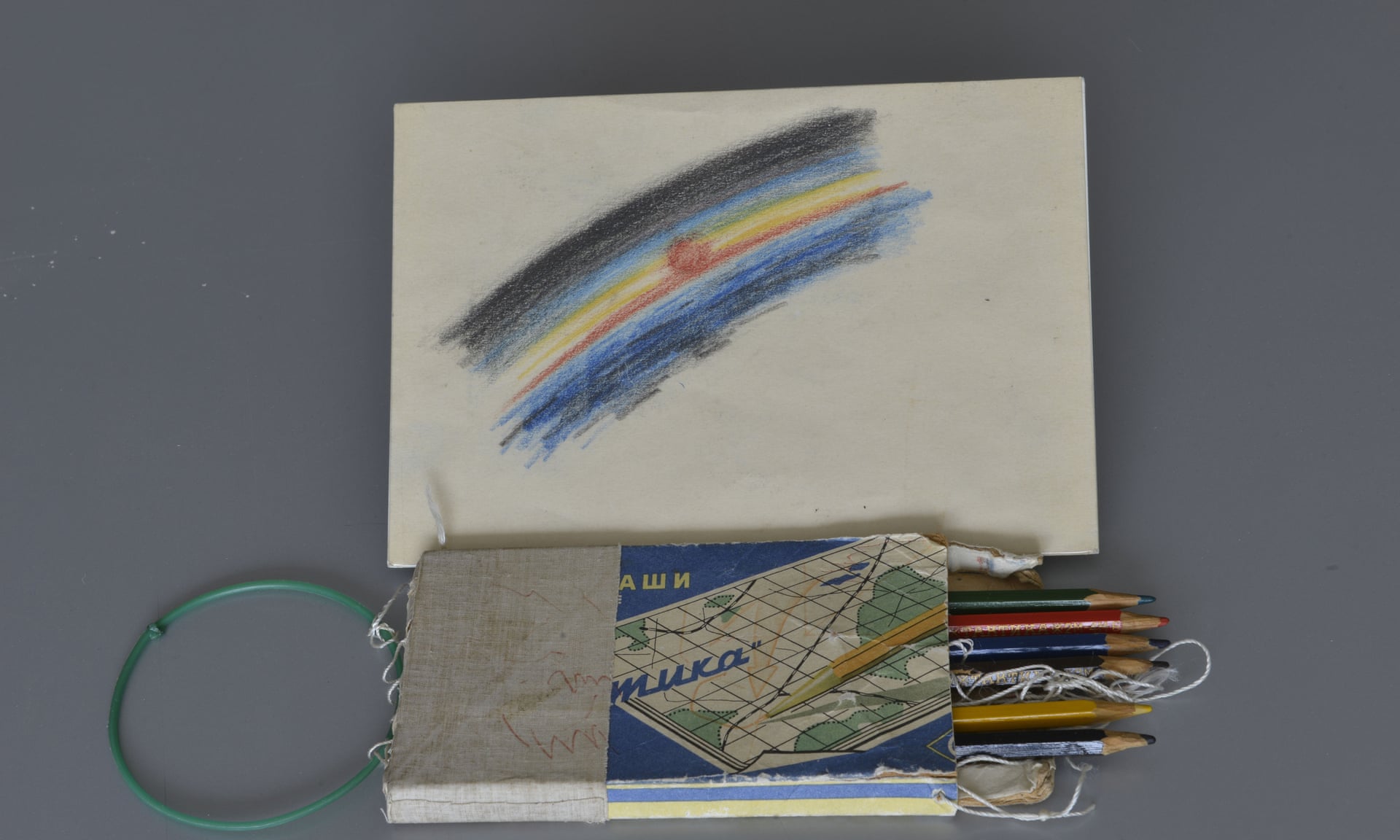
Leonov was also a celebrated artist who brought colored pencils to space to sketch the view of Earth. His drawing of the sunrise is considered the first piece of art created in space.

His funeral will be held October 15 at Mytishchi Military Memorial cemetery outside Moscow.

https://www.cnn.com/2019/10/11/world/alexei-leonov-first-spacewalk-death-scn-trnd/index.html