Wild birds communicate and collaborate with humans, study confirms


Humans use a unique call to request help from honeyguide birds, and the birds also ‘actively recruit’ human partners. This is two-way teamwork, scientists say, a rarity between people and wildlife.

By Russell McLendon

“Brrr-hm!”

When a human makes that sound in Mozambique’s Niassa National Reserve, a wild bird species instinctively knows what to do. The greater honeyguide responds by leading the human to a wild beehive, where both can feast on honey and wax. The bird does this without any training from people, or even from its own parents.

This unique relationship pre-dates any recorded history, and likely evolved over hundreds of thousands of years. It’s a win-win, since the birds help humans find honey, and the humans (who can subdue a beehive more easily than the 1.7-ounce birds can) leave behind beeswax as payment for their avian informants.

While this ancient partnership is well-known to science, a new study, published July 22 in the journal Science, reveals incredible details about how deep the connection has become. Honeyguides “actively recruit appropriate human partners,” the study’s authors explain, using a special call to attract people’s attention. Once that works, they fly from tree to tree to indicate the direction of a beehive.

Not only do honeyguides use calls to seek human partners, but humans also use specialized calls to summon the birds. Honeyguides attach specific meaning to “brrr-hm,” the authors say, a rare case of communication and teamwork between humans and wild animals. We’ve trained lots of domesticated animals to work with us, but for wildlife to do so voluntarily — and instinctively — is pretty wild.

Here’s an example of what the “brrr-hm” call sounds like:

“What’s remarkable about the honeyguide-human relationship is that it involves free-living wild animals whose interactions with humans have probably evolved through natural selection, probably over the course of hundreds of thousands of years,” says lead author Claire Spottiswoode, a zoologist at the University of Cambridge.

“[W]e’ve long known that people can increase their rate of finding bees’ nests by collaborating with honeyguides, sometimes following them for over a kilometer,” Spottiswoode explains in a statement. “Keith and Colleen Begg, who do wonderful conservation work in northern Mozambique, alerted me to the Yao people’s traditional practice of using a distinctive call which they believe helps them to recruit honeyguides. This was instantly intriguing — could these calls really be a mode of communication between humans and a wild animal?”

To answer that question, Spottiswoode went to Niassa National Reserve, a vast wildlife refuge larger than Switzerland. With the help of honey hunters from the local Yao community, she tested whether the birds can distinguish “brrr-hm” — a sound passed down from generation to generation of Yao hunters — from other human vocalizations, and if they know to respond accordingly.

She made audio recordings of the call, along with two “control” sounds — arbitrary words spoken by the Yao hunters, and the calls of another bird species. When she played all three recordings in the wild, the difference was clear: Honeyguides proved much more likely to answer the “brrr-hm” call than either of the other sounds.

“The traditional ‘brrr-hm’ call increased the probability of being guided by a honeyguide from 33 percent to 66 percent, and the overall probability of being shown a bees’ nest from 16 percent to 54 percent compared to the control sounds,” Spottiswoode says. “In other words, the ‘brrr-hm’ call more than tripled the chances of a successful interaction, yielding honey for the humans and wax for the bird.”

The researchers released this video, which includes footage from their experiments

This is known as mutualism, and while lots of animals have evolved mutualistic relationships, it’s very rare between humans and wildlife. People also recruit honeyguides in other parts of Africa, the study’s authors note, using different sounds like the melodious whistle of Hadza honey hunters in Tanzania. But aside from that, the researchers say the only comparable example involves wild dolphins who chase schools of mullet into anglers’ nets, catching more fish for themselves in the process.

“It would be fascinating to know whether dolphins respond to special calls made by fishermen,” Spottiswoode says.

The researchers also say they’d like to study if honeyguides learned “language-like variation in human signals” across Africa, helping the birds identify good partners among the local human population. But however it began, we know the skill is now instinct, requiring no training from people. And since honeyguides reproduce like cuckoos — laying eggs in other species’ nests, thus tricking them into raising honeyguide chicks — we know they don’t learn it from their parents, either.

This human-honeyguide relationship isn’t just fascinating; it’s also threatened, fading away in many places along with other ancient cultural practices. By shedding new light on it, Spottiswoode hopes her research can also help preserve it.

“Sadly, the mutualism has already vanished from many parts of Africa,” she says. “The world is a richer place for wildernesses like Niassa where this astonishing example of human-animal cooperation still thrives.”
http://www.mnn.com/earth-matters/animals/blogs/wild-birds-communicate-and-collaborate-humans-study-confirms

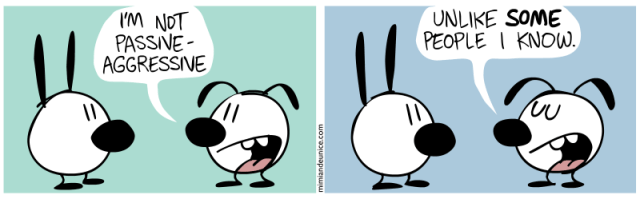
16 commonly-used passive-aggressive Email phrases

By Minda Zetlin

Ah, email. Everyone hates it, yet most of us use it for the majority of our communications with acquaintances, sales prospects, and pretty much everyone we do business with. We use email to brainstorm ideas, close deals, make pitches, and form new friendships and alliances. But it can also be a subtle tool that some people deploy with such precision that, like a razor-sharp rapier, you might be wounded before you even know what happened.

Some of the most effective email parries and thrusts are delivered in the form of passive-aggressive phrases–the kind that can impose an obligation, express ire, or even deliver an insult in such a nice and nonchalant way you won’t even know what hit you.

To put you on your guard, here’s a list of passive-aggressive email phrases and what they’re really saying. I’ve received almost every one of these. I bet you have too. I’ve used almost all of them as well. Because–unfortunately–they usually work.

1. “Thanks in advance.”

Translation: I’m already thanking you for doing me this favor, even though you haven’t yet agreed to it. Therefore, you must do it.

2. ” … I’d be most grateful.”

As in, “If you could respond to this inquiry any time within the next 24 hours, I’d be so grateful.” Another form of thanking someone in advance, with the same expected result.

3. “Can I send you some information?”

This is a classic sales technique that, as someone who gets lots of pitches, can drive me straight up the wall. If you’re going to mail me a book, it makes sense to ask my permission first. For anything else, the investment on your end is exactly the same whether you send me an email asking to send information or just go ahead and email the information. The only purpose of asking first is to create some sort of commitment that I’ll pay attention to that information. And to waste everyone’s time with two emails instead of one.

4. “Any interest in … ?”

Usually this is used to try to create what we in publishing call a “curiosity gap.” It’s followed by insufficient information–just enough to try to get a rise out of the recipient. As in, “Any interest in learning about a brilliant new innovation that will change the way you do business forever?” Say yes and you may feel obligated to buy. Say no and you may feel like you’re missing the boat.

5. “Looking forward to … “

” … hearing from you soon,” ” … working with you,” ” … learning more about your needs,” etc., etc. It’s the same idea as “Thanks in advance.” I’m already looking forward to your positive response. If I don’t get it, I’ll be disappointed. (Of course, this phrase is perfectly fine if it refers to something the recipient has already agreed to, for instance if you have a meeting scheduled the following day.)

6. “I hope you don’t mind … “

Translation: I’ve done something or am planning to do something when I should have obtained your permission first. This phrase should be a red flag every time it’s used.

7. “Just wondering … “

This is often used when making what you know is an unreasonable request. “Just wondering if you might have any free time tomorrow when I’m going to be in your city?” Translation: I probably shouldn’t be asking this, but I am anyway

8. “Checking in.”

As in, “I’m just checking in to see whether you’ve had a moment to review my latest proposal.” Translation: I’m going to keep sending you emails about this until you respond.

9. “Circling back.”

This is a relatively new and more aggressive version of “checking in.” As in, “Just circling back to see if you’ve reviewed my proposal.” The meaning of the word circle in this context is clear: I will keep coming around and around like a merry-go-round until you give me an answer.

10. “I don’t mean to be a pest.”

This statement is always a lie.

11. “FYI.”

This, of course, can be perfectly innocuous. But often it’s used when forwarding a message that a recipient might be unhappy about. Like the email I once got “just letting me know” about the harsh criticisms being lobbed at a project of mine that I might not have heard.

12. “See below.”

See above. This too can be used as a different form of “just letting you know.”

13. “Let me clarify.”

Often used as a lead-in to a more detailed or more explicit explanation of something the sender has said before. Translation: You completely misunderstood my last message, you idiot!

14. “Sorry for being unclear.”

I’ll admit to using this one sometimes myself. Sometimes I really was unclear and I am apologizing. Other times it means, “You didn’t really read what I wrote. Pay more attention this time!”

15. “Your thoughts?”

This could be a perfectly innocuous phrase, as in “We could go to the beach tomorrow. Or maybe we should go to the ballgame. Your thoughts?” But more often than not, it’s used to ask someone to comment on, or maybe even solve, a challenging problem or weigh in on a pernicious conflict.

And sometimes it’s a semi-subtle way of telling someone you think he or she has screwed up. As in, “It seems to me your latest actions could lead some investors and customers to believe you’ve completely given up on this company. Your thoughts?”

16. “All the best.”

This phrase, along with “Take care,” subtly or not so subtly indicates that the sender intends to end the conversation with this message. If it’s a continuing discussion, one might sign off with “Best,” “Sincerely,” or something equally neutral. “All the best” translates to: I wish you well in your future endeavors and I don’t expect to hear from you again. You definitely shouldn’t expect to hear from me again.

In other words, goodbye.

Direct brain to brain communication

By Jerry Adler
SMITHSONIAN MAGAZINE

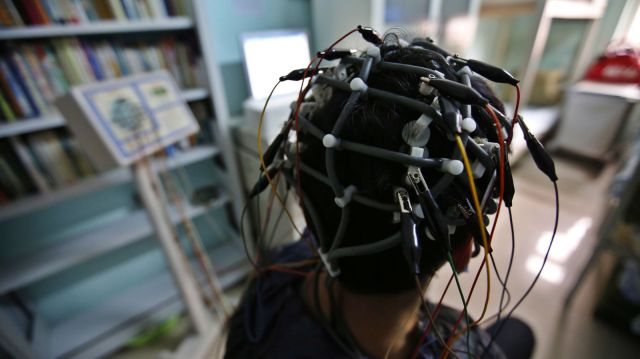
Telepathy, 2015: At the Center for Sensorimotor Neural Engineering of the University of Washington, a young woman dons an electroencephalogram cap, studded with electrodes that can read the minute fluctuations of voltage across her brain. She is playing a game, answering questions by turning her gaze to one of two strobe lights labeled “yes” and “no.” The “yes” light is flashing at 13 times a second, the “no” at 12, and the difference is too small for her to perceive, but sufficient for a computer to detect in the firing of neurons in her visual cortex. If the computer determines she is looking at the “yes” light, it sends a signal to a room in another building, where another woman is sitting with a magnetic coil positioned behind her head. A “yes” signal activates the magnet, causing a brief disturbance in the second subject’s visual field, a virtual flash (a “phosphene”) that she describes as akin to the appearance of heat lightning on the horizon. In this way, the first woman’s answers are conveyed to another person across the campus, going “Star Trek” one better: exchanging information between two minds that aren’t even in the same place.

For nearly all of human history, only the five natural senses were known to serve as a way into the brain, and language and gesture as the channels out. Now researchers are breaching those boundaries of the mind, moving information in and out and across space and time, manipulating it and potentially enhancing it. This experiment and others have been a “demonstration to get the conversation started,” says researcher Rajesh Rao, who conducted it along with his colleague Andrea Stocco. The conversation, which will likely dominate neuroscience for much of this century, holds the promise of new technology that will dramatically affect how we treat dementia, stroke and spinal cord injuries. But it will also be about the ethics of powerful new tools to enhance thinking, and, ultimately, the very nature of consciousness and identity.

That new study grew out of Rao’s work in “brain-computer interfaces,” which process neural impulses into signals that can control external devices. Using an EEG to control a robot that can navigate a room and pick up objects—which Rao and his colleagues demonstrated as far back as 2008—may be commonplace someday for quadriplegics.

In what Rao says was the first instance of a message sent directly from one human brain to another, he enlisted Stocco to help play a basic “Space Invaders”-type game. As one person watched the attack on a screen and communicated by using only thought the best moment to fire, the other got a magnetic impulse that caused his hand, without conscious effort, to press a button on a keyboard. After some practice, Rao says, they got quite good at it.

“That’s nice,” I said, when he described the procedure to me. “Can you get him to play the piano?”

Rao sighed. “Not with anything we’re using now.”

For all that science has studied and mapped the brain in recent decades, the mind remains a black box. A famous 1974 essay by the philosopher Thomas Nagel asked, “What Is It Like to Be a Bat?” and concluded that we will never know; another consciousness—another person’s, let alone a member of another species—can never be comprehended or accessed. For Rao and a few others to open that door a tiny crack, then, is a notable achievement, even if the work has mostly underscored how big a challenge it is, both conceptually and technologically.

The computing power and the programming are up to the challenge; the problem is the interface between brain and computer, and especially the one that goes in the direction from computer to brain. How do you deliver a signal to the right group of nerve cells among the estimated 86 billion in a human brain? The most efficient approach is an implanted transceiver that can be hard-wired to stimulate small regions of the brain, even down to a single neuron. Such devices are already in use for “deep brain stimulation,” a technique for treating patients with Parkinson’s and other disorders with electrical impulses. But it’s one thing to perform brain surgery for an incurable disease, and something else to do it as part of an experiment whose benefits are speculative at best.

So Rao used a technique that does not involve opening the skull, a fluctuating magnetic field to induce a tiny electric current in a region of the brain. It appears to be safe—his first volunteer was his collaborator, Stocco—but it is a crude mechanism. The smallest area that can be stimulated in this way, Rao says, is not quite half an inch across. This limits its application to gross motor movements, such as hitting a button, or simple yes-or-no communication.

Another way to transmit information, called focused ultrasound, appears to be capable of stimulating a region of the brain as small as a grain of rice. While the medical applications for ultrasound, such as imaging and tissue ablation, use high frequencies, from 800 kilohertz up to the megahertz range, a team led by Harvard radiologist Seung-Schik Yoo found that a frequency of 350 kilohertz works well, and apparently safely, to send a signal to the brain of a rat. The signal originated with a human volunteer outfitted with an EEG, which sampled his brainwaves; when he focused on a specific pattern of lights on a computer screen, a computer sent an ultrasound signal to the rat, which moved his tail in response. Yoo says the rat showed no ill effects, but the safety of focused ultrasound on the human brain is unproven. Part of the problem is that, unlike magnetic stimulation, the mechanism by which ultrasound waves—a form of mechanical energy—creates an electric potential isn’t fully understood. One possibility is that it operates indirectly by “popping” open the vesicles, or sacs, within the cells of the brain, flooding them with neurotransmitters, like delivering a shot of dopamine to exactly the right area. Alternatively, the ultrasound could induce cavitation—bubbling—in the cell membrane, changing its electrical properties. Yoo suspects that the brain contains receptors for mechanical stimulation, including ultrasound, which have been largely overlooked by neuroscientists. Such receptors would account for the phenomenon of “seeing stars,” or flashes of light, from a blow to the head, for instance. If focused ultrasound is proven safe, and becomes a feasible approach to a computer-brain interface, it would open up a wide range of unexplored—in fact, barely imagined—possibilities.

Direct verbal communication between individuals—a more sophisticated version of Rao’s experiment, with two connected people exchanging explicit statements just by thinking them—is the most obvious application, but it’s not clear that a species possessing language needs a more technologically advanced way to say “I’m running late,” or even “I love you.” John Trimper, an Emory University doctoral candidate in psychology, who has written about the ethical implications of brain-to-brain interfaces, speculates that the technology, “especially through wireless transmissions, could eventually allow soldiers or police—or criminals—to communicate silently and covertly during operations.” That would be in the distant future. So far, the most content-rich message sent brain-to-brain between humans traveled from a subject in India to one in Strasbourg, France. The first message, laboriously encoded and decoded into binary symbols by a Barcelona-based group, was “hola.” With a more sophisticated interface one can imagine, say, a paralyzed stroke victim communicating to a caregiver—or his dog. Still, if what he’s saying is, “Bring me the newspaper,” there are, or will be soon, speech synthesizers—and robots—that can do that. But what if the person is Stephen Hawking, the great physicist afflicted by ALS, who communicates by using a cheek muscle to type the first letters of a word? The world could surely benefit from a direct channel to his mind.

Maybe we’re still thinking too small. Maybe an analog to natural language isn’t the killer app for a brain-to-brain interface. Instead, it must be something more global, more ambitious—information, skills, even raw sensory input. What if medical students could download a technique directly from the brain of the world’s best surgeon, or if musicians could directly access the memory of a great pianist? “Is there only one way of learning a skill?” Rao muses. “Can there be a shortcut, and is that cheating?” It doesn’t even have to involve another human brain on the other end. It could be an animal—what would it be like to experience the world through smell, like a dog—or by echolocation, like a bat? Or it could be a search engine. “It’s cheating on an exam if you use your smartphone to look things up on the Internet,” Rao says, “but what if you’re already connected to the Internet through your brain? Increasingly the measure of success in society is how quickly we access, digest and use the information that’s out there, not how much you can cram into your own memory. Now we do it with our fingers. But is there anything inherently wrong about doing it just by thinking?”

Or, it could be your own brain, uploaded at some providential moment and digitally preserved for future access. “Let’s say years later you have a stroke,” says Stocco, whose own mother had a stroke in her 50s and never walked again. “Now, you go to rehab and it’s like learning to walk all over again. Suppose you could just download that ability into your brain. It wouldn’t work perfectly, most likely, but it would be a big head start on regaining that ability.”

Miguel Nicolelis, a creative Duke neuroscientist and a mesmerizing lecturer on the TED Talks circuit, knows the value of a good demonstration. For the 2014 World Cup, Nicolelis—a Brazilian-born soccer aficionado—worked with others to build a robotic exoskeleton controlled by EEG impulses, enabling a young paraplegic man to deliver the ceremonial first kick. Much of his work now is on brain-to-brain communication, especially in the highly esoteric techniques of linking minds to work together on a problem. The minds aren’t human ones, so he can use electrode implants, with all the advantages that conveys.

One of his most striking experiments involved a pair of lab rats, learning together and moving in synchrony as they communicated via brain signals. The rats were trained in an enclosure with two levers and a light above each. The left- or right-hand light would flash, and the rats learned to press the corresponding lever to receive a reward. Then they were separated, and each fitted with electrodes to the motor cortex, connected via computers that sampled brain impulses from one rat (the “encoder”), and sent a signal to a second (the “decoder”). The “encoder” rat would see one light flash—say, the left one—and push the left-hand lever for his reward; in the other box, both lights would flash, so the “decoder” wouldn’t know which lever to push—but on receiving a signal from the first rat, he would go to the left as well.

Nicolelis added a clever twist to this demonstration. When the decoder rat made the correct choice, he was rewarded, and the encoder got a second reward as well. This served to reinforce and strengthen the (unconscious) neural processes that were being sampled in his brain. As a result, both rats became more accurate and faster in their responses—“a pair of interconnected brains…transferring information and collaborating in real time.” In another study, he wired up three monkeys to control a virtual arm; each could move it in one dimension, and as they watched a screen they learned to work together to manipulate it to the correct location. He says he can imagine using this technology to help a stroke victim regain certain abilities by networking his brain with that of a healthy volunteer, gradually adjusting the proportions of input until the patient’s brain is doing all the work. And he believes this principle could be extended indefinitely, to enlist millions of brains to work together in a “biological computer” that tackled questions that could not be posed, or answered, in binary form. You could ask this network of brains for the meaning of life—you might not get a good answer, but unlike a digital computer, “it” would at least understand the question. At the same time, Nicolelis criticizes efforts to emulate the mind in a digital computer, no matter how powerful, saying they’re “bogus, and a waste of billions of dollars.” The brain works by different principles, modeling the world by analogy. To convey this, he proposes a new concept he calls “Gödelian information,” after the mathematician Kurt Gödel; it’s an analog representation of reality that cannot be reduced to bytes, and can never be captured by a map of the connections between neurons (“Upload Your Mind,” see below). “A computer doesn’t generate knowledge, doesn’t perform introspection,” he says. “The content of a rat, monkey or human brain is much richer than we could ever simulate by binary processes.”

The cutting edge of this research involves actual brain prostheses. At the University of Southern California, Theodore Berger is developing a microchip-based prosthesis for the hippocampus, the part of the mammal­ian brain that processes short-term impressions into long-term memories. He taps into the neurons on the input side, runs the signal through a program that mimics the transformations the hippocampus normally performs, and sends it back into the brain. Others have used Berger’s technique to send the memory of a learned behavior from one rat to another; the second rat then learned the task in much less time than usual. To be sure, this work has only been done in rats, but because degeneration of the hippocampus is one of the hallmarks of dementia in human beings, the potential of this research is said to be enormous.

Given the sweeping claims for the future potential of brain-to-brain communication, it’s useful to list some of the things that are not being claimed. There is, first, no implication that humans possess any form of natural (or supernatural) telepathy; the voltages flickering inside your skull just aren’t strong enough to be read by another brain without electronic enhancement. Nor can signals (with any technology we possess, or envision) be transmitted or received surreptitiously, or at a distance. The workings of your mind are secure, unless you give someone else the key by submitting to an implant or an EEG. It is, however, not too soon to start considering the ethical implications of future developments, such as the ability to implant thoughts in other people or control their behavior (prisoners, for example) using devices designed for those purposes. “The technology is outpacing the ethical discourse at this time,” Emory’s Trimper says, “and that’s where things get dicey.” Consider that much of the brain traffic in these experiments—and certainly anything like Nicolelis’ vision of hundreds or thousands of brains working together—involves communicating over the Internet. If you’re worried now about someone hacking your credit card information, how would you feel about sending the contents of your mind into the cloud?There’s another track, though, on which brain-to-brain communication is being studied. Uri Hasson, a Princeton neuroscientist, uses functional magnetic resonance imaging to research how one brain influences another, how they are coupled in an intricate dance of cues and feedback loops. He is focusing on a communication technique that he considers far superior to EEGs used with transcranial magnetic stimulation, is noninvasive and safe and requires no Internet connection. It is, of course, language.

Read more: http://www.smithsonianmag.com/innovation/why-brain-brain-communication-no-longer-unthinkable-180954948/#y1xADWfAk1VkKIJc.99


New research shows that infants need to be able to freely move their tongues in order to distinguish sounds.

A team of researchers led by Dr Alison Bruderer, a postdoctoral fellow at the University of British Columbia, has discovered a direct link between tongue movements of infants and their ability to distinguish speech sounds.

“Until now, research in speech perception development and language acquisition has primarily used the auditory experience as the driving factor. Researchers should actually be looking at babies’ oral-motor movements as well,” said Dr Bruderer, who is the lead author on a study published in the Proceedings of the National Academy of Sciences on October 12, 2015.

In the study, teething toys were placed in the mouths of six-month-old English-learning infants while they listened to speech sounds – two different Hindi ‘d’ sounds that infants at this age can readily distinguish.

When the teethers restricted movements of the tip of the tongue, the infants were unable to distinguish between the two sounds.

But when their tongues were free to move, the babies were able to make the distinction.

“Before infants are able to speak, their articulatory configurations affect the way they perceive speech, suggesting that the speech production system shapes speech perception from early in life,” the scientists said.

“These findings implicate oral-motor movements as more significant to speech perception development and language acquisition than current theories would assume and point to the need for more research.”

http://www.sci-news.com/othersciences/psychology/science-infants-tongue-movement-speech-sounds-03336.html?utm_source=feedburner&utm_medium=feed&utm_campaign=Feed%3A+BreakingScienceNews+%28Breaking+Science+News%29

Giraffes spend their nights constantly humming.

For years, experts believed that giraffes didn’t really communicate vocally. After all, many zookeepers thought, it would be pretty difficult to force enough air past their voice boxes to make any sort of sound aside from a snort, considering the length of their necks. But as it turns out, giraffes spend their nights humming to each other.

Since it would take a lot of airflow to make a loud sound from a giraffe’s 13-foot-long trachea, researchers believed that giraffes had no form of vocal communication and instead relied on their keen sense of sight. But according to a new study by researchers from the University of Vienna, giraffes do communicate vocally after all – it’s just that the sounds they make are so low that it’s hard for humans to hear them.

Initially, the researchers wanted to test a long-standing theory that giraffes could “talk” using infrasonic frequencies too low for the human ear, much like elephants and some other large mammals do. To answer the question, they spent almost 1,000 hours recording giraffes at three different European zoos and painstaking analyzed the waveforms by sight, looking for patterns. While they didn’t find any evidence of the giraffes using infrasound, the scientists realized that the giraffes would spend their nights humming.

Because giraffes seem to only hum at night, scientists have yet to figure out whether it correlates with any behavior or if it’s just snoring. However, it’s possible that the humming might be used to communicate all sorts of information from age, gender, social dominance and sexual arousal.

Read more: http://www.smithsonianmag.com/smart-news/giraffes-spend-their-nights-quietly-constantly-humming-180956683/#T0MUP6ruXlsYDl81.99

The human brain is particularly vulnerable to trauma at two distinct ages

Our brain’s ability to process information and adapt effectively is dependent on a number of factors, including genes, nutrition, and life experiences. These life experiences wield particular influence over the brain during a few sensitive periods when our most important muscle is most likely to undergo physical, chemical, and functional remodeling.

According to Tara Swart, a neuroscientist and senior lecturer at MIT, your “terrible twos” and those turbulent teen years are when the brain’s wiring is most malleable. As a result, traumatic experiences that occur during these time periods can alter brain activity and ultimately change gene expressions—sometimes for good.

Throughout the first two years of life, the brain develops at a rapid pace. However, around the second year, something important happens—babies begin to speak.

“We start to understand speech first, then we start to articulate speech ourselves and that’s a really complex thing that goes on in the brain,” Swart, who conducts ongoing research on the brain and how it affects how we become leaders, told Quartz. “Additionally, children start to walk—so from a physical point of view, that’s also a huge achievement for the brain.

Learning and understanding a new language forces your brain to work in new ways, connecting neurons and forming new pathways. This is a mentally taxing process, which is why learning a new language or musical instrument often feels exhausting.

With so many important changes happening to the brain in such a short period of time, physical or emotional trauma can cause potentially momentous interruptions to neurological development. Even though you won’t have any memories of the interruptions (most people can’t remember much before age five), any kind of traumatic event—whether it’s abuse, neglect, ill health, or separation from your loved ones—can lead to lasting behavioral and cognitive deficits later in life, warns Swart.

To make her point, Swart points to numerous studies on orphans in Romania during the 1980s and 1990s. After the nation’s communist regime collapsed, an economic decline swept throughout the region and 100,000 children found themselves in harsh, overcrowded government institutions.

“[The children] were perfectly well fed, clothed, washed, but for several reasons—one being that people didn’t want to spread germs—they were never cuddled or played with,” explains Swart. “There was a lot of evidence that these children grew up with some mental health problems and difficulty holding down jobs and staying in relationships.”

Swart continues: “When brain scanning became possible, they scanned the brains of these children who had grown up into adults and showed that they had issues in the limbic system, the part of the brain [that controls basic emotions].”

In short, your ability to maintain proper social skills and develop a sense of empathy is largely dependent on the physical affection, eye contact, and playtime of those early years. Even something as simple as observing facial expressions and understanding what those expressions mean is tied to your wellbeing as a toddler.

The research also found that the brains of the Romanian orphans had lower observable brain activity and were physically smaller than average. As a result, researchers concluded that children adopted into loving homes by age two have a much better chance of recovering from severe emotional trauma or disturbances.

The teenage years

By the time you hit your teenage years, the brain has typically reached its adult weight of about three pounds. Around this same time, the brain is starting to eliminate, or “prune” fragile connections and unused neural pathways. The process is similar to how one would prune a garden—cutting back the deadwood allows other plants to thrive.

During this period, the brain’s frontal lobes, especially the prefrontal cortex, experience increased activity and, for the first time, the brain is capable of comparing and analyzing several complex concepts at once. Similar to a baby learning how to speak, this period in an adolescent’s life is marked by a need for increasingly advanced communication skills and emotional maturity.

“At that age, they’re starting to become more understanding of social relationships and politics. It’s really sophisticated,” Swart noted. All of this brain activity is also a major reason why teenagers need so much sleep.

Swart’s research dovetails with the efforts of many other scientists who have spent decades attempting to understand how the brain develops, and when. The advent of MRIs and other brain-scanning technology has helped speed along this research, but scientists are still working to figure out what exactly the different parts of the brain do.

What is becoming more certain, however, is the importance of stability and safety in human development, and that such stability is tied to cognitive function. At any point in time, a single major interruption has the ability to throw off the intricate workings of our brain. We may not really understand how these events affect our lives until much later.

http://qz.com/470751/your-brain-is-particularly-vulnerable-to-trauma-at-two-distinct-ages/

Vodafone warns mobile phone users in London to expect up to two months of slower networks because nesting peregrine falcons on masts cannot be moved

Mobile phone users have been warned they could face reception problems because it is the peregrine falcon nesting season.

Vodafone said three pairs of the world’s fastest bird have been found beside masts across London, including a church, hospital and office building, and could be slowing down networks.

Phone masts are a popular nesting site for the bird of prey and the company will be unable to remove the nests until the chicks are hatched and leave, which could take two months.

It is a criminal offence under the Wildlife and Countryside Act of 1981 to disturb the birds while they are nesting.

Vodafone spokesman Simon Gordon said: “We apologise to any customers who experience a dip in service, but we have to respect the environment and the law.

“This is the first time to my knowledge we have had this in London, so for us it is unprecedented. They can sometimes nest on the mast itself – which is like a big metal climbing frame – or use the box underneath, where the computer stuff sits.”

Mr Gordon, who is himself a wildlife enthusiast and bird watcher, added: “At the moment, we are a year into a £200million upgrade works and we are going to individual sites to upgrade the equipment.

“If there is a peregrine falcon nesting there, we have to abide by the law and not approach the nest and call the experts to go onto the site to assess where they are nesting.”

n April 2013, Vodafone customers complained about poor reception in Southampton. Engineers called out to repair a faulty transmitter found a peregrine falcon nesting next to it.

The company had to tell its frustrated customers they were unable to repair the faulty mast until the chicks had left the nest.

Peregrine falcons, which can travel at speeds of up to 240mph, have seen a revival in recent years.

The birds nearly became extinct in the 1960s after their existence was threatened by pesticides, but laws controlling use of pesticides meant their numbers slowly recovered.

The Royal Society for the Protection of Birds has estimated there are 1,402 breeding pairs in the UK and there are currently thought to be 30 nesting pairs in the capital.

http://www.telegraph.co.uk/news/newstopics/howaboutthat/11482677/Peregrine-falcons-nesting-on-Vodafone-mobile-phone-masts-cause-poor-signal.html

Study shows lemurs use communal latrines as information exchange centers

Ein Weißfuß-Wieselmaki (Lepilemur leucopus) in seinem Schlafbaum.

Emily loves Justin – Stop global warming – Two more weeks till I graduate!: The exchange of information in public toilets is widespread. It also occurs in the world of white-footed sportive lemurs. Only instead of writing on the walls, they use scent-marks in order to communicate with their own kind.. In a study published online in Springer’s journal Behavioral Ecology and Sociobiology, Iris Dröscher and Peter Kappeler from the German Primate Center (DPZ) have found that the urine left on latrine trees serves as a method to maintain contact with family members. It also serves as a means to inform an intruder that there is a male that will defend his partner. Latrines thus serve as information exchange centers and promote social bonding in territorial nocturnal animals that do not live in closely-knit groups.

In the animal kingdom, the use of latrines, which serve as specific locations for urination and defecation, is a common occurrence. Because little is known about why primates, in particular, use the same latrines over and over, the researchers set out to investigate this phenomenon among white-footed sportive lemurs (Lepilemur leucopus) in southern Madagascar. Do they hint to others that they want to defend their mate or territory? Or, do they indicate the fertility of the female? Or do they promote exchange of information within a group and support social bonding? To answer these questions, the researchers wanted to establish where such latrines were found, and if they were used differently between seasons and between individuals of different ages and sexes. In the process, Dröscher and Kappeler spent over 1,000 hours watching the toilet habits of 14 radio-collared adult sportive lemurs.

White-footed sportive lemurs are nocturnal tree-dwellers that are found exclusively in southern Madagascar. They live together in families consisting of parents and their offspring. Even though the family members share a common territory, the individuals do not interact much. Neither do pair-partners sleep in the same tree nor do they associate while foraging. But what they have in common are latrines that are located in the core of their territory. All members of the family visit the same latrines for defecation and urination. Dröscher and Kappeler believe the latrines are a way in which to maintain familiarity and social bonding among members of a social unit, who otherwise have very little contact with each other. Such scent signals are picked up from urine that stains the tree trunks rather than feces that accumulate on the ground under the trees.

Males visited the latrines more often during nights when an intruder invaded the territory. In addition, the males placed scent marks from their specialized anogenital glands preferentially in latrines. “This indicates that latrine use in this primate species should also be connected to mate defense,” says Iris Dröscher, a PhD student at the German Primate Center.

“Scent marks transmit a variety of information such as sexual and individual identity and may function to signal an individual’s presence and identity to others,” continues Dröscher. “Latrines therefore serve as information exchange centers of individual-specific information.”

“Especially nocturnal species with limited habitat visibility and low inter-individual cohesion profit from predictable areas for information exchange to facilitate communication,” says Peter Kappeler, head of the Department for Behavioral Ecology and Sociobiology at the DPZ. “The white-footed sportive lemur has found these information centers by means of latrine use.”

More information: Dröscher I, Kappeler PM (2014): “Maintenance of familiarity and social bonding via communal latrine use in a solitary primate (Lepilemur leucopus).” Behavioral Ecology and Sociobiology, DOI: 10.1007/s00265-014-1810-z

http://phys.org/news/2014-10-lemurs-latrines-exchange-centers.html