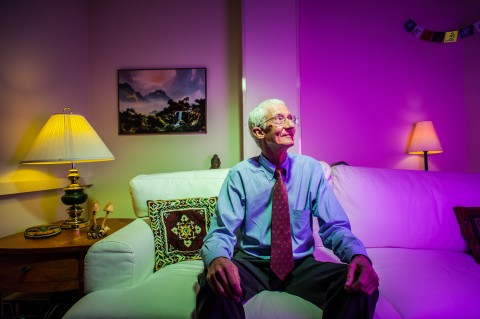
Johns Hopkins clinical pharmacologist Roland Griffiths talks about a major new study hinting at psychedelic drugs as therapeutic powerhouses

By Richard Schiffman

In one of the largest and most rigorous clinical investigations of psychedelic drugs to date, researchers at Johns Hopkins University and New York University have found that a single dose of psilocybin—the psychoactive compound in “magic” mushrooms—substantially diminished depression and anxiety in patients with advanced cancer.

Psychedelics were the subject of a flurry of serious medical research in the 1960s, when many scientists believed some of the mind-bending compounds held tremendous therapeutic promise for treating a number of conditions including severe mental health problems and alcohol addiction. But flamboyant Harvard psychology professor Timothy Leary—one of the top scientists involved—started aggressively promoting LSD as a consciousness expansion tool for the masses, and the youth counterculture movement answered the call in a big way. Leary lost his job and eventually became an international fugitive. Virtually all legal research on psychedelics shuddered to a halt when federal drug policies hardened in the 1970s.

The decades-long research blackout ended in 1999 when Roland Griffiths of Johns Hopkins was among the first to initiate a new series of studies on psilocybin. Griffiths has been called the grandfather of the current psychedelics research renaissance, and a 21st-century pioneer in the field—but the soft-spoken investigator is no activist or shaman/showman in the mold of Leary. He’s a scientifically cautious clinical pharmacologist and author of more than 300 studies on mood-altering substances from coffee to ketamine.

Much of Griffiths’ fascination with psychedelics stems from his own mindfulness meditation practice, which he says sparked his interest in altered states of consciousness. When he started administering psilocybin to volunteers for his research, he was stunned that more than two-thirds of the participants rated their psychedelic journey one of the most important experiences of their lives.

Griffiths believes that psychedelics are not just tools for exploring the far reaches of the human mind. He says they show remarkable potential for treating conditions ranging from drug and alcohol dependence to depression and post-traumatic stress disorder.

They may also help relieve one of humanity’s cruelest agonies: the angst that stems from facing the inevitability of death. In research conducted collaboratively by Griffiths and Stephen Ross, clinical director of the NYU Langone Center of Excellence on Addiction, 80 patients with life-threatening cancer in Baltimore and New York City were given laboratory-synthesized psilocybin in a carefully monitored setting, and in conjunction with limited psychological counseling. More than three-quarters reported significant relief from depression and anxiety—improvements that remained during a follow-up survey conducted six months after taking the compound, according to the double-blind study published December 1 in The Journal of Psychopharmacology.

“It is simply unprecedented in psychiatry that a single dose of a medicine produces these kinds of dramatic and enduring results,” Ross says. He and Griffiths acknowledge that psychedelics may never be available on the drugstore shelf. But the scientists do envision a promising future for these substances in controlled clinical use. In a wide-ranging interview, Griffiths told Scientific American about the cancer study and his other work with psychedelics—a field that he says could eventually contribute to helping ensure our survival as a species.

[An edited transcript of the interview follows.]

What were your concerns going into the cancer study?
The volunteers came to us often highly stressed and demoralized by their illness and the often-grueling medical treatment. I felt very cautious at first, wondering if this might not re-wound people dealing with the painful questions of death and dying. How do we know that this kind of experience with this disorienting compound wouldn’t exacerbate that? It turns out that it doesn’t. It does just the opposite. The experience appears to be deeply meaningful spiritually and personally, and very healing in the context of people’s understanding of their illness and how they manage that going forward.

Could you describe your procedure?
We spent at least eight hours talking to people about their cancer, their anxiety, their concerns and so on to develop good rapport with them before the trial. During the sessions there was no specific psychological intervention—we were just inviting people to lie on the couch and explore their own inner experience.

What did your research subjects tell you about that experience?
There is something about the core of this experience that opens people up to the great mystery of what it is that we don’t know. It is not that everybody comes out of it and says, ‘Oh, now I believe in life after death.’ That needn’t be the case at all. But the psilocybin experience enables a sense of deeper meaning, and an understanding that in the largest frame everything is fine and that there is nothing to be fearful of. There is a buoyancy that comes of that which is quite remarkable. To see people who are so beaten down by this illness, and they start actually providing reassurance to the people who love them most, telling them ‘it is all okay and there is no need to worry’— when a dying person can provide that type of clarity for their caretakers, even we researchers are left with a sense of wonder.

Was this positive result universal?
We found that the response was dose-specific. The larger dose created a much larger response than the lower dose. We also found that the occurrence of mystical-type experiences is positively correlated with positive outcomes: Those who underwent them were more likely to have enduring, large-magnitude changes in depression and anxiety.

Did any of your volunteers experience difficulties?
There are potential risks associated with these compounds. We can protect against a lot of those risks, it seems, through the screening and preparation procedure in our medical setting. About 30 percent of our people reported some fear or discomfort arising sometime during the experience. If individuals are anxious, then we might say a few words, or hold their hand. It is really just grounding them in consensual reality, reminding them that they have taken psilocybin, that everything is going to be alright. Very often these short-lived experiences of psychological challenge can be cathartic and serve as doorways into personal meaning and transcendence—but not always.

Where do you go from here?
The Heffter Research Institute, which funded our study, has just opened a dialogue with the FDA (Food and Drug Administration) about initiating a phase 3 investigation. A phase 3 clinical trial is the gold standard for determining whether something is clinically efficacious and meets the standards that are necessary for it to be released as a pharmaceutical. Approval would be under very narrow and restrictive conditions initially. The drug might be controlled by a central pharmacy, which sends it to clinics that are authorized to administer psilocybin in this therapeutic context. So this is not writing a prescription and taking it home. The analogy would be more like an anesthetic being dispensed and managed by an anesthesiologist.

You are also currently conducting research on psilocybin and smoking.
We are using psilocybin in conjunction with cognitive behavioral therapy with cigarette smokers to see if these deeply meaningful experiences that can happen with psilocybin can be linked with the intention and commitment to quit smoking, among people who have failed repeatedly to do so. Earlier we ran an uncontrolled pilot study on that in 50 volunteers, in which we had 80 percent abstinence rates at six months. Now we are doing a controlled clinical trial in that population.

How do you account for your remarkable initial results?
People who have taken psilocybin appear to have more confidence in their ability to change their own behavior and to manage their addictions. Prior to this experience, quite often the individual feels that they have no freedom relative to their addiction, that they are hooked and they don’t have the capacity to change. But after an experience of this sort—which is like backing up and seeing the larger picture—they begin to ask themselves ‘Why would I think that I couldn’t stop cigarette smoking? Why would I think that this craving is so compelling that I have to give in to it?’ When the psilocybin is coupled with cognitive behavioral therapy, which is giving smokers tools and a framework to work on this, it appears to be very helpful.

You are also working with meditation practitioners. Are they having similar experiences?
We have done an unpublished study with beginning meditators. We found that psilocybin potentiates their engagement with their spiritual practice, and it appears to boost dispositional characteristics like gratitude, compassion, altruism, sensitivity to others and forgiveness. We were interested in whether the psilocybin used in conjunction with meditation could create sustained changes in people that were of social value. And that appears to be the case.

So it is actually changing personality?
Yes. That is really interesting because personality is considered to be a fixed characteristic; it is generally thought to be locked down in an individual by their early twenties. And yet here we are seeing significant increases in their “openness” and other pro-social dimensions of personality, which are also correlated with creativity, so this is truly surprising.

Do we know what is actually happening in the brain?
We are doing neuro-imaging studies. Dr. Robin Carhart-Harris’s group at Imperial College in London is also doing neuro-imaging studies. So it is an area of very active investigation. The effects are perhaps explained, at least initially, by changes in something [in the brain] called “the default mode network,” which is involved in self-referential processing [and in sustaining our sense of ego]. It turns out that this network is hyperactive in depression. Interestingly, in meditation it becomes quiescent, and also with psilocybin it becomes quiescent. This may correlate with the experience of clarity of coming into the present moment.

That is perhaps an explanation of the acute effects, but the enduring effects are much less clear, and I don’t think that we have a good handle on that at all. Undoubtedly it is going to be much more complex than just the default mode network, because of the vast interconnectedness of brain function.

What are the practical implications of this kind of neurological and therapeutic knowledge of psychedelics?
Ultimately it is not really about psychedelics. Science is going to take it beyond psychedelics when we start understanding the brain mechanisms underlying this and begin harnessing these for the benefit of humankind.

The core mystical experience is one of the interconnectedness of all people and things, the awareness that we are all in this together. It is precisely the lack of this sense of mutual caretaking that puts our species at risk right now, with climate change and the development of weaponry that can destroy life on the planet. So the answer is not that everybody needs to take psychedelics. It is to understand what mechanisms maximize these kinds of experiences, and to learn how to harness them so that we don’t end up annihilating ourselves.

https://www.scientificamerican.com/article/psilocybin-a-journey-beyond-the-fear-of-death/

Taurine, a common additive to energy drinks, may help lessen the symptoms in first episode psychosis.

Supplementation with taurine, the additive found in many energy drinks, may improve the symptoms in young people suffering a first episode of psychosis (FEP), according to a new study presented at the International Early Psychosis Association (IEPA) meeting.

Taurine, an amino acid naturally occurring in the body, exhibits an inhibitory neuro-modulatory effect in the nervous system and also functions as a neuroprotective agent. The authors devised a study to analyze the efficacy of taurine supplementation in improving symptoms and cognition in patients with FEP.

The study included 86 individuals with FEP between the ages of 18 and 25 years. It was conducted by Dr. Colin O’Donnell, Donegal Mental Health Service, Co. Donegal, Ireland, and Professor Patrick McGorry and Dr. Kelly Allott, Orygen, The National Centre of Excellence in Youth Mental Health, Australia, and colleagues. Each participant was taking a low dose antipsychotic medication and was attending Orygen.

Forty-seven participants received 4g of taurine daily, while 39 received placebo. Symptoms were assessed Using the scoring system called BPRS (Brief Psychiatric Rating Scale) and cognition was assessed with the MCCB tool (MATRICS consensus cognitive battery).

Results showed that taurine significantly improved symptoms on the BPRS scale, in overall score and in psychosis specific analysis, however, there was no difference between the treatment and placebo group regarding cognition. Depression symptoms (rated by the Calgary Depression Scale for Schizophrenia) and general overall functioning also improved in the taurine group.

“The use of taurine warrants further investigation in larger randomised studies, particularly early in the course of psychosis,” concluded the authors, who themselves, are planning to conduct further studies into the potential benefits of taurine in the treatment of psychosis.

http://www.empr.com/news/energy-drink-additive-could-potentially-improve-psychosis-symptoms/article/567497/?DCMP=EMC-MPR_Charts_rd&cpn=&hmSubId=&NID=&c_id=&dl=0&spMailingID=16159114&spUserID=MzI5NTMwMzQ0NDIyS0&spJobID=921765029&spReportId=OTIxNzY1MDI5S0

Small RNA identified that offers clues for quieting the “voices” of schizophrenia


St. Jude Children’s Research Hospital scientists have linked disruption of a brain circuit associated with schizophrenia to an age-related decline in levels of a single microRNA in one brain region

St. Jude Children’s Research Hospital scientists have identified a small RNA (microRNA) that may be essential to restoring normal function in a brain circuit associated with the “voices” and other hallucinations of schizophrenia. The microRNA provides a possible focus for antipsychotic drug development. The findings appear today in the journal Nature Medicine.

The work was done in a mouse model of a human disorder that is one of the genetic causes of schizophrenia. Building on previous St. Jude research, the results offer important new details about the molecular mechanism that disrupts the flow of information along a neural circuit connecting two brain regions involved in processing auditory information. The findings also provide clues about why psychotic symptoms of schizophrenia are often delayed until late adolescence or early adulthood.

“In 2014, we identified the specific circuit in the brain that is targeted by antipsychotic drugs. However, the existing antipsychotics also cause devastating side effects,” said corresponding author Stanislav Zakharenko, M.D., Ph.D., a member of the St. Jude Department of Developmental Neurobiology. “In this study, we identified the microRNA that is a key player in disruption of that circuit and showed that depletion of the microRNA was necessary and sufficient to inhibit normal functioning of the circuit in the mouse models.

“We also found evidence suggesting that the microRNA, named miR-338-3p, could be targeted for development of a new class of antipsychotic drugs with fewer side effects.”

There are more than 2,000 microRNAs whose function is to silence expression of particular genes and regulate the supply of the corresponding proteins. Working in a mouse model of 22q11 deletion syndrome, researchers identified miR-338-3p as the microRNA that regulates production of the protein D2 dopamine receptor (Drd2), which is the prime target of antipsychotics.

Individuals with the deletion syndrome are at risk for behavior problems as children. Between 23 and 43 percent develop schizophrenia, a severe chronic disorder that affects thinking, memory and behavior. Researchers at St. Jude are studying schizophrenia and other brain disorders to improve understanding of how normal brains develop, which provides insights into the origins of diseases like cancer.

The scientists reported that Drd2 increased in the brain’s auditory thalamus when levels of the microRNA declined. Previous research from Zakharenko’s laboratory linked elevated levels of Drd2 in the auditory thalamus to brain-circuit disruptions in the mutant mice. Investigators also reported that the protein was elevated in the same brain region of individuals with schizophrenia, but not healthy adults.

Individuals with the deletion syndrome are missing part of chromosome 22, which leaves them with one rather than the normal two copies of more than 25 genes. The missing genes included Dgcr8, which facilitates production of microRNAs.

Working in mice, researchers have now linked the 22q11 deletion syndrome and deletion of a single Dgcr8 gene to age-related declines in miR-338-3p in the auditory thalamus. The decline was associated with an increase in Drd2 and reduced signaling in the circuit that links the thalamus and auditory cortex, a brain region implicated in auditory hallucination. Levels of miR-338-3p were lower in the thalamus of individuals with schizophrenia compared to individuals of the same age and sex without the diagnosis.

The miR-338-3p depletion did not disrupt other brain circuits in the mutant mice, and the findings offer a possible explanation. Researchers found that miR-338-3p levels were higher in the thalamus than in other brain regions. In addition, miR-338-3p was one of the most abundant microRNAs present in the thalamus.

Replenishing levels of the microRNA in the auditory thalamus of mutant mice reduced Drd2 protein and restored the circuit to normal functioning. That suggests that the microRNA could be the basis for a new class of antipsychotic drugs that act in a more targeted manner with fewer side effects. Antipsychotic drugs, which target Drd2, also restored circuit function.

The findings provide insight into the age-related delay in the onset of schizophrenia symptoms. Researchers noted that microRNA levels declined with age in all mice, but that mutant mice began with lower levels of miR-338-3p. “A minimum level of the microRNA may be necessary to prevent excessive production of the Drd2 that disrupts the circuit,” Zakharenko said. “While miR-338-3p levels decline as normal mice age, levels may remain above the threshold necessary to prevent overexpression of the protein. In contrast, the deletion syndrome may leave mice at risk for dropping below that threshold.”

The study’s first authors are Sungkun Chun, Fei Du and Joby Westmoreland, all formerly of St. Jude. The other authors are Seung Baek Han, Yong-Dong Wang, Donnie Eddins, Ildar Bayazitov, Prakash Devaraju, Jing Yu, Marcia Mellado Lagarde and Kara Anderson, all of St. Jude.

https://www.stjude.org/media-resources/news-releases/2016-medicine-science-news/small-rna-identified-that-offers-clues-for-quieting-the-voices-of-schizophrenia.html

2% of the population are ‘super-recognizers’

by Angela Nelson

You’ve probably heard about face blindness, an incurable neurological disorder that impairs someone’s ability to recognize faces — even those of family or friends. It affects about 2.5 percent of the world’s population, or 1 in every 50 people.

At the other end of the spectrum are “super recognizers.” These gifted individuals can remember people they’ve met or seen only briefly, as well as people they haven’t seen in decades whose appearance may have changed. Though researchers don’t yet know how many of us have these superior facial recognition skills, early estimates indicate that, like facial blindness, 1 in 50 people have the skill, according to a recent study published in the journal Frontiers in Psychology.

Researchers at Bournemouth University in the U.K. studied 254 British young adults and investigated how the super recognizers among them processed faces. According to an article written by one of the study authors, Sarah Bate, Ph.D., in The Conversation:

It has long been known that the optimal way to process faces involves the use of a “configural” or “holistic” processing strategy. This involves seeing faces as a whole, taking account of all of the facial features and the spacing between them. Interestingly, all of the super recognizer participants displayed heightened configural processing on at least one task. We also monitored their eye movements as they looked at faces. While control participants mostly looked at the eyes, super recognizers spent more time looking at the nose. It is possible that this more central viewing position promotes the optimal configural processing strategy.

Being a super recognizer has nothing to do with your intellect or your ability to excel at visual or memory tasks, according to Bate. However, it may have something to do with your genes, as increasing evidence shows the ability is hereditary. Face blindness has been known to run in families, too.

How can you test for this?

Bate writes that some tests show participants a photo of a celebrity taken a long time before they became famous. But that test is flawed, because you never know when you’re going to get a celebrity superfan in the mix. “A more reliable option is to assess performance on computerized tests that require participants to memorize faces and to later recall them. The number of correct responses can then be compared to the average score achieved by people with typical face recognition skills,” Bate says.

During the tests, researchers found some participants were “extremely good at deciding whether pairs of simultaneously presented faces were of the same person or two different people.” One superhero-like skill that hasn’t yet been tested is the ability to scan large crowds for individual faces.

Some police forces are already screening candidates for superior facial recognition skills. These super spotters could scan CCTV or security camera footage for a missing person, victim or suspect. Or they could examine passports at airports or border crossings. As Bate points out, there may not be enough of these people to go around for all the potential uses, but an “elite team” could be formed and deployed as needed.

http://www.mnn.com/family/protection-safety/stories/are-you-super-recognizer

Lying feels bad at first but our brains soon adapt to deceiving

By Jessica Hamzelou

Lies have a tendency to snowball, because the more we lie, the more our brains become desensitised to the act of lying. Could this discovery help prevent dishonesty spiralling out of control? It isn’t difficult to think of someone who has ended up in a tangled web of their own lies. In many cases, the lies start small, but escalate.

Tali Sharot at University College London and her colleagues wondered if a person’s brain might get desensitised to lying, in the same way we get used to the horror of a violent image if we see it enough times. Most people feel guilty when they intentionally deceive someone else, but could this feeling ebb away with practice?

To find out, Sharot and her colleagues set up an experiment that encouraged volunteers to lie. In the task, each person was shown jars of pennies, full to varying degrees. While in a brain scanner, each person had to send their estimate to a partner in another room.

The partner was only shown a blurry low-resolution image of the jar, and so relied on the volunteer’s estimate. In some rounds, a correct answer would mean a financial reward for both the volunteer and their partner. But in others, the volunteer was told that a wrong answer from the partner would result in a higher reward for them, but a lower reward for their partner – and the more incorrect the answer, the greater the personal reward. In other rounds, incorrect answers benefited the partner, but not the volunteer.

Sharot found that her volunteers seemed happy to lie if it meant that their partner would benefit. On each of these rounds, the volunteer lied to the same degree. But when it came to self-serving lies, the volunteer’s dishonesty escalated over time – each lie was greater than the one before. For example, a person might start with a lie that earned them £1, but end up telling untruths worth £8.

Brain scans showed that the first lie was associated with a burst of activity in the amygdalae, areas involved in emotional responses. But this activity lessened as the lies progressed. The effect was so strong that the team could use a person’s amygdala activity while they were lying to predict how big their next lie would be.

“When you lie or cheat for your own benefit, it makes you feel bad,” says Sophie van der Zee at the Free University of Amsterdam in the Netherlands. “But when you keep doing it, that feeling goes away, so you’re more likely to do it again.”

“This highlights the danger of engaging in small acts of dishonesty,” says Sharot. Frequent liars are also likely to be better at lying, and harder to catch out, she says. That’s because the amygdala is responsible for general emotional arousal, and all the clues we would normally look for in a liar, such as nervous sweating.

Sharot hopes that her research will help us avoid the spiralling of lies. “If you can understand the mechanism, you might be able to nudge people away from dishonesty,” she says.

One way could be by playing on a person’s emotions to boost the level of activity in the amygdala, says Sharot. “For example, if a government wants people to pay their taxes, they might want to make an emotional case for doing so,” she says.

Van der Zee is working with insurance companies to encourage their customers to file honest claims. In her own research, she has found that people are more likely to lie if they feel they have been rejected, so she is working on ways to reduce the number of failed claims. She has also found that people are more likely to fill in claims forms honestly if they sign their name at the top of the page, before they start filling it in, rather than at the end.

Journal reference: Nature Neuroscience, DOI: 10.1038/nn.4426

https://www.newscientist.com/article/2110130-lying-feels-bad-at-first-but-our-brains-soon-adapt-to-deceiving/

‘Brain wi-fi’ shown to be able to reverse leg paralysis in a primate.

By James Gallagher

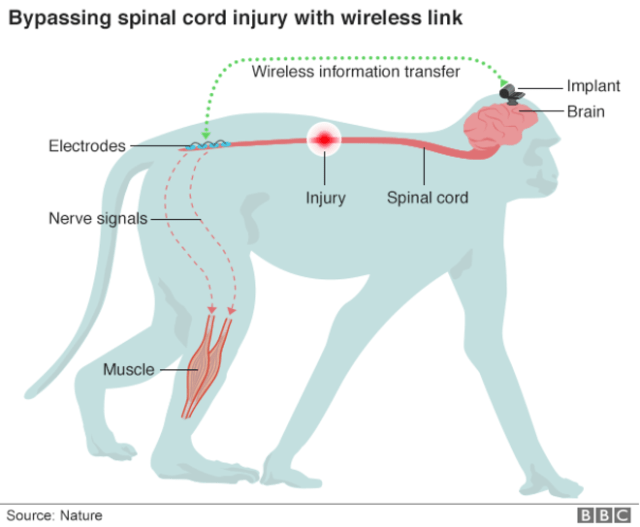
An implant that beams instructions out of the brain has been used to restore movement in paralysed primates for the first time, say scientists.

Rhesus monkeys were paralysed in one leg due to a damaged spinal cord. The team at the Swiss Federal Institute of Technology bypassed the injury by sending the instructions straight from the brain to the nerves controlling leg movement. Experts said the technology could be ready for human trials within a decade.

Spinal-cord injuries block the flow of electrical signals from the brain to the rest of the body resulting in paralysis. It is a wound that rarely heals, but one potential solution is to use technology to bypass the injury.

In the study, a chip was implanted into the part of the monkeys’ brain that controls movement. Its job was to read the spikes of electrical activity that are the instructions for moving the legs and send them to a nearby computer. It deciphered the messages and sent instructions to an implant in the monkey’s spine to electrically stimulate the appropriate nerves. The process all takes place in real time. The results, published in the journal Nature, showed the monkeys regained some control of their paralysed leg within six days and could walk in a straight line on a treadmill.

Dr Gregoire Courtine, one of the researchers, said: “This is the first time that a neurotechnology has restored locomotion in primates.” He told the BBC News website: “The movement was close to normal for the basic walking pattern, but so far we have not been able to test the ability to steer.” The technology used to stimulate the spinal cord is the same as that used in deep brain stimulation to treat Parkinson’s disease, so it would not be a technological leap to doing the same tests in patients. “But the way we walk is different to primates, we are bipedal and this requires more sophisticated ways to stimulate the muscle,” said Dr Courtine.

Jocelyne Bloch, a neurosurgeon from the Lausanne University Hospital, said: “The link between decoding of the brain and the stimulation of the spinal cord is completely new. “For the first time, I can image a completely paralysed patient being able to move their legs through this brain-spine interface.”

Using technology to overcome paralysis is a rapidly developing field:
Brainwaves have been used to control a robotic arm
Electrical stimulation of the spinal cord has helped four paralysed people stand again
An implant has helped a paralysed man play a guitar-based computer game

Dr Mark Bacon, the director of research at the charity Spinal Research, said: “This is quite impressive work. Paralysed patients want to be able to regain real control, that is voluntary control of lost functions, like walking, and the use of implantable devices may be one way of achieving this. The current work is a clear demonstration that there is progress being made in the right direction.”

Dr Andrew Jackson, from the Institute of Neuroscience and Newcastle University, said: “It is not unreasonable to speculate that we could see the first clinical demonstrations of interfaces between the brain and spinal cord by the end of the decade.” However, he said, rhesus monkeys used all four limbs to move and only one leg had been paralysed, so it would be a greater challenge to restore the movement of both legs in people. “Useful locomotion also requires control of balance, steering and obstacle avoidance, which were not addressed,” he added.

The other approach to treating paralysis involves transplanting cells from the nasal cavity into the spinal cord to try to biologically repair the injury. Following this treatment, Darek Fidyka, who was paralysed from the chest down in a knife attack in 2010, can now walk using a frame.

Neither approach is ready for routine use.

http://www.bbc.com/news/health-37914543

Thanks to Kebmodee for bringing this to the It’s Interesting community.

US military enhancing human skills with electrical brain stimulation


Study paves way for personnel such as drone operators to have electrical pulses sent into their brains to improve effectiveness in high pressure situations.

US military scientists have used electrical brain stimulators to enhance mental skills of staff, in research that aims to boost the performance of air crews, drone operators and others in the armed forces’ most demanding roles.

The successful tests of the devices pave the way for servicemen and women to be wired up at critical times of duty, so that electrical pulses can be beamed into their brains to improve their effectiveness in high pressure situations.

The brain stimulation kits use five electrodes to send weak electric currents through the skull and into specific parts of the cortex. Previous studies have found evidence that by helping neurons to fire, these minor brain zaps can boost cognitive ability.

The technology is seen as a safer alternative to prescription drugs, such as modafinil and ritalin, both of which have been used off-label as performance enhancing drugs in the armed forces.

But while electrical brain stimulation appears to have no harmful side effects, some experts say its long-term safety is unknown, and raise concerns about staff being forced to use the equipment if it is approved for military operations.

Others are worried about the broader implications of the science on the general workforce because of the advance of an unregulated technology.

In a new report, scientists at Wright-Patterson Air Force Base in Ohio describe how the performance of military personnel can slump soon after they start work if the demands of the job become too intense.

“Within the air force, various operations such as remotely piloted and manned aircraft operations require a human operator to monitor and respond to multiple events simultaneously over a long period of time,” they write. “With the monotonous nature of these tasks, the operator’s performance may decline shortly after their work shift commences.”

Advertisement

But in a series of experiments at the air force base, the researchers found that electrical brain stimulation can improve people’s multitasking skills and stave off the drop in performance that comes with information overload. Writing in the journal Frontiers in Human Neuroscience, they say that the technology, known as transcranial direct current stimulation (tDCS), has a “profound effect”.

For the study, the scientists had men and women at the base take a test developed by Nasa to assess multitasking skills. The test requires people to keep a crosshair inside a moving circle on a computer screen, while constantly monitoring and responding to three other tasks on the screen.

To investigate whether tDCS boosted people’s scores, half of the volunteers had a constant two milliamp current beamed into the brain for the 36-minute-long test. The other half formed a control group and had only 30 seconds of stimulation at the start of the test.

According to the report, the brain stimulation group started to perform better than the control group four minutes into the test. “The findings provide new evidence that tDCS has the ability to augment and enhance multitasking capability in a human operator,” the researchers write. Larger studies must now look at whether the improvement in performance is real and, if so, how long it lasts.

The tests are not the first to claim beneficial effects from electrical brain stimulation. Last year, researchers at the same US facility found that tDCS seemed to work better than caffeine at keeping military target analysts vigilant after long hours at the desk. Brain stimulation has also been tested for its potential to help soldiers spot snipers more quickly in VR training programmes.

Neil Levy, deputy director of the Oxford Centre for Neuroethics, said that compared with prescription drugs, electrical brain stimulation could actually be a safer way to boost the performance of those in the armed forces. “I have more serious worries about the extent to which participants can give informed consent, and whether they can opt out once it is approved for use,” he said. “Even for those jobs where attention is absolutely critical, you want to be very careful about making it compulsory, or there being a strong social pressure to use it, before we are really sure about its long-term safety.”

But while the devices may be safe in the hands of experts, the technology is freely available, because the sale of brain stimulation kits is unregulated. They can be bought on the internet or assembled from simple components, which raises a greater concern, according to Levy. Young people whose brains are still developing may be tempted to experiment with the devices, and try higher currents than those used in laboratories, he says. “If you use high currents you can damage the brain,” he says.

In 2014 another Oxford scientist, Roi Cohen Kadosh, warned that while brain stimulation could improve performance at some tasks, it made people worse at others. In light of the work, Kadosh urged people not to use brain stimulators at home.

If the technology is proved safe in the long run though, it could help those who need it most, said Levy. “It may have a levelling-up effect, because it is cheap and enhancers tend to benefit the people that perform less well,” he said.

https://www.theguardian.com/science/2016/nov/07/us-military-successfully-tests-electrical-brain-stimulation-to-enhance-staff-skills

Thanks to Kebmodee for bringing this to the It’s Interesting community.

Pain Sensitivity Can Be Socially Transmitted Via Olfactory Cues

by Tori Rodriguez, MA, LPC

The social transmission of emotions has been reported in several studies in recent years. Research published in 2013, for example, found that joy and fear are transmissible between people, while a 2011 study showed that stress — as measured by an increase in cortisol — can be transmitted from others who are under pressure.1,2 Results of a new study that appeared in Science Advances suggest that pain may also be communicable.3

“Being able to perceive and communicate pain to others probably gives an evolutionary advantage to animals,” study co-author Andrey E. Ryabinin, PhD, a professor of behavioral neuroscience at Oregon Health & Science University, told Clinical Pain Advisor. Such awareness may trigger self-protective or caretaking behaviors, for instance, that facilitate the survival of the individual and the group.
In the current study, Ryabinin and colleagues investigated whether “bystander” mice would develop hyperalgesia after being housed in the same room as “primary” mice who had received a noxious stimulus. In one experiment, the paws of primary mice were injected with complete Freund’s adjuvant (CFA), which, as expected, induced persistent hypersensitivity that was apparent for 2 weeks. Bystander mice who had been injected with phosphate-buffered saline (PBS) similarly demonstrated hypersensitivity throughout the same 2-week period.

Bystander mice also displayed acquired hypersensitivity in another set of experiments in which primary mice experienced pain related to withdrawal from morphine and alcohol. This suggests that the transfer of hyperalgesia is not limited to the effects of inflammatory stimuli. In addition, the transfer was consistent across mechanical, thermal, and chemical modalities of nociception.

Tests revealed that nociceptive thresholds returned to basal levels in both primary and bystander mice within 4 days, and the transferred hyperalgesia was not accounted for by familiarity, as the effects were similar between mice that were not familiar with the others and those that were.
Finally, the authors determined that the transfer of hyperalgesia was mediated by olfactory cues (as measured by exposing naïve mice to the bedding of hypersensitive co-housed mice), and it could not be accounted for by anxiety, visual cues, or stress-induced hyperalgesia.

Future research is needed to pinpoint the molecular messenger involved in the transfer of hyperalgesia, and whether a similar process occurs in humans.

“Here we show for the first time that you do not need an injury or inflammation to develop a pain state–pain can develop simply because of social cues,” said Dr Ryabinin. These findings have important implications for the treatment of chronic pain patients. “We cannot dismiss people with chronic pain if they have no physical pathology. They can be in pain without the pathology and need to be treated for their pain despite lack of injury.”

References
Dezecache G, Conty L, Chadwick M, et al. Evidence for Unintentional Emotional Contagion Beyond Dyads.PLoS One. 2013; 8(6): e67371.
Buchanan TW , Bagley SL, Stansfield RB, Preston SD. The empathic, physiological resonance of stress. Soc Neurosci. 2012; 7(2):191-201.
Smith ML, Hostetler CM, Heinricher MM, Ryabinin AE. Social transfer of pain in mice. Sci Adv. 2016; 2(10): e1600855.

http://www.psychiatryadvisor.com/anxiety/social-transfer-of-hyperalgesia/article/571087/?DCMP=EMC-PA_Update_RD&cpn=psych_md%2cpsych_all&hmSubId=&NID=1710903786&dl=0&spMailingID=15837872&spUserID=MTQ4MTYyNjcyNzk2S0&spJobID=902320519&spReportId=OTAyMzIwNTE5S0

Birds with bigger brains appear to be better able to avoid getting shot

by Jaymi Heimbuch

When a flock of geese fly into the air and a hunter takes aim, which bird is most likely to drop from the sky? A new study published in the journal Biology Letters shows that those birds with larger brains relative to their body size are less likely to be shot by hunters.

PhysOrg reports:

The researchers found that those birds with smaller brains (relative to the size of their bodies) were more likely to be shot and catalogued—as were males and larger birds in general. The team looked at a variety of factors such as organ size, body mass, gender, species, color, etc., and found one factor that stood out very clearly from the rest—birds with larger brains were 30 times less likely to be shot and killed. This, the team suggests, indicates that hunting is very likely having an evolutionary impact on animals that are hunted by humans. They do not believe that hunters are specifically targeting smaller species, it’s more likely that those with larger brains have learned to be wary of humans.

Brain size is of course not the only possible factor for which bird ends up on a hunter’s dinner table. But the ability to distinguish danger with more clarity than your compatriots certainly helps, and the researchers point out that brain size might be part of that ability.

Increasing muscle strength through weight resistance training improves cognitive function and may prevent dementia

In Australia, a University of Sydney study has linked improved cognitive function with stronger muscles using a steady regime of weightlifting exercises. Published in the Journal of American Geriatrics, the study used a system known as SMART (Study of Mental and Resistance Training). A trial was done on a group of patients age 55 to 68, suffering MCI (mild cognitive impairment). This condition is not as serious as full-blown dementia, as people affected only have mild cognitive symptoms not severe enough to disable them from normal daily life.

People who have MCI though are at high risk of developing dementia or Alzheimer’s with 80% going on to develop Alzheimer’s disease within 6 years. The World Alzheimer Report 2016 has reported that 47 million people globally are affected by dementia related diseases, with an expected three-fold increase by the year 2050. The cost of care is high for these patients, with a focus only on extending the quality of life for those living with dementia.

Weight Training Improves Cognitive Functions

The aim of the study was to measure the effects of different physical and mental activities on the human brain. Researchers examined 100 people affected by MCI. They were divided into four groups, and assigned the activities as seen below:
•weightlifting exercises
•seated stretching exercises
•real cognitive training on a computer
•placebo training on a computer

The weightlifting trial lasted for 6 months with exercising done twice a week. As the participants got stronger, they increased the amount of weight for each exercise. The exercises were done while trying to maintain 80% or greater at their peak strength.

Surprisingly, only the weight training activity demonstrated a measured improvement in brain function. The stretching exercises, cognitive training, and placebo training did not yield any results. This proved a link between muscle strength gained through physical training and the improved cognitive functions. According to Doctor Yorgi Mavros, lead author of the study, there was a clear relationship between mental functions and increased muscular strength. And the stronger the muscles got the greater the mental improvement.

In an earlier study, researchers scanned the brains of older adults after 6 months of weight training. The results mirrored the SMART trial with measured brain growth. Although previous studies have been done that show links between exercise and improved brain functions, the SMART system went into detail on the types of exercise required to get the best results. This study was a first in showing evidence of a link between strength training and improved cognitive functions for people with MCI who were 55 or older.

Delaying or Stopping Aging in the Brain

People increase their chances of brain impairment by not exercising. Exercise can help prevent dementia and Alzheimer’s disease, but also improves cardiovascular health and some other cognitive processes like multitasking.

Doctor Mavros is a strong advocate for encouraging resistance exercises as people start to grow older. The result could be a much healthier aging population. Mavros stressed the need for exercising at least 2-3 time per week at a high enough intensity in order to get the maximum cognitive benefits.

Professor Maria Fiatarone Singh of the University of Sydney wants to discover the underlying process of muscle growth and brain growth and its effect on cognitive performance. The next step is deciding how to prescribe optimal exercise programs to individuals with mild cognitive impairment, and to those who want to prevent MCI.

The authors of the study pointed out that the mechanism behind weight training and improving cognitive impairment has not yet been determined and future study may uncover the secret of delaying or even stopping degenerative aging effects of the brain.

http://www.worldhealth.net/news/stronger-muscles-improved-cognitive-function/