An explanation of blood sugar

By Alina Bradford

Blood sugar, or glucose, is the main sugar found in blood. The body gets glucose from the food we eat. This sugar is an important source of energy and provides nutrients to the body’s organs, muscles and nervous system. The absorption, storage and production of glucose is regulated constantly by complex processes involving the small intestine, liver and pancreas.

Glucose enters the bloodstream after a person has eaten carbohydrates. The endocrine system helps keep the bloodstream’s glucose levels in check using the pancreas. This organ produces the hormone insulin, releasing it after a person consumes protein or carbohydrates. The insulin sends excess glucose in the liver as glycogen.

The pancreas also produces a hormone called glucagon, which does the opposite of insulin, raising blood sugar levels when needed. The two hormones work together to keep glucose balanced.

When the body needs more sugar in the blood, the glucagon signals the liver to turn the glycogen back into glucose and release it into the bloodstream. This process is called glycogenolysis.

When there isn’t enough sugar to go around, the liver hoards the resource for the parts of the body that need it, including the brain, red blood cells and parts of the kidney. For the rest of the body, the liver makes ketones , which breaks down fat to use as fuel. The process of turning fat into ketones is called ketogenesis. The liver can also make sugar out of other things in the body, like amino acids, waste products and fat byproducts.

Glucose vs. dextrose
Dextrose is also a sugar. It’s chemically identical to glucose but is made from corn and rice, according to Healthline. It is often used as a sweetener in baking products and in processed foods. Dextrose also has medicinal purposes. It is dissolved in solutions that are given intravenously to increase a person’s blood sugar levels.

Normal blood sugar
For most people, 80 to 99 milligrams of sugar per deciliter before a meal and 80 to 140 mg/dl after a meal is normal. The American Diabetes Association says that most nonpregnant adults with diabetes should have 80 to 130 mg/dl before a meal and less than 180 mg/dl at 1 to 2 hours after beginning the meal.

These variations in blood-sugar levels, both before and after meals, reflect the way that the body absorbs and stores glucose. After you eat, your body breaks down the carbohydrates in food into smaller parts, including glucose, which the small intestine can absorb.

Problems
Diabetes happens when the body lacks insulin or because the body is not working effectively, according to Dr. Jennifer Loh, chief of the department of endocrinology for Kaiser Permanente in Hawaii. The disorder can be linked to many causes, including obesity, diet and family history, said Dr. Alyson Myers of Northwell Health in New York.

“To diagnose diabetes, we do an oral glucose-tolerance test with fasting,” Myers said.

Cells may develop a tolerance to insulin, making it necessary for the pancreas to produce and release more insulin to lower your blood sugar levels by the required amount. Eventually, the body can fail to produce enough insulin to keep up with the sugar coming into the body.

It can take decades to diagnose high blood-sugar levels, though. This may happen because the pancreas is so good at its job that a doctor can continue to get normal blood-glucose readings while insulin tolerance continues to increase, said Joy Stephenson-Laws, founder of Proactive Health Labs (pH Labs), a nonprofit that provides health care education and tools. She also wrote “Minerals – The Forgotten Nutrient: Your Secret Weapon for Getting and Staying Healthy” (Proactive Health Labs, 2016).

Health professionals can check blood sugar levels with an A1C test, which is a blood test for type 2 diabetes and prediabetes, according to the U.S. National Library of Medicine. This test measures your average blood glucose, or blood sugar, level over the previous three months.

Doctors may use the A1C alone or in combination with other diabetes tests to make a diagnosis. They also use the A1C to see how well you are managing your diabetes. This test is different from the blood sugar checks that people with diabetes do for themselves every day.

In the condition called hypoglycemia, the body fails to produce enough sugar. People with this disorder need treatment when blood sugar drops to 70 mg/dL or below. According to the Mayo Clinic, symptoms of hypoglycemia can be:

Tingling sensation around the mouth
Shakiness
Sweating
An irregular heart rhythm
Fatigue
Pale skin
Crying out during sleep
Anxiety
Hunger
Irritability


Keeping blood sugar in control

Stephenson-Laws said healthy individuals can keep their blood sugar at the appropriate levels using the following methods:

Maintaining a healthy weight

Talk with a competent health care professional about what an ideal weight for you should be before starting any kind of weight loss program.

Improving diet

Look for and select whole, unprocessed foods, like fruits and vegetables, instead of highly processed or prepared foods. Foods that have a lot of simple carbohydrates, like cookies and crackers, that your body can digest quickly tend to spike insulin levels and put additional stress on the pancreas. Also, avoid saturated fats and instead opt for unsaturated fats and high-fiber foods. Consider adding nuts, vegetables, herbs and spices to your diet.

Getting physical

A brisk walk for 30 minutes a day can greatly reduce blood sugar levels and increase insulin sensitivity.

Getting mineral levels checked

Research also shows that magnesium plays a vital role in helping insulin do its job. So, in addition to the other health benefits it provides, an adequate magnesium level can also reduce the chances of becoming insulin-tolerant.

Get insulin levels checked

Many doctors simply test for blood sugar and perform an A1C test, which primarily detects prediabetes or type 2 diabetes. Make sure you also get insulin checks.

https://www.livescience.com/62673-what-is-blood-sugar.html#?utm_source=ls-newsletter&utm_medium=email&utm_campaign=05272018-ls

Bursts of brain activity linked to memory reactivation

By Hilary Hurd Anyaso

Leading theories propose that sleep presents an opportune time for important, new memories to become stabilized. And it’s long been known which brain waves are produced during sleep. But in a new study, researchers set out to better understand the brain mechanisms that secure memory storage.

The team from Northwestern and Princeton universities set out to find more direct and precisely timed evidence for the involvement of one particular sleep wave — known as the “sleep spindle.”

In the study, sleep spindles, described as bursts of brain activity typically lasting around one second, were linked to memory reactivation. The paper, “Sleep spindle refractoriness segregates periods of memory reactivation,” published today in the journal Current Biology.

“The most novel aspect of our study is that we found these spindles occur rhythmically — about every three to six seconds — and this rhythm is related to memory,” said James W. Antony, first author of the study and a postdoctoral fellow in Princeton’s Computational Memory Lab.

Three experiments explored how recent memories are reactivated during sleep. While volunteers took an afternoon nap, sound cues were surreptitiously played. Each was linked to a specific memory. The researchers’ final experiment showed that if cues were presented at opportune times such that spindles could follow them, the linked memories were more likely to be retained. If they were presented when a spindle was unlikely to follow, the linked memories were more likely to be forgotten.

“One particularly remarkable aspect of the study was that we were able to monitor spindles moment by moment while people slept,” said Ken A. Paller, senior author of the study and professor of psychology at Northwestern’s Weinberg College of Arts and Sciences. “Therefore, we could know when the brain was most ready for us to prompt memory reactivation.”
If the researchers reminded people of a recently learned fact, a spindle would likely be evident in the cerebral cortex, and memory for that information would be improved, added Paller, also director of Northwestern’s Cognitive Neuroscience Program.

“In memory research, we know it’s important to segregate experiences while you’re awake so that everything doesn’t just blend together,” said Antony, who worked in Paller’s lab at Northwestern as a doctoral student. “If that happens, you may have difficulty retrieving information because so many things will come to mind at once. We believe the spindle rhythmicity shown here might play a role in segregating successive memory reactivations from each other, preventing overlap that might cause later interference between memories.”

Ultimately, the researchers’ goal is to understand how sleep affects memory under natural conditions and how aging or disease can impact these functions.

“With that goal in mind, we’ve helped elucidate the importance of sleep spindles more generally,” Antony said.

Paller said they are on the trail of the physiology of memory reactivation.

“Future work will be needed to see how spindles fit together with other aspects of the physiology of memory and will involve other types of memory testing and other species,” Paller said.

In addition to Antony and Paller, co-authors are Luis Piloto, Margaret Wang, Paula Pacheco and Kenneth A. Norman, all of Princeton.

https://news.northwestern.edu/stories/2018/may/bursts-of-brain-activity-linked-to-memory-reactivation/

New research shows that heavy marijuana users may hold on more strongly to negative feelings

By Rachael Rettner

Many people tend to look back on the past with rose-colored glasses, remembering the good times and the good feelings…while forgetting the bad.

But a new study suggests that heavy marijuana users may have some trouble letting go of negative emotions tied to memories — a phenomenon that’s also seen in people with depression. Earlier research has also linked marijuana use with depression.

Although the new results are very preliminary, the findings, presented here on Friday (May 25) at the annual meeting of the Association for Psychological Science, may offer clues about the link between marijuana use and depression.

Rose-colored memories

The study explored a psychological phenomenon called “fading affect bias,” in which people tend to hold on to positive feelings tied to their memories more than they hold on to negative feelings. In other words, negative feelings related to our memories fade faster than positive ones.

Psychologists have hypothesized that this phenomenon, which is generally seen in people without mental health conditions, may serve as a sort of “psychological immune system,” said study lead author Daniel Pillersdorf, a graduate student in psychology at the University of Windsor in Ontario. This may be “so that we think more pleasantly in general, and don’t have that cognitive burden of holding on to negative emotions associated with memories,” Pillersdorf said.

Some previous studies have suggested that this fading affect bias may be different for people who use drugs, but no studies have looked at whether marijuana use could affect this phenomenon.

In the new study, the researchers analyzed information from 46 heavy marijuana users — most of whom used the drug at least four times a week — and 51 people who didn’t use marijuana. Participants were asked to recall, and provide written descriptions of, three pleasant memories and three unpleasant memories from the past year. The participants were then asked to rate the intensity of emotion tied to those memories, on a scale of negative 10, meaning extremely unpleasant, to positive 10, or extremely pleasant. They rated their emotions both at the time the memory was made, and at the current time. (Marijuana users were not under the influence at the time the researchers asked them the questions.)

The researchers found that both marijuana users and non-users showed fading affect bias, but for marijuana users, the fading was a lot less.

“They were hanging on to that unpleasant affect over time, much more” than non-users, Pillersdorf told Live Science. “They were less able … to shed that unpleasantness associated with their memories.”

The study also found that marijuana users tended to recall life events in more general terms than specific ones. For example, when asked about a happy event in the past year, marijuana users were more likely to respond with general or broad answers such as “I went on vacation,” rather than recalling a specific event or day, such as “I attended my college graduation.” This phenomenon is known as over-general autobiographical memory, and it’s also linked with depression, Pillersdorf said.

It’s important to note that the new study found only an association and cannot determine why marijuana users show less fading affect bias, and more overgeneral memory, than non-users.

Link with depression?

Even so, the new findings agree with previous research that has found a link between heavy marijuana use and depression. However, researchers don’t know why marijuana and depression are linked — it could be that marijuana use plays a role in developing depression, or that people who are already depressed are more likely to use the drug. [7 Ways Marijuana May Affect the Brain]

Based on the new findings, one hypothesis is that the decreased “fading” of negative memories in marijuana users could be contributing to the development or continuing of depression, Pillersdorf said. “It may be that, chronic or frequent cannabis use is putting [a person] more at risk for the development or continuing of depression,” he said. However, Pillersdorf stressed that this is just a hypothesis that would need to be investigated with future research.

To further investigate the link, researchers will need to study marijuana users and non-users over long periods of time. For example, researchers could start with people in their late teens or early 20s, who don’t have depression, and see if those who use marijuana frequently are more likely to eventually develop depression than non-users.

Additional studies could also investigate whether other substances have an effect on fading affect bias, Pillersdorf said.

The study has not yet been published in a peer-reviewed journal.

https://www.livescience.com/62679-marijuana-negative-memories.html?utm_source=notification

Depression speeds up brain ageing

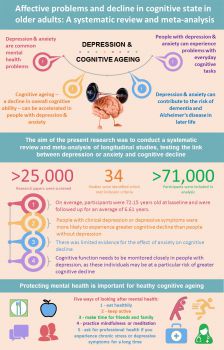
Psychologists at the University of Sussex have found a link between depression and an acceleration of the rate at which the brain ages. Although scientists have previously reported that people with depression or anxiety have an increased risk of dementia in later life, this is the first study that provides comprehensive evidence for the effect of depression on decline in overall cognitive function (also referred to as cognitive state), in a general population.

For the study, published today, Thursday 24 May 2018, in the journal Psychological Medicine, researchers conducted a robust systematic review of 34 longitudinal studies, with the focus on the link between depression or anxiety and decline in cognitive function over time. Evidence from more than 71,000 participants was combined and reviewed. Including people who presented with symptoms of depression as well as those that were diagnosed as clinically depressed, the study looked at the rate of decline of overall cognitive state – encompassing memory loss, executive function (such as decision making) and information processing speed – in older adults.

Importantly, any studies of participants who were diagnosed with dementia at the start of study were excluded from the analysis. This was done in order to assess more broadly the impact of depression on cognitive ageing in the general population. The study found that people with depression experienced a greater decline in cognitive state in older adulthood than those without depression. As there is a long pre-clinical period of several decades before dementia may be diagnosed, the findings are important for early interventions as currently there is no cure for the disease.

Lead authors of the paper, Dr Darya Gaysina and Amber John from the EDGE (Environment, Development, Genetics and Epigenetics in Psychology and Psychiatry) Lab at the University of Sussex, are calling for greater awareness of the importance of supporting mental health to protect brain health in later life.

Dr Gaysina, a Lecturer in Psychology and EDGE Lab Lead, comments: “This study is of great importance – our populations are ageing at a rapid rate and the number of people living with decreasing cognitive abilities and dementia is expected to grow substantially over the next thirty years.

“Our findings should give the government even more reason to take mental health issues seriously and to ensure that health provisions are properly resourced. We need to protect the mental wellbeing of our older adults and to provide robust support services to those experiencing depression and anxiety in order to safeguard brain function in later life.”

Researcher Amber John, who carried out this research for her PhD at the University of Sussex adds: “Depression is a common mental health problem – each year, at least 1 in 5 people in the UK experience symptoms. But people living with depression shouldn’t despair – it’s not inevitable that you will see a greater decline in cognitive abilities and taking preventative measures such as exercising, practicing mindfulness and undertaking recommended therapeutic treatments, such as Cognitive Behaviour Therapy, have all been shown to be helpful in supporting wellbeing, which in turn may help to protect cognitive health in older age.”

The research paper, ‘Affective problems and decline in cognitive state in older adults’ will be available at: https:// doi.org/10.1017/S0033291718001137 from Thursday 24 May 2018.

http://www.sussex.ac.uk/broadcast/read/44977

Ultrasound Fires Up the Auditory Cortex—Even Though Animals Can’t Hear It


Ultrasound activates auditory pathways in the rodent brain (red arrows) regardless of where in the brain the ultrasound-generating transducer is placed.

By Abby Olena

Activating or suppressing neuronal activity with ultrasound has shown promise both in the lab and the clinic, based on the ability to focus noninvasive, high-frequency sound waves on specific brain areas. But in mice and guinea pigs, it appears that the technique has effects that scientists didn’t expect. In two studies published today (May 24) in Neuron, researchers demonstrate that ultrasound activates the brains of rodents by stimulating an auditory response—not, as researchers had presumed, only the specific neurons where the ultrasound is focused.

“These papers are a very good warning to folks who are trying to use ultrasound as a tool to manipulate brain activity,” says Raag Airan, a neuroradiologist and researcher at Stanford University Medical Center who did not participate in either study, but coauthored an accompanying commentary. “In doing these experiments going forward [the hearing component] is something that every single experimenter is going to have to think about and control,” he adds.

Over the past decade, researchers have used ultrasound to elicit electrical responses from cells in culture and motor and sensory responses from the brains of rodents and primates. Clinicians have also used so-called ultrasonic neuromodulation to treat movement disorders. But the mechanism by which high frequency sound waves work to exert their influence is not well understood.

The University of Minnesota’s Hubert Lim studies ways to restore hearing, but many of the strategies that his group uses are invasive, such as cochlear implants, which require surgery to insert a device inside the ear. He says that he and his colleagues were excited by the prospect of using noninvasive and precise ultrasound to activate the parts of the brain responsible for hearing.

Lim’s team started by stimulating the brains of guinea pigs with audible noise or with pulsed ultrasound directly over the auditory cortex. They were surprised to observe similar neuronal responses to the two different stimuli because ultrasound is outside the spectrum that the guinea pigs—and humans—can hear. The researchers also found that the rodents’ neurons showed comparable electrical activity in the auditory cortex regardless of where in the brain the researchers directed the ultrasound. This raised the question: are the animals’ brains responding directly to the ultrasound or to responses of the auditory system?

When the authors cut the guinea pigs’ auditory nerves or removed their cochlear fluid, the guinea pigs stopped responding to the ultrasound and to audible noise. Lim’s team concluded that what must be happening is ultrasound moves through brain tissue and vibrates the cochlear fluid. This vibration then triggers auditory signaling and indirectly activates the auditory cortex and other brain regions, rather than ultrasound having a direct effect on the activity of the neurons.

“I am actually very hopeful that ultrasound can be a powerful tool that can not only modulate but also treat different neurologic and psychiatric disorders, and that it can achieve a noninvasive yet localized activation,” says Lim. “But what we’re trying to show in this paper is that there are many confounding effects that are actually happening with ultrasound, and we have to remove those effects to really see how it’s activating the brain.”

A coauthor on the companion study, Mikhail Shapiro of Caltech, says that previous work showing that it is possible to apply ultrasound to the brains of mice and rats to elicit electrical activity and movement in their limbs left him and his colleagues curious about how it works. To determine where and when neural activation happens, they applied ultrasonic pulses to the brains of transgenic mice that have neurons that light up when stimulated. As with guinea pigs, ultrasound is inaudible to mice.

“To our surprise, we found that the main activation pattern that we were seeing was not in the region where we were applying the ultrasound directly, but actually in the auditory areas of the brain, those responsible for processing information about sound,” Shapiro tells The Scientist.

Consistent with the findings of Lim and colleagues, Shapiro and his coauthors determined that the mouse brains lit up across the cortex, starting from the auditory cortex. And as in the guinea pigs, the mouse neurons responded similarly to ultrasound and audible sounds. The researchers also showed that both ultrasound and audible noise elicited motor movements that decreased when they used chemicals to deafen the mice.

“We’re not trying to imply that [the effects of ultrasound observed in previous studies are] due to this auditory side effect,” says Shapiro. “We’re very optimistic that now that we know that it’s there, we will be able to design ways to get around it and still be able to use this technology scientifically.”

Shy Shoham, a neuroscientist and biomedical engineer at New York University Langone Medical Center who did not participate in the studies, tells The Scientist that these papers highlight how careful researchers must be in the future when using ultrasound to modify neuronal function. “In the field of neural stimulation in general, we should always be very concerned about off-target effects,” he says. We must “delineate what is real and what isn’t.”

“The big take home point here is that we need to take care of the auditory effects,” says Kim Butts Pauly, who studies ultrasound neuromodulation at Stanford University Medical Center and who coauthored the accompanying commentary with Airan. “There’s been very compelling data from other studies that ultrasound can stimulate the brain and change recordings from the brain that are completely separate from any auditory effects. As we get rid of the auditory effects, then the more subtle effects may become apparent.”

H. Guo et al., “Ultrasound produces extensive brain activation via a cochlear pathway,” Neuron, doi:10.1016/j.neuron.2018.04.036, 2018.

T. Sato et al., “Ultrasonic neuromodulation causes widespread cortical activation via an indirect auditory mechanism,” Neuron, doi:10.1016/j.neuron.2018.05.009, 2018.

https://www.the-scientist.com/?articles.view/articleNo/54652/title/Ultrasound-Fires-Up-the-Auditory-Cortex-Even-Though-Animals-Can-t-Hear-It/

Biomaterial developed at UCLA helps regrow brain tissue after stroke in mice

by Leigh Hopper

Tnew stroke-healing gel created by UCLA researchers helped regrow neurons and blood vessels in mice whose brains had been damaged by strokes. The finding is reported May 21 in Nature Materials.

“We tested this in laboratory mice to determine if it would repair the brain and lead to recovery in a model of stroke,” said Dr. S. Thomas Carmichael, professor of neurology at the David Geffen School of Medicine at UCLA. “The study indicated that new brain tissue can be regenerated in what was previously just an inactive brain scar after stroke.”

The results suggest that such an approach could some day be used to treat people who have had a stroke, said Tatiana Segura, a former professor of chemical and biomolecular engineering at UCLA who collaborated on the research. Segura is now a professor at Duke University.

The brain has a limited capacity for recovery after stroke. Unlike the liver, skin and some other organs, the brain does not regenerate new connections, blood vessels or tissue structures after it is damaged. Instead, dead brain tissue is absorbed, which leaves a cavity devoid of blood vessels, neurons or axons — the thin nerve fibers that project from neurons.

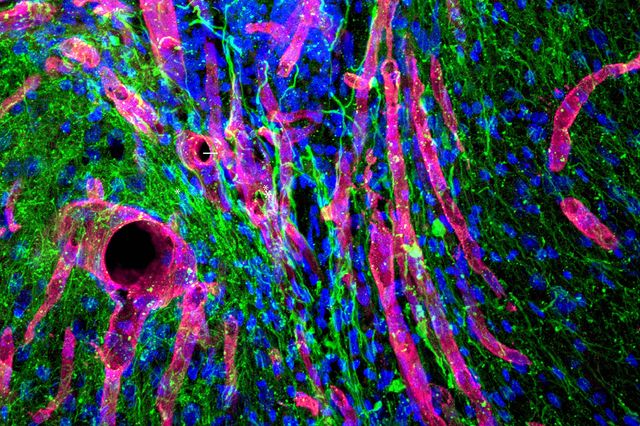
To see if healthy tissue surrounding the cavity could be coaxed into healing the stroke injury, Segura engineered a hydrogel that, when injected into the cavity, thickens to create a scaffolding into which blood vessels and neurons can grow. The gel is infused with medications that stimulate blood vessel growth and suppress inflammation, since inflammation results in scars and impedes functional tissue from regrowing.

After 16 weeks, the stroke cavities contained regenerated brain tissue, including new neuronal connections — a result that had not been seen before. The mice’s ability to reach for food improved, a sign of improved motor behavior, although the exact mechanism for the improvement wasn’t clear.

“The new axons could actually be working,” Segura said. “Or the new tissue could be improving the performance of the surrounding, unharmed brain tissue.”

The gel was eventually absorbed by the body, leaving behind only new tissue.

The research was designed to explore recovery in acute stroke, the period immediately following a stroke — in mice, that period lasts five days; in humans, it’s two months. Next, Carmichael and Segura plan to investigate whether brain tissue can be regenerated in mice long after the stroke injury. More than 6 million Americans are living with long-term effects of stroke, which is known as chronic stroke.

The other authors of the paper are Lina Nih and Shiva Gojgini, both of UCLA.

The study was supported by the National Institutes of Health.

http://newsroom.ucla.edu/releases/biomaterial-ucla-regrow-brain-tissue-after-stroke-mice

Molecular link between long-term memory and neurodegenerative disease discovered

Scientists have just discovered that a small region of a cellular protein that helps long-term memories form also drives the neurodegeneration seen in motor neuron disease (MND). This small part of the Ataxin-2 protein thus works for good and for bad. When a version of the protein lacking this region was substituted for the normal form in fruit flies (model organisms), the animals could not form long-term memories – but, surprisingly, the same flies showed a remarkable resistance to neurodegeneration.

The popular “ice bucket challenge” highlighted the social significance of MND, as well as the need to better understand and treat neurodegenerative conditions. This new research identifies a very specific basic mechanism that facilitates progression of neuronal loss in an animal model of MND, and, by shedding light on a potential way to protect against cell death in MND, it should inform strategies for the development of therapeutics to treat or manage these devastating conditions, which are currently incurable.

The Science Foundation Ireland-funded research, involving scientists from the Trinity College Institute of Neuroscience, NCBS Bangalore and HMMI, University of Colorado, Boulder, has just been published in the leading international journal Neuron.

Professor of Neurogenetics at Trinity College Dublin, Mani Ramaswami, said: “This work, by collaborating young researchers based in Irish, Indian and American laboratories, provides a great example of the ability of fundamental research in model organisms to produce biologically and clinically interesting information.”

A common feature of neurodegenerative diseases is the presence of specific protein aggregates in nerve cells, which accumulate and clump together — usually as protein fibres called amyloid filaments. Such aggregates are believed to trigger processes that cause the neuronal death associated with these debilitating diseases. For example, amyloid-beta (Aβ) aggregates are associated with Alzheimer’s disease, while TDP-43, FUS and Ataxin-2 proteins are commonly found in MND patients.

The scientists behind the current study set out to test this “amyloid hypothesis” to see whether it may explain how MND develops. The scientists genetically engineered fruit flies with mutations designed to reduce Ataxin-2 protein assembly into aggregates without affecting other functions of the protein.

Arnas Petrauskas, Trinity, said: “The flies with this altered, non-aggregating version of the protein showed a striking resistance to neurodegeneration. This suggests the normal Ataxin-2 protein and its ability to form aggregates is required for the progression of at least some forms of MND, which means these results provide support for the amyloid hypothesis.”

“What really surprised us though was that this same protein region seems to be required for the flies to develop long-term memory, as those with the altered version of Ataxin-2 showed normal short-term but defective long-term memories.”

Fruit flies normally respond strongly to new odorants, but weakly to familiar odorants through a process called habituation. This memory of the familiar can be of the short-term kind – to an odorant encountered for half-an-hour, or of the long-term kind, to odorants encountered for days (think of it as remembering a phone number of a new acquaintance versus remembering your own phone number). Flies lacking this small domain of Ataxin-2 showed greatly reduced long-term memory.

So how is long-term memory formation and disease progression connected? It turns out that proteins like the TDP-43, FUS and Ataxin-2 found in MND are also involved in the natural control and management of protein expression in the cell. The very same region of Ataxin-2 is needed to form RNP granules that store RNAs (essentially blueprints, or recipes for specific proteins) in a silent form until they are unpackaged by a signal and used to produce molecules when they are required. This local control of RNAs is required for long-term changes at neuronal synapses that underlie long-term memory.

The new discovery shows that Ataxin-2 concentrates several RNA-binding proteins used in the process of memory storing, but in doing so, it creates a biological environment that can help these proteins aggregate into disease-causing amyloids. A “trade-off” therefore exists in nature where the Ataxin-2 gene increases the danger of neurodegeneration, but helps our cells control RNA and form long-term memories.

In a commentary on the research published in the same issue of the journal Neuron, Aaron Gitler, Professor of Genetics in the Stanford Neuroscience Institute, an independent expert in MND research said: “This data suggest that manipulating RNP granule formation by genetically manipulating ataxin-2’s IDRs, or by other means could be therapeutic in ALS. Beyond ataxin-2, the race is now on to discover additional proteins that help build RNP granules.”

https://www.tcd.ie/news_events/articles/link-between-long-term-memory-and-neurodegenerative-disease/8941

New Inherited Neurodevelopmental Disease Discovered

Writing in the journal eLife, the team reveals that this disease is caused by a recessive mutation in CAMK2A – a gene that is well known for its role in regulating learning and memory in animals. The findings suggest that dysfunctional CAMK2 genes may contribute to other neurological disorders, such as epilepsy and autism, opening up potential new avenues for treating these conditions.

“A significant number of children are born with growth delays, neurological defects and intellectual disabilities every year across the world,” explains senior author Bruno Reversade, Research Director at the Institute of Medical Biology and Institute of Molecular and Cell Biology, A*STAR, Singapore, who supervised the study. “While specific genetic mutations have been identified for some patients, the cause remains unknown in many cases. Identifying novel mutations would not only advance our understanding of neurological diseases in general, but would also help clinicians diagnose children with similar symptoms and/or carry out genetic testing for expecting parents.”

The team’s research began when they identified a pair of siblings who demonstrated neurodevelopmental delay with frequent, unexplained seizures and convulsions. While the structure of their bodies developed normally, they did not gain the ability to walk or speak. “We believed that the children had novel mutations in CAMK2A, and we wanted to see if this were true,” says Reversade.

The fully functional CAMK2A protein consists of multiple subunits. Using a genomic technique called exome sequencing, the team discovered a single coding error affecting a key residue in the CAMK2A gene that prevents its subunits from assembling correctly.

Moving their studies into the roundworm Caenorhabditis elegans, the scientists saw that this mutation disrupts the ability of CAMK2A to ensure proper neuronal communication and normal motor function. This suggests that the mutation is indeed the cause of the neurodevelopmental defects seen in the siblings.

To the best of the team’s knowledge, this new disorder represents the first human disease caused by inherited mutations on both copies of the CAMK2A gene. In addition, another report* published recently identified single-copy mutations on both CAMK2A and CAMK2B that caused intellectual disabilities as soon as the mutations occurred. “We would like to bring these findings to the attention of those working in the area of paediatric genetics, such as clinicians and genetic counsellors, as there are likely more undiagnosed children with similar symptoms who have mutations in their CAMK2A gene,” explains co-first author Franklin Zhong, Research Scientist in Reversade’s lab at A*STAR.

“Neuroscientists working to understand childhood brain development, neuronal function and memory formation also need to consider this new disease, since CAMK2A is associated with these processes. In future, it would be interesting to test whether restoring CAMK2A activity can bring therapeutic benefit to patients with this condition, as well as those with related neurological disorders.”

The paper ‘A homozygous loss-of-function CAMK2A mutation causes growth delay, frequent seizures and severe intellectual disability‘ can be freely accessed online at https://doi.org/10.7554/eLife.32451. Contents, including text, figures and data, are free to reuse under a CC BY 4.0 license.

*Küry, S., van Woerden, G.M., Besnard, T., Proietti Onori, M., Latypova, X., Towne, M.C., Cho, M.T., Prescott, T.E., Ploeg, M.A., Sanders, S., et al. (2017). De Novo Mutations in Protein Kinase Genes CAMK2A and CAMK2B Cause Intellectual Disability. The American Journal of Human Genetics 101, 768-788.

https://www.technologynetworks.com/neuroscience/news/new-inherited-neurodevelopmental-disease-discovered-303233?utm_campaign=Newsletter_TN_BreakingScienceNews&utm_source=hs_email&utm_medium=email&utm_content=63149617&_hsenc=p2ANqtz-_AJri5fciUzcysqtDye56dm2VpMIbIwRqkV2di9BmqZhzk9xuPEv5CWgKF24BpT8_OB1uWAjitxNXhmduWHyW2XKGlhw&_hsmi=63149617

Could a Dose of Sunshine Make You Smarter?

By Ruth Williams

The sun’s ultraviolet (UV) radiation is a major cause of skin cancer, but it offers some health benefits too, such as boosting production of essential vitamin D and improving mood. A recent report in Cell adds enhanced learning and memory to UV’s unexpected benefits.

Researchers have discovered that, in mice, exposure to UV light activates a molecular pathway that increases production of the brain chemical glutamate, heightening the animals’ ability to learn and remember.

“The subject is of strong interest, because it provides additional support for the recently proposed theory of ultraviolet light’s regulation of the brain and central neuroendocrine system,” dermatologist Andrzej Slominski of the University of Alabama who was not involved in the research writes in an email to The Scientist.

“It’s an interesting and timely paper investigating the skin-brain connection,” notes skin scientist Martin Steinhoff of University College Dublin’s Center for Biomedical Engineering who also did not participate in the research. “The authors make an interesting observation linking moderate UV exposure to . . . [production of] the molecule urocanic acid. They hypothesize that this molecule enters the brain, activates glutaminergic neurons through glutamate release, and that memory and learning are increased.”

While the work is “fascinating, very meticulous, and extremely detailed,” says dermatologist David Fisher of Massachusetts General Hospital and Harvard Medical School, “it does not imply that UV is actually good for you. . . . Across the board, for humanity, UV really is dangerous.”

Wei Xiong of the University of Science and Technology of China who led the research did not set out to investigate the effects of UV light on the brain or the skin-brain connection. He stumbled upon his initial finding “almost accidentally,” he explains in an email to The Scientist. Xiong and his colleagues were using a mass spectrometry technique they had recently developed for analyzing the molecular contents of single neurons, when their results revealed the unexpected presence of urocanic acid—a little-known molecule produced in the skin in response to UV light.

“It was a surprise because we checked through all the literature and found no reports of the existence of this small molecule in the central nervous system,” writes Xiong.

With little information to go on, Xiong and his colleagues decided to see whether UV light could also boost levels of urocanic acid in the brain. They exposed shaved mice to a low-dose of UVB—responsible for sunburn in humans—for 2 hours, then performed mass spectrometry on the animals’ individual brain cells. Sure enough, levels of urocanic acid increased in neurons of the animals exposed to the light, but not in those of control animals.

Urocanic acid can absorb UV rays and, as a result, may be able to protect skin against the sun’s harmful effects. But in the liver and other peripheral tissues, the acid is also known to be an intermediate molecule generated in the metabolic pathway that converts histidine to glutamate. Given glutamate’s role in the brain as an excitatory neurotransmitter, Xiong and his colleagues were interested to test whether the observed UV-dependent increase in urocanic acid in neurons might be coupled with increased glutamate production. It was.

Next, the team showed that UV light enhanced electrical transmission between glutaminergic neurons in brain slices taken from animals exposed to UV, but not in those from control animals. This UV-induced effect was prevented when the researchers inhibited activity of the enzyme urocanase, which converts urocanic acid to glutamate, indicating that the acid was indeed the mediator of the UV-induced boost in glutaminergic activity.

Lastly, the team showed that mice exposed to UV performed better in motor learning and recognition memory tasks than their unexposed counterparts. And, as before, treating the animals with a urocanase inhibitor prevented the UV-induced improvements in learning and memory. Administering urocanic acid directly to animals not exposed to ultraviolet light also spurred similar learning and memory improvements to those achieved with UV exposure.

Whether the results obtained in mice, which are nocturnal and rarely see the sun, will hold true in humans is yet to be determined. But, Fisher says, if the results do hold, the finding that urocanic acid alone can enhance learning and memory might suggest “a way to utilize this information to benefit people without exposing them to the damaging effects of UV.”

H. Zhu et al., “Moderate UV exposure enhances learning and memory by promoting a novel glutamate biosynthetic pathway in the brain,” Cell, doi: 10.1016/j.cell.2018.04.014, 2018.

https://www.the-scientist.com/?articles.view/articleNo/54603/title/Could-a-Dose-of-Sunshine-Make-You-Smarter-/

‘Yanny’ or ‘Laurel’? Why Your Brain Hears One or the Other in This Maddening Illusion

By Jeanna Bryner

An auditory illusion that’s making the rounds online seems to have divided people into passionate camps depending on whether they hear the word “Yanny” or “Laurel” when listening to a recording.

If you hear one, you don’t hear the other, and you’ll be convinced the audio clip could only be saying … “Laurel” (in my case). Are you #teamyanny or #teamlaurel?

There’s some science to suggest that depending on how you look at the explanation, either both teams are correct or neither are. That’s because no “true” word has been recorded, Andrew Oxenham, a professor in the Departments of Psychology and Otolaryngology at the University of Minnesota, told Live Science.

The illusion first popped up on Reddit a few days ago. It is being likened to the famous dress debate of 2015, in which some people swore the garment was black and blue and others said it was white and gold. According to a study of that illusion, people saw the different colors because of assumptions the brain made about the illumination of the dress under different lighting conditions.

Filling in missing information
This latest “illusion,” although based on auditory perception and not vision, also likely boils down to the brain’s wackiness. One idea is that, if there is any ambiguity about a sound or word, the brain will lock onto one word or sound and deem that the correct interpretation. When there is a “perceptually ambiguous stimulus,” the University of Sydney’s David Alais told The Guardian, “the brain locks on to a single perceptual interpretation. Here, the Yanny/Laurel sound is meant to be ambiguous because each sound has a similar timing and energy content — so, in principle, it’s confusable.”

Alais, who studies audiovisual perception, added, “All of this goes to highlight just how much the brain is an active interpreter of sensory input, and thus that the external world is less objective than we like to believe.”

Researchers are saying it’s the auditory version of the so-called Rubin’s vase, an image that is visually ambiguous and can be interpreted in one of two ways: as the profiles of two people, or a vase, according to various news reports on the illusion.

Because your brain plays tricks on you here, your expectations about what you’ll hear, or even your past experiences, could shape whether you feel strongly about Team Yanny or Team Laurel, The Guardian reported.

In addition to sending vital auditory clues to your brain, your ears play a role in this maddening Yanny/Laurel interpretation. Each sound is made up of several frequencies, and those that create “Yanny” are higher than those for “Laurel,” said Lars Riecke, a cognitive neuroscientist at Maastricht University in the Netherlands, as reported by The Verge. The speakers you’re using may change the frequency, leading to the different interpretations, he added.

But your ear shape and your age could also play roles. Turns out, as people age, they start to lose the ability to hear the higher sounds, so they may be more likely to hear “Laurel,” which was the case for Alais, who is 52.

Sound frequencies
“Basically, there is no ‘true’ word and the stimulus has ‘clues’ based on the formant frequencies that point to either one or the other word,” Oxenham said. A formant refers to the frequencies that carry the most energy when a sound is made, and they depend on the different parts of a person’s vocal tract.

The shape of the tract and the resulting frequencies that come out when a person speaks are due to the placement of the tongue, according to psycholinguist Suzy Styles of the Nanyang Technological University, who tweeted about the Yanny/Laurel puzzle.

It seems like a speech synthesizer must have created the clip, according to Oxram and Styles. In normal speech, Styles tweeted, there are three formants that a person produces, but in this clip, there are more than three.

“So unless this speaker had two completely separate tongues, this ambiguous speech has been carefully crafted to fool the ears. Shall we call it an Ear-llusion?,” Styles tweeted.

Reportedly, if you mess with the sound on your speakers to remove the high frequencies, you’ll hear “Laurel” and vice versa when you remove the lower frequencies.

Why Laurel or Yanny?
As for what makes a person sway one way or the other after listening to this audio clip, that’s anyone’s guess for now.

“I’m not sure that anyone knows why some people hear it one way and other people hear it another way, but that’s often the way with these visual and auditory illusions — our brains ‘fill in’ missing information, and how that happens seems to vary a lot from one person to the next,” Oxenham said.

Bharath Chandrasekaran, an associate professor in the Department of Communication Sciences and Disorders at the University of Texas at Austin, said he doesn’t know either, but he’s planning to find out. He told The Verge that he is going to look for volunteers in both camps and then run tests in which he looks at their brain waves while they listen to the audio clip.

https://www.livescience.com/62583-yanny-laurel-auditory-illusion-explained.html?utm_source=notification