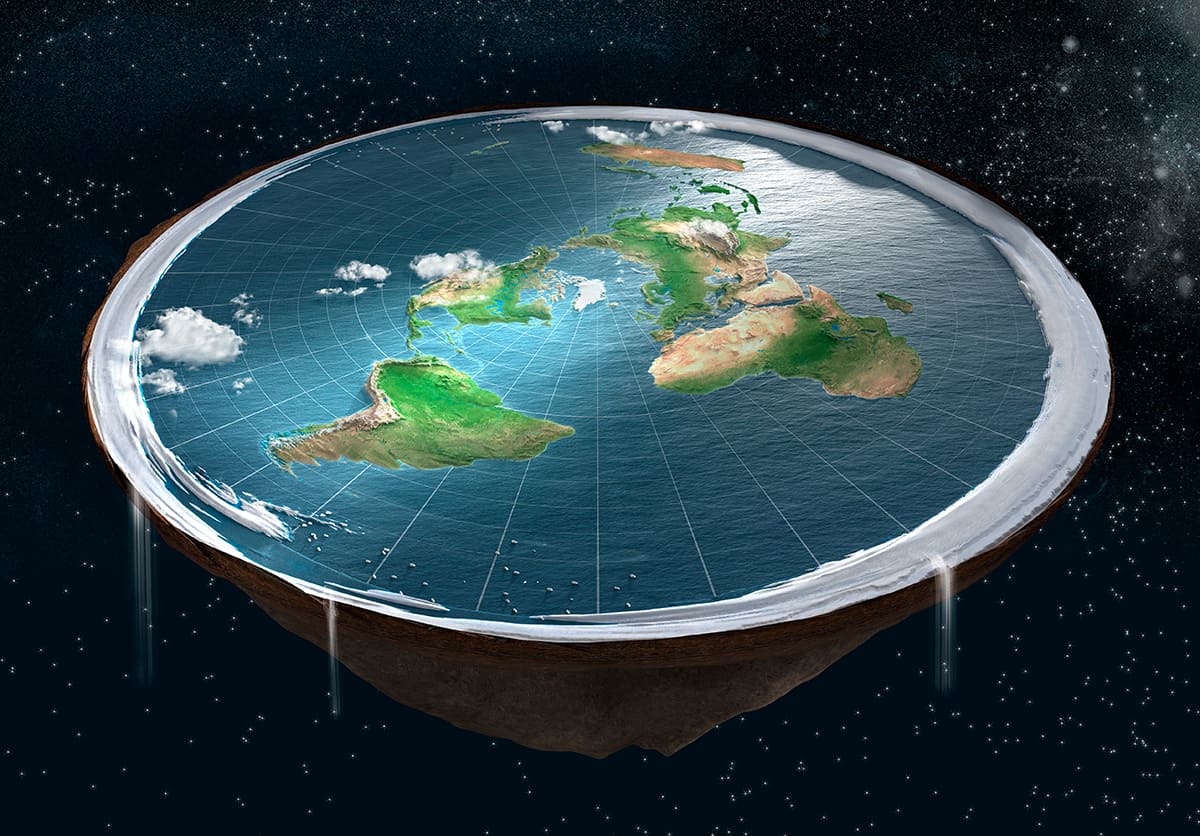
Flat Earther Admits Truth After Antarctica Trip

By Jonathan Chadwick

Ever since the time of the ancient Greeks over 2,000 years ago, human beings have known the Earth is a globe.

Despite this, some people are still convinced that we live on a giant floating disc in space, known as ‘Flat Earth’.

Now, one of the internet’s most famous ‘Flat Earthers’ has finally cottoned on to the truth.

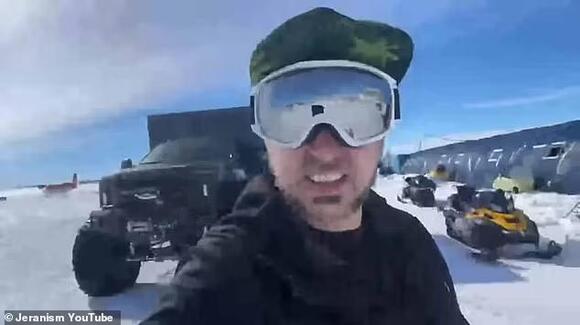
Jeran Campanella, who runs the popular Flat Earth YouTube show ‘Jeransim’, has travelled to Antarctica as part of a trip dubbed ‘The Final Experiment’.

Mr Campanella witnessed first hand that the sun doesn’t set during the southern hemisphere’s summer.

This debunks the belief held by Flat Earthers that Antarctica is an ice wall where the sun rises and sets every day.

Stationed in Antarctica, he says to the camera: ‘Sometimes you are wrong in life and I thought there was no 24-hour sun. In fact I was pretty sure of it. And it’s a fact – the sun does circle you in the south. So what does that mean? You guys are going to have to find that out for yourself.’

Campanella thanked the organiser of the trip, which cost $35,000 (£27,500) – although he stopped short of saying that the Earth is spherical.
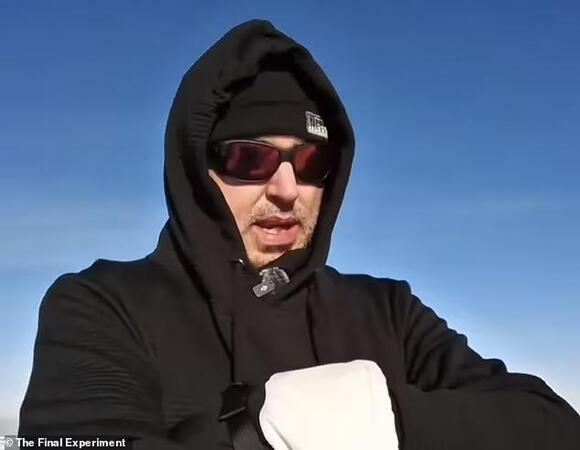
https://img.particlenews.com/image.php?url=4Ap5g0_0xW653Pt00
Jeran Campanella, who runs the popular Flat Earth YouTube channel ‘Jeransim’, has travelled to Antarctica as part of a trip dubbed ‘The Final Experiment’

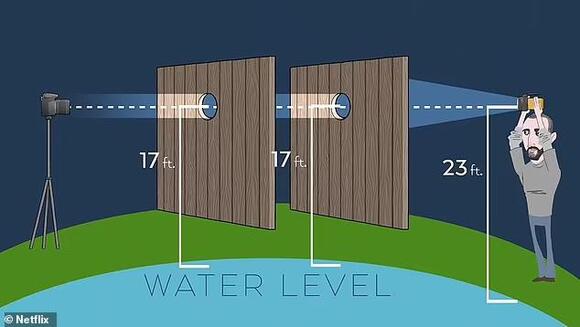
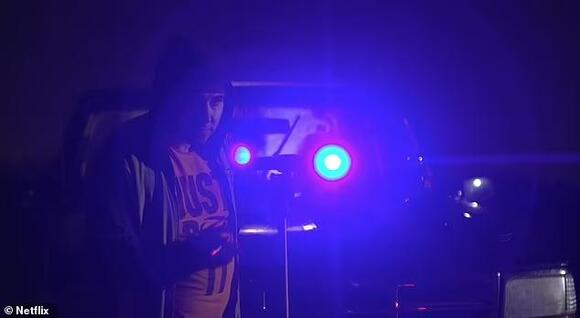
Mr Campanella was featured in the 2018 documentary ‘Behind the Curve’ as he unintentionally debunked his own theory with a light experiment.

A co-creator of the GlobeBusters YouTube channel, which has 73,000 subscribers, he describes himself as an ‘open-minded True Earth’ proponent and crypto enthusiast.

His website Jeransim.com flogs everything from ‘anti-NASA’ t-shirts and beenies to crypto consultations, leaf powder medicinal capsules and private Zoom dinner parties.

When he agreed to travel to Antarctica on the proviso he wouldn’t have to cover the trip costs, he expected the sun to rise and fall out of view from the horizon.

But in the new clip, he bashfully admits to the truth and acknowledges people may see him as a ‘shill’ – a trickster who takes part in the supposed cover-up that the Earth is round.

‘I realise that I’ll be called a shill for just saying that and you know what, if you’re a shill for being honest so be it,’ he said.

‘I honestly believed there was no 24-hour sun – I honestly now believe there is.’

As any well-informed person will know, Antarctica is an island continent at the southernmost part of our planet.


https://img.particlenews.com/image.php?url=341wEV_0xW653Pt00
A co-creator of the GlobeBusters YouTube channel, Campanella has 73,000 subscribers. He describes himself as an ‘open-minded True Earth’ proponent and crypto enthusiast
https://img.particlenews.com/image.php?url=3LmlNf_0xW653Pt00
Campanella agreed to travel to Antarctica on the proviso he wouldn’t have to cover the trip costs
https://img.particlenews.com/image.php?url=1REYCy_0xW653Pt00
In the new clip, he bashfully admits to the truth and acknowledges people may see him as a ‘shill’ – a trickster who takes part in the supposed cover-up that the Earth is round
https://img.particlenews.com/image.php?url=1qbywI_0xW653Pt00
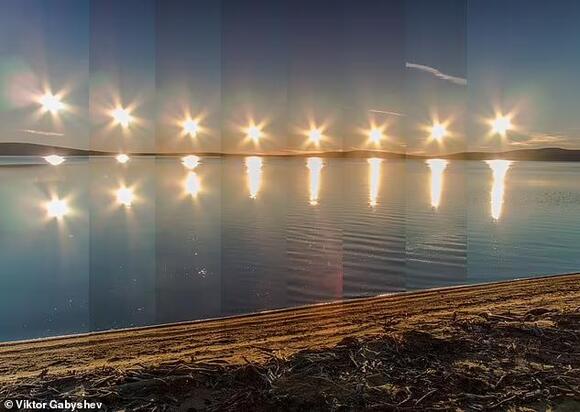
During the southern hemisphere’s and northern hemisphere’s summer, the sun remains visible all day, including at midnight – a phenomenon dubbed ‘the midnight sun’. Pictured, multiple exposure of midnight sun on Lake Ozhogino in Yakutia, Russia

What do Flat Earthers believe?

People who believe the idea that the Earth is disc-shaped rather than round are called ‘Flat Earthers’.

Because Earth’s surface looks and feels flat when we walk around it, the conspiracy theorists denounce all evidence to the contrary.

The leading theory suggests Earth is a disc with the Arctic Circle in the centre and Antarctica, a 150-foot-tall (45-metre) wall of ice, around the rim.

Proponents of the bizarre theory also claim the Earth is stationary in space rather than orbiting the sun.

Due to the tilt of the Earth, the sun does not set during the southern hemisphere’s (or northern hemisphere’s) summer – it just moves in a circle in the sky.

It means the sun remains visible all day, including at midnight – a phenomenon dubbed ‘the midnight sun’.

But Flat Earthers, or ‘Flerfs’, believe that Antarctica is an ice wall that encircles all the other continents and holds in all the world’s oceans.

Therefore, they think the sun rises and sets each day, every day, regardless of whether it’s summer or not.

To account for night and day, most theorists believe the sun moves in circles around the North Pole, with the sun’s light acting like a spotlight over Earth.

About three years ago, Will Duffy, a pastor from Colorado, was made aware that people still believe the Earth is flat when a friend of his posted about it on Facebook.

Since Flat Earthers said for years that Antarctica will show the world the truth about the shape of the Earth, Mr Duffy decided the easiest solution would be to just go to Antarctica.

‘After we go to Antarctica, no one has to waste any more time debating the shape of the Earth,’ he said.
https://img.particlenews.com/image.php?url=2VcpjK_0xW653Pt00
Mr Campanella was featured in the 2018 documentary ‘Behind the Curve’ as he unintentionally debunked his own theory with a light experiment
https://img.particlenews.com/image.php?url=1YnsZD_0xW653Pt00
The Flat Earther claimed that if the light can be seen with a camera, the holes in the fence and the torch all at equal differences above the ground, then he could draw a positive conclusion that the planet is flat

‘I created The Final Experiment to end this debate, once and for all,’ he said.

On December 14, Mr Duffy flew with four Flat Earthers (including Mr Campanella) and four people who already know the Earth is round (‘globe earthers’) to Antarctica.

Mr Duffy said he filmed the sun for 25 hours straight, using SpaceX’s Starlink satellite internet network for a livestream.

Stunning footage from the frozen landscape shows the gleaming midnight sun with ice-peaked mountains in the background.

‘That is a midnight sun – so the sun has never set the entire time we’ve been here,’ the pastor said to the camera.

‘I put sunscreen on at midnight so that I would not get burned at midnight while I was doing this livestream.’

He passes over to Mr Campanella, who humbly admits he was wrong, having witnessed the sun travel in a circle above his head.

However, another famous Flat Earther on the trip, Austin Witsit, has more trouble letting go of the theory.
https://img.particlenews.com/image.php?url=44YtW9_0xW653Pt00
Mr Campanella humbly admitted he was wrong, having witnessed the sun travel in a circle above his head

Witsit said there’s ‘clearly’ a 24-hour sun, but denied that this proves the Earth is a globe.

‘I don’t think it falsifies plane [flat] Earth, I don’t think it proves a globe – I think it’s a singular data point,’ he said.

Likewise, some YouTuber conspiracy theorists have been left unconvinced, with many claiming the group were standing in front of a green screen.

In the live chat, YouTube user Nandy posted: ‘THIS IS A GREEN SCREEN, HOLD UP SNOW AND PUT UP THREE FINGERS IF IT’S REAL, the earth will always be flat’, while user Fozzy_Foster said: ‘move the camera green screen.’

Another user, Oz Riv, called Mr Duffy a ‘shill’, adding: ‘You are a pastor advocating for earth that isn’t biblical. Annd you work with Nasa.’

Scientists have know for millennia that Earth is a sphere due to the simple fact that the sun sets at different times in different locations.

If the Earth were flat, then shadows would be the same length, regardless of location.

For space travelers and robotic probes adorned with cameras, the curvature of the Earth has also long been clearly visible.

It was Greek philosopher Pythagoras who first proposed that the Earth was round around 500 BC, but it was about 350 BC that Aristotle declared Earth was a sphere.

This was based on observations Aristotle had made about which constellations you could see in the sky as you travelled further and further away from the equator.

A French Teenager Turned the Bible and Quran into DNA and Injected Them into His Body

By Rafi Letzter

A kid in France transcribed parts of the Hebrew book of Genesis and the Arabic-language Quran, into DNA and injected them into his body — one text into each thigh.

Adrien Locatelli, a 16-year-old high school student, posted a paper Dec. 3 on the preprint server OS, in which he claimed, “It is the first time that someone injects himself macromolecules developed from a text.”

Locatelli, a student at the boarding school Lycée les Eaux Claires in Grenoble, France, told Live Science that he didn’t need any special equipment for his project.

“I just needed to buy saline solution and a syringe because VectorBuilder sent me liquid and ProteoGenix sent me powder,” he told Live Science.

VectorBuilder is a company that creates viruses that can sneak DNA strands into cells for gene-editing purposes. ProteoGenix synthesizes, among other things, custom strands of DNA. Both companies primarily serve scientists, but their products are available to anyone who purchases them.

If you saw the texts that Locatelli injected into his body, they wouldn’t look like much. DNA is just a long molecule that can store information. Mostly, it stores the information living things use to go about their business. But it can be used to store just about any kind of information that can be written down.

Locatelli’s method for translating the texts into DNA was straightforward, if a bit crude. DNA encodes its information using repeating strings of four nucleotides, which scientists have abbreviated as A, G, T and C. Locatelli lined up each letter of the Hebrew and Arabic alphabets (which correspond closely to each other) with a nucleotide, so each nucleotide represented more than one letter. So if you were to write a Hebrew sentence using his scheme, every aleph, vav, yud, nun, tsade, and tav would become a G. Every dalet, khet, ayin, and resh would become a T. And so on.

So, is this a good idea? Locatelli thinks so.

“I did this experiment for the symbol of peace between religions and science,” he said, adding, “I think that for a religious person it can be good to inject himself his religious text.”

Locatelli said he didn’t experience any significant health problems following the procedure, though he reported some “minor inflammation” around the injection site on his left thigh for a few days.

This account of only minimal complications fits with what Sriram Kosuri, a professor of biochemistry at UCLA, told Live Science.

“[The injected texts] are unlikely to do anything except possibly cause an allergic reaction. I also don’t know how likely the rAAV vector would be to make actual virus, given the way he injected. I honestly don’t know enough about the vector he used and how he did it (details are scarce),” he wrote in a message.

https://www.livescience.com/64388-boy-encoded-and-injected-dna-bible-quran.html#?utm_source=ls-newsletter&utm_medium=email&utm_campaign=12252018-ls

Hidden Text Found on ‘Blank’ Dead Sea Scrolls

By Laura Geggel

Previously hidden text on fragments of the Dead Sea Scrolls is now readable, revealing a possible undiscovered scroll and solving a debate about the sacred Temple Scroll. The discoveries came from a new infrared analysis of the artifacts, the Israel Antiquities Authority (IAA) announced yesterday (May 1).

The newfound writing came from the books of Deuteronomy and Leviticus, which are in the Hebrew Bible (also known as the Old Testament of the Christian Bible), and the Book of Jubilees, a text written at the same time as the Hebrew Bible that was never incorporated into the biblical books, the archaeologists said.

Researchers presented the newly revealed words at an international conference, called “The Dead Sea Scrolls at Seventy: Clear a Path in the Wilderness,” in Israel.

Local Bedouins and archaeologists discovered the Dead Sea Scrolls in the 1940s in caves near Qumran in the West Bank, located near the northern edge of the Dead Sea. Excavations in the following decades turned up tens of thousands of parchment and papyrus fragments that were dated to 2,000 years ago, the IAA said.

There were so many small and fragile fragments that archaeologists placed them in boxes to be studied at a later date. Now, that time has come: IAA researchers are digitizing the scrolls so that they can be studied and shared with the public without damaging the originals.

During one of these digital scans, Oren Ableman, a scroll researcher at the IAA’s Dead Sea Scrolls Unit and a doctoral student in the Department of Jewish History at the Hebrew University of Jerusalem, noticed something peculiar on a few dozen fragments that had been discovered in Cave 11 near Qumran.

These fragments looked blank to the naked eye. But, by using infrared imaging, Ableman discovered that they held Hebrew letters and words, he said in a statement. Ableman then deciphered the script and even connected the fragments to the manuscripts that they had likely been attached to before crumbling away.

Some of the more interesting fragments include the following:

1) A fragment from the Temple Scroll, a text that gives instructions for how to conduct services in the ideal temple. Scholars have debated whether there are two or three copies of the Temple Scroll from Cave 11. The discovery of the text on this fragment suggests that there are, indeed, three copies.

2) A fragment from the Great Psalms Scroll. This fragment contains part of the beginning of Psalm 147:1, and the end of the verse is preserved in a larger fragment from the same cave. The newfound fragment shows that the ancient Psalm is slightly shorter than the Hebrew text used nowadays.

3) Another fragment has letters written in paleo-Hebrew, an ancient Hebrew script. This fragment could not be attributed to any known manuscripts and could belong to an unknown manuscript.

https://www.livescience.com/62467-hidden-text-dead-sea-scrolls.html?utm_source=notification

A genetic analysis finds that the Canaanites survived a divine call for their extinction and that their descendants live in Lebanon

There is a story in the Hebrew Bible that tells of God’s call for the annihilation of the Canaanites, a people who lived in what are now Jordan, Lebanon, Syria, Israel and the Palestinian territories thousands of years ago.

“You shall not leave alive anything that breathes,” God said in the passage. “But you shall utterly destroy them.”

But a genetic analysis published on Thursday has found that the ancient population survived that divine call for their extinction, and their descendants live in modern Lebanon.

“We can see the present-day Lebanese can trace most of their ancestry to the Canaanites or a genetically equivalent population,” said Chris Tyler-Smith, a geneticist with the Wellcome Trust Sanger Institute who is an author of the paper. “They derive just over 90 percent of their ancestry from the Canaanites.”

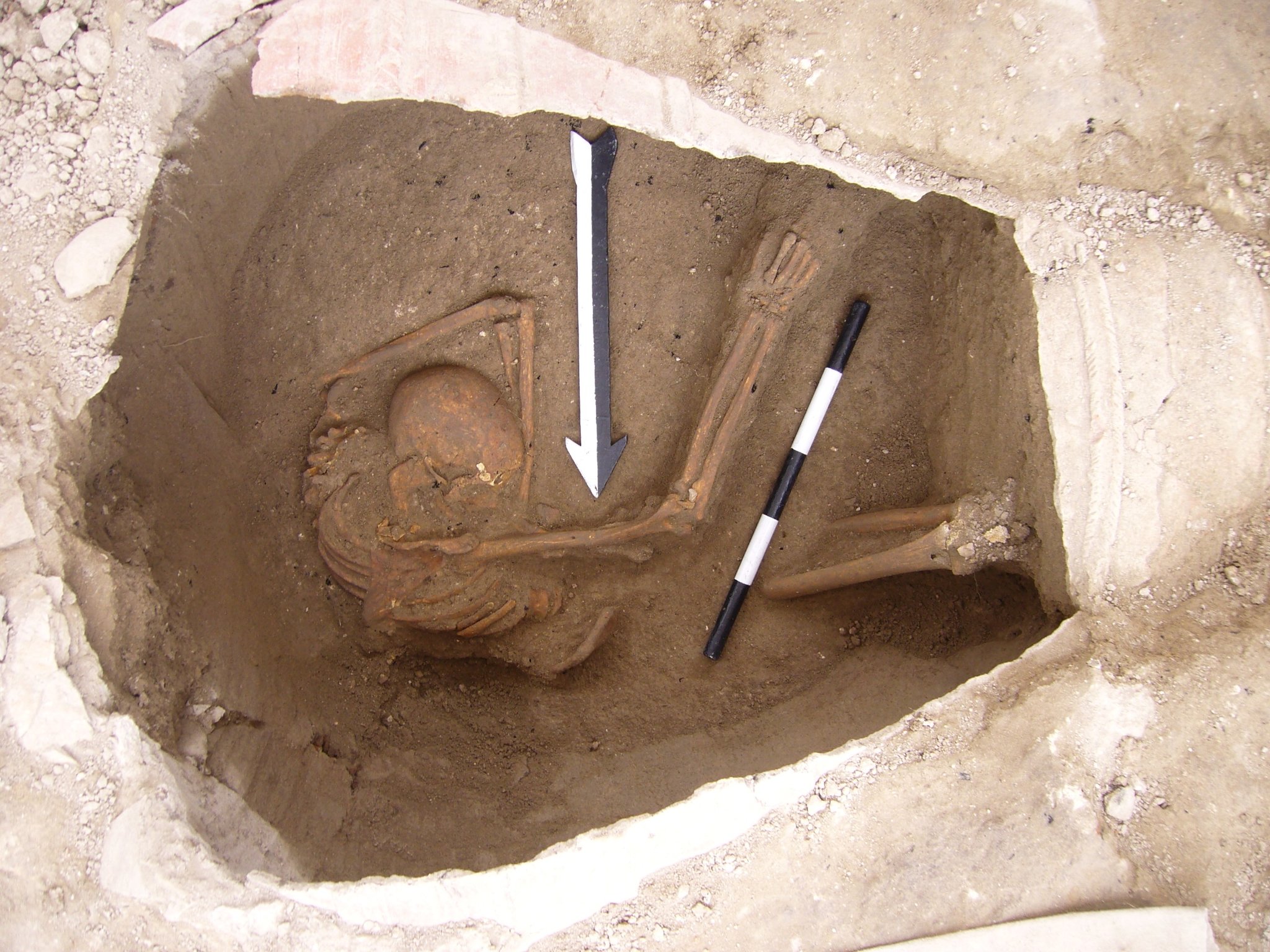
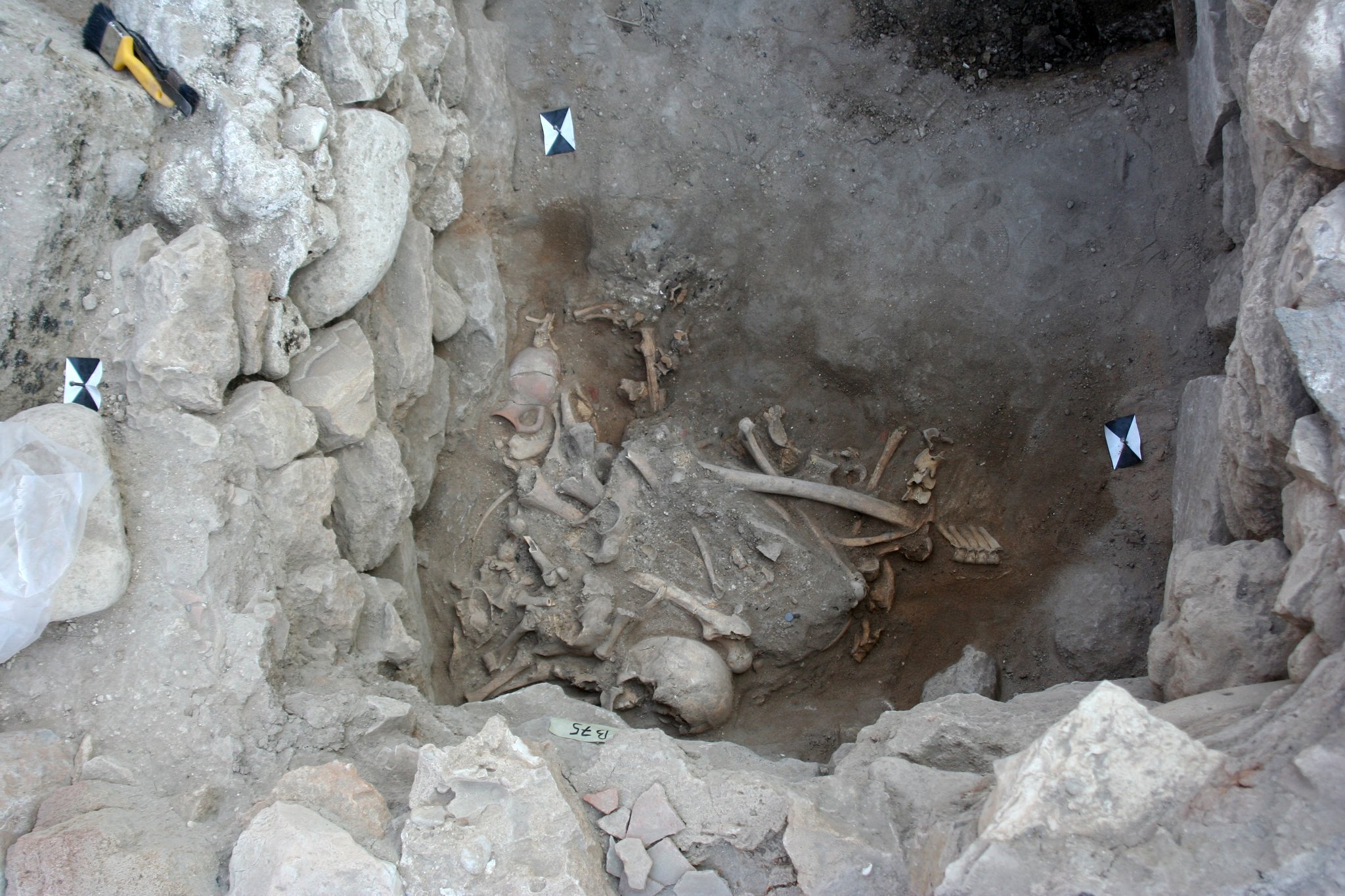
Dr. Tyler-Smith and an international team of geneticists and archaeologists recovered ancient DNA from bones belonging to five Canaanites retrieved from an excavation site in Sidon, Lebanon, that were 3,650 to 3,750 years old. The team then compared the ancient DNA with the genomes of 99 living people from Lebanon that the group had sequenced. It found that the modern Lebanese people shared about 93 percent of their ancestry with the Bronze Age Sidon samples.

The team published its results in The American Journal of Human Genetics.

“The conclusion is clear,” said Iosif Lazaridis, a geneticist at Harvard who was not involved in the study. “Based on this study it turns out that people who lived in Lebanon almost 4,000 years ago were quite similar to people who lived there today, to the modern Lebanese.”

Marc Haber, a postdoctoral fellow at the Wellcome Trust Sanger Institute in England and lead author on the study, said that compared with other Bronze Age civilizations, not much is known about the Canaanites.

“We know about ancient Egyptians and ancient Greeks, but we know very little about the ancient Canaanites because their records didn’t survive,” he said. Their writings may have been kept on papyrus, which did not stand the test of time as clay did. What is known about the Canaanites is that they lived and traded along the eastern coast of the present-day Mediterranean, a region that was known as the Levant.

“What we see is that since the Bronze Age, this ancestry, or the genetics of the people there, didn’t change much,” Dr. Haber said. “It changed a little, but it didn’t change much and that is what surprised me.”

At first the team was not sure if it would be able to retrieve DNA from the ancient skeletons, which were recovered from the hot and humid excavation site within the last 19 years. Dr. Haber had chosen more than two dozen bones from the site that looked promising and had them investigated for genetic material. It turned out that only five contained ancient DNA. All of those came from the petrous part of the temporal bone, which is the tough part of the skull behind the ear, from five different individuals.

After extracting that DNA, the team members compared it with a database that contained genetic information from hundreds of human populations. They then further compared their results with the genomes of the modern-day Lebanese population sample, which revealed what happened to the ancient Canaanite population.

“Genetics has the power to answer questions that historical records or archaeology are not able to answer,” Dr. Haber said.

He said researchers thought that migrations, conquests and the intermixing of Eurasian people — like the Assyrians, Persians or Macedonians — with the Canaanites 3,800 to 2,200 years ago might have contributed to the slight genetic changes seen in modern Lebanese populations. Still, the Lebanese retain most of their ancestral DNA from the Canaanites.

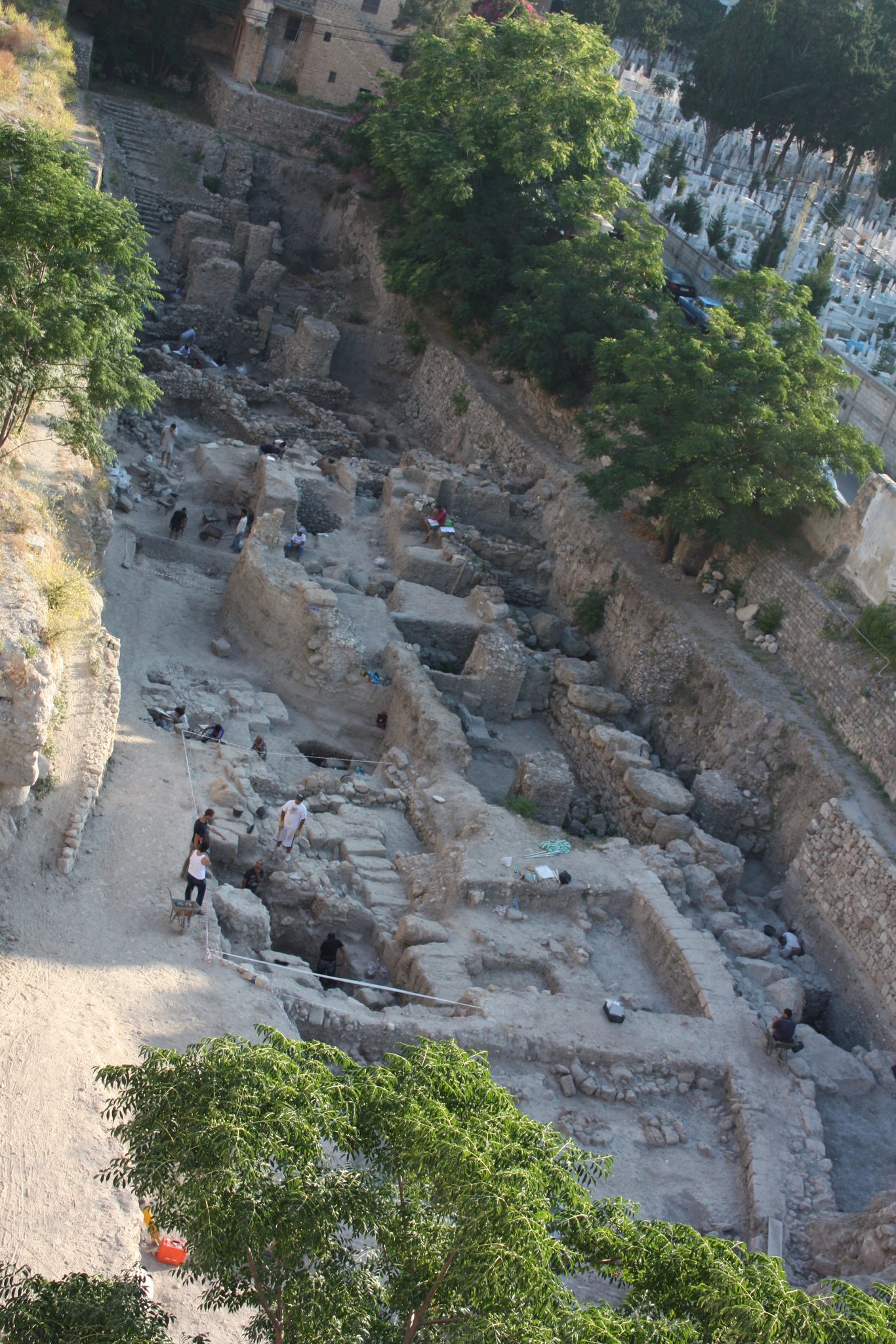
“It confirms the continuity of occupation and rooted tradition we have seen on-site, which was occupied from the 4th millennium B.C. right to the Crusader period,” Claude Doumet-Serhal, an archaeologist and director of the Sidon Excavation who is a co-author on the paper, said in an email.

She said that the archaeologists had found about 160 burials to date at their excavation site, which is in the heart of modern Sidon. They include graves and burials where a person was placed in a large jar, and they date to between 1900 and 1550 B.C. The genetic results further support the archaeological findings.

“We were delighted by the findings,” Dr. Doumet-Serhal said. “We are looking at the Canaanite society through 160 burials and at the same time uncovering a common past for all the people of Lebanon, whatever religion they belong to.”