

Salmon Hats: A Bizarre Behavior Resurfaces in Orcas

By Sascha Pare

Orcas off the coast of Washington State are balancing dead fish on their heads like it’s the 1980s, but researchers still aren’t sure why they do it.

Northwest Pacific orcas have started wearing salmon hats again, bringing back a bizarre trend first described in the 1980s, researchers say.

Last month, scientists and whale watchers spotted orcas (Orcinus orca) in South Puget Sound and off Point No Point in Washington State swimming with dead fish on their heads.

This is the first time they’ve donned the bizarre headgear since the summer of 1987, when a trendsetting female West Coast orca kickstarted the behavior for no apparent reason. Within a couple of weeks, the rest of the pod had jumped on the bandwagon and turned salmon corpses into must-have fashion accessories, according to the marine conservation charity ORCA — but it’s unclear whether the same will happen this time around.

Researchers think the orcas sporting salmon hats now may be veterans of the trend when it first appeared nearly 40 years ago. “It does seem possible that some individuals that experienced [the behavior] the first time around may have started it again,” Andrew Foote, an evolutionary ecologist at the University of Oslo in Norway, told New Scientist.

The motivation for the salmon hat trend remains a mystery. “Honestly, your guess is as good as mine,” Deborah Giles, an orca researcher at the University of Washington who also heads the science and research teams at the non-profit Wild Orca, told New Scientist.

Salmon hats are a perfect example of what researchers call a “fad” — a behavior initiated by one or two individuals and temporarily picked up by others before it’s abandoned. Back in the 1980s, the trend only lasted a year; by the summer of 1988, dead fish were totally passé and salmon hats disappeared from the West Coast orca population.

Orca researchers’ best guess is that salmon hat fads are linked to high food availability. South Puget Sound is currently teeming with chum salmon (Oncorhynchus keta), and with too much food to eat on the spot, orcas may be saving fish for later by balancing them on their heads, New Scientist reported.

Orcas have been spotted stashing food away in other places, too. “We’ve seen mammal-eating killer whales carry large chunks of food under their pectoral fin, kind of tucked in next to their body,” Giles said. Salmon is probably too small to fit securely under orcas’ pectoral fins, so the marine mammals may have opted for the top of their heads instead.

Camera-equipped drones could help researchers monitor salmon hat-wearing orcas in a way that was not possible 37 years ago. “Over time, we may be able to gather enough information to show that, for instance, one carried a fish for 30 minutes or so, and then he ate it,” Giles said.

But the food availability theory could be wrong — if the footage reveals that orcas abandon the salmon without eating them, researchers will be sent back to the drawing board.

Whatever the reason for the behavior, Giles said it’s been fun to watch it come back in style. “It’s been a while since I’ve personally seen it,” she said.
Dogs Can Smell Your Stress and Make Choices Based on It

By:

Ernie Mundell

Ernie Mundell

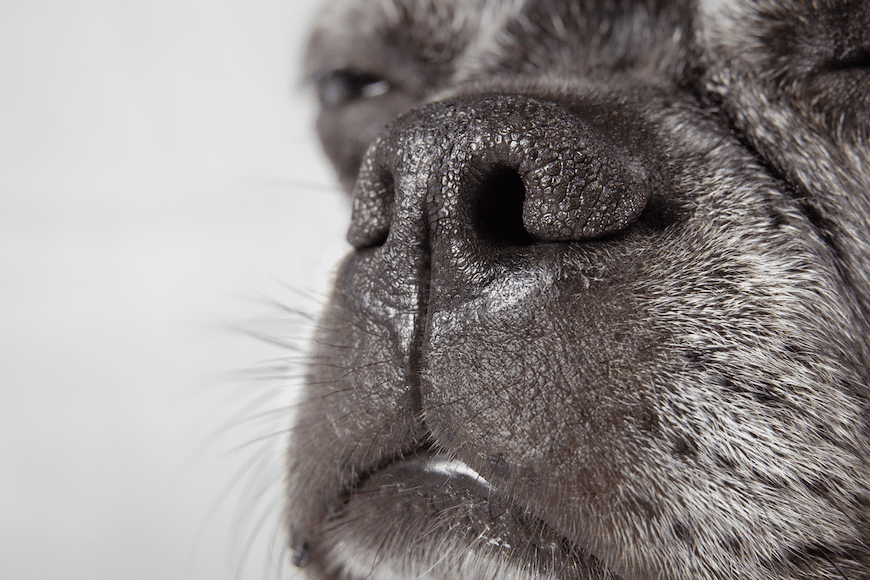
MONDAY, July 22, 2024 (HealthDay News) — Dogs can sniff out whether a human is stressed or relaxed, new research suggests, and that sensory feedback appears to influence canine emotions and choices.

The dog doesn’t even have to know the human well to interpret odor in this way, the British researchers noted.

“Dog owners know how attuned their pets are to their emotions, but here we show that even the odor of a stressed, unfamiliar human affects a dog’s emotional state, perception of rewards and ability to learn,” said study author Dr. Nicola Rooney. She’s a senior lecturer in wildlife and conservation at Bristol Veterinary School in Bristol, England.

“Working dog handlers often describe stress traveling down the lead, but we’ve also shown it can also travel through the air,” she said in a university news release.

Her team published its findings July 22 in the journal Scientific Reports.

As the Bristol team noted, research has long pointed to scent as an important but perhaps under-appreciated form of emotional communication between people.

Rooney’s group wondered if dogs, with olfactory senses that are so much more sophisticated than humans, might catch human emotions through smell, as well, and act accordingly.

They constructed an elaborate experiment to find out. First, they trained dogs in a simple task: If a bowl was placed in one location, it invariably contained food. But if it was placed in a separate location, no food was present.

For obvious reasons, the dogs soon became more eager to trot over to bowls in the “have” spot than the “have not” location.

But what if the bowl was placed between these locations?

If the pooch ambled quickly over to this ambiguous, mid-range bowl, the researchers considered that the dog was in an “optimistic” frame of mind (“maybe there’s food in that bowl!”).

If the dog was more hesitant about heading towards the bowl, that reflected a more “pessimistic” attitude (“The bowl’s in the wrong spot, probably no food there”).

Next, the 18 dogs recruited for the experiment were exposed to sweat and breath samples from humans who’d been in either a stressed or relaxed state of mind (a math test versus listening to soothing music).

When dogs smelled the “stressed” human odors, they were visibly less eager to head towards the ambiguously placed bowl, suggesting an emotional downturn towards pessimism, the researchers said.

“This ‘pessimistic’ response reflects a negative emotional state and could possibly be a way for the dog to conserve energy and avoid disappointment,” the researchers reasoned.

However, this “downer” effect was not seen when the dogs were exposed to a “relaxed” odor sample from a human.

According to Rooney, the new findings have real-world applications.

“Understanding how human stress affects dogs’ well-being is an important consideration for dogs in kennels and when training companion dogs and dogs for working roles such as assistance dogs,” she said.

https://www.healthday.com/health-news/pets/dogs-can-smell-your-stress-and-make-choices-based-on-it