AI Can Now Predict Suicide with Remarkable Accuracy

When someone commits suicide, their family and friends can be left with the heartbreaking and answerless question of what they could have done differently. Colin Walsh, data scientist at Vanderbilt University Medical Center, hopes his work in predicting suicide risk will give people the opportunity to ask “what can I do?” while there’s still a chance to intervene.

Walsh and his colleagues have created machine-learning algorithms that predict, with unnerving accuracy, the likelihood that a patient will attempt suicide. In trials, results have been 80-90% accurate when predicting whether someone will attempt suicide within the next two years, and 92% accurate in predicting whether someone will attempt suicide within the next week.

The prediction is based on data that’s widely available from all hospital admissions, including age, gender, zip codes, medications, and prior diagnoses. Walsh and his team gathered data on 5,167 patients from Vanderbilt University Medical Center that had been admitted with signs of self-harm or suicidal ideation. They read each of these cases to identify the 3,250 instances of suicide attempts.

This set of more than 5,000 cases was used to train the machine to identify those at risk of attempted suicide compared to those who committed self-harm but showed no evidence of suicidal intent. The researchers also built algorithms to predict attempted suicide among a group 12,695 randomly selected patients with no documented history of suicide attempts. It proved even more accurate at making suicide risk predictions within this large general population of patients admitted to the hospital.

Walsh’s paper, published in Clinical Psychological Science in April, is just the first stage of the work. He’s now working to establish whether his algorithm is effective with a completely different data set from another hospital. And, once confidant that the model is sound, Walsh hopes to work with a larger team to establish a suitable method of intervening. He expects to have an intervention program in testing within the next two years. “I’d like to think it’ll be fairly quick, but fairly quick in health care tends to be in the order of months,” he adds.

Suicide is such an intensely personal act that it seems, from a human perspective, impossible to make such accurate predictions based on a crude set of data. Walsh says it’s natural for clinicians to ask how the predictions are made, but the algorithms are so complex that it’s impossible to pull out single risk factors. “It’s a combination of risk factors that gets us the answers,” he says.

That said, Walsh and his team were surprised to note that taking melatonin seemed to be a significant factor in calculating the risk. “I don’t think melatonin is causing people to have suicidal thinking. There’s no physiology that gets us there. But one thing that’s been really important to suicide risk is sleep disorders,” says Walsh. It’s possible that prescriptions for melatonin capture the risk of sleep disorders—though that’s currently a hypothesis that’s yet to be proved.

The research raises broader ethical questions about the role of computers in health care and how truly personal information could be used. “There’s always the risk of unintended consequences,” says Walsh. “We mean well and build a system to help people, but sometimes problems can result down the line.”

Researchers will also have to decide how much computer-based decisions will determine patient care. As a practicing primary care doctor, Walsh says it’s unnerving to recognize that he could effectively follow orders from a machine. “Is there a problem with the fact that I might get a prediction of high risk when that’s not part of my clinical picture?” he says. “Are you changing the way I have to deliver care because of something a computer’s telling me to do?”

For now, the machine-learning algorithms are based on data from hospital admissions. But Walsh recognizes that many people at risk of suicide do not spend time in hospital beforehand. “So much of our lives is spent outside of the health care setting. If we only rely on data that’s present in the health care setting to do this work, then we’re only going to get part of the way there,” he says.

And where else could researchers get data? The internet is one promising option. We spend so much time on Facebook and Twitter, says Walsh, that there may well be social media data that could be used to predict suicide risk. “But we need to do the work to show that’s actually true.”

Facebook announced earlier this year that it was using its own artificial intelligence to review posts for signs of self-harm. And the results are reportedly already more accurate than the reports Facebook gets from people flagged by their friends as at-risk.

Training machines to identify warning signs of suicide is far from straightforward. And, for predictions and interventions to be done successfully, Walsh believes it’s essential to destigmatize suicide. “We’re never going to help people if we’re not comfortable talking about it,” he says.

But, with suicide leading to 800,000 deaths worldwide every year, this is a public health issue that cannot be ignored. Given that most humans, including doctors, are pretty terrible at identifying suicide risk, machine learning could provide an important solution.
https://www.doximity.com/doc_news/v2/entries/8004313

How to Save Your Digital Soul


With a selfie and some audio, a startup called Oben says, it can make you an avatar that can say—or sing—anything.

by Rachel Metz

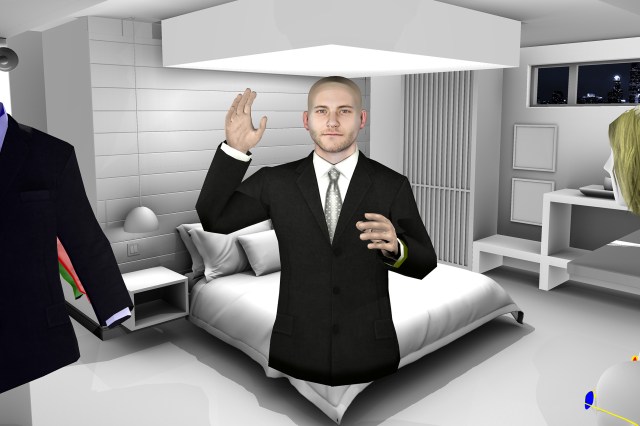
I’ve met Nikhil Jain in the flesh, and now, on the laptop screen in front of me, I’m looking at a small animated version of him from the torso up, talking in the same tone and lilting accented English—only this version of Jain is bald (hair is tricky to animate convincingly), and his voice has a robotic sound.

For the past three years, Jain has been working on Oben, the startup he cofounded and leads. It’s building technology that uses a single image and an audio clip to automate the construction of what are sort of like digital souls: avatars that look and sound a lot like anyone, and can be made to speak or sing anything.

Of course it won’t really be you—or Beyoncé, or Michael Jackson, or whomever an Oben avatar depicts—but it could be a decent, potentially fun approximation that’s useful for all kinds of things. Maybe, like Jain, you want a virtual you to read stories to your kids when you can’t be there in person. Perhaps you’re a celebrity who wants to let fans do duets with your avatar on a mobile or virtual-reality app, or the estate of a dead celebrity who wants to continue to keep that person “alive” with avatar-based performances. The opportunities are endless—and, perhaps, endlessly eerie.

Oben, based in Pasadena, California, has raised about $9 million so far. The company is planning to release an app late this year that lets people make their own personal avatar and share video clips of it with friends.

Oben is also working with some as-yet-unnamed bands in Asia to make mobile-based avatars that will be able to sing duets with fans, and last month it announced it will launch a virtual-reality-enabled version of its avatar technology with the massively popular social app WeChat, for the HTC Vive headset.

For now, producing the kind of avatar Jain showed me still takes a lot of time, and it doesn’t even include the body below the waist (Jain says the company is experimenting with animating other body parts, but mainly it’s “focusing on other things”). While the avatar can be made with just one photo and two to 20 minutes of reading from a phoneme-rich script (the more, the better), a good avatar still takes Oben’s deep-learning system about eight hours to create. This includes cleaning up the recorded audio, creating a voice print for the person that reflects qualities such as accent and timbre, and making the 3-D visual model (facial movements are predicted from the selfie and voice print, Jain says). While speaking sounds pretty good, the singing clips I heard sounded very Auto-Tuned.

The avatars in the forthcoming app will be less focused on perfection but much faster to build, he says. Oben is also trying to figure out how to match speech and facial expressions so that the avatars can speak any language in a natural-looking way; for now, they’re limited to English and Chinese.

If digital copies like Oben’s are any good, they will raise questions about what should happen to your digital self over time. If you die, should an existing avatar be retained? Is it disturbing if others use digital breadcrumbs you left behind to, in a sense, re-create your digital self?

Jain isn’t sure what the right answer is, though he agrees that, like other companies that deal with user data, Oben does have to address death. And beyond big questions, there are potentially big business opportunities in that issue. The company’s business model is likely to be, in part, predicated on it: he says Oben has been approached by the estates of numerous celebrities, some of them long dead, some recently deceased.

https://www.technologyreview.com/s/607885/how-to-save-your-digital-soul/

First-Ever LSD Microdosing Study Will Pit the Human Brain Against AI

by Daniel Oberhaus

Amanda Feilding used to take lysergic acid diethylamide every day to boost creativity and productivity at work before LSD, known as acid, was made illegal in 1968. During her downtime, Feilding, who now runs the Beckley Foundation for psychedelic research, would get together with her friends to play the ancient Chinese game of Go, and came to notice something curious about her winning streaks.

“I found that if I was on LSD and my opponent wasn’t, I won more games,” Feilding told me over Skype. “For me that was a very clear indication that it improves cognitive function, particularly a kind of intuitive pattern recognition.”

An interesting observation to be sure. But was LSD actually helping Feilding in creative problem solving?

A half-century ban on psychedelic research has made answering this question in a scientific manner impossible. In recent years, however, psychedelic research has been experiencing something of a “renaissance” and now Feilding wants to put her intuition to the test by running a study in which participants will “microdose” while playing Go—a strategy game that is like chess on steroids—against an artificial intelligence.

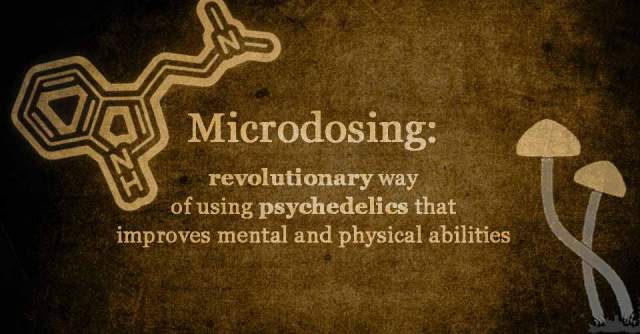
Microdosing LSD is one of the hallmarks of the so-called “Psychedelic Renaissance.” It’s a regimen that involves regularly taking doses of acid that are so low they don’t impart any of the drug’s psychedelic effects. Microdosers claim the practice results in heightened creativity, lowered depression, and even relief from chronic somatic pain.

But so far, all evidence in favor of microdosing LSD has been based on self-reports, raising the possibility that these reported positive effects could all be placebo. So the microdosing community is going to have to do some science to settle the debate. That means clinical trials with quantifiable results like the one proposed by Feilding.

As the first scientific trial to investigate the effects of microdosing, Feilding’s study will consist of 20 participants who will be given low doses—10, 20 and 50 micrograms of LSD—or a placebo on four different occasions. After taking the acid, the brains of these subjects will be imaged using MRI and MEG while they engage in a variety of cognitive tasks, such as the neuropsychology staples the Wisconsin Card Sorting test and the Tower of London test. Importantly, the participants will also be playing Go against an AI, which will assess the players’ performance during the match.

By imaging the brain while it’s under the influence of small amounts of LSD, Feilding hopes to learn how the substance changes connectivity in the brain to enhance creativity and problem solving. If the study goes forward, this will only be the second time that subjects on LSD have had their brain imaged while tripping. (That 2016 study at Imperial College London was also funded by the Beckley Foundation, which found that there was a significant uptick in neural activity in areas of the brain associated with vision during acid trips.)

Before Feilding can go ahead with her planned research, a number of obstacles remain in her way, starting with funding. She estimates she’ll need to raise about $350,000 to fund the study.

“It’s frightening how expensive this kind of research is,” Feilding said. “I’m very keen on trying to alter how drug policy categorizes these compounds because the research is much more costly simply because LSD is a controlled substance.”

To tackle this problem, Feilding has partnered with Rodrigo Niño, a New York entrepreneur who recently launched Fundamental, a platform for donations to support psychedelic research at institutions like the Beckley Foundation, Johns Hopkins University, and New York University.

The study is using smaller doses of LSD than Feilding’s previous LSD study, so she says she doesn’t anticipate problems getting ethical clearance to pursue this. A far more difficult challenge will be procuring the acid to use in her research. In 2016, she was able to use LSD that had been synthesized for research purposes by a government certified lab, but she suspects that this stash has long since been used up.

But if there’s anyone who can make the impossible possible, it would be Feilding, a psychedelic science pioneer known as much for drilling a hole in her own head (https://www.vice.com/en_us/article/drilling-a-hole-in-your-head-for-a-higher-state-of-consciousness) to explore consciousness as for the dozens of peer-reviewed scientific studies on psychedelic use she has authored in her lifetime. And according to Feilding, the potential benefits of microdosing are too great to be ignored and may even come to replace selective serotonin reuptake inhibitors, or SSRIs as a common antidepressant.

“I think the microdose is a very delicate and sensitive way of treating people,” said Feilding. “We need to continue to research it and make it available to people.”

https://motherboard.vice.com/en_us/article/first-ever-lsd-microdosing-study-will-pit-the-human-brain-against-ai

Artificial intelligence replaces physicists


Physicists are putting themselves out of a job, using artificial intelligence to run a complex experiment. The experiment created an extremely cold gas trapped in a laser beam, known as a Bose-Einstein condensate, replicating the experiment that won the 2001 Nobel Prize.

Physicists are putting themselves out of a job, using artificial intelligence to run a complex experiment.

The experiment, developed by physicists from The Australian National University (ANU) and UNSW ADFA, created an extremely cold gas trapped in a laser beam, known as a Bose-Einstein condensate, replicating the experiment that won the 2001 Nobel Prize.

“I didn’t expect the machine could learn to do the experiment itself, from scratch, in under an hour,” said co-lead researcher Paul Wigley from the ANU Research School of Physics and Engineering.

“A simple computer program would have taken longer than the age of the Universe to run through all the combinations and work this out.”

Bose-Einstein condensates are some of the coldest places in the Universe, far colder than outer space, typically less than a billionth of a degree above absolute zero.

They could be used for mineral exploration or navigation systems as they are extremely sensitive to external disturbances, which allows them to make very precise measurements such as tiny changes in the Earth’s magnetic field or gravity.

The artificial intelligence system’s ability to set itself up quickly every morning and compensate for any overnight fluctuations would make this fragile technology much more useful for field measurements, said co-lead researcher Dr Michael Hush from UNSW ADFA.

“You could make a working device to measure gravity that you could take in the back of a car, and the artificial intelligence would recalibrate and fix itself no matter what,” he said.

“It’s cheaper than taking a physicist everywhere with you.”

The team cooled the gas to around 1 microkelvin, and then handed control of the three laser beams over to the artificial intelligence to cool the trapped gas down to nanokelvin.

Researchers were surprised by the methods the system came up with to ramp down the power of the lasers.

“It did things a person wouldn’t guess, such as changing one laser’s power up and down, and compensating with another,” said Mr Wigley.

“It may be able to come up with complicated ways humans haven’t thought of to get experiments colder and make measurements more precise.

The new technique will lead to bigger and better experiments, said Dr Hush.

“Next we plan to employ the artificial intelligence to build an even larger Bose-Einstein condensate faster than we’ve seen ever before,” he said.

The research is published in the Nature group journal Scientific Reports.

https://www.sciencedaily.com/releases/2016/05/160516091544.htm

Elon Musk says we’re all cyborgs almost certainly living within a computer simulation

Elon Musk has said that there is only a “one in billions” chance that we’re not living in a computer simulation.

Our lives are almost certainly being conducted within an artificial world powered by AI and highly-powered computers, like in The Matrix, the Tesla and SpaceX CEO suggested at a tech conference in California.

Mr Musk, who has donated huge amounts of money to research into the dangers of artificial intelligence, said that he hopes his prediction is true because otherwise it means the world will end.

“The strongest argument for us probably being in a simulation I think is the following,” he told the Code Conference. “40 years ago we had Pong – two rectangles and a dot. That’s where we were.

“Now 40 years later we have photorealistic, 3D simulations with millions of people playing simultaneously and it’s getting better every year. And soon we’ll have virtual reality, we’ll have augmented reality.

“If you assume any rate of improvement at all, then the games will become indistinguishable from reality, just indistinguishable.”

He said that even if the speed of those advancements dropped by 1000, we would still be moving forward at an intense speed relative to the age of life.

Since that would lead to games that would be indistinguishable from reality that could be played anywhere, “it would seem to follow that the odds that we’re in ‘base reality’ is one in billions”, Mr Musk said.

Asked whether he was saying that the answer to the question of whether we are in a simulated computer game was “yes”, he said the answer is “probably”.

He said that arguably we should hope that it’s true that we live in a simulation. “Otherwise, if civilisation stops advancing, then that may be due to some calamitous event that stops civilisation.”

He said that either we will make simulations that we can’t tell apart from the real world, “or civilisation will cease to exist”.

Mr Musk said that he has had “so many simulation discussions it’s crazy”, and that it got to the point where “every conversation [he had] was the AI/simulation conversation”.

The question of whether what we see is real or simulated has perplexed humans since at least the Ancient philosophers. But it has been given a new and different edge in recent years with the development of powerful computers and artificial intelligence, which some have argued shows how easily such a simulation could be created.

http://www.independent.co.uk/life-style/gadgets-and-tech/news/elon-musk-ai-artificial-intelligence-computer-simulation-gaming-virtual-reality-a7060941.html