Lie-detecting computer kiosks equipped with artificial intelligence


Aaron Elkins, a professor at the San Diego State University, is working on a kiosk system that can ask travelers questions at an airport or border crossings and capture behaviors to detect if someone is lying.

International travelers could find themselves in the near future talking to a lie-detecting kiosk when they’re going through customs at an airport or border crossing.

The same technology could be used to provide initial screening of refugees and asylum seekers at busy border crossings.

The U.S. Department of Homeland Security funded research of the virtual border agent technology known as the Automated Virtual Agent for Truth Assessments in Real-Time, or AVATAR, about six years ago and allowed it to be tested it at the U.S.-Mexico border on travelers who volunteered to participate. Since then, Canada and the European Union tested the robot-like kiosk that uses a virtual agent to ask travelers a series of questions.

Last month, a caravan of migrants from Central America made it to the U.S.-Mexico border, where they sought asylum but were delayed several days because the port of entry near San Diego had reached full capacity. It’s possible that a system such as AVATAR could provide initial screening of asylum seekers and others to help U.S. agents at busy border crossings such as San Diego’s San Ysidro.

“The technology has much broader applications potentially,” despite most of the funding for the original work coming primarily from the Defense or Homeland Security departments a decade ago, according to Aaron Elkins, one of the developers of the system and an assistant professor at the San Diego State University director of its Artificial Intelligence Lab. He added that AVATAR is not a commercial product yet but could be also used in human resources for screening.

The U.S.-Mexico border trials with the advanced kiosk took place in Nogales, Arizona, and focused on low-risk travelers. The research team behind the system issued a report after the 2011-12 trials that stated the AVATAR technology had potential uses for processing applications for citizenship, asylum and refugee status and to reduce backlogs.

High levels of accuracy
President Donald Trump’s fiscal 2019 budget request for Homeland Security includes $223 million for “high-priority infrastructure, border security technology improvements,” as well as another $210.5 million for hiring new border agents. Last year, federal workers interviewed or screened more than 46,000 refugee applicants and processed nearly 80,000 “credible fear cases.”

The AVATAR combines artificial intelligence with various sensors and biometrics that seeks to flag individuals who are untruthful or a potential risk based on eye movements or changes in voice, posture and facial gestures.

“We’re always consistently above human accuracy,” said Elkins, who worked on the technology with a team of researchers that included the University of Arizona.

According to Elkins, the AVATAR as a deception-detection judge has a success rate of 60 to 75 percent and sometimes up to 80 percent.

“Generally, the accuracy of humans as judges is about 54 to 60 percent at the most,” he said. “And that’s at our best days. We’re not consistent.”

The human element
Regardless, Homeland Security appears to be sticking with human agents for the moment and not embracing virtual technology that the EU and Canadian border agencies are still researching. Another advanced border technology, known as iBorderCtrl, is a EU-funded project that aims to increase speed but also reduce “the workload and subjective errors caused by human agents.”

A Homeland Security official, who declined to be named, told CNBC the concept for the AVATAR system “was envisioned by researchers to assist human screeners by flagging people exhibiting suspicious or anomalous behavior.”

“As the research effort matured, the system was evaluated and tested by the DHS Science and Technology Directorate and DHS operational components in 2012,” the official added. “Although the concept was appealing at the time, the research did not mature enough for further consideration or further development.”

Another DHS official familiar with the technology didn’t work at a high enough rate of speed to be practical. “We have to screen people within seconds, and we can’t take minutes to do it,” said the official.

Elkins, meanwhile, said the funding for the AVATAR system hasn’t come from Homeland Security in recent years “because they sort of felt that this is in a different category now and needs to transition.”

The technology, which relies on advanced statistics and machine learning, was tested a year and a half ago with the Canadian Border Services Agency, or CBSA, to help agents determine whether a traveler has ulterior motives entering the country and should be questioned further or denied entry.

A report from the CBSA on the AVATAR technology is said to be imminent, but it’s unclear whether the agency will proceed the technology beyond the testing phase.

“The CBSA has been following developments in AVATAR technology since 2011 and is continuing to monitor developments in this field,” said Barre Campbell, a senior spokesman for the Canadian agency. He said the work carried out in March 2016 was “an internal-only experiment of AVATAR” and that “analysis for this technology is ongoing.”

Prior to that, the EU border agency known as Frontex helped coordinate and sponsor a field test of the AVATAR system in 2014 at the international arrivals section of an airport in Bucharest, Romania.

People and machines working together
Once the system detects deception, it alerts the human agents to do follow-up interviews.

AVATAR doesn’t use your standard polygraph instrument. Instead, people face a kiosk screen and talk to a virtual agent or kiosk fitted with various sensors and biometrics that seeks to flag individuals who are untruthful or signal a potential risk based on eye movements or changes in voice, posture and facial gestures.

“Artificial intelligence has allowed us to use sensors that are noncontact that we can then process the signal in really advanced ways,” Elkins said. “We’re able to teach computers to learn from some data and actually act intelligently. The science is very mature over the last five or six years.”

But the researcher insists the AVATAR technology wasn’t developed as a replacement for people.

“We wanted to let people focus on what they do best,” he said. “Let the systems do what they do best and kind of try to merge them into the process.”

Still, future advancement in artificial intelligence systems may allow the technology to someday supplant various human jobs because the robot-like machines may be seen as more productive and cost effective particularly in screening people.

Elkins believes the AVATAR could potentially get used one day at security checkpoints at airports “to make the screening process faster but also to improve the accuracy.”

“It’s just a matter of finding the right implementation of where it will be and how it will be used,” he said. “There’s also a process that would need to occur because you can’t just drop the AVATAR into an airport as it exists now because all that would be using an extra step.”

https://www.cnbc.com/2018/05/15/lie-detectors-with-artificial-intelligence-are-future-of-border-security.html

Thanks to Kebmodee for bringing this to the It’s Interesting community.

“Dirty jokes” found in Anne Frank’s diary

There was more to Anne Frank’s diary than we once thought. Two pages, which were previously covered in a brown masking paper, have been revealed by researchers at Dutch museums. The pages contained “four risque jokes and candid explanations of sex, contraception and prostitution” written by the Jewish teen, according to The Guardian.

The Anne Frank Museum, the Institute for War, Holocaust and Genocide Studies and the Huygens Institute for the History of the Netherlands used digital technology to show the writing on the pages.

They photographed the pages, backlit by a flash, and then used image-processing software to decipher the words, which were hard read because they were jumbled up with the writing on the reverse sides of the pages.
In the passage on sex, Anne described how a young woman gets her period around 14, saying that it is “a sign that she is ripe to have relations with a man but one doesn’t do that of course before one is married”.

On prostitution, she wrote: “All men, if they are normal, go with women, women like that accost them on the street and then they go together. In Paris they have big houses for that. Papa has been there.”

Anne wrote her diary while she and her family hid for more than two years. The family was provided with food and other essentials by a close-knit group of helpers, until 4 August 1944 when they were discovered and ultimately deported to Auschwitz.

Only Anne’s father, Otto Frank, survived the war. Anne and her sister died in Bergen-Belsen camp. Anne was 15.

Frank van Vree, the director of the Netherlands Institute for War, Holocaust and Genocide Studies, says, “The dirty jokes are classics among growing children. They make it clear that Anne, with all her gifts, was above all also an ordinary girl.”

“Dirty jokes” found in Anne Frank’s diary

A new species of self-cloning tick is now thriving in the U.S.

by MICHAEL D’ESTRIES

Much to the chagrin of everyone who loves the great outdoors, a new species of exotic tick has officially set up residence in the United States.

The New Jersey Department of Agriculture announced last week that the longhorned tick, a species native to China, Japan and Australia has successfully survived the New Jersey winter and may be spreading throughout the state.

The tick was first discovered in the U.S. last August after a N.J. farmer walked into a county health office covered in ticks. She reported that she had been shearing the single sheep on her property when she noticed multitudes of the four-legged blood suckers crawling up her arms. A closer inspection by health officials revealed something even more frightening: nearly 1,000 ticks moving throughout her clothing.

“What she didn’t know was her entire clothing, pants and everything, they were covered in ticks,” Tadhgh Rainey, division manager of Hunterdon County Division of Health Services, told NPR.

More unusual than this sight, however, was that officials couldn’t identify the species of tick clinging to her clothes. A team of experts later determined it to be Haemaphysalis longicornis, never before seen in the U.S., and plaguing livestock that had never ventured outside the country.

A grim discovery

A description of the team’s visit to the tick-plagued farm sounds like something straight out of a horror movie.

“Investigation of the Hunterdon property in early October revealed a large number of ticks both on the sheep and throughout the paddock,” the scientists shared in a new study published in the Journal of Medical Entomology. “The ticks in the paddock were so numerous that they crawled on investigators’ pants soon after setting foot inside. The sheep was supporting hundreds of ticks, including all three active life stages (larva, nymph, adult). Although ticks were concentrated on the sheep’s ears and face, engorged ticks of all stages were readily found all over its body, including areas beneath the animal’s thick coat.”

Following a chemical treatment in September, the sheep was later declared tick-free. Visits by officials in late November found no ticks in either the paddocks or the surrounding grounds. While scientists were hopeful that the state’s cold winter temperatures might kill off any remaining populations, the longhorned tick has one evolutionary advantage that gave them pause.

“This tick overwinters in the ground,” Rainey told NJ.com. “No tick does that.”

Sure enough, when entomologists visited the site again this spring, they were disappointed to discover that the longhorned tick had successfully overwintered. They added that, based on this evidence, the new species has quite possibly “become established in the state.”

Divide and conquer

Besides its ability to burrow underground to avoid death from freezing temperatures, the longhorned also has some other characteristics that put a frightening spin on this discovery. For one thing, the tick reproduces asexually, rapidly increasing in population by cloning itself and laying thousands of eggs. The nymphs and adults also tend to “swarm” their prey, with recorded observations of hundreds of ticks hanging from their hosts like “bunches of grapes.”

“Only one tick is needed to start a population, and they can grow to high numbers quickly,” Andrea M. Egizi, Ph.D., research scientist at the Tick-Borne Disease Laboratory at Rutgers University and senior author on the report, told Entomology Today. “They are not limited by the need to find mates, which can be difficult in a small population.”

While the longhorned ticks tested at the New Jersey sheep farm came back negative for known tick-borne disease, such as Lyme disease or borreliosis, it may be only a matter of time before they become carriers. The tick is already a known transmitter of diseases in its native ranges.

If there’s any good news to come out of this discovery, it’s that the ticks apparently don’t have a taste for human, preferring instead to swarm livestock and wildlife. Unfortunately, this also makes it easier for them to spread. In late April, federal and state wildlife officials combing the area around the farm where the infestation was first discovered found a longhorned tick on a white-tailed deer, a foreboding sign for early containment efforts.

A call for vigilance

In an effort to track the extent of the tick’s spread, N.J. Department of Agriculture officials are asking people to report infestations of unusual ticks on pets or livestock. Figuring out whether or not they’re exotic or native species may be another challenge altogether.

“Like deer ticks, the nymphs of the longhorned tick are very small (resembling tiny spiders) and can easily go unnoticed on animals and people,” they said in a statement.

The group plans to continue surveillance of potentially impacted species throughout the rest of the year.

https://www.mnn.com/health/fitness-well-being/blogs/self-cloning-longhorn-tick-new-jersey

A drug originally developed for treating osteoporosis may also help fight baldness


Immunofluorescence of β-catenin protein (red) and cell nuclei (blue) in the human hair follicle bulb, the command center for maintaining hair growth.

A new drug could ease the distress of men and women who suffer from baldness, according to researchers from The University of Manchester’s Centre for Dermatology Research.

The study from the laboratory of Prof Ralf Paus, is published last week in the open access journal PLOS Biology

It shows that a drug originally designed as a treatment for osteoporosis has a dramatic stimulatory effect on human hair follicles donated by patients undergoing hair transplantation surgery.

Currently only two drugs – minoxidil and finasteride – are available for treatment of male-pattern balding (androgenetic alopecia).

However, both agents have moderate side effects and often produce disappointing hair regrowth results. The only other option available to patients is hair transplantation surgery.

The PhD project, led by Dr Nathan Hawkshaw and colleagues, sought to develop new ways to promote human hair growth with the hope of finding novel, well-tolerated agents for treating androgenetic alopecia.

The approach was to first identify the molecular mechanisms of an old immunosuppressive drug, Cyclosporine A (CsA).

Cyclosporine A has been commonly used since the 1980s as a crucial drug that suppresses transplant rejection and autoimmune diseases.

However, it often has severe side-effects, the least serious – but most interesting – of which is that it enhances cosmetically unwanted hair growth.

The team carried out a full gene expression analysis of isolated human scalp hair follicles treated with CsA. This revealed that CsA reduces the expression of SFRP1, a protein that inhibits the development and growth of many tissues, including hair follicles.

This identifies a completely novel mechanism of action of this old and widely used immunosuppressant.

The research also explanains why CsA so often induces undesired hair growth in patients as it removes an inbuilt and potent molecular brake on human hair growth.

The inhibitory mechanism is completely unrelated to CsA’s immunosuppressive activities, making SFRP1 a new and highly promising therapeutic target for anti-hair loss strategies.

After some detective work, Dr Hawkshaw found that a compound originally developed to treat osteoporosis, called WAY-316606, targets the same mechanism as CsA by specifically antagonising SFRP1.

When he then treated hair follicles with WAY-316606, the unrelated agent also effectively enhanced human hair growth like CsA.

The external application of WAY-316606 or similar compounds to balding human scalp, he argued, may promote hair growth to the same magnitude as CsA or even better, but without its side effects.

“The fact this new agent, which had never even been considered in a hair loss context, promotes human hair growth is exciting because of its translational potential: it could one day make a real difference to people who suffer from hair loss
Dr Nathan Hawkshaw

Dr Hawkshaw said: “Thanks to our collaboration with a local hair transplant surgeon, Dr Asim Shahmalak, we were able to conduct our experiments with scalp hair follicles that had generously been donated by over 40 patients and were then tested in organ cultures.

“This makes our research clinically very relevant, as many hair research studies only use cell culture.”

He added: “When the hair growth-promoting effects of CsA were previously studied in mice, a very different molecular mechanism of action was suggested; had we relied on these mouse research concepts, we would have been barking up the wrong tree.

“The fact this new agent, which had never even been considered in a hair loss context, promotes human hair growth is exciting because of its translational potential: it could one day make a real difference to people who suffer from hair loss.

“Clearly though, a clinical trial is required next to tell us whether this drug or similar compounds are both effective and safe in hair loss patients.”

http://www.manchester.ac.uk/discover/news/fringe-benefits-drug-side-effects-could-treat-human-hair-loss/

Deep brain stimulation may help children with Rett syndrome


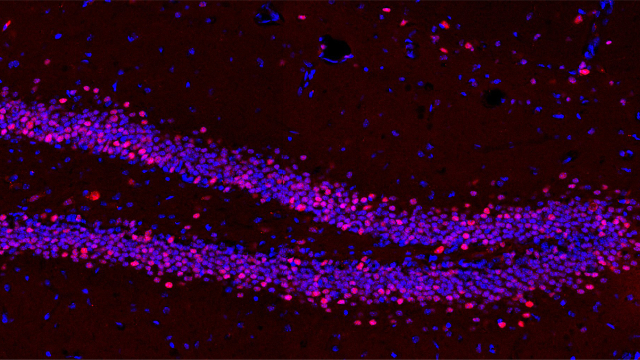
The dentate gyrus of a mouse that received deep brain stimulation, with cell nuclei in blue and expression of the gene c-Fos in red.

By Shawna Williams

Even as patients with Parkinson’s disease, obsessive-compulsive disorder, and other conditions turn to deep brain stimulation (DBS) to keep their symptoms in check, it’s been unclear to scientists why the therapy works. Now, researchers in Texas report that in mice, the treatment dials the activity of hundreds of genes up or down in brain cells. Their results, published in eLife March 23, hint that DBS’s use could be expanded to include improving learning and memory in people with intellectual disabilities.

“The paper is very well done. . . . It’s really a rigorous study,” says Zhaolan “Joe” Zhou, a neuroscientist at the University of Pennsylvania’s Perelman School of Medicine who reviewed the paper for eLife. Now that the genes and pathways DBS affects are known, researchers can home in on ways to improve the treatment, or perhaps combine the therapy with pharmacological approaches to boost its effect, he says.

In DBS, two electrodes are surgically implanted in a patient’s brain (the area depends on the disorder being treated), and connected to generators that are placed in the chest. Gentle pulses of electricity are then passed continuously through the electrodes. The treatment reduces motor symptoms in many people with Parkinson’s, and allows some patients to reduce their use of medications, but it does not eliminate symptoms or slow the disease’s progression.

In addition to its use in movement disorders, DBS is being explored as a potential therapy for a range of other brain-related disorders. For instance, as a way to boost learning and memory in people with Alzheimer’s disease, researchers are looking into stimulating the fimbria-fornix, a brain region thought to regulate the activity of the memory-storing hippocampus.

Such studies made Huda Zoghbi, a neurogeneticist at Baylor College of Medicine, wonder what effect DBS might have on learning- and memory-related disorders that strike earlier in life. “We rationalized that maybe in Alzheimer’s, many of the neurons are already gone, but perhaps in a healthier brain, like that of a Rett syndrome model, we can test the idea if stimulation of the fornix can improve learning and memory,” she explains. Rett syndrome, a genetic disease that almost exclusively strikes girls, includes intellectual disability, autism-like deficits in social interactions, and a loss of motor function. Several years ago, Zoghbi and colleagues tried zapping the fimbria-fornix, a C-shape bundle of nerves adjacent to the hippocampus in the brain, in mouse models of Rett syndrome. Published in 2015, their results showed that after two weeks of daily, one-hour DBS sessions, the mice with an intellectual disability performed like their peers without the disorder on a range of hippocampus-dependent tasks.

“We were struck that everything became indistinguishable after deep brain stimulation from a baseline normal,” Zoghbi says. This prompted her team to ask, “How does it work at a molecular level?” The answer, she thought, could determine whether DBS of the fimbria-fornix has the potential to serve as a multipurpose tool, treating not just Rett syndrome but other childhood-onset intellectual disabilities with a variety of causes. “It’s going to be really tough, perhaps, to solve these diseases one gene at a time, so that learning can be corrected,” she says. “You could eventually consider an intervention that can be broadly applicable, irrespective of the molecular cause of the defect.”

For the latest study, the research team analyzed baseline differences in gene activity between mice with and without the Rett syndrome–like condition in a part of the hippocampus called the dentate gyrus. They also treated the mice with the intellectual disability once with 45 minutes of DBS. Of the many genes with marked differences in initial activity between the two groups of mice, one-quarter (39 genes) became normal in the Rett mice after treatment, they report.

Zoghbi’s group also tested the effects of DBS in normal mice; in addition to changing the activity levels of thousands of genes, the researchers found, the treatment prompted alternative splicing of the RNA copies of other genes, which would result in differences in the resulting proteins. Many of the genes affected by the alternative splicing are known to be involved in the growth of new neurons or in maintaining the synapses through which brain cells communicate. In the 2015 study, the group had found that DBS enhances some hippocampus-related abilities in wildtype mice, such as spatial learning.

For hints as to whether DBS might have the potential to treat intellectual disabilities other than Rett syndrome, the researchers compared their list of genes whose activity levels changed after DBS in normal mice with existing data on genes known to have abnormal expression levels in mouse models of several such disorders. As with Rett syndrome, DBS in wildtype mice altered the activity levels of about one-quarter of the genes involved in each of the disorders.

The fact that a short period of stimulation had such profound effects on gene expression is interesting, says Svjetlana Miocinovic, a movement-disorders neurologist at Emory University who was not involved in the study. Most research on the mechanism of DBS has focused on changes it induces in the electrical or physical properties of the brain, she tells The Scientist. “I think this kind of study, where they actually look at the molecular environment in these neurons that are exposed to stimulation . . . is really the way to figure out what exactly is going on and how is that neural plasticity accomplished.”

Now that they have a way to measure such molecular effects, Zoghbi and her collaborators plan to optimize DBS for models of intellectual disabilities—figuring out how long the current needs to be on, for example, and how often. Another question they’d like to address is whether stimulating other brain areas in addition to the fimbria-fornix could add to the benefits seen in the mice.

Zoghbi emphasizes that even if DBS turns out to be safe and effective for children with Rett syndrome, it won’t be a silver bullet, because patients will have missed out on some important developmental milestones. “To really get the full benefit,” she says, “we’re going to have to combine any intervention with intensive physical and behavioral therapy.”

A. Pohodish et al., “Forniceal deep brain stimulation induces gene expression and splicing changes that promote neurogenesis and plasticity,” eLife, doi:10.7554/eLife.34031, 2018.

https://www.the-scientist.com/?articles.view/articleNo/54581/title/Deep-Brain-Stimulation-Affects-the-Activity-of-Hundreds-of-Genes/&utm_campaign=TS_DAILY%20NEWSLETTER_2018&utm_source=hs_email&utm_medium=email&utm_content=62919749&_hsenc=p2ANqtz-_Wc4T-kVW-WjClgnxcSv-OaWmpr8r7DtQJQRRztFWWATkUzGmgHVi5RLo74kNAO-J2872OymH-_uX0WKTVquRF4v7QAw&_hsmi=62919749

Scientists transfer memory from one snail to another

By Ashley Yeager

Researchers have transferred a memory from one snail to another via RNA, they report today (May 14) in eNeuro. If confirmed in other species, the finding may lead to a shift in scientists’ thinking about how memories are made—rather than cemented in nerve-cell connections, they may be spurred on by RNA-induced epigenetic changes.

“The study suggests that RNA populations are the missing link in the search for memory,” Bridget Queenan, a neuroscientist at the University of California, Santa Barbara, who was not involved in the study, writes in an email to The Scientist. “If circulating neural RNAs can transfer behavioral states and tendencies, orchestrating both the transient feeling and the more permanent memory, it suggests that human memory—just like mood—will only be explained by exploring the interplay between bodies and brains.”

For decades, researchers have tried to pinpoint how, when, and where memories form. In the 1940s, Canadian psychologist Donald Hebb proposed memories are made in the connections between neurons, called synapses, and stored as those connections grow stronger and more abundant. Experiments in the 1960s, however, suggested RNA could play a role in making memories, though the work was largely written off as irreproducible.

Study coauthor David Glanzman of the University of California, Los Angeles, has been working on the cell biology of learning and memory for nearly 40 years, and says for the majority of that time he believed memory was stored at synapses. Several years ago, though, he and his colleagues began replicating memory-erasing research done in rodents in California sea hares (Aplysia californica), a type of marine snail also called a sea slug. The team found that the snail synapses built to “store” a memory weren’t necessarily the synapses that were removed from the neural circuits in the memory-erasing experiments.

“It was completely arbitrary which synaptic connections got erased,” Glanzman says. “That suggested maybe the memory wasn’t stored at the synapse but somewhere else.”

Glanzman turned his attention to RNA because of those earlier hints it was related to memory, and also because of recent experiments suggesting long-term memory was stored in the cell bodies of neurons, not synapses. He picked Aplysia because it has been a longtime model organism for memory studies. Like all mollusks, these snails have groups of neurons called ganglia, rather than brains. Their nervous systems comprise about 20,000 neurons, and the cells are some of the biggest and easily identifiable among nerve cells in all animals. In the snail’s gut, for example, are specific sensory and motor neurons that control the withdrawal of a fleshy, spout-like organ on the snail’s back called a siphon and the contraction of a caterpillar-looking gill, which the animal uses to breathe.

When touched lightly on the siphon, the neurons fire, retract the tissue, and contract the gill within the body cavity for a few seconds to protect it against attack. Sticking electrodes in the snail’s tail and shocking it makes this defensive response last longer, tens of seconds, and sometimes up to almost a minute. By repeatedly shocking the snail’s tail, the animal learns to stay in that defensive position when touched on the siphon, even weeks after the shocks end.

In his team’s latest experiments, Glanzman and his colleagues zapped snails’ tails, then pulled the abdominal neurons from the shocked snails, extracted their RNA, dissolved the RNA into deionized water, and injected the solution into the necks of snails that had never been shocked. (For a control, the team also took RNA from non-shocked snails and injected into naive snails.) When tapped on the siphon 24 hours later, snails that got RNA from shocked snails withdrew their siphon and gill for significantly longer (almost 40 seconds) than did snails that got RNA from non-shocked animals (less than 10 seconds).

DNA methylation appeared to be essential for the transfer of the memory among snails. When Glanzman and his colleagues blocked DNA methylation in snails getting RNA from shocked ones, the injected snails withdrew their siphons for only a few seconds when tapped on the siphon.

Glanzman wanted to know if the RNA from shocked snails actually affected the neuronal connections of the snails receiving the injections any differently than RNA from nonshocked snails. So, in a third test, he and his team removed sensory neurons from nonshocked snails, cultured the cells in a dish, and then exposed the cells to RNA from shocked snails. Zapping the culture with a bit of current excited the sensory neurons much more than neurons treated with RNA from nonshocked snails. RNA from shocked snails also enhanced a subset of synapses between sensory and motor neurons in vitro, suggesting it was indeed the RNA that transported the memory, Glanzman explains.

The idea “seems quite radical as we don’t have a specific mechanism for how it works in a non-synaptic manner,” Bong-Kiun Kaang, a neuroscientist at Seoul National University who was not involved in the study, writes in an email to The Scientist. Kaang notes there are “many critical questions that need to be addressed to further validate the author’s argument,” such as what kinds of noncoding RNAs are specifically involved, how are the RNAs transferred among neurons, and how much do RNAs at the synapse play a role? The experiments should also be replicated in organisms other than snails, he says.

Glanzman says that in his next experiments he will attempt to identify the RNAs involved, and he has an idea for the mechanism, too. The memory is not stored in the RNA itself, he speculates—instead, noncoding RNA produces epigenetic changes in the nucleus of neurons, thereby storing the memory.

“This idea is probably going to strike most of my colleagues as extremely improbable,” Glanzman says. “But if we’re right, we’re just at the beginning of understanding how memory works.”

A. Bédécarrats et al., “RNA from trained Aplysia can induce an epigenetic engram for long-term sensitization in untrained Aplysia,” eNeuro, doi.org/10.1523/ENEURO.0038-18.2018, 2018.

https://www.the-scientist.com/?articles.view/articleNo/54565/title/RNA-Moves-a-Memory-From-One-Snail-to-Another/

University of Calgary scientists discover a new way to battle multiple sclerosis that challenges conventional thinking about its root cause


The Dr. Peter Stys lab within the Hotchkiss Brain Institute at the Cumming School of Medicine, University of Calgary, is equipped with highly specialized microscopes used for researching multiple sclerosis, Alzheimer’s and other neurodegenerative disease. In this customized lab, the researchers can’t wear white lab coats, they have to wear dark clothing. Photons could reflect off light clothing and interfere with the experiments. From left: Megan Morgan, research assistant, and Craig Brideau, engineering scientist. Photo by Pauline Zulueta, Cumming School of Medicine

By Kelly Johnston, Cumming School of Medicine

Ridiculous. That’s how Andrew Caprariello says his colleagues described his theory about multiple sclerosis (MS) back when he was doing his PhD in Ohio.

Caprariello’s passion to explore controversial new theories about MS propelled him to seek out a postdoctoral fellowship with a like-minded thinker, whom he found in University of Calgary’s Dr. Peter Stys, a member of the Hotchkiss Brain Institute at the Cumming School of Medicine (CSM).

The collaboration paid off. Caprariello, Stys and their colleagues have scientific proof published in the Proceedings of the National Academy of Sciences (PNAS) that their somewhat radical theory has merit. “I’ve always wondered ‘what if’ MS starts in the brain and the immune attacks are a consequence of the brain damage,” says Caprariello, PhD, and lead author on the study.

Currently, MS is considered to be a progressive autoimmune disease. Brain inflammation happens when the body’s immune system attacks a protective material around nerve fibers in the brain called myelin. Conventional thinking is that rogue immune cells initially enter the brain and cause myelin damage that starts MS.

“In the field, the controversy about what starts MS has been brewing for more than a decade. In medical school, I was taught years ago that the immune attack initiates the disease. End of story,” says Stys, a neurologist and professor in the Department of Clinical Neurosciences at the CSM. “However, our findings show there may be something happening deeper and earlier that damages the myelin and then later triggers the immune attacks.”

To test the theory, the research team designed a mouse model of MS that begins with a mild myelin injury. In this way, researchers could mirror what they believe to be the earliest stages of the disease.

“Our experiments show, at least in this animal model, that a subtle early biochemical injury to myelin secondarily triggers an immune response that leads to additional damage due to inflammation. It looks very much like an MS plaque on MRI and tissue examination,” says Stys. “This does not prove that human MS advances in the same way, but provides compelling evidence that MS could also begin this way.”

With that result, the researchers started to investigate treatments to stop the degeneration of the myelin to see if that could reduce, or stop, the secondary autoimmune response.

“We collaborated with researchers at the University of Toronto and found that by targeting a treatment that would protect the myelin to stop the deterioration, the immune attack stopped and the inflammation in the brain never occurred,” says Stys. “This research opens a whole new line of thinking about this disease. Most of the science and treatment for MS has been targeted at the immune system, and while anti-inflammatory medications can be very effective, they have very limited benefit in the later progressive stages of the disease when most disability happens.”

It can be very hard to find funding to investigate an unconventional theory. The research team was funded by the Brain and Mental Health Strategic Research Fund, established by the Office of the Vice-President (Research) at UCalgary to support innovative, interdisciplinary studies within the Brain and Mental Health research strategy.

“We chose high-risk, novel projects for these funds to support discoveries by teams who did not have the chance to work together through conventional funding sources,” said Ed McCauley, PhD, vice-president (research). “The MS study shows the potential of brain and mental health scholars to expand capacity by tapping into new approaches for conducting research. Their work also exemplifies the type of interdisciplinary research that is propelling the University of Calgary as an international leader in brain and mental health research.”

http://www.ucalgary.ca/utoday/issue/2018-05-04/ucalgary-scientists-discover-new-way-battle-multiple-sclerosis

New peptide treatment for obese patients suffering from insatiable hunger

In a new study researchers from the Institute for Experimental Pediatric Endocrinology of the Charité – Universitätsmedizin Berlin have successfully treat patients whose obesity is caused by a genetic defect. Aside from its beneficial effects on the patients, the researchers also provided insights into the fundamental signaling pathways regulating satiety of the new drug. The results of this research have been published in Nature Medicine*.

A mutation in the gene encoding the leptin receptor (LEPR) can cause extreme hunger starting with the first months of life. As a result, affected individuals develop extreme obesity during childhood. Increased exercise and reduced caloric intake are usually insufficient to stabilize body-weight. In many cases, obesity surgery fails to deliver any benefits, meaning that a drug-based treatment approach becomes increasingly important.

Two years ago, Dr. Peter Kühnen and the working group successfully demonstrated that treatment with a peptide, which activates the melanocortin 4 receptor (MC4R) could play a central role in the body’s energy metabolism and body weight regulation. Leptin, which is also known as the satiety (or starvation) hormone, normally binds to the LEPR, triggering a series of steps that leads to the production of melanocyte-stimulating hormone (MSH). The act of MSH by binding to its receptor, the melanocortin 4 receptor (MC4R) which transduce the satiety signal to the body. However, if the LEPR is defective, the signaling cascade is interrupted. The patient’s hunger remains unabated, placing them at greater risk of becoming obese. As part of this current study, researchers used a peptide that binds to the MC4R in the brain, and this activation trigger the normal satiety signal. Working in cooperation with the Clinical Research Unit at the Berlin Institute of Health (BIH), the researchers were able to record significant weight loss in patients with genetic defects affecting the LEPR.

“We also wanted to determine why the used peptide was so effective and why, in contrast to other preparations with a similar mode of action, it did not produce any severe side effects,” explains Dr. Kühnen. “We were able to demonstrate that this treatment leads to the activation of a specific and important signaling pathway, whose significance had previously been underestimated.” Dr. Kühnen’s team is planning to conduct further research to determine whether other patients might benefit from this drug: “It is possible that other groups of patients with dysfunctions affecting the same signaling pathway might be suitable candidates for this treatment.”

*Clément K, et al., MC4R agonism promotes durable weight loss in patients with leptin receptor deficiency, Nature Medicine (2018), doi:10.1038/s41591-018-0015-9.

https://www.charite.de/en/service/press_reports/artikel/detail/den_unstillbaren_hunger_abschalten/

A Simple Treatment May Minimize Hearing Loss Triggered by Loud Noises

It’s well known that exposure to extremely loud noises — whether it’s an explosion, a firecracker or even a concert — can lead to permanent hearing loss.
But knowing how to treat noise-induced hearing loss, which affects about 15 percent of Americans, has largely remained a mystery. That may eventually change, thanks to new research from the Keck School of Medicine of USC, which sheds light on how noise-induced hearing loss happens and shows how a simple injection of a salt- or sugar-based solution into the middle ear may preserve hearing. The results of the study were published today in PNAS.

Deafening sound
To develop a treatment for noise-induced hearing loss, the researchers first had to understand its mechanisms. They built a tool using novel miniature optics to image inside the cochlea, the hearing portion of the inner ear, and exposed mice to a loud noise similar to that of a roadside bomb.

They discovered that two things happen after exposure to a loud noise: sensory hair cells, which are the cells that detect sound and convert it to neural signals, die, and the inner ear fills with excess fluid, leading to the death of neurons.

“That buildup of fluid pressure in the inner ear is something you might notice if you go to a loud concert,” says the study’s corresponding author John Oghalai, MD, chair and professor of the USC Tina and Rick Caruso Department of Otolaryngology – Head and Neck Surgery and holder of the Leon J. Tiber and David S. Alpert Chair in Medicine. “When you leave the concert, your ears might feel full and you might have ringing in your ears. We were able to see that this buildup of fluid correlates with neuron loss.”

Both neurons and sensory hair cells play critical roles in hearing.

“The death of sensory hair cells leads to hearing loss. But even if some sensory hair cells remain and still work, if they’re not connected to a neuron, then the brain won’t hear the sound,” Oghalai says.

The researchers found that sensory hair cell death occurred immediately after exposure to loud noise and was irreversible. Neuron damage, however, had a delayed onset, opening a window of opportunity for treatment.

A simple solution

The buildup of fluid in the inner ear occurred over a period of a few hours after loud noise exposure and contained high concentrations of potassium. To reverse the effects of the potassium and reduce the fluid buildup, salt- and sugar-based solutions were injected into the middle ear, just through the eardrum, three hours after noise exposure. The researchers found that treatment with these solutions prevented 45–64 percent of neuron loss, suggesting that the treatment may offer a way to preserve hearing function.

The treatment could have several potential applications, Oghalai explains.

“I can envision soldiers carrying a small bottle of this solution with them and using it to prevent hearing damage after exposure to blast pressure from a roadside bomb,” he says. “It might also have potential as a treatment for other diseases of the inner ear that are associated with fluid buildup, such as Meniere’s disease.”

Oghalai and his team plan to conduct further research on the exact sequence of steps between fluid buildup in the inner ear and neuron death, followed by clinical trials of their potential treatment for noise-induced hearing loss.

https://www.keckmedicine.org/a-simple-treatment-may-minimize-hearing-loss-triggered-by-loud-noises/

Congress Wants to Spend $10 Million to Search for Aliens and Texas Is to Thank

By Jeanna Bryner

Congress is talking about spending a bunch of money on the search for extraterrestrial intelligence (or SETI) for the first time in 25 years.

The U.S. House of Representatives has proposed a bill that includes $10 million in NASA funding for the next two years “to search for technosignatures, such as radio transmissions, in order to meet the NASA objective to search for life’s origin, evolution, distribution, and future in the universe.” Such technosignatures would come in the form of radio waves that have the telltale features of being produced by TV- or radio-type technologies. An intelligent civilization could also produce those signals intentionally to communicate with other civilizations like ours.

“If it passes, it would definitely be a sea-change in Congressional attitude since Sen. [Richard] Bryan terminated NASA’s SETI program, the High Resolution Microwave Survey, in 1993,” renowned astronomer Jill Tarter, former diretor of the SETI Institute, told Live Science in an email.

Here’s what Tarter is referring to: In 1992, a huge NASA SETI initiative was launched in order to build instrumentation so that observatories could comb the cosmos for signals from alien civilizations. For instance, the high resolution microwave survey was hooked up to the Arecibo telescope in Puerto Rico for just that. A year later, however, Nevada Sen. Bryan shut it down, and “SETI” became an unmentionable.

“[Bryan] made it clear to the administration that if they came back with SETI in their budget again, it wouldn’t be good for the NASA budget,” Tarter told Marina Koren of The Atlantic. “So, we instantly became the four-letter S-word that you couldn’t say at headquarters anymore, and that has stuck for quite a while.”

She added that the funding proposal seems to be an extension of the efforts of Rep. Lamar Smith, R–Texas, to bring attention to the search for life beyond Earth when he was the chairman of the House Science Committee. (Smith, who announced that he will retire at the end of his term this year, is a known denier of human-caused climate change.)

If the legislation clears the House and passes the Senate, the result would be huge. “It allows for new instrumentation to be built, and data collected and analyzed at scale, by a global community,” Tarter said of the $10 million.

Of course, the hunt for intelligence beyond Earth has not stopped, as private companies and other organizations have funded it, but a buy-in from the federal government is a big deal. [7 Huge Misconceptions about Aliens]

“You need to remember that this is an authorization bill, not an appropriations bill. Even if it passes, the appropriators may not provide any SETI funding in their bill. But if they do, that would be a very big deal,” said Tarter, who was the basis for the heroine Ellie Arroway in Carl Sagan’s novel “Contact” and in the adapted movie by the same name.

Tarter is admittedly ecstatic about the possibility of such a federal focus on SETI. But you don’t become the director of the SETI Institute by keeping your feet on the ground.

“Bring it on! But don’t stop there,” Tarter said about the potential funding. “Earthlings everywhere are fascinated with this search and care about the answer. So, we should create an international endowment for searching for intelligent life beyond Earth. The backers should be private individuals, enlightened corporations, U.S. federal agencies and agencies from other governments around the world.”

She added, “By smoothing out the funding roller coaster that has characterized this research field from the beginning, it will be possible to attract the best and brightest minds with the best ideas from everywhere, and commit to the long-term search efforts that might be required for success.”

Are alien greetings just around the corner? Tarter said we have the technology now to search for more distant and fainter signals in ways we haven’t tried before. “But that doesn’t guarantee success in the ‘near future.’ The cosmos is vast, and we may not yet be looking in the right way, although we are doing the best job possible with what we now know.”

The “correct perspective on timing,” Tarter said, is summed up in a line from a paper published in 1959 in the journal Nature by Giuseppe Cocconi and Philip Morrison: “‘The probability of success is difficult to estimate; but if we never search, the chance of success is zero,'” Tarter said.

https://www.livescience.com/62529-congress-search-for-intelligent-aliens.html?utm_source=notification