Why introverts might actually be better networkers

By David Burkus

“I’m an introvert,” someone inevitably tells me when I speak about building a professional network. “Networking is just not for me.” These people assume networking belongs solely in the domain of the extroverts.

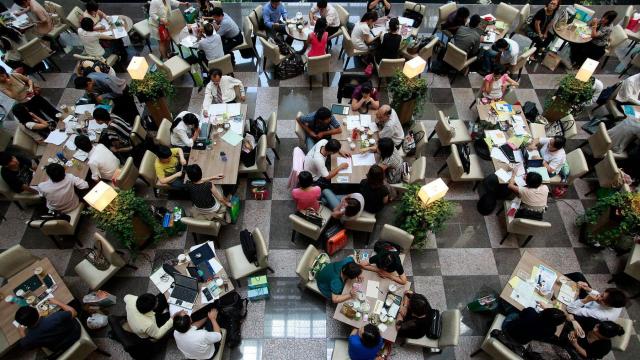
Presumably, extroverts are more excited by going to mixers and events and meeting new people. But recent research from the world of network science suggests that introverts might actually be the better networkers.

To understand why, we first have to debunk a common misconception about introverts: They don’t hate people. They just prefer to interact with them differently than extroverts do. The series of small chit-chat conversations that are so common at networking events might, for an introvert, be draining. Instead, introverts crave deep and meaningful conversations. And this preference can actually be an advantage when it comes to networking.

Research from the domain of network science, psychology, and other social sciences implies that we prefer relationships where there is more than one context for connecting with other people. We want to know more about them than we learn from superficial questions such as “who are you and what do you do?” We want to know more than their thoughts on the weather. We want to know their back stories, their motivations, their passions, and so much more. We want multiple points of connection. In network science, relationships where there are multiple contexts for connection are referred to as multiplex ties.

Social scientists and network scientists have been studying multiplex ties for a number of decades. They have found that a multiplex relationship between individuals dramatically increases trust (presumably because it raises more opportunities to demonstrate trustworthy behavior). It also makes it more likely that new ideas and fresh information will be shared. Compared to those with more uniplex networks, individuals and organizations with high degrees of multiplexity in their total network are better able to validate ideas, they have access to greater resources, and they can think more critically and gather more diverse information. So when you find out you do a similar job, grew up in the same area, or have children in the same grade as someone else, you may end up knowing, liking, and trusting them more.

But you will only discover any of if you’re willing to have a deeper conversation—the kind that introverts want.

Small talk might seem like a way to stay professional in business settings by avoiding overly personal topics. But the truth is, when it comes to networks, business is better when it is personal. In one study of employees at an insurance firm, researchers examined the development of multiplex relationships inside of companies to determine if they were helpful or harmful to performance. The researchers surveyed employees to establish their work-related and personal ties to other employees, as well as overlap. Then, they gathered performance data from each employee’s supervisor four to six weeks after talking to employees.

The researchers found that having more multiplex relationships, while more emotionally taxing than work-only relationships, significantly increased employees’ performance (as judged by their supervisors).

Multiplex ties make for better connections and better performance. Better connections come from deeper conversations. And those deeper conversations are more welcomed by introverts. So while they might not feel like “working the room,” introverts may be better networkers over the long-term than their extroverted counterparts precisely because they don’t work the room. Instead, they stick to just a few conversations and go deeper.

https://work.qz.com/1277113/networking-events-why-introverts-might-actually-be-better-at-them/

Nanoparticles normally used to fight cancer could also help rescue malnourished crops

Synthetic nanoparticles used to fight cancer could also heal sickly plants.

The particles, called liposomes, are nanosized, spherical pouches that can deliver drugs to specific parts of the body (SN: 12/16/06, p. 398). Now, researchers have filled these tiny care packages with fertilizing nutrients. The new liposomes, described online May 17 in Scientific Reports, soak into plant leaves more easily than naked nutrients. That allows the nanoparticles to give malnourished crops a more potent pick-me-up than the free-floating molecules in ordinary nutrient spray.

Each liposome is a hollow sphere about 100 nanometers across, and is made of fatty molecules extracted from soybean plants. Once a plant leaf absorbs these nanoparticles, the liposomes spread to cells in the plant’s other leaves and its roots, where the fatty envelopes break down and release their molecular cargo.

Researchers first exposed tomato plants to either liposomes packed with a rare earth metal called europium, or free-floating europium molecules. Europium doesn’t naturally exist in plants or soil, so it’s easy to trace how much of this element plants soaked up after treatment. Three days after exposure, plants treated with liposomes had absorbed up to 33 percent of the nanoparticles. Plants exposed to free-floating europium took in less than 0.1 percent of the molecules

The researchers then spritzed iron- and magnesium-deficient tomato plants with either a standard spray containing iron and magnesium, or a solution containing liposomes packed with those nutrients. Two weeks later, the leaves on plants treated with free-floating nutrients were still tinged yellow and curled. Plants that received liposome treatment sported healthy, green leaves.

Avi Schroeder, a chemical engineer at the Israel Institute of Technology in Haifa, and colleagues don’t know exactly why liposomes are more palatable to plants than plain nutrients. But sprays that contain nutrient-loaded liposomes could help farmers rejuvenate frail plants more efficiently than existing mixtures, Schroeder says.

Liposome-based spray would need to be tested on a variety of vegetation before it could enter widespread use, says Ramesh Raliya, a nanobiotechnology researcher at Washington University in St. Louis not involved in the work. That’s because the pores on leaves where liposomes are assumed to enter plants can range from 50 to 150 nanometers across. If a plant’s pores are smaller than 100 nanometers, the liposomes can’t squeeze inside.

Mariya Khodakovskaya, a biologist at the University of Arkansas at Little Rock, is wary of the potential cost of this new technique. Fashioning liposomes is expensive. That’s not a problem for making liposome-based medication, which requires only a small amount of nanoparticles. But for any new agricultural practice to take root, she says, “it has to be massive, and it has to be cheap.”

A. Karny et al. Therapeutic nanoparticles penetrate leaves and deliver nutrients to agricultural crops. Scientific Reports. Published online May 17, 2018. doi: 10.1038/s41598-018-25197-y.

Nanoparticles could help rescue malnourished crops

New Data: Hurricanes Will Get Worse


Analysis of Hurricane Harvey, which drowned Houston, confirms predictions that the storms are likely to get bigger, be more intense and last longer.

By Mark Fischetti

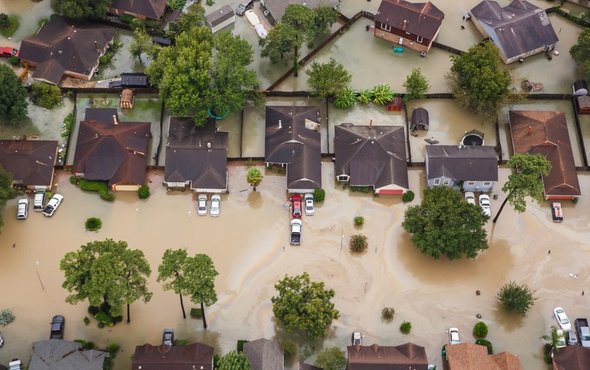
Hurricane Harvey, which inundated the Houston area with up to 60 inches of rain last August, was one of the most outlandish storms ever to hit the U.S. Ironically, it crossed a Gulf of Mexico that had been calm for days and quickly quieted again afterward. This rare situation allowed scientists to obtain unusually specific data about the ocean before and after the hurricane, and about the storm’s energy and moisture.

Last week researchers published that data in Earth’s Future. The numbers indicate the amount of energy Harvey pulled from the ocean, in the form of rising water vapor, equaled the amount of energy it dropped over land in the form of rain—the first time such an equivalence has been documented. Investigators say this revelation supports assertions climate change is likely to make Atlantic hurricanes bigger, more intense and longer-lasting than in the past. The researchers calculate climate change caused Harvey’s rainfall to be 15 to 38 percent greater than it would have been otherwise.

Kevin Trenberth, a senior climate scientist at the National Center for Atmospheric Research, led the team. Scientific American asked him why Harvey behaved so strangely, how it confirms predictions about changing hurricanes and what the U.S. and other nations prone to the storms should prepare for in the future.

[An edited transcript of the interview follows:]

You say hurricanes will get bigger, and last longer. Why?

As climate change makes oceans hotter there is more heat—more energy—available, so there is likely to be an increase in hurricane activity. That can be the size of the storms, their duration and their intensity.

So hurricane dynamics are really driven by ocean energy?

Right. The way that energy moves around is transporting water vapor in the atmosphere—in this case, pulled up into the storm and dumped over the land in Texas. As the water vapor condenses it releases the latent ocean heat into the atmosphere. Our study was the first time anyone has been able to match up these two numbers.

Is moving energy a hurricane’s main role in the climate system? Why do we even have them?

A hurricane moves heat out of the ocean rapidly. It keeps the oceans cooler. A hurricane is actually a relief valve for the tropical ocean.

Why does it need a relief valve?

In general, the global weather system doesn’t like to have big temperature contrasts. If it’s hot in one place and cold in another, that produces wind that blows the warm air toward the cold and the cold air toward the warm. The atmosphere is always trying to remove those temperature gradients.

Similarly, thunderstorms move heat upward from a hot ocean to a cooler atmosphere but they don’t have the strong winds that a hurricane does, which produce the very large evaporating out of the ocean into the atmosphere. A hurricane is a collection of thunderstorms, but having the same number of thunderstorms without hurricane winds doesn’t cool off the tropical ocean to the same extent. Without hurricanes the tropical ocean would get really hot and the contrast between there and the middle latitudes would create different weather systems than we have now.

Warmer oceans mean more intense hurricanes. But you note that the number of large storms might actually decrease. Why?

By pulling up an ocean’s heat, a hurricane leaves a colder ocean in its wake. One big storm creates more cooling than, say, four smaller storms. It leaves a cooler ocean that is less favorable for a new storm.

That explains why Harvey got so big; your paper notes that the Gulf of Mexico water temperature was several degrees hotter than usual for late August. But why did Harvey stay big?

Over the ocean a hurricane’s circulation typically reaches about 1,000 miles in all directions, grabbing moisture and bringing it into the storm. Once over land the storm dries and weakens. But even when two sides of Harvey were over land, the spiral arm bands reached well out over the Gulf, which was still very warm. That kept the storm going.

After several days the storm moved back over the Gulf before it came inland again, and then moved north. We don’t attribute that movement to climate change. But the fact that when it did come back over the Gulf it reintensified is very much related to climate change. Despite the fact that Harvey had taken a lot of energy from the Gulf and cooled the waters in the upper 100 meters in particular, the deeper Gulf was still warm enough to well up and sustain hurricane-force winds.

The related question is why did Harvey remain over Houston so long? Some experts say it had to do with climate change altering the nature of the jet stream—giving it bigger bends, causing it to meander more slowly from west to east across the U.S.— which can help weather systems get stuck in one place.

Some people suggest that may have played a role. I’m inclined to think it didn’t. The storm track does depend on the weather; a high-pressure system blocked Harvey from moving north or northeast over land as it normally would have. But that high wasn’t part of a big jet steam wave structure. Also, the idea of a slow jet stream, because of changing conditions in the Arctic, is still a controversial topic. I and others think the bigger factor is the tropical Pacific—systems like El Niño and so on. We need to research this more, but I think the effect of the tropics is much greater than the effect of polar regions.

The end of the paper addresses what society needs to do to prepare for stronger hurricanes. It’s commentary, which is unusual. Why did you decide to include this?

Physical scientists often do not talk about impacts and consequences. They often leave that to social scientists or economists. But we need to connect the physical and social effects much more. The Earths’ Future journal is designed to help bridge that divide. Our study is relevant to a lot of policy. And it’s especially relevant to the current administration, whose operational rule seems to be to do away with regulations even when they make sense and are based in science.

You also recommended actions hurricane-prone regions should take. What is the most crucial?

The hurricane damage last season in Puerto Rico, Florida and Texas shows that infrastructure should have been hardened for such storms, which were certainly going to come sooner or later. There were many meetings—I was at some of them—in which politicians, heads of countries and states, were very aware of two main threats: sea level rise and intense hurricanes. But they haven’t done much to prepare.

In Texas, after Hurricane Ike in 2008, there were proposals to add flood control measures in Houston, and they were voted down. In contrast, places like Taiwan, in the typhoon belt, hardened their infrastructures: drainage systems, building codes to withstand category 4 and 5 storms, emergency systems. In 2015 Taiwan had four typhoons that caused flooding and damage—but each time, within about four days they were back up and fully operational because they had built-in resilience and were prepared. Places in the U.S. need to make that kind of investment.

https://www.scientificamerican.com/article/new-data-hurricanes-will-get-worse/

Earth-Like Alien Planets Could Experience Snowball States


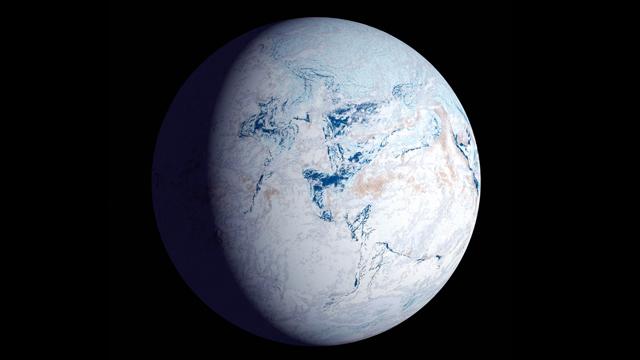
A NASA artist visualized what Earth would look like if it entered the “snowball state” predicted by new research from the University of Washington

By Chelsea Gohd

Earth-like planets with severe tilts and orbits could enter abrupt “snowball states,” in which entire oceans freeze and surface life cannot survive, according to new research.

Researchers at the University of Washington (UW) have found a new reason why, just because a planet is located in a “habitable zone” — meaning it’s close enough to its host star to sustain liquid water — it isn’t necessarily habitable. The team found that the axial tilt and orbital dynamics of planets in the habitable zone around “G dwarf” stars like our own sun can lead to “snowball states,” which are essentially extreme ice ages.

This new research looked at how a planet’s obliquity, or the angle at which a planet’s rotation axis tilts, and its orbital eccentricity, a parameter that determines the amount that an orbit deviates from a perfect circle, could affect that planet’s potential to be habitable.

Previous research suggested that planets in a habitable zone with a sun-like star that had a severe axial tilt or tilting orbit would be warmer, according to the statement. The team’s research found that the opposite holds true, which was quite a shock, they said.”We found that planets in the habitable zone could abruptly enter ‘snowball’ states if the eccentricity or the semi-major axis variations — changes in the distance between a planet and star over an orbit — were large or if the planet’s obliquity increased beyond 35 degrees,” Russell Deitrick, lead author of the new work and a postdoctoral researcher at the University of Bern who completed this research at UW, said in a statement.

Luckily, Earth’s axial tilt varies ever so slightly, leaving Earth “a relatively calm planet, climate-wise,” co-author Rory Barnes, an astronomer at UW, said in the statement. But, as it pertains to exoplanets, Deitrick “has essentially shown that ice ages on exoplanets can be much more severe than on Earth, that orbital dynamics can be a major driver of habitability and that the habitable zone is insufficient to characterize a planet’s habitability,” Barnes said.

A planet’s position in the habitable zone is typically a major factor in considering whether it may be habitable. However, this new research shows that even if a planet seems Earth-like and is orbiting at the right distance from its star, if “its orbit and obliquity oscillate like crazy, another planet might be better for follow-up with telescopes of the future,” Deitrick said.

With this research in mind, orbital dynamics should be considered an important part of determining a planet’s habitability, Deitrick added.

The work will be published in The Astronomical Journal, according to the statement.

https://www.space.com/40606-exoplanets-sudden-ice-age-snowball-states.html

Researchers find new way to stimulate the natural cellular recycling process, which may help treat patients with neurodegenerative disease.

Brown University researchers studying the biology of aging have demonstrated a new strategy for stimulating autophagy, the process by which cells rebuild themselves by recycling their own worn-out parts.

In a study published in the journal Cell Reports, the researchers show that the approach increased the lifespans of worms and flies, and experiments in human cells hint that the strategy could be useful in future treatments for Alzheimer’s disease, ALS and other age-related neurodegenerative conditions.

“Autophagy dysfunction is present across a range of age-related diseases including neurodegeneration,” said Louis Lapierre, an assistant professor of molecular biology, cell biology and biochemistry at Brown who led the work. “We and others think that by learning how to influence this process pharmacologically, we might be able to affect the progression of these diseases. What we’ve shown here is a new and conserved entry point for stimulating autophagy.”

Autophagy has become a hot topic in recent years, earning its discoverer the Nobel Prize in Physiology and Medicine in 2016. The process involves the rounding up of misfolded proteins and obsolete organelles within a cell into vesicles called autophagosomes. The autophagosomes then fuse with a lysosome, an enzyme-containing organelle that breaks down those cellular macromolecules and converts it into components the cell can re-use.

Lapierre and his colleagues wanted to see if they could increase autophagy by manipulating a transcription factor (a protein that turns gene expression on and off) that regulates autophagic activity. In order for the transcription factor to switch autophagic activity on, it needs to be localized in the nucleus of a cell. So Lapierre and his team screened for genes that enhance the level of the autophagy transcription factor, known as TFEB, within nuclei.

Using the nematode C. elegans, the screen found that reducing the expression of a protein called XPO1, which transports proteins out of the nucleus, leads to nuclear accumulation of the nematode version of TFEB. That accumulation was associated with an increase in markers of autophagy, including increased autophagosome, autolysosomes as well as increased lysosome biogenesis. There was also a marked increase in lifespan among the treated nematodes of between about 15 and 45 percent.

“What we showed was that by blocking the escape of this transcription factor from the nucleus, we could not only influence autophagy but we could get an increase in lifespan as well,” Lapierre said.

The next step was to see if there were drugs that could mimic the effect of the gene inhibition used in the screening experiment. The researchers found that selective inhibitors of nuclear export (SINE), originally developed to inhibit XPO1 to treat cancers, had a similar effect — increasing markers of autophagy and significantly increasing lifespan in nematodes.

The researchers then tested SINE on a genetically modified fruit fly that serves as a model organism for the neurodegenerative disease ALS. Those experiments showed a small but significant increase in the lifespans of the treated flies. “Our data suggests that these compounds can alleviate some of the neurodegeneration in these flies,” Lapierre said.

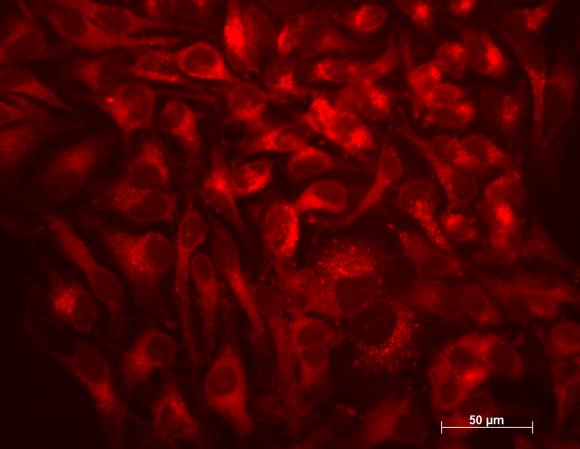
As a final step, the researchers set out to see if XPO1 inhibition had similar effects on autophagy in human cells as it had in the nematodes. After treating a culture of human HeLa cells with SINE, the researchers found that, indeed, TFEB concentrations in nuclei increased, as did markers of autophagic activity and lysosomal biogenesis.

“Our study tells us that the regulation of the intracellular partitioning of TFEB is conserved from nematodes to humans and that SINE could stimulate autophagy in humans,” Lapierre said. “SINE have been recently shown in clinical trials for cancer to be tolerated, so the potential for using SINE to treat other age-related diseases is there.”

Future research, Lapierre said, will focus on testing these drugs in more clinically relevant models of neurodegenerative diseases. But this initial research is a proof of concept for this strategy as a means to increase autophagy and potentially treat age-related diseases.

Lapierre is a faculty member in the newly approved Center on the Biology of Aging within the Brown Institute for Translational Science. This center, led by Professor of Biology John Sedivy, studies the biological mechanisms of aging. The center’s mission is to expand biomedical research and education programs in the emerging discipline of biogerontology, and to bring forth scientific discoveries related to aging and associated disorders.

Dutch art dealer discovers first ‘new’ Rembrandt in 44 years

Dutch art dealer Jan Six made the discovery of a lifetime at an auction house in 2016, when he saw the hand of Rembrandt in an unknown painting that had gone unnoticed for four centuries.

The portrait of a well-dressed young man with red hair was presented on Wednesday as the first “new” Rembrandt to surface since 1974. It will be on display at the Hermitage museum in Amsterdam for a month.

With the help of an unnamed investor, Six snapped up “Portrait of a Young Gentleman”, painted around 1634, for a bargain at 137,000 pounds ($185,000) at the London auction. Given past sales, it will likely now be worth very much more.

“Finding a Rembrandt is a tremendous feeling”, Six told Reuters.

Six has a special relationship with Rembrandt, having grown up in a house filled with classic Dutch artwork, including a Rembrandt portrait of one of his ancestors, a former Amsterdam mayor, also called Jan Six, as the centerpiece.

With his knowledge of the artist and the period, Six noticed a particular type of collar the subject of the painting wears, which was only in fashion for a short time around 1633 and was painted in a style that only Rembrandt used in those days.

The specialist on Dutch and Flemish old masters then spent 18 months using X-ray techniques and analysis of paint samples to prove he had in fact bought a real Rembrandt.

The 39-year-old art dealer eventually won the backing of more than a dozen Rembrandt experts, including the former leader of the Rembrandt Research Project, who spent a year verifying its authenticity.

“Seeing all these experts agreeing to what you’ve found is truly special. With the support of this vast body of knowledge, anybody contesting the painting would clearly represent a minority,” Six said.

Until now, the existence of the painting had been completely unknown, as there was no previous literary reference to it. This makes the discovery different from other paintings attributed to Rembrandt over the years, as they were already known to exist.’

But Six says he knew exactly what he saw when he laid eyes on the painting at Christie’s.

“I saw so many details pointing in Rembrandt’s direction, that I was totally convinced,” he said.

The newly discovered Rembrandt, measuring just under a meter high, is thought to have been painted when the artist was 28. It was almost certainly cut out of a larger painting, experts say, probably also depicting the young man’s wife.

Six said he will now try to find a buyer for his discovery, but he did not want to speculate on how much it might be worth.

https://www.reuters.com/article/us-netherlands-rembrandt/dutch-art-dealer-discovers-first-new-rembrandt-in-44-years-idUSKCN1IH14V

Drug target for curing the common cold

UK scientists believe they may have found a way to combat the common cold.

Rather than attacking the virus itself, which comes in hundreds of versions, the treatment targets the human host.

It blocks a key protein in the body’s cells that cold viruses normally hijack to self-replicate and spread.

This should stop any cold virus in its tracks if given early enough, lab studies suggest. Safety trials in people could start within two years.

The Imperial College London researchers are working on making a form of the drug that can be inhaled, to reduce the chance of side-effects.

In the lab, it worked within minutes of being applied to human lung cells, targeting a human protein called NMT, Nature Chemistry journal reports.

All strains of cold virus need this human protein to make new copies of themselves.

Researcher Prof Ed Tate said: “The idea is that we could give it to someone when they first become infected and it would stop the virus being able to replicate and spread.

“Even if the cold has taken hold, it still might help lessen the symptoms.

“This could be really helpful for people with health conditions like asthma, who can get quite ill when they catch a cold.”

He said targeting the host rather than the infection was “a bit radical” but made sense because the viral target was such a tricky one.

Cold viruses are not only plentiful and diverse, they also evolve rapidly, meaning they can quickly develop resistance to drugs.

The test drug completely blocked several strains of cold virus without appearing to harm the human cells in the lab. Further studies are needed to make sure it is not toxic in the body though.

Dr Peter Barlow of the British Society for Immunology said: “While this study was conducted entirely in vitro – using cells to model Rhinovirus infection in the laboratory – it shows great promise in terms of eventually developing a drug treatment to combat the effects of this virus in patients.”

Fighting a cold
Colds spread very easily from person to person. And the viruses that cause the infections can live on hands and surfaces for 24 hours.

Painkillers and cold remedies might help ease the symptoms. But currently there is nothing that will halt the infection.

You can catch a cold by:

– inhaling tiny droplets of fluid that contain the cold virus – these are launched into the air when an infected person coughs or sneezes
– touching an object or surface contaminated by infected droplets and then touching your mouth, nose or eyes
– touching the skin of someone who has the infected droplets on their skin and then touching your mouth, nose or eyes

Symptoms – a runny or blocked nose, sneezing and sore throat – usually come on quickly and peak after a couple of days. Most people will feel better after a week or so. But a mild cough can persist for a few weeks.

http://www.bbc.com/news/health-44107481

Hawaii’s erupting volcano may blast out ‘10-tonne cannonballs’

Large boulders 2 metres across and weighing 10 tonnes could soon begin blasting out from Kilauea, the erupting volcano on Hawaii’s Big Island. But the biggest imminent threat to residents could arise if the volcano starts spewing ash to heights of 6000 metres or more.

The conditions are similar to those when Kilauea last erupted in 1924, which showered the island in ash for several months. “That’s what I would guess will happen next,” said Don Swanson of the Hawaiian Volcano Observatory, in a press conference video issued on 9 May.

Kilauea has been unusually active since late April. On 30 April, the floor of the lava lake at the volcano’s summit collapsed.

The lava has been draining ever since. By 9 May, and following a 6.9-magnitude earthquake on 3 May, it had already plunged almost 300 metres into the vertical shaft below. The lava is now below the level of water-saturated rock at 600 metres above sea level. “Since the earthquake, the lava lake has dropped in a very steady manner, at 2.2 metres per hour,” said Swanson.

Steam explosions

Because the lava has sunk so low, water is now draining into the empty shaft that it previously occupied. The walls of the crater are red hot, so the water is instantly turning to steam, which is now bellowing in white clouds from the volcano summit.

What happens next is difficult to predict, said Swanson. But there could be explosions. If large rocks fall from the unstable walls of the shaft, they could block it, in which case pressure from steam will build up underneath and cause an explosion.

Once the “plug” is blown out, the steam can escape again unimpeded, until the plug is restored by rock falls.

The result would be a series of explosions followed by hiatuses. That’s what happened in 1924: there were 60 explosions over the course of four months or so.

Boulders and ash

Any explosion can produce a variety of “ejecta”, said Swanson. “You can get rocks ejected like cannonballs, weighing up to 10 tonnes and 2 [metres] in diameter,” he said.

The good news is that these boulders should fall within about a kilometre of the summit. This area is deserted. Smaller rocks the size of softballs could impact a bit further away, albeit still not far enough to reach people’s homes. But tinier fragments a fraction of an inch wide could reach peopled areas. “They would sting, but not be lethal,” says Swanson.

The most important hazard is fine ash, which can block thoroughfares and accumulate on buildings. In 1924, ash landed on railway tracks and made them too slippery for trains to run on safely.

“It’s a nuisance, especially if it goes on for several weeks,” said Tina Neal of the Hawaiian Volcano Observatory at the press conference. “I’ve been in many ash falls myself, and the most difficult bit is keeping it out of your eyes.”

Meanwhile, lava fountains and steam continue to spew copiously from cracks on the island, reaching heights of 30 metres. By Monday, there were 19 fissures in total. So far, more than 30 properties have been destroyed by lava, and 2000 residents remain evacuated.

https://www.newscientist.com/article/2168913-hawaiis-erupting-volcano-may-blast-out-10-tonne-cannonballs/

Since legalization, the illegal marijuana market now hides in plain sight.


Law enforcement officers uproot a large-scale illegal marijuana grow, one of several masquerading as legal operations in Okanogan County.

by Martin Kaste

On a big-sky plateau on the eastern slope of the Cascades, a 10-acre parcel of land has been trashed by illicit pot farmers. Abandoned equipment rusts and jugs of chemicals molder.

Marijuana legalization wasn’t supposed to look like this.

Five years into its experiment with legal, regulated cannabis, Washington state is finding that pot still attracts criminals.

Okanogan County Chief Criminal Deputy Steve Brown helped raid this farm last fall. What was striking, he says, is how brazen it was: located just off the road, within sight of neighbors. Before legalization, an operation like this would at least have been hidden up in the hills.

“Now it’s just out in the open, because everywhere you drive in the county you see the fencing, and everybody just assumes it must be just another legal grow going on.”

This particular grow was just a few hundred feet from licensed, state-regulated pot farms. Brown recalls how the growers tried to “blend in.”

“They acted like it was legal,” he says, and he says they even tried to fool the tax assessor, filing to pay agricultural property taxes at the rate for licensed pot growers.

After an investigation, it turned out the growers were part of a network with connections to California and Thailand, who had purchased six properties in the Okanogan area. They’d been growing pot illegally on five.

Legalization was also supposed to end pot smuggling, but that hasn’t worked out either.

Deputy Brown keeps track of the people from this area who’ve been arrested transporting big loads of marijuana through other states, such as Arkansas and Wyoming. At least one of them had ties to a licensed marijuana store in the Okanogan area, according to investigators.

The reason is simple economics. Overproduction in Washington and other states with legal pot, such as Oregon, has led to a market glut — and rock-bottom wholesale prices in the legal market.

“You’re going to get maybe $1,500 a pound — tops,” says Jeremy Moberg. He runs a licensed outdoor marijuana farm in Okanogan called CannaSol. “And a lot of people in farms around here are going to be lucky to get $250 a pound.”

In states where marijuana is still illegal, the same product would easily fetch three or four times that price, Moberg says. That’s a powerful temptation for licensed farmers who aren’t covering production costs right now.

“[For] those that are just totally underwater, and lost all their money, I think it’s a huge incentive to think that they could divert [legally-grown pot to the black market],” Moberg says. But he says he wouldn’t take that risk.

“I have a strong enough fear for prison and enforcement to not think about that too much,” he says.

A couple of licensed farms nearby have been caught not keeping proper track of their marijuana. Another is accused of using marijuana to pay a contractor. That’s a major violation of the state’s tracking rules for legally-grown pot.

“I could see where it’s definitely tempting for someone to take it out of state,” says Steve Morehead, an enforcement officer for the Washington State Liquor and Cannabis Board. He does surprise inspections of licensed growers to make sure they’re keeping all their marijuana inside the tracking system, meant to prevent diversion.

“Every plant that is 8 inches or taller needs to have a [bar-coded] tag on it,” he says.

But he acknowledges the system isn’t foolproof, especially if someone decides to “set aside” some of the buds from those tagged plants.

“There is a lot of the honor system, of how many ounces or how many pounds did you take off these plants,” he says. “We’re trusting them to input good information.”

This may be the Achilles’ heel of Washington state’s marijuana tracing system. “The amount of product that a plant produces depends on lots of different things, it’s not a constant,” says Mark Kleiman. He’s a professor of public policy at New York University and his consulting company BOTEC studies the pot market for the Washington State Liquor and Cannabis Board.

“So it’s certainly possible that someone could ship some out the back door,” he says.

This matters for many reasons. Off-the-books pot feeds the glut, depressing prices further and tempting producers to sell more into the black market, tax-free.

Still, diversion is hard to prove, unless investigators are tipped off and know to check the thousands of hours of surveillance videos that licensed growers are required to keep.

Illegal grows are easier to catch. The Thai-California network operating in Okanogan was not unique.

Last November, law enforcement on the Washington coast said they’d discovered a large network of illegal marijuana grows run by Chinese nationals. Police in three counties served 50 search warrants, confiscated 32,000 pot plants, 26 vehicles and $400,000 in cash and gold. They also arrested 44 people.

Given the low wholesale prices in Washington, investigators believe the illegal grows are producing for other states where prices are higher, and are here simply to use the local legal pot industry as cover.

Raids like that are ominous for the supporters of Washington’s regulated pot system. Organized crime and cross-border trafficking are just the problems that the Justice Department said states with legalized marijuana should keep a lid on. Such incidents could give the feds a reason to crack down on the state’s licensed growers and retailers, which are still illegal in the eyes of federal law.

That worries licensed producers such as Moberg.

“If it’s organized crime, building operations made to look like [legal grows], in order to export out, I’m much more concerned,” he says. “Obviously this is what the feds are mostly concerned about. So if they are able to do this, and the attention is brought upon us that this is happening, then I don’t think that is great for all of us.”

https://www.npr.org/2018/05/16/610579599/despite-legalization-marijuana-black-market-hides-in-plain-sight

Many thanks to Ray Gaudette, for bringing this to the It’s Interesting community.

‘Yanny’ or ‘Laurel’? Why Your Brain Hears One or the Other in This Maddening Illusion

By Jeanna Bryner

An auditory illusion that’s making the rounds online seems to have divided people into passionate camps depending on whether they hear the word “Yanny” or “Laurel” when listening to a recording.

If you hear one, you don’t hear the other, and you’ll be convinced the audio clip could only be saying … “Laurel” (in my case). Are you #teamyanny or #teamlaurel?

There’s some science to suggest that depending on how you look at the explanation, either both teams are correct or neither are. That’s because no “true” word has been recorded, Andrew Oxenham, a professor in the Departments of Psychology and Otolaryngology at the University of Minnesota, told Live Science.

The illusion first popped up on Reddit a few days ago. It is being likened to the famous dress debate of 2015, in which some people swore the garment was black and blue and others said it was white and gold. According to a study of that illusion, people saw the different colors because of assumptions the brain made about the illumination of the dress under different lighting conditions.

Filling in missing information
This latest “illusion,” although based on auditory perception and not vision, also likely boils down to the brain’s wackiness. One idea is that, if there is any ambiguity about a sound or word, the brain will lock onto one word or sound and deem that the correct interpretation. When there is a “perceptually ambiguous stimulus,” the University of Sydney’s David Alais told The Guardian, “the brain locks on to a single perceptual interpretation. Here, the Yanny/Laurel sound is meant to be ambiguous because each sound has a similar timing and energy content — so, in principle, it’s confusable.”

Alais, who studies audiovisual perception, added, “All of this goes to highlight just how much the brain is an active interpreter of sensory input, and thus that the external world is less objective than we like to believe.”

Researchers are saying it’s the auditory version of the so-called Rubin’s vase, an image that is visually ambiguous and can be interpreted in one of two ways: as the profiles of two people, or a vase, according to various news reports on the illusion.

Because your brain plays tricks on you here, your expectations about what you’ll hear, or even your past experiences, could shape whether you feel strongly about Team Yanny or Team Laurel, The Guardian reported.

In addition to sending vital auditory clues to your brain, your ears play a role in this maddening Yanny/Laurel interpretation. Each sound is made up of several frequencies, and those that create “Yanny” are higher than those for “Laurel,” said Lars Riecke, a cognitive neuroscientist at Maastricht University in the Netherlands, as reported by The Verge. The speakers you’re using may change the frequency, leading to the different interpretations, he added.

But your ear shape and your age could also play roles. Turns out, as people age, they start to lose the ability to hear the higher sounds, so they may be more likely to hear “Laurel,” which was the case for Alais, who is 52.

Sound frequencies
“Basically, there is no ‘true’ word and the stimulus has ‘clues’ based on the formant frequencies that point to either one or the other word,” Oxenham said. A formant refers to the frequencies that carry the most energy when a sound is made, and they depend on the different parts of a person’s vocal tract.

The shape of the tract and the resulting frequencies that come out when a person speaks are due to the placement of the tongue, according to psycholinguist Suzy Styles of the Nanyang Technological University, who tweeted about the Yanny/Laurel puzzle.

It seems like a speech synthesizer must have created the clip, according to Oxram and Styles. In normal speech, Styles tweeted, there are three formants that a person produces, but in this clip, there are more than three.

“So unless this speaker had two completely separate tongues, this ambiguous speech has been carefully crafted to fool the ears. Shall we call it an Ear-llusion?,” Styles tweeted.

Reportedly, if you mess with the sound on your speakers to remove the high frequencies, you’ll hear “Laurel” and vice versa when you remove the lower frequencies.

Why Laurel or Yanny?
As for what makes a person sway one way or the other after listening to this audio clip, that’s anyone’s guess for now.

“I’m not sure that anyone knows why some people hear it one way and other people hear it another way, but that’s often the way with these visual and auditory illusions — our brains ‘fill in’ missing information, and how that happens seems to vary a lot from one person to the next,” Oxenham said.

Bharath Chandrasekaran, an associate professor in the Department of Communication Sciences and Disorders at the University of Texas at Austin, said he doesn’t know either, but he’s planning to find out. He told The Verge that he is going to look for volunteers in both camps and then run tests in which he looks at their brain waves while they listen to the audio clip.

https://www.livescience.com/62583-yanny-laurel-auditory-illusion-explained.html?utm_source=notification