What is Your First memory – and Did it Ever Really Happen?

what-is-your-first-memory-and-did-it-ever-really-happen-309444

By Dr. Lucy Justice

I can remember being a baby. I recall being in a vast room inside a doctor’s surgery. I was passed to a nurse and then placed in cold metal scales to be weighed. I was always aware that this memory was unusual because it was from so early in my life, but I thought that perhaps I just had a really good memory, or that perhaps other people could remember being so young, too.

What is the earliest event that you can remember? How old do you think you are in this memory? How do you experience the memory? Is it vivid or vague? Positive or negative? Are you re-experiencing the memory as it originally happened, through your own eyes, or are you watching yourself “acting” in the memory?

In our recent study, we asked more than 6,000 people of all ages to do the same, to tell us what their first autobiographical memory was, how old they were when the event happened, to rate how emotional and vivid it was and to report what perspective the memory was “seen” from. We found that on average people reported their first memory occurring during the first half of the third year of their lives (3.24 years to be precise). This matches well with other studies that have investigated the age of early memories.

What does this mean for my memory of being a baby then? Perhaps I do just have a really good memory and can remember those early months of life. Indeed, in our study, we found that around 40% of participants reported remembering events from the age of two or below – and 14% of people recalled memories from age one and below. However, psychological research suggests that memories occurring below the age of three are highly unusual – and indeed, highly improbable.

The origin of memory

Researchers who have investigated memory development suggest that the neurological processes needed to form autobiographical memories are not fully developed until between the ages of three and four years. Other research has suggested that memories are linked to language development. Language allows children to share and discuss the past with others, enabling memories to be organised in a personal autobiography.

So how can I remember being a baby? And why did 2,487 people from our study remember events that they dated from the age of two years and younger?

One explanation is that people simply gave incorrect estimates of their age in the memory. After all, unless confirmatory evidence is present, guesswork is all we have when it comes to dating memories from across our lives, including the very earliest.

But if incorrect dating explained the presence of these memories, we would expect that they would be about similar events to those memories from ages three and above. But this was not the case – we found that very early reported memories were of events and objects from infancy (pram, cot, learning to walk) whereas older memories were of things typical of childhood (toys, school, holidays). This finding meant that these two groups of memories were qualitatively different and ruled out the misdating explanation.

If research tells us that these very early memories are highly unlikely, and we have ruled out a misdating explanation, then why do people, including me, have them?

Pure fiction?

We concluded that these memories are likely to be fictional – that is, that they never in fact occurred. Perhaps, rather than recalling an experienced event, we recall imagery derived from photographs, home movies, shared family stories or events and activities that frequently happen in infancy. These facts are then, we suggest, linked with some fragmentary visual imagery and are combined together to form the basis of these fictitious early memories. Over time, this combination of imagery and fact begins to be experienced as a memory.

Although 40% of participants in our study retrieved these fictitious memories, they are not altogether surprising. Contemporary theories of memory highlight the constructive nature of memory; memories are not “records” of events, but rather psychological representations of the self in the past.

In other words, all of our memories contain some degree of fiction – indeed, this is the sign of a healthy memory system in action. But perhaps, for reasons not yet known, we have a psychological need to fictionalise memories from times of our lives that we are unable to remember. For now, these “stories” remain a mystery.

https://theconversation.com/what-is-your-first-memory-and-did-it-ever-really-happen-95953

Sperm donor #2757 sired at least 45 kids—now they’re connecting online

Human sperm, artwork

Half-siblings conceived with donated sperm and eggs are connecting online using DNA testing and online registries, forming extraordinarily large genetic families with dozens to hundreds of children linked to one parent, The Washington Post reports.

The modern family ties and genetic sleuthing are making it easier for donor-conceived children to learn about their backgrounds—and harder for anonymous donors to maintain anonymity. That has clearly been proven in tragic cases in which fertility doctors misled patients about their donor’s identity, even using their own sperm to sire dozens of children. But in legal, less-scandalous cases, the online connections are also highlighting the complex consequences of America’s lax regulations of the fertility industry, particularly on sperm and egg donations.

Many other countries have set legal limits on the number of children, families, or pregnancies to which one donor can contribute. Sperm donors in Taiwan can only sire one child, for instance. In Britain, they can donate to 10 families, and in China they can provide starter material for five pregnancies. But in the US, no such limits exist.

The nonprofit organization the American Society of Reproductive Medicine recommends limiting each sperm donor’s contributions to 25 births within a population of 800,000, which is about the size of San Francisco. As the Post points out, that could allow for one donor to sire more than 10,000 children across the entire country.

Though that number may seem absurdly large, the real numbers are also eye-popping. In one instance, half-siblings used online registries and DNA testing to discover that their biological father, sperm donor #2757, sired at least 29 girls and 16 boys. The half-siblings range in ages from 1 to 21 and live in eight states and four countries. Other sibling networks linked online ranged in size from dozens to nearly 200.

Such large genetic families raise concerns about half-siblings meeting unknowingly, falling in love, and having children of their own, risking genetic disorders. The vast family connections also exacerbate concerns that donors are often not required to provide medical histories and updates. There are already cases in the medical literature of half-siblings discovering each other while seeking treatments for rare genetic conditions, the Post points out.

Last month, the US Food and Drug Administration rejected a petition put forth by donor-offspring that sought to limit the number of births to which a donor could contribute. The petition also urged the FDA to track the number of each donor’s offspring and make collecting donor medical histories and updates mandatory. The FDA responded by saying that such oversight extended beyond its authority, which for now is limited to making sure that donors are screened for certain infectious diseases.

The response has infuriated families with donor-conceived children who want more regulations and transparency for donors. Meanwhile, donor-offspring continue to link up online. One daughter of donor #2757 told the Post:

“Every time I find a new sibling, I get anxiety and think to myself: when is it going to end?”

https://arstechnica.com/science/2018/09/sperm-donor-2757-sired-at-least-45-kids-now-theyre-connecting-online/

New tiny sensors track dopamine in the brain for more than a year, and could be useful for monitoring patients with Parkinson’s and other diseases.

Mit-Dopamine-Tracking_0

By Anne Trafton

Dopamine, a signaling molecule used throughout the brain, plays a major role in regulating our mood, as well as controlling movement. Many disorders, including Parkinson’s disease, depression, and schizophrenia, are linked to dopamine deficiencies.

MIT neuroscientists have now devised a way to measure dopamine in the brain for more than a year, which they believe will help them to learn much more about its role in both healthy and diseased brains.

“Despite all that is known about dopamine as a crucial signaling molecule in the brain, implicated in neurologic and neuropsychiatric conditions as well as our abilty to learn, it has been impossible to monitor changes in the online release of dopamine over time periods long enough to relate these to clinical conditions,” says Ann Graybiel, an MIT Institute Professor, a member of MIT’s McGovern Institute for Brain Research, and one of the senior authors of the study.

Michael Cima, the David H. Koch Professor of Engineering in the Department of Materials Science and Engineering and a member of MIT’s Koch Institute for Integrative Cancer Research, and Rober Langer, the David H. Koch Institute Professor and a member of the Koch Institute, are also senior authors of the study. MIT postdoc Helen Schwerdt is the lead author of the paper, which appears in the Sept. 12 issue of Communications Biology.

Long-term sensing

Dopamine is one of many neurotransmitters that neurons in the brain use to communicate with each other. Traditional systems for measuring dopamine — carbon electrodes with a shaft diameter of about 100 microns — can only be used reliably for about a day because they produce scar tissue that interferes with the electrodes’ ability to interact with dopamine.

In 2015, the MIT team demonstrated that tiny microfabricated sensors could be used to measure dopamine levels in a part of the brain called the striatum, which contains dopamine-producing cells that are critical for habit formation and reward-reinforced learning.

Because these probes are so small (about 10 microns in diameter), the researchers could implant up to 16 of them to measure dopamine levels in different parts of the striatum. In the new study, the researchers wanted to test whether they could use these sensors for long-term dopamine tracking.

“Our fundamental goal from the very beginning was to make the sensors work over a long period of time and produce accurate readings from day to day,” Schwerdt says. “This is necessary if you want to understand how these signals mediate specific diseases or conditions.”

To develop a sensor that can be accurate over long periods of time, the researchers had to make sure that it would not provoke an immune reaction, to avoid the scar tissue that interferes with the accuracy of the readings.

The MIT team found that their tiny sensors were nearly invisible to the immune system, even over extended periods of time. After the sensors were implanted, populations of microglia (immune cells that respond to short-term damage), and astrocytes, which respond over longer periods, were the same as those in brain tissue that did not have the probes inserted.

In this study, the researchers implanted three to five sensors per animal, about 5 millimeters deep, in the striatum. They took readings every few weeks, after stimulating dopamine release from the brainstem, which travels to the striatum. They found that the measurements remained consistent for up to 393 days.

“This is the first time that anyone’s shown that these sensors work for more than a few months. That gives us a lot of confidence that these kinds of sensors might be feasible for human use someday,” Schwerdt says.

Paul Glimcher, a professor of physiology and neuroscience at New York University, says the new sensors should enable more researchers to perform long-term studies of dopamine, which is essential for studying phenomena such as learning, which occurs over long time periods.

“This is a really solid engineering accomplishment that moves the field forward,” says Glimcher, who was not involved in the research. “This dramatically improves the technology in a way that makes it accessible to a lot of labs.”

Monitoring Parkinson’s

If developed for use in humans, these sensors could be useful for monitoring Parkinson’s patients who receive deep brain stimulation, the researchers say. This treatment involves implanting an electrode that delivers electrical impulses to a structure deep within the brain. Using a sensor to monitor dopamine levels could help doctors deliver the stimulation more selectively, only when it is needed.

The researchers are now looking into adapting the sensors to measure other neurotransmitters in the brain, and to measure electrical signals, which can also be disrupted in Parkinson’s and other diseases.

“Understanding those relationships between chemical and electrical activity will be really important to understanding all of the issues that you see in Parkinson’s,” Schwerdt says.

The research was funded by the National Institute of Biomedical Imaging and Bioengineering, the National Institute of Neurological Disorders and Stroke, the Army Research Office, the Saks Kavanaugh Foundation, the Nancy Lurie Marks Family Foundation, and Dr. Tenley Albright.

https://news.mit.edu/2018/brain-dopamine-tracking-sensors-0912

Gut bacteria’s shocking secret – they produce electricity.

bacteria-crop750
Listeria bacteria transport electrons through their cell wall into the environment as tiny currents, assisted by ubiquitous flavin molecules (yellow dots). (Amy Cao graphic, copyright UC Berkeley)

By Robert Sanders

While bacteria that produce electricity have been found in exotic environments like mines and the bottoms of lakes, scientists have missed a source closer to home: the human gut.

UC Berkeley scientists discovered that a common diarrhea-causing bacterium, Listeria monocytogenes, produces electricity using an entirely different technique from known electrogenic bacteria, and that hundreds of other bacterial species use this same process.

Many of these sparking bacteria are part of the human gut microbiome, and many, like the bug that causes the food-borne illness listeriosis, which can also cause miscarriages, are pathogenic. The bacteria that cause gangrene (Clostridium perfringens) and hospital-acquired infections (Enterococcus faecalis) and some disease-causing streptococcus bacteria also produce electricity. Other electrogenic bacteria, like Lactobacilli, are important in fermenting yogurt, and many are probiotics.

“The fact that so many bugs that interact with humans, either as pathogens or in probiotics or in our microbiota or involved in fermentation of human products, are electrogenic — that had been missed before,” said Dan Portnoy, a UC Berkeley professor of molecular and cell biology and of plant and microbial biology. “It could tell us a lot about how these bacteria infect us or help us have a healthy gut.”

The discovery will be good news for those currently trying to create living batteries from microbes. Such “green” bioenergetic technologies could, for example, generate electricity from bacteria in waste treatment plants.

The research will be posted online Sept. 12 in advance of Oct. 4 print publication in the journal Nature.

Breathing metal

Bacteria generate electricity for the same reason we breathe oxygen: to remove electrons produced during metabolism and support energy production. Whereas animals and plants transfer their electrons to oxygen inside the mitochondria of every cell, bacteria in environments with no oxygen — including our gut, but also alcohol and cheese fermentation vats and acidic mines — have to find another electron acceptor. In geologic environments, that has often been a mineral — iron or manganese, for example — outside the cell. In some sense, these bacteria “breathe” iron or manganese.

microbebattery611
A microbial battery made with newly discovered electrogenic bacteria. Electrodes (CE, WE) are placed in jars full of bacteria, producing up to half a millivolt of electricity. Ajo-Franklin photo.

Transferring electrons out of the cell to a mineral requires a cascade of special chemical reactions, the so-called extracellular electron transfer chain, which carries the electrons as a tiny electrical current. Some scientists have tapped that chain to make a battery: stick an electrode in a flask of these bacteria and you can generate electricity.

The newly discovered extracellular electron transfer system is actually simpler than the already known transfer chain, and seems to be used by bacteria only when necessary, perhaps when oxygen levels are low. So far, this simpler electron transfer chain has been found in bacteria with a single cell wall — microbes classified as gram-positive bacteria — that live in an environment with lots of flavin, which are derivatives of vitamin B2.

“It seems that the cell structure of these bacteria and the vitamin-rich ecological niche that they occupy makes it significantly easier and more cost effective to transfer electrons out of the cell,” said first author Sam Light, a postdoctoral fellow. “Thus, we think that the conventionally studied mineral-respiring bacteria are using extracellular electron transfer because it is crucial for survival, whereas these newly identified bacteria are using it because it is ‘easy.’”

To see how robust this system is, Light teamed up with Caroline Ajo-Franklin from Lawrence Berkeley National Laboratory, who explores the interactions between living microbes and inorganic materials for possible applications in carbon capture and sequestration and bio-solar energy generation.

She used an electrode to measure the electric current that streams from the bacteria — up to 500 microamps — confirming that it is indeed electrogenic. In fact, they make about as much electricity — some 100,000 electrons per second per cell — as known electrogenic bacteria.

Light is particularly intrigued by the presence of this system in Lactobacillus, bacteria crucial to the production of cheese, yogurt and sauerkraut. Perhaps, he suggests, electron transport plays a role in the taste of cheese and sauerkraut.

“This is a whole big part of the physiology of bacteria that people didn’t realize existed, and that could be potentially manipulated,” he said.

Light and Portnoy have many more questions about how and why these bacteria developed such a unique system. Simplicity — it’s easier to transfer electrons through one cell wall rather than through two — and opportunity — taking advantage of ubiquitous flavin molecules to get rid of electrons – appear to have enabled these bacteria to find a way to survive in both oxygen-rich and oxygen-poor environments.

Other co-authors are Lin Su and Jose A. Cornejo of Berkeley Lab and Rafael Rivera-Lugo, Alexander Louie and Anthony T. Iavarone of UC Berkeley. The research was funded by the National Institute of Allergy and Infectious Diseases of the National Institutes of Health and the Office of Naval Research.

http://news.berkeley.edu/2018/09/12/gut-bacterias-shocking-secret-they-produce-electricity/

Identification of types of chronic pain patients who will respond to placebo.

sugar-pills-relieve-pain-for-chronic-pain-patients-309475

Someday doctors may prescribe sugar pills for certain chronic pain patients based on their brain anatomy and psychology. And the pills will reduce their pain as effectively as any powerful drug on the market, according to new research.

Northwestern Medicine scientists have shown they can reliably predict which chronic pain patients will respond to a sugar placebo pill based on the patients’ brain anatomy and psychological characteristics.

“Their brain is already tuned to respond,” said senior study author A. Vania Apkarian, professor of physiology at Northwestern University Feinberg School of Medicine. “They have the appropriate psychology and biology that puts them in a cognitive state that as soon as you say, ‘this may make your pain better,’ their pain gets better.”

There’s no need to fool the patient, Apkarian said.

“You can tell them, ‘I’m giving you a drug that has no physiological effect but your brain will respond to it,'” he said. “You don’t need to hide it. There is a biology behind the placebo response.”

The study was published Sept. 12 in Nature Communications.

The findings have three potential benefits:

Prescribing non-active drugs rather than active drugs. “It’s much better to give someone a non-active drug rather than an active drug and get the same result,” Apkarian said. “Most pharmacological treatments have long-term adverse effects or addictive properties. Placebo becomes as good an option for treatment as any drug we have on the market.”

Eliminating the placebo effect from drug trials. “Drug trials would need to recruit fewer people, and identifying the physiological effects would be much easier,” Apkarian said. “You’ve taken away a big component of noise in the study.”

Reduced health care costs. A sugar pill prescription for chronic pain patients would result in vast cost savings for patients and the health care system, Apkarian said.

How the study worked

About 60 chronic back pain patients were randomized into two arms of the study. In one arm, subjects didn’t know if they got the drug or the placebo. Researchers didn’t study the people who got the real drug. The other study arm included people who came to the clinic but didn’t get a placebo or drug. They were the control group.

The individuals whose pain decreased as a result of the sugar pill had a similar brain anatomy and psychological traits. The right side of their emotional brain was larger than the left, and they had a larger cortical sensory area than people who were not responsive to the placebo. The chronic pain placebo responders also were emotionally self-aware, sensitive to painful situations and mindful of their environment.

“Clinicians who are treating chronic pain patients should seriously consider that some will get as good a response to a sugar pill as any other drug,” Apkarian said. “They should use it and see the outcome. This opens up a whole new field.”

https://news.northwestern.edu/stories/2018/september/sugar-pills-relieve-pain-for-chronic-pain-patients/

New Hearing Aid Includes Fitness Tracking, Language Translation

new-hearing-aid-includes-fitness-tracking-language-translation-309458
Starkey Hearing Technologies recently unveiled their latest hearing aid, the Livio AI. The aid leverages artificially intelligent software to adapt to users’ listening environments. Starkey says the device does a lot more than just assist in hearing, and includes a range of additional technology, such as a physical activity tracker and integrated language translation.

Hearing loss has a disabling effect on 466 million people worldwide, including over 7 million children under 5 years old. Modern hearing aids already include some pretty sophisticated connectivity, including Bluetooth and internet functionality. The Livio device, however, goes quite a few steps further, and capitalizes on the current craze for fitness devices by including a host of health-minded integrations.

The Future is Hear
Launched August 27 at an event at Starkey’s Minnesota HQ, the Livio contains advances which the Starkey CTO Achin Bhowmik was keen to compare to those seen in the phone market over the last twenty years. The eponymous “artificial intelligence” aspect of the device includes the ability to detect the location and environment in which the user is wearing the aid and optimize the listening experience based on this information. This is, arguably, not the most eye-catching (ear-catching?) feature of the Livio – such capabilities have been advertised in other hearing aid technology.

Rather the Livio’s integration of inertial sensors is its main party trick – this enables it to count physical activity much like other fitness devices. It can count your steps and exercise, and cleverly integrates this with a “brain health” measurement to derive a mind and body health score. The brain health measurement is partly calculated from how much you wear the device, and while it’s arguable whether simply wearing a hearing aid represents training your brain, another component that increases its users’ score when they interact with different people in different environments sounds like a neat way to check on the social health of elderly users. Furthermore, the inertia sensor can detect whether a wearer has fallen, which Bhowmik was keen to point out is a major health hazard for older people.

The translation software is also a major draw, and the promise of sci-fi level language conversion, covering 27 languages, shows Starkey are aiming to bring the multi-billion-dollar hearing aid industry into the future.

As for whether the device can meet these lofty promises, you’ll simply have to keep an eye (and er, ear) out to see if the Livio performs as well as Starkey hope.

Vaitheki Maheswaran, Audiology Specialist for UK-based charity Action on Hearing Loss, said: “The innovation in technology is interesting, not only enabling users to hear better but to monitor their body and mental fitness with the use of an app. However, while this technology is not currently available in the UK, it is important to speak to an audiologist who can help you in choosing the most suitable type of hearing aid for your needs because one type of hearing aid is not suitable for everyone.”

https://www.technologynetworks.com/informatics/news/new-hearing-aid-includes-fitness-tracking-language-translation-309458?utm_campaign=Sanjay%20September%20Import&utm_source=hs_email&utm_medium=email&utm_content=65893142&_hsenc=p2ANqtz-_CC9W1Y_evlwrgOG0GdRhfYJ_mOHrGxnEpu1HE6y-7cm33CbRDTUVa6V0mxPwdOreS8vfPP4WXVAlEOoHebb4_S9KOxA&_hsmi=65893142

Tragic Loss to Medicine as Celebrated Cardiologist Bongani Mayosi Commits Suicide

mayosi-banner-x
The 51-year-old University of Cape Town researcher had been suffering from depression, and his death has prompted reflection on being a black academic in South Africa.

Bongani Mayosi, a prominent cardiologist and dean of the Faculty of Health Sciences at the University of Cape Town in South Africa, died of suicide on July 27. He was 51.

“In the last two years he has battled with depression and on that day [Friday] took the desperate decision to end his life,” his family said in a statement at the time, News24 reports. “We are still struggling to come to terms with this devastating loss.”

Born in 1967, Mayosi grew up under apartheid in the Transkei region of South Africa. Homeschooled by his mother as a child, he later studied medicine at the University of KwaZulu-Natal, incorporating a year of research to qualify for a BMedSci degree. In 1998, he won a fellowship to join the PhD program in the department of cardiovascular medicine at the University of Oxford.

Upon returning to South Africa a few years later, Bongani worked on a number of projects, including searching for the genetic mutations underpinning arrhythmogenic cardiomyopathy to identifying risk factors involved in cardiovascular disease. In 2006, at 38 years old, he became the first black person to chair the Department of Medicine at the University of Cape Town (UCT).

His career over the next decade would be marked by several awards recognizing his contributions to cardiology. In 2007, he was named one of the top 25 “influential leaders in healthcare in South Africa,” and, two years later, received the Order of Mapungubwe, South Africa’s highest honor. In 2017, he was elected to the US National Academy of Medicine.

Becoming dean in 2016, Mayosi was responsible for handling part of the university’s response to a tumultuous period of student unrest across the country. In a letter published on News24, the university’s vice chancellor Mamokgethi Phakeng writes that during that period, Mayosi’s “office was occupied for about two weeks in 2016. He had to manage pressure coming from many different directions, including from staff and students.” Over the next two years, Mayosi suffered from depression and took time off from his position; he resigned twice, but was persuaded to change his mind.

Mayosi’s death has led colleagues to examine the external forces that might have contributed to his desperation. In early August, Johannesburg’s City Press and other outlets reported that UCT had instigated an inquiry into the circumstances surrounding Mayosi’s death following calls from concerned colleagues and the university’s Black Academic Caucus. In a statement on Facebook on August 2, the Caucus wrote that “it is hard for us to exclude the UCT working environment from the tragic death of our colleague, and indeed others, including students.” Many researchers and activists also highlighted challenges Mayosi faced as a black academic in South Africa.

Matshidiso Moeti, the African regional director for the World Health Organization—where Mayosi had chaired the African Advisory Committee on Health Research & Development—was one of many health officials and researchers to send condolences after news of Mayosi’s death. “We will always cherish him for his diligence and immense contribution to the development of the WHO strategy for strengthening the use of evidence, information and research for policy-making in the African Region,” she wrote.

Cardiologists Hugh Watkins of the University of Oxford and Ntobeko Ntusi of UCT write in a memorial published yesterday (September 11) in Circulation that “one of the most striking impressions from his funeral, attended by thousands of mourners who remembered him with awe and love, was the abundant evidence of his commitment to bring others with him, nurture talent, and provide the sorts of opportunity from which he had benefited. . . . We speak for many in saying that we are in awe of what Bongani achieved.”

https://www.the-scientist.com/news-opinion/celebrated-cardiologist-bongani-mayosi-dies-64787?utm_campaign=TS_DAILY%20NEWSLETTER_2018&utm_source=hs_email&utm_medium=email&utm_content=65896990&_hsenc=p2ANqtz-_Xn_C3066EAlU479N7jk9yk0YpvAneSzSm7Ae9hwdounQSXC6y1NB1SlSwEHpKfuJXV3J_nz64REq0mTIGy6GuyMPE0Q&_hsmi=65896990

In 2012, in order to boost real estate profits, North Carolina passed a bill that barred policymakers and developers from using up-to-date climate science to plan for rising sea levels on the state’s coast.

912flo

After passing legislation 6 years ago that prohibited North Carolina policymakers from considering climate change data in planning for rising sea levels along their coast, Hurricane Florence now threatens to cause a devastating storm surge that could put thousands of lives in danger and cost North Carolina billions of dollars worth of damage.

The hurricane, which is expected to make landfall on Friday, is shaping up to be one of the worst storms to hit the East Coast. Residents of North Carolina’s Outer Banks and mainland coasts have already been ordered to evacuate. President Donald Trump declared a state of emergency in both North and South Carolina, and a Federal Emergency Management Agency administrator said that the Category 4 hurricane will likely cause “massive damage to our country.”

And the rise in sea levels, experts say, is making the storm surge worse.

Sea level rise is a direct consequence of global warming; the warming of the ocean has resulted in thermal expansion and melted ice sheets and glaciers that are causing the oceans to rise. Since 1950, the sea level has risen 6.5 inches ― a number that sounds small but has actually had major consequences across the country.

“Sea level rising, simply put, makes every coastal flood deeper and more destructive,” said Ben Strauss, CEO of Climate Central, a climate change research organization that has published dozens of studies about rising sea levels and the risks of ignoring the problem. “Ignoring it is incredibly dangerous.”

“It only takes a few extra inches of water depth to be the difference between a ruined floor and no damage, or a ruined electrical system and just a ruined floor,” Strauss said. “Floods tend to be a great deal more destructive and costly than homeowners anticipate.”

Sea level rise can also affect the severity of hurricanes, said William Sweet, an oceanographer at the National Oceanic and Atmospheric Administration. “If you compared storm surge heights from the same storm at the same location over several decades, the surge would be higher ― assuming no change in flood defenses ― because of sea level rise,” Sweet said.

But in North Carolina, lawmakers chose to ignore the threats. A panel of scientists on the state Coastal Resources Commission issued a dire warning in March 2010, estimating that the sea levels along the state’s coast would rise 39 inches over the next century. Conservative lawmakers and business interest groups feared the report would hurt lucrative real estate development on the state’s coast and sought to undermine it. A lobbying group committed to economic development on the coast accused the panel of “pulling data out of their hip pocket.”

Conservative state Rep. Pat McElraft, whose top campaign contributors were the North Carolina Association of Realtors and the North Carolina Home Builders’ Association, drafted a bill in response that rejected the panel’s predictions.

McElraft introduced the bill in April 2011, and it passed the legislature in the summer of 2012.

Part of the bill stipulated that state and local agencies must also refer to historical linear predictions of sea level rise rather than current research, and another alarming section required that research look only at 30-year predictions rather than at a century, as the CRC report had done. Supporters of the bill saw short-term benefits in more affordable insurance, and continued opportunities for real estate development and tourism along the attractive coast. Critics saw the long-term consequences of damaged homes and businesses and vast swaths of the state being swallowed by floods.

Environmental scientists, coastal researchers and a number of lawmakers called the measure a blatant denial of crucial climate science and criticized then-Gov. Bev Perdue (D) for not acting on the bill and therefore allowing it to become law.

“By putting our heads in the sand, literally, we are not helping property owners,” said then-state Sen. Deborah K. Ross. “We are hurting them. We are not giving them information they might need to protect their property. Ignorance is not bliss. It’s dangerous.”

‘It’s a really bad setup’

In North Carolina, the state’s topography and the rising sea levels have made for even more dangerous storms and floods, Strauss said. Unlike coastal communities that have deep, cliff-like dropoffs, North Carolina’s coast is flat, wide and shallow, “like a kiddie pool,” Strauss said. “When you think about storm surge, some places have higher potential than others. The same storm would produce different surges depending on the topography,” said Strauss.

The state also has a wide, shallow continental shelf compared with places like Miami, which “means there is massive potential for a storm surge,” he said.

“Especially a storm like this, that’s moving straight forward,” he said. “It’s a really bad setup.”

At the same time, climate change has “supercharged” recent storms, as HuffPost’s Chris D’Angelo reported on Friday, putting Florence on track to do as much, if not more, damage than last year’s Hurricane Harvey, which devastated parts of Texas and Louisiana.

“It is fair to say that the very same factors are likely at play here, namely very warm ocean temperatures and an anomalous jet stream pattern favoring stalled weather systems,” said Michael Mann, a climate scientist at Pennsylvania State University.

https://www.huffingtonpost.com/entry/north-carolina-sea-level-rise-hurricane-florence_us_5b985a87e4b0162f4731da0e?ncid=APPLENEWS00001

system_001_launch_4-8c0ffa987ec559156057b8fd87e8dbedae09acfe-s800-c85
A nearly 2,000-foot-long tube is towed offshore from San Francisco Bay on Saturday. It’s a giant garbage collector and the brainchild of 24-year-old Boyan Slat, who aims to remove 90 percent of ocean plastic by 2040.

by LAUREL WAMSLEY

We humans have deposited a huge amount of plastic in Earth’s waters. There are now five garbage-filled gyres in the world’s oceans — the largest and most notorious being the Great Pacific Garbage Patch, with its estimated 1.8 trillion pieces of plastic, spread across an area twice the size of Texas.

One of the people trying to figure out how to clean up the ocean is Boyan Slat, a 24-year-old Dutch social entrepreneur who has been working to invent a solution since he was 17. His idea — for a giant floating system that would corral the plastic so it can be scooped out — is on the verge of reality.

He founded a nonprofit called The Ocean Cleanup and picked up a major environmental award from the United Nations along the way. Tech investors including Peter Thiel and Marc Benioff got behind his go-big ethos; a reported $35 million total has been raised.

On Saturday, a vessel that usually tows oil rigs instead towed Slat’s giant garbage-catcher some 300 miles offshore from San Francisco Bay. For two weeks, engineers will monitor how the system handles the battering waves in the Pacific before towing it 1,100 more miles to the patch.

The system’s centerpiece is a nearly 2,000-foot-long plastic tube with a 10-foot skirt attached beneath, forming a U-shaped barrier designed to be propelled by wind and waves. Its aim is to collect plastic as it floats — and then every few months, a support vessel would come by to retrieve the plastic, like an oceanic garbage truck. The plastic would then be transported back to land for recycling.

If it works, The Ocean Cleanup plans to deploy a fleet of 60 such devices, which the group projects can remove half the plastic in the Great Pacific Garbage Patch in five years’ time.

But will it actually work? Slat doesn’t know.

His team has changed its concept over time, switching from a moored system to a drifting one, in order to act more like the plastic it’s trying to catch. They tested a prototype on the North Sea but say the Pacific will be the real challenge.

“We believe that every risk that we can eliminate in advance we have been able to eliminate,” he said in a video prior to Saturday’s launch. “But that doesn’t mean that all risks have been eliminated. Truly, the only way to prove that we can rid the oceans of plastic is to actually go out there and deploy the world’s first ocean-cleaning system.”

The Ocean Cleanup hopes to reduce the amount of plastics in the world’s oceans by at least 90 percent by 2040. But many experts on plastic pollution have expressed concerns about whether the project will be effective.

For one thing, most of the plastic that ends up in the ocean doesn’t end up in these garbage gyres.

“Based on the latest math, we think that about 8 million metric tons of plastic is flowing in to the ocean from land around the world,” says George Leonard, chief scientist at Ocean Conservancy. And he says that only around 3 percent to 5 percent of that total amount of plastic actually winds up in the gyres.

“So if you want to clean up the ocean,” Leonard says, “it may in fact be that the open ocean is not the place to look.”

Part of the issue is that not all plastic is buoyant. A lot of it sinks immediately — and thus won’t be captured by this floating boom, said Eben Schwartz, marine debris program manager for the California Coastal Commission.

“It would be wonderful if we can clean up the surface of the gyre, but since so much more of the trash in the ocean actually doesn’t end up on the surface of the gyre, it’s even more critical that we address where it’s coming from and try to stop it at its source,” Schwartz recently told NPR’s Here and Now.

Then there’s the question of whether the project might cause unintended environmental consequences. Specifically: Can you capture plastics without ensnaring marine life?

“We know from the fishing industry that if you put any kind of structure in the open ocean, it will attract a whole community of animals, both large and small, to that particular piece of structure,” Leonard says.

Fishermen sometimes create fish aggregating devices (FADs) that intentionally create little floating ecosystems to attract fish. “There’s a worry that this could become a very large FAD and attract a whole number of larger fish and marine mammals and seabirds that might be impacted by it,” he says.

Plus, The Ocean Cleanup’s system is made of high-density polyethylene, a kind of plastic. So, what if it becomes part of the problem it’s trying to solve?

“I sort of wonder what kinds of microplastics this thing is going to be generating on its own, assuming that it’s even functioning exactly as designed,” oceanographer Kara Lavender Law of the Sea Education Association told Wired. And if the boom gets busted in a big storm, well: “If it’s shedding nano-size particles and then gets smashed into 200-meter-long pieces, you’re really covering the whole size range there.”

And then there’s the worry that a big, expensive project like The Ocean Cleanup diverts money and attention away from other efforts that are known to be effective — such as waste management policies to keep the garbage from getting into the ocean in the first place.

A 2015 study found that China, Indonesia, the Philippines, Vietnam, Sri Lanka and Thailand were the leading sources of plastic waste in the world’s oceans.

“The science points to about a half a dozen countries in Southeast Asia which are rapidly developing economies that are heavily reliant on plastic, and lack the kind of waste management infrastructure that I think many of us in the U.S. take for granted,” Leonard says.

He points to one low-tech way to help fight plastics in the ocean: Pick up trash in your own local waterways. His organization’s annual International Coastal Cleanup takes place Sept. 15, when he says nearly a million people are expected to work to remove some 20 million pounds of trash from beaches and waterways around the world.

Leonard says the Ocean Conservancy is skeptical that the giant trash collector will work, “but we’re being enthusiastic, and we hope it does.”

“The ocean really needs all the help it can get.”

https://www.npr.org/2018/09/11/646724291/a-massive-floating-boom-is-supposed-to-clean-up-the-pacific-can-it-work

The Military Now Has Tooth Mics For Invisible, Hands-Free Radio Calls

defense-large

molar-mike-on-cast--598x414px-1

screen_shot_2018-09-10_at_4.00.19_pm
The future of battlefield communications is resting comfortably near your back gums.

Next time you pass someone on the street who appears to be talking to themselves, they may literally have voices inside their head…and be a highly trained soldier on a dangerous mission. The Pentagon has inked a roughly $10 million contract with a California company to provide secure communication gear that’s essentially invisible.

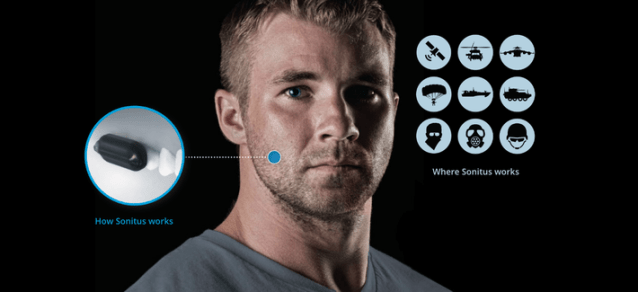
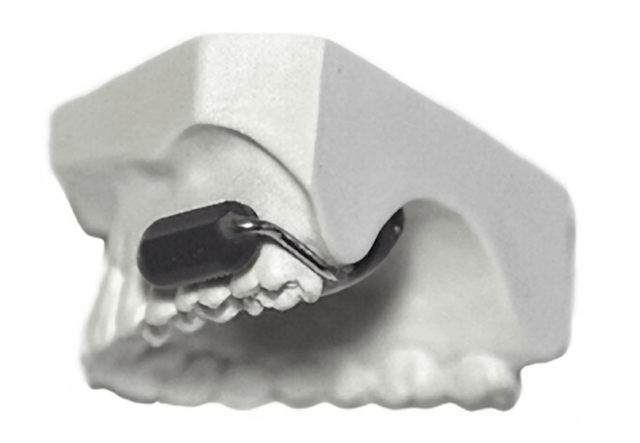
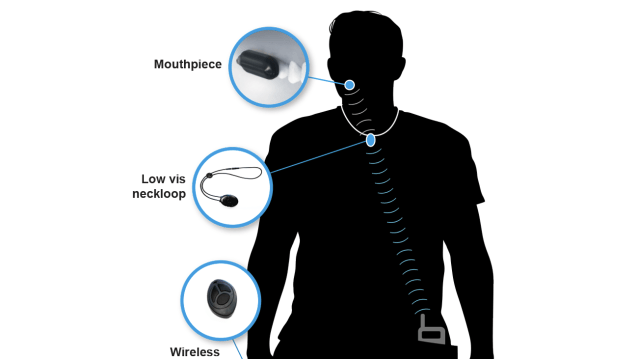
Dubbed the Molar Mic, it’s a small device that clips to your back teeth. The device is both microphone and “speaker,” allowing the wearer to transmit without any conspicuous external microphone and receive with no visible headset or earpiece. Incoming sound is transmitted through the wearer’s bone matter in the jaw and skull to the auditory nerves; outgoing sound is sent to a radio transmitter on the neck, and sent to another radio unit that can be concealed on the operator. From there, the signal can be sent anywhere.

“Essentially, what you are doing is receiving the same type of auditory information that you receive from your ear, except that you are using a new auditory pathway — through your tooth, through your cranial bones — to that auditory nerve. You can hear through your head as if you were hearing through your ear,” said Peter Hadrovic, CEO of Molar Mic creator Sonitus Technologies. He likened the experience to what happens when you eat a crunchy breakfast cereal — but instead of hearing that loud (delightfully marketable) chewing noise, you’re receiving important communications from your operations team.

Your ability to understand conversations transmitted through bone improves with practice. “Over the period of three weeks, your brain adapts and it enhances your ability to process the audio,” said Hadrovic. But even “out of the gate, you can understand it,” he said. (more below)

The Molar Mic connects to its transmitter via near-field magnetic induction. It’s similar to Bluetooth, encryptable, but more difficult to detect and able to pass through water.

Sonitus received early funding from In-Q-Tel, the nonprofit investment arm of the CIA, to develop the concept. Hadrovic declined to say whether CIA operatives had used the device in intelligence gathering. But the Molar Mic has seen the dust of Afghanistan and even played a role in rescue operations in the United States.

In Aug, 2016, a connection Hadrovic met through In-Q-Tel introduced the company to the Defense Innovation Unit Experimental, or DIUx (since rebranded simply DIU). They linked Sonitus to their “warrior in residence” and several other pararescuemen, or PJs, from the Air National Guard’s 131st Rescue Squadron at Moffett Field in Mountain View, California, near the DIU headquarters.Pararescuemen airdrop behind enemy lines to rescue downed aircrews.

A few of the airmen took prototypes of the device on deployment to Afghanistan. Although they didn’t use it during missions, they were able to test it repeatedly and offer feedback. Hadrovic said the 14 months of testing were critical to improving the product for use by the military.

In 2017, a few of the PJs from the 131st brought Molar Mic along when they deployed to Texas to help with rescue operations for Hurricane Harvey. Hadrovic said the airmen were pleased with its performance during complicated operations involving water, helicopters, and a lot of external noise.

“This guy is standing in neck-deep water, trying to hoist a civilian up into a helicopter above. He says, ‘There is no way I would be able to communicate with the crew chief and the pilot if I was not wearing your product.’” (More below)

The same technology holds the potential for far more rich biometric communication between operators and their commanders, allowing soldiers in the field and their team to get a timely sense of how the soldier is responding to pressure or injury, without him or her having to communicate all of that explicitly. It’s something that the military is working toward.

“As we look to the future human-machine interface… the human creates a lot of information, some of it intentional, some of it unintentional. Speaking is one form of information creation,” says Hadrovic. “Once you’ve made something digital, the information can be interspersed…We have a tremendous wealth of opportunities to communicate out of the person and back to the person, information that can be either collected from them and processed offline and given back in a nice feedback loop. What we’ve done is invested in the platform that will support these future elements.”

https://www.defenseone.com/technology/2018/09/military-now-has-tooth-mics-invisible-hands-free-radio-calls/151145/

Thanks to Kebmodee for bringing this to the It’s Interesting community.