A study from UC Davis suggests that quercetin, a flavanol in red wine, could cause headaches by disrupting alcohol metabolism and leading to toxin buildup. Further research is planned to understand why some people are more susceptible to these headaches.
Not everyone feels fine after red wine, and a flavanol may be the culprit.
A red wine may pair nicely with the upcoming Thanksgiving meal. But for some people, drinking red wine even in small amounts causes a headache. Typically, a “red wine headache” can occur within 30 minutes to three hours after drinking as little as a small glass of wine.
What in Wine Causes Headaches?
In a new study, scientists at the University of California, Davis, examined why this happens – even to people who don’t get headaches when drinking small amounts of other alcoholic beverages. Researchers think that a flavanol found naturally in red wines can interfere with the proper metabolism of alcohol and can lead to a headache. The study was published on November 20 in the journal Scientific Reports.
The Headache Culprit: Quercetin, a Flavanol
This flavanol is called quercetin and it is naturally present in all kinds of fruits and vegetables, including grapes. It’s considered a healthy antioxidant and is even available in supplement form. But when metabolized with alcohol, it can be problematic.
“When it gets in your bloodstream, your body converts it to a different form called quercetin glucuronide,” said wine chemist and corresponding author Andrew Waterhouse, professor emeritus with the UC Davis Department of Viticulture and Enology. “In that form, it blocks the metabolism of alcohol.”
Acetaldehyde Toxin Buildup Leads to Flushing, Headache, Nausea
As a result, people can end up accumulating the toxin acetaldehyde, explains lead author Apramita Devi, postdoctoral researcher with the UC Davis Department of Viticulture and Enology.
“Acetaldehyde is a well-known toxin, irritant, and inflammatory substance,” said Devi. “Researchers know that high levels of acetaldehyde can cause facial flushing, headache, and nausea.”
The medication disulfiram prescribed to alcoholics to prevent them from drinking causes these same symptoms. Waterhouse said that’s because the drug also causes the toxin to build up in the body when normally an enzyme in the body would break it down. About 40% of the East Asian population also has an enzyme that doesn’t work very well, allowing acetaldehyde to build up in their system.
“We postulate that when susceptible people consume wine with even modest amounts of quercetin, they develop headaches, particularly if they have a preexisting migraine or another primary headache condition,” said co-author Morris Levin, professor of neurology and director of the Headache Center at the University of California, San Francisco. “We think we are finally on the right track toward explaining this millennia-old mystery. The next step is to test it scientifically on people who develop these headaches, so stay tuned.”
Sunlight Increases Headache-Causing Flavanol in Grapes
Waterhouse said levels of this flavanol can vary dramatically in red wine.
“Quercetin is produced by the grapes in response to sunlight,” Waterhouse said. “If you grow grapes with the clusters exposed, such as they do in the Napa Valley for their cabernets, you get much higher levels of quercetin. In some cases, it can be four to five times higher.”
Levels of quercetin can also differ depending on how the wine is made, including skin contact during fermentation, fining processes, and aging.
Clinical Trial on Wine Headaches
Scientists will next compare red wines that contain a lot of quercetin with those that have very little to test their theory about red wine headaches on people. This small human clinical trial, funded by the Wine Spectator Scholarship Foundation, will be led by UCSF.
Researchers said there are still many unknowns about the causes of red wine headaches. It’s unclear why some people seem more susceptible to them than others. Researchers don’t know if the enzymes of people who suffer from red wine headaches are more easily inhibited by quercetin or if this population is just more easily affected by the buildup of the toxin acetaldehyde.
“If our hypothesis pans out, then we will have the tools to start addressing these important questions,” Waterhouse said.
Reference: “Inhibition of ALDH2 by quercetin glucuronide suggests a new hypothesis to explain red wine headaches” by Apramita Devi, Morris Levin and Andrew L. Waterhouse, 20 November 2023, Scientific Reports. DOI: 10.1038/s41598-023-46203-y
Funding for this initial investigation came from people who supported the project via 2022 Crowdfund UC Davis.
A novel technique that detects DNA from dead nerve cells in the blood may help diagnose Alzheimer’s disease and predict its development with a five-year window among people with mild cognitive impairment, a new study showed.
The work was led by scientists at Resonant, a subsidiary of Renew Biotechnologies, which expects to launch its new Alzheimer’s test early next year.
“Our research suggests that analyzing a simple blood draw can predict whether individuals with MCI [mild cognitive impairment] will develop Alzheimer’s disease within 5 years,” Timothy Jenkins, PhD, Resonant’s co-founder and the study’s senior author, said in a company press release.
“These data demonstrate significant potential for this technology’s use as a clinically actionable predictor of neurodegeneration, which could allow for pre-symptomatic interventions [or those before symptom onset],” Jenkins said, adding, “We believe that such early identification is the key to improving outcomes for patients with neurodegenerative disease.”
Seeking to diagnose Alzheimer’s much earlier in its course
As more new treatments for Alzheimer’s become available, diagnosing the disease accurately and early has become increasingly important. Some studies have recently begun examining protein-based biomarkers such as amyloid-beta as potential diagnostic markers. But diagnosing Alzheimer’s remains challenging.
“Alzheimer’s disease has historically been diagnosed by cognitive symptoms and the presence of proteins called amyloid beta and tau, but by the time these symptoms appear, the disease has progressed too far to significantly alter its trajectory,” said Chad Pollard, Resonant’s co-founder and the study’s first author.
“We are determined to change this,” Pollard said.
To that end, the researchers explored an alternative diagnostic strategy looking at DNA in blood “that circumvents the limitations of protein-based assays,” they wrote.
When cells in the body die, their DNA is released into the blood, where it’s detectable in trace amounts. In neurodegenerative diseases like Alzheimer’s, this cell-free DNA, or cfDNA, would be expected to contain a high proportion of DNA from the dying neurons, or nerve cells.
Detecting cfDNA from dead neurons might therefore be a useful tool to diagnose Alzheimer’s at very early stages of the disease, the team hypothesized.
“Early pre-symptomatic diagnosis has the potential to revolutionize disease management, allowing interventions that could halt the disease’s progression altogether, significantly improving patient outcomes,” the researchers wrote.
“The use of cfDNA offers the advantage of convenient and minimally invasive sample collection compared to traditional cerebrospinal fluid [the liquid around the brain and spinal cord] or tissue biopsies, making this approach more accessible and patient friendly,” they added.
Using cfDNA as a diagnostic biomarker presents a technical challenge however: how to distinguish between cfDNA from dying neurons and cfDNA from all the other types of cells dying in the body?
The scientists were able to solve this problem via a combination of detailed DNA sequencing and analysis of epigenetic changes.
Epigenetic modifications refer to the addition of chemical marks to DNA that influence genes’ activities without altering their underlying DNA sequence. Different types of cells characteristically have unique epigenetic profiles.
The team found that DNA from neurons show certain characteristic changes in methylation, a type of epigenetic modification, in particular regions of DNA. By looking at the proportion of DNA containing these methylation changes, the researchers were able to calculate the proportion of neuronal cfDNA.
“Through a comprehensive analysis of differential methylation regions (DMRs) between purified [brain] neurons and blood … samples, we identified robust biomarkers that accurately distinguish neuron-derived cfDNA from non-neuron derived cfDNA,” the team wrote.
Testing found to accurately ID ‘100% of patients’ with an Alzheimer’s diagnosis
Using this technology, the scientists analyzed blood samples from 13 Alzheimer’s patients, six people with MCI who progressed to confirmed Alzheimer’s within five years, six people with MCI who did not progress to Alzheimer’s, and 25 older people without signs of cognitive impairment.
The results showed that neuron-derived cfDNA accounted for more than 5% of the total cfDNA in all of the Alzheimer’s patients. In addition, all the people initially diagnosed with mild cognitive impairment who eventually progressed to Alzheimer’s, but only 25% of those who did not, had a proportion of neuronal cfDNA higher than 5%.
“Targeted sequencing at the identified DMR locus demonstrated that a conservative cutoff of 5% of neuron-derived cfDNA in blood … accurately identifies 100% of patients diagnosed with AD [Alzheimer’s disease], showing promising potential for early disease detection,” the team wrote.
“Additionally, this method effectively differentiated between patients with mild cognitive impairment (MCI) who later progressed to AD and those who did not, highlighting its prognostic capabilities,” they added.
The researchers speculated that the handful of MCI patients who had elevated neuron cfDNA levels but did not progress to Alzheimer’s might actually have been showing signs of early dementia, but they did not have access to data to verify this idea.
Among those without signs of cognitive impairment, just 10% had neuron-derived cfDNA accounting for more than 5% of total cfDNA.
“This cfDNA-based diagnostic strategy outperforms recently developed protein-based assays, which often lack accuracy and convenience,” the researchers wrote, adding that “this study highlights the advantages of utilizing cfDNA as a diagnostic tool for neurodegenerative diseases.”
Still, the team is working to increase the test’s cell-specificity and predictive power in people with mild cognitive impairment. Resonant aims to make the test broadly accessible, which “will be essential to see meaningful changes in patient care and outcomes,” Pollard said.
Besides Alzheimer’s, the company is working on the potential expansion of this diagnostic technique to other neurogenerative disorders such as Parkinson’s disease and amyotrophic lateral sclerosis.
While PepsiCo’s Doritos chips are popular with gamers, the loud crunch they make has long been a source of frustration.
The beverage and snacking giant estimated that 85% percent of U.S. gamers have consumed Doritos in the past three months. But at the same time, nearly a third of individuals reported that other people’s crunching distracts them from playing well and impacts their performance.
To “help gamers keep the crunch to themselves,” Doritos is debuting what it calls “Doritos Silent.” Gamers download Doritos Crunch Cancellation software and when the technology is turned on, the software detects the crunching sounds and silences it while keeping the gamer’s voice intact.
“The connection between Doritos fans and the gaming community is undeniable,” Fernando Kahane, global marketing head at PepsiCo, said in a statement. “Both boldly and unapologetically embrace their individual flavors. ‘Doritos Silent’ recognizes this bond and demonstrates the brand’s continued commitment to innovation and elevating the experience for gamers who choose Doritos.”
The software, which took six months to develop, used artificial intelligence and machine learning to analyze more than 5,000 different crunch sounds.
While much of PepsiCo’s focus is on creating snacks or beverages that resonate with fickle consumers, Doritos Silent serves to make consuming the chip and gaming more enjoyable. The hope for Doritos and PepsiCo, of course, is to remove a major source of frustration, making the chip a more attractive snacking option.
At the same time, it keeps the crunch for the person eating Doritos, which according to PepsiCo, is a major reason people enjoy it in the first place.
Gaming remains an incredibly popular activity. Roughly 213 million Americans, or 65% of the population, play at least one hour of video games each week, according to the Entertainment Software Association. DataProt estimates the $197 billion video game market has 3.25 million gamers worldwide.
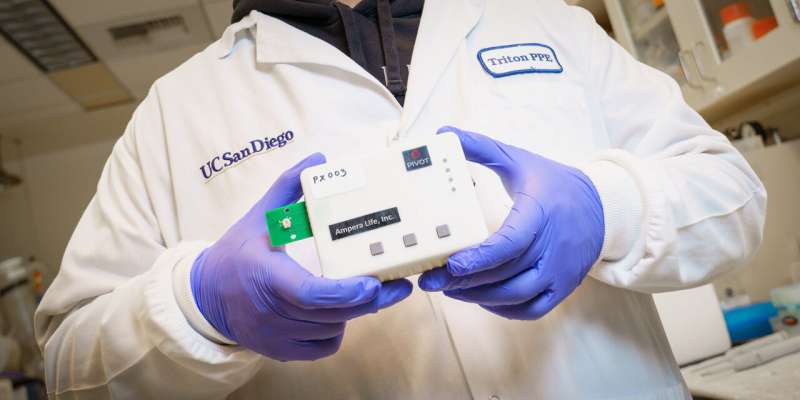
An international team of researchers has developed a handheld, non-invasive device that can detect biomarkers for Alzheimer’s and Parkinson’s Diseases. The biosensor can also transmit the results wirelessly to a laptop or smartphone.
The team tested the device on in vitro samples from patients and showed that it is as accurate as the state of the art. Ultimately, researchers plan to test saliva and urine samples with the biosensor. The device could be modified to detect biomarkers for other conditions as well.
Researchers present their findings in the Nov. 13, 2023 issue of the Proceedings of the National Academy of Sciences.
The device relies on electrical rather than chemical detection, which researchers say is easier to implement and more accurate.
“This portable diagnostic system would allow testing at-home and at point of care, like clinics and nursing homes, for neurodegenerative diseases globally,” said Ratnesh Lal, a bioengineering, mechanical engineering and materials science professor at the UC San Diego Jacobs School of Engineering and one of the paper’s corresponding authors.
By the year 2060, about 14 million Americans will suffer from Alzheimer’s Disease. Other neurodegenerative diseases, such as Parkinson’s, are also on the rise. Current state of the art testing methods for Alzherimer’s and Parkinson’s require a spinal tap and imaging tests, including an MRI. As a result, early detection of the disease is difficult, as patients balk at the invasive procedures. Testing is also difficult for patients who are already exhibiting symptoms and have difficulty moving as well as those who have no early access to local hospitals or medical facilities.
One of the prevailing hypotheses in the field, which Lal has focused on, is that Alzheimer’s Disease is caused by soluble amyloid peptides that come together in larger molecules, which in turn form ion channels in the brain.
Lal wanted to develop a test that would be able to detect amyloid beta and tau peptides—biomarkers for Alzheimer’s—and alpha synuclein proteins—biomarker for Parkinson’s—non invasively, specifically from saliva and urine. He wanted to rely on electrical rather than chemical detection, as he believes it is easier to implement and more accurate. He also wanted to build a device that could wirelessly transmit the test results to the patient’s family and physicians.
The device is the result of his three decades of expertise, as well as his collaboration with researchers globally, including those co-authors in this work from Texas and China.
“I am trying to improve quality of life and save lives,” he said.
To realize Lal’s vision, he and colleagues adapted a device they developed during the COVID pandemic to detect the spike and nucleoprotein proteins in the live SARS-CoV-2 virus, which they described in PNAS in 2022. That breakthrough had been made possible by chip miniaturization and by large-scale automation of biosensor manufacturing.
How the device is made and how it works
The device described in the 2023 PNAS study, consists of a chip with a high sensitivity transistor, commonly known as a field effect transistor (FET). In this case, each transistor is made of a graphene layer that is a single atom thick (GFET, with the G standing for graphene) and three electrodes–source and drain electrodes, connected to the positive and negative poles of a battery, to flow electric current, and a gate electrode to control the amount of current flow.
Connected to the gate electrode is a single DNA strand, which serves as a probe that specifically binds to either amyloid beta, tau or synuclein proteins. The binding of these amyloids with their specific DNA strand probe, called an aptamer, changes the amount of current flow between the source and drain electrode. The change in this current or voltage is the signal used to detect the specific biomarkers, like amyloids or COVID 19 proteins.
The research team tested the device with brain-derived amyloid proteins from Alzheimer’s and Parkinson’s deceased patients. The experiments showed that the biosensors were able to detect the specific biomarkers for both conditions with great accuracy, on par with existing state of the art methods. The device also works at extremely low concentrations, meaning that it needs small quantities for samples–down to just a few microliters.
In addition, the tests showed that the device performed well even when the samples analyzed contained other proteins. Tau proteins were more difficult to detect. But because the device looks at three different biomarkers, it can combine results from all three to arrive at a reliable overall result.
The technology has been licensed from UC San Diego to a biotechnology startup Ampera Life. Lal is the company’s chairman but does not receive financial support for his research from the company.
Next steps include testing blood plasma and cerebro-spinal fluid with the device, then finally saliva and urine samples. The tests would take place in hospital settings and nursing homes. If those tests go well, Ampera Life plans to apply for FDA approval for the device, hopefully in the next five or six months. The ultimate goal is to have the device on the market in a year.
More information: In pursuit of degenerative brain disease diagnosis: Dementia biomarkers detected by DNA aptamer-attached portable graphene biosensor, Proceedings of the National Academy of Sciences (2023). DOI: 10.1073/pnas.2311565120. doi.org/10.1073/pnas.2311565120
The bear population near Glacier National Park is staring down a 36 million pound problem of human creation, and it’s killing as many as eight grizzlies per year. There isn’t much in the wild that can take down a grizzly, but a stretch of rail line that goes over the Marias Pass in Montana is one of the predator’s most deadly perils. The bears are attracted to the rail line because the trains frequently drop grain, and when they consume the cold fermented grain a bear can become intoxicated to the point of either falling asleep right there on the tracks, or becoming too lethargic to effectively run away.
According to the State Daily, BNSF is attempting to push off any action on the matter because grizzly populations are growing to the point where they may soon be delisted from endangered species status. The train company doesn’t want the death of these bears to force them to run trains less full, or to avoid running trains in weather that may cause derailments. Apparently the rail operators’ bottom line is dependent on running overloaded train cars in risky inclement weather, and the coffers are greased with the blood of dead bears.
To learn more about the bears, their populations, the train problem, and potential solutions, check out Cowboy State Daily’s report on the matter. It’s well worth a read.
Do lab rats have the ability to imagine, like humans do? A new study says yes.
Rats may be capable of a type of imagination that’s crucial for route planning, research from the Howard Hughes Medical Institute (HHMI) suggests. Although the creative arts spring to mind when we think of imagination, the ability also plays roles in everyday tasks, like navigating our environment. People constantly imagine the route they will take to get to places, whether it’s a routine commute to work or a trip to an unfamiliar location.
This type of imagination is controlled by the hippocampus, a brain region involved in learning and memory. People with a damaged hippocampus struggle to imagine scenarios, including future routes, co-lead study author Chongxi Lai, a research specialist at HHMI’s Janelia Research Campus in Virginia, told Live Science. Until now, scientists couldn’t determine whether other animals, such as rats, possess this form of imagination.
In the study, published Thursday (Nov. 2) in the journal Science, the researchers used virtual reality (VR) and a brain-machine interface to show that rats have this capability.
The study is provocative because it challenges the long-held assumption that rats might not be capable of thinking beyond their immediate circumstances, said Kenneth Kay, a neuroscientist at Columbia University’s Zuckerman Institute who was not involved with the work.
The team implanted electrodes into the rats’ brains to measure their hippocampal activity. They then immersed them in a VR world by putting them in an arena surrounded by a 360-degree screen that displayed a virtual environment. The rats were placed on a spherical treadmill that allowed them to rotate freely and view the entire panorama.
The researchers then trained the rats to run toward a virtual goalpost to receive a treat. The treadmill’s movements updated the rat’s position in the virtual environment. After several rounds, each with the same goalpost at a random location, the rats had explored the whole landscape.
For each set of coordinates in the virtual environment, the electrodes detected a specific pattern of activity in the hippocampus. The team hypothesized that rats could recreate those patterns if they imagined following a route along those coordinates, rather than actually running the route.
So, they set up a game where rats only had to think about moving toward a goalpost; the virtual environment jumped to coordinates based on the electrode readings instead of treadmill movements. Named after a 2008 movie about teleportation, this “Jumper” game showed that rats planned efficient routes to the goalpost without meandering and regardless of how they physically moved.
Lastly, the researchers tested whether the rats could imagine moving an object toward the goalpost, rather than themselves.
Nicknamed the “Jedi” game, this required the rats to “use the Force” to move a virtual box toward the goalpost. The rodents’ success showed that they could harness their mental maps to think about navigating an object through their environment, without moving themselves.
Lai noted that scientists already knew about patterns of hippocampal activity that correspond to environmental locations in humans and rats. “But it hasn’t been shown that animals can control it” until now.
Similar to humans, the rats took only a few seconds to plan routes, suggesting this form of imagination may be similar between these species. “I could see the same experiment being run in human subjects and producing similar results, which by itself gets at the potential similarity,” Kay said.
Senior study author Albert Lee said he would like to explore whether rats can imagine navigating an environment without receiving cues, as well as probe how other brain regions communicate with the hippocampus during imagination to “get a whole picture of the underlying processes for this very high-level cognitive function.”
Astronomers have detected a mysterious blast of radio waves that have taken 8 billion years to reach Earth. The fast radio burst is one of the most distant and energetic ever observed.
Fast radio bursts, or FRBs, are intense, millisecond-long bursts of radio waves with unknown origins. The first FRB was discovered in 2007, and since then, hundreds of these quick, cosmic flashes have been detected coming from distant points across the universe.
The burst, named FRB 20220610A, lasted less than a millisecond, but in that fraction of a moment, it released the equivalent of our sun’s energetic emissions over the course of 30 years, according to a study published Thursday in the journal Science.
Many FRBs release super bright radio waves lasting only a few milliseconds at most before disappearing, which makes fast radio bursts difficult to observe.
Radio telescopes have helped astronomers trace these quick cosmic flashes, including the ASKAP array of radio telescopes, located on Wajarri Yamaji Country in Western Australia. Astronomers used ASKAP to detect the FRB in June 2022 and determine where it originated.
“Using ASKAP’s array of (radio) dishes, we were able to determine precisely where the burst came from,” said study co-author Dr. Stuart Ryder, an astronomer at Macquarie University in Australia, in a statement. “Then we used (the European Southern Observatory’s Very Large Telescope) in Chile to search for the source galaxy, finding it to be older and (farther) away than any other FRB source found to date and likely within a small group of merging galaxies.”
The research team traced the burst to what appears to be a group of two or three galaxies that are in the process of merging, interacting and forming new stars. This finding aligns with current theories that suggest fast radio bursts may come from magnetars, or highly energetic objects that result from the explosions of stars.
Scientists believe that fast radio bursts may be a unique method that can be used to “weigh” the universe by measuring the matter between galaxies that remains unaccounted for.
“If we count up the amount of normal matter in the Universe — the atoms that we are all made of — we find that more than half of what should be there today is missing,” said study coauthor Ryan Shannon, a professor at Swinburne University of Technology in Australia, in a statement. “We think that the missing matter is hiding in the space between galaxies, but it may just be so hot and diffuse that it’s impossible to see using normal techniques.”
So far, the results of current methods used to estimate the universe’s mass don’t agree with one another, which suggests the entire scope of the universe isn’t included.
“Fast radio bursts sense this ionised material,” Shannon said. “Even in space that is nearly perfectly empty they can ‘see’ all the electrons, and that allows us to measure how much stuff is between the galaxies.”
“J-P showed that the (farther) away a fast radio burst is, the more diffuse gas it reveals between the galaxies. This is now known as the Macquart relation,” Ryder said. “Some recent fast radio bursts appeared to break this relationship. Our measurements confirm the Macquart relation holds out to beyond half the known Universe.”
Nearly 50 fast radio bursts have been traced to date back to their origin points, and about half of them have been found using ASKAP.
“While we still don’t know what causes these massive bursts of energy, the paper confirms that fast radio bursts are common events in the cosmos and that we will be able to use them to detect matter between galaxies, and better understand the structure of the Universe,” Shannon said.
Astronomers said they hope that future radio telescopes, currently under construction in South Africa and Australia, will enable the detection of thousands more fast radio bursts at greater distances.
“The fact that FRBs are so common is also amazing,” Shannon said. “It shows how promising the field can be, because you’re not just going to do this for 30 bursts, you can do this for 30,000 bursts, make a new map of the structure of the universe, and use it to answer big questions about cosmology.”
Scientists once considered sleep to be like a shade getting drawn over a window between the brain and the outside world: when the shade is closed, the brain stops reacting to outside stimuli.
A study published on 12 October in Nature Neuroscience1 suggests that there might be periods during sleep when that shade is partially open. Depending on what researchers said to them, participants in the study would either smile or frown on cue in certain phases of sleep.
“You’re not supposed to be able to do stuff while you sleep,” says Delphine Oudiette, a cognitive scientist at the Paris Brain Institute in France and a co-author of the study. Historically, the definition of sleep is that consciousness of your environment halts, she adds. “It means you don’t react to the external world.”
Dream time
A few years ago, however, Oudiette began questioning this definition after she and her team conducted an experiment in which they were able to communicate with people who are aware that they are dreaming while they sleep — otherwise known as lucid dreamers. During these people’s dreams, experimenters were able to ask questions and get responses through eye and facial-muscle movements2.
Karen Konkoly, who was a co-author on that study and a cognitive scientist at Northwestern University in Evanston, Illinois, says that after that paper came out, “it was a big open question in our minds whether communication would be possible with non-lucid dreamers”.
So Oudiette continued with the work. In her latest study, she and her colleagues observed 27 people with narcolepsy — characterized by daytime sleepiness and a high frequency of lucid dreams — and 22 people without the condition. While they were sleeping, participants were repeatedly asked to frown or smile. All of them responded accurately to at least 70% of these prompts.
Overall response rates were higher for all participants during REM (rapid eye movement) sleep, when the deepest sleep occurs but the brain remains quite active, than during other sleep stages. The researchers tracked participants’ brain activity during the experiments using electroencephalography (EEG), which captures signals from electrodes placed along a person’s scalp.
What this shows is that “you have some physiological states that are more favourable to opening the [window shade] to the external world”, Oudiette says.
Using similar experiments, researchers might gain a better understanding of various sleep disorders, including insomnia and sleep walking, she says. And they might begin to identify the parts of the brain that are active during sleep, and how those relate to consciousness.
This study is part of a larger evolution in the field of sleep research, says Mélanie Strauss, a neurologist and cognitive scientist at Erasmus Hospital in Brussels, Belgium. Researchers are moving away from monitoring sleep mainly with EEG and towards “fine grained” approaches that combine EEG with various tasks and stimuli — a strategy that could help to shed light on specific diseases or conditions, she says.
Roland Griffiths, an internationally revered researcher of psychedelic and mood-altering drugs, whose research helped kickstart a new era of psychedelic study and led to the creation of the nation’s first psychedelic research center, at Johns Hopkins, died on Monday, Oct. 16, at age 77.
Griffiths’ work generated immense scientific and philanthropic interest, including $17 million in gifts that led to the creation of the Johns Hopkins Center for Psychedelic and Consciousness Research in 2019, where he served as the founding director. He was diagnosed with colon cancer in November 2021.
Groundbreaking studies published by Griffiths and his colleagues found that psilocybin—the active ingredient in so-called magic mushrooms—produced experiences that resulted in substantial and sustained personal meaning, could help treat depression and had therapeutic effects in people who suffer from substance use disorder (smoking, alcohol, and misuse of other drugs) and existential distress caused by life-threatening disease.
In June, David Yaden, a researcher at the center, became the inaugural recipient of the Roland R. Griffiths, Ph.D. Professorship Fund in Psychedelic Research on Secular Spirituality and Well-Being. The $24 million endowed professorship, the largest ever at the Johns Hopkins University School of Medicine, aims to advance research on psychedelic substances and their effects on human health, behavior and worldview. Yaden is an assistant professor of psychiatry and behavioral sciences.
Jimmy Potash, director of the Department of Psychiatry and Behavioral Sciences, credits Griffiths with attracting talented investigators and trainees to the department, in turn helping it become one of the country’s top-ranked programs. Potash says Griffiths’ earlier pioneering work in psychopharmacology and his reputation as a superb researcher made him the ideal person to take on the controversial study of psychedelic drugs.
“He was about 50 years old when he plunged into this area, and he had already established himself as a careful, methodical, meticulous investigator, the kind of researcher whose work was unimpeachable,” Potash says. “This is what the field needed, as skeptics would be unlikely to trust the work of anyone less rigorous and objective. The other key was that Roland was sure of himself, and unflappable. He knew that all that mattered was what the data told him.”
Prior to his work in psychedelic research, Griffiths was already a giant in the field of psychopharmacology and recognized for his seminal research into the psychoactive and dependence-potential properties of caffeine. That work enhanced understanding of caffeine as a model for studying drug dependence, which led to caffeine withdrawal being included in the Diagnostic and Statistical Manual of Mental Disorders (DSM-5), the authoritative guide to the diagnosis in psychiatry and psychology.
Griffiths authored a letter in 2008 signed by nearly 100 scientists and physicians urging the FDA to regulate labeling and caffeine composition of energy drinks. A study published that year in the journal Drug and Alcohol Dependence argued as such, noting that there were increasing reports of caffeine intoxication from energy drinks, and it was likely that problems with caffeine dependence and withdrawal would also increase. Letters and advocacy such as this led to greater FDA regulations when combining caffeine with other products, including the federal ban on prepackaged caffeinated alcoholic drinks.
“Roland’s research with caffeine was elegant, systematic and thorough,” says Eric Strain, director of the Behavioral Pharmacology Research Unit and a co-author of the 2008 study. “It was not only scientifically impressive, but it also really helped to reveal that there were people who truly struggled to control their caffeine use and, under some circumstances, would go to incredible lengths to get caffeine. His caffeine work alone would be an impressive career for most scientists.”
A specialist in the behavioral and subjective effects of mood-altering drugs, including nicotine and sedatives, as well as alcohol self-administration, Griffiths’ extensive work in sedative research included studies on long-term use and misuse, and cognitive effects of the drugs. He also served as a consultant to the National Institutes of Health, to numerous pharmaceutical companies in the development of new psychotropic drugs and to the World Health Organization as a member of the Expert Committee on Drug Dependence.
Griffiths’ landmark 2006 study, published in Psychopharmacology, demonstrated that a single high dose of psilocybin in medically and psychiatrically healthy participants produced experiences that had substantial personal meaning and spiritual significance, and resulted in sustained positive changes in attitudes and behavior. This study is credited with marking the beginning of a renaissance in psychedelic research, which had been largely dormant since the early 1970s—a number of other prominent institutions began their own psychedelic research ventures around this same time, including New York University and University of California Los Angeles, due to renewed interest and backing from similar funding sources.
In 2020, he and his Johns Hopkins colleagues at the center published a JAMA Psychiatry paper that was the first rigorous controlled study showing that psilocybin-assisted psychotherapy could effectively treat clinical depression. “The first study in 2006 was amazing and revelatory to him with how meaningful and profound an experience it was for the volunteers,” says Mary Cosimano, director of guide/facilitator services at the Center for Psychedelic and Consciousness Research. “Over time, study after study, volunteer after volunteer, Roland and the rest of the team observed how powerful this treatment can be, not just spiritually, but therapeutically as well.”
VIDEO CREDIT: OPRAH DAILY’S O TALKS
Griffiths was also well aware that the use of psychedelics involves risks, and he worked assiduously to characterize them as he observed and measured the benefits.
A clinical researcher at Johns Hopkins for more than 50 years and author of more than 400 journal articles and book chapters, Griffiths’ discipline extended to his exercise, his meditation practice and his diet, which he carefully controlled, with the exception of his love for chocolate.
Fred Barrett, director of the Center for Psychedelic and Consciousness Research, notes that when they would write papers together, Griffiths would scrutinize each word and data point to make sure that the report precisely communicated their scientific findings.
“He really challenged me to be as precise in my language as possible, but as audacious as possible in my goals,” Barrett says. “Those two things juxtaposed allow for an awful lot of discovery.”
Griffiths earned his bachelor’s degree at Occidental College in Los Angeles in 1968, and his doctorate in psychology at the University of Minnesota in 1972. Upon graduation, he became an assistant professor in behavioral biology at the Johns Hopkins University School of Medicine and a research associate in the Department of Psychiatry at Johns Hopkins Bayview Medical Center, then known as Baltimore City Hospitals. He was named research chief in 1975.
In the 1990s, Griffiths got deeply involved with the Siddha Yoga meditation community, and began a long-term dedicated practice. He has said it was the first time it got him thinking about his own deep inner experience, and he was intrigued by the altered states of consciousness achieved through meditation. That interest ultimately led him to study psilocybin—which can also cause altered states of consciousness—when the opportunity was presented.
In November 2021, after a routine colonoscopy, doctors diagnosed Griffiths with late stage colon cancer. But he remained himself to the end, drawing on his 25-year meditation practice and his work exploring the depths of the human experience to find beauty, joy and meditative contemplation in the throes of his surprise diagnosis, which he referred to as a “gift” that helped inspire the professorship.
“For me, the psychological off-ramp from potential emotional misery has been the cultivation of gratitude for the precious gift of life itself, of being conscious, awake to the mystery of this present moment,” Griffiths said in 2022 in a video about the professorship.
Griffiths is survived by his wife, Marla Weiner; three children from a previous marriage: Sylvie Grahan, Jennie Otis and Morgan Griffiths; and five grandchildren.
To learn more about the Roland R. Griffiths, Ph.D. Professorship Fund in Psychedelic Research on Secular Spirituality and Well-Being, visit the website.
Cassava Sciences, a biotech company whose work on the experimental Alzheimer’s drug simufilam has been heavily criticized and is the subject of ongoing federal probes, has suffered another blow. A much-anticipated investigation by the City University of New York has accused neuroscientist Hoau-Yan Wang, a CUNY faculty member and longtime Cassava collaborator, of scientific misconduct involving 20 research papers. Many provided key support for simufilam’s jump from the lab into ongoing clinical studies and, given the CUNY report, some scientists are now calling for the two ongoing trials to be suspended.
The investigative committee found numerous signs that images were improperly manipulated, for example in a 2012 paper in The Journal of Neuroscience that suggested simufilam can blunt the pathological effects of beta amyloid, a protein widely thought to drive Alzheimer’s disease. It also concluded that Lindsay Burns, Cassava’s senior vice president for neuroscience and a co-author on several of the papers, bears primary or partial responsibility for some of the possible misconduct or scientific errors.
The committee could not prove its suspicions, however, because Wang did not produce the original raw data. Instead, the panel says its finding of wrongdoing was based on “long-standing and egregious misconduct in data management and record keeping by Dr. Wang.”
The 50-page report obtained by Science says the scientist failed to turn over to the panel “even a single datum or notebook in response to any allegation” and cites “Wang’s inability or unwillingness to provide primary research materials to this investigation” as a “deep source of frustration.”
Wang’s attorney, Jennifer Beidel Scramlin, said neither she nor her client can comment about the report until they speak with CUNY, and that university representatives have not responded to their inquiries. But the report says Wang offered a variety of defenses, including a claim that much of his original data had been “thrown away in response to a request from CCNY [City College of New York] to clean the lab during the COVID-19 pandemic.” (CCNY is part of CUNY.) The panel could find no evidence of such a request.
The CUNY investigation into Wang began in the fall of 2021, in response to allegations from other investigators that were forwarded by the Office of Research Integrity (ORI), the federal entity that oversees work funded by the National Institutes of Health. NIH provided millions of dollars for work by Wang and Burns, including about $1.2 million to Wang since December 2020. The investigation was not completed until this year, in May, according to emails obtained by Science. The four-member investigative panel of researchers, led by CUNY neuroscientist Orie Shafer, encountered delays beyond its failed efforts to obtain raw data from Wang. For 6 months, university officials stonewalled the panel’s requests for image files confiscated from Wang’s computers, according to the report. The investigators received the files only after appealing directly to Vincent Boudreau, president of CCNY.
Science obtained the report, labeled “Final,” from a person who requested anonymity because they are not authorized to share it. The university forwarded the report to ORI, according to emails obtained by Science. But it has taken no public steps regarding Wang during the roughly 5 months since the report was completed. In response to questions from Science, senior adviser to the CCNY president Dee Dee Mozeleski said Boudreau could not comment on the matter at this time, but “action on the report is imminent.”
CUNY biochemist Kevin Gardner, who helped prepare a preliminary assessment of Wang’s work but was not involved in the final review, calls what the panel found “embarrassing beyond words.” Wang’s record of research is “abhorrent,” he says. That this work has supported clinical trials, Gardner adds, “makes it doubly sickening.”
Some scientists have called for Cassava to suspend its trials, but the company, in a written statement, Cassava declined to comment about the CUNY report because the school had not shared it with the firm nor confirmed to the company the authenticity of what Science obtained. It said CUNY did not interview any Cassava employees, “and refused all requests for information and offers of assistance from Cassava.” The company said “it looks forward contnuing the development of simulfiam as a potential treatment for patients with Alzheimer’s.”
WANG AND BURNS HAVE PUBLISHED together since the mid-2000s. Their studies of the brain’s opioid receptors were applied to developing a pain drug that reached clinical trials but never won Food and Drug Administration (FDA) approval. The collaborators shifted their efforts to the possible influence on Alzheimer’s of filamin-A, a protein that provides cellular scaffolding for neurons and other cells. Studies conducted in Wang’s lab suggested simufilam reinstates the shape and function of filamin-A when it becomes misfolded. In addition, the drug purportedly reduces inflammation, and suppresses the toxic effects of beta amyloid and tau, two proteins that can kill nerve cells and have long been implicated in Alzheimer’s.
Burns and Wang share inventor credit on numerous patents related to filamin-A and simufilam. They assigned intellectual property rights to Pain Therapeutics—Cassava’s name before it was changed in 2019.
Questions about simufilam broke out in public in August 2021, when an attorney filed a petition to pause its clinical trials with FDA on behalf of two neuroscientists—Geoffrey Pitt of Weill Cornell Medicine and David Bredt, a former pharmaceutical executive. The petition cited many of the same papers described in the CUNY report, suggesting that apparent image doctoring in them undermined claims that simufilam might slow or even reverse Alzheimer’s symptoms.
Pitt and Bredt were short sellers—investors who stand to profit if a company’s stock falls. Cassava CEO Remi Barbier challenged their motives and denied their scientific claims, and the company filed a defamation lawsuit against them and other detractors. Meanwhile, Cassava investors filed their own lawsuit claiming that some executives, including Burns and Barbier, who is her spouse, misled investors in a “fraudulent scheme” regarding simufilam’s prospects for success.
Cassava conducted relatively small phase 2 trials of the drug. Based on what it said were promising results, it launched the phase 3 trials needed to win FDA approval. One of Cassava’s phase 3 trials to treat mild-to-moderate Alzheimer’s has enrolled more than 800 volunteers. The company says that by December it will complete enrollment of nearly 1100 more patients for a second phase 3 trial. After the petition, FDA declined to pause those trials, but reserved the right to do so.
Bredt’s and Pitt’s attorney paid Matthew Schrag, a Vanderbilt University neuroscientist, $18,000 to produce some of the analysis used in the petition. Schrag says he has never owned Cassava stock or held a short-selling position and worked independently from his employer. Schrag sent his findings, along with other apparent irregularities he detected in Wang’s papers, to NIH, which passed them along to ORI.
AFTER ORI REACHED OUT TO CUNY, the school’s investigators examined Wang-authored papers published from 2003 through 2021, a conference poster, and a grant proposal to NIH. Many of the 31 allegations the panel reviewed involved apparently improper alterations of Western blots, a technique to distinguish distinct proteins within a tissue sample. Such manipulation can significantly alter the interpretation and validity of experimental findings. The committee said it “found evidence highly suggestive of deliberate scientific misconduct by Dr. Wang for 14 of the 31 allegations.”
To check for doctoring of those data, Shafer and his colleagues sought raw-data images to compare against published versions. Wang provided none of those, the report said, adding: “It appears likely that no primary data and no research notebooks pertaining to the 31 allegations exist.” The panel also found that Wang “starkly siloed” Western blot preparation in his lab, apparently preparing nearly all such images himself—a highly unusual practice for a lab’s principal investigator.
Among his defenses, Wang told the investigators that “at least one hard drive” containing key data was destroyed by CCNY officials when they sequestered his materials for review. Wang also accused the committee of bias against him, “failing to follow the CUNY guidelines for this investigation, and of lacking a basic understanding of Western blot analysis.” The committee noted in its report, however, that three of its members “routinely conduct experiments involving protein biochemistry and two out of four routinely conduct and publish western blot experiments.”
The CUNY report suggests scientists beyond Wang and Burns might also be faulted. Harvard University neurologist Steven Arnold, senior and corresponding author of a 2012 study with Wang in The Journal of Clinical Investigation, “may bear a measure of responsibility” for failing to ensure the integrity of the data in that paper and others co-authored by the CUNY scientist. Arnold leads an Alzheimer’s research program at Harvard and, like Wang, has served as a Cassava scientific adviser. Arnold declined to comment, saying he needed time to review the report.
The scientific basis for simufilam, including the critical “misfolding” of filamin-A, came from Wang’s lab. But in its statement, Cassava said six basic research studies by organizations that “have no connection to CUNY” also support their drug. One paper, funded by Cassava, concluded simufilam “may promote brain health.” Although some of the lab work was done at the Cochin Institute, much of it took place in Wang’s lab. Burns and Wang were the chief authors.
Two more papers cited by the company, both co-authored by Burns, suggest simufilam might be effective to treat pituitary tumors or seizures. The other papers examined issues surrounding filamin-A, beta amyloid, and tau, but did not directly test simufilam’s ability to reverse or prevent brain pathologies.
The CUNY investigators recommended that journals retract the Wang papers they had probed if he can’t provide original data. Multiple journals have already done so, after Schrag notified them of his findings. The investigators noted that PLOS ONE, which retracted five of Wang’s papers, “discovered evidence of research misconduct in his response to the concerns raised.” Other journals, including The Journal of Neuroscience, posted corrections or expressions of concern on Wang papers, with some editors saying they were waiting for CUNY’s investigation before taking further steps.
Wang’s fate appears to be in limbo as CUNY prepares its next steps. In the meantime, he continues to publish with Burns, including papers on simufilam in recent months.
Schrag noted that his extensive dossier on Wang’s studies went to NIH during the summer of 2021. CUNY’s report is “detailed, thorough, and credible,” he says. “But a 2-year delay is somewhat astonishing. … The phase 3 simufilam clinical trials should never have started. And they should certainly be shut down on the basis of this report.”










 It's Interesting