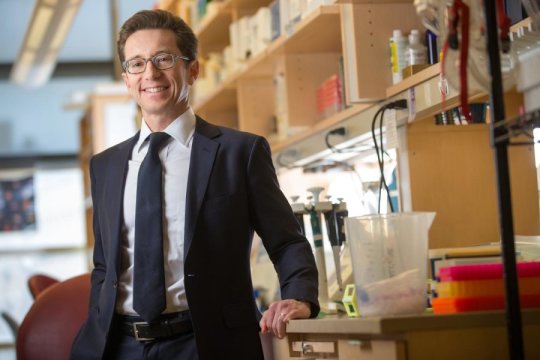
Socioeconomic status shapes developing brains


The brain anatomy is consistently shaped by socioeconomic status from childhood to early adulthood, a study has found.

The brain anatomy is consistently shaped by socioeconomic status from childhood to early adulthood, a study has found. The findings, published in the journal JNeurosci, draws attention to the importance of preschool life as a period when associations between SES and brain organisation may first develop.

Researchers from the National Institute of Mental Health in the US analysed brain scans of the same individuals collected over time between five and 25 years of age. Comparing this data to parental education and occupation and each participants’ intelligence quotient (IQ) allowed the researchers to demonstrate positive associations between socioeconomic status (SES) and the size and surface area of brain regions involved in cognitive functions such as learning, language, and emotions.

This is the first study to associate greater childhood SES with larger volumes of two subcortical regions — the thalamus and striatum — thereby extending previous SES research that has focused on its relationship to the cortex.

Finally, the researchers identify brain regions underlying the relationship between SES and IQ. A better understanding of these relationships could clarify the processes by which SES becomes associated with a range of life outcomes, and ultimately inform efforts to minimise SES-related variation in health and achievement, they said.

https://www.timesnownews.com/health/article/socioeconomic-status-shapes-developing-brains-study/336480

Scientists Find A Brain Circuit That Could Explain Seasonal Depression


Before light reaches these rods and cones in the retina, it passes through some specialized cells that send signals to brain areas that affect whether you feel happy or sad.

by Jon Hamilton

Just in time for the winter solstice, scientists may have figured out how short days can lead to dark moods.

Two recent studies suggest the culprit is a brain circuit that connects special light-sensing cells in the retina with brain areas that affect whether you are happy or sad.

When these cells detect shorter days, they appear to use this pathway to send signals to the brain that can make a person feel glum or even depressed.

“It’s very likely that things like seasonal affective disorder involve this pathway,” says Jerome Sanes, a professor of neuroscience at Brown University.

Sanes was part of a team that found evidence of the brain circuit in people. The scientists presented their research in November at the Society for Neuroscience meeting. The work hasn’t been published in a peer-reviewed journal yet, but the researchers plan to submit it.

A few weeks earlier, a different team published a study suggesting a very similar circuit in mice.

Together, the studies offer a strong argument that seasonal mood changes, which affect about 1 in 5 people, have a biological cause. The research also adds to the evidence that support light therapy as an appropriate treatment.

“Now you have a circuit that you know your eye is influencing your brain to affect mood,” says Samer Hattar, an author of the mouse study and chief of the section on light and circadian rhythms at the National Institute of Mental Health. The finding is the result of a decades-long effort to understand the elusive link between light and mood. “It is the last piece of the puzzle,” Hattar says.

The research effort began in the early 2000s, when Hattar and David Berson, a professor of neuroscience at Brown University, were studying cells in the retina.

At the time, most scientists thought that when light struck the retina, only two kinds of cells responded: rods and cones. But Hattar and Berson thought there were other light-sensitive cells that hadn’t been identified.

“People used to laugh at us if we say there are other photoreceptors distinct from rods and cones in the retina,” Hattar says.

The skeptics stopped laughing when the team discovered a third kind of photoreceptor that contained a light-sensitive substance called melanopsin not found in rods and cones. (The full name of these cells, if you’re interested, is intrinsically photosensitive retinal ganglion cells, or ipRGCs.) These receptors responded to light but weren’t part of the visual system.

Instead, their most obvious function was keeping the brain’s internal clock in sync with changes in daylight. And many scientists assumed that this circadian function also explained seasonal depression.

“People thought that the only reason you get mood problems is because your clock is misaligned,” Hattar says.

Other potential explanations included speculation that reduced sunlight was triggering depression by changing levels of serotonin, which can affect mood, or melatonin, which plays a role in sleep patterns and mood. But the evidence for either of these possibilities has been weak.

Hattar and Berson were pretty sure there was a better reason. And, after years of searching, they found one.

In September, Hattar’s team published a study about mice suggesting a direct pathway between the third kind of photoreceptor in the retina and brain areas that affect mood.

When these cells were present, an artificially shortened cycle of light and dark caused a version of depression in a mouse. But when the team removed the cells with gene-editing tools, the mouse didn’t become depressed.

Sanes knew about the research, in part because he and Berson are neuroscientists at Brown. And he was so intrigued by the discovery of the new pathway between retina and brain in mice that he decided to see whether something similar was going on in human brains.

Sanes’ team put young adults in an MRI machine and measured their brain activity as they were exposed to different levels of light. This allowed the team to identify brain areas that seemed to be receiving signals from the photoreceptors Hattar and Berson had discovered.

Two of these areas were in the front of the brain. “It’s interesting because these areas seem to be the areas that have been shown in many studies to be involved in depression and other affective disorders,” Sanes says.

The areas also appeared to be part of the same circuit found in mice.

The finding needs to be confirmed. But Hattar is pretty confident that this circuit explains the link between light exposure and mood.

So now he’s trying to answer a new question: Why would evolution produce a brain that works this way?

“You will understand why you would need light to see,” he says, “but why do you need light to make you happy?”

Hattar hopes to find out. In the meantime, he has some advice for people who are feeling low: “Try to take your lunch outside. That will help you adjust your mood.”

https://www.npr.org/sections/health-shots/2018/12/21/678342879/scientists-find-a-brain-circuit-that-could-explain-seasonal-depression

6 months of exercise may reverse mild cognitive impairment

By Ana Sandoiu

New research finds that a 6-month regimen of aerobic exercise can reverse symptoms of mild cognitive impairment in older adults.

Mild cognitive impairment (MCI) is characterized by a mild loss of cognitive abilities, such as memory and reasoning skills.

A person with MCI may find it hard to remember things, make decisions, or focus on tasks.

While the loss of cognitive abilities is not serious enough to interfere with daily activities, MCI raises the risk of Alzheimer’s disease and other forms of dementia.

According to the Alzheimer’s Association, 15–20 percent of adults aged 65 and over in the United States have MCI.

New research suggests that there might be a way to reverse these age-related cognitive problems. James A. Blumenthal, Ph.D. — of Duke University Medical Center in Durham, NC — and colleagues examined the effects of regimented exercise in 160 people aged 65 on average.

They published their findings in the journal Neurology.

‘Transmissible’ Alzheimer’s theory gains traction


A normal brain of a 70-year-old (left slice), compared with the brain of a 70-year-old with Alzheimer’s disease.Credit: Jessica Wilson/Science Photo Library

Neuroscientists have amassed more evidence for the hypothesis that sticky proteins that are a hallmark of neurodegenerative diseases can be transferred between people under particular conditions — and cause new damage in a recipient’s brain.

They stress that their research does not suggest that disorders such as Alzheimer’s disease are contagious, but it does raise concern that certain medical and surgical procedures pose a risk of transmitting such proteins between humans, which might lead to brain disease decades later.

“The risk may turn out to be minor — but it needs to be investigated urgently,” says John Collinge, a neurologist at University College London who led the research, which is published in Nature1 on 13 December.

The work follows up on a provocative study published by Collinge’s team in 20152. The researchers discovered extensive deposits of a protein called amyloid-beta during post-mortem studies of the brains of four people in the United Kingdom. They had been treated for short stature during childhood with growth-hormone preparations derived from the pituitary glands of thousands of donors after death.

The recipients had died in middle-age of a rare but deadly neurodegenerative condition called Creutzfeldt-Jakob disease (CJD), caused by the presence in some of the growth-hormone preparations of an infectious, misfolded protein — or prion — that causes CJD. But pathologists hadn’t expected to see the amyloid build up at such an early age. Collinge and his colleagues suggested that small amounts of amyloid-beta had also been transferred from the growth-hormone samples, and had caused, or ‘seeded’, the characteristic amyloid plaques.

Seeds of trouble
Amyloid plaques in blood vessels in the brain are a hallmark of a disease called cerebral amyloid angiopathy (CAA) and they cause local bleeding. In Alzheimer’s disease, however, amyloid plaques are usually accompanied by another protein called tau — and the researchers worry that this might also be transmitted in the same way. But this was not the case in the brains of the four affected CJD patients, which instead had the hallmarks of CAA.

The team has now more directly tested the hypothesis that these proteins could be transmitted between humans through contaminated biological preparations. Britain stopped the cadaver-derived growth hormone treatment in 1985 and replaced it with a treatment that uses synthetic growth hormone. But Collinge’s team was able to locate old batches of the growth-hormone preparation stored as powder for decades at room temperature in laboratories at Porton Down, a national public-health research complex in southern England.

When the researchers analysed the samples, their suspicions were confirmed: they found that some of the batches contained substantial levels of amyloid-beta and tau proteins.

Mouse tests
To test whether the amyloid-beta in these batches could cause the amyloid pathology, they injected samples directly into the brains of young mice genetically engineered to be susceptible to amyloid pathology. By mid-life, the mice had developed extensive amyloid plaques and CAA. Control mice that received either no treatment or treatment with synthetic growth hormone didn’t have amyloid build up.

The scientists are now checking in separate mouse experiments whether the same is true for the tau protein.

“It’s an important study, though the results are very expected,” says Mathias Jucker at the Hertie Institute for Clinical Brain Research in Tubingen, Germany. Jucker demonstrated in 2006 that amyloid-beta extracted from human brain could initiate CAA and plaques in the brains of mice3. Many other mouse studies have also since confirmed this.

Surgical implications
That the transmissibility of the amyloid-beta could be preserved after so many decades underlines the need for caution, says Jucker. The sticky amyloid clings tightly to materials used in surgical instruments, resisting standard decontamination methods4. But Jucker also notes that, because degenerative diseases take a long time to develop, the danger of any transfer may be most relevant in the case of childhood surgery where instruments have also been used on old people.

So far, epidemiologists have not been able to assess whether a history of surgery increases the risk of developing a neurodegenerative disease in later life — because medical databases tend not to include this type of data.

But epidemiologist Roy Anderson at Imperial College London says researchers are taking the possibility seriously. Major population cohort studies, such as the US Framingham Heart Study, are starting to collect information about participants’ past surgical procedures, along with other medical data.

The 2015 revelation prompted pathologists around the world to reexamine their own cases of people who had been treated with similar growth-hormone preparations — as well as people who had acquired CJD after brain surgery that had involved the use of contaminated donor brain membranes as repair patches. Many of the archived brain specimens, they discovered, were full of aberrant amyloid plaques5,6,7. One study showed that some batches of growth-hormone preparation used in France in the 1970s and 1980s were contaminated with amyloid-beta and tau — and that tau was also present in three of their 24 patients.8

Collinge says he applied unsuccessfully for a grant to develop decontamination techniques for surgical instruments after his 2015 paper came out. “We raised an important public-health question, and it is frustrating that it has not yet been addressed.” But he notes that an actual risk from neurosurgery has not yet been established.

https://www.nature.com/articles/d41586-018-07735-w?utm_source=fbk_nnc&utm_medium=social&utm_campaign=naturenews&sf204283628=1

Thank to Kebmodee for bringing this to the It’s Interesting community.

Chronic Bullying Could Actually Reshape The Brains of Teens

by Carly Cassella

Sticks and stones may break your bones, but name-calling could actually change the structure of your brain.

A new study has found that persistent bullying in high school is not just psychologically traumatising, it could also cause real and lasting damage to the developing brain.

The findings are drawn from a long-term study on teenage brain development and mental health, which collected brain scans and mental health questionnaires from European teenagers between the ages of 14 and 19.

Following 682 young people in England, Ireland, France and Germany, the researchers tallied 36 in total who reported experiencing chronic bullying during these years.

When the researchers compared the bullied participants to those who had experienced less intense bullying, they noticed that their brains looked different.

Across the length of the study, in certain regions, the brains of the bullied participants appeared to have actually shrunk in size.

In particular, the pattern of shrinking was observed in two parts of the brain called the putamen and the caudate, a change oddly reminiscent of adults who have experienced early life stress, such as childhood maltreatment.

Sure enough, the researchers found that they could partly explain these changes using the relationship between extreme bullying and higher levels of general anxiety at age 19. And this was true even when controlling for other types of stress and co-morbid depressive symptoms.

The connection is further supported by previous functional MRI studies that found differences in the connectivity and activation of the caudate and putamen activation in those with anxiety.

“Although not classically considered relevant to anxiety, the importance of structural changes in the putamen and caudate to the development of anxiety most likely lies in their contribution to related behaviours such as reward sensitivity, motivation, conditioning, attention, and emotional processing,” explains lead author Erin Burke Quinlan from King’s College London.

In other words, the authors think all of this shrinking could be a mark of mental illness, or at least help explain why these 19-year-olds are experiencing such unusually high anxiety.

But while numerous past studies have already linked childhood and adolescent bullying to mental illness, this is the very first study to show that unrelenting victimisation could impact a teenager’s mental health by actually reshaping their brain.

The results are cause for worry. During adolescence, a young person’s brain is absolutely exploding with growth, expanding at an incredible place.

And even though it’s normal for the brain to prune back some of this overabundance, in the brains of those who experienced chronic bullying, the whole pruning process appears to have spiralled out of control.

The teenage years are an extremely important and formative period in a person’s life, and these sorts of significant changes do not bode well. The authors suspect that as these children age, they might even begin to experience greater shrinkage in the brain.

But an even longer long-term study will need to be done if we want to verify that hunch. In the meantime, the authors are recommending that every effort be made to limit bullying before it can cause damage to a teenager’s brain and their mental health.

This study has been published in Molecular Psychiatry.

https://www.sciencealert.com/chronic-bullying-could-actually-reshape-the-brains-of-teens

Re-programming the body’s energy pathway boosts kidney self-repair


A team of researchers led by Jonathan Stamler, MD, of Case Western Reserve University School of Medicine and University Hospitals Cleveland Medical Center, has discovered a pathway for enhancing the self-repair efforts of injured kidneys. The finding may pave the way for new drugs to stop or even reverse the progression of serious kidney disease in humans — and other potentially lethal conditions of the heart, liver, and brain as well.

Kidneys filter waste and excess fluid from the blood, excreting the unsafe molecules in urine. As kidneys are injured or fail, waste builds up, potentially resulting in death.

The newly-discovered pathway involves reprogramming the body’s own metabolism in order to save damaged kidneys. Normally, a process called glycolysis converts glucose from food into energy, which is necessary for life to continue. But the new discovery shows that when tissue is injured, the body can switch the process in to one of repair to damaged cells.

Until now, the mechanisms by which the body switches between energy generation (for maximal performance) and repair (in injury) were poorly understood. Moreover, the body rarely maximizes the potential for repair, usually favoring energy production.

In the new findings, published online today and in the November 29th issue of Nature, the science team discovered how to intensify the switching process, resulting in a cascade of tissue-repair molecules that successfully stopped progression of kidney disease in mice.

“When injured, the body slows down use of sugar for energy, using it for repair instead,” said Stamler. “We show that we can control and amplify this process by shunting glucose away from energy generation into pathways that protect and repair cells. By giving a ‘lift and push’ to the body’s own self-healing we improve lifespan of injured animals. We can think of it as a blueprint for new lines of future therapy against injured and damaged tissue.”

Normally, when cells break down fat, sugars, and proteins into glucose, the three substances are converted into intermediate products that move into the mitochondria, the powerhouse of cells, providing fuel for life. Stamler’s team reports that things work very differently in injured tissues: in the kidneys for example, the body triggers a “Plan B,” converting the glucose into new molecules that carry out cell repair instead.

Stamler and colleagues found that a protein called PKM2 controls whether fuel (glucose) is used to power the cell or shift into repair mode. Disabling PKM2 resulted in a significant increase in cell-repair and a concomitant decrease in energy-generation. “After injury or disease, the body tries to disable the PKM2 protein in order to divert glucose into recovery mode. In our research, we amplified its inhibition. This resulted in significant protection against kidney injury in mice.”

A key molecule in the process is nitric oxide (NO). It was already known that NO protects kidneys and other tissue. NO is the active ingredient in nitroglycerine used for addressing heart disease so it was assumed that NO worked by dilating blood vessels. But the research team found that NO attached to a critical molecule called Co-enzyme A — known as a metabolite — linked to the glycolysis and energy production. Co-enzyme A binds to and transports NO into many different proteins, including PKM2, “turning them off.” This determines whether the kidney cells are using their pathways for energy or repair.

In addition to finding that adding NO to PKM2 activates repair, Stamler’s team found that a protein called AKR1A1 subsequently removes the NO from PKM2, re-activating a robust energy-generating process. This reversal, after healing is complete, allows glucose to be converted efficiently into fuel. “This helps explain why people regain the capacity to do strenuous activity after they recover from an injury or illness,” said Stamler. When the research team disabled AKR1A1, the kidneys remained in repair mode and were highly protected from disease.

Thirty million people — 15 percent of the adult population — are estimated to have kidney disease in the United States. Causes include medical conditions such as high blood pressure and diabetes, as well as chemotherapy and dyes used in cardiac catherization.

Therefore, the goal is to develop drugs to inhibit PKM2 or AKR1A1. This could open up new healing possibilities for millions of people worldwide suffering from numerous conditions, injuries, and diseases, including heart disease, stroke, brain trauma and kidney disease.

https://www.sciencedaily.com/releases/2018/11/181128141657.htm

Pilots report seeing UFO “moving so fast” off coast of Ireland

Irish aviation officials are investigating after two airline pilots reported seeing unidentified flying objects off the southwest coast of Ireland last week, the Irish Examiner reports. A pilot of a British Airways flight contacted air control last Friday, November 9, asking if there were military scheduled in the airpace. Air control said there was nothing showing for that evening.

“It was moving so fast,” the pilot said, according to audio of the call released by LiveATC.net. “It appeared on our left hand side and rapidly veered to the north. We saw a bright light and then it disappeared at a very high speed.”

A second pilot, flying a Virgin Airlines plane, also called into air traffic control. “A meteor or another object making some kind of re-entry. It appears to be multiple objects following the same sort of trajectory. They were very bright from where we were.”

In a statement to CBS News, the Irish Aviation Authority said the reports will be “investigated under the normal confidential occurrence investigation process.”

In March, two airline pilots claimed to see UFOs fly over their planes in Arizona’s airspace. The Federal Aviation Administration (FAA) admitted that it didn’t know what the object was either, and released audio of the radio broadcasts.

https://www.cbsnews.com/news/pilots-report-seeing-ufo-sky-off-ireland-2018-11-12/?ftag=CNM-00-10aag7e

These Plant Chemicals Could Help Your Heart’s Health

By Yasemin Saplakoglu

Drinking a cup of tea or eating a handful of berries a day may help protect against heart disease, a new study suggests.

The research, presented November 10 at the American Heart Association’s Scientific Sessions annual meeting, found that daily consumption of small amounts of flavonoids — compounds found in berries, tea, chocolate, wine and many other fruits and plants — was associated with a lower risk of heart disease.

This association (which is not to be confused with a cause-and-effect finding) is not new; previous research has also found a link between flavonoids and heart disease risk. But the new study — one of the largest done to date — adds stronger evidence to the idea that flavonoids may protect the heart, said co-lead study author Nicola Bondonno, a postdoctoral researcher at the School of Biomedical Science at the University of Western Australia.

In the study, Bondonno and her team analyzed data from nearly 53,000 people who had participated in the long-running Danish Diet, Cancer and Health Study, which began in the 1990s. At the beginning of that study, participants filled out a questionnaire with information about what types of foods they ate and how often they ate them. The researchers then tracked the participants’ health for more than two decades.

After a 23-year follow-up period, around 12,000 of the participants had developed some sort of heart condition.

The researchers found that people who reported eating around 500 milligrams or more of flavonoids daily had a lower risk of developing ischemic heart disease (where the heart’s major blood vessels are narrowed, reducing blood flow to the heart), stroke and peripheral artery disease (where blood vessels in the body are narrowed, reducing blood flow throughout the body). This association was the greatest for the latter, the researchers found.

Bondonno noted that 500 mg of flavonoids is “very easy to eat in one day.” You would get that amount of flavonoids from “a cup of tea, a handful of blueberries, maybe some broccoli,” she said. They also found that, on average, it didn’t make too much of a difference how much more flavonoids healthy people consumed once they passed the 500 mg/day threshold.

The reason flavonoids could have a protective role against heart disease is because of their anti-inflammatory properties, Bondonno told Live Science. Inflammation is a risk factor for heart disease, she said.

The researchers noted that the association between flavonoids and reduced heart disease risk varied for different groups of people. The link between flavonoids and reduced risk of heart disease in smokers, for example, wasn’t observed at 500 mg of flavonoids a day; rather, smokers needed to eat more flavonoids for the link to be apparent. Similar results were seen in people who drank alcohol and in men. However, it was in these three groups that the researchers found that flavonoid intake was associated with the greatest reduction in risk.

In their analysis, Bondonno and her team made sure to take people’s whole diets into consideration, because people who tend to eat lots of fruits and vegetables (and in turn, consume a lot of flavonoids), tend to have better diets in general, eating more fiber and fish and less processed food, which are all “associated with heart disease,” Bondonno said. When they adjusted for these diets in their report, they found that the association between flavonoid intake and reduced heart disease risk was still there, but a bit weaker. In other words, flavonoids may not play as big a role in heart disease risk as a healthy diet would in general.

Further, the study was conducted only in Danish people, and though these results shouldn’t be extrapolated, “these kinds of associations have been seen in other populations,” Bondonno said.

The findings have not yet been published in a peer-reviewed journal.

https://www.livescience.com/64060-flavonoids-heart-health.html

PhD student Zijie Wang poisoned colleague and former roommate in the lab

Graduate student Zijie Wang has pleaded guilty to poisoning a co-worker in the chemistry labs at Queen’s University in Kingston, Canada. He had been dosing his coworker’s
food with N-nitrosodimethylamine (NDMA), used to induce cancer in rats, which initially made the victim vomit and gave him diarrhea. The victim – who survived and testified in court on November 2 – had installed a camera on his desk and recorded Wang pipetting a substance into his food.

Wang is due to be sentenced on December 11 for ‘administering a noxious thing to endanger life or cause bodily harm’ and aggravated assault.

Local media reports that the victim was also Wang’s former roommate, as well as his colleague, having lived with him between December 2016 and May 2017. The victim asked the court ‘What kind of hatred would make a person attempt to kill his roommate?’, the Queen’s University Journal reported.

All of Wang’s colleagues had been through ‘unpleasant experiences’ with him, the victim added. He reportedly told the court that he will ‘suffer for life’ wondering if he’ll develop cancer. He has now developed two small bumps on his chest, and fears they could be cancerous. Worse still, the university is not renewing the victim’s contract, he testified.

The victim’s first recollection of the poisoning was 8 January, when he tried to eat an apple pie he had brought into work, stopping after finding the second bite too bitter. Within four hours he was reportedly vomiting and suffering from diarrhea. A week later, on 15 January, he found another apple pie that he ate at work at first tasted normal, but then tasted bitter in the middle. This time he didn’t fall ill.

The following week a cinnamon raisin bread loaf that the victim had brought in similarly tasted bitter. He asked a colleague to try some, and they agreed it didn’t taste right. The victim had
also detected a strange flavor in water he had been drinking.

Detecting a pattern, the victim set up a camera and recorded Wang poisoning a loaf of bread while he was in a group meeting on January 29. The Queen’s University Journal reports that when Wang was arrested, he initially said he’d only used ethanol. The victim didn’t find out about his exposure to NDMA until a toxicology report months later.

According to Linkedin, Wang did his bachelor’s degree in materials chemistry at Sun Yet-Sen University in Guangdong. He then moved to Queen’s, where he is a PhD candidate in Guojun Liu’s group in the chemistry department. As a master’s degree student in 2015, working in Liu’s group, Wang functionalised cotton fabrics so that they can separate oil from an oil-in-water emulsion rapidly and cleanly.

NDMA has been used to poison people in several cases, including a fatal poisoning at Fudan University in Shanghai, China in 2013. Clare Selden from University College London explains that researchers use NDMA to induce liver cancer in rats to then test treatments that might cure it. Usually, scientists would need to give several doses to the rats to do this. Rather than facing the difficulty of repeatedly catching and injecting them, they will put NDMA in rats’ water, a process which resembles the Wang case.

In Chinese hamsters a single injection of a dose exceeding 30mg/kg is usually fatal, while a single 20mg/kg injection induced cancer in 80% of hamsters 25 months after treatment. The 30mg/kg dose equates to a 70kg person being given 2.1g of NDMA. One of the victim’s partially-drunk water bottles contained 5.8g and another 4.1g, according to the Queen’s University Journal.

However Selden warns against projecting risks from animal models to humans, and also that drinking and eating NDMA differs from it being injected. ‘No one can tell you for sure if somebody’s going to get cancer, but if you’ve ingested a known carcinogen you ought to imagine that your chances will go up,’ she adds.

China created what it claims is the first AI news anchor

by Isobel Asher Hamilton

– China’s state press agency has developed what it calls “AI news anchors,” avatars of real-life news presenters that read out news as it is typed.

– It developed the anchors with the Chinese search-engine giant Sogou.

– No details were given as to how the anchors were made, and one expert said they fell into the “uncanny valley,” in which avatars have an unsettling resemblance to humans.

China’s state-run press agency, Xinhua, has unveiled what it claims are the world’s first news anchors generated by artificial intelligence.

Xinhua revealed two virtual anchors at the World Internet Conference on Thursday. Both were modeled on real presenters, with one who speaks Chinese and another who speaks English.

“AI anchors have officially become members of the Xinhua News Agency reporting team,” Xinhua told the South China Morning Post. “They will work with other anchors to bring you authoritative, timely, and accurate news information in both Chinese and English.”

In a post, Xinhua said the generated anchors could work “24 hours a day” on its website and various social-media platforms, “reducing news production costs and improving efficiency.”

Xinhua developed the virtual anchors with Sogou, China’s second-biggest search engine. No details were given about how they were made.

Though Xinhua presents the avatars as independently learning from “live broadcasting videos,” the avatars do not appear to rely on true artificial intelligence, as they simply read text written by humans.

“I will work tirelessly to keep you informed as texts will be typed into my system uninterrupted,” the English-speaking anchor says in its first video, using a synthesized voice.

The Oxford computer-science professor Michael Wooldridge told the BBC that the anchor fell into the “uncanny valley,” in which avatars or objects that closely but do not fully resemble humans make observers more uncomfortable than ones that are more obviously artificial.

https://www.businessinsider.com/ai-news-anchor-created-by-china-xinhua-news-agency-2018-11