Why you need acquaintances, not just best friends

by MARY JO DILONARDO

I’ve never met some of my friends. I work virtually, so I interact with my coworkers on daily conference calls. At least one I’ve never met in person, yet often he’s the first voice I hear every day. We talk about our dogs and our jobs, the weather and our families.

Similarly, I know lots of people in rescue who I interact with via social media. We send messages back and forth about dogs that need help or training tips. I’ll never meet many of them or even talk with them on the phone. But they still play a key part of my life.

It’s easy to believe that the friends who really matter are your BFFs — the ones you open your soul to about your hopes, dreams and failures or the friends you’ve had since high school. But a recent story in The New York Times points out that you also need a network of low-stakes, casual friendships. These lightweight liaisons offer all sorts of benefits. The more you have, the more connected you’ll feel to your community and the less lonely you’ll feel.

Why ‘weak ties’ make you strong
Sociologist Mark S. Granovetter of Johns Hopkins University refers to these casual relationships as “weak ties.” His research found that weak ties can help people build bridges, for example assisting them find jobs and other connections. They can also help them feel more involved in the community by having links to social groups.

Weak ties or these peripheral relationships can include parents in the school carpool line, the cashier at the grocery store, and neighbors you meet when you walk your dog.

A 2014 study found that although these casual interactions might not seem very helpful, they actually benefit your social and emotional well-being.

Talking to people you meet throughout the day when you’re running errands or working also expands not just your social circle, but your worldview, the Times story points out. You’re chatting with people who might not have everything in common with you, but still becoming richer from the interaction.

In addition, by asking questions of your hairstylist or your neighbor, you’re learning more about them than your likely first impression. That changes your view of them and, from that, alters your view of the bigger picture around you.

Fewer friends as we age

Young adults amass lots of friends but by the mid-20s when responsibilities increase and free time dwindles, so does the number of friendships. As we get older, we no longer have the need to be out with friends all the time. But that doesn’t mean we don’t still benefit from relationships — even super-casual ones.

Gillian Sandstrom, a senior lecturer of psychology at the University of Essex, studies social interactions. She found that sustaining these minor connections keeps us involved in the community, particularly after a move away from close friends and family or after the loss of a loved one.

“A lot of us think it’s not worth our time to have those kinds of interactions, that they can’t possibly provide any meaning,” Sandstrom tells the Times. “We’re focused on whatever is next and we don’t stop and take that second to enjoy the moment.”

How to make more friends

If you don’t normally chat to the people around you, you may want to start.

Experts suggest taking the time to talk to people you might normally overlook. Instead of just thanking a waiter or clerk, strike up a conversation. Make a point to talk to a familiar, friendly face you see often at the gym or when you walk in the park.

Don’t just ask about the weather or some generic, “How’s your day going?” Take time to get to know that person so the exchange and relationship becomes more meaningful for both of you. The more often you chat and the more involved the discussion becomes, the more likely a friendship of some sort will blossom.

https://www.mnn.com/health/fitness-well-being/stories/why-you-need-bunch-acquaintances-not-just-bffs?utm_source=Weekly+Newsletter&utm_campaign=0b6acd8a4f-RSS_EMAIL_CAMPAIGN_MON0513_2019&utm_medium=email&utm_term=0_fcbff2e256-0b6acd8a4f-40844241

Broccoli sprout compound may restore brain chemistry imbalance linked to schizophrenia


In a series of recently published studies using animals and people, Johns Hopkins Medicine researchers say they have further characterized a set of chemical imbalances in the brains of people with schizophrenia related to the chemical glutamate. And they figured out how to tweak the level using a compound derived from broccoli sprouts.

In a series of recently published studies using animals and people, Johns Hopkins Medicine researchers say they have further characterized a set of chemical imbalances in the brains of people with schizophrenia related to the chemical glutamate. And they figured out how to tweak the level using a compound derived from broccoli sprouts.

They say the results advance the hope that supplementing with broccoli sprout extract, which contains high levels of the chemical sulforaphane, may someday provide a way to lower the doses of traditional antipsychotic medicines needed to manage schizophrenia symptoms, thus reducing unwanted side effects of the medicines.

“It’s possible that future studies could show sulforaphane to be a safe supplement to give people at risk of developing schizophrenia as a way to prevent, delay or blunt the onset of symptoms,” adds Akira Sawa, M.D., Ph.D., professor of psychiatry and behavioral sciences at the Johns Hopkins University School of Medicine and director of the Johns Hopkins Schizophrenia Center.

Schizophrenia is marked by hallucinations, delusions and disordered thinking, feeling, behavior, perception and speaking. Drugs used to treat schizophrenia don’t work completely for everyone, and they can cause a variety of undesirable side effects, including metabolic problems increasing cardiovascular risk, involuntary movements, restlessness, stiffness and “the shakes.”

In a study described in the Jan. 9 edition of the journal JAMA Psychiatry, the researchers looked for differences in brain metabolism between people with schizophrenia and healthy controls. They recruited 81 people from the Johns Hopkins Schizophrenia Center within 24 months of their first psychosis episode, which can be a characteristic symptom of schizophrenia, as well as 91 healthy controls from the community. The participants were an average of 22 years old, and 58% were men.

The researchers used a powerful magnet to measure and compare five regions in the brain between the people with and without psychosis. A computer analysis of 7-Tesla magnetic resonance spectroscopy (MRS) data identified individual chemical metabolites and their quantities.

The researchers found on average 4% significantly lower levels of the brain chemical glutamate in the anterior cingulate cortex region of the brain in people with psychosis compared to healthy people.

Glutamate is known for its role in sending messages between brain cells, and has been linked to depression and schizophrenia, so these findings added to evidence that glutamate levels have a role in schizophrenia.

Additionally, the researchers found a significant reduction of 3% of the chemical glutathione in the brain’s anterior cingulate cortex and 8% in the thalamus. Glutathione is made of three smaller molecules, and one of them is glutamate.

Next, the researchers asked how glutamate might be managed in the brain and whether that management is faulty in disease. They first looked at how it’s stored. Because glutamate is a building block of glutathione, the researchers wondered if the brain might use glutathione as a way to store extra glutamate. And if so, the researchers questioned if they could use known drugs to shift this balance to either release glutamate from storage when there isn’t enough, or send it into storage if there is too much.

In another study, described in the Feb. 12 issue of the journal PNAS, the team used the drug L-Buthionine sulfoximine in rat brain cells to block an enzyme that turns glutamate into glutathione, allowing it to be used up. The researchers found that theses nerves were more excited and fired faster, which means they were sending more messages to other brain cells. The researchers say shifting the balance this way is akin to shifting the brain cells to a pattern similar to one found in the brains of people with schizophrenia. Next, the researchers wanted to see if they could do the opposite and shift the balance to get more glutamate stored in the form of glutathione. They used the chemical sulforaphane found in broccoli sprouts, which is known to turn on a gene that makes more of the enzyme that sticks glutamate with another molecule to make glutathione. When they treated rat brain cells with glutathione, it slowed the speed at which the nerve cells fired, meaning they were sending fewer messages. The researchers say this pushed the brain cells to behave less like the pattern found in brains with schizophrenia.

“We are thinking of glutathione as glutamate stored in a gas tank,” says Thomas Sedlak, M.D., Ph.D., assistant professor of psychiatry and behavioral sciences. “If you have a bigger gas tank, you have more leeway on how far you can drive, but as soon as you take the gas out of the tank it’s burned up quickly. We can think of those with schizophrenia as having a smaller gas tank.”

Because sulforaphane changed the glutamate imbalance in the rat brains and affected how messages were transmitted between the rat brain cells, the researchers wanted to test whether sulforaphane could change glutathione levels in healthy people’s brains and see if this could eventually be a strategy for people with mental disorders. For their study, published in April 2018 in Molecular Neuropsychiatry, the researchers recruited nine healthy volunteers (four women, five men) to take two capsules with 100 micromoles daily of sulforaphane in the form of broccoli sprout extract for seven days.

The volunteers reported that a few of them were gassy and some had stomach upset when eating the capsules on an empty stomach, but overall the sulforaphane was relatively well tolerated.

The researchers used MRS again to monitor three brain regions for glutathione levels in the healthy volunteers before and after taking sulforaphane. They found that after seven days, there was about a 30% increase in average glutathione levels in the subjects’ brains. For example, in the hippocampus, glutathione levels rose an average of 0.27 millimolar from a baseline of 1.1 millimolar after seven days of taking sulforaphane.

The scientists say further research is needed to learn whether sulforaphane can safely reduce symptoms of psychosis or hallucinations in people with schizophrenia. They would need to determine an optimal dose and see how long people must take it to observe an effect. The researchers caution that their studies don’t justify or demonstrate the value of using commercially available sulforaphane supplements to treat or prevent schizophrenia, and patients should consult their physicians before trying any kind of over-the-counter supplement. Versions of sulforaphane supplementsare sold in health food stores and at vitamin counters, and aren’t regulated by the U.S. Food and Drug Administration.

“For people predisposed to heart disease, we know that changes in diet and exercise can help stave off the disease, but there isn’t anything like that for severe mental disorders yet,” says Sedlak. “We are hoping that we will one day make some mental illness preventable to a certain extent.”

Sulforaphane is found in a variety of cruciferous vegetables, and was first identified as a “chemoprotective” substance decades ago by Paul Talalay and Jed Fahey at Johns Hopkins.

According to the World Health Organization, schizophrenia affects about 21 million people worldwide.

https://www.eurekalert.org/pub_releases/2019-05/jhm-bsc050619.php

A Growing Push To Loosen Laws Around Psilocybin, Treat Mushrooms As Medicine


A growing body of research suggests psychedelic mushrooms may have therapeutic benefits for certain conditions. Now a movement seeks to decriminalize them.

Douglas rattles around a collection of glass jars in the storage closet of his Denver apartment. They’re filled with sterilized rye grains, covered in a soft white fungus — a mushroom spawn. Soon, he’ll transplant it in large plastic bins filled with nutrients such as dried manure and coconut fiber.

Over the course of two weeks, a crop of mushrooms that naturally contain psilocybin, a psychoactive ingredient, will sprout. The species he grows include psilocybe cubensis.

“I mean, it’s a relatively quiet thing to do. There’s just lots of waiting,” says Douglas, which is his middle name. He didn’t want to be identified because this is an illegal grow-and-sell operation; psychedelic mushrooms were federally banned in 1970, along with several other hallucinogens.

“Mushrooms are really easygoing, especially psilocybin,” he says. “They kind of just grow themselves.”

Denver is at the forefront of a national movement that seeks to access these mushrooms, largely for medicinal use. On Tuesday, voters are weighing in on a ballot measure to decriminalize them. And while that may sound ambitious, a campaign in Oregon is gathering signatures for a ballot measure in the 2020 election and seeks to legalize mushrooms with a medical prescription for use in approved clinics.

In Iowa, Republican lawmaker Jeff Shipley recently proposed two bills: one removing psilocybin from the state’s list of controlled substances, and the other legalizing it for medical use. And last year, a campaign in California did not get enough signatures to qualify for the ballot. The group that led the campaign hopes to try again in 2020, according to their Facebook page.

For Douglas, it’s a sign that change is on the horizon, one that could have implications for his business, which he says he runs for the supplemental income, but also because he believes mushrooms are beneficial.

“Cultivating psilocybin and offering medicine to people to change their lives, that will be my mission, or my way of serving others,” he says.

With his DIY setup of glass jars, large plastic bins and a pressure cooker for sterilization, Douglas can produce up to $1,000 of mushrooms a month. He learned how to do this thanks to Internet videos. He purchased his first mushroom spores online and received them in the mail; companies legally are allowed to sell spores since they don’t contain psilocybin.

If the Denver ballot measure passes, adults 21 and older who are caught with psilocybin mushrooms, or even growing them for personal use, would become the “lowest law enforcement priority” for local police. Plus, the city and county of Denver would be barred from spending any money to prosecute psilocybin cases.

The notion that state laws around mushrooms could be loosened up, much like they have been for cannabis, is not without controversy. Matthew Johnson, who has spent the past 15 years researching psychedelics at Johns Hopkins University in Baltimore, says decriminalization of illegal drugs is generally a good thing, but he wouldn’t support policy that encourages people to use psilocybin without professional supervision.

“(This therapy) needs to be done by appropriately trained and credentialed medical and psychological professionals,” he says.

Research suggests that psilocybin is not addictive, causes few ER visits compared to other illegal drugs and could be used to treat a number of ailments. Johnson believes the most promising research is on treating anxiety and depression in cancer patients. In a study he conducted with other researchers at Johns Hopkins, he says they found even a single dose can positively affect an individual for several months.

“It’s really unprecedented in medical history to see effects for depression that are caused by a single medication,” he says.

Preliminary research has been conducted for other potential uses, including curbing nicotine addiction and for treatment-resistant depression. And while Johnson believes psilocybin could one day become a groundbreaking treatment, he’s emphatic about the potential risks involved.

“The most common side effect is the so-called ‘bad trip,’ ” he says. “(It) can be well-managed in a medical research setting, but that sometimes leads to dangerous behavior when out in the wild.”

Under the influence of psilocybin, people can panic and put themselves in unsafe situations; there have been fatalities, he says.

Johnson says he thinks that, in as little as five years, research on psilocybin will lead to the first medication approved by the Federal Drug Administration. Once that happens, he thinks the government will have to remove it as a Schedule 1 drug — a substance like heroin that the DEA considers to have “no accepted medical use and a high potential for abuse.”

Until then, Deanne Reuter, the assistant special agent in charge at the DEA’s Denver office, says the agency will continue prosecuting cases of psilocybin possession and trafficking.

“Any controlled substance is a concern,” she says. “It’s obviously on a Schedule 1 for a reason.”

Reuter admits they don’t see many cases of psilocybin trafficking. Typically, they’ll bust a drug dealer carrying several types of narcotics, including mushrooms.

“The trafficking of psilocybin seems to be like a small, niche kind of community,” she says.

Douglas would agree. He has little competition and knows most of the people he sells his product to. Still, he knows the work he does it risky.

“With decriminalization and stuff I can operate a little bit more freely, have to worry less,” he says.

If the Denver ballot measure passes, it wouldn’t protect someone like him, who’s selling mushrooms for profit. Still, he says it’d be a step closer to a future where he can freely provide people with something he believes in.

https://www.npr.org/sections/health-shots/2019/05/07/720828367/a-growing-push-to-loosen-laws-around-psilocybin-treat-mushrooms-as-medicine

Some of Earth’s Gold Came From Two Neutron Stars That Collided Billions of Years Ago

For about a century now, scientists have theorized that the metals in our Universe are the result of stellar nucleosynthesis. This theory states that after the first stars formed, heat and pressure in their interiors led to the creation of heavier elements like silicon and iron. These elements not only enriched future generations of stars (“metallicity”), but also provided the material from which the planets formed.

More recent work has suggested that some of the heaviest elements could actually be the result of binary stars merging. In fact, a recent study by two astrophysicists found that a collision which took place between two neutron stars billions of years ago produced a considerable amount of some of Earth’s heaviest elements. These include gold, platinum and uranium, which then became part of the material from which Earth formed.

The research was conducted by Prof. Szabolcs Márka from Columbia University and Prof. Imre Bartos of the University of Florida. Their findings were published in a study titled “Nearby Neutron-Star Mergers Explain Actinide Abundance in the Early Solar System”, which recently appeared in the May issue of the scientific journal Nature.


An artist’s conception of two neutron stars, moments before they collide. Credit: NASA

According to the scientific consensus, asteroids and comets are composed of material left over from the formation of the Solar System. When bits of these come to Earth in the form of meteorites, they carry traces of radioactive isotopes whose decay is used to determine when the asteroids were created. The study of these space rocks can also shed light on what materials existed in our Solar System billions of years ago.

For the sake of their study, Bartos and Márka ran numerical simulations of the Milky Way and compared the results to the composition of meteorites that were retrieved on Earth. What they found was that a single neutron-star collision could have occurred within our cosmic neighborhood – ~1,000 light years from our Solar System – roughly 4.65 billion years ago.

At the time, our Solar System was still a massive cloud of dust and gas that would soon undergo gravitational collapse at its center, thus giving birth to our Sun. Roughly 100 million years later, the Earth and other Solar Planets would form from the proto-planetary debris disk that fell into orbit around our young Sun.

This single cosmic event, they estimate, gave birth to elements that would become part of this disk – and which now make up roughly 0.3% of the Earth’s heaviest elements. Most of these are in the form on iodine, an element which is essential to biological processes. In this respect, this event may have played a role in the emergence of life here in the Solar System as well.

To put this event in perspective, consider that the Milky Way galaxy is an estimated 100,000 light years in diameter. This collision and the resulting explosion, therefore, took place roughly 1/100th the distance away. In fact, the research team indicated that if a similar event happened at the same distance today, the resulting radiation would outshine every star in the sky.

What is especially interesting about this study is the way it provides insight into an event that was both unique and highly consequential in the history and formation of Earth and our Solar System. “It sheds bright light on the processes involved in the origin and composition of our Solar System, and will initiate a new type of quest within disciplines, such as chemistry, biology and geology, to solve the cosmic puzzle,” Bartos summarized.

And as Márka indicated, it also addresses some of the deeper questions scientists have about the origins of life as we know it:

“Our results address a fundamental quest of humanity: Where did we come from and where are we going? It is very difficult to describe the tremendous emotions we felt when we realized what we had found and what it means for the future as we search for an explanation of our place in the universe.”

It also reaffirms what Carl Sagan famously said: “We are a way for the universe to know itself. Some part of our being knows this is where we came from. We long to return. And we can, because the cosmos is also within us… The nitrogen in our DNA, the calcium in our teeth, the iron in our blood, the carbon in our apple pies were made in the interiors of collapsing stars. We are made of starstuff.”

Some of Earth’s Gold Came From Two Neutron Stars That Collided Billions of Years Ago

Why the giant heads of 43 presidents are sitting in a field in Virginia

by MARY JO DILONARDO

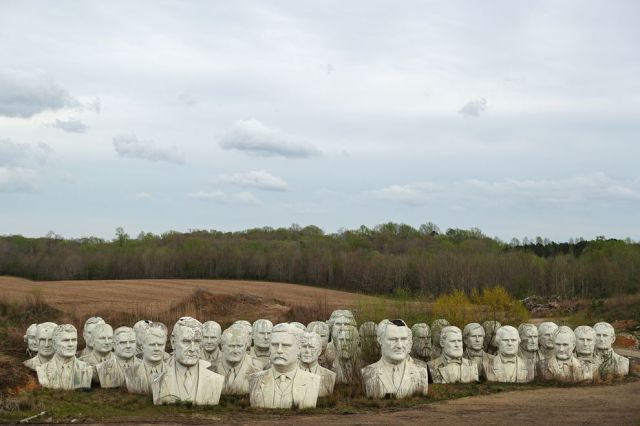
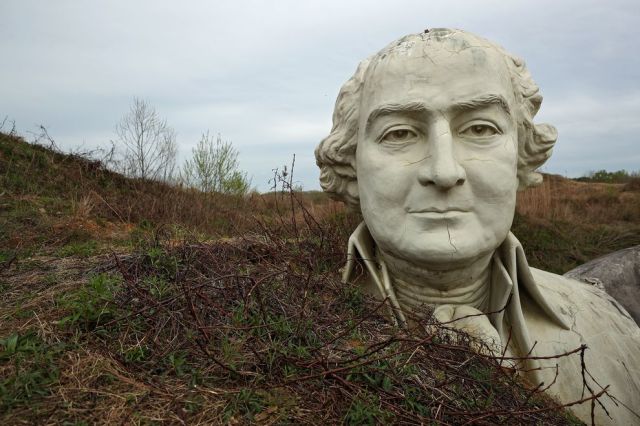
They stand in rows in a Virginia field, kind of a White House version of Easter Island. There are 43 concrete busts of most of the U.S. presidents — from George Washington to George W. Bush. Towering at an average of about 20 feet and weighing as much as 22,000 pounds, this is an elementary school student’s history class nightmare.

The presidential heads once were on display at Presidents Park in York County, near Williamsburg. The 10-acre park featured a museum and a sculpture garden where visitors could stroll among the presidential busts while reading about each man’s accomplishments.

The park was open from 2004 to 2010, according to “All the Presidents’ Heads,” a documentary about the giant creations. When the park closed, the heads sat abandoned for several years until new developers bought the property. They were putting in a rental car business and asked Howard Hankins, who owned a local waste management company, to haul the statues away and destroy them.

“Instead of going into the crusher, I brought them up to the farm and there they are in their new home,” Hankins says in the documentary, which you can watch at the bottom of the file.

It took 10 men more than three weeks to lug the statues to Hankins’ farm in Croaker, Virginia, about 10 miles from their original home in Presidents Park. The ordeal cost Hankins about $50,000 and several of the presidents were “injured” in the process.

Since 2013, the heads have sat, relatively undisturbed on the farm. Weeds have grown up between them, and Hankins says frogs and snakes share the field with the former leaders.

“You almost feel they’re looking at you the way the sculptor did the work on them,” Hankins says. “It’s an overwhelming feeling being next to these giants of men who represented our country and built this strong country we live in.”

Although the farm is private property and not open to the public, Hankins hopes to once again share the presidents with the people. He has partnered with photographer and historian John Plashal to provide tours of the busts. There is also a crowdfunding campaign to restore and transport the massive sculptures somewhere for public viewing.

In various media interviews, Hankins has said he needs to raise $1.5 million to preserve the sculptures and have them moved and reset.

“It meant a lot to me to preserve history. I would love to find the means to build an educational park for our kids to come to from all over the country,” Hankins says. “I really want to do something with these guys. If I have to leave them here, this would really disappoint me.”

https://www.mnn.com/lifestyle/arts-culture/blogs/43-giant-heads-presidents-field-virginia?utm_source=Weekly+Newsletter&utm_campaign=3ddc2ee848-RSS_EMAIL_CAMPAIGN_FRI0503_2019&utm_medium=email&utm_term=0_fcbff2e256-3ddc2ee848-40844241

For Lower-Paid Workers, the Robot Overlords Have Arrived

By Greg Ip

It’s time to stop worrying that robots will take our jobs — and start worrying that they will decide who gets jobs.

Millions of low-paid workers’ lives are increasingly governed by software and algorithms. This was starkly illustrated by a report last week that Amazon.com tracks the productivity of its employees and regularly fires those who underperform, with almost no human intervention.

“Amazon’s system tracks the rates of each individual associate’s productivity and automatically generates any warnings or terminations regarding quality or productivity without input from supervisors,” a law firm representing Amazon said in a letter to the National Labor Relations Board, as first reported by technology news site The Verge. Amazon was responding to a complaint that it had fired an employee from a Baltimore fulfillment center for federally protected activity, which could include union organizing. Amazon said the employee was fired for failing to meet productivity targets.

Perhaps it was only a matter of time before software started firing people. After all, it already screens resumes, recommends job applicants, schedules shifts and assigns projects. In the workplace, “sophisticated technology to track worker productivity on a minute-by-minute or even second-by-second basis is incredibly pervasive,” says Ian Larkin, a business professor at the University of California at Los Angeles specializing in human resources.

Industrial laundry services track how many seconds it takes to press a laundered shirt; on-board computers track truckers’ speed, gear changes and engine revolutions per minute; and checkout terminals at major discount retailers report if the cashier is scanning items quickly enough to meet a preset goal. In all these cases, results are shared in real time with the employee, and used to determine who is terminated, says Mr. Larkin.

Of course, weeding out underperforming employees is a basic function of management. General Electric Co.’s former chief executive Jack Welch regularly culled the company’s underperformers. “In banking and management consulting it is standard to exit about 20% of employees a year, even in good times, using ‘rank and yank’ systems,” says Nick Bloom, an economist at Stanford University specializing in management.

For employees of General Electric, Goldman Sachs Group Inc.and McKinsey & Co., that risk is more than compensated for by the reward of stimulating and challenging work and handsome paychecks. The risk-reward trade-off in industrial laundries, fulfillment centers and discount stores is not nearly so enticing: the work is repetitive and the pay is low. Those who aren’t weeded out one year may be the next if the company raises its productivity targets. Indeed, wage inequality doesn’t fully capture how unequal work has become: enjoyable and secure at the top, monotonous and insecure at the bottom.

At fulfillment centers, employees locate, scan and box all the items in an order. Amazon’s “Associate Development and Performance Tracker,” or Adapt, tracks how each employee performs on these steps against externally-established benchmarks and warns employees when they are falling short.

Amazon employees have complained of being monitored continuously — even having bathroom breaks measured — and being held to ever-rising productivity benchmarks. There is no public data to determine if such complaints are more or less common at Amazon than its peers. The company says about 300 employees — roughly 10% of the Baltimore center’s employment level — were terminated for productivity reasons in the year before the law firm’s letter was sent to the NLRB.

Mr. Larkin says 10% is not unusually high. Yet, automating the discipline process, he says, “makes an already difficult job seem even more inhuman and undesirable. Dealing with these tough situations is one of the key roles of managers.”

“Managers make final decisions on all personnel matters,” an Amazon spokeswoman said. “The [Adapt system] simply tracks and ensures consistency of data and process across hundreds of employees to ensure fairness.” The number of terminations has decreased in the last two years at the Baltimore facility and across North America, she said. Termination notices can be appealed.

Companies use these systems because they work well for them.

Mr. Bloom and his co-authors find that companies that more aggressively hire, fire and monitor employees have faster productivity growth. They also have wider gaps between the highest- and lowest-paid employees.

Computers also don’t succumb to the biases managers do. Economists Mitchell Hoffman, Lisa Kahn and Danielle Li looked at how 15 firms used a job-testing technology that tested applicants on computer and technical skills, personality, cognitive skills, fit for the job and various job scenarios. Drawing on past correlations, the algorithm ranked applicants as having high, moderate or low potential. Their study found employees hired against the software’s recommendation were below-average performers: “This suggests that managers often overrule test recommendations because they are biased or mistaken, not only because they have superior private information,” they wrote.

Last fall Amazon raised its starting pay to $15 an hour, several dollars more than what the brick-and-mortar stores being displaced by Amazon pay. Ruthless performance tracking is how Amazon ensures employees are productive enough to merit that salary. This also means that, while employees may increasingly be supervised by technology, at least they’re not about to be replaced by it.

Write to Greg Ip at greg.ip@wsj.com

https://www.morningstar.com/news/glbnewscan/TDJNDN_201905017114/for-lowerpaid-workers-the-robot-overlords-have-arrived.html

Thanks to Kebmodee for bringing this to the It’s Interesting community.

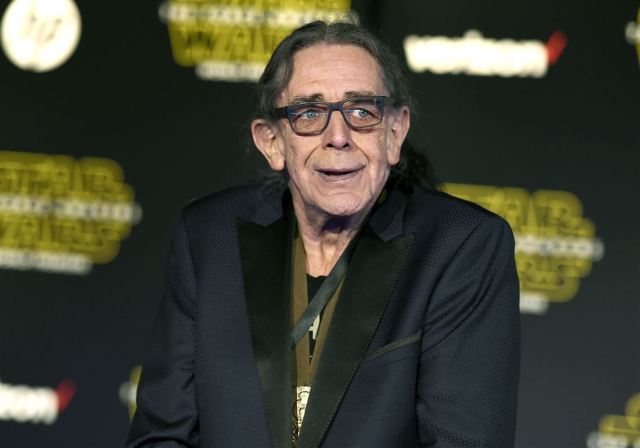
Peter Mayhew, the original Chewbacca in ‘Star Wars,’ dies at 74

Peter Mayhew, the towering actor who donned a huge, furry costume to give life to the rugged-and-beloved character of Chewbacca in the original “Star Wars” trilogy and two other films, has died, his family said Thursday.

Mayhew died at his home in north Texas on Tuesday, according to a family statement. He was 74. No cause was given.

As Chewbacca, known to his friends as Chewie, the 7-foot-3 Mayhew was a fierce warrior with a soft heart, loyal sidekick to Harrison Ford’s Han Solo, and co-pilot of the Millennium Falcon.

Mayhew went on to appear as the Wookiee in the 2005 prequel “Revenge of the Sith” and shared the part in 2015′s “The Force Awakens” with actor Joonas Suotamo, who took over the role in subsequent films.

“Peter Mayhew was a kind and gentle man, possessed of great dignity and noble character,” Ford said in a statement Thursday. “These aspects of his own personality, plus his wit and grace, he brought to Chewbacca. We were partners in film and friends in life for over 30 years and I loved him… My thoughts are with his dear wife Angie and his children. Rest easy, my dear friend.”

Mayhew defined the incredibly well-known Wookiee and became a world-famous actor for most of his life without speaking a word or even making a sound — Chewbacca’s famous roar was the creation of sound designers.

“He put his heart and soul into the role of Chewbacca and it showed in every frame of the films,” the family statement said. “But, to him, the ‘Star Wars’ family meant so much more to him than a role in a film.”

Mark Hamill, who played Luke Skywalker alongside Mayhew, wrote on Twitter that he was “the gentlest of giants — A big man with an even bigger heart who never failed to make me smile & a loyal friend who I loved dearly. I’m grateful for the memories we shared & I’m a better man for just having known him.”

Born and raised in England, Mayhew had appeared in just one film and was working as a hospital orderly in London when George Lucas, who shot the first film in England, found him and cast him in 1977′s “Star Wars.”

Lucas chose quickly when he saw Mayhew, who liked to say all he had to do to land the role was stand up.

“Peter was a wonderful man,” Lucas said in a statement Thursday. “He was the closest any human being could be to a Wookiee: big heart, gentle nature … and I learned to always let him win. He was a good friend and I’m saddened by his passing.”

From then on, “Star Wars” would become Mayhew’s life. He made constant appearances in the costume in commercials, on TV specials and at public events. The frizzy long hair he had most of his adult life made those who saw him in real life believe he was Chewbacca, along with his stature.

His height, the result of a genetic disorder known as Marfan syndrome, was the source of constant health complications late in his life. He had respiratory problems, his speech grew limited and he often had to use scooters and wheelchairs instead of walking.

His family said his fighting through that to play the role one last time in “The Force Awakens” was a triumph.

Even after he retired, Mayhew served as an adviser to his successor Suotamo, a former Finnish basketball player who told The Associated Press last year that Mayhew put him through “Wookiee boot camp” before he played the role in “Solo.”

Mayhew spent much of the last decades of his life in the United States, and he became a U.S. citizen in 2005.

The 200-plus-year-old character whose suit has been compared to an ape, a bear, and Bigfoot, and wore a bandolier with ammunition for his laser rifle, was considered by many to be one of the hokier elements in the original “Star Wars,” something out of a more low-budget sci-fi offering.

The films themselves seemed to acknowledge this.

“Will somebody get this big walking carpet out of my way?!” Carrie Fisher, as Princess Leia, says in the original “Star Wars.” It was one of the big laugh lines of the film, as was Ford calling Chewie a “fuzzball” in “The Empire Strikes Back.”

But Chewbacca would become as enduring an element of the “Star Wars” galaxy as any other character, his roar — which according to the Atlantic magazine was made up of field recordings of bears, lions, badgers and other animals — as famous as any sound in the universe.

“Chewbacca was an important part of the success of the films we made together,” Ford said in his statement.

Mayhew is the third major member of the original cast to die in recent years. Fisher and R2-D2 actor Kenny Baker died in 2016.

Mayhew’s family said he was active with various nonprofit groups and established the Peter Mayhew Foundation, which is devoted to alleviating disease, pain, suffering and the financial toll from traumatic events. The family asked that in lieu of flowers, friends and fans donate to the foundation.

Mayhew is survived by his wife, Angie, and three children. A private service will be held June 29, followed by a public memorial in early December at a Los Angeles “Star Wars” convention.

https://www.post-gazette.com/news/obituaries/2019/05/02/Peter-Mayhew-original-Chewbacca-Star-Wars-died-74/stories/201905020200

Male researchers’ ‘vague’ language more likely to win grants

by Holly Else

Grant reviewers award lower scores to proposals from women than to those from men, even when they don’t know the gender of the applicant, an analysis of thousands of submissions to the Bill and Melinda Gates Foundation has found (1).

That’s because male and female scientists use different types of word on grant applications, according to the study, published by the US National Bureau of Economic Research.

The study finds that women are more likely to choose words specific to their field to describe their science, whereas men tend to use less precise terms. These broader terms seem to be preferred by the reviewers who decide how to distribute the cash, says the analysis — even though proposals containing those words don’t lead to better research outcomes.

The findings aren’t surprising, says Kuheli Dutt, who works in academic affairs and diversity at Columbia University in New York City. Dutt sees parallels with research showing that men are more likely to boast and overstate their performance in tests, whereas women are more likely to be cautious in their statements (2). Using broad words might lead to sweeping claims, but narrow words might imply more cautious claims, she says.

Loaded language

Previous research had highlighted how differences in the way men and women use language can drive bias. For example, some studies show that the words in some job adverts can put women off applying, and women in the geosciences are less likely than their male counterparts to receive a recommendation letter whose tone suggests that they are outstanding candidates (3).

A meeting between four executives in a large, open space.
Reviewers give higher scores to grant applications from men than those from women.Credit: TommL/Getty

Grant reviewers award lower scores to proposals from women than to those from men, even when they don’t know the gender of the applicant, an analysis of thousands of submissions to the Bill and Melinda Gates Foundation has found1.

That’s because male and female scientists use different types of word on grant applications, according to the study, published by the US National Bureau of Economic Research.

The study finds that women are more likely to choose words specific to their field to describe their science, whereas men tend to use less precise terms. These broader terms seem to be preferred by the reviewers who decide how to distribute the cash, says the analysis — even though proposals containing those words don’t lead to better research outcomes.

The findings aren’t surprising, says Kuheli Dutt, who works in academic affairs and diversity at Columbia University in New York City. Dutt sees parallels with research showing that men are more likely to boast and overstate their performance in tests, whereas women are more likely to be cautious in their statements2. Using broad words might lead to sweeping claims, but narrow words might imply more cautious claims, she says.

Loaded language
Previous research had highlighted how differences in the way men and women use language can drive bias. For example, some studies show that the words in some job adverts can put women off applying, and women in the geosciences are less likely than their male counterparts to receive a recommendation letter whose tone suggests that they are outstanding candidates3.

But this is the first time that ‘gendered’ language has been explored in grant applications, says Julian Kolev, who studies entrepreneurship at the Southern Methodist University in Texas and led the work.

Kolev’s analysis looked at almost 7,000 proposals submitted to the Grand Challenges Explorations programme of the Bill & Melinda Gates Foundation between 2008 and 2017. The fund awards grants of between $100,000 and $1 million to address challenges in global health and is open to anyone through a two-page online application. Reviewers are blind to the gender of the applicants.

The researchers singled out the applications from US researchers and sought information from the Gates Foundation on applicants’ gender, discipline and where they work. The group also looked at each scientist’s publication record and grant history before and after the application.

The team found that women received significantly lower scores from reviewers than men did. This couldn’t be explained by the applicants’ experience, publications record or the gender of the reviewers. Instead, it seemed to be down to their communication style in the proposal.

The researchers found that men tended to use ‘broad’ words, such as “control”, “detection” and “bacteria”, more often. These were defined as words that appeared at the same rate in proposals regardless of the topic. By contrast, women favoured ‘narrower’ or more topic-specific terms, such as “community”, “oral” and “brain” (see ‘Broad language’). The authors linked broad words to higher review scores, and narrow ones with lower scores.

But funded applications that contained many broad words didn’t result in work that led to more publications and future grants, the researchers found. And when women secured funding, they generally outperformed men on these measures.

Closing the gap

The Gates Foundation says that it is committed to ensuring gender equality and that its grand-challenges programme uses blind reviews in an attempt to eliminate reviewer bias. It is also reviewing the results of this study.

Kolev suggests that grant reviewers could be trained to limit their sensitivity to communication styles. The make-up of the review panel also seems important. “We consistently show that female reviewers’ scores do not favour proposals from male applicants in the way that male reviewers’ scores do,” he notes. “So increasing the number of female reviewers is one potential way to mitigate the effects we find.”

doi: 10.1038/d41586-019-01402-4

References
1.Kolev, J., Fuentes-Medel, Y. and Murray, F. Natl Bureau Econ. Res. Working Paper No. 25759 https://www.nber.org/papers/w25759 (2019)

2.Reuben, E., Sapienza, P. and Zingales, L. Proc. Natl Acad. Sci. USA 111, 4403–4408 (2014).

3.Dutt, K. et al. Nature Geosci. 9, 805–808 (2016).

https://www.nature.com/articles/d41586-019-01402-4?utm_source=Nature+Briefing&utm_campaign=96860aed6e-briefing-dy-20190502&utm_medium=email&utm_term=0_c9dfd39373-96860aed6e-44039353

Boise’s Potato Airbnb is the Most Idaho Hotel Room Ever

There’s no travel quite like a good ol’ fashioned, Route 66-flavored road trip. The vintage gas stations, souvenir tchotchke shops, and bi-level motels barely clinging to life, but beckoning passersby with the neon siren call of “Free HBO” — all hallmarks of a bygone era that helped define the term “Americana.” Now, one proud Idaho woman is adding to our nation’s tableau of strange roadside kitsch with a six-ton “faux-tato” Airbnb that may be the most Idahoan hotel room ever. We’ve never wanted to visit the Gem State so badly in our adult lives.

For some, it might seem like a half-baked idea. For travelers who love potatoes, kitsch, or both, the Big Idaho Potato Hotel is a starchy dream come true. Located just 20 minutes from downtown Boise on 400 acres of pristine farmland, the “potato-tel” is among Airbnb’s quirkiest stays. From the outside, it looks exactly like what it is: a windowless, 28-foot-long fake potato. Inside, the cozy, one-room suite accommodates just two guests. The decor is surprisingly stylish, but in-room amenities are limited to a queen bed, some chairs, a small kitchenette, and air-conditioning. Guests do have access to a bathroom, an indoor fireplace, and a hot tub in a silo nearby on the property.

Like the Oscar Meyer Weiner Truck hot dog, the starchy sculpture began life as the centerpiece of a potato-on-wheels. The one-of-a-kind vehicle toured the United States in 2012 to promote (wait for it …) Idaho potatoes and help raise money for various charities along the way. Kristie Wolfe, the current potato hotelier, traveled with the spud as a spokesperson. When the time came for the truck to receive an overhaul, Wolfe decided to buy the original potato and do something interesting with it.

“From day one I told the team that someday I was going to put that potato in my backyard and turn it into another rental. I even have design notes from those days,” Wolfe told Travel + Leisure. “When I heard [they were retiring the original potato], I made my pitch to the president to turn it into a little roadside attraction/Airbnb and they went for it!”

If it sounds ridiculous, it certainly is. But, consider that the Big Idaho Potato Hotel is booked at least a month in advance with travelers paying upwards of $200 per night for the privilege to stay.

Sadly, the walls are made of steel, concrete, and plaster, so don’t expect to eat your way out. You could, however, bring your camp kitchenware to whip up some potato biscuits while sipping a sweet potato beer inside a giant potato in the potato-est state in the country. We challenge you to find a more meta travel experience than that.

https://www.themanual.com/travel/boises-potato-airbnb-is-the-most-idaho-hotel-room-ever/?utm_medium=push&utm_source=1sig&utm_campaign=One%20Signal%20Icon

This post is dedicated to the 75th Birthday of Dr. H.P. Happy Birthday!!!

A newly identified type of dementia that is sometimes mistaken for Alzheimer’s disease

Doctors have newly outlined a type of dementia that could be more common than Alzheimer’s among the oldest adults, according to a report published Tuesday in the journal Brain.

The disease, called LATE, may often mirror the symptoms of Alzheimer’s disease, though it affects the brain differently and develops more slowly than Alzheimer’s. Doctors say the two are frequently found together, and in those cases may lead to a steeper cognitive decline than either by itself.

In developing its report, the international team of authors is hoping to spur research — and, perhaps one day, treatments — for a disease that tends to affect people over 80 and “has an expanding but under-recognized impact on public health,” according to the paper.

“We’re really overhauling the concept of what dementia is,” said lead author Dr. Peter Nelson, director of neuropathology at the University of Kentucky Medical Center.

Still, the disease itself didn’t come out of the blue. The evidence has been building for years, including reports of patients who didn’t quite fit the mold for known types of dementia such as Alzheimer’s.

“There isn’t going to be one single disease that is causing all forms of dementia,” said Sandra Weintraub, a professor of psychiatry, behavioral sciences and neurology at Northwestern University Feinberg School of Medicine. She was not involved in the new paper.

Weintraub said researchers have been well aware of the “heterogeneity of dementia,” but figuring out precisely why each type can look so different has been a challenge. Why do some people lose memory first, while others lose language or have personality changes? Why do some develop dementia earlier in life, while others develop it later?

Experts say this heterogeneity has complicated dementia research, including Alzheimer’s, because it hasn’t always been clear what the root cause was — and thus, if doctors were treating the right thing.

What is it?

The acronym LATE stands for limbic-predominant age-related TDP-43 encephalopathy. The full name refers to the area in the brain most likely to be affected, as well as the protein at the center of it all.

“These age-related dementia diseases are frequently associated with proteinaceous glop,” Nelson said. “But different proteins can contribute to the glop.”

In Alzheimer’s, you’ll find one set of glops. In Lewy body dementia, another glop.

And in LATE, the glop is a protein called TDP-43. Doctors aren’t sure why the protein is found in a modified, misfolded form in a disease like LATE.

“TDP-43 likes certain parts of the brain that the Alzheimer’s pathology is less enamored of,” explained Weintraub, who is also a member of Northwestern’s Mesulam Center for Cognitive Neurology and Alzheimer’s Disease.

“This is an area that’s going to be really huge in the future. What are the individual vulnerabilities that cause the proteins to go to particular regions of the brain?” she said. “It’s not just what the protein abnormality is, but where it is.”

More than a decade ago, doctors first linked the TDP protein to amyotrophic lateral sclerosis, otherwise known as ALS or Lou Gehrig’s disease. It was also linked to another type of dementia, called frontotemporal lobar degeneration.

LATE “is a disease that’s 100 times more common than either of those, and nobody knows about it,” said Nelson.

The new paper estimates, based on autopsy studies, that between 20 and 50% of people over 80 will have brain changes associated with LATE. And that prevalence increases with age.

Experts say nailing down these numbers — as well as finding better ways to detect and research the disease — is what they hope comes out of consensus statements like the new paper, which gives scientists a common language to discuss it, according to Nelson.

“People have, in their own separate bailiwicks, found different parts of the elephant,” he said. “But this is the first place where everybody gets together and says, ‘This is the whole elephant.’ ”

What this could mean for Alzheimer’s

The new guidelines could have an impact on Alzheimer’s research, as well. For one, experts say some high-profile drug trials may have suffered as a result of some patients having unidentified LATE — and thus not responding to treatment.

In fact, Nelson’s colleagues recently saw that firsthand: a patient, now deceased, who was part of an Alzheimer’s drug trial but developed dementia anyway.

“So, the clinical trial was a failure for Alzheimer’s disease,” Nelson said, “but it turns out he didn’t have Alzheimer’s disease. He had LATE.”

Nina Silverberg, director of the Alzheimer’s Disease Research Centers Program at the National Institute on Aging, said she suspects examples like this are not the majority — in part because people in clinical trials tend to be on the younger end of the spectrum.

“I’m sure it plays some part, but maybe not as much as one might think at first,” said Silverberg, who co-chaired the working group that led to the new paper.

Advances in testing had already shown that some patients in these trials lacked “the telltale signs of Alzheimer’s,” she said.

In some cases, perhaps it was LATE — “and it’s certainly possible that there are other, as yet undiscovered, pathologies that people may have,” she added.

“We could go back and screen all the people that had failed their Alzheimer’s disease therapies,” Nelson said. “But what we really need to do is go forward and try to get these people out of the Alzheimer’s clinical trials — and instead get them into their own clinical trials.”

Silverberg describes the new paper as “a roadmap” for research that could change as we come to discover more about the disease. And researchers can’t do it without a large, diverse group of patients, she added.

“It’s probably going to take years and research participants to help us understand all of that,” she said.

https://www.cnn.com/2019/04/30/health/dementia-late-alzheimers-study/index.html