Early life on Earth may have existed as miniature droplets of jelly

By Michael Marshall

Blobs of simple carbon-based compounds could have been the precursors to the first living cells. A new study suggests that such droplets could have formed quickly and easily on the young Earth.

“We were able to find these interesting microdroplet structures that could be synthesised from prebiotically available resources,” says Tony Jia of the Tokyo Institute of Technology in Japan. “Maybe they weren’t the direct precursors to modern cells, but perhaps they could have had some effect or had a role in the emergence of initial life.”

All modern cells are surrounded by an outer wall called a membrane, which is made of long chain-like molecules called lipids. Given the ubiquity of these membranes, many researchers studying how life began have made simple membrane-lined spheres, which they say could mimic the first simple cells.

The droplets Jia and his colleagues made are different. “They don’t have an outer layer,” says Jia. “In that sense they’re membrane-less.”

The first cells?
The team made them from simple chemicals called alpha-hydroxy acids. These are made by the same processes that create amino acids, suggesting they were present on the early Earth, says team member Kuhan Chandru of the National University of Malaysia. “You can find them in meteorites as well.” He showed in 2018 that alpha-hydroxy acids link up to form complex molecules at a wide range of temperatures.

In the new study, the team simply dissolved the acids in water, then left them to dry out at 80 °C for a week – mimicking the conditions near a hot volcanic pond.

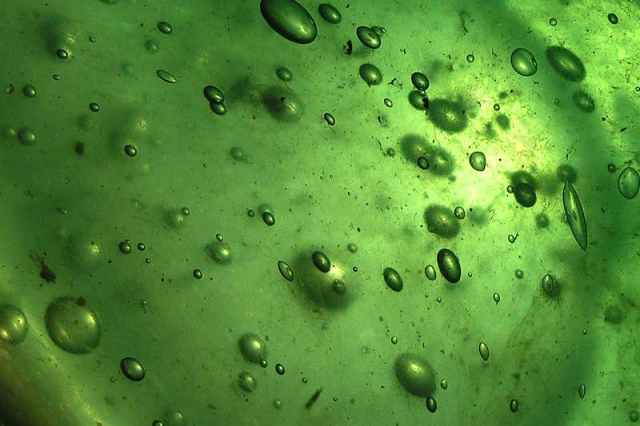
The acids turned into a thick jelly, because they had again formed complex molecules. When the researchers added water, the jelly formed hundreds of droplets a few micrometres across. Further experiments showed that crucial biological molecules, including protein and RNA, could enter the droplets and still perform their functions.

Cells without walls
Membrane-less droplets were a key element of the first popular hypothesis for life’s origin, which was set out by Russian biologist Alexander Oparin in the 1920s. However, the idea fell out of favour when it emerged that all cells have membranes.

The idea is now being re-assessed, says Kate Adamala of the University of Minnesota in Minneapolis. She suspects that life went through a “membrane-less stage” and that membranes only arose later.

Both droplets and membrane-based cells are a container for life’s components. This is crucial, says Adamala, because it keeps all the parts together, creating an individual organism from what would otherwise be a mess of chemicals.

But membranes are such good barriers that the first cells would have struggled to get food in and waste out, Adamala argues. So at the very beginning, membrane-less droplets would be better. “You don’t have to be shut off from the environment, because those droplets are permeable and you can have things diffusing in and out of them.”

Journal reference: PNAS, DOI: 10.1073/pnas.1902336116

Read more: https://www.newscientist.com/article/2210671-early-life-on-earth-may-have-existed-as-miniature-droplets-of-jelly/#ixzz5uVl0RAI6

Checking Your Phone at Night Won’t Necessarily Throw Off Your Internal Clock, Mouse Study Finds

by Ed Cara

People who only occasionally fall down an internet rabbit hole on their smartphones late at night might be able to rest easier—at least according to the results of a new study in mice. Researchers found that short bursts of light exposure at night won’t necessarily disrupt your internal clock, including sleep habits.

The researchers used mice to study the circadian rhythm. In both mice and humans, the circadian rhythm is primarily controlled by the brain’s suprachiasmatic nucleus (SCN), a tiny region found in the hypothalamus. One crucial aspect of the SCN involves regulating our sleep/wake, or light/dark, cycle. It’s long been thought that any kind of light exposure our eyes take in affects the SCN, and thus, can affect our sleep.

“Light information comes into the SCN, and that’s what synchronizes all of the body’s clocks to the light/dark cycle,” said lead author Tiffany Schmidt, a neurogeneticist at Northwestern, in a release from the university. “This one master pacemaker makes sure everything is in sync.”

Schmidt and her team wanted to test this long-held theory that the SCN responds to any light exposure. So they bred mice that had light-sensitive nerve cells in the retina that were only capable of communicating with the SCN. Then they exposed these mice to light for short periods of time.

Because mice, unlike people, are nocturnal, the light should have made them want to fall asleep. But they instead just carried out on with their day, sleeping and waking as normal. Their body temperature, which fluctuates predictably before, during, and after sleep, also followed the same pattern seen in mice with normal circadian rhythms.

What this could mean, according to the authors, is that our brains respond to acute light—meaning brief exposures to light—through a different neural pathway than what’s used for long periods of light exposure, a pathway that doesn’t involve the SCN.

“If these two effects—acute and long-term light exposure—were driven through the same pathway, then every minor light exposure would run the risk of completely shifting our body’s circadian rhythms,” Schmidt said.

The findings will be published this week in the journal eLife.

Mice and their brains aren’t a perfect proxy for people, obviously. And even if the same general principle does apply to us, Schmidt and her team say there’s no clear lead on where these other pathways could exist in the brain. And there’s undoubtedly a point where being exposed to light late at night too long or too often can start to affect our internal clock—even if where that point lies is still a mystery right now. There needs to be a lot much research studying these questions and others.

What is clear, the authors cautioned, is that chronic nighttime light exposure, and the disruptions to our sleep it can cause, can be very bad for health. In other words, don’t use this study as an excuse to start regularly binge-watching Netflix till 4 a.m.

“Light at the wrong time of day is now recognized as a carcinogen,” Schmidt said. “We want people to feel alert while they are exposed to light without getting the health risks that are associated with shifted circadian rhythms, such as diabetes, depression and even cancer.”

https://gizmodo.com/checking-your-phone-at-night-wont-necessarily-throw-off-1836603924

Scientists can now induce hallucinations in mice with lasers


A mouse exploring one of the custom hologram generators used in the experiments at Stanford. By stimulating particular neurons, scientists were able to make engineered mice see visual patterns that weren’t there.

By Carl Zimmer

In a laboratory at the Stanford University School of Medicine, the mice are seeing things. And it’s not because they’ve been given drugs.

With new laser technology, scientists have triggered specific hallucinations in mice by switching on a few neurons with beams of light. The researchers reported the results on Thursday in the journal Science.

The technique promises to provide clues to how the billions of neurons in the brain make sense of the environment. Eventually the research also may lead to new treatments for psychological disorders, including uncontrollable hallucinations.

“This is spectacular — this is the dream,” said Lindsey Glickfeld, a neuroscientist at Duke University, who was not involved in the new study.

In the early 2000s, Dr. Karl Deisseroth, a psychiatrist and neuroscientist at Stanford, and other scientists engineered neurons in the brains of living mouse mice to switch on when exposed to a flash of light. The technique is known as optogenetics.

In the first wave of these experiments, researchers used light to learn how various types of neurons worked. But Dr. Deisseroth wanted to be able to pick out any individual cell in the brain and turn it on and off with light.

So he and his colleagues designed a new device: Instead of just bathing a mouse’s brain in light, it allowed the researchers to deliver tiny beams of red light that could strike dozens of individual brain neurons at once.

To try out this new system, Dr. Deisseroth and his colleagues focused on the brain’s perception of the visual world. When light enters the eyes — of a mouse or a human — it triggers nerve endings in the retina that send electrical impulses to the rear of the brain.

There, in a region called the visual cortex, neurons quickly detect edges and other patterns, which the brain then assembles into a picture of reality.

The scientists inserted two genes into neurons in the visual cortices of mice. One gene made the neurons sensitive to the red laser light. The other caused neurons to produce a green flash when turned on, letting the researchers track their activity in response to stimuli.

The engineered mice were shown pictures on a monitor. Some were of vertical stripes, others of horizontal stripes. Sometimes the stripes were bright, sometimes fuzzy. The researchers trained the mice to lick a pipe only if they saw vertical stripes. If they performed the test correctly, they were rewarded with a drop of water.

As the mice were shown images, thousands of neurons in their visual cortices flashed green. One population of cells switched on in response to vertical stripes; other neurons flipped on when the mice were shown horizontal ones.

The researchers picked a few dozen neurons from each group to target. They again showed the stripes to the mice, and this time they also fired light at the neurons from the corresponding group. Switching on the correct neurons helped the mice do better at recognizing stripes.

Then the researchers turned off the monitor, leaving the mice in darkness. Now the scientists switched on the neurons for horizontal and vertical stripes, without anything for the rodents to see. The mice responded by licking the pipe, as if they were actually seeing vertical stripes.

Anne Churchland, a neuroscientist at Cold Spring Harbor Laboratory who was not involved in the study, cautioned that this kind of experiment can’t reveal much about a mouse’s inner experience.

“It’s not like a creature can tell you, ‘Oh, wow, I saw a horizontal bar,’” she said.

Dr. Churchland said that it would take more research to better understand why the mice behaved as they did in response to the flashes of red light. Did they see the horizontal stripes more clearly, or were they less distracted by misleading signals?

One of the most remarkable results from the study came about when Dr. Deisseroth and his colleagues narrowed their beams of red light to fewer and fewer neurons. They kept getting the mice to lick the pipe as if they were seeing the vertical stripes.

In the end, the scientists found they could trigger the hallucinations by stimulating as few as two neurons. Thousands of other neurons in the visual cortex would follow the lead of those two cells, flashing green as they became active.

Clusters of neurons in the brain may be tuned so that they’re ready to fire at even a slight stimulus, Dr. Deisseroth and his colleagues concluded — like a snowbank poised to become an avalanche.

But it doesn’t take a fancy optogenetic device to make a few neurons fire. Even when they’re not receiving a stimulus, neurons sometimes just fire at random.

That raises a puzzle: If all it takes is two neurons, why are we not hallucinating all the time?

Maybe our brain wiring prevents it, Dr. Deisseroth said. When a neuron randomly fires, others may send signal it to quiet down.

Dr. Glickfeld speculated that attention may be crucial to triggering the avalanche of neuronal action only at the right times. “Attention allows you to ignore a lot of the background activity,” she said.

Dr. Deisseroth hopes to see what other hallucinations he can trigger with light. In other parts of the brain, he might be able to cause mice to perceive more complex images, such as the face of a cat. He might be able to coax neurons to create phantom sounds, or even phantom smells.

As a psychiatrist, Dr. Deisseroth has treated patients who have suffered from visual hallucinations. In his role as a neuroscientist, he’d like to find out more about how individual neurons give rise to these images — and how to stop them.

“Now we know where those cells are, what they look like, what their shape is,” he said. “In future work, we can get to know them in much more detail.”

People attribute their winning to personal skill even when they know the game is rigged in their favor.

When it comes to fairness and privilege, a new study finds it really is not about how you play the game. It’s about whether you win or lose.

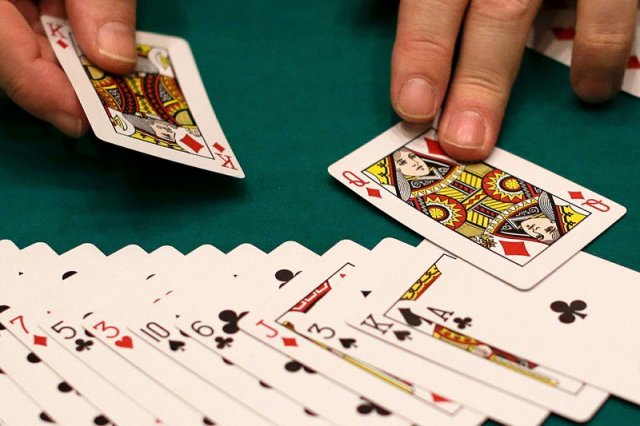
A new experiment, played out as a card game, shows that even when the deck is literally stacked in people’s favor — and they know it — most winners still think it’s fair anyway. Losers don’t, according to a study in Wednesday’s journal Science Advances .

The study “tells us something about privilege and about society,” said Bates College sociologist Emily Kane, who wasn’t part of the research. “It reminds us how powerful perceptions are — it’s not just what is happening that matters, it’s often more a matter of what we think is happening,” she wrote in an email.

The research shows how people who have advantages in life can give themselves too much credit in explaining how they got so far, Kane said.

It all started when some Cornell University sociology graduate students were playing a card game that rewards someone who has already won. Study lead author Mario D. Molina noticed that people who won — because the rules benefited them — thought it was their skill, when it mostly wasn’t.

So Molina and colleagues created their own game that would take away randomness as much as possible and rewarded winners by letting them discard their worst cards and take away the losers’ best cards. Nearly 1,000 players were shown how it works and how the game was rigged to help the winners.

The players were asked if the game was fair, based on luck or based on skill. Molina said 60% of the winners thought the game was fair, compared with 30% of the losers. And when it came to explaining who won, winners attributed it to talent three times more often than losers.

Once the game got even more unfair, with a second round of card exchanges to further benefit the winners, far fewer winners thought the game was fair. Molina called that “the Warren Buffett effect,” after the billionaire who has called on higher taxes for the rich to level the playing field.

Molina said this is just a game and noted that the players tended to be younger, whiter and richer than America as a whole — so using these results to explain society more broadly could be too much of a leap. Yet he said it is useful when thinking about economic privilege.

The main message of the study was pessimistic, said Eliot Smith, a brain sciences professor at Indiana University who wasn’t involved in the research: People have problems making moral judgments about fairness when it benefits them.

https://www.apnews.com/27514e41dfa4479fb304b614fb37a5af

Human voices scare mountain lions away, but not mice.

The presence of people in remote areas of the Santa Cruz Mountains turns mountain lions into veritable fraidy-cats and strikes so much fear in bobcats, skunks and opossums that they change their behavior to avoid detection, a new study has found.

Rats and mice, on the other hand, actually forage more in areas where homo sapien voices are heard, probably because they know fewer rodent-eating predators are around, the UC Santa Cruz study concluded.

The paper, published Wednesday in the journal Ecology Letters, describes how humans create a “landscape of fear” among both large and small predators just by being around, a situation that is ripe for exploitation by rodents and, potentially, other pests like ticks.

“We already know that humans are incredibly lethal predators. We kill other predators at much higher rates than any other predator kills predators,” said Chris Wilmers, an associate professor of environmental studies who co-authored the paper with doctoral students. “What we didn’t know was the impact of just our presence in the forest.”

The findings, part of the university-managed Santa Cruz Puma Project, came two years after a previous study by Wilmers showed cougars on trail cameras abandoning deer carcasses and turning tail and running when recorded human voices suddenly started playing near them.

This time Wilmers wanted to find out the wider impact of the human presence, so his research team selected two remote locations closed to the public that some of the more than 40 cougars fitted with GPS and radio telemetry collars are known to frequent.

Twenty-five speakers were spaced evenly in five rows of five in each of the two square-kilometer grids, one inside the Sierra Azul Preserve, just south of Los Gatos, and the other in the San Vicente Redwoods, east of the coastal town of Davenport. There were about 200 meters between each speaker.

Between May 29 and Aug. 31, 2017, the speakers alternated broadcasts of human voices and Pacific tree frog vocalizations for five weeks each, with long silences in between. The researchers then compared the behavior and responses of the various animals.

The seven mountain lions they observed changed their behavior dramatically when the human voices were playing, becoming more cautious and avoiding the area where they perceived there was a human presence. The cougars increased their distance from the nearest speaker by 29% and were detected inside the test areas 30% less often when human voices were being broadcast.

“They both avoided the grid and changed their behavior,” said Justin Suraci, a post doctoral student in Wilmers’ lab and the lead author of the study. “They slowed down their movement speed, which we interpreted as increased caution.”

Bobcats reduced their daytime activity by 31%, skunk activity decreased 40%and opossums foraged 66% less when people were talking. All the medium-sized carnivores were detected less on camera at feed stations when the human voices were within earshot.

“All three of the meso predators were behaviorally suppressed by the presence of humans,” Suraci said. “As it turns out humans are sufficiently scary that it was better to be more cautious and avoid a risky human encounter.”

The opposite happened with mice and rats. Deer mice expanded their range by 45% when people were heard talking in the forest. Both mice and woodrats increased their foraging activities by 17% compared to times when human voices weren’t playing, according to the study.

None of the animals in the experiment changed their behavior or reacted in any noticeable way to the sound of tree frogs.

Wilmers said the sudden boldness of rodents is probably as significant to us as the fear displayed by the mountain lions. It could mean more tick and insect-borne diseases, like Lyme disease, are being spread by rodents and other prey species when predators aren’t around.

Previous studies of cougars in the Santa Cruz Mountains showed that they kill more deer in residential areas, but spend less time feeding when they are near humans. Researchers believe they abandon prey more often around people and then must kill more deer because they are hungry.

Wilmers said human-cougar encounters in the Bay Area mostly occur because mountain lion travel corridors have been blocked by development. One such incident occurred in May 2014 when a large male puma hid behind a small hedge on a busy street in Mountain View for nine hours as pedestrians and bicyclists passed only a few feet away.

The confused cat eventually was tranquilized amid a community furor and released in the hills, but he was later killed trying to cross Interstate 280.

https://www.sfchronicle.com/science/article/Fearsome-mountain-lions-high-tail-it-out-of-there-14100856.php?psid=dkuGd

Injuring a fly may subject it to chronic pain

BY HANNAH OSBORNE

Injuring a fly could result in it living with chronic pain for the rest of its life, scientists have said. In a study looking at the mechanisms of pain following injury, researchers discovered that, after being hurt, flies develop “hypersensitivity.” This persists long after the injury has healed.

Scientists first discovered insects can feel pain over 15 years ago. However, it was not clear whether they continued to be affected by the injury after the event—as humans do with chronic pain.

Fruit flies are used extensively in scientific research because, even though it is very different to humans, they have many molecular processes that are shared among all species as a result of evolution. They are quick to breed and have a short life cycle, making studying them reasonably quick and inexpensive.

In a study published in Science Advances, a team of researchers looked at whether insects also suffer from chronic pain. “People don’t really think of insects as feeling any kind of pain,” study author Greg Neely, from the University of Sydney, Australia, said in a statement. “But it’s already been shown in lots of different invertebrate animals that they can sense and avoid dangerous stimuli that we perceive as painful.”

He said what they did not know was whether an injury could result in “long-lasting hypersensitivity to normally non-painful stimuli in a similar way to human patients’ experiences.”

In the study, researchers looked at neuropathic pain, resulting from damage to the nervous system. They injured a nerve of a fly by amputating the right middle leg. This was then left to fully heal. When exposed to a surface temperature of around 42 degrees Celsius, flies will either look to escape, or will die within minutes.

To find out if the injury triggered a different response to uninjured flies, the team exposed the flies to surfaces heated to different temperatures. Findings showed injured flies would try to escape when the temperature reached 38 C—indicating they had a lower threshold for painful stimulus. In contrast, uninjured flies “displayed minimal escape attempts when exposed to a 38 C surface,” the team found.

“After the animal is hurt once badly, they are hypersensitive and try to protect themselves for the rest of their lives,” Neely said. “That’s kind of cool and intuitive.

“The fly is receiving ‘pain’ messages from its body that then go through sensory neurons to the ventral nerve cord, the fly’s version of our spinal cord. In this nerve cord are inhibitory neurons that act like a ‘gate’ to allow or block pain perception based on the context. After the injury, the injured nerve dumps all its cargo in the nerve cord and kills all the brakes, forever. Then the rest of the animal doesn’t have brakes on its ‘pain’. The ‘pain’ threshold changes and now they are hypervigilant.”

He said that when the “breaks” are switched off in humans it leads to chronic pain. By understanding chronic pain mechanisms in fruit flies, a better understanding of the condition in humans may be possible. “From our unbiased genomic dissection of neuropathic ‘pain’ in the fly, all our data points to central disinhibition as the critical and underlying cause for chronic neuropathic pain,” Neely said.

It is estimated that over 20 percent of American adults suffer from some sort of chronic pain.

https://www.newsweek.com/injuring-fly-lifetime-chronic-pain-1449436

Prosthetics can sense touch with ‘electronic skin’ invention

Users of prosthetic limbs could soon be able to feel sensation on them, thanks to an “electronic skin” (e-skin) invented by researchers from the National University of Singapore (NUS).

The artificial nervous system can detect touch more than 1,000 times faster than the human equivalent and is the first e-skin in the world to do so, according to Assistant Professor Benjamin Tee from the Department of Materials Science and Engineering at the NUS Faculty of Engineering, who led the research.

Previously, damaged e-skins would lose their function due to their interlinked wiring system.

But if a corner of the Asynchronous Coded Electronic Skin (Aces) nervous system tears, the rest of the skin continues to have sensation, just like human skin, the researchers said.

This is because the Aces detects signals like the human nervous system and it comprises a network of sensors – each working independently – connected via a single electrical conductor.

The research team, which took 11/2 years to develop the sensor system, published its innovation in Science Robotics journal today.

“When you lose a limb and get fitted with a prosthetic that doesn’t feel, it’s almost like you’re always feeling numb and cannot control things very well,” said Prof Tee. “If we have a skin that can make prosthetics smarter, we can restore motor functions, productivity and general quality of life for these people.”

In human skin, receptors send information about touch to the brain, which enables humans to intuitively sense touch.

When the Aces is attached to a prosthetic hand, a neural implant must be inserted into the patient’s arm so that the brain can detect the sense of touch from the e-skin.

The team will work with prosthetics researchers abroad to conduct a clinical trial of the e-skin with a patient using an artificial hand.

The Aces has also been designed for robots. “Robots need to have a sense of touch to interact better with humans, but robots today still cannot feel objects very well,” said Prof Tee.

For instance, a search-and-rescue robot digging through rubble will need sensation to know that it has to push away rocks and concrete to rescue a trapped person.

E-skin such as the Aces can be commercialised for robots within a year or two, Prof Tee said, but it will take five to 10 years for prosthetics that sense touch to reach patients, to allow for clinical trials.

https://www.straitstimes.com/singapore/prosthetics-can-sense-touch-with-electronic-skin-invention

Chimpanzees grow closer when they watch a movie together

By Katie Camero

Watching a movie with a friend can make you feel closer to that person, and more likely to hang out with them in the future. The same, it turns out, is true of chimpanzees.

Researchers analyzed 36 pairs of chimpanzees in the Ngamba Island Chimpanzee Sanctuary in Uganda. They led the apes—two at a time—into two adjacent, caged rooms with a closed door between them. The scientists then played several 1-minute videos of baby chimps swinging on tree branches on a computer screen. In one trial, the apes watched one screen placed outside of their rooms together. In the other trial, the team added a screen and put a plastic barrier in between them, blocking the apes from watching the same video together. An eye-tracking camera was used to monitor what the apes were looking at as the videos played, with red dots showing their shifting focus (as seen in the video above).

When the videos ended, the researchers opened the door separating the chimps’ rooms. The apes spent about seven more seconds in the same room with each other after watching the videos together than when they watched the videos separately. They also only groomed each other when they had watched the video together, the team reports today in the Proceedings of the Royal Society B.

In a separate experiment, the researchers paired apes with a human instead. They found that the apes were more motivated to approach the human, who sat on the other side of the cage, after watching the video with them—approaching them 12 seconds faster, on average—than when the two species watched the video separately.

The scientists say apes don’t seek out shared experiences just to connect with others, like humans do. But they claim their study is the first to suggest apes have some of the psychology required to do so. More studies need to be done to see whether such short-term interactions, like sharing a video, strengthen great ape relationships in the long run, the team notes.

https://www.sciencemag.org/news/2019/07/chimpanzees-grow-closer-when-they-watch-movie-together

A drastic plan that might prevent catastrophic Antarctic ice sheet collapse

By Adam Vaughan

Pumping colossal amounts of ocean water onto the West Antarctic ice sheet could stop it collapsing and causing drastic sea level rise that would threaten cities including Tokyo and New York.

But the German and US researchers who have explored the idea admit the drastic intervention would require an “unprecedented effort for humankind in one of the harshest environments of the planet”. The fix would also be extremely expensive, incredibly hard to do and risk potentially devastating impacts for the region’s unique ecosystem.

Five years ago, studies suggested the West Antarctic ice sheet had already started an unstoppable collapse. While the process will take centuries, it would raise sea levels to a height that would have dire consequences for major coastal cities.

Bold ideas
The threat is so grave, it requires an exploration and discussion of bold ideas to stop the ice sheet’s collapse, says Anders Levermann of the Potsdam Institute in Germany. “I’m certain the impact is so big it justifies this sort of thinking. It doesn’t mean it justifies the measure,” he says.

Previous far-out ideas to stop the loss of the ice sheet have included building an island to stop the flow off the ice shelf. Levermann and colleagues instead modelled a more direct approach that would involve pumping ocean water onto the sheet, adding it either in liquid form or as snow. They found stabilising the collapse would require at least 7400 gigatonnes of the stuff over 10 years. “It’s a lot of ice. It’s huge,” says Levermann. He says while he is against global scale geoengineering proposals such as giant sunshades, the water pumping idea is different and more surgical.

Even if society agreed on such a scheme, it faces mind-boggling obstacles. Around 145GW of wind farm capacity would be needed for the pumping, 12 times that installed in Europe last year. Temperatures would be too low for existing turbines, so new materials would be needed. The infrastructure would also turn the region into an “industrial compound”, says Levermann. Costs would likely be hundreds of billions of dollars, he adds.

Not going to happen
“This publication gives an indication of quite how challenging it would be to attempt to halt ice sheet collapse through direct human intervention,” says Emily Shuckburgh at the University of Cambridge.

Clive Hamilton at Charles Sturt University in Australia says: “The conditions under which such a scheme could be implemented are beyond anything feasible. It’s not going to happen.”

The priority for limiting sea level rises remains cutting greenhouse gas emissions, Levermann emphasises. Shuckburgh says the paper underlines the best option of managing the risk from Antarctica is to rapidly reduce emissions.

Journal reference: Science Advances, DOI: 10.1126/sciadv.aaw4132

https://www.newscientist.com/article/2210043-a-drastic-plan-might-prevent-catastrophic-antarctic-ice-sheet-collapse/

The Racist History of Tipping

By REV. DR. WILLIAM J. BARBER II

This week, the House of Representatives will have a chance to end a pernicious legacy of slavery. Lawmakers will vote on the Raise the Wage Act, which would boost the minimum wage across the country to $15 an hour by 2024. This would be a crucial step toward the first federal minimum wage increase in more than a decade.

A just-released Congressional Budget Office report finds that a $15 minimum wage would have tremendous benefits for low-wage workers of all races and ethnicities. Yet the stakes are particularly high for black workers. The share who would benefit from the Raise the Wage Act is far larger than the share of white workers who would benefit—38 percent compared with 23 percent.

There’s another provision in the legislation—eliminating the subminimum tipped wage—that corrects a wrong that goes much further back than the previous federal minimum wage increase. For workers regularly making more than $30 a month in tips, employers can currently pay as little as $2.13 an hour. That subminimum wage has been frozen at this level for decades. Should the Raise the Wage Act pass the House, it will mark the first time that either chamber of Congress has moved to eliminate the subminimum wage, which not only deepens economic inequalities but also happens to be a relic of slavery.

You might not think of tipping as a legacy of slavery, but it has a far more racialized history than most Americans realize. Tipping originated in feudal Europe and was imported back to the United States by American travelers eager to seem sophisticated. The practice spread throughout the country after the Civil War as U.S. employers, largely in the hospitality sector, looked for ways to avoid paying formerly enslaved workers.

One of the most notorious examples comes from the Pullman Company, which hired newly freed African American men as porters. Rather than paying them a real wage, Pullman provided the black porters with just a meager pittance, forcing them to rely on tips from their white clientele for most of their pay.

Tipping further entrenched a unique and often racialized class structure in service jobs, in which workers must please both customer and employer to earn anything at all. A journalist quoted in Kerry Segrave’s 2009 book, Tipping: An American Social History of Gratuities, wrote in 1902 that he was embarrassed to offer a tip to a white man. “Negroes take tips, of course; one expects that of them—it is a token of their inferiority,” he wrote. “Tips go with servility, and no man who is a voter in this country is in the least justified in being in service.”

The immorality of paying an insufficient wage to workers, who then were forced to rely on tips, was acknowledged at the time. In his popular 1916 anti-tipping study, The Itching Palm, writer William Scott described tipping as an aristocratic custom that went against American ideals. “The relation of a man giving a tip and a man accepting it is as undemocratic as the relation of master and slave,” Scott wrote. “A citizen in a republic ought to stand shoulder to shoulder with every other citizen, with no thought of cringing, without an assumption of superiority or an acknowledgment of inferiority.”

Several states sought to end the practice in the early 1900s, often in recognition of its racist roots. But the restaurant industry fought back and was powerful enough to roll back local bans on tipping. And tipped workers—along with most others, as the act applied to industries that together made up only one-fifth of the labor force—were excluded from the first, limited federal minimum wage law passed in 1938.

It took until 1966 for advocates to win a base wage for tipped workers, and that amounted to only 50 percent of the minimum wage already guaranteed to other workers. Congress continued to raise the subminimum tipped wage until 1996, when Herman Cain, who headed the National Restaurant Association at the time, offered legislators a bargain: The industry would accept a small increase in the minimum wage as long as the tipped wage was frozen at $2.13 an hour.

Congress agreed to the deal, and the tipped minimum wage remains just $2.13 to this day. Employers are supposed to pay the difference if tips don’t bring workers to the full regular minimum wage. But too often that law is not enforced. When the Department of Labor conducted an unusual compliance sweep of 9,000 full-service restaurants between 2010 and 2012, they found that 84 percent had violated the subminimum wage system.

A century later, the industry lobby continues its fight to uphold this two-tiered pay system. Where social movements have gotten cities to pass minimum wage hikes, the lobby has pressured state legislatures to ban local wage increases altogether. The industry also fought to overturn voter-approved initiatives in Maine and Washington, D.C., that would have ended the subminimum tipped wage, while they lobbied legislators in Michigan to keep the issue from reaching the ballot in the first place.

That’s why national action to finally reverse this particular vestige of slavery is so vital. No one can live on $2.13 an hour—a poverty wage.

We may live in a very different society from 150 years ago, but the subminimum tipped wage still exacerbates the inequalities passed down from that time. Workers in the restaurant industry are far more likely to be poor or near-poor than the general population. Sure, upscale restaurants where wealthy patrons offer servers good tips on expensive menu items can provide a good living, but those jobs are few and far between—and dominated by white men.

Research also shows that tipping itself has a racial component: Customers generally give white workers bigger tips than black workers, regardless of service quality. Thanks in part to segregation within the industry and discrimination from patrons, restaurant worker poverty rates are highest for women and people of color.

Ending the subminimum wage would right one of the historical wrongs keeping certain groups of workers from receiving the full protections they are due, but ultimately, low wages driven by racism hurt workers of all races. Three times as many white workers as black workers stand to get a raise if the federal minimum wage hike passes. Undoing systemic racism opens up opportunities for all people.

With a Republican Senate and president, the Raise the Wage Act might not become national law in the immediate future. But a vote by the House to end the subminimum tipped wage would send an unmistakable signal to the several states considering similar legislation: The days of these racist tiered wage systems are coming to an end.

https://www.politico.com/magazine/story/2019/07/17/william-barber-tipping-racist-past-227361