How information is like snacks, money, and drugs—to your brain

By Laura Counts

Can’t stop checking your phone, even when you’re not expecting any important messages? Blame your brain.

A new study by researchers at UC Berkeley’s Haas School of Business has found that information acts on the brain’s dopamine-producing reward system in the same way as money or food.

“To the brain, information is its own reward, above and beyond whether it’s useful,” says Assoc. Prof. Ming Hsu, a neuroeconomist whose research employs functional magnetic imaging (fMRI), psychological theory, economic modeling, and machine learning. “And just as our brains like empty calories from junk food, they can overvalue information that makes us feel good but may not be useful—what some may call idle curiosity.”

The paper, “Common neural code for reward and information value,” was published this month by the Proceedings of the National Academy of Sciences. Authored by Hsu and graduate student Kenji Kobayashi, now a post-doctoral researcher at the University of Pennsylvania, it demonstrates that the brain converts information into the same common scale as it does for money. It also lays the groundwork for unraveling the neuroscience behind how we consume information—and perhaps even digital addiction.

“We were able to demonstrate for the first time the existence of a common neural code for information and money, which opens the door to a number of exciting questions about how people consume, and sometimes over-consume, information,” Hsu says.

Rooted in the study of curiosity

The paper is rooted in the study of curiosity and what it looks like inside the brain. While economists have tended to view curiosity as a means to an end, valuable when it can help us get information to gain an edge in making decisions, psychologists have long seen curiosity as an innate motivation that can spur actions by itself. For example, sports fans might check the odds on a game even if they have no intention of ever betting.

Sometimes, we want to know something, just to know.

“Our study tried to answer two questions. First, can we reconcile the economic and psychological views of curiosity, or why do people seek information? Second, what does curiosity look like inside the brain?” Hsu says.

The neuroscience of curiosity

To understand more about the neuroscience of curiosity, the researchers scanned the brains of people while they played a gambling game. Each participant was presented with a series of lotteries and needed to decide how much they were willing to pay to find out more about the odds of winning. In some lotteries, the information was valuable—for example, when what seemed like a longshot was revealed to be a sure thing. In other cases, the information wasn’t worth much, such as when little was at stake.

For the most part, the study subjects made rational choices based on the economic value of the information (how much money it could help them win). But that didn’t explain all their choices: People tended to over-value information in general, and particularly in higher-valued lotteries. It appeared that the higher stakes increased people’s curiosity in the information, even when the information had no effect on their decisions whether to play.

The researchers determined that this behavior could only be explained by a model that captured both economic and psychological motives for seeking information. People acquired information based not only on its actual benefit, but also on the anticipation of its benefit, whether or not it had use.

Hsu says that’s akin to wanting to know whether we received a great job offer, even if we have no intention of taking it. “Anticipation serves to amplify how good or bad something seems, and the anticipation of a more pleasurable reward makes the information appear even more valuable,” he says.

Common neural code for information and money

How does the brain respond to information? Analyzing the fMRI scans, the researchers found that the information about the games’ odds activated the regions of the brain specifically known to be involved in valuation (the striatum and ventromedial prefrontal cortex or VMPFC), which are the same dopamine-producing reward areas activated by food, money, and many drugs. This was the case whether the information was useful, and changed the person’s original decision, or not.

Next, the researchers were able to determine that the brain uses the same neural code for information about the lottery odds as it does for money by using a machine learning technique (called support vector regression). That allowed them to look at the neural code for how the brain responds to varying amounts of money, and then ask if the same code can be used to predict how much a person will pay for information. It can.

In other words, just as we can convert such disparate things as a painting, a steak dinner, and a vacation into a dollar value, the brain converts curiosity about information into the same common code it uses for concrete rewards like money, Hsu says.

“We can look into the brain and tell how much someone wants a piece of information, and then translate that brain activity into monetary amounts,” he says.

Raising questions about digital addiction

While the research does not directly address overconsumption of digital information, the fact that information engages the brain’s reward system is a necessary condition for the addiction cycle, he says. And it explains why we find those alerts saying we’ve been tagged in a photo so irresistible.

“The way our brains respond to the anticipation of a pleasurable reward is an important reason why people are susceptible to clickbait,” he says. “Just like junk food, this might be a situation where previously adaptive mechanisms get exploited now that we have unprecedented access to novel curiosities.”

How information is like snacks, money, and drugs—to your brain
Paralyzed man walks using brain-controlled robotic suit

A tetraplegic man has been able to move all four of his paralyzed limbs by using a brain-controlled robotic suit, researchers have said.

The 28-year-old man from Lyon, France, known as Thibault, was paralyzed from the shoulders down after falling 40 feet from a balcony, severing his spinal cord, the AFP news agency reported.

He had some movement in his biceps and left wrist, and was able to operate a wheelchair using a joystick with his left arm.

Researchers from the University of Grenoble in France, biomedical research center Clinatec and the CEA research center implanted recording devices on either side of Thibault’s head, between the brain and skin, to span the sensorimotor cortex — the area of the brain that controls motor function and sensation.

Electrode grids collected the man’s brain signals and transmitted them to a decoding algorithm, which translated the signals into movements and commanded a robotic exoskeleton to complete them.

Over a period of two years, Thibault trained the algorithm to understand his thoughts by controlling an avatar — a virtual character — within a video game, making it walk and touch 2D and 3D objects.

He trained on simple virtual simulations before using the exoskeleton — which is assisted by a ceiling-mounted harness — to eventually walk, and reach for targets with his arms.

Over the course of the study, Thibault covered a total of 145 meters (around 476 feet) with 480 steps using the avatar, video and exoskeleton combined, researchers said in the study, which was published in the Lancet Neurology journal on Friday.

Scientists have said that the technology is an experimental treatment for now, but once improved, it could have the potential to improve patients’ lives.

“I can’t go home tomorrow in my exoskeleton, but I’ve got to a point where I can walk. I walk when I want and I stop when I want,” Thibault told AFP.

“Our findings could move us a step closer to helping tetraplegic patients to drive computers using brain signals alone, perhaps starting with driving wheelchairs using brain activity instead of joysticks and progressing to developing an exoskeleton for increased mobility,” Professor Stephan Chabardes, a neurosurgeon from Grenoble University Hospital and author of the study, said in a press release.

The team has recruited three more patients to the trial, and aims to allow patients to walk and balance without using a ceiling suspension system in the next phase of the research.

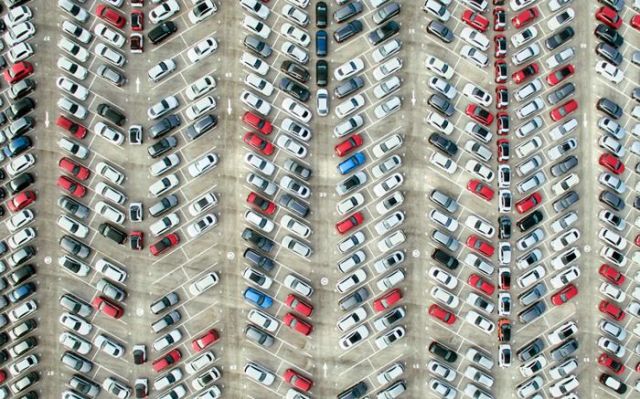
The mathematically-determined best way to choose a parking spot


Two strategies for choosing a parking spot save far more time than a third, according to researchers’ estimates.

Physicists have compared three typical strategies for finding a parking spot to determine which saves the most time — at least in a highly simplified parking scenario.

Paul Krapivsky at Boston University in Massachusetts and Sidney Redner at the Santa Fe Institute in New Mexico modelled an idealized car park in which the parking spots are in a single row between the entrance to the park and the drivers’ ultimate destination, such as a building.

An ‘optimistic’ strategy, which aims to minimize the time spent walking, is to drive straight to the destination and then backtrack to find a spot. Drivers using a ‘meek’ strategy try to reduce the time spent driving by picking the spot immediately before the first parked car that they come across. An intermediate, or ‘prudent’, strategy is to park in the first encountered gap between two cars.

The authors calculated that the prudent strategy is on average slightly more efficient — in terms of time spent walking and driving — than the optimistic one; the meek strategy was a distant third. Still, even the prudent strategy left many good spots near the target empty.

https://www.nature.com/articles/d41586-019-02903-y?utm_source=Nature+Briefing&utm_campaign=c699f7417d-briefing-dy-20190927&utm_medium=email&utm_term=0_c9dfd39373-c699f7417d-44039353

Dining-hall data suggest that a rise in vegetarian options leads customers to embrace meat-free meals.

Dining establishments can nudge consumers to eat less meat by offering more vegetarian choices, according to a study of university-cafeteria sales.

Emma Garnett and her colleagues at the University of Cambridge, UK, collected data on more than 94,000 meals sold in 3 of the cafeterias at the university in 2017. When the proportion of meatless options doubled from one to two of four choices, overall sales remained about constant. But sales of meat-containing meals dropped, and sales of vegetarian meals, such as “wild mushroom, roasted butternut squash and sun blushed tomato risotto with parmesan”, rose 40–80%.

Increases in plant-based dining were largest among people with the lowest baseline rates of vegetarian-meal consumption. The researchers found no evidence that higher sales of vegetarian dishes at lunch led to lower vegetarian sales at dinner.

Other variables that influenced dining choices included the relative prices of vegetarian and non-vegetarian options, and the outdoor temperature.

The authors suggest that an increase in vegetarian options could encourage consumers to move away from meat-heavy diets, potentially reducing greenhouse-gas emissions linked to animal-derived food.

https://www.nature.com/articles/d41586-019-02934-5?utm_source=Nature+Briefing&utm_campaign=f31c2e3d02-briefing-dy-20191004&utm_medium=email&utm_term=0_c9dfd39373-f31c2e3d02-44039353

Researchers implant a memory into a bird’s brain

by ABBY OLENA

Animals learn by imitating behaviors, such as when a baby mimics her mother’s speaking voice or a young male zebra finch copies the mating song of an older male tutor, often his father. In a study published today in Science, researchers identified the neural circuit that a finch uses to learn the duration of the syllables of a song and then manipulated this pathway with optogenetics to create a false memory that juvenile birds used to develop their courtship song.

“In order to learn from observation, you have to create a memory of someone doing something right and then use this sensory information to guide your motor system to learn to perform the behavior. We really don’t know where and how these memories are formed,” says Dina Lipkind, a biologist at York College who did not participate in the study. The authors “addressed the first step of the process, which is how you form the memory that will later guide [you] towards performing this behavior.”

“Our original goals were actually much more modest,” says Todd Roberts, a neuroscientist at UT Southwestern Medical Center. Initially, Wenchan Zhao, a graduate student in his lab, set out to test whether or not disrupting neural activity while a young finch interacted with a tutor could block the bird’s ability to form a memory of the interchange. She used light to manipulate cells genetically engineered to be sensitive to illumination in a brain circuit previously implicated in song learning in juvenile birds.

Zhao turned the cells on by shining a light into the birds’ brains while they spent time with their tutors and, as a control experiment, when the birds were alone. Then she noticed that the songs that the so-called control birds developed were unusual—different from the songs of birds that had never met a tutor but also unlike the songs of those that interacted with an older bird.

Once Zhao and her colleagues picked up on the unusual songs, they decided to “test whether or not the activity in this circuit would be sufficient to implant memories,” says Roberts.

The researchers stimulated birds’ neural circuits with sessions of 50- or 300-millisecond optogenetic pulses over five days during the time at which they would typically be interacting with a tutor but without an adult male bird present. When these finches grew up, they sang adult courtship songs that corresponded to the duration of light they’d received. Those that got the short pulses sang songs with sounds that lasted about 50 milliseconds, while the ones that received the extended pulses held their notes longer. Some song features—including pitch and how noisy harmonic syllables were in the song—didn’t seem to be affected by optogenetic manipulation. Another measure, entropy, which approximates the amount of information carried in the communication, was not distinguishable in the songs of normally tutored birds and those that received 50-millisecond optogenetic pulses, but was higher in the songs of birds who’d received tutoring than in the songs of either isolated birds or those that received the 300-millisecond light pulses.

While the manipulation of the circuit affected the duration of the sounds in the finches’ songs, other elements of singing behavior—including the timeline of vocal development, how frequently the birds practiced, and in what social contexts they eventually used the songs—were similar to juveniles who’d learned from an adult bird.

The researchers then determined that when the birds received light stimulation at the same time as they interacted with a singing tutor, their adult songs were more like those of birds that had only received light stimulation, indicating that optogenetic stimulation can supplant tutoring.

When the team lesioned the circuit before young birds met their tutors, they didn’t make attempts to imitate the adult courtship songs. But if the juveniles were given a chance to interact with a tutor before the circuit was damaged, they had no problem learning the song. This finding points to an essential role for the pathway in forming the initial memory of the timing of vocalizations, but not in storing it long-term so that it can be referenced to guide song formation.

“What we were able to implant was information about the duration of syllables that the birds want to attempt to learn how to sing,” Roberts tells The Scientist. But there are many more characteristics birds have to attend to when they’re learning a song, including pitch and how to put the syllables in the correct order, he says. The next steps are to identify the circuits that are carrying other types of information and to investigate the mechanisms for encoding these memories and where in the brain they’re stored.

Sarah London, a neuroscientist at the University of Chicago who did not participate in the study, agrees that the strategies used here could serve as a template to tease apart where other characteristics of learned song come from. But more generally, this work in songbirds connects to the bigger picture of our understanding of learning and memory, she says.

Song learning “is a complicated behavior that requires multiple brain areas coordinating their functions over long stretches of development. The brain is changing anyway, and then on top of that the behavior’s changing in the brain,” she explains. Studying the development of songs in zebra finches can give insight into “how maturing neural circuits are influenced by the environment,” both the brain’s internal environment and the external, social environment, she adds. “This is a really unique opportunity, not just for song, not just for language, but for learning in a little larger context—of kids trying to understand and adopt behavioral patterns appropriate to their time and place.”

W. Zhao et al., “Inception of memories that guide vocal learning in the songbird,” Science, doi:10.1126/science.aaw4226, 2019.

https://www.the-scientist.com/news-opinion/researchers-implant-memories-in-zebra-finch-brains-66527?utm_campaign=TS_DAILY%20NEWSLETTER_2019&utm_source=hs_email&utm_medium=email&utm_content=77670023&_hsenc=p2ANqtz-87EBXf6eeNZge06b_5Aa8n7uTBGdQV0pm3iz03sqCnkbGRyfd6O5EXFMKR1hB7lhth1KN_lMxkB_08Kb9sVBXDAMT7gQ&_hsmi=77670023

This charity is feeding the hungry and helping the planet by rescuing millions of pounds of leftover food.

According to FDA estimates, the United States wastes 30 to 40% of its food. That’s hard to swallow when you consider that one in 10 US households faced food insecurity in 2018.

That means roughly 14 million families are struggling to put meals on the table while approximately 30 million tons of food are trashed.

Sending food to the dump carries a steep environmental cost as well. Landfills, filled more with discarded food than any other single item, account for one-third of all US methane gas emissions.

So NGOs and nonprofits are tackling the problems of food waste and food insecurity by launching food-rescue programs. And you can help, too.

Rescuing 41 million pounds of food a year

For 29 years Forgotten Harvest, a nonprofit in Detroit, has been rescuing food destined for landfills and redirecting it to the hungry.

Forgotten Harvest CEO Kirk Mayes says it’s taken that long to develop the logistics for his program, which now rescues and delivers 130,000 pounds of food a day.

“This operation is set up so that our fleet of about 27 trucks and our drivers can leave our warehouse in the morning and go to about 12 to 14 different stops … for our donations.” Mayes says. Drivers collect food from local bakers and butchers and national chains, he says. “And then these drivers redistribute the food to three to four community partners on a daily basis.”

A rotating army of 16,000 volunteers makes this daily event happen.

“At our warehouse, our volunteers are working with commodities that are coming off of our farm and from other commodity partners like the food manufacturers and other farms and donations,” Mayes says. “All this (food) is inspected, sorted and set to go out.”

The result? Last year Forgotten Harvest redistributed 41 million pounds of food, Mayes says. That’s 41 million pounds that filled stomachs instead of landfills.

“We see a lot of work in front of us, with what is one in six people vulnerable for food insecurity in southeast Michigan,” he says. “We’re all working towards our one mission — to make sure that we can rescue as much food as possible and get it into the hands of people in need.”

How you can help

The federal government has set a goal to cut food waste in half by 2030. To reach that objective, the USDA and the EPA are working with communities and businesses.

They are also providing tips and guides for people to reduce the amount of food they waste:

Support food-rescue programs like Forgotten Harvest. Sustainable America provides this directory to find organizations in your area.

What We Do


https://foodrescuelocator.com/

Help organize food-rescue efforts in your community. The Food Donation Connection offers online training and resources to implement programs for communities and businesses.
https://www.foodtodonate.com/food-safety-and-training

K-12 Food Rescue provides step-by-step instructions to start a food-rescue program at schools.
https://www.foodrescue.net/getting-started.html

Donate unused food. This EPA guide provides instructions and resources on how and where to donate unused food, leftovers from events and surplus food inventory.
https://www.epa.gov/recycle/donating-food#ideasforincreasing

You can also find local food banks with this search tool from Feeding America.
https://www.feedingamerica.org/find-your-local-foodbank

Reduce food waste at home. This EPA guide and toolkit helps reduce food waste in homes. It also provides planning, prep, storage and thriftiness tips to help families and individuals get the most out of the food they buy.
https://www.epa.gov/sustainable-management-food/food-too-good-waste-implementation-guide-and-toolkit
https://www.epa.gov/recycle/reducing-wasted-food-home#toolkit

Compost in your backyard. Food scraps and yard waste, which make up about 30% of our trash, can be composted instead. The USDA’s Backyard Conservation tip sheet explains how to get started with composting.
https://www.nrcs.usda.gov/wps/portal/nrcs/detail/national/newsroom/features/?&cid=nrcs143_023537

Additional guides, including ways to start a composting program at local schools, can be found here.
http://cwmi.css.cornell.edu/smallscale.htm

https://www.cnn.com/2019/09/25/health/iyw-forgotten-harvest-food-waste-trnd/index.html

Why being an optimist is good for your heart

Looking on the bright side could save your life.

People who look at life from a positive perspective have a much stronger shot at avoiding death from any type of cardiovascular risk than pessimistic people, according to a new meta-analysis of nearly 300,000 people published Friday in the medical journal JAMA.

“We observed that an optimist had about a 35% lower risk of major heart complications, such as a cardiac death, stroke or a heart attack, compared to the pessimists in each of these studies,” said cardiologist Dr. Alan Rozanski, a professor of medicine at the Icahn School of Medicine at Mount Sinai, who is lead author of the study.

In fact, the more positive the person, the greater the protection from heart attacks, stroke and any cause of death, said Rozanski, who is also the chief academic officer for the department of cardiology at Mount Sinai St. Luke’s.

“The more pessimistic (a person was), the worse the outcome,” he added.

It’s not just your heart that’s protected by a positive outlook. Prior research has found a direct link between optimism and other positive health attributes, such as healthier diet and exercise behaviors, a stronger immune system and better lung function, among others.

Why would that be true? Optimists tend to have better health habits, Rozanski said. They’re more likely to exercise, have better diets and are less likely to smoke.

“Optimists also tend to have better coping skills and are better problem-solvers,” he continued. “They are better at what we call proactive coping, or anticipating problems and then proactively taking steps to fix them.”

But don’t get confuse optimism with happiness, as there is a key difference.

“Happiness is an emotion. It’s transient,” Rozanski said. “People may have more moments of happiness than others … but it’s just a description of a feeling.”

Optimism, however, is a mindset, Rozanski says.

“It’s how you look at the world,” he says. “Optimists are people who expect good things to happen to them, and pessimists are those who expect bad things to happen to them.”

In other words, happiness may come and go but optimism is a character trait — one that can be measured quite accurately with a series of statements called the “life orientation test.”

The test includes statements such as, “I’m a believer in the idea that ‘every cloud has a silver lining,'” and, “If something can go wrong for me, it will.” You rate the statements on a scale from highly agree to highly disagree, and the results can be added up to determine your level of optimism or pessimism.

What if you take the test and discover you’re a pessimist? Don’t fret. Studies show you can actually train yourself to be a positive person.

“People can change their thought patterns, but like everything else, it’s a muscle that needs to be developed,” Rozanski said.

Using direct measures of brain function and structure, one study found it only took 30 minutes a day of meditation practice over the course of two weeks to produce a measurable change in the brain.

“When these kinds of mental exercises are taught to people, it actually changes the function and the structure of their brain in ways that we think support these kinds of positive qualities,” said neuroscientist Richard Davidson, professor of psychiatry at the University of Wisconsin-Madison and the founder and director of the Center for Healthy Minds.

One of the most effective ways to increase optimism, according to a meta-analysis of existing studies, is called the “Best Possible Self” method, where you imagine or journal about yourself in a future in which you have achieved all your life goals and all of your problems have been resolved.

Another technique is to practice gratefulness. Just taking a few minutes each day to write down what makes you thankful can improve your outlook on life. And while you’re at it, list the positive experiences you had that day, which can also raise your optimism.

“And then finally, we know that cognitive behavioral therapies are very effective treatments for depression; pessimism is on the road toward depression,” Rozanski said. “So you can apply the same principles as we do for depression, such as reframing. You teach there is an alternative way to think or reframe negative thoughts, and you can make great progress with a pessimist that way.”

https://www.cnn.com/2019/09/27/health/optimism-heart-attack-stroke-wellness/index.html

One of the few drugs that has been FDA-approved for patients with Alzheimer’s disease now identified as possibly increasing risk of a life-threatening condition of muscle breakdown

Many people with Alzheimer’s disease take the drug donepezil (brand name Aricept) to help ease symptoms for a time. But those on the drug should be aware of a rare but potentially life-threatening side effect. The drug can cause muscles to break down, leading to a condition called rhabdomyolysis that can lead to kidney damage and even death.

The risk of hospitalization for rhabdomyolysis was more than double that for those taking Aricept compared to other Alzheimer’s drugs, a new study reports.

Still, the condition is very rare, and anyone taking Aricept should not stop taking it. But because rhabdomyolysis is potentially very serious, patients should be aware of the problem and seek medical care should symptoms arise.

The main symptom of rhabdomyolysis, or rhabdo as it is commonly called, is intense muscle pain or weakness that does not go away. Urine can also turn dark. Emergency treatment is needed to manage the condition and may require a week or longer stay in the hospital.

For the study, Canadian researchers analyzed data on 220,353 men and women over age 65 who had gotten a prescription between 2002 and 2017 for one of three Alzheimer’s drugs: donepezil, rivastigmine (Execlon) or galantamine (Razadyne).

There were 88 hospitalizations for rhabdo among 152,300 patients taking donepezil (0.06 percent prevalence), compared to 16 cases among the 68,053 patients taking one of the other drugs (0.02 percent prevalence).

The authors note that doctors should rule out rhabdo if someone on an Alzheimer’s drug comes to the hospital because of constant muscle pain. Still, the condition remains very rare (about 25,000 per year in the U.S. from all causes), and most of the cases in the current study were not life-threatening.

Other medications may also trigger the condition, including antipsychotic medications, which are also often prescribed to people with Alzheimer’s disease to allay symptoms like agitation and aggression. Cholesterol-lowering statin drugs have also been tied to an increased risk of rhabdo. It is possible that Aricept cannot trigger rhabdo alone. Further studies will be required to determine what other cofactors might act with Aricept to trigger rhabdo.

The condition more commonly arises after intense physical exertion, often in people who have not been training regularly. The condition can arise in military recruits undergoing basic training, and in people beginning high-intensity workouts at the gym.

By ALZinfo.org, The Alzheimer’s Information Site. Reviewed by Marc Flajolet, Ph.D., Fisher Center for Alzheimer’s Research Foundation at The Rockefeller University.

Jamie L. Fleet, Eric McArthur, Aakil Patel, et al: “Risk of rhabdomyolysis with donepezil compared with rivastigmine or galantamine: a population-based cohort study.” CMAJ – Canadian Medical Association Journal, Sept. 16, 2019

Seaweed helps trap carbon dioxide in sediment

Every beachgoer can spot seaweed in the ocean or piling up on the beach, but Florida State University researchers working with colleagues in the United Kingdom have found that these slimy macroalgae play an important role in permanently removing carbon dioxide from the atmosphere.

Their work is published in the journal Ecological Monographs by the Ecological Society of America.

The researchers, who partnered with ecologists from Plymouth Marine Laboratory in the United Kingdom, investigated how seaweed absorbed carbon and processed it, trapping it in the seafloor.

“Seaweeds have been ignored in the ‘blue carbon’ storage literature in favor of seagrasses and mangroves, which physically trap carbon from sediments and their own biomass in root structures,” said Assistant Professor of Biological Science Sophie McCoy. “Macroalgae are also often overlooked by oceanographers who study the carbon cycle, as their high productivity occurs close to shore and has been thought to stay and cycle locally.”

In designing the study, researchers suspected that the high productivity and huge amount of seasonal biomass of annual algae would provide carbon subsidies farther offshore than typically considered, and that these subsidies would be important to benthic food webs there.

That was exactly what they found. They also discovered that this was the process that leads to the burial of seaweed carbon in ocean sediments.

Blue carbon is the carbon captured in marine systems both through photosynthesis and then by trapping it in the seafloor. Researchers sequenced environmental DNA and modeled stable isotope data for over a year off the coast of Plymouth, England. Through this, they found that seaweed debris was an important part of the food web for marine organisms and that much of that debris was ultimately stored in sediments or entered the food web on the seafloor.

Jeroen Ingels, a researcher at the FSU Coastal and Marine Laboratory who conducted the meiofauna work for the study, said the research not only explains seaweed’s role in the food web, but it also shows that human activities that affect seaweed and the sea floor are important to monitor.

“The human activities that are impacting macroalgae and sediment habitats and their interstitial animals are undermining the potential for these systems to mitigate climate change by affecting their potential to take up and cycle carbon,” he said. “The study really illustrates in a new way how seaweed and subsequently benthic animals can contribute in a significant way to blue carbon.”

The team found that about 8.75 grams of macroalgae carbon are trapped per square meter of sediment each year.

Ana M. Queiros, a scientist at Plymouth Marine Laboratory and the paper’s lead author, said these first measurements of seaweed carbon trapped in the sediment gives scientists more information to help them develop sustainable environmental practices.

“They tell us that the global extent of blue carbon-meaningful marine habitats could be much wider than we previously thought,” she said. “Identifying these areas and promoting their management will let us capitalize on the full potential of the ocean’s blue carbon towards the stabilization of the global climate system.”

Journal Reference:

Ana Moura Queirós, Nicholas Stephens, Stephen Widdicombe, Karen Tait, Sophie J. McCoy, Jeroen Ingels, Saskia Rühl, Ruth Airs, Amanda Beesley, Giorgia Carnovale, Pierre Cazenave, Sarah Dashfield, Er Hua, Mark Jones, Penelope Lindeque, Caroline L. McNeill, Joana Nunes, Helen Parry, Christine Pascoe, Claire Widdicombe, Tim Smyth, Angus Atkinson, Dorte Krause‐Jensen, Paul J. Somerfield. Connected macroalgal‐sediment systems: blue carbon and food webs in the deep coastal ocean. Ecological Monographs, 2019; e01366 DOI: 10.1002/ecm.1366

https://www.sciencedaily.com/releases/2019/06/190603124721.htm

Thanks to Lynn and Bill Penland for bringing this to the It’s Interesting community.

Spiders Can Fly Hundreds of Miles Using Electricity via “Ballooning” by Using the Earth’s Electric Field

by Ed Yong

On October 31, 1832, a young naturalist named Charles Darwin walked onto the deck of the HMS Beagle and realized that the ship had been boarded by thousands of intruders. Tiny red spiders, each a millimeter wide, were everywhere. The ship was 60 miles offshore, so the creatures must have floated over from the Argentinian mainland. “All the ropes were coated and fringed with gossamer web,” Darwin wrote.

Spiders have no wings, but they can take to the air nonetheless. They’ll climb to an exposed point, raise their abdomens to the sky, extrude strands of silk, and float away. This behavior is called ballooning. It might carry spiders away from predators and competitors, or toward new lands with abundant resources. But whatever the reason for it, it’s clearly an effective means of travel. Spiders have been found two-and-a-half miles up in the air, and 1,000 miles out to sea.

It is commonly believed that ballooning works because the silk catches on the wind, dragging the spider with it. But that doesn’t entirely make sense, especially since spiders only balloon during light winds. Spiders don’t shoot silk from their abdomens, and it seems unlikely that such gentle breezes could be strong enough to yank the threads out—let alone to carry the largest species aloft, or to generate the high accelerations of arachnid takeoff. Darwin himself found the rapidity of the spiders’ flight to be “quite unaccountable” and its cause to be “inexplicable.”

But Erica Morley and Daniel Robert have an explanation. The duo, who work at the University of Bristol, has shown that spiders can sense the Earth’s electric field, and use it to launch themselves into the air.

Every day, around 40,000 thunderstorms crackle around the world, collectively turning Earth’s atmosphere into a giant electrical circuit. The upper reaches of the atmosphere have a positive charge, and the planet’s surface has a negative one. Even on sunny days with cloudless skies, the air carries a voltage of around 100 volts for every meter above the ground. In foggy or stormy conditions, that gradient might increase to tens of thousands of volts per meter.

Ballooning spiders operate within this planetary electric field. When their silk leaves their bodies, it typically picks up a negative charge. This repels the similar negative charges on the surfaces on which the spiders sit, creating enough force to lift them into the air. And spiders can increase those forces by climbing onto twigs, leaves, or blades of grass. Plants, being earthed, have the same negative charge as the ground that they grow upon, but they protrude into the positively charged air. This creates substantial electric fields between the air around them and the tips of their leaves and branches—and the spiders ballooning from those tips.

This idea—flight by electrostatic repulsion—was first proposed in the early 1800s, around the time of Darwin’s voyage. Peter Gorham, a physicist, resurrected the idea in 2013, and showed that it was mathematically plausible. And now, Morley and Robert have tested it with actual spiders.

First, they showed that spiders can detect electric fields. They put the arachnids on vertical strips of cardboard in the center of a plastic box, and then generated electric fields between the floor and ceiling of similar strengths to what the spiders would experience outdoors. These fields ruffled tiny sensory hairs on the spiders’ feet, known as trichobothria. “It’s like when you rub a balloon and hold it up to your hairs,” Morley says.

In response, the spiders performed a set of movements called tiptoeing—they stood on the ends of their legs and stuck their abdomens in the air. “That behavior is only ever seen before ballooning,” says Morley. Many of the spiders actually managed to take off, despite being in closed boxes with no airflow within them. And when Morley turned off the electric fields inside the boxes, the ballooning spiders dropped.

It’s especially important, says Angela Chuang, from the University of Tennessee, to know that spiders can physically detect electrostatic changes in their surroundings. “[That’s] the foundation for lots of interesting research questions,” she says. “How do various electric-field strengths affect the physics of takeoff, flight, and landing? Do spiders use information on atmospheric conditions to make decisions about when to break down their webs, or create new ones?”

Air currents might still play some role in ballooning. After all, the same hairs that allow spiders to sense electric fields can also help them to gauge wind speed or direction. And Moonsung Cho from the Technical University of Berlin recently showed that spiders prepare for flight by raising their front legs into the wind, presumably to test how strong it is.

Still, Morley and Robert’s study shows that electrostatic forces are, on their own, enough to propel spiders into the air. “This is really top-notch science,” says Gorham. “As a physicist, it seemed very clear to me that electric fields played a central role, but I could only speculate on how the biology might support this. Morley and Robert have taken this to a level of certainty that far exceeds any expectations I had.”

“I think Charles Darwin would be as thrilled to read it as I was,” he adds.

https://www.theatlantic.com/science/archive/2018/07/the-electric-flight-of-spiders/564437/