Trans Fats, Bad for the Heart, May Be Bad for the Brain as Well

By Nicholas Bakalar

Trans fatty acids, known to increase the risk for heart disease, stroke and diabetes, have now been linked to an increased risk for dementia.

Researchers measured blood levels of elaidic acid, the most common trans fats, in 1,628 men and women 60 and older and free of dementia. Over the following 10 years, 377 developed some type of dementia.

Trans fats, which are added to processed food in the form of partially hydrogenated vegetable oils, increase levels of LDL, or “bad” cholesterol. Meat and dairy products naturally contain small amounts of trans fats, but whether these fats raise bad cholesterol is unknown.

After controlling for other factors, the scientists found that compared with those in the lowest one-quarter in blood levels of elaidic acid, those in the highest were 50 percent more likely to develop any form of dementia and 39 percent more likely to develop Alzheimer’s disease in particular. Elaidic acid levels were not associated with vascular dementia considered alone. The study is in Neurology.

The senior author, Dr. Toshiharu Ninomiya, a professor of public health at Kyushu University in Japan, said the study is observational so cannot prove cause and effect. “It is difficult to avoid trans fats completely, and the risk of a small amount of trans fats is unclear,” he said. “But it would be better to try to avoid them as much as possible.”

AI is the new Grandmaster of StarCraft II

by PETER DOCKRILL

Video games were invented for humans, by humans. But that doesn’t necessarily mean we’re the best when it comes to playing them.

In a new achievement that signifies just how far artificial intelligence (AI) has progressed, scientists have developed a learning algorithm that rose to the very top echelon of the esports powerhouse StarCraft II, reaching Grandmaster level.

According to the researchers who created the AI – called AlphaStar – the accomplishment of reaching the Grandmaster League means you’re in the top 0.2 percent of StarCraft II players.

In other words, AlphaStar competes at a level in this multi-player real-time strategy game that could trounce millions of humans foolhardy enough to take it on.

In recent years, we’ve seen AI come to dominate games that represent more traditional tests of human skill, mastering the strategies of chess, poker, and Go.

For David Silver, principal research scientist at AI firm DeepMind in the UK, those kinds of milestones – many of which DeepMind pioneered – are what’s led us to this inevitable moment: a game representing even greater problems than the ancient games that have challenged human minds for centuries.

“Ever since computers cracked Go, chess, and poker, StarCraft has emerged by consensus as the next grand challenge,” Silver says.

“The game’s complexity is much greater than chess, because players control hundreds of units; more complex than Go, because there are 1,026 possible choices for every move; and players have less information about their opponents than in poker.”

Add it all together and mastering the complex real-time battles of StarCraft seems almost impossible for a machine, so how did they do it?

In a new paper published this week, the DeepMind team describes how they developed a multi-agent reinforcement learning algorithm, which trained itself up through self-play, including playing against itself, and playing humans, learning to mimic successful strategies, and also effective counter-strategies.

The research team has been working towards this goal for years. An earlier version of the system made headlines back in January when it started to beat human professionals.

“I will never forget the excitement and emotion we all felt when AlphaStar first started playing real competitive matches,” says Dario “TLO” Wünsch, one of the top human StarCraft II players beaten by the algorithm.

“The system is very skilled at assessing its strategic position, and knows exactly when to engage or disengage with its opponent.”

The latest algorithm takes things even further than that preliminary incarnation, and now effectively plays under artificial constraints designed to most realistically simulate gameplay as experienced by a human (such as observing the game at a distance, through a camera, and feeling the delay of network latency).

With all the imposed limitations of a human, AlphaStar still reached Grandmaster level in real, online competitive play, representing not just a world-first, but perhaps a sunset of these kinds of gaming challenges, given what the achievement now may make possible.

“Like StarCraft, real-world domains such as personal assistants, self-driving cars, or robotics require real-time decisions, over combinatorial or structured action spaces, given imperfectly observed information,” the authors write.

“The success of AlphaStar in StarCraft II suggests that general-purpose machine learning algorithms may have a substantial effect on complex real-world problems.”

The findings are reported in Nature.

https://www.sciencealert.com/starcraft-ii-has-a-new-grandmaster-and-it-s-not-human?perpetual=yes&limitstart=1

Parents have started using LSD and ‘magic’ mushrooms because they say it helps them be more present with their kids

In September, the Brooklyn Psychedelic Society hosted a “Plant Parenthood” event to educate moms and dads on how psychedelics can make a person a better — and more present — parent.

Psychedelics have been shown to help people battling depression and anxiety by disrupting ruminative thought patterns, and enabling people to connect more deeply to the world around them.

A number of parents at the “Plant Parenthood” event said that psychedelics have helped them to overcome childhood trauma and keep it from interfering with how they relate to their own children now.

When Nina’s baby turned 1 last year, Nina quit her job working as a therapist. She realized she could no longer cope, let alone help her patients get through trying times.

Nina was still battling postpartum depression. When she held her daughter, she wanted to feel at peace the way she had always envisioned. But, instead, she was awash with dark memories of her traumatic childhood and sexual assault.

That’s when Nina started microdosing with LSD and mushrooms. It’s also when she finally started to feel some relief.

“I realized how much I was reliving my childhood trauma through my own child,” Nina, who asked to use just her first name to protect her family’s privacy, told Insider. “It was affecting my mothering skills. I wanted the cycle of trauma to end with me.”

Nina, who lives in Brooklyn, New York, grew up homeless and often felt responsible for her mother’s hardships. She felt guilty that her mother endured a difficult pregnancy with her, and she constantly worried about her mother’s financial struggles.

Now, the 31-year-old microdoses a couple of times a week in sub-perceptual doses — very low amounts that don’t cause a user to experience a traditional “trip.” The precise amount is determined based on a person’s tolerance and body weight.

Nina said the experience has helped her to let go of some of her pain and refocus energy towards her daughter.

The mother of one is hardly alone in examining how psychedelics could help her become a better parent. Insider met Nina at a September event in Brooklyn called “Plant Parenthood,” which was an opportunity for moms and dads to learn more about the benefits of psychedelics.


The Brooklyn Psychedelic Society hosted an event last month to teach about the benefits of psychedelics. Jodie Love

Organized by Brooklyn Psychedelic Society, a group that educates about psychedelics, the event drew about 30 parents. Panelists, which included a poet, a church founder, and a lactation consultant, spoke from personal experience about how psychedelics can help people to overcome trauma, battle addiction, treat anxiety and depression, and simply feel more present.

Psychedelics help to disrupt ruminative thought patterns

Research into how psychedelics can be incorporated into a therapy setting began in the 1990s.

Psychedelics have been shown to disrupt the way people who are distressed think, and allow them to break out of depressive thought patterns. Psilocybin, which is similar in chemical makeup to LSD,targets the “default mode network” in the brain, and essentially causes that part of the mind to go “offline,” author Michael Pollan wrote in his book, “How to Change Your Mind,” which was excerpted in the Wall Street Journal.

In turn, the user is able to more effectively connect to other people and the world around them.

“All these disorders involve uncontrollable and endlessly repeating loops of rumination that gradually shade out reality and fray our connections to other people and the natural world,” Pollan wrote. “The ego becomes hyperactive, even tyrannical, enforcing rigid habits of thought and behavior — habits that the psychedelic experience, by loosening the ego’s grip, could help us to break.”

More than 30 million Americans are psychedelic users, according to a 2013 study published by the National Center for Biotechnology Information. That figure has remained consistent since the 1970s, Matthew Johnson, associate professor of psychiatry at the John Hopkins Center for Psychedelic Research, told Insider.

Johnson said that many of his patients who have used the mind-altering drugs report feeling more present and having a better ability to refocus their priorities, especially when it comes to familial relationships.

Despite the purported benefits, Johnson doesn’t encourage the use of these substances to help with improving parenting techniques. However, he confirmed that the drugs are physiologically safe for most people: They’re non-addictive and it’s nearly impossible to overdose.

People with heart conditions, however, run the risk of experiencing elevated blood pressure and cardiac arrest. The drugs are also unsafe for people who have schizophrenia, bipolar disorder, and other psychotic disorders, because they can lead to a psychotic break.

That being said, anybody who takes a high enough dose can have a “bad trip” which, though relatively rare, can lead to potentially dangerous behaviors. “I have a file folder full of cases where people have gotten into accidents or killed by the police because they were out of it and broke into a neighbor’s house,” Johnson said. Anxiety and depression can be exacerbated, even though there are anecdotes stating the opposite.

Experts across the board stress the importance of parents hiring a babysitter to care for their children while they’re using psychedelics.

A number of parents at the Brooklyn event agreed that the drugs have helped them to relate to their children in a deeper way.

“Psychedelics have cleared the path between me and my son,” Nicholas Powers, a poet and journalist, said during the event. “This helps me listen to him.”

Others had similar experiences to Nina, saying that psychedelics allowed them to overcome issues from their childhoods, and keep them from interfering with their relationships with their children.

This was the case with Danny Allan, a 42-year-old filmmaker and father of one. Allan said he and his wife take a “hearty” dose of mushrooms once every few months. They aim to mimic indigenous shamanic ceremonial practices and used Ayahuasca, a drink used for spiritual purposes by Amazonian tribes, once during a retreat in Peru.

Allan said using these drugs has helped him to work through the issues he had with his own mother growing up. As a child, Allan often felt that his mother was detached and that having children disrupted the lifestyle she actually wanted. When he was a teenager, Allan’s mother changed gears and became more religious, and more controlling.

As a result of his experience, Allan said he was at times smothering to his 8-year-old son, because of his mother’s aloofness. At other times, he was detached in response to her controlling behaviors.

He said psychedelics have helped him to find an even ground with his child.

“When you do that internal work with the help of psychedelics, you can heal from childhood wounds,” Allan said, “and make your parenting decisions with love and empathy.”

https://www.businessinsider.com/how-psychedelics-like-mushrooms-lsd-help-parents-relate-to-kids-2019-10

AI at Case Western Reserve lab predicts which pre-malignant breast lesions will progress to invasive cancer

New research at Case Western Reserve University could help better determine which patients diagnosed with the pre-malignant breast cancer commonly referred to as stage 0 are likely to progress to invasive breast cancer and therefore might benefit from additional therapy over and above surgery alone.

Once a lumpectomy of breast tissue reveals this pre-cancerous tumor, most women have surgery to remove the remainder of the affected tissue and some are given radiation therapy as well, said Anant Madabhushi, the F. Alex Nason Professor II of Biomedical Engineering at the Case School of Engineering.

“Current testing places patients in high risk, low risk and indeterminate risk—but then treats those indeterminates with radiation, anyway,” said Madabhushi, whose Center for Computational Imaging and Personalized Diagnostics (CCIPD) conducted the new research. “They err on the side of caution, but we’re saying that it appears that it should go the other way—the middle should be classified with the lower risk.

“In short, we’re probably overtreating patients,” Madabhushi continued. “That goes against prevailing wisdom, but that’s what our analysis is finding.”

The most common breast cancer

Stage 0 breast cancer is the most common type and known clinically as ductal carcinoma in situ (DCIS), indicating that the cancer cell growth starts in the milk ducts.

About 60,000 cases of DCIS are diagnosed in the United States each year, accounting for about one of every five new breast cancer cases, according to the American Cancer Society. People with a type of breast cancer that has not spread beyond the breast tissue live at least five years after diagnosis, according to the cancer society.

Lead researcher Haojia Li, a graduate student in the CCIPD, used a computer program to analyze the spatial architecture, texture and orientation of the individual cells and nuclei from scanned and digitized lumpectomy tissue samples from 62 DCIS patients.

The result: Both the size and orientation of the tumors characterized as “indeterminate” were actually much closer to those confirmed as low risk for recurrence by an expensive genetic test called Oncotype DX.

Li then validated the features that distinguished the low and high risk Oncotype groups in being able to predict the likelihood of progression from DCIS to invasive ductal carcinoma in an independent set of 30 patients.

“This could be a tool for determining who really needs the radiation, or who needs the gene test, which is also very expensive,” she said.

The research led by Li was published Oct. 17 in the journal Breast Cancer Research.

Madabhushi established the CCIPD at Case Western Reserve in 2012. The lab now includes nearly 60 researchers. The lab has become a global leader in the detection, diagnosis and characterization of various cancers and other diseases, including breast cancer, by meshing medical imaging, machine learning and artificial intelligence (AI).

Some of the lab’s most recent work, in collaboration with New York University and Yale University, has used AI to predict which lung cancer patients would benefit from adjuvant chemotherapy based on tissue slide images. That advancement was named by Prevention Magazine as one of the top 10 medical breakthroughs of 2018.

AI at Case Western Reserve lab predicts which pre-malignant breast lesions will progress to invasive cancer

New Evidence Suggests Neanderthals Were Capable of Starting Fires


Artist’s depiction of Neanderthals around a fire.
Illustration: James Ives

by George Dvorsky

Neanderthals were regular users of fire, but archaeologists aren’t certain if these extinct hominins were capable of starting their own fires or if they sourced their flames from natural sources. New geochemical evidence suggests Neanderthals did in fact possess the cultural capacity to spark their own Paleolithic barbecues.

At some point, our ancestors harnessed the power of the flame to keep warm, cook food, produce new materials, shoo away predators, and illuminate dark caves. And of course, it provided a classic social setting, namely the campfire circle.

Archaeological evidence suggests hominins of various types were using fire as far back as 1.5 million years ago, but no one really knows how they acquired that fire. This paradigm-shifting ability—to both intentionally start and control fire—is known as pyrotechnology, and it’s traditionally thought to be the exclusive domain of our species, Homo sapiens.

But as new evidence presented this week in Scientific Reports suggests, Neanderthals did possess the capacity to start their own fires. Using hydrocarbon and isotopic evidence, researchers from the University of Connecticut showed that certain fire-using Neanderthals had poor access to wildfires, so the only possible way for them to acquire it was by starting it themselves.

“Fire was presumed to be the domain of Homo sapiens but now we know that other ancient humans like Neanderthals could create it,” said Daniel Adler, a co-author of the new study and an associate professor in anthropology at the University of Connecticut, in a press release. “So perhaps we are not so special after all.”

We know Neanderthals and other hominins used fire based on archaeological evidence like the remnants of fire pits and charred animal bones. But evidence also exists to show that Neanderthals had the requisite materials for sparking fires, namely blocks of manganese dioxide (scrapings from this material can assist with fire production, as it can be set alight at lower temperatures compared to other materials). That said, competing evidence from France has linked Neanderthal fire use to warmer periods, when forests are dense with flammable material and when the odds of lightning strikes are higher—important factors for determining the likelihood of wildfires. This and other evidence has been used to claim that Neanderthals weren’t pyrotechnologically capable, as it was easy for them to grab flames from burning bushes.

For the new study, Adler and his colleagues sought to test this hypothesis, that is, to determine if fire use among Neanderthals could indeed be correlated with the occurrence of natural wildfires.

A critical component of this research is a molecule called polycyclic aromatic hydrocarbons (PAHs). PAHs are released when organic materials are burned, and they can provide a record of fire over geological timescales. They also come in two varieties: light and heavy. The light kind, lPAHs, can travel vast distances, while the heavy kind, hPAHs, remain localized. For the study, the researchers analyzed lPHAs found inside Lusakert Cave 1 in Armenia—a known Neanderthal cave—as evidence of fire use, and hPHAs found outside the cave as evidence of wildfires. The scientists also looked at isotopic data taken from fossilized plants, specifically from the wax found on leaves, to determine what the climatic conditions were like at the time.

A total of 18 sedimentary layers from Lusakert Cave 1 were analyzed, a time period spanning 60,000 to 40,000 years ago. The hHPAs in these layers, along with other archaeological data, pointed to extensive use of fires by Neanderthals in this cave. During the same time period, however, wildfires outside of the cave were rare. What’s more, the isotopic data didn’t point to anything particularly unusual in terms of fire-friendly environmental conditions, such as excessive aridity. This led the authors to “reject the hypothesis” that fire use among Neanderthals was “predicated on its natural occurrence in the regional environment,” according to the paper. If anything, the new evidence points to the “habitual use” of fire by Neanderthals “during periods of low wildfire frequency,” wrote the authors in the study.

Chemist and co-author Alex Brittingham described it this way in the press release: “It seems they were able to control fire outside of the natural availability of wildfires.”

A challenge facing the researchers was to take all this data and keep it within the same time frame.

“In an archaeological context like we find at Lusakert Cave, we are forced to answer all questions on longer timescales,” said Brittingham in an email to Gizmodo. “So all of the data that we present in this publication, whether it is the climate from the leaf waxes, fire data from PAHs, or data on human occupation from lithics, are time averaged. So, when we compare these independent datasets we compare them between different identified stratigraphic layers.”

Needless to say, this study presents indirect evidence in support of Neanderthal pyrotechnology, as opposed to direct evidence such as manganese dioxide blocks or other clues. More evidence will be needed to make a stronger case, but this latest effort is a good step in that direction.

Another potential limitation of this research is the possibility that the sedimentary materials moved around over the years, or became degraded or diluted through the processes of erosion.

“However, given the good preservation of other hydrocarbons at the site, we do not believe this is an issue,” Brittingham told Gizmodo.

That Neanderthals had the capacity to start fires isn’t a huge shocker. These hominins demonstrated the capacity for abstract thinking, as evidenced by their cave paintings. They also forged tools and manufactured their own glue, so they were quite creative and industrious. What’s more, they managed to eke out an existence across much of Eurasia for an impressive 360,000 years. Notions that they survived for so long without the ability to start fires or that their extinction was somehow tied to their lack of pyrotechnic ability seem to be the more far-fetched conclusions.

https://gizmodo.com/new-evidence-suggests-neanderthals-were-capable-of-star-1839363643

Medieval masterpiece found in French kitchen sells for over $26M

A lost 13th-century masterpiece has sold for almost 24.2 million Euros ($26.8 million), just months after it was found hanging in a French kitchen.

“Christ Mocked,” by the Florentine painter Cimabue, sold for more than four times the pre-sale estimate at an auction in Senlis, north of Paris, on Sunday.

An elderly French woman from the town of Compiegne had kept the rare artwork — which she thought was a Greek religious icon — in her kitchen. The unsuspecting owner did not know where the 10-inch by 8-inch painting had come from, according to Jerome Montcouquil of art specialists Cabinet Turquin, which was asked to carry out tests on the painting following its discovery in the summer.

“It didn’t take long for us to see that it was an artwork by Italian painter Cimabue,” he told CNN prior to the sale. “He’s a father of painting so we know his work very well.”

Cimabue is the pseudonym of artist Cenni di Pepo, born in Florence around the year 1240. He is known to have been the discoverer and master of Giotto, widely regarded as one of the greatest artists of the pre-Renaissance era.

“There are only 11 of his paintings in the world — they are rare,” Montcouquil said.

Montcouquil said the work is part of a diptych made in 1280, when the artist painted eight scenes centered on the passion and crucifixion of Christ.

The style of painting, its gold background and traces of its old frame helped experts identify the artwork as part of the triptych, according to a press release published by auctioneers Acteon ahead of the sale.

The pictorial layer remains in “excellent condition” despite accumulating dust, continued the release.

The National Gallery in London is home to another scene from the work, “The Virgin and Child with Two Angels,” which the gallery acquired in 2000. It had been lost for centuries, before a British aristocrat found it in his ancestral home in Suffolk, according to AFP.

Another, “The Flagellation of Christ,” can be found at the Frick Collection in New York.

“They are all made with the same technique on the same wood panel so you can follow the grain of the wood through the different scenes,” said Montcouquil. “We also used infrared light to be sure the painting was done by the same hand. You can even see the corrections he made.”

The painting had been hanging above a hot plate used for cooking food, according to AFP. Montcouquil said it was the first ever Cimabue painting to be auctioned.

https://www.cnn.com/style/article/cimabue-masterpiece-discovered-scli-intl/index.html

Australian water rats cut cane toads open with ‘surgical precision’ to feast on their hearts

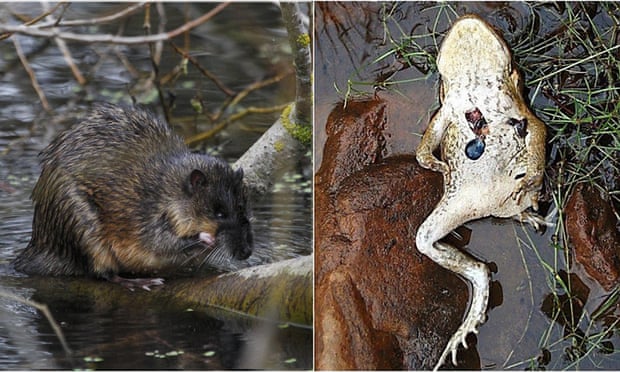
Australian water rats have learned how to kill cane toads, eat their hearts and carve out their organs with “surgical precision”.

In only two years, highly intelligent native rakali in the Kimberly region of Western Australia discovered how to safely destroy the deadly toad – by removing its gallbladder and feasting on the heart.

The rats even targeted the biggest, most poisonous toads they could find, leaving their bodies strewn by the riverside, according to research published in Australian Mammalogy.

Cane toads were first introduced into Queensland in the 1930s and have been marching slowly west ever since, devastating native animals and driving them towards extinction. The toads first arrived in a site monitored by the researchers in WA in 2011.

But to their surprise, the scientists found the native water rat – better known as the rakali – was fighting back. The highly intelligent rodent has extremely sharp claws and teeth, and can grow to up 1kg in weight.

Dr Marissa Parrott, the paper’s co-author, said the scientists began to see dead toads appear, cut open in a “very distinctive” way.

“It was a small area of creek, three to five metres in size, and every day we were finding new dead cane toads,” she said. “Up to five every single morning.

“They were flipping them over, making a very distinctive, almost surgical precision cut down the chest. They would even remove the gallbladder outside the body, which contains toxic bile salts. They knew to remove that bit.”

“In the medium-sized toads, as well as eating the heart and liver, they would strip off the toxic skin from one or both legs and eat the non-toxic thigh muscle.

“They have very strong sharp teeth, very dextrous little hands. They can pick up a fish or a yabby and open them up very quickly and target the areas they like.”

According to the paper, researchers observed 38 toad carcasses, floating in the river or on the creekbank, over 15 days.

“All carcasses had an incision in the chest area, measuring [on average] 10.8mm vertically and 12.2mm horizontally,” it said.

“There was no evidence of bites to the head or body of the partially consumed toads. Rather, the rats appeared to hold the toad on its back and then incise the thoracic cavity to consume organs while the toad was still alive.”

Parrott, a reproductive biologist at Zoos Victoria, said another astonishing finding was the size of the dead toads. While only 2.5% of the toads in the region were classified as large toads, the big toads made up 74% of the bodycount.

This suggested the rats were specifically targeting the biggest toads.

“Water rats are quite large themselves,” Parrott said. “They have the power to subdue a larger toad and get a bigger payload, get that larger heart and larger liver. By killing those larger toads, it may be easier to avoid the toxic organs like the gallbladder.”

This could have a positive effect for other native animals, because the largest toads are more toxic and more dangerous.

Parrott hopes other water rats around the country could develop the same technique, and help halt the march of the toad, but said other measures were needed.

“The water rats could protect small areas and could slow the progression of toads,” she said. “There have been anecdotal reports of water rats killing cane toads, across Queensland and the Northern Territory. But there are so many hundreds of millions of cane toads those areas could get swamped. It’s a major issue for our native predators.”

The researchers hypothesise that the rats either learned from scratch – by figuring out which parts of the toad made them sick – or already had previous experience from eating Australian native toxic frogs.

Either way, Parrott said, it was likely helped by the fact the rats spent a lot of time raising their children.

“The parents have quite a long period of care with their offspring. The baby rats will stay with their mother – and they can learn from their parents. It would make very good sense that their parents are teaching their children how to kill those cane toads and avoid those poisonous areas.

“And it is very possible that those children will spread to other areas and teach their children how to kill and eat those biggest toads.”

Other animals, like crows and kites, have been observed turning cane toads inside out to avoid the toxic skin and only eat non-poisonous organs, the report said.

Parrott said her focus was now on promoting water rat conservation. The rats face threats from pollution of waterways, can be caught in fishing line and discarded balloons, and hunted by stray cats, foxes and dogs.

“[The findings] show the intelligence of our native rodents,” she said. “A lot of people don’t really know we have native rodents in Australia. A story like this has really raised their profile and made people not only realise they are very clever but they are a very beautiful animal we should be protecting.”

https://www.theguardian.com/world/2019/oct/26/australian-water-rats-cut-cane-toads-open-with-surgical-precision-to-feast-on-their-hearts

Thanks to Kebmodee for bringing this to the It’s Interesting community.

Robert Provine, neuroscientist with pioneering work in laughter, yawning, hiccupping, and tears, dies.

by EMILY MAKOWSKI

Neuroscientist Robert Provine, known for his groundbreaking research on common but mysterious human behavior such as laughter and yawning, died October 17 of complications from non-Hodgkin’s lymphoma, according to The Washington Post. He was 76.

Provine studied human social behaviors through innovative methods. In one 1993 study, his team observed people laughing outside of the lab setting, such as in shopping malls or while walking down the street. He found that, contrary to scientific belief of the time, most instances of laughter were based not in response to overt humor, but instead in an effort to strengthen social bonds, acknowledge a superior’s authority, or, when used negatively, to exclude someone from a group.

“Laughter is part of this universal human vocabulary. Everyone speaks this language. Just as birds of a given species all sing their species’ typical song, laughter is part of our own human song,” Provine once told NPR, according to the Post.

Born on May 11, 1943 in Tulsa, Oklahoma, Provine showed an aptitude for science at a young age when he built telescopes in high school. He received his bachelor’s degree in psychology from Oklahoma State University in 1965 and PhD in psychology from Washington University in St. Louis in 1971. He was a member of the American Association for the Advancement of Science, the Association for Psychological Science, and the Psychonomic Society, and wrote two popular science books: Laughter: A Scientific Investigation in 2000 and Curious Behavior: Yawning, Laughing, Hiccupping, and Beyond in 2012.

“Provine’s research on topics such as yawning, laughter, tickling, and emotional tears provided fascinating insights into the fundamental building blocks of human social behavior,” according to a memorial on the University of Maryland, Baltimore County’s (UMBC) website. Provine taught at UMBC for four decades before becoming a professor emeritus in 2013.

“His approach was just amazing. It was different than what pretty much anyone was doing,” Robert Spencer, one of Provine’s former PhD students and currently the chief of neuropsychology at the VA Ann Arbor Healthcare System, tells The Scientist. “He was opening up a whole new set of methods, things that he would refer to as ‘sidewalk neuroscience,’ which was essentially ethology as applied to humans. And he answered questions you just can’t answer in synthetic lab situations,” he says.

Spencer remembers Provine as having a quirky personality, a distinctive Oklahoma accent, and a lab that “looked like a museum,” adding that it was “just full of equipment that he had built himself” in order to conduct experiments. In addition, he had many interests outside of the lab, such as saxophone playing, race car driving, and martial arts.

He is survived by his wife of 23 years, his son and daughter from his first marriage, and three grandchildren.

https://www.the-scientist.com/news-opinion/robert-provine–researcher-of-universal-human-behavior–dies-66622?utm_campaign=TS_DAILY%20NEWSLETTER_2019&utm_source=hs_email&utm_medium=email&utm_content=78428564&_hsenc=p2ANqtz-9rEINL9K9sYAcnp9kSxgo46D44ioSo_zR3e3MkXqwoeczqjTYDR5a4v3X7Cc4X3sqANvMx6eWvkiUiGKo7lYg5Cj8Sjw&_hsmi=78428564

Study shows that chocolate chip cookies trigger the same parts of the brain as cocaine and marijuana.

Researchers at the University of Bordeaux say the combination of ingredients in a traditional chocolate cookie trigger the same addictive response in your brain as cocaine or marijuana.

“Overall, this research has revealed that sugar and sweet reward can not only substitute to addictive drugs, like cocaine, but can even be more rewarding and attractive,” the study’s abstract posits.

Like your cookies with a dash of salt? Your brain does too. Salt consumption activates the brain’s reward centers, compounding the already addictive effects of these chocolaty treats.

So the next time your cookie cravings compel you to act against your better judgement, don’t beat yourself up about it. It’s basically a natural human response, the study shows.

Chocolate chip cookies account for about a fifth of the global cookie market, which is expected to become a $38 billion industry by 2022.

https://www.kron4.com/news/study-chocolate-chip-cookies-as-addictive-as-cocaine/

Genetic Risk for Alzheimer’s Disease Linked to Highly Active Brains

Young carriers of the APOE4 allele have brains that are more connected (left, red lines illustrate connections between brain areas) and active (right, yellow indicates activity) than the brains of those without the allele.
KRISHNA SINGH, ELIFE, 8:E36011, 2019.

A growing body of evidence supports the theory that neural hyperactivity and hyperconnectivity precede the pathological changes that lead to neurodegeneration.

DIANA KWON

There are approximately 5.6 million people over the age of 65 living with Alzheimer’s disease in the United States. With the population aging, that number is projected to grow to 7.1 million by 2025. Researchers know that age, a family history of the disease, and carrying a genetic variant known as APOE4 are all associated with a higher chance of developing the condition. But the biological mechanisms leading to Alzheimer’s are still largely a mystery.

Over the last decade, scientists have amassed evidence for a hypothesis that, prior to developing full-blown Alzheimer’s disease, patients experience a period of hyperactivity and hyperconnectivity in the brain. Several functional magnetic resonance imaging studies have reported that people with mild cognitive impairment (MCI), a condition that often precedes Alzheimer’s, appear to have higher brain activity levels than their age-matched counterparts. Researchers have also found signs of such changes in healthy people carrying the APOE4 allele, as well as in presymptomatic stages of Alzheimer’s in rodent models of the disease.

Krishna Singh, a physicist and imaging neuroscientist at the Cardiff University Brain Research Imaging Center (CUBRIC) in the UK, and his colleagues wanted to investigate this theory further. Previous studies of brain activity in young APOE4 carriers were mostly conducted using small sample sizes, according to Singh. But by the mid-2010s, his team had access to neuroimaging data from close to 200 participants studied at CUBRIC as part of an effort to build a massive dataset of healthy brains. So the researchers decided to use the data to search for signs of unusual brain activity and connectivity in people with the APOE4 allele.

Using magnetoencephalography (MEG), a neuroimaging technique that records the magnetic fields generated by electrical activity in the brain, Singh and his colleagues had measured resting-state brain activity in a group of 183 healthy adults, which included 51 individuals who carried at least one copy of APOE4. The average age of the participants was 24 years old, although ages ranged from 18 to 65 years old.

Analysis of the imaging data revealed that, compared with controls, young APOE4 carriers displayed greater activity in several regions in the right side of the brain, including parts of what’s known as the default mode network, which is active when a person is not focused on a specific task. A similar set of brain regions also showed an overall increase in connectivity.

The researchers next compared the results to brain activity and connectivity data from a previous neuro­imaging study they had conducted, which found that elderly people with early-stage Alzheimer’s disease had decreased neuronal activity and connectivity compared with that of age-matched controls. The network of brain areas that displayed increased connectivity in young APOE4 carriers, the team found, partially overlapped with the brain regions that exhibited a decrease in connectivity in people with early-stage Alzheimer’s. These findings are intriguing, Singh says, because they suggest that brain areas that end up getting impaired in Alzheimer’s may be highly active and connected early in life—long before symptoms of the disease appear.

“This study adds further evidence that hyperactivity and hyperconnectivity may play an influential role in Alzheimer’s disease,” says Tal Nuriel, a professor of pathology and cell biology at the Columbia University Medical Center who wasn’t involved in the work. Because this was an observational study, the findings can only establish a correlation between brain activity and Alzheimer’s, Nuriel adds, so it’s still unclear whether the hyperactivity and hyperconnectivity observed during the early stages of the disease are a cause or a consequence of pathological changes that lead to neurodegeneration.

Scientists used to think that increased activity was simply a compensatory effect—the brain trying to make up for a loss of neurons and synapses, says Willem de Haan, a neurologist at the Amsterdam University Medical Center who was not involved in the latest study. “But I think there’s overwhelming evidence that this may actually be pathological hyperactivity.”

Much of that evidence comes from animal experiments conducted over the last decade or so. In rodents, researchers have found that hyperactivity can increase the production and spread of amyloid-ß, the peptide that accumulates into plaques found in the brains of people with Alzheimer’s—and that amyloid-ß can in turn induce neuronal hyperactivity. These findings have led some scientists to speculate that there might be a self-amplifying loop, where a progressive hyperactivity and build-up of amyloid-ß drives pathological changes associated with the neurodegenerative disease.

Research in humans also supports the idea that hyperactivity could play a causal role in Alzheimer’s disease. In 2012, researchers at Johns Hopkins University treated individuals with MCI with the anti-epileptic drug levetiracetam and found that the therapy suppressed activity in the hippocampus and led to improved memory performance. The team is currently testing levetiracetam for MCI in clinical trials. “I think this is one of the most interesting results,” says de Haan. “It seems to show that by correcting hyperactivity we can actually find some improvements in patients that might point to a completely new type of therapy for [Alzheimer’s disease].”

For the current study, Singh’s team also trained a machine-learning algorithm to distinguish APOE4 carriers from non-carriers based on their MEG data and tested whether it would be able to predict cases of Alzheimer’s. They found that while the program was able to perform above chance, the effect was not significant. “In a way, that was kind of encouraging,” Singh says. “Because I don’t think anybody would predict that we could find a signature [for Alzheimer’s] in 20- and 30-year-olds.”

For now, Singh says, his team’s findings simply shed light on what might be going on in the brains of people with the APOE4 allele. There are still a number of unanswered questions—such as when the transition from hyper- to hypoconnectivity and activity happens, what changes occur in the largely understudied middle-aged cohort, and whether there are differences between APOE4 carriers who go on to develop Alzheimer’s and those who don’t. Ultimately, to understand how disruptions in neuronal activity lead to behavioral and cognitive deficits, scientists need to decipher what’s going on inside a healthy brain, Singh says. “[We] require a model of how the brain works—and those are still in their infancy.”

https://www.the-scientist.com/notebook/genetic-risk-for-alzheimers-disease-linked-to-highly-active-brains-66483?utm_campaign=TS_DAILY%20NEWSLETTER_2019&utm_source=hs_email&utm_medium=email&utm_content=78081371&_hsenc=p2ANqtz-98aZf5axxCqtPYITNqfIVWKM6xuk3ni-QSpgTS4gFXzeQcntecrOf6DFFXjrf5qcktWTUz2M3xnAEJlvXTaS7WDQEKNg&_hsmi=78081371