AI can determine if you’re going to die soon from looking at your ECG, and even cardiologists don’t understand how it does this.


Researchers found that a black-box algorithm predicted patient death better than humans.

They used ECG results to sort historical patient data into groups based on who would die within a year.

Although the algorithm performed better, scientists don’t understand how or why it did.

Albert Einstein’s famous expression “spooky action at a distance” refers to quantum entanglement, a phenomenon seen on the most micro of scales. But machine learning seems to grow more mysterious and powerful every day, and scientists don’t always understand how it works. The spookiest action yet is a new study of heart patients where a machine-learning algorithm decided who was most likely to die within a year based on echocardiogram (ECG) results, reported by New Scientist.

The algorithm performed better than the traditional measures used by cardiologists. The study was done by researchers in Pennsylvania’s Geisinger regional healthcare group, a low-cost and not-for-profit provider.

Much of machine learning involves feeding complex data into computers that are better able to examine it really closely. To analogize to calculus, if human reasoning is a Riemann sum, machine learning may be the integral that results as the Riemann calculation approaches infinity. Human doctors do the best they can with what they have, but whatever the ECG algorithm is finding in the data, those studying the algorithm can’t reverse engineer what it is.

The most surprising axis may be the number of people cardiologists believed were healthy based on normal ECG results: “The AI accurately predicted risk of death even in people deemed by cardiologists to have a normal ECG,” New Scientist reports.

To imitate the decision-making of individual cardiologists, the Geisinger team made a parallel algorithm out of the factors that cardiologists use to calculate risk in the accepted way. It’s not practical to record the individual impressions of 400,000 real human doctors instead of the results of the algorithm, but that level of granularity could show that cardiologists are more able to predict poor outcomes than the algorithm indicates.

It could also show they perform worse than the algorithm—we just don’t know. Head to head, having a better algorithm could add to doctors’ human skillset and lead to even better outcomes for at-risk patients.

Machine learning experts use a metric called area under the curve (AUC) to measure how well their algorithm can sort people into different groups. In this case, researchers programmed the algorithm to decide which people would survive and which would die within the year, and its success was measured in how many people it placed in the correct groups. This is why future action is so complicated: People can be misplaced in both directions, leading to false positives and false negatives that could impact treatment. The algorithm did show an improvement, scoring 85 percent versus the 65 to 80 percent success rate of the traditional calculus.

As in other studies, one flaw in this research is that the scientists used past data where the one-year window had finished. The data set is closed and scientists can directly compare their results to a certain outcome. There’s a difference—and in medicine it’s an ethical one—between studying closed data and using a mysterious, unstudied mechanism to change how we treat patients today.

Medical research faces the same ethical hurdles across the board. What if intervening based on machine learning changes outcomes and saves lives? Is it ever right to treat one group of patients better than a control group that receives less effective care? These obstacles make a big difference in how future studies will pursue the results of this study. If the phenomenon of better prediction holds up, it may be decades before patients are treated differently.

https://www.popularmechanics.com/science/health/a29762613/ai-predict-death-health/

DNA is only one among millions of possible genetic molecules

Biology encodes information in DNA and RNA, which are complex molecules finely tuned to their functions. But are they the only way to store hereditary molecular information? Some scientists believe life as we know it could not have existed before there were nucleic acids, thus understanding how they came to exist on the primitive Earth is a fundamental goal of basic research. The central role of nucleic acids in biological information flow also makes them key targets for pharmaceutical research, and synthetic molecules mimicking nucleic acids form the basis of many treatments for viral diseases, including HIV. Other nucleic acid-like polymers are known, yet much remains unknown regarding possible alternatives for hereditary information storage. Using sophisticated computational methods, scientists from the Earth-Life Science Institute (ELSI) at the Tokyo Institute of Technology, the German Aerospace Center (DLR) and Emory University explored the “chemical neighbourhood” of nucleic acid analogues. Surprisingly, they found well over a million variants, suggesting a vast unexplored universe of chemistry relevant to pharmacology, biochemistry and efforts to understand the origins of life. The molecules revealed by this study could be further modified to gives hundreds of millions of potential pharmaceutical drug leads.

Nucleic acids were first identified in the 19th century, but their composition, biological role and function were not understood by scientists until the 20th century. The discovery of DNA’s double-helical structure by Watson and Crick in 1953 revealed a simple explanation for how biology and evolution function. All living things on Earth store information in DNA, which consists of two polymer strands wrapped around each other like a caduceus, with each strand being the complement of the other. When the strands are pulled apart, copying the complement on either template results in two copies of the original. The DNA polymer itself is composed of a sequence of “letters”, the bases adenine (A), guanine (G), cytosine (C) and thymine (T), and living organisms have evolved ways to make sure during DNA copying that the appropriate sequence of letters is almost always reproduced. The sequence of bases is copied into RNA by proteins, which then is read into a protein sequence. The proteins themselves then enable a wonderland of finely-tuned chemical processes which make life possible.

Small errors occasionally occur during DNA copying, and others are sometimes introduced by environmental mutagens. These small errors are the fodder for natural selection: some of these errors result in sequences which produce fitter organisms, though most have little effect, and many even prove lethal. The ability of new sequences to allow their hosts to better survive is the “ratchet” which allows biology to almost magically adapt to the constantly changing challenges the environment provides. This is the underlying reason for the kaleidoscope of biological forms we see around us, from humble bacteria to tigers, the information stored in nucleic acids allows for “memory” in biology. But are DNA and RNA the only way to store this information? Or are they perhaps just the best way, discovered only after millions of years of evolutionary tinkering?

“There are two kinds of nucleic acids in biology, and maybe 20 or 30 effective nucleic acid-binding nucleic acid analogues. We wanted to know if there is one more to be found or even a million more. The answer is, there seem to be many, many more than was expected,” says professor Jim Cleaves of ELSI.

Though biologists don’t consider them organisms, viruses also use nucleic acids to store their heritable information, though some viruses use a slight variant on DNA, RNA, as their molecular storage system. RNA differs from DNA in the presence of a single atom substitution, but overall RNA plays by very similar molecular rules as DNA. The remarkable thing is, among the incredible variety of organisms on Earth, these two molecules are essentially the only ones biology uses.

Biologists and chemists have long wondered why this should be. Are these the only molecules that could perform this function? If not, are they perhaps the best, that is to say, other molecules could play this role, and perhaps biology tried them out during evolution?

The central importance of nucleic acids in biology has also long made them drug targets for chemists. If a drug can inhibit the ability of an organism or virus to pass its knowledge of how to be infectious on to offspring, it effectively kills the organisms or virus. Mucking up the heredity of an organism or virus is a great way to knock it dead. Fortunately for chemists, and all of us, the cellular machinery which manages nucleic acid copying in each organism is slightly different, and in viruses often very different.

Organisms with large genomes, like humans, need to be very careful about copying their hereditary information and thus are very selective about not using the wrong precursors when copying their nucleic acids. Conversely, viruses, which generally have much smaller genomes, are much more tolerant of using similar, but slightly different molecules to copy themselves. This means chemicals that are similar to the building blocks of nucleic acids, known as nucleotides, can sometimes impair the biochemistry of one organism worse than another. Most of the important anti-viral drugs used today are nucleotide (or nucleoside, which are molecule differing by the removal of a phosphate group) analogues, including those used to treat HIV, herpes and viral hepatitis. Many important cancer drugs are also nucleotide or nucleoside analogues, as cancer cells sometimes have mutations that make them copy nucleic acids in unusual ways.

“Trying to understand the nature of heredity, and how else it might be embodied, is just about the most basic research one can do, but it also has some really important practical applications,” says co-author Chris Butch, formerly of ELSI and now a professor at Nanjing University.

Since most scientists believe the basis of biology is heritable information, without which natural selection would be impossible, evolutionary scientists studying the origins of life have also focused on ways of making DNA or RNA from simple chemicals that might have occurred spontaneously on primitive Earth. Once nucleic acids existed, many problems in the origins of life and early evolution would make sense. Most scientists think RNA evolved before DNA, and for subtle chemical reasons which make DNA much more stable than RNA, DNA became life’s hard disk. However, research in the 1960s soon split the theoretical origins field in two: those who saw RNA as the simple “Occam’s Razor” answer to the origins-of-biology problem and those who saw the many kinks in the armour of RNA’s abiological synthesis. RNA is still a complicated molecule, and it is possible structurally simpler molecules could have served in its place before it arose.

Co-author Dr. Jay Goodwin, a chemist with Emory University says “It is truly exciting to consider the potential for alternate genetic systems, based on these analogous nucleosides – that these might possibly have emerged and evolved in different environments, perhaps even on other planets or moons within our solar system. These alternate genetic systems might expand our conception of biology’s ‘central dogma’ into new evolutionary directions, in response and robust to increasingly challenging environments here on Earth.”

Examining all of these basic questions, which molecule came first, what is unique about RNA and DNA, all at once by physically making molecules in the laboratory, is difficult. On the other hand, computing molecules before making them could potentially save chemists a lot of time. “We were surprised by the outcome of this computation,” says co-author Dr. Markus Meringer, “it would be very difficult to estimate a priori that there are more than a million nucleic-acid like scaffolds. Now we know, and we can start looking into testing some of these in the lab.”

“It is absolutely fascinating to think that by using modern computational techniques we might stumble upon new drugs when searching for alternative molecules to DNA and RNA that can store hereditary information. It is cross-disciplinary studies such as this that make science challenging and fun yet impactful,” says co-author Dr. Pieter Burger, also of Emory University.

###

Reference:

Henderson James Cleaves, II*1,2,3, Christopher Butch1,3,4, Pieter Buys Burger4, Jay Goodwin4, and Markus Meringer5, One Among Millions: The Chemical Space of Nucleic Acid-Like Molecules, Journal of Chemical Information and Modeling, DOI: 10.1021/acs.jcim.9b00632

1. Earth-Life Science Institute, Tokyo Institute of Technology, 2-12-IE-1 Ookayama, Meguro-ku, Tokyo 152-8551, Japan
2. Institute for Advanced Study, Princeton, New Jersey 08540, United States

3. Blue Marble Space Institute for Science, 1515 Gallatin St. NW, Washington, DC 20011, United States

4. Department of Chemistry, Emory University, 1515 Dickey Dr., Atlanta, Georgia 30322, United States

5. German Aerospace Center (DLR), Earth Observation Center (EOC), Münchner Straße 20, 82234 Oberpfaffenhofen-Wessling, Germany

https://www.eurekalert.org/pub_releases/2019-11/tiot-dio103119.php

How the U.S. betrayed the Marshall Islands, kindling the next nuclear disaster

By SUSANNE RUST

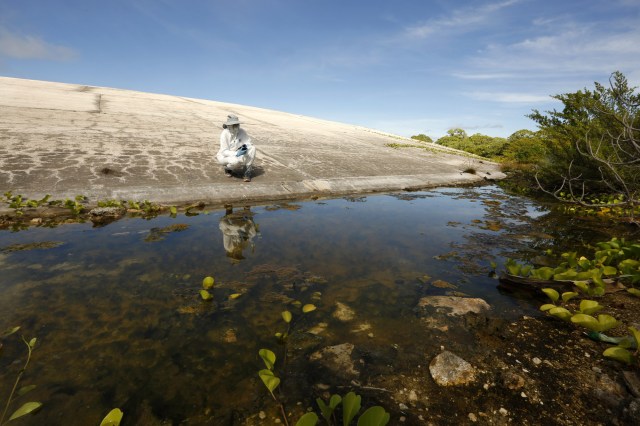
Five thousand miles west of Los Angeles and 500 miles north of the equator, on a far-flung spit of white coral sand in the central Pacific, a massive, aging and weathered concrete dome bobs up and down with the tide.

Here in the Marshall Islands, Runit Dome holds more than 3.1 million cubic feet — or 35 Olympic-sized swimming pools — of U.S.-produced radioactive soil and debris, including lethal amounts of plutonium. Nowhere else has the United States saddled another country with so much of its nuclear waste, a product of its Cold War atomic testing program.

Between 1946 and 1958, the United States detonated 67 nuclear bombs on, in and above the Marshall Islands — vaporizing whole islands, carving craters into its shallow lagoons and exiling hundreds of people from their homes.

U.S. authorities later cleaned up contaminated soil on Enewetak Atoll, where the United States not only detonated the bulk of its weapons tests but, as The Times has learned, also conducted a dozen biological weapons tests and dumped 130 tons of soil from an irradiated Nevada testing site. It then deposited the atoll’s most lethal debris and soil into the dome.

Now the concrete coffin, which locals call “the Tomb,” is at risk of collapsing from rising seas and other effects of climate change. Tides are creeping up its sides, advancing higher every year as distant glaciers melt and ocean waters rise.

Officials in the Marshall Islands have lobbied the U.S. government for help, but American officials have declined, saying the dome is on Marshallese land and therefore the responsibility of the Marshallese government.

“I’m like, how can it [the dome] be ours?” Hilda Heine, the president of the Republic of the Marshall Islands, said in an interview in her presidential office in September. “We don’t want it. We didn’t build it. The garbage inside is not ours. It’s theirs.”

To many in the Republic of the Marshall Islands, Runit Dome is the most visible manifestation of the United States’ nuclear legacy, a symbol of the sacrifices the Marshallese made for U.S. security, and the broken promises they received in return.

They blame the United States and other industrialized countries for global climate change and sea level rise, which threaten to submerge vast swaths of this island nation’s 29 low-lying atolls.

Over the last 15 months, a reporting team from the Los Angeles Times and Columbia University’s Graduate School of Journalism made five trips to the Marshall Islands, where they documented extensive coral bleaching, fish kills and algae blooms — as well as major disease outbreaks, including the nation’s largest recorded epidemic of dengue fever. They interviewed folk singers who lost their voices to thyroid cancers and spent time in Arkansas, Washington and Oregon, where tens of thousands of Marshallese have migrated to escape poverty and an uncertain future.

Marshallese leaders acknowledge that America doesn’t bear full responsibility for their nation’s distress. But they say the United States has failed to take ownership of the environmental catastrophe it left behind, and they claim U.S. authorities have repeatedly deceived them about the magnitude and extent of that devastation.

A Times review of thousands of documents, and interviews with U.S. and Marshallese officials, found that the American government withheld key pieces of information about the dome’s contents and its weapons testing program before the two countries signed a compact in 1986 releasing the U.S. government from further liability. One example: The United States did not tell the Marshallese that in 1958, it shipped 130 tons of soil from its atomic testing grounds in Nevada to the Marshall Islands.

U.S. authorities also didn’t inform people in Enewetak, where the waste site is located, that they’d conducted a dozen biological weapons tests in the atoll, including experiments with an aerosolized bacteria designed to kill enemy troops.

U.S. Department of Energy experts are encouraging the Marshallese to move back to other parts of Enewetak, where 650 now live, after being relocated during the U.S. nuclear tests during the Cold War. But many Marshallese leaders no longer trust U.S. assurances of safety.

“We didn’t know the Runit Dome waste dump would crack and leak…. We didn’t know about climate change,” said Jack Ading, a Marshallese senator from Enewetak Atoll. “We weren’t nuclear scientists who could independently verify what the U.S. was telling us. We were just island people who desperately wanted to return home.”

Adding to the alarm is a study published this year by a team of Columbia University scientists showing levels of radiation in some spots in Enewetak and other parts of the Marshall Islands that rival those found near Chernobyl and Fukushima.

Such discoveries could give Marshallese leaders fresh ammunition to challenge the 1986 compact, which is up for renegotiation in 2023, and also to press the United States to honor property and health claims ordered by an international tribunal.

The tribunal, established by the two countries in 1988, concluded the United States should pay $2.3 billion in claims, but Congress and U.S courts have refused. Documents show the U.S. paid just $4 million.

The U.S. position is that it has already paid more than $600 million for the resettlement, rehabilitation and radiation-related healthcare costs of communities affected by the nuclear testing, said Karen Stewart, the U.S. ambassador to the Republic of the Marshall Islands. She said inflation brings the number closer to $1 billion.

“The United States recognizes the effects of its testing and has accepted and acted on its responsibility to the people of the Republic of the Marshall Islands,” Stewart said in a statement.

In September, the Marshallese parliament, the Nitijela, approved a national nuclear strategy, which calls for a risk analysis and environmental survey of Runit Dome, an assessment of legal options for its cleanup and a new attempt to secure the $2.3 billion ordered by the tribunal.

Last month, Marshall Islands lawmakers called on the international community to reduce greenhouse gases causing what they declared to be a “national climate crisis.”

China is taking an increasing interest in the Marshall Islands and other Pacific island nations, in part because of their strategic location and Beijing’s interest in reducing U.S. influence in the region. Those inroads by China have alarmed U.S. leaders, forcing them to pay more attention to the grievances of Marshallese leaders such as Heine.

“This heightened interest,” Heine said, “should bode well for us.”

From the U.S. mainland, it takes more than a day to fly to the Marshall Islands, and only one commercial airline makes the trip.

The “Island Hopper,” United Airlines Flight 154, starts at Honolulu, making stops in the Marshall Islands at Majuro and Kwajalein before heading west toward the Micronesian islands of Kosrae, Pohnpei and Chuuk, and finally terminating in Guam.

The next day, it doubles back.

As it approaches Majuro, the blue-scape of the ocean is broken by an oblong necklace of white-coral-beached islands, dotted with coconut, pandanus and breadfruit trees.

The Marshall Islands’ atolls are the remnants of ancient volcanoes that once protruded from these cerulean seas. They were settled 3,000 years ago by the ancestors of present-day Marshallese who crossed the ocean on boats from Asia and Polynesia. For American officials in the mid-1940s, this 750,000-square-mile expanse of ocean, nearly five times larger than the state of California, must have seemed like a near-perfect spot to test their growing atomic arsenal.

“The Marshall Islands were selected as ground zero for nuclear testing precisely because colonial narratives portrayed the islands as small, remote and unimportant,” said Autumn Bordner, a former researcher at Columbia University’s K=1 Project, which has focused on the legacy of nuclear testing in the Marshall Islands, and now a research fellow in ocean law and policy at UC Berkeley’s Center for Law, Energy & the Environment.

Nerje Joseph, 72, was a witness to the largest thermonuclear bomb tested by the United States: the Castle Bravo detonation. She was 7 years old at the time, living with her family in Rongelap Atoll, 100 miles east of Bikini Atoll — a tropical lagoon commandeered for nuclear testing.

On March 1, 1954, Joseph recalls waking up and seeing two suns rising over Rongelap. First there was the usual sun, topping the horizon in the east and bringing light and warmth to the tropical lagoon near her home. Then there was another sun, rising from the western sky. It lighted up the horizon, shining orange at first, then turning pink, then disappearing as if it had never been there at all.

Joseph and the 63 others on Rongelap had no idea what they had just witnessed. Hours later, the fallout from Castle Bravo rained down like snow on their homes, contaminating their skin, water and food.

According to Joseph and government documents, U.S. authorities came to evacuate the Rongelapese two days later. By that time, some islanders were beginning to suffer from acute radiation poisoning — their hair fell out in clumps, their skin was burned, and they were vomiting.


Nerje Joseph, 72, was 7 years old when the United States detonated its largest nuclear bomb. The Castle Bravo test sent a mushroom cloud into the sky and unexpectedly irradiated parts of the northern Marshall Islands that she and her family called home.

“More than any other place, the Marshall Islands is a victim of the two greatest threats facing humanity — nuclear weapons and climate change,” said Michael Gerrard, a legal scholar at Columbia University’s law school. “The United States is entirely responsible for the nuclear testing there, and its emissions have contributed more to climate change than those from any other country.”

The Castle Bravo test and others in the Marshall Islands helped the U.S. establish the credibility of its nuclear arsenal as it raced against its Cold War adversary, the Soviet Union, to develop new atomic weapons. But the testing came at a horrible price; Joseph and other Marshallese ended up becoming human guinea pigs for U.S. radiation research.

Three years after Castle Bravo, U.S. authorities encouraged Joseph, her family and her neighbors to return to Rongelap.

U.S. government documents from the time show that officials weighed the potential hazards of radiation exposure against “the current low morale of the natives” and a “risk of an onset of indolence.” Ultimately they decided to go forward with the resettlement so researchers could study the effects of lingering radiation on human beings.

“Data of this type has never been available,” Merrill Eisenbud, a U.S official with the Atomic Energy Commission, said at a January 1956 meeting of the agency’s Biology and Medicine Committee. “While it is true that these people do not live the way that Westerners do, civilized people, it is nonetheless also true that they are more like us than the mice.”

The resettlement proved catastrophic for the people of Rongelap. Cancer cases, miscarriages and deformities multiplied. Ten years later, in 1967, 17 of the 19 children who were younger than 10 and on the island the day Bravo exploded had developed thyroid disorders and growths. One child died of leukemia.

In 1985, the people of Rongelap asked Greenpeace to evacuate them again after the United States refused to relocate them or to acknowledge their exposure, according to government documents and news reports from the time.

Joseph, who had her thyroid removed because of her radiation exposure, has spent nearly seven decades taking daily thyroid medication, enabling her body to produce hormones it otherwise would not generate.

A quiet, dignified woman with thick, wavy gray hair, Joseph lives in a cinder-block home in Majuro, the capital, a setting far different from the pristine atoll where she grew up.

Composed of three low-lying islands connected by one flood-prone road, Majuro is long and narrow and home to roughly half the population of the Marshall Islands, about 28,000 people. Taxis crawl the length of this lone road, fitting as many riders into their vehicles as they can accommodate. Visitors opting to walk are encouraged to carry long sticks to beat away packs of feral dogs that roam the streets.

Joseph says she misses her home, but she knows she may never go back.

“We had a oneness when we lived on Rongelap,” she said of her childhood. “We worked together, we ate together, we played together. That has been lost.”

The legacy of the testing program is most evident at Enewetak, an atoll that took the brunt of the United States’ late-stage nuclear detonations before an international ban on atmospheric testing in 1963.

A string of 40 islands to the west of Bikini, Enewetak was once a postcard-perfect ring of coral reefs, white-sand beaches and coconut trees, where roughly 450 dri-Enewetak and dri-Enjebi — the two clans that lived in the atoll — gathered breadfruit and pandanus, and harvested fish and clams from the lagoon.

Between 1948 and 1958, the U.S. military detonated 43 atomic bombs here. After agreeing to a 1958 temporary moratorium on nuclear testing with the United Kingdom and the Soviet Union, the U.S. began using the atoll as a conventional and bioweapons testing ground. For the next 18 years, the U.S. shot ballistic missiles at it from California, tested virulent forms of bacteria on its islands and detonated a series of other large, conventional bombs in the lagoon.

In 1972, after the U.S had nearly exhausted its military interest in the region, it invited the leaders of Enewetak back to see the atoll for the first time since 1946.

According to a Department of Energy report of the event, the Enewetak leaders “were deeply gratified to be able to visit their ancestral homeland, but they were mortified by what they saw.”

The islands were completely denuded. Photos show an apocalyptic scene of windswept, deforested islands, with only the occasional coconut tree jutting up from the ground. Elsewhere, crumbling concrete structures, warped tarmac roads and abandoned construction and military equipment dotted the barren landscape.

The damage they saw on that visit was the result of nearly three decades of U.S. military testing.

The United States had detonated 35 bombs in the Marshall Islands in 112 days in 1958. Nine of these were on Enewetak’s Runit Island. With names such as Butternut, Holly and Magnolia, the bombs were detonated in the sky, underwater and on top of islands.

One test shot, Quince, misfired Aug. 6, 1958, and sprayed plutonium fuel across Runit Island. The Department of Defense and the Lawrence Livermore National Laboratory, which was sponsoring the test, ordered soldiers into the contaminated ground zero to prepare the site for the next bomb, 12 days later.

Soldiers swarmed in with bulldozers and earthmoving equipment, pushing the radioactive soil into big debris piles that they shoved into the lagoon, the ocean or possibly left alone; government reports differ on these details.

What is clear, and which has never been reported before, is that 130 tons of soil transported 5,300 miles from an atomic test site in Nevada was dumped into a 30-foot-wide, 8-foot-deep “conical plug” where the next bomb, Fig, was detonated.

Archived documents suggest the soil was used as part of an experiment, to help scientists understand how soil types contribute to different blast impacts and crater sizes.

Terry Hamilton, a researcher at the Lawrence Livermore National Laboratory and today the Department of Energy’s point person on the Marshall Islands’ nuclear issues, said the soil was clean and taken from Area 10 at the Nevada Test Site. That area of the Nevada site had been the site of two nuclear blasts in 1951 and 1955, according to government records.

“It is appalling that the Marshallese people, and in particular the people of Enewetak, are just learning about this for the first time,” said Sen. Ading, the Marshallese minister of justice, immigration and labor.

A decade later, in 1968, teams from the Department of Defense set up a new experiment. This time, they were testing biological weapons — bombs and missiles filled with bacteria designed to fell enemy troops.

According to a 2002 military fact sheet and Ed Regis, the author of “The Biology of Doom,” U.S. government scientists came to Enewetak with “their boats and monkeys, space suits and jet fighter planes” and then sprayed clouds of biologically enhanced staphylococcal enterotoxin B, an incapacitating biological agent known to cause toxic shock and food poisoning and considered “one of the most potent bacterial superantigens.”

The bacteria were sprayed over much of the atoll — with ground zero at Lojwa Island, where U.S. troops were stationed 10 years later for the cleanup of the atoll.

According to military documents, the weapons testers concluded a single weapon could cover 926.5 square miles — roughly twice the size of modern-day Los Angeles — and produce a 30% casualty rate.

Records of the test, including a two-volume, 244-page account of operation “Speckled Start,” as it was called, are still classified, according to the Defense Technical Information Center, a branch of the Department of Defense.

Today, 40 years after it was constructed, the Tomb resembles an aged, neglected and slightly diminutive cousin of the Houston Astrodome.

Spiderweb cracks whipsaw across its cap and chunks of missing concrete pock its facade. Pools of brown, brackish water surround its base, and vines and foliage snake up its sides.

The Tomb, which was built atop an unlined crater created by a U.S. nuclear bomb, was designed to encapsulate the most radioactive and toxic land-based waste of the U.S. testing programs in Enewetak Atoll. This included irradiated military and construction equipment, contaminated soil and plutonium-laced chunks of metal pulverized by the 43 bombs detonated in this 2.26-square-mile lagoon, according to U.S. government documents.

It took 4,000 U.S. servicemen three years to scoop up 33 Olympic-sized swimming pools’ worth of irradiated soil and two Olympic swimming pools’ worth of contaminated debris from islands across the atoll and dump it into the crater on Runit Island.

Much of it was mixed in a slurry of concrete and poured into the pit, which was eventually capped with a concrete dome. Six men died during the cleanup; hundreds of others developed radiation-induced cancers and maladies that the U.S. government has refused to acknowledge, according to news reports.

Rising seas could unseal a toxic tomb

More than 3.1 million cubic feet of radioactive material lie within a bomb crater that was capped with an 18-inch-thick cover on Runit Island.

What is underneath the dome

Contaminated debris and soil left behind by 43 nuclear bombs detonated in Enewetak Atoll were cemented and enclosed in a crater from one of the nuclear tests. The dome, constructed in the late ’70s, is showing signs of decay. If it crumbles, its radioactive contents will be released into the lagoon and ocean.

“It’s like they say in the Army,” said Bob Retmier, a retired Huntington Beach-based electrician who did two six-month tours of duty at the dome in 1977 and 1978. “They treat us like mushrooms: They feed us crap and keep us in the dark.”

Retmier, who was in Enewetak with Company C, 84th Engineer Battalion out of Schofield Barracks, Hawaii, said he didn’t know he had been working in a radioactive landscape until he read about the dome in The Times this year.

“They had us mixing that soil into cement,” he said. “There were no masks, or respirators, or bug suits, for that matter. My uniform was a pair of combat boots, shorts and a hat. That was it. No shirt. No glasses. It was too hot and humid to wear anything else.”

According to unclassified military documents, the completion of the dome fulfilled “a moral obligation incurred by the United States.”

Marshallese officials say they were never told that U.S. authorities had doubts about the long-term integrity of the dome to safely store waste.

According to a 1981 military document chronicling the construction of the dome, U.S. government officials met Feb. 25, 1975, to discuss various cleanup options — including ocean dumping and transporting the waste back to the U.S. mainland. Many “of those present seemed to realize that radioactive material was leaking out of the crater even then and would continue to do so,” the document reported.

But because the other options were so expensive, they settled on the dome and relied on military personnel to do the cleaning instead of contractors.

At that meeting, a top Pentagon official was asked what would happen if the dome failed and who would be responsible.

“It would be the responsibility of the United States,” said Lt. Gen. Warren D. Johnson of the U.S. Air Force, who was directing the cleanup process through the Defense Nuclear Agency.

Documents show that as construction teams were finishing the dome by capping it with an 18-inch concrete cover, new, highly contaminated debris was discovered.

In the process of adding that material to the waste site, parts of the concrete top were embedded with contaminated metallic debris.

“It was sloppy,” said Paul Griego, who worked as a contract radiochemist for Eberline Instruments in Enewetak while the military built the dome.

The authors of the report noted that because the dome was “designed to contain material and prevent erosion rather than act as a radiation shield,” the radioactive material in the dome cover was no cause for concern.

Today, U.S. officials maintain that the dome has served its “intended purpose” — to hold garbage, not necessarily to be a radiation shield.

That distinction, though, is not well understood in the Marshall Islands, where many assumed the United States built the dome to protect them.

“My understanding from day one is that the dome was to shield the radiation from leaking out,” Ading said.

Soon after the dome was completed, the winter tides washed more than 120 cubic yards of radioactive debris onto Runit’s shores, prompting U.S. authorities to build a small antechamber adjacent to the dome to hold the new “red-level” debris.

When more debris washed up, they built a second, smaller antechamber.

Then they left.

The U.S. scientific expert on Runit Dome is Hamilton, the Energy Department contractor. He began working on radiation issues nearly three decades ago and is widely respected among nuclear scientists and physicists.

In 2012, Hamilton called the waste site a highly radioactive “point source” whose construction was “not consistent” with U.S. Nuclear Regulatory Commission regulations. He also suggested it could possibly release more plutonium into the surrounding environment.

“Any increases in availability of plutonium will have an impact on food security reserves for the local population,” he wrote with two Lawrence Livermore National Laboratory coauthors, noting a “growing commercial export market” for sea cucumbers in the lagoon.

In more recent years, Hamilton’s message has changed: The islands are safe, U.S. researchers are monitoring the situation, and no one should be concerned.

At a May meeting in Majuro, he told an audience of Marshallese dignitaries, politicians and U.S. officials that the Tomb was bobbing with the tides, sucking in and flushing out radioactive water into the lagoon. Moreover, he said, its physical integrity is “vulnerable to leakage and the sustained impacts of storm surge and sea level rise.”

But Hamilton went on to assure them such a scenario was not cause for alarm. Enewetak lagoon is already so contaminated, he said, that any added radiation introduced by a dome failure would be virtually undetectable — in the lagoon, or in the wider ocean waters.

Hamilton has said that his assessment is based on a sampling of U.S. documents from the 1970s and 1980s suggesting that there is far more contamination in Enewetak lagoon than remains inside the dome. He contends the land is safe for habitation and will remain so, even if the dome crumbles and releases its contents into the contaminated lagoon.

Plutonium is a risk to human health only when it is airborne or introduced via a cut in the skin, Hamilton said. The plutonium in the lagoon, he claims, is not a concern.

“Under existing living conditions, there is no radiological basis why I or anyone else should be concerned about living on Enewetak,” Hamilton said in an email, reflecting a position that other experts find perplexing.

“That’s crazy,” said Holly Barker, a University of Washington anthropologist who serves on the Marshall Islands nuclear commission. The whole point of building the Tomb, she said, was to clean up contamination left behind by the U.S. testing programs.

“Does that mean they didn’t clean it up?” she asked.

Asked about his contradictory messages, Hamilton wrote in an email that his earlier assessment was “put forward to help provide a scientific justification” for securing funding and time for a more thorough analysis of the dome.

“People living on Enewetak do not show elevated levels of plutonium in their bodies,” he said, discounting concerns. “This is the ultimate test.”

To many, Hamilton’s most recent position is just another case of the United States moving the goal posts in the Marshall Islands: It promised a thorough cleanup, only to backtrack in the face of new revelations or costs.

Griego, the radiochemist and the New Mexico state commander of the National Assn. of Atomic Veterans, notes that when Hamilton wrote a report for the Department of Energy in 2013 stating that catastrophic failure of the dome would be inconsequential, the report included a mission statement that cast doubt on its scientific integrity.

According to the document, the report’s purpose was to “address the concerns of the Enewetak community” and “help build public confidence in the maintenance of a safe and sustainable resettlement program on Enewetak Atoll.”

Griego worked as a contractor in Enewetak in 1978.

“I saw the water rising and falling as we filled that dome. I know that limestone is porous. And I know how sick people got,” Griego said. “That dome is dangerous. And if it fails, it’s a problem.”

Climate scientists have been nearly unanimous about one thing: The waters around the Marshall Islands are rising — and growing warmer.

On an August day a year ago, tens of thousands of dead fish washed up on the ocean side of Bikini Atoll.

Dick Dieke Jr., one of seven temporary caretakers working for a Department of Energy contractor there, recalls the water being uncomfortable.

“It didn’t feel good to put my feet in it,” he said. “It was too hot.”

Earlier that day, the typically crystalline and azure waters of the Bikini lagoon, near Nam Island, were cloudy and brown. Sea turtles, reef fish and rays swam slowly through the murk, appearing suddenly out of the cloudy bloom only to disappear just as quickly.

Dive computers showed 92-degree temperatures 30 feet below the surface in the lagoon, an area usually no warmer than 86 degrees in August.

It is impossible to say exactly what caused that day’s massive algae bloom and fish kill, but scientists say such marine incidents will occur more frequently as oceans warm from climate change.

“I’ve never seen or heard of a fish kill in Bikini,” Jack Niedenthal, the Marshall Islands’ secretary of health and human services, said in an interview last summer, just a week after the event. “That’s surprising and deeply upsetting.”

Just a few years ago, the northern Marshall Islands were known for their pristine coral reefs, little disturbed by human contact, in part because many of these isles were radiation no-go zones. But during a visit last year, The Times saw vast expanses of bleached and dead coral around Bikini Atoll, a finding that surprised some familiar with the region.

Elora López, a Stanford University doctoral student, accompanied a PBS documentary film team in 2016 to Bikini Atoll to collect coral samples. The reefs — hundreds of miles from the nearest tourist — were healthy.

But when she returned in 2018, using GPS coordinates to find the same location, all of the corals were dead.

Since 1993, sea levels have risen about 0.3 inches a year in the Marshall Islands, far higher than the global average of 0.11 to 0.14 inches. Studies show sea levels are rising twice as fast in the western Pacific than elsewhere.

Based on forecasts by the Intergovernmental Panel on Climate Change, sea levels could rise 4 to 5 feet by the end of the century, submerging most of the Marshall Islands.

Even if seas rose just half that, said Curt Storlazzi, a geoengineer at the United States Geological Survey, the islands would be in trouble — damaging infrastructure and contaminating most groundwater reserves.

“We have a lot of difficult choices to make,” James Matayoshi, the mayor of Rongelap Atoll, said in a September interview. “If the seas don’t stop rising, we’re going to lose some places. Assuming we can save some, we’ll have to decide which islands, which places, for which people. But who gets to do that?”

The thought of abandoning their homeland is unthinkable for many Marshallese, the nation’s president said.

“Many of our people … want to stay here,” Heine said. “For us, for these people, land is a critical part of our existence. Our culture is based on our land. It is part of us. We cannot think about abandoning the land.”

Outbreaks of certain diseases in the Pacific also have been linked to climate change. The Republic of the Marshall Islands is fighting the largest outbreak of dengue fever in its recorded history — more than 1,000 people have been infected, with the outer atolls quarantined to prevent the spread of disease among people with no access to hospital care.

“Most people talk about rising sea levels when it comes to climate change,” said Niedenthal, the health secretary. “Even more immediate and devastating is what has been happening with disease outbreaks. This is the worst outbreak in Pacific history.”

For many Americans, the Marshall Islands are best known for a movie monster and a cartoon icon. Godzilla, the Japanese-inspired monster of the Pacific, was awakened and mutated by the atomic bombs in Bikini Atoll. SpongeBob SquarePants, the Nickelodeon cartoon character, lives with his friends in Bikini Bottom.

A recent review of California-approved high school history textbooks and curricula showed no mention of the Marshall Islands or the U.S. nuclear testing program and human experimentation program there.

Even less widely known are the Marshallese attempts, for the last three decades, to seek compensation from the U.S. for the health and environmental effects of nuclear testing. They’ve been denied standing to sue in U.S. courts, and Congress has declined their requests.

The Nuclear Claims Tribunal — an independent arbiter established by the U.S.-Marshall Islands compact to process and rule on claims — has ruled in their favor, awarding them more than $2 billion in damages. But the U.S. has paid out only $4 million, according to congressional testimony, and no enforcement mechanism exists.

In the last few years, though, the island nation’s claims have begun to get more visibility.

President Heine has achieved near-celebrity status at international events. The Marshall Islands recently secured a seat on the United Nations Human Rights Council, giving the nation another forum in which to raise its concerns.

A geopolitical shift also has given the islands new leverage. China has increased its reach into the central Pacific, providing aid and loans to dozens of nations, surpassing the United States as the region’s largest trade partner.

“China is trying to erode U.S. influence in the region to weaken the U.S. military presence and create an opening for Chinese military access,” according to a 2018 report from the U.S.-China Economic and Security Review Commission, a congressional committee.

In September, two of the United States’ staunchest allies in the Pacific — Kiribati and the Solomon Islands — severed diplomatic ties with Taiwan, embracing China instead.

Washington has greeted those developments with concern.

In August, Secretary of State Michael R. Pompeo flew to Micronesia to meet with the leaders of several Pacific island nations, including the Marshall Islands.

He announced the United States’ intention to extend the compact with the Marshall Islands — providing aid in exchange for a secure military presence, and working rights for Marshallese in the United States.

The announcement came as a surprise to the Marshallese, who were anticipating the expiration in 2023 of their compact, which includes annual grants from the U.S. that total about $30 million a year.

Marshallese officials read that as a sign that the islands have new negotiating power.

“These are matters of life and death for us,” said Ading, the Enewetak senator. “We can’t afford to rely exclusively on reassurances from one source. We need neutral experts from the international community to weigh in, to confirm or challenge” previous U.S. findings.

Many Marshallese say they don’t want U.S. money or apologies, but just a home in the Marshall Islands that is safe and secure.

Nerje Joseph holds out hope for a day when her children, grandchildren and great-grandchildren can return to her ancestral home in Rongelap and she can be buried in the sands of her youth, alongside her ancestors, under the coconut trees she remembers so well.

“In Los Angeles, you make movies about the Titanic. About people who lost everything,” she said.

“Why don’t you make movies about us?”

https://www.latimes.com/projects/marshall-islands-nuclear-testing-sea-level-rise/?utm_source=Nature+Briefing&utm_campaign=afb6bb4ab4-briefing-dy-20191111&utm_medium=email&utm_term=0_c9dfd39373-afb6bb4ab4-44039353

Ice eggs in Finland wash up on beach

By Nicoletta Lanese

Smooth balls of ice rolled ashore on a beach in Finland and piled up like a gigantic clutch of turtles’ eggs.

But where did these “ice eggs” come from? Turns out, the frigid orbs were sculpted by a peculiar combination of weather and waves, according to news reports.

Amateur photographer Risto Mattila stumbled upon the strange sight while walking with his wife on Hailuoto Island, a land mass between Finland and Sweden, according to BBC News. The temperature hovered around 32 degrees Fahrenheit (minus 1 degree Celsius) that day, he said, and the wind whipped across the beach. “There, we found this amazing phenomenon. There was snow and ice eggs along the beach near the water line,” he told the BBC.

The “ice eggs” littered an area the length of about one-quarter of a football field and ranged in size from that of an average chicken egg to that of a hefty soccer ball, Mattila said. He snapped a photo, noting that he had “never seen anything like this during 25 years living in the vicinity.”

Others came upon the ice eggs, too. “This was [an] amazing phenomenon, [I’ve] never seen before. The whole beach was full of these ice balls,” Tarja Terentjeff, who lives in the nearby town of Oulu, told CNN. Another local, Sirpa Tero, told CNN she’d seen icy orbs line the shoreline before, “but not over such a large area.”

Although fairly rare, these ice eggs form similarly to sea glass or rounded stones that wash up on the beach, said BBC Weather expert George Goodfellow. Chunks of ice break off from larger ice sheets in the sea and either taxi to shore on the incoming tide or get pushed in by gusts of wind at the water’s surface, he explained. Waves buffet the ice chunks as they travel, slowly eroding their jagged edges into smooth curves. Seawater sticks and freezes to the forming eggs, causing them to grow like snowballs do as they roll across the ground.

Once the ice chunks reach shore, pounding waves tend to buff out any lingering kinks on their surfaces, leaving behind nothing but sleek and shiny “eggs” for curious tourists to happen upon.

https://www.livescience.com/ice-eggs-in-finland-beach.html?utm_source=Selligent&utm_medium=email&utm_campaign=9881&utm_content=20191108_LS_Essentials_Newsletter+-+adhoc+&utm_term=3675605&m_i=KLvdVq2D1jG_1ZlsN2BtGnhxz5lDWnoT1z5TH7nDwaq0voJwXv3R_F4qtiVoYAKPhitMFL_skBWImJ%2By0oVarC4t%2Bc9VnaCZKB

Rare case offers clues to staving off Alzheimer’s


Francisco Lopera, a neurologist at the University of Antioquia in Medellin, Colombia, has been painstakingly collecting brains, birth and death records from one sprawling Colombian family to study Alzheimer’s.Credit…Federico Rios Escobar for The New York Times


A woman with lots of beta-amyloid buildup (red) in her brain remained cognitively healthy for decades.

by Kelly Servick

In 2016, a 73-year-old woman from Medellín, Colombia, flew to Boston so researchers could scan her brain, analyze her blood, and pore over her genome. She carried a genetic mutation that had caused many in her family to develop dementia in middle age. But for decades, she had avoided the disease. The researchers now report that another rare mutation—this one in the well-known Alzheimer’s disease risk gene APOE—may have protected her. They can’t prove this mutation alone staved off disease. But the study draws new attention to the possibility of preventing or treating Alzheimer’s by targeting APOE—an idea some researchers say has spent too long on the sidelines.

“This case is very special,” says Yadong Huang, a neuroscientist at the Gladstone Institutes in San Francisco, California, who was not involved with the research. “This may open up a very promising new avenue in both research and therapy.”

APOE, the strongest genetic risk factor for Alzheimer’s, has three common forms. A variant called APOE2 lowers risk of the disease. The most common variant, APOE3, doesn’t influence risk. APOE4 raises risk; roughly half of the people with the disease have at least one copy of this variant.

Researchers have long contemplated targeting APOE with therapies. A team at Cornell University will soon start a clinical trial that infuses the protective APOE2 gene into the cerebrospinal fluid of people with two copies of APOE4.

But mysteries about APOE have kept it from becoming a front-runner among drug targets. “It does so many things that it’s confusing,” says Eric Reiman, a neuroscientist at the Banner Alzheimer’s Institute in Phoenix and a co-author on the new paper. The APOE protein binds and transports fats and is abundant in the brain. And the APOE4 variant seems to encourage the formation of sticky plaques of the protein beta-amyloid, which clog the brain in Alzheimer’s. But powerful amyloid-busting drugs have repeatedly failed to benefit patients in clinical trials. Some researchers saw no reason to try an APOE-targeting therapy that seemed to be “just a poor man’s antiamyloid treatment,” Reiman says.

The Colombian woman’s case suggests other ways APOE could affect Alzheimer’s risk. The woman participated in a study led by researchers at the University of Antioquia in Medellín that has tracked roughly 6000 members of her extended family. About one-fifth of them carried an Alzheimer’s-causing mutation in a gene called presenilin 1; these carriers generally developed dementia in their late 40s. Yet the woman didn’t show the first signs of the disease until her 70s, even though she, too, carried the mutation. “She’s definitely an outlier,” says cell biologist Joseph Arboleda-Velasquez of Harvard Medical school in Boston. (The research team is keeping the woman’s name confidential to protect her privacy.)

In Boston, a positron emission tomography scan of the woman’s brain revealed more amyloid buildup than in any other family member who has been scanned. “It was very striking,” says Yakeel Quiroz, a clinical neuropsychologist at Massachusetts General Hospital and Harvard Medical School. But the team found no signs of major damage to neurons, and minimal buildup of another Alzheimer’s hallmark: the misfolded protein tau. Whatever protection this woman had didn’t depend on keeping the brain amyloid-free. Instead, her case supports the idea that tau has a “critical role … in the clinical manifestations of Alzheimer’s disease,” says Jennifer Yokoyama, a neurogeneticist at the University of California, San Francisco.

Genome sequencing revealed two copies of a rare mutation in the APOE gene, the researchers report this week in Nature Medicine. First discovered in 1987, the mutation, known as Christchurch, occurs in a region separate from those that determine a person’s APOE2, 3, or 4 status. (The woman has the neutral APOE3 variant.) Previous research found that the Christchurch mutation—like the more common protective APOE2 mutation—impairs APOE’s ability to bind to and clear away fats and sometimes leads to cardiovascular disease.

The researchers also found that the mutation prevents APOE from binding strongly to other molecules called heparan sulfate proteoglycans (HSPGs), which coat neurons and other cells “like a carpet,” says Guojun Bu, a neuroscientist at the Mayo Clinic in Jacksonville, Florida, who has studied the interaction between these molecules and APOE.

APOE2 may also impair the protein’s ability to bind HSPGs. But how that could protect against disease isn’t clear. One possible clue: Research by neuroscientist Marc Diamond of the University of Texas Southwestern Medical Center in Dallas and his colleagues suggest the toxic tau protein relies on HSPGs to help it spread between cells. Maybe the less APOE binds to HSPGs, the harder it is for tau to spread.

But, Diamond cautions, “It will require much more study to understand if this relationship exists.” The Christchurch mutation might have protective effects unrelated to HSPGs; it’s also possible that mutations other than Christchurch protected the woman.

If hampering APOE’s normal binding really staved off her Alzheimer’s, future treatments might aim to mimic that effect. An antibody or small molecule could latch onto the APOE protein to interfere with binding, gene editing could change the structure of APOE to imitate the Christchurch variant, or a “gene silencing” approach could reduce production of APOE altogether.

Reiman hopes the new study will rally researchers to pursue treatments related to APOE. He, Quiroz, Arboleda-Velasquez, and other collaborators also posted a preprint on the medRxiv server on 2 November showing that people with two copies of APOE2 have lower Alzheimer’s risk than previously thought—about 99% lower than people with two copies of APOE4. “When it comes to finding a treatment that could have a profound impact on the disease,” Reiman says, “APOE may be among the lowest hanging fruit.”

https://science.sciencemag.org/content/366/6466/674

Ape Fossils Shed New Light on Evolution of Bipedalism


The 12-million-year-old bones of a previously unknown species named Danuvius guggenmosi challenge the prevailing view about when and where our ancestors first started walking upright.

by CATHERINE OFFORD

Researchers in Germany have discovered the fossilized bones of a previously unknown species of ape that appeared to walk upright, according to a study published yesterday (November 6) in Nature. The bones, which the team dated to nearly 12 million years ago, suggest that bipedalism might have evolved in a common ancestor of humans and other great apes living in Europe, and not in more-recent human ancestors in Africa as many researchers had assumed.

The finding “changes the why, when and where of evolution of bipedality dramatically,” study coauthor Madelaine Böhme, a paleobiologist at the University of Tübingen in Germany, tells Reuters.

There are many theories about the evolution of bipedalism, but many assumed that upright walking appeared in our ancestors about 6 million to 8 million years ago—possibly as an adaptation to a reduction in forest cover occurring in East Africa around the same time.

See “Exploding Stars Probably Didn’t Spur Hominins to Walk Upright”
The new set of bones, unearthed from a clay pit in Bavaria between 2015 and 2018, are around 11.62 million years old and belong to several baboon-size apes, members of a species researchers have named Danuvius guggenmosi. The limbs show an unusual combination of anatomical features indicative of an ability to move both by swinging through trees and by walking upright.

“It was astonishing for us to realise during the process of research how similar certain bones were to humans, as opposed to great apes,” Böhme says in a statement, The Guardian reports.

“Together, the mosaic features of D. guggenmosi arguably provide the best model yet of what a common ancestor of humans and African apes might have looked like,” writes Tracy Kivell, a paleoanthropologist at the University of Kent who was not involved in the work, in an accompanying commentary in Nature. “It offers something for everyone: the forelimbs suited to life in the trees that all living apes, including humans, still have, and lower limbs suited to extended postures like those used by orangutans during bipedalism in the trees.”

The fossils could help researchers study hominid evolution more generally, the authors write in their paper. “With a broad thorax, long lumbar spine and extended hips and knees, as in bipeds, and elongated and fully extended forelimbs, as in all apes (hominoids), Danuvius combines the adaptations of bipeds and suspensory apes, and provides a model for the common ancestor of great apes and humans.”

https://www.the-scientist.com/news-opinion/ape-fossils-shed-new-light-on-evolution-of-bipedalism-66695?utm_campaign=TS_DAILY%20NEWSLETTER_2019&utm_source=hs_email&utm_medium=email&utm_content=79150661&_hsenc=p2ANqtz-_EefiY-JAKl-yb1fxj7MqKSJdZEuyl0TTakFZw9e-FBzEMeisoBvJqoPoa27FyCkjRQIrlk-7oAhz3wSnBDjyyfqQk1A&_hsmi=79150661

This Science Vigilante Calls Out Bogus Results in Prestigious Journals


With pressure to “publish or perish,” some scientists fake their research results. Elisabeth Bik spends her days correcting them.

by Gemma Milne

Elisabeth Bik spends her days trawling scientific papers, life sciences papers in particular, looking for signs of image manipulation. Put another way, she plays a backward game of “spot the difference” (backward because it’s more like “spot the similarity”) to seek out fraudulent work posing as science. She does this for free, week after week, along with other online science misconduct sleuths, in the pursuit of correcting the record upon which the world’s knowledge is based.

She is a self-appointed, image-manipulation detective — the Sherlock Holmes of science fraud.

It started with plagiarism before plagiarism became easy to catch. After reading about its prevalence in scientific papers, Bik, who had a 15-year career as a microbiology researcher, searched Google Scholar and found her own work had been copied. Then she set about finding other instances of this particular fraud. On one such investigation, she found a PhD thesis that not only had plagiarized text, but also an image that was reused throughout. The author had been trying to pass off the same image as a series of distinct results. “[The image] was mirrored, or turned around, but it had a very distinct little smear, which I recognized,” she says.

After reporting the fraudulent thesis to the university, resulting in its retraction, Bik realized she’d stumbled upon a new, strange hobby. “That was something I was good at, recognizing these patterns,” she says, “and so I started doing that more and more.” She soon found herself going through swaths of research papers during her evenings and weekends, and looking forward to getting home from her day job to continue.

It wasn’t long before Bik had amassed a huge collection of fraudulent papers. In 2016, she co-authored a paper revealing the fruits of her labor. Within her manual search of more than 20,000 pieces of biomedical research, 4% contained manipulated images. She reported those 800 papers, and she’s continued searching, sharing, and reporting ever since.

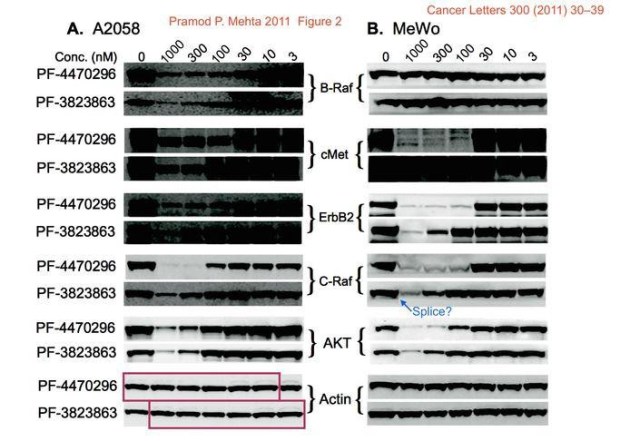
One of the initial 800 papers she reported was by Min-Jean Yin, who led the Pfizer California cancer lab at the time of the paper’s publication. It contained duplicated images of western blots, a common test used to detect specific protein molecules. The images produced from the test are the data, so editing them essentially amounts to chopping and changing results to fit whatever hypothesis the scientist is trying to prove.

After Bik reported the abnormalities both on popular research discussion forum PubPeer as well as on the science misconduct blog For Better Science, Pfizer not only fired Yin but also opened up a larger investigation into her years of work at their lab. This led them to retract many of her published papers focused on cancer therapeutics.


Image from the PubPeer listing questioning of one of Yin’s 2011 papers, with the red box annotating a copied crop. Credit: PubPeer

Bik is prolific on PubPeer and on Twitter, where she posts multicolored annotated graphics that point out how images have been manipulated to nearly 40,000 followers. “I’ve been a very quiet microbiologist until a few years ago when I joined Twitter,” she says with a laugh.

After earning a PhD in the Netherlands, 15 years at Stanford, and a few years in the science startup scene, this year, both Bik and her husband decided to take the leap into working on personal projects instead of for companies. Looking for fraud in research is more than just a fun hobby for Bik. “I’ve found this niche that I feel I can make a difference in,” she says. “I felt it was calling me.”

Bik often picks open-access journals, as they’re easier to flick through, or papers that are requested by other scientists who are tipping her off. “What I’m doing now is going into all the image manipulation cases I’ve already found and finding other papers by the same author, which could be in other journals.”

Living off savings, Bik reckons she has about a year’s leeway to work on her image manipulation sleuthing and hopes to find a way of monetizing her expertise as a science misconduct consultant to journals.

Published work in prestigious academic journals is the main currency of the science world, and career progression, respect, and compensation are often linked to publishing reputation. The most significant journals only publish research with big implications and strong evidence that represents a leap in knowledge, not just an incremental addition. Unfortunately, this can’t always be achieved through grit, hard work, and the right area of research, so some scientists succumb to “publish or perish” pressure by editing their images to show clearer results, re-using images to convey “desirable” scientific claims, or photoshopping their graphs to back up false, but exciting findings.

Other scientists may spend years of time and huge amounts of research funding trying to build upon false science. “My goal is not to have people disciplined; my goal is to correct the science,” Bik explains.

Despite Bik’s work finding these manipulations, she estimates that only 30% of those papers have been corrected or retracted. “By tweeting about it, I hope to accomplish two things,” she explains. “First, put pressure on journals to react, like those viral videos where people are mistreated on airplanes. And second, make them aware that fraud happens, so when they see a paper, they know what to look for.”

Journals are notoriously bad at handling scientific misconduct. Sometimes this failing is understandable: Correcting or retracting a published paper could mean getting in touch with a myriad of authors, who may have since changed universities, never reply, or be unable to produce the original data. It requires time and patience to hunt down either the rationale for an honest mistake or the admission of misconduct, and it reduces the bottom line of these profit-making enterprises.

But sometimes the lack of investigation is unjustified. Journals have been known to reject complaints that aren’t submitted correctly through their complex and out-of-date online systems, or — more worryingly — come from anonymous submissions. Ivan Oransky, co-founder of Retraction Watch, which keeps track of scientific retractions, says: “I would love for scientists, journals, and universities who refuse to take seriously anonymous complaints and allegations about papers to tell me how they feel about the anonymous whistle-blower [who brought forth concerns about President Donald Trump’s dealings with Ukraine].”

Because reputation is paramount in science, anonymity is often required.

Much of the sleuthing is done by active scientists who use pseudonyms for fear of being ousted by their university or ostracized by the affected researchers. One such sleuth is Smut Clyde who, like Bik, spends huge amounts of time finding irregularities, knowing that their anonymous posts may not be accepted by the journals. “There are an awful lot of scientists [committing fraud]. Just picking out one or two doesn’t really make much of a difference — it’s just a drop in the ocean,” they told OneZero. “The best we can hope for is to raise awareness that the ocean is rather full already and ultimately shift the incentives. It’s more long-term than identifying one particular person who is up to no good.”

Bik is well-known and well-respected within the science misconduct community, not only for the prolific nature of her work but also because she writes and reports under her own name. In some ways, then, Bik is a surrogate for so many. She posts and reports publicly, often after being tipped off to papers from those who aren’t able to do it themselves: “Every day I get a new request.”

“I hope more people join me in the image manipulation search, as I feel we need more people doing this. There’s so many papers and I feel we need to clean ship.”
It’s the volunteers, the puzzle aficionados, the ones who do it because they feel they must, that are holding science to account. Conan Doyle’s fictional Sherlock Holmes famously inspired changes in police reporting; maybe one day the tenacity and sharp eyes of Bik and the rest of the image manipulation sleuths might inspire the institutions of science to do the same.

https://onezero.medium.com/this-science-vigilante-calls-out-bogus-results-in-prestigious-journals-eb5a414c7f76

Loneliness is linked to increased risk of death in patients with heart disease.

By Steven Reinberg

Loneliness can take a heavy toll on heart patients — including a higher risk of death in the year after hospitalization, researchers found.

“This study confirms what has also been indicated in previous research regarding the serious health consequences of loneliness,” said lead researcher Anne Vinggaard Christensen, of Copenhagen University Hospital in Denmark.

“Loneliness should be considered a serious risk factor in patients with cardiac disease and should be included in risk evaluation of patients,” added Christensen, who is with the hospital’s heart center.

The Danish researchers cautioned, however, that their findings can’t prove that loneliness caused people to die, only that loneliness and the risk of death appear to be connected. But the differences in mortality between those who felt lonely and those who didn’t can’t be explained by their medical condition alone, they said.

Loneliness is a subjective experience, one that is distressing and unpleasant, the researchers noted.

The connection between loneliness and health is complex, Christensen said.

People who are lonely or socially isolated tend to have more unhealthy lifestyles. They smoke more, are less likely to be physically active and don’t take their medication, she said.

“Having a social network helps motivate people to make healthier choices,” Christensen said. “A social network can act as a buffer for stress.”

Also, lonely people have been found to have higher levels of stress hormones and lower immune function, she added.

“These different pathways are interconnected and help us understand why people feeling lonely or socially isolated experience worse health,” Christensen said.

James Maddux is a professor emeritus in the department of psychology at George Mason University in Fairfax, Va. Reviewing the findings, he took issue with the study’s methodology.

“My major concern about the methodology is that their measure of loneliness is rather weak and is not consistent with most studies about loneliness that I am familiar with,” Maddux said. He explained that the question used to measure loneliness failed to capture loneliness “as a profound sense of isolation and disconnected from others, accompanied by sadness and a longing to be with others. In other words, loneliness is painful.”

Still, even in its flawed state, the new study “adds to the growing research on the perils of social isolation among people in general and among older adults over 60 in particular,” said Maddux. “These results help reaffirm what we’ve learned so far about how unhealthy social isolation can be.”

For the study, Christensen and her colleagues collected data on more than 13,400 heart patients after they left the hospital from 2013 to 2014. Their average age was in the mid-60s.

Participants completed questionnaires on their health, psychological well-being, quality of life and levels of anxiety and depression.

Compared to people who didn’t feel lonely, those who said they were lonely were nearly three times more likely to be anxious and depressed and have a lower quality of life, the researchers found.

A year later, Christensen’s team found that feeling lonely had a significant impact on participants’ health.

Regardless of other factors, lonely women were nearly three times more likely to die than women who weren’t lonely, and lonely men were more than twice as likely to die, the researchers found.

Living alone, however, is not necessarily equal to feeling lonely, and it was linked to a lower risk of depression and anxiety than living with others.

But among men, living alone was tied with a 39% greater risk for poor heart health. This may be because men tend not to have an extensive support network after divorce or death of a spouse, compared with women, the researchers noted.

“Loneliness can have many causes and can occur even if you have people around you,” Christensen said.

For some, it would help to have a family member who remembers to ask how they are doing and is ready to listen, she said.

“For others, help with practical things might be what they need, and for some, the opportunity to talk to other patients who have gone through the same thing is helpful,” Christensen said.

She also stressed that the effects of loneliness are not confined to heart disease. “It’s also [detrimental] for individuals who do not suffer from an illness. Loneliness seems to be damaging to your health no matter what,” Christensen said.

The report was published online Nov. 4 in the journal Heart.

https://consumer.healthday.com/cardiovascular-health-information-20/misc-stroke-related-heart-news-360/risks-mount-for-lonely-hearts-after-cardiac-surgery-751879.html

Any amount of running can lower a person’s risk of early death, an analysis of multiple studies finds.

By Jonathan Lambert

If you’re looking for motivation to take up running, perhaps this will help. A new study finds that people who run as little as once a week have a lower risk of early death compared with people who don’t run at all.

In fact, any amount of running was associated with a 27 percent lower risk of premature death. And researchers found no evidence that running more alters that number significantly, according to a new meta-analysis published November 4 in the British Journal of Sports Medicine.

“This is good news for the many adults who find it hard to find time for exercise,” says Elaine Murtagh, an exercise physiologist at Mary Immaculate College in Limerick, Ireland, who was not involved in the study. “Any amount of running is better than none.”

While this conclusion might seem obvious to runners, the science has been fairly mixed, says public health researcher Željko Pedišić of Victoria University in Melbourne, Australia. “Some studies found a significant benefit of running, but others did not,” he says.

Also unclear was whether the duration or intensity of running mattered. Researchers who study the effects of running think about the activity in terms of doses, as though it were itself a medicine. Pedišić says that while it might make sense that more running would yield greater health benefits, some studies have sparked debate by suggesting that higher levels of running — more than 250 minutes a week — could actually negate any benefits in terms of mortality.

Pedišić and his colleagues tried to make sense of these conflicting findings by pooling and reanalyzing data from previous studies, an approach known as a meta-analysis. They settled on 14 previously published studies, which collectively asked 232,149 participants about their running habits and then tracked their health over a period of time from 5 ½ to 35 years.

Over the course of each study a total of 25,951 participants died, allowing the researchers to look for statistical associations between running and risk of death.

The researchers found that runners, even those who reported running as infrequently as once a month, had a 27 percent reduced risk of death from any cause compared with non-runners. Each study differed slightly in how they defined a runner, making it difficult to say exactly how little running is necessary for a benefit, though Pedišić says taking just a few strides a week is almost certainly not enough.

Still, the lower risk of early death was more or less the same across all running doses, from running no more than once a week for less than 50 minutes to running every day for a weekly total of 250 minutes. “All these doses of running are significantly associated with lower risk of death,” Pedišić says. “There was no significant difference between frequency, duration or pace,”

“Not finding a trend does not mean that the trend does not exist,” Pedišić cautions. A trend could be too small to be detected within the sample size. Studying the health effects of heavy running can be difficult because there aren’t many people who run that much, he says.

While more evidence is needed to determine if there is an upper limit to how much running is beneficial, this study fits with other research finding health benefits for any level of activity, says Angelique Brellenthin, a kinesiologist at Iowa State University in Ames who was not involved in the study, “Any amount of physical activity that you can fit into your schedule is good for you,” she says.

Running just once a week may help you outpace an early death

China approves 1st new drug for Alzheimer’s disease in 17 years

By Julie Zaugg and Jared Peng

Authorities in China have approved a drug for the treatment of Alzheimer’s disease, the first new medicine with the potential to treat the cognitive disorder in 17 years.

The seaweed-based drug, called Oligomannate, can be used for the treatment of mild to moderate Alzheimer’s, according to a statement from China’s drug safety agency. The approval is conditional however, meaning that while it can go on sale during additional clinical trials, it will be strictly monitored and could be withdrawn should any safety issues arise.

In September, the team behind the new drug, led by Geng Meiyu at the Shanghai Institute of Materia Medica under the Chinese Academy of Sciences, said they were inspired to look into seaweed due to the relatively low incidence of Alzheimer’s among people who consume it regularly.

In a paper in the journal Cell Research, Geng’s team described how a sugar contained within seaweed suppresses certain bacteria contained in the gut which can cause neural degeneration and inflammation of the brain, leading to Alzheimer’s.

This mechanism was confirmed during a clinical trial carried out by Green Valley, a Shanghai-based pharmaceutical company that will be bringing the new drug to market.

Conducted on 818 patients, the trial found that Oligomannate — which is derived from brown algae — can statistically improve cognitive function among people with Alzheimer’s in as little as four weeks, according to a statement from Green Valley.

“These results advance our understanding of the mechanisms that play a role in Alzheimer’s disease and imply that the gut microbiome is a valid target for the development of therapies,” neurologist Philip Scheltens, who advises Green Valley and heads the Alzheimer Center Amsterdam, said in the statement.

Vincent Mok, who heads the neurology division at the Chinese University of Hong Kong, said the new drug showed “encouraging results” when compared to acetylcholinesterase inhibitors — the existing treatment for mild to severe Alzheimer’s.

“It is just as effective but it has fewer side effects,” he told CNN. “It will also open up new avenues for Alzheimer’s research, focusing on the gut microbiome.”

Since very little is known about the mechanisms of the new drug, Mok said it should also be probed to see if it could have a protective effect and possibly slow down the progression of the disease in patients who have yet to develop strong symptoms of dementia.

The company said Oligomannate will be available in China “very soon,” and it is currently seeking approval to market it abroad, with plans to launch third-phase clinical trials in the US and Europe in early 2020.

Alzheimer’s disease, which starts with memory loss and escalates to severe brain damage, is believed to cause 60% to 70% of the cases of dementia reported worldwide, according to the World Health Organization. Dementia affects an estimated 50 million people worldwide, including 9.5 million people in mainland China, Hong Kong and Taiwan.

Named after Alois Alzheimer, the neuropathologist who discovered the disease in 1906, it has so far confounded researchers and pharmaceutical companies.

In October, US pharmaceutical giant Biogen said it would pursue Food and Drug Administration (FDA) approval for an experimental treatment called aducanumab, after announcing in March it was canceling a large clinical trial for the drug.

Johnson & Johnson, Merck, Pfizer and Eli Lilly have all previously abandoned projects to develop a drug for Alzheimer’s after unsatisfactory clinical data.

https://www.cnn.com/2019/11/03/health/china-alzheimers-drug-intl-hnk-scli/index.html