Afroz Shah – the man behind the world’s largest beach cleaning effort.

Afroz Shah, a lawyer in Mumbai, hasn’t had a weekend off in four years. But he hasn’t spent this time writing briefs or preparing for court.

His mission? Saving the world’s oceans from plastic pollution.

It’s a calling he found in 2015 after moving to a community in Mumbai called Versova Beach. He had played there as a child and was upset to see how much it had changed. The sand was no longer visible because it was covered by a layer of garbage more than five feet thick — most of it plastic waste.

“The whole beach was like a carpet of plastic,” he said. “It repulsed me.”

The unsightly mess Shah had stumbled upon is part of a global environmental crisis. More than 8 million tons of plastic ends up in the world’s oceans each year — the equivalent of a garbage truck dumped every minute. It’s predicted that by 2050, there will be more plastic in the ocean than fish.

The results are devastating. More than 1 million seabirds, 100,000 sea mammals and countless fish die from plastic pollution each year.

“The marine species have no choice at all,” Shah said. “We are attacking their habitats, their food. Plastic in (the) ocean is a killer.”

In October 2015, Shah began picking up trash from the beach every Sunday morning. At first, it was just him and a neighbor, and then he began recruiting others to join in. Word spread and with help from social media, more volunteers got involved.

Shah hasn’t stopped since. He’s now spent 209 weekends dedicated to this mission, inspiring more than 200,000 volunteers to join him in what’s been called the world’s biggest beach cleanup. By October 2018, Versova Beach was finally clean and Shah’s cleanups expanded to another beach as well as a stretch of the Mithi River and other regions of India.

All told, the movement has cleared more than 60 million pounds of garbage — mostly plastic waste — from Mumbai’s beaches and waterways.

For Shah, the work has always been a personal journey, but it has earned global attention. After he was honored as a Champion of the Earth by the United Nations in 2016, Bollywood celebrities and politicians embraced his mission and joined in his cleanups.

While he continues to work as a lawyer during the week, Shah now devotes nearly all of his free time to this cause. He said he believes that people must accept responsibility for society’s impact on the environment.

“This problem of pollution is created by us. … If this huge ocean is in a problem, we’ll have to rise up in huge numbers.”

Today, Shah is also working with coastal communities to tackle plastic pollution at one of the sources. In areas lacking sufficient waste management systems, trash often ends up in creeks and rivers that empty into the ocean.

Shah and his volunteers educate and assist villagers in reducing, managing and recycling their plastic waste.

For years, Shah’s work was strictly a grassroots effort that he coordinated on social media. Recently, he started the Afroz Shah Foundation to help spread his mission across India and around the world.

“This world talks too much. I think you must talk less and do action more,” he said. “Every citizen on this planet must be in for a long haul.”

CNN spoke with Shah about his work. Below is an edited version of the conversations.

CNN: You’ve said that beach cleaning is not just about clean beaches. What do you mean by that?

Afroz Shah: Beaches are like nets. They trap the plastic. The ocean is telling us, “Take it — take it away.” So, as the beach gets clean, the ocean is also getting clean. There’s a dual purpose. Volunteers who come to pick up are also getting trained to handle plastic. Anybody who sees plastic here will not buy plastic later. They’ll say, “No, no we don’t want this! We had to clean up so much!’ So, it’s creating awareness.

Cleaning is one part, but it’s not the solution. We are drowning in plastic. The bottles, packets, wrappers, packaging to preserve the food is what travels and lands (in the ocean). You have to reduce garbage in this world and change the way our packaging is made. So, it’s about what you can do as a person and as a system. I tell people, “Please protect yourself and other species. Have you thought about how do you reduce your garbage?” We are a smart species. We’ll adapt. We’ll learn. And with these youngsters rising up, I see hope.

CNN: You’re also taking your message to students.

Shah: Twice a week I go to schools and colleges. I feel the urge to be with these youngsters and train them up on plastic pollution. I’m looking at creating leaders there. I tell the kids, “You exist with other species. Your habits should not hurt the other species.” The energy of these youngsters is infectious. I can see it in the eyes of those kids. They want to be the change. They want to take it up. I can see it, years from now — some will become lawyers, judges, politicians. This will become a huge thing all over India. If those kids get it right, the world will get it right. So, my idea is to put the seed there.

CNN: Having worked on this for four years now, what’s your insight into why this is happening?

Shah: There is a disconnect with Mother Nature. It’s about me, me, me — all the time. “I need a life of convenience.” But we exist with other species. You cannot by your choices attack their lives and habitats. Every wrapper, every plastic straw is a war on another species. So, our choices and lifestyle need to be balanced — all 7 billion of us.

I feel the need to do something for my planet, so this will continue for life. This is a mindset change. But this must reach every human being. What is happening with climate change, plastic pollution, climate injustice is going to hit all of us. We have 7 billion people. If each one could start — this journey could become marvelous. Can we do it together?

To donate to the Afroz Shah Foundation via CrowdRise, click here
https://charity.gofundme.com/donate/project/afroz-shah-afroz-shah-foundation/afrozshah

https://www.cnn.com/2019/10/17/world/cnnheroes-afroz-shah-afroz-shah-foundation/index.html?utm_source=The+Good+Stuff&utm_campaign=2aa589d67e-EMAIL_CAMPAIGN_2019_11_14_08_33&utm_medium=email&utm_term=0_4cbecb3309-2aa589d67e-103653961

People who cannot read may be three times as likely to develop dementia

New research has found that people who are illiterate, meaning they never learned to read or write, may have nearly three times greater risk of developing dementia than people who can read and write. The study is published in the November 13, 2019, online issue of Neurology®, the medical journal of the American Academy of Neurology.

According to the United States Department of Education, approximately 32 million adults in the country are illiterate.

“Being able to read and write allows people to engage in more activities that use the brain, like reading newspapers and helping children and grandchildren with homework,” said study author Jennifer J. Manly, Ph.D., of Columbia University Vagelos College of Physicians and Surgeons in New York. “Previous research has shown such activities may reduce the risk of dementia. Our new study provides more evidence that reading and writing may be important factors in helping maintain a healthy brain.”

The study looked at people with low levels of education who lived in northern Manhattan. Many were born and raised in rural areas in the Dominican Republic where access to education was limited. The study involved 983 people with an average age of 77. Each person went to school for four years or less. Researchers asked each person, “Did you ever learn to read or write?” Researchers then divided people into two groups; 237 people were illiterate and 746 people were literate.

Participants had medical exams and took memory and thinking tests at the beginning of the study and at follow-up appointments that occurred every 18 months to two years. Testing included recalling unrelated words and producing as many words as possible when given a category like fruit or clothing.

Researchers found of the people who were illiterate, 83 of 237 people, or 35 percent, had dementia at the start of the study. Of the people who were literate, 134 of 746 people, or 18 percent, had dementia. After adjusting for age, socioeconomic status and cardiovascular disease, people who could not read and write had nearly a three times greater chance of having dementia at the start of the study.

Among participants without dementia at the start of the study, during follow-up an average of four years later, 114 of 237 people who were illiterate, or 48 percent, had dementia. Of the people who were literate, 201 of 746 people, or 27 percent, had dementia. After adjusting for age, socioeconomic status and cardiovascular disease, researchers found that people who could not read and write were twice as likely to develop dementia during the study.

When researchers evaluated language, speed, spatial, and reasoning skills, they found that adults who were illiterate had lower scores at the start of the study. But their test scores did not decline at a more rapid rate as the study progressed.

“Our study also found that literacy was linked to higher scores on memory and thinking tests overall, not just reading and language scores,” said Manly. “These results suggest that reading may help strengthen the brain in many ways that may help prevent or delay the onset of dementia.”

Manly continued, “Even if they only have a few years of education, people who learn to read and write may have lifelong advantages over people who never learn these skills.”

Manly said future studies should find out if putting more resources into programs that teach people to read and write help reduce the risk of dementia.

A limitation of the study was that researchers did not ask how or when literate study participants learned to read and write.

The study was supported by the National Institutes of Health and National Institute on Aging.

Story Source:

Materials provided by American Academy of Neurology. Note: Content may be edited for style and length.

Journal Reference:

Miguel Arce Rentería, Jet M.J. Vonk, Gloria Felix, Justina F. Avila, Laura B. Zahodne, Elizabeth Dalchand, Kirsten M. Frazer, Michelle N. Martinez, Heather L. Shouel, Jennifer J. Manly. Illiteracy, dementia risk, and cognitive trajectories among older adults with low education. Neurology, 2019; 10.1212/WNL.0000000000008587 DOI: 10.1212/WNL.0000000000008587

https://www.sciencedaily.com/releases/2019/11/191114180033.htm

Seriously ill kids couldn’t play video games. So he’s bringing the games to them.

By Allie Torgan

At one point, Zach Wigal had 5,000 video games in his parents’ basement.

Yes, 5,000. But it’s not what you might think.

Wigal is the founder of Gamers Outreach, a nonprofit that makes sure that kids who can’t leave their hospital rooms during long-term medical treatment can play video games while they recuperate.

“We noticed that a lot of the video games (at the hospitals) were getting stuck in playrooms,” said Wigal, 29. “And because of that, there was a whole segment of the hospital population that was, sort of, limited to whatever it was they had access to their bedside environment.”

Those 5,000 games eventually made their way out of his parents’ basement and some were featured on simple, portable video game carts that Wigal’s foundation helped design and provide to more than a million kids a year.

These “GOKarts” — equipped with a gaming console and an array of video games — are rolled into a patient’s room and allow kids “a source of fun and relief during … stressful and difficult times,” Wigal said.

Some kids have seen health benefits as a result, and doctors are prescribing “video game time” for certain patients, according to Andrew Gabanyicz, patient technologist at C.S. Mott Children’s Hospital in Ann Arbor, Michigan.

“We’ve seen anxiety go down, prescription pain killers are being used less,” Gabanyicz said.

Wigal’s inspiration for his charity came from his love of gaming as a teen — which took an interesting turn during his junior year of high school.

He registered more than 300 fellow students to participate in a Halo 2 tournament in his high school cafeteria. He rented the space with permission from the school. He spent months organizing it.

Then BAM.

“This event got shut down a couple days before it was supposed to happen by a police officer who believed that games like Halo were, in his words, corrupting the minds of America’s youth,” Wigal said. “Everyone who had signed up for our video game tournament was a little upset.”

The cancellation sparked an idea: Wigal wanted to show authorities that gamers weren’t all bad or lazy kids — and they could do something good with their gaming skills.

So he decided to throw a new tournament. The twist: He would donate the proceeds to charity. In 2008, Wigal and his friends held an event called Gamers for Giving and raised money for the Autism Society of America.

“I thought, ‘Let’s illustrate the positive things that can happen when gamers get together around what they’re passionate about,'” said Wigal, once named to Forbes Magazine’s 30 under 30.

The event continued year after year, and as it grew in popularity, Wigal’s team branched out and started working with local hospitals. In 2009, Wigal began working with the C.S. Mott Children’s Hospital and his team designed his portable GOKarts.

“We work with kids that can’t go on the soccer field. They physically cannot participate. But I don’t feel like they should be missing out on the values that are communicated through traditional activities,” Wigal said.

CNN’s Allie Torgan spoke with Wigal about his work. Below is an edited version of their conversation.

CNN: As a teenager, your parents’ house was ground zero for charitable operations. What was the straw that broke the camel’s back, so to speak?

Zach Wigal: We had taken over my parents’ basement raising money for Gamers Outreach. It had become this holding area for gaming equipment that was being donated to our organization for use in the hospital environment. There was a period of time we had, I kid you not, more than 5,000 video games in my parents’ basement.

We actually had someone donate, like, 900 Xboxes that had just been sitting in a warehouse. Thankfully my parents just had the patience to be okay with all of this up until that semi-truck wanted to show up, and that was the day it was like, “It’s not going to go in the basement. You need to find a place for all this equipment.” That was the day we got kicked out of my parents’ house! Now we have a warehouse here in Michigan.

CNN: Your signature GOKarts are now serving more than a million kids a year at 50 hospitals. Why that model?

Wigal: By volunteering and visiting hospitals, we were noticing that it was difficult to bring technology into these environments. We noticed that a lot of the video games were getting stuck in playrooms. And because of that, there was a whole segment of the hospital population that was, sort of, limited to whatever it was they had access to their bedside environment if they couldn’t leave their rooms.

Sometimes you have families that can’t afford technology or they don’t have things that they can bring from home for their kids. It becomes important for technology and hardware to exist in the hospital environment to help provide some access to entertainment to patients who maybe can’t do things outside of their room.

CNN: What advice do you have for parents of patients who may be struggling with how much screen time is appropriate?

Wigal: Even if you’re not a fan of gaming or screen time or you feel it might be excessive, technology is a prevalent part of all our lives. I mean, even my mom has Angry Birds installed on her cell phone at this point.

What’s important is that we communicate the right values of how this technology plays a role in our life, how we balance technology with being healthy as an individual and taking care of your mental health, keeping up with schoolwork, finding a career. These are all things that can exist cohesively.

We think of the work we’re doing as an opportunity to improve a patient’s quality of life. We’re coming to provide entertainment into hospital environments. We’re helping kids to find a source of fun and relief during times where being in the hospital can be really stressful and difficult otherwise.

Want to get involved? Check out the Gamers Outreach website and see how to help.

Home

To donate to Gamers Outreach via CrowdRise, click here.
https://charity.gofundme.com/donate/project/zach-wigal-gamers-outreach/GamersOutreach

https://www.cnn.com/2019/03/08/us/cnnheroes-zach-wigal-gamers-outreach/index.html?utm_source=The+Good+Stuff&utm_campaign=2aa589d67e-EMAIL_CAMPAIGN_2019_11_14_08_33&utm_medium=email&utm_term=0_4cbecb3309-2aa589d67e-103653961

Vitamin D may improve sunburn, according to new clinical trial

High doses of vitamin D taken one hour after sunburn significantly reduce skin redness, swelling, and inflammation, according to double-blinded, placebo-controlled clinical trial out of Case Western Reserve University School of Medicine and University Hospitals Cleveland Medical Center. The trial results were recently published in the Journal of Investigative Dermatology.

In the study, 20 participants were randomized to receive a placebo pill or 50,000, 100,000, or 200,000 IU of vitamin D one hour after a small UV lamp “sunburn” on their inner arm. Researchers followed up with the participants 24, 48, 72 hours and 1 week after the experiment and collected skin biopsies for further testing. Participants who consumed the highest doses of vitamin D had long-lasting benefits — including less skin inflammation 48 hours after the burn. Participants with the highest blood levels of vitamin D also had less skin redness and a jump in gene activity related to skin barrier repair.

“We found benefits from vitamin D were dose-dependent,” said Kurt Lu, MD, senior author on the study and Assistant Professor of Dermatology at Case Western Reserve University School of Medicine and University Hospitals Cleveland Medical Center. “We hypothesize that vitamin D helps promote protective barriers in the skin by rapidly reducing inflammation. What we did not expect was that at a certain dose, vitamin D not only was capable of suppressing inflammation, it was also activating skin repair genes.”

The trial is the first to describe acute anti-inflammatory benefits from taking vitamin D. According to the authors, despite widespread attention given to vitamin D deficiency, “there is a lack of evidence demonstrating that intervention with vitamin D is capable of resolving acute inflammation.” By measuring gene activity in the biopsies, the researchers also uncovered a potential mechanism behind how vitamin D aids skin repair. The results suggest vitamin D increases skin levels of an anti-inflammatory enzyme, arginase-1. The enzyme enhances tissue repair after damage and helps activate other anti-inflammatory proteins.

The study may have people flocking to vitamin supplement aisles, but Lu stresses that the trial tested very high doses of vitamin D that far exceed daily allowances. The Food and Drug Administration’s recommended adult daily allowance for vitamin D is 400 IU. Said Lu, “I would not recommend at this moment that people start taking vitamin D after sunburn based on this study alone. But, the results are promising and worthy of further study.” Lu and colleagues are planning additional studies that could inform treatment plans for burn patients.

https://www.brightsurf.com/news/article/070617433327/vitamin-d-may-improve-sunburn-according-to-new-clinical-trial.html

Scientists may have now worked out why we hiccup

By Rory Sullivan

Although hiccups seem a nuisance, scientists have discovered they may play a crucial role in our development — by helping babies to regulate their breathing.

In a study led by University College London (UCL), researchers monitoring 13 newborn babies found that hiccupping triggered a large wave of brain signals which could aid their development.

Lorenzo Fabrizi, the study’s senior author, said in a statement that this brain activity might help babies “to learn how to monitor the breathing muscles,” eventually leading to an ability to control breathing voluntarily.

He added: “When we are born, the circuits which process body sensations are not fully developed, so the establishment of such networks is a crucial developmental milestone for newborns.”

Since the babies involved in the study were pre-term and full-term, ranging from 30 to 42 weeks gestational age, the scientists believe this development could be typical of the final trimester of pregnancy.

According to the researchers, fetuses and newborn infants often hiccup.

The phenomenon is seen as early as nine weeks into pregnancy, and pre-term infants — those born at least three weeks premature — spend approximately 15 minutes hiccupping every day.

The pre-term and full-term newborns involved in the study had electrodes placed on their scalps and sensors on their torsos to monitor for hiccups.

Scientists found that contractions in the babies’ diaphragms produced three brainwaves, and believe that through the third brainwave babies may be able to link the ‘hic’ sound of the hiccup to the physical contraction they feel.

Kimberley Whitehead, the study’s lead author, told CNN: “The muscle contraction of a hiccup is quite big — it’s good for the developing brain because it suddenly gives a big boost of input, which helps the brain cells to all link together for representing that particular body part.”

She added that hiccups have no known advantage for adults, and suggested they could be an example of “a hangover from early periods of our life that persists into later life.”

The same researchers have previously theorized that a baby’s kicks in the womb may help it to create a mental map of its own body.

Their new findings may show the same process occurring internally.

https://www.cnn.com/2019/11/12/health/babies-hiccup-wellness-scli-intl-scn/index.html?utm_source=The+Good+Stuff&utm_campaign=2aa589d67e-EMAIL_CAMPAIGN_2019_11_14_08_33&utm_medium=email&utm_term=0_4cbecb3309-2aa589d67e-103653961

Scientists reverse cognitive symptoms in a mouse model of Down Syndrome

By Kristin Houser

Down syndrome is a cognitive disability that can affect a person’s memory or ability to learn — intellectual impairments researchers traditionally thought were untreatable and irreversible.

But now, researchers from the University of California San Francisco and Baylor College of Medicine say they’ve reversed the impairments in mouse models of Down syndrome — potentially foreshadowing an ethically-fraught future in which doctors can do the same for humans with the condition.

All people with Down syndrome share one thing in common: an extra copy of chromosome 21. For that reason, much of the research on Down syndrome has focused on genetics.

But for this new study, published Friday in the prestigious journal Science, researchers focused on the protein-producing cells in the brains of mice with Down syndrome. That led them to the discovery that the animals’ hippocampus regions produced 39 percent less protein than those of typical mice.

Further study led the researchers to conclude that the presence of an extra chromosome likely prompted the animals’ hippocampal cells to trigger the integrated stress response (ISR), which decreased protein production.

“The cell is constantly monitoring its own health,” researcher Peter Walter said in a press release. “When something goes wrong, the cell responds by making less protein, which is usually a sound response to cellular stress. But you need protein synthesis for higher cognitive functions, so when protein synthesis is reduced, you get a pathology of memory formation.”

By blocking the activity of PKR, the enzyme that prompted the ISR in the mouse model’s hippocampal cells, the researchers found they could not only reverse the decreased protein production but also improve the animals’ cognitive function.

Of course, just because something works in mice doesn’t mean it’ll work in humans.

However, when the researchers analyzed postmortem brain tissue samples of people with Down syndrome, they found evidence that the ISR had been activated. They also obtained a tissue sample from a person with Down syndrome who only had the extra copy of chromosome 21 in some of their cells — and those cells were the only ones with ISR activated.

“We started with a situation that looked hopeless,” Walter said. “Nobody thought anything could be done. But we may have struck gold.”

https://futurism.com/neoscope/scientists-reverse-cognitive-deficiets-of-down-syndrome-mice

Thanks to Kebmodee for bringing this to the It’s Interesting community.

Carissa Liebowitz on how running, and physical challenge in general, expands our comfort zone to share ourselves with others.


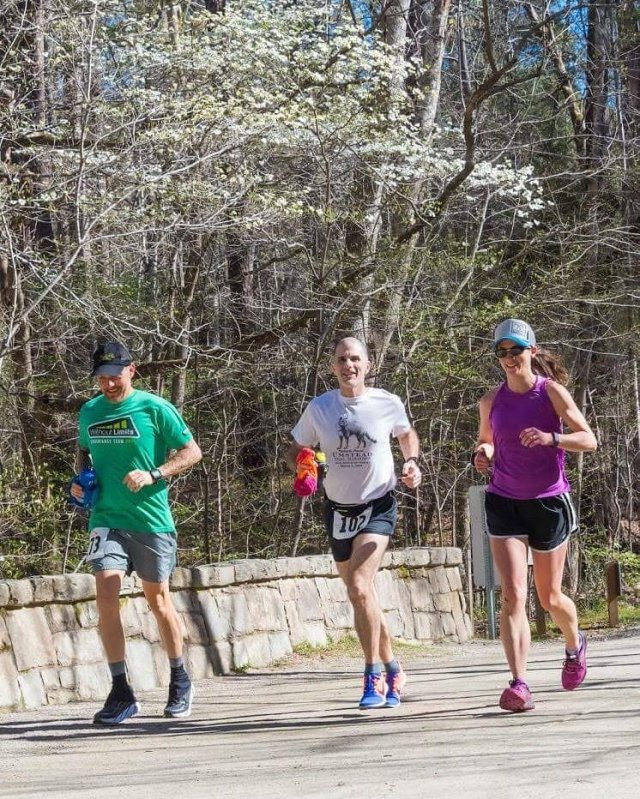
Carissa Liebowitz (at right, in the purple shirt)

‘Running is a safe space… we can scrape the barrel of our souls and go back to our regular lives without repercussion.’

If left to our own devices with free time and adequate resources, what would we choose to do?

While in Nepal recently, en route to reach the starting line of the Everest Marathon, I found such happiness in trekking daily, falling asleep at 7:30 p.m., and no agenda other than to take in the beautiful scenery and move my body.

It helped, of course, to be led by someone else. To not have to give any thoughts about where I was going, how I was going to find food or shelter, or what I needed to do to prepare for the next day.

But if I shake away the potential complications, I am left with how I like living. Using my body for moderate work pretty much all day with periods of adequate rest, time for reflection, minimal internet connectivity, and at peace.

I think about the things that some people would find moderately uncomfortable and those are the things I enthusiastically embraced. Crawling into my sleeping bag with a layer of dust. Surprise meals prepared in a traditional way. Rest days with light hiking.

In much of the first world, we have evolved to live in a 72° environment with infrequent activity. Our biggest challenges are keeping our inboxes clear and deciding what’s for dinner.

I like the idea of hiking for a long period of time. As a sense of accomplishment, yes, but also, as a sense of being in nature for extended periods of time. And of course, the reality of not dealing with the day-to-day is ultimately appealing. No bills, no housework and no commuting.

I wonder about the lack of communication if I were solo. I came to truly enjoy the camaraderie of breaking bread or unpacking a life story during a shared experience.

Snippets of dark life moments came out and these are the kind of things that you trust to people that you share a close and physical experience with. I heard more recently that these are evolutionary behaviors — the strenuousness of the physical breaks down the filters of social norms.

When we sit in a comfortable space without struggle, our inclination is to hide these things away. Even in our close friendship circles or family, our darker secrets are not shared. Perhaps because of the fragility of the relationship?

But if there is nothing to lose, it becomes easy to unload the burdens on a stranger. Our relationship could be nothing at best and that wouldn’t change the state of affairs. But it could strengthen our bond and push us to outcomes we’ve only dreamed of.

Friendships forged over miles of running are built on the same foundation. The higher the level of suffering, the more it seems we are willing to open up and offer the true versions of ourselves.

I’ve found that I’m the most authentic version of myself in the midst of a long training run or deep into a tough race. The things I might caution myself from sharing with a non-running friend over coffee suddenly fall easily out of my mouth when my legs are tired and my heart rate is high.

While running, I might be more apt to open up about my struggles with my husband’s multiple sclerosis battle or share my very undecided thoughts on spirituality.

I’ll give you all the details about my eating disorder in high school and losing my job, 15 years into my career. Running is my safe space. There is an unspoken notion that we can scrape the barrel of our souls and go back to our regular lives without repercussion.

It’s not just me either. The skeletons (and treasures!) slip out of my running friends’ closets too. Many of them I know on a more personal level after just a few runs than some friends I’ve known half of their lifetimes.

As we dig a little deeper physically, we dig a little deeper psychologically and in the discomfort of our bodies, we somehow find our comfort zone.

https://halfmarathons.substack.com/p/carissa-liebowitz-on-how-running?token=eyJ1c2VyX2lkIjozNzY4NzIsInBvc3RfaWQiOjE3MjE1NSwiXyI6InVnNEVTIiwiaWF0IjoxNTc0MDAwMDEyLCJleHAiOjE1NzQwMDM2MTIsImlzcyI6InB1Yi0xMzczIiwic3ViIjoicG9zdC1yZWFjdGlvbiJ9.K0w17guN-6eemVW90j3BDXEIef7AHDveH6OOzqgxsGw

The charismatic llama is a welcome addition at some nursing homes and rehabilitation centers.


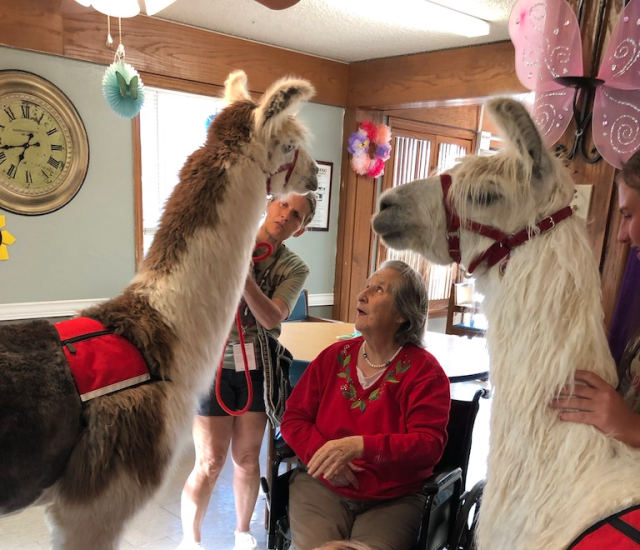
Jean Wyatt greets Tic at the Stockdale Residence and Rehabilitation Center in Stockdale, Tex., in April.Credit…Jennifer Kingson

By Jennifer A. Kingson

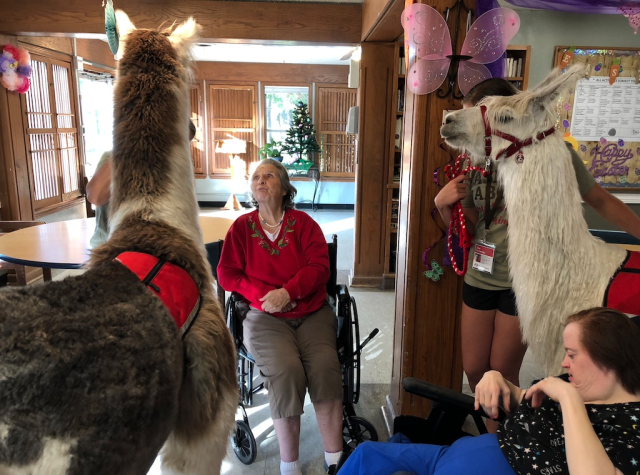
The 300-pound llamas strolled quietly through the corridors of the nursing home, lowering their heads to be petted by residents in wheelchairs and pausing patiently as staffers took selfies.

“Did you get a bath today?” one resident, Jean Wyatt, asked Tic, a white male llama owned by Zoe Rutledge. (He had.)

Zoe, a high school sophomore, was there with her parents, Jeff and Carol Rutledge, who keep 13 llamas and alpacas at their home here in Stockdale, an exurb of San Antonio. Three of their herd have passed the qualifying exam necessary to become registered therapy llamas, a test that involves being touched by strangers and remaining impassive when people nearby start arguing.

“You look for the ones that are mellow and calm,” said Zoe, explaining how her family chose the animals they take to assisted living facilities, nursing and veterans’ homes, rehabilitation centers and walk-a-thons for groups like the Down Syndrome Association of South Texas.

Llamas and alpacas — popular in TV commercials, as toys and on all manner of apparel — are simultaneously growing more common in therapeutic settings. While a handful are registered with Pet Partners, a national nonprofit clearinghouse for therapy animals, most are simply family farm pets whose owners take them to hospitals, college campuses and senior centers to ease people’s stress.

The novelty factor is a big part of the appeal, along with the creatures’ big-eyed, empathetic gaze. Among the animals that biologists refer to as charismatic megafauna — tigers, elephants, giant pandas and the like — llamas, which are not endangered, are among the few that people can safely hug.

“For some people, dogs are a little too much, or they’ve had a bad experience with them,” said Niki Kuklenski, a longtime llama breeder in Bellingham, Wash., who was one of the first to use the animals for therapeutic purposes. She said that her llamas, especially a female named Flight, “will read people. So when she goes into a setting where someone’s really animated and excited to see her, she’ll put her head down for a hug.”

But if someone seems apprehensive, “Flight will stand stock still,” Ms. Kuklenski said. “She is very cool.”

At Pet Partners, 94 percent of the registered therapy animals are dogs, but there are 20 llamas and alpacas in the mix, said Elisabeth Van Every, a spokeswoman for the group. (Most are llamas, which are much larger than alpacas and typically far friendlier to humans.) People who register their animals are covered under Pet Partners’ insurance for the duration of their therapy visits, and must abide by strict rules about health, grooming and working conditions. No animal may work more than two hours a day, and handlers must be aware of any signs of fatigue or annoyance.


Carol Rutledge, left, says her llamas have a sixth sense about people who are needy or frail.Credit…Jennifer Kingson

Llama owners will tell you that their pets have a sixth sense about people who are needy, ill or frail. Carol Rutledge says that her therapy llama, whose name is Knock, will walk voluntarily to the bedside of a hospice patient and stand in silence while the patient reaches for him. “It wrenches at your heart,” she said. “It’s taken me several visits to be able to get through it without getting emotional.”

Mona Sams, an occupational therapist in Roanoke, Va., has eight llamas and five alpacas at her practice, which serves children with autism and other disorders, as well as adults with developmental disabilities. One patient is a girl with severe cerebral palsy and seizures who comes twice a week. “I have one llama,” — named Woolly — “who literally sits there with her for a whole hour, face to face,” Ms. Sams said. “She calls Woolly her ‘counselor,’ and she will spend the first part of the hour telling Woolly what difficulties she’s had, and he just sits beside her for that entire time.”

Ms. Sams is the lead author of what seems to be the only published study involving the use of llamas as therapy animals. The article, published in 2006 in the American Journal of Occupational Therapy, describes a very small clinical trial in which children with autism were given either standard occupational therapy or therapy that involved handling llamas. The results “indicated that the children engaged in significantly greater use of language and significantly social interaction in the occupational therapy sessions incorporating animals than in the standard occupational therapy sessions,” the study authors wrote.

Hal Herzog, an anthrozoologist and professor emeritus of psychology at Western Carolina University, said that such results are not surprising, though they do not prove the efficacy of animal-assisted therapy. He says there’s a big mismatch between what the public believes — or wants to believe — about the effectiveness of therapy animals and what scientific studies show.


Tic walks down the hall at the Stockdale Residence and Rehabilitation Center.

“The evidence for the short-term, probably transient, effects of interacting with animals in nursing homes or for autistic kids is quite good — petting a dog, or interacting with a llama, stress levels go down,” Dr. Herzog said. “But when we think of therapy, we think about long-term treatment, and I think the evidence for that is mixed.”

In Ms. Sams’s llama study, for example, he said, the children who got the standard therapy were doing “boring stuff” compared with the children who got to play with llamas. “I have no objection to that llama study, if it makes the kids feel better for a time, but I wouldn’t call it therapy,” said Dr. Herzog, author of the animal ethics book “Some We Love, Some We Hate, Some We Eat.”

He also pointed out that many people who research the human-animal bond are what he calls “true believers,” eager to validate the positive influence of pets and emotional support animals. “As an animal lover myself, I really wanted to believe it too,” Dr. Herzog said, adding that his research led him to a different conclusion.

Llama therapy is certainly not for everyone. While llamas are gentle creatures that seldom spit at humans, some people find their large stature intimidating or get spooked at seeing livestock indoors. On the flip side, some llamas aren’t cut out for the job: The two notorious runaway llamas that escaped onto a highway near Phoenix in 2015 had bolted from a visit to an assisted-living residence.


Knock and Tic join residents at the Stockdale Residence and Rehabilitation Center.

When two of the Rutledge family’s three therapy llamas — Tic and Knock — arrived at the Stockdale Residence and Rehabilitation Center for a regular visit, Bill Smallwood, a resident who is disabled from a motorcycle accident, accepted a small brush from Zoe and began grooming her llama. Mr. Smallwood is nonverbal, she said, but when the llamas are there, he will murmur and make word-like noises.

This summer, for a science competition for 4-H Club, Zoe compared the blood pressure readings of three of the nursing home’s residents, including Mr. Smallwood and Ms. Wyatt, before and after the llamas visited. Her hypothesis proved correct: Most of the time, their blood pressure was lower after the llamas left, and, observationally, they seemed happier.

Bobbie West, the nursing home’s activities director, said she kept it secret when the llamas were scheduled to visit, lest staff and residents get too excited. “They love the llamas,” she said. “One lady, she can be in the foulest of moods, and when the llamas come, she just gets a whole new aura to her.”

A NASA scientist’s incredible animation shows how dinosaurs roamed the Earth on the other side of the Milky Way galaxy

by Morgan McFall-Johnsen

The NASA scientist Jessie Christiansen made a video that traces our solar system’s movement through the Milky Way as dinosaurs emerged, went extinct, and were replaced by mammals on Earth.

Our sun orbits the galaxy’s center, so many dinosaurs roamed the Earth while the planet was on the other side of the Milky Way.

Our solar system’s orbit keeps us just the right distance from the galaxy’s chaotic center for life to exist.

When dinosaurs ruled the Earth, the planet was on a completely different side of the galaxy.

A new animation by the NASA scientist Jessie Christiansen shows just how long the dinosaurs’ reign lasted — and how short the era of humans has been in comparison — by tracing our solar system’s movement through the Milky Way.

Our sun orbits the galaxy’s center, completing its rotation every 250 million years or so. So Christiansen’s animation shows that the last time our solar system was at its current point in the galaxy, the Triassic period was in full swing and dinosaurs were just emerging. Many of the most iconic dinosaurs roamed the Earth when the planet was in a very different part of the Milky Way.

Christiansen got the idea to illustrate this history when she was leading a stargazing party at the California Institute of Technology in Pasadena. Attendees were astonished when she mentioned that our solar system was across the galaxy when dinosaurs roamed.

“That was the first time I realized that those time scales — archaeological, fossil-record time scales and astronomical time scales — actually kind of match along together,” Christiansen told Business Insider. “Then I had this idea that I could map out dinosaur evolution through the galaxy’s rotation.”

Christiansen said it took her about four hours to make the film using timed animations in PowerPoint. She also noted a couple of minor corrections to the text in her video: Plesiosaurs are not dinosaurs, and we complete a galactic orbit every 250 million years, not 200 million years.

‘A spiral through space’

But galactic movement is more complicated than the video shows. The other stars and planetary systems in the galaxy are also moving, at different speeds and in different orbits. The inner portions spin faster than the outer regions.

What’s more, the galaxy itself is moving through space, slowly approaching the nearby Andromeda galaxy.

“The animation kind of makes it seem like we’ve come back to the same spot, but in reality the whole galaxy has moved a very long way,” Christiansen said. “It’s more like we’re doing a spiral through space. As the whole galaxy’s moving and we’re rotating around the center, it kind of creates this spiral.”

So in the solar system’s rotation around the galactic center, we’re not returning to a fixed point. The neighborhood is different from the last time we were here.

Earth, however, is not drastically different; it still supports complex life. That’s partially thanks to the path of our sun’s galactic orbit.

“Our solar system doesn’t travel to the center of the galaxy and then back again,” Christiansen said. “We always stay about this distance away.”

In other words, even as our solar system travels through the Milky Way, it doesn’t approach the inhospitable center, where life probably wouldn’t survive.

“There’s a lot of stars, it’s dynamically unstable, there’s a lot of radiation,” Christiansen said. “Our solar system certainly doesn’t pass through that.”

That’s a huge part of why dinosaurs, mammals, or any other form of life can exist on Earth.

https://www.businessinsider.com/video-nasa-scientist-dinosaurs-milky-way-2019-10

MRI scans from more than 800 incarcerated men pinpoint distinct structural features of people who have committed homicide, compared with those who carried out other crimes.

by NICOLETTA LANESE

Kent Kiehl and his research team regularly park their long, white trailer just outside the doors of maximum-security prisons across the US. Inside the vehicle sits the bulky body of a mobile MRI machine. During each visit, people from the prison make their way to and from the vehicle in hourly shifts to have their brains scanned and help to answer an age-old question: What makes a murderer?

“It’s not an uncommon thing for [incarcerated people], while they’re getting a scan, to be like, ‘I’ve always been different. Can you tell me why I’ve always been so different?’” says Kiehl, a neuroscientist at the University of New Mexico and the Albuquerque-based nonprofit Mind Research Network (MRN) who helped design the mobile MRI system back in the early 2000s.


SCAN-MOBILE: Kiehl and his colleagues made more than 75 modifications to a trailer and the MRI system inside to outfit both for the team’s unique research.

The author of The Psychopath Whisperer: The Science of Those Without a Conscience, Kiehl has been fascinated by the criminal mind since he was an undergraduate at the University of California, Davis. Now, as director of mobile imaging at MRN, he oversees efforts to gather brain scans from thousands of people held in US prisons to learn what features, if any, might differ from scans of the general population.

This massive dataset recently allowed Kiehl to examine the brain structures of more than 800 men held in state prisons in New Mexico and Wisconsin in an attempt to distinguish incarcerated people who have committed homicide from those who have committed other crimes.

First, Kiehl and his colleagues laboriously sorted the pool of people who had volunteered for the study into three categories based on their crimes: homicide, violent offenses that were not homicide, or non-violent or minimally violent transgressions. The team relied on official convictions, self-reported homicides, and confidential interviews with participants to determine who attempted or committed murder—both offenses that got a “homicide” label in their dataset.

People charged with felony murder—meaning that they had committed a serious felony that was in some way connected to a person’s death, even though they hadn’t intended to kill the victim—and people whose cases indicated considerable doubt about a judgment of homicide were not counted among murderers. And occasionally, people were moved from another category into the homicide group, Kiehl says. The researchers excluded people with abnormal radiology reports, traumatic brain injury, or diagnosed psychotic disorders from the study.

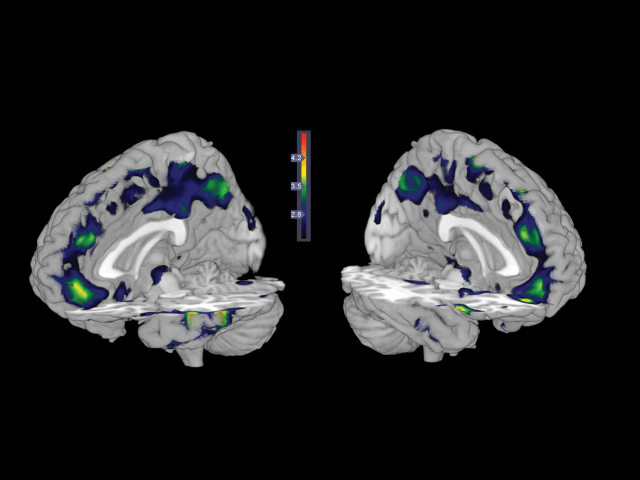
Controlling for substance use severity, time in prison, age, and IQ, the team analyzed the MRI data to look for differences among the study participants. Compared with the other two groups, the 200 men who had committed homicide showed significantly reduced gray matter in several brain regions that play important roles in behavioral control and social cognition.

“I think that the intriguing thing was, first, that they found a difference,” says Hannes Vogel, a neuropathologist at Stanford University Medical Center who was not involved in the work. “And second of all, that it correlates with some of the brain centers that deal with behavior and social interaction.”

Lora Cope, a neuroscientist who studies substance disorders at the University of Michigan, notes in an email to The Scientist that the team’s mobile MRI system has now been used in correctional facilities all over New Mexico and Wisconsin, and “has really revolutionized this area of research.” Indeed, the MRN has now used the equipment to collect roughly 6,500 scans from more than 3,000 research participants since its first outing in 2007.

Although Cope wasn’t involved in the current project, she worked with Kiehl a few years ago while earning her doctorate at the University of New Mexico. After speaking with members of the Avielle Foundation, named for a six-year-old victim of the 2012 Sandy Hook Elementary School shooting, the two researchers spearheaded a study of more than 150 incarcerated young males, 20 of whom had been convicted of homicide, held at a maximum-security detention facility within the state. “Jeremy, [Avielle’s] father, really wanted to know if there was anything neuroscience could tell us about boys who commit homicide,” says Kiehl.

As in the current study, Cope and Kiehl deployed the mobile scanner to collect MRI scans of the incarcerated teens in New Mexico and discovered differences between those who had committed homicide and their imprisoned peers. The homicide offenders “had significantly less gray matter volume in parts of their temporal lobes,” Cope says. When Kiel compared the data from that study with the results of his latest project, he found a high degree of overlap. “Lo and behold . . . we found and replicated every region that was different in the boys and was different in the adult males, and in the same way,” he says.

The latest study’s finding that MRI data can distinguish homicide offenders not only from people who committed non-violent crimes, but also from those who performed other violent crimes, is particularly interesting, says Harold Koenigsberg, a psychiatrist at Icahn School of Medicine at Mount Sinai. “I would have thought there would be more of an overlap between [homicide and violent non-homicide offenders],” he says. “I’m surprised that it was so specific to homicide.”


ANATOMY OF A MURDERER: Homicide offenders exhibited reduced gray matter density compared with other violent offenders in the regions of the brain highlighted blue and green above.

Koenigsberg notes that homicidal violence can itself be split into two categories: impulsive and instrumental. Impulsive violence is born of unbridled emotions and overblown reactions, a brand of behavior linked to poor frontal lobe functioning and abnormal serotonin levels. Instrumental violence, on the other hand, is premeditated and is associated with other brain changes, such as reduced amygdala activation during emotion processing. “These two groups, we think that they have different biologies,” says Koenigsberg. Kiehl’s dataset could be enriched by adding measures of neurotransmitter release and electrical activity, along with related behavioral assessments, he suggests, and with both functional and structural data, psychologists might learn more about what gives rise to these distinct behavioral phenotypes.

Koenigsberg, Vogel, and Kiehl all note that the structural data collected in the current study cannot on its own be used to predict who has committed homicide, let alone who might in the future. Nonetheless, the paper may find its way into the courtroom, says Vogel. If lawyers felt so inclined, they could try to “find an expert on one side who will quote this [paper]” in defense of someone who has committed a homicide, by arguing a client’s actions were due to brain abnormalities and thus out of his or her control. Or, a prosecutor could potentially use the paper to argue that MRI findings should be admissible as evidence that a defendant has committed a homicide, says Vogel, who has served as a consultant for court cases in California and Nevada, and helped investigate the brain of the Route 91 Harvest music festival shooter in 2017. “But then you’re [also] going to find an expert that will tear that [testimony] to pieces.”

Kiehl notes that his MRI study could also someday contribute to new evidence-based measures of homicidal risk. These measures could supplement current measures of violent behavior, such as psychological questionnaires, if future studies demonstrated they carried predictive weight, he says. Beyond courts of law, he also suggests that understanding how violent behavior arises could pave the way to better psychological treatment aimed at both rehabilitation and prevention.

https://www.the-scientist.com/notebook/secrets-in-the-brains-of-people-who-have-committed-murder-66589