Mysterious 5-pound chunk of metal plunges through roof

The FAA says a 5-pound metal cylinder that came crashing through the roof of a Massachusetts warehouse is not a plane part, but otherwise has no idea why the item dropped from the sky.

The cylinder plunged into a storage closet at Michael’s Warehouse in an industrial park in Plymouth, Mass., apparently Wednesday, the Patriot-Ledger reports.

Fox 25 News in Boston notes that the roof is made of sheet-metal, indicating that the cylinder had to be traveling at a high rate of speed to penetrate the building. No one was hurt.

An FAA spokeswoman says the chunk probably came from a piece of heavy machinery, possibly a wood chipper, the Associated Press reports.

WHDH-TV in Boston quotes the FAA as saying there have been no flight paths over the building.

http://content.usatoday.com/communities/ondeadline/post/2011/12/5-pound-chunk-of-metal-plunges-through-warehouse-roof/1


Thanks to Dr. WRP for bringing this to the attention of the It’s Interesting community.

A New Smart Pill?

HOUSTON – (Dec. 8, 2011) – When the activity of a molecule that is normally elevated during viral infections is inhibited in the brain, mice learn and remember better, researchers at Baylor College of Medicine reported in a recent article in the journal Cell.

“The molecule PKR (the double-stranded RNA-activated protein kinase) was originally described as a sensor of viral infections, but its function in the brain was totally unknown,” said Dr. Mauro Costa-Mattioli, assistant professor of neuroscience at BCM and senior author of the paper. Since the activity of PKR is altered in a variety of cognitive disorders, Costa-Mattioli and colleagues decided to take a closer look at its role in the mammalian brain.

The authors discovered that mice lacking PKR in the brain have a kind of “super” memory. “We found that when we genetically inhibit PKR, we increased the excitability of brain cells and enhanced learning and memory, in a variety of behavioral tests,” he said. For instance, when the authors assessed spatial memory (the memory for people, places and events) through a test in which mice use visual cues for finding a hidden platform in a circular pool, they found that normal mice had to repeat the task multiple times over many days in order to remember the platform’s location. By contrast, mice lacking PKR learned the task after only one training session.

Costa-Mattioli and colleagues wanted to know how this molecular process actually works. They found that when PKR is inhibited, the increased synaptic activity (that is, the enhanced communication between neurons) is caused by gamma interferon, another molecule involved in immunity.

“These data are totally unexpected, and show that two molecules classically known to play a role in viral infection and the immune response regulate the kind of brain activity that leads to the formation of long-term memory in the adult brain,” said Costa-Mattioli.

Another key finding made by Costa-Mattioli and his team of researchers was the fact that this process could be mimicked by a PKR inhibitor – a small molecule that blocks PKR activity and thus acts as a “memory-enhancing drug.”
“It is indeed quite amazing that we can also enhance both memory and brain activity with a drug that specifically targets PKR”. Definitely then, the next step is to use what we have learned in mice and to try to improve brain function in people suffering from memory loss, said Costa-Mattioli.

Although Costa-Mattioli’s memory pill may be years away from approval by the U.S. Food and Drug Administration, its impact on society and medicine could be very profound. There are roughly 6 million Americans and 35 million people world-wide with Alzheimer’s disease and more than 70 million Americans over the age of 60 who may suffer from aged-associated impairment of memory.

Costa-Mattioli said, “More investigation is undoubtedly necessary to translate these findings to effective therapies but we would be delighted if our scientific studies were to contribute in some way to this ultimate goal.”

“Our identity and uniqueness is made up of our memories,” Costa-Mattioli said. “This molecule could hold the key to how we can keep our memories longer, but also how we create new ones.”

Security Santas in South Korea

Armed with the prerequisite beards, presents and red bags, the Father Christmases demonstrate their martial arts skills at a shopping centre in South Korea.

Christmas may still be weeks away but security guards in Seoul, South Korea were happy to dress up and spread some festive cheer with their humourous display.

Christmas is a major holiday in the country, home to one of Asia’s largest Christian populations.

Kim Young-mok, director of the Safety and Security team, said the guards donned the Father Christmas outfits and handed out sweets around the shopping centre just to make their customers happy.


Fake Pregnancy Bellies


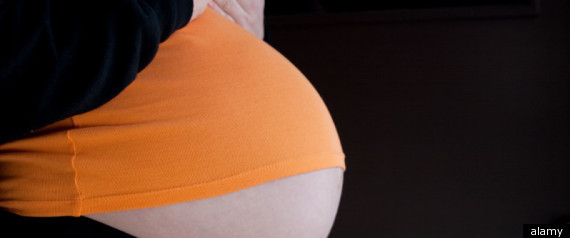
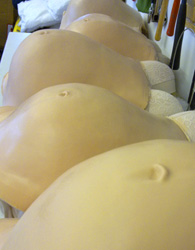
These fake baby bumps are made of a skin-colored silicon that gives the appearance (and feel) of a real stomach. They range in price from $79 to $252 and you can buy them in a variety of pregnancy stages. The most popular? Bellies that look to be about five to seven months along.

But why are these artificial baby bumps on the rise?

A shop owner who sells the bellies says that most people buy them for usage in a stage or film production. Others buy them to try to “experience” what it’s like to be pregnant. But others use the fake bellies for more nefarious reasons. Stan Abrams, a law professor and writer for China Hearsay mentions that some would use the belly bump to get seats on the bus or to assist in begging for money, because nothing is sadder than a pregnant woman begging for spare change. And of course the fake baby bump industry probably saw their stock rise after the allegations that Beyonce is using a fake bump during her pregnancy.

Wonder if this will be a growing global trend? And if you are in the market for a baby bump of your own, you can buy one from Moon Bump right here.

http://www.huffingtonpost.com/2011/12/09/fake-pregnancy-bellies-china_n_1139157.html

Zimbabwe Man Claims Prostitute Turned Into a Donkey

A Zimbabwe man has told a court that the prostitute he hired turned into a donkey overnight, and now he is “seriously in love.”

Sunday Moyo, 28, was caught having sex with a donkey early Sunday morning, according to the New Zimbabwe news website. While appearing in court on bestiality charges, he told the magistrate a tale that reportedly “had the court in stitches.”

Police said they found Moyo having sex with a donkey tied to a tree outside his home in Zvishavane, a mining town near Masvingo, on Sunday at around 4 a.m., the New Zimbabwe says.

In court, Moyo admitted to the sex act, but explained that the donkey was in fact a prostitute he had earlier hired for $20 at a local nightclub.

“I don’t know how she then became a donkey,” Moyo is reported to have told the court. “I only came to know that I was being intimate with a donkey when I got arrested.”

The experience appears to have been a sexual awakening for Moyo, who now says he is in love with the beast.

“I do not know what happened when I left the bar, but I am seriously in love with [the] donkey,” Moyo said, according to state-run newspaper The Herald.

http://www.globalpost.com/dispatches/globalpost-blogs/weird-wide-web/zimbabwe-man-donkey-love-sunday-moyo-prostitute

Mating Mites Trapped in Amber Reveal Sex Role ReversalPosted on March 1, 2011


In a paper published March 1 in the Biological Journal of the Linnean Society, researchers Pavel Klimov and Ekaterina Sidorchuk describe an extinct mite species in which the traditional sex roles were reversed.

“In this species, it is the female who has partial or complete control of mating,” said Klimov, an associate research scientist at the U-M Museum of Zoology. “This is in contrast to the present-day reproductive behavior of many mite species where almost all aspects of copulation are controlled by males.”

In mites, as in other animals including humans, the battle of the sexes has been raging throughout evolutionary history. Each gender struggles to get the upper hand to assure that their interests are protected. In the case of mites, males benefit from coercing females to mate and making sure no other males mate with them. Harassing reluctant females, guarding females before and after mating and fighting off competing males are typical behaviors.

Females, on the other hand, gain an evolutionary advantage if they have some control over matters of mating. This allows them to choose superior males to mate with, while rejecting losers (who may be, however, extremely adept at coercing females), and it spares them the wear and tear of being subjected to harassment, guarding and frequent copulation.

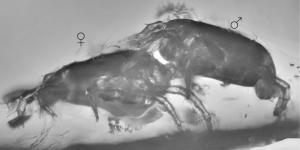
In the extinct mite species Glaesacarus rhombeus, the male lacks the specialized organs for clinging to females that are seen in many present-day mites. The female, however, has a pad-like projection on her rear end that allows her to control the clinging. A remarkably preserved copulating pair of mites found in amber gave Klimov and Sidorchuk a glimpse at how the apparatus worked.

Structures found in some living mites also show evidence of female control over mating, Klimov said. “Some lineages have developed female copulatory tubes that function like a penis.”

Klimov’s coauthor, Ekaterina Sidorchuk, is a researcher at the Paleontological Institute of the Russian Academy of Sciences.

The research was funded by the National Science Foundation and the Russian Ministry of Education and Science.

http://earth-climate.science.org/Mating-Mites-Trapped-in-Amber-Reveal-Sex-Role-Reversal.html

Urinal-Mounted, Urine-Controlled Video Game Launched in the U.K.


A British-based company has unveiled what it claims to be the world’s first urinal-mounted, urine-controlled game console for men.

 
Captive Media saytheir device allows for “around a minute-long opportunity to catch young men with targeted ads”.


Mark Melford, director of the company, explained to Metro: “It’s taken three years of research and development to get to this point [and the] reaction to the units so far has been incredible – it’s just so much fun.”


Games that can be played include “Clever Dick” – where you aim left or right for the correct answer – and urinal gamers can post their scores via Twitter.


Internal Business Times says: “Bar bosses hope the games will not only attract new customers, but that regulars will drink more in order to play longer and set new high scores.”


According to Metro, beer sales increased by 47 per cent at the Exhibit Bar in Balham, South London, where the trial has taken place. “It’s a tough time for bars and pubs currently,” Captive Media’s co-founder Gordon MacSween told the paper. “This product offers customers something fun, and unlike anything they’ve seen before. Those are two good reasons to go out for a drink at a time when so many are opting to stay in.”


BBC News reports that the trade paper Adweekhas calculated that on average “men are rooted to the spot for 55 seconds while they relieve themselves [which will add up to] 9 months over the course of their lifetimes”.


Time magazine reports that the bar’s owner, Drew Weatherhead, “hopes the games attract new customers and, in a way, the idea is quite ingenious”.

Read more: http://www.digitaljournal.com/article/315187#ixzz1fILM3BBb

New Study Identifies Empathy in Rats

The act of helping others out of empathy has long been associated strictly with humans and other primates, but new research shows that rats exhibit this prosocial behavior as well.
In the new study, laboratory rats repeatedly freed their cage-mates from containers, even though there was no clear reward for doing so. The rodents didn’t bother opening empty containers or those holding stuffed rats.

 
To the researchers’ surprise, when presented with both a rat-holding container and a one containing chocolate — the rats’ favorite snack — the rodents not only chose to open both containers, but also to share the treats they liberated.
 
Peggy Mason, a neuroscientist at the University of Chicago and lead author of the new study, says that the research shows that our empathy and impulse to help others are common across other mammals.
 
“Helping is our evolutionary inheritance,” Mason told LiveScience. “Our study suggests that we don’t have to cognitively decide to help an individual in distress; rather, we just have to let our animal selves express themselves.”
 
Empathetic rats
In previous studies, researchers found that rodents show the simplest form of empathy, called emotional contagion — a phenomenon where one individual’s emotions spread to others nearby. For example, a crying baby will trigger the other babies in a room to cry as well. Likewise, rats will become distressed when they see other rats in distress, or they will display pain behavior if they see other rats in pain.
 
For the new study, Mason and her colleagues wanted to see if rats could go beyond emotional contagion and actively help other rats in distress. To do so, the rats would have to suppress their natural responses to the “emotions” of other rats, the result of emotional contagion. “They have to down-regulate their natural reaction to freeze in fear in order to actively help the other rat,” Mason explained.
 
The researchers began their study by housing rats in pairs for two weeks, allowing the rodents to create a bond with one another. In each test session, they placed a rat pair into a walled arena; one rat was allowed to roam free while the other was locked in a closed, transparent tube that could only be opened from the outside.
 
The free rat was initially wary of the container in the middle of the arena, but once it got over the fear it picked up from its cage-mate, it slowly began to test out the cage. After an average seven days of daily experiments, the free rat learned it could release its friend by nudging the container door open. Over time, the rat began releasing its cage-mate almost immediately after being placed into the arena.
 
“When the free rat opens the door, he knows exactly what he’s doing — he knows that the trapped rat is going to get free,” Mason said. “It’s deliberate, purposeful, helping behavior.”
 
The researchers then conducted other tests to make sure empathy was the driving force in the rats’ behavior. In one experiment, they rigged the container so that opening the door would release the captive rat into a separate arena. The free rat repeatedly set its cage-mate free, even though there was no reward of social interaction afterwards. [Like Humans, Chimps Show Selfless Behaviors]
 
True motivations
While it appears that the rats are empathetic, questions about the rodents’ true motivations still remain.
 
“It is unclear whether the rats sympathize with the distress of their cage-mates, or simply feel better as they alleviate the perceived distress of others,” Jaak Panksepp, a psychologist and neuroscientist at Washington State University, wrote in an article accompanying the study.
 
Mason says they don’t yet know if the free rats are acting to relieve their own distress, the distress of their cage-mates, or a combination of both, but this is definitely a topic for further research. She’s also looking to study if the rats would behave the same way if they weren’t cage-mates, and she would like to tease out the brain areas and genes involved in the behavior.
 
But, she says, “We now have this incredibly controlled, reproducible paradigm.” Other scientists should be able to use the model they developed to see if empathy and prosocial behavior are present in other animals, she said.
 
The study was published today in the journal Science.


Indian Farmer Dies After Having 13 Pounds of Metal Removed From His Stomach


A man has man died after stunned doctors removed 13 pounds of metal from his stomach.

Farmer Kamleshwar Singh was admitted to hospital in the Indian state of Chhattisgarh complaining of abdominal pains.

Following x-ray inspection, three keys, 431 coins, 196 iron pellets and 17 small bolts were found in his stomach.

Despite removing the items, doctors were unable to save his life.

Bhojram Dewangan, Director of Shreesti Institute of Medical Science and Research Centre, where Mr Singh was treated, said, ‘The patient had been consuming small iron objects for the last nine months.’

‘He visited us complaining of intolerable abdominal pain.

‘After sonography and X- ray tests, the doctors carried out the major surgery.’

Even after the tests the doctors who opened Mr Singh’s stomach were shocked by the number and variety of everyday metallic objects they found.

Dr Yadav, led the team that operated upon Mr Singh, who is suspected of having schizophrenia.

‘All the iron objects were lying at the base of his stomach,’ he said.

‘When we started the surgery, we thought we would find a few items.

‘But as we progressed, we were amazed to find such a huge number of coins and pellets had passed into his intestines.

‘Signs of chronic ulceration were apparent in the stomach.’

Mr Singh’s friends and family were apparently unaware of his habit of swallowing iron objects.

His wife, said: ‘My husband complained of frequent stomach ache and spent sleepless nights in the past four weeks.

‘But he kept us in the dark about swallowing iron objects.

‘He stopped going to the field citing weakness and was even unable to have his regular meals.’

In addition to schizophrenia experts believed Mr Singh was suffering from additional psychiatric problems which gave him an appetite for non-nutritional foreign objects.

Read more: http://www.dailymail.co.uk/news/article-2067189/431-coins-196-pellets-17-small-bolts-Man-dies-doctors-remove-13lbs-metal-stomach.html#ixzz1fIJuTGJS

More Evidence of Water on Mars


The long-lived Mars rover Opportunity has spotted bright veins of a water-deposited mineral, apparently gypsum, on the surface of the planet. The vein is informally named ‘Homestake,’ and it and other similar-looking deposits are located in a zone where sulfate-rich bedrock meets volcanic bedrock, at the rim of the Endeavour Crater. Homestake is roughly 0.4 to 0.8 inches wide, 16 to 20 inches long, and protrudes slightly above the surrounding bedrock.

Researchers used three of Opportunity’s instruments – the Micrcosopic Imager, the Alpha Particle X-Ray Spectrometer and the Panoramic Camera‘s filters – to identify calcium and sulfur in a ratio that indicates “relatively pure” calcium sulfate, specifically hydrated calcium sulfate, or gypsum.

The Homestake vein likely formed as calcium, dissolved by water out of volcanic rocks, combined with sulfur and was deposited as calcium sulfate in an underground fracture, which was then exposed at the surface of Mars.

Steve Squyres, principal investigator for Opportunity, said in a statement: “This tells a slam-dunk story that water flowed through underground fractures in the rock. This stuff is a fairly pure chemical deposit that formed in place right where we see it. That can’t be said for other gypsum seen on Mars or for other water-related minerals Opportunity has found. It’s not uncommon on Earth, but on Mars, it’s the kind of thing that makes geologists jump out of their chairs.”

Opportunity has found other evidence of water on Mars in the form of magnesium, iron and calcium sulfate in the bedrock, but that same evidence has also indicated a highly acidic environment. This new deposit indicates more neutral conditions, which could have hosted a greater variety of organisms.

Learn more about the Mars rovers, operated by the Jet Propulsion Laboratory.

The next rover to visit Mars will be Curiosity, launched in November 2011 and expected to arrive in August 2012. You can follow Curiosity on Twitter at @MarsCuriosity.

http://lightyears.blogs.cnn.com/2011/12/08/opportunity-finds-more-evidence-of-water-on-mars/?hpt=hp_t3