Ancient Lost Continent Discovered in Indian Ocean

new-micro-continent-found-near-mauritius_64654_600x450

Evidence of a drowned “microcontinent” has been found in sand grains from the beaches of a small Indian Ocean island, scientists say.

A well-known tourist destination, Mauritius (map) is located about 1,200 miles (2,000 kilometers) off the coast of Africa, east of Madagascar. Scientists think the tiny island formed some nine million years ago from cooling lava spewed by undersea volcanoes.

But recently, researchers have found sand grains on Mauritius that contain fragments of the mineral zircon that are far older than the island, between 660 million and about 2 billion years old.

In a new study, detailed in the current issue of the journal Nature Geoscience, scientists concluded that the older minerals once belonged to a now vanished landmass, tiny bits of which were dragged up to the surface during the formation of Mauritius.

“When lavas moved through continental material on the way towards the surface, they picked up a few rocks containing zircon,” study co-author Bjørn Jamtveit, a geologist at the University of Oslo in Norway, explained in an email.

Most of these rocks probably disintegrated and melted due to the high temperatures of the lavas, but some grains of zircons survived and were frozen into the lavas [during the eruption] and rolled down to form rocks on the Mauritian surface.”

Jamtveit and his colleagues estimate that the lost microcontinent, which they have dubbed Mauritia, was about a quarter of the size of Madagascar.

Furthermore, based on a recalculation of how the ancient continents drifted apart, the scientists concluded that Mauritia was once a tiny part of a much larger “supercontinent” that included India and Madagascar, called Rodinia.

The three landmasses “were tucked together in one big continent prior to the formation of the Indian Ocean,” Jamtveit said.

But like a prehistoric Atlantis, Mauritia was eventually drowned beneath the waves when India broke apart from Madagascar about 85 million years ago.

Scientists have long suspected that volcanic islands might contain evidence of lost continents, and Jamtveit and his team decided to test this hypothesis during a layover in Mauritius as part of a longer research trip in 1999.
The stop in tropical Mauritius “was a very tempting thing to do for a Norwegian in the cold month of January,” Jamtveit said.

Mauritius was a good test site because it was a relatively young island and, being formed from ocean lava, would not naturally contain zircon, a tough mineral that doesn’t weather easily.

If zircon older than nine million years was found on Mauritius, it would be good evidence of the presence of buried continental material, Jamtveit explained.

At first, the scientists crushed rocks from Mauritius to extract the zircon crystals, but this proved difficult because the crushing equipment contained zircon from other sites, raising the issue of contamination.

“That was a show stopper for a while,” Jamtveit said.

A few years later, however, some members of the team returned to Mauritius and this time brought back sand from two different beaches for sampling.

The scientists extracted 20 zircon samples and successfully dated 8 of them by calculating the rate that the elements uranium and thorium inside of the samples slowly break down into lead.

“They all provided much older ages than the age of the Mauritius lavas,” Jamtveit said. “In fact they gave ages consistent with the ages of known continental rocks in Madagascar, Seychelles, and India.”

Jérôme Dyment, a geologist at the Paris Institute of Earth Physics in France, said he’s unconvinced by the work because it’s possible that the ancient zircons found their way to the island by other means, for example as part of ship ballast or modern construction material.

“Extraordinary claims require extraordinary evidence, which are not given by the authors so far,” said Dyment, who did not participate in the research.

“Finding zircons in sand is one thing, finding them within a rock is another one … Finding the enclave of deep rocks that, according to the author’s inference, bring them to the surface during an eruption would be much more convincing evidence.”

Dyment added that if Mauritia was real, evidence for its existence should be found as part of a joint French and German experiment that installed deep-sea seismometers to investigate Earth’s mantle around Réunion Island, which is situated about 120 miles (200 kilometers) from Mauritius.

“If a microcontinent lies under Réunion, it should be depicted by this experiment,” said Dyment, who is part of the project, dubbed RHUM-RUM.

But Conall Mac Niocaill, a geologist at the University of Oxford in the U.K. who was also not involved in the study, said “the lines of evidence are, individually, only suggestive, but collectively they add up to a compelling story.”
The zircons “produce a range of ages, but all yield ages older than 660 million years, and one is almost 2 billion years old,” he added.

“There is no obvious source for them in Mauritius, and they are unlikely to have been blown in by the wind, or carried in by human activity, so the obvious conclusion is that the young volcanic lava sampled some older material on their way through the crust.”

Based on the new findings, Mac Niocaill and others think other vanished microcontinents could be lurking beneath the Indian Ocean.

In fact, analyses of Earth’s gravitational field have revealed other areas in the world’s oceans where the rock appears to be thicker than normal and could be a sign of continental crusts.

“We know more about the topography of Mars than we do about the [topography] of the world’s ocean floor, so there may well be other dismembered continents out there waiting to be discovered.”

http://news.nationalgeographic.com/news/2013/02/130225-microcontinent-earth-mauritius-geology-science/

Did Neanderthals go extinct because they couldn’t learn to catch rabbits?

snow-rabbitNeanderthals1

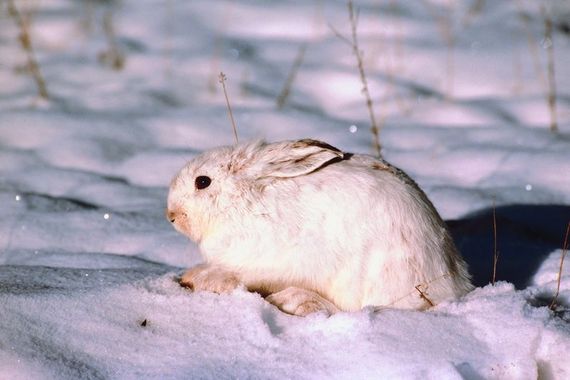
Neanderthals became extinct as they were unable to adapt their hunting skills to catch small animals like rabbits, a new study has claimed.

For the study, John Fa of Durrell Wildlife Conservation Trust in Trinity, Jersey, and his colleagues counted skeletons of animals that were found in three excavation sites in Spain and southern France.

The team found that up until 30,000 years ago, the skeletons of larger animals like deer were plentiful in caves.

But around the same time, coinciding with Neanderthals’ disappearance, rabbit skeletons became more abundant.

The team postulated that humans succeeded far more at switching to capturing and eating rabbits than Neanderthals, New Scientist reported.

Fa said that it is still not clear as to why Neanderthals had trouble changing their prey.

He said that maybe the Neanderthals may have been less able to cooperate and rather than using spears, early humans probably surrounded a warren and flushed out rabbits with fire, smoke or dogs.

http://www.phenomenica.com/2013/03/inability-to-catch-rabbits-may-have-led-to-demise-of-neanderthals.html

Did the Phoenicians set foot in North America 2000 yrs before Columbus?

imagesCAWHFXUD

Columbus, credited with the discovery of Americas, may not have been the first to set foot on the continent, says a British explorer, claiming that Phoenicians actually beat him by 2,000 years.

Christopher Columbus, the poster boy Renaissance explorer found fame and fortune by sailing from the ‘Old World’ to the ‘New’, crossing the great unknown waters between Spain and the Caribbean in 1492.

In an ambitious voyage that could challenge maritime history, former Royal Navy officer Philip Beale hopes to sail a replica Phoenician boat 10,000 kilometres across the Atlantic.

Beale aims to demonstrate that the Phoenicians – a Semitic civilisation that prospered between 1500BC and 300BC on the Mediterranean coast – sailed to the Americas first, CNN reported.

“It is one of the greatest voyages of mankind and if anyone could have done it [before Columbus], it was the Phoenicians,” said Beale.

“Of all the ancient civilisations they were the greatest seafarers – Lebanon had cedar trees perfect for building strong boats, they were the first to use iron nails, and they had knowledge of astrology and currents,” he said.

The prospect of sailing a 50-ton wooden vessel identical to those built 2,600 years ago across the Atlantic might appear foolhardy.

However, Beale has already sailed the replica boat – named The Phoenician – around Africa in 2010, in a bid to demonstrate the ancient civilisation had the capability to circumnavigate the continent 2,000 years before the first recorded European, Bartolomeu Dias, in 1488.

The Phoenician boat covered 32,000 kilometres over two years, setting sail from Syria in 2008, battling everything from six-meter waves off the Cape of Good Hope to Somali pirates.

Beale based his ambitious quest on a quote by Greek Historian Herodotus, who claimed the Phoenicians circumnavigated Africa in 600BC.

Phoenicians were renowned as an intellectual and industrious civilisation who helped develop the alphabet we still use today along with their sophisticated seafaring skills.

http://www.phenomenica.com/2013/03/phoenicians-discovered-america-2000-yrs-before-columbus.html

Meat pies in Iceland tested for horesemeat, and found to be free of any meat

li-meat-pie-02247898

When officials in Iceland began hearing about horsemeat being secreted into beef products around Europe, they decided to run tests to ensure the same thing wasn’t happening in Iceland.

Icelandic meat inspector Kjartan Hreinsson says his team didn’t find any horsemeat, but one brand of locally produced beef pie left it stumped: it contained no meat at all.

“That was the peculiar thing,” Hreinsson said in a telephone interview Friday. “It was labelled as beef pie, so it should be beef pie.”

Hreinsson said it appeared to be some kind of vegetable matter. He said the mystery pie was traced to a firm in western Iceland and the case had been handed to municipal authorities.

http://www.cbc.ca/news/world/story/2013/03/01/wrd-iceland-horsemeat-meat-pie.html

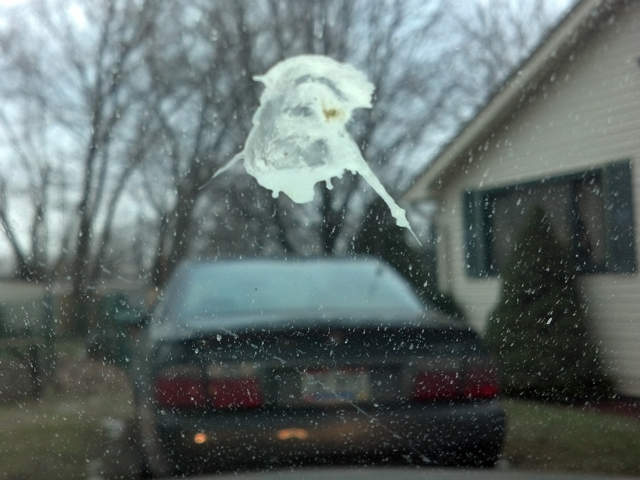
Ohio man claims to see image of Christ in bird dropping on car windshield

bird christ

The picture was taken by Jim Lawry.

Lawry was in the driveway of his parent’s Brooklyn, Ohio, home when he noticed the spot left behind by a passing bird. A closer look gave him quite a surprise and left him amazed.

Lawry’s son, parents and friends all came out to look. They too were amazed.

In an email to NewsChannel5, Lawry said he believed it was some sort of sign and wanted to share.

Read more: http://www.newsnet5.com/dpp/news/local_news/oh_cuyahoga/northeast-ohio-man-claims-bird-droppings-show-image-of-christ#ixzz2MUdPiq00

Malik Obama, Barack Obama’s half-brother, running for governor in Kenya

Malik Obama

A politician named Obama who is running for governor in Kenya can boast of one big claim to fame on the campaign trail: blood relations with the president of the United States.

Malik Obama — a half-brother of Barack Obama — is running for a governor’s position in the country’s nationwide elections on Monday, though he said he’s not sure what impact his relationship to the American president has on his campaign.

“I’m going into it as Malik Obama,” he said in a phone interview with The Associated Press from western Kenya. “I can’t run away from my name and association with my brother, but I have the feeling that people somewhat want to see who the brother of Obama is.”

The president’s relative even invokes the message that Barack Obama leaned on during his groundbreaking 2008 political campaign: Change. Malik Obama says his platform is poverty eradication, infrastructure development and industrialization.

“I hope that you all out there will support me and vote for me for this important position so that we can bring change to the county of Siaya,” Obama said at a recent campaign stop.

Kenyans on Monday will cast ballots for a wide range of regional offices, but the most crucial vote is for president. Monday is Kenya’s first nationwide election since the 2007 vote devolved into massive tribal violence that killed more than 1,000 people and displaced 600,000 from their homes.

The 54-year-old Malik Obama hopes to become the first governor of Kenya’s western county of Siaya. He is running as an independent candidate. Kenya’s new 2010 constitution created 47 new political divisions known as counties, to be headed by governors.

Obama is competing against candidates who are from well-funded parties, and the political newcomer may be in need of campaign cash. He asked an AP Television News freelance cameraman to contribute to his campaign. No contribution was given. Obama said he was asking for the individual to contribute, not for AP to contribute.

This is Malik Obama’s first run for office.

Barack Obama’s father was from Kenya and the U.S. president has several relatives in the country. Malik and Barack Obama have the same father but different mothers.

Read more: http://world.time.com/2013/03/01/president-obamas-half-brother-runs-for-office-in-kenya/#ixzz2MUZtgYfo