Chef Massimo Bottura on Why the Future of Food is in Our Trash

By MASSIMO BOTTURA

WHEN I THINK ABOUT THE FUTURE of restaurants—what chefs will be cooking in the years to come—the first thing that comes to mind is garbage: day-old bread, potato peels, fish bones, wilted vegetables. We currently produce enough food to feed the world’s 7.3 billion people, and yet 795 million are hungry, according to the United Nations. The reason is waste: a 2013 U.N. report reveals that 550 million tons of food are discarded by distributors, supermarkets and consumers every year. The U.S. and EU have pledged to reduce food waste in the next 10 to 15 years. This is where chefs come in.

This year the 20th anniversary of my restaurant, Osteria Francescana, coincided with the Expo Milano 2015. In an effort to address the expo’s ambitious theme—“Feeding the Planet, Energy for Life”—Francescana collaborated with the Catholic charity Caritas Ambrosiana and the culture maven Davide Rampello to turn a renovated theater in the Greco quarter into a think tank and experimental soup kitchen. This collaboration was baptized Refettorio Ambrosiano after Sant’Ambrogio, Milan’s patron saint. The word Refettorio has roots in the Latin word refice, to restore, and Refettorio Ambrosiano runs on salvaged waste and volunteer labor, including stints from the best chefs in the world.

In May, Daniel Humm of Eleven Madison Park made a sweet pudding from day-old, discarded bread. In June, René Redzepi of Noma turned black bananas into mouth-watering banana bread. In July, Daniel Patterson of Coi produced the quintessential minestrone from a crate of dismal-looking vegetables. Osteria Francescana made weekly broths from vegetable scraps and peelings. The guests were not fine-dining regulars, but a selection of Milan’s homeless community. What surprised us all was just how fabulous salvaged food can become.

Every Refettorio Ambrosiano recipe is an ode to imperfection with revolutionary potential; these dishes could change the way we feed the world, because they can be cooked by anyone, anywhere, on any budget. For families in need, it’s a way to bring dignity back to the table—dignity based not on the quality of ingredients, but on the quality of ideas.

Chefs have greater social responsibility than ever before. Celebrity status has allowed some of us to become ambassadors of culture and advocates for artisans, ethics and change. But have we spent enough time and energy considering the waste that results from our work? Imagine a school where young chefs are taught to be as resourceful with ingredients as they are with ideas. Imagine chefs embracing imperfect, discarded food and treating it with the same reverence they would a rack of lamb or ripe tomato. Imagine changing the perceptions about what is beautiful, nutritious and worthy of being shared.

Cooking is a call to act. At its best it can unite, revive and restore. As populations grow and food supplies are threatened, we are called to educate and spread ideas that will be the motivational force behind the evolution of our kitchens, our communities and our future. Let us begin by turning our waste—in our homes and our restaurants—into food that’s ethical and delicious. Because something salvaged is something gained.

http://www.wsj.com/articles/chef-massimo-bottura-on-why-the-future-of-food-is-in-our-trash-1449506020

Air evacuation following traumatic brain injury may worsen outcomes for patients.


Over the past 15 years, more than 330,000 US soldiers have suffered a traumatic brain injury. Many were evacuated by air for further treatment. A new study has found evidence that such air evacuations may pose a significant added risk, potentially causing more damage to already injured brains.

Over the past 15 years, more than 330,000 U.S. soldiers have suffered a traumatic brain injury (TBI). It is one of the leading causes of death and disability connected to the country’s recent conflicts in Afghanistan and Iraq. Many of these patients were evacuated by air from these countries to Europe and the U.S. for further treatment. In general, these patients were flown quickly to hospitals outside the battle zone, where more extensive treatment was available.

But now a new study by researchers at the University of Maryland School of Medicine has found evidence that such air evacuations may pose a significant added risk, potentially causing more damage to already injured brains. The study is the first to suggest that air evacuation may be hazardous for TBI patients. The study was published in the Journal of Neurotrauma.

“This research shows that exposure to reduced barometric pressure, as occurs on military planes used for evacuation, substantially worsens neurological function and increases brain cell loss after experimental TBI — even when oxygen levels are kept in the normal range. It suggests that we need to carefully re-evaluate the cost-benefit of air transport in the first days after injury,” said lead researcher Alan Faden, MD, the David S. Brown Professor in Trauma in the Departments of Anesthesiology, Anatomy & Neurobiology, Neurology, and Neurosurgery, and director, Shock, Trauma and Anesthesiology Research Center (STAR) as well as the National Study Center for Trauma and Emergency Medical Services.

About a quarter of all injured soldiers evacuated from Afghanistan and Iraq have suffered head injuries.

Faden and his colleagues tested rats that were subjected to TBI, using a model that simulates key aspects of human brain injury. Animals were exposed to six hours of lowered air pressure, known as hypobaria, at levels that simulated conditions during transport; control animals were exposed to normal pressure. All the animals received extra oxygen to restore normal oxygen concentrations in the blood. In another study, animals received oxygen, either as in the first study or at much higher 100 percent concentration, which is often used during military air evacuations. On its own, low air pressure worsened long-term cognitive function and increased chronic brain inflammation and brain tissue loss. Pure oxygen further worsened outcomes.

Faden and his colleagues believe the findings raise concerns about the increased use of relatively early air evacuation, and suggest that this potential risk should be weighed against the benefits of improved care after evacuation. It may be necessary, he says, to change the current policy for TBI patients and delaying air evacuation in many cases.

In an accompanying editorial, Patrick Kochanek, MD, a leading expert on TBI and trauma care at the University of Pittsburgh, called the findings “highly novel and eye-opening,” and said that they could have “impactful clinical relevance for the field of traumatic brain injury in both military and civilian applications.”

Faden and colleagues believe that one of the mechanisms by which hypobaria worsens TBI is by increasing persistent brain inflammation after injury. They are currently examining how this process occurs and have tested treatments that can reduce the risks of air evacuation. Early results are promising. Scientists suspect that breathing pure oxygen could worsen TBI by increasing production of dangerous free radicals in the brain. After brain injury, these free radicals flood the site of injury, and pure oxygen may further boost these levels. Several recent studies from trauma centers, including from the R Adams Cowley Shock Trauma Center at the University of Maryland Medical Center, have found evidence that using 100 percent oxygen in trauma patients may be counterproductive.

Journal Reference:

Jacob W Skovira, Shruti V Kabadi, Junfang Wu, Zaorui Zhao, Joseph DuBose, Robert E Rosenthal, Gary Fiskum, Alan I Faden. Simulated Aeromedical Evacuation Exacerbates Experimental Brain Injury. Journal of Neurotrauma, 2015; DOI: 10.1089/neu.2015.4189

http://www.sciencedaily.com/releases/2015/11/151130110013.htm

Man sleeping in garbage bin survives 2 cycles of compaction in trash truck

Police say a homeless man sleeping inside a garbage bin survived two compaction cycles after the bin was emptied into a trash truck.

Fremont police spokeswoman Geneva Bosques said Tuesday the 44-year-old man was sleeping inside a large trash bin behind a restaurant when a trash truck collected it and used the compactor.

Bosques tells the Oakland Tribune the truck then traveled to a fast food restaurant, collected trash from another bin there and again used the compactor.

She says the man crawled out through an opening in the roof the next time the truck stopped at another store.

Bosques says the man was very lucky to have survived the compaction without serious injuries.

The man, who suffers from mental health issues, was taken to a hospital to be checked.

http://nypost.com/2015/12/09/man-asleep-in-garbage-bin-suvives-trash-compactor/

Alligator eats burglary suspect hiding from cops


Investigators have identified the remains of a suspected burglar who was killed by an alligator. Police say it appears 22-year-old Matthew Riggins was hiding from law enforcement when the incident occurred.

Brevard County deputies have determined that Matthew Riggins, 22, was killed by an alligator in Barefoot Bay lake on Nov. 23 while possibly hiding to avoid law enforcement.

Investigators say that Riggins had told his girlfriend he would be in Barefoot Bay to commit burglaries with another suspect who is now in custody but not cooperating with officials, according to Maj. Tod Goodyear with BCSO.

Deputies responded to calls in Barefoot Bay on Nov. 13 that there were two men dressed in black walking behind area houses, who ran from responding officers. Later that day, Riggins was reported missing to the Palm Bay Police Department.

Police searching the area reported hearing “yelling” but could not determine the source that night, Goodyear said. Ten days later, Riggins’ body was found in the lake.

Sheriff’s dive team members encountered an 11-foot alligator behaving aggressively while recovering the body, according to BCSO.

“When the body was found, it had injuries that were consistent with an alligator attack,” Goodyear said. “We had trappers euthanize the gator and when we opened it up, there were some remains inside that were consistent with injuries found on the body.”

Riggins died from drowning and bites were discovered along his legs and body that led investigators to determine he had been dragged underwater by the massive animal.

http://www.usatoday.com/story/news/nation-now/2015/12/08/alligator-kills-florida-burglary-suspect-hiding-cops/76966512/

Researchers find new phase of carbon, Q-carbon, that is brighter and harder than diamond and can be made easily and inexpensively in less than a second.

Researchers from North Carolina State University have discovered a new phase of solid carbon, called Q-carbon, which is distinct from the known phases of graphite and diamond. They have also developed a technique for using Q-carbon to make diamond-related structures at room temperature and at ambient atmospheric pressure in air.

Phases are distinct forms of the same material. Graphite is one of the solid phases of carbon; diamond is another.

“We’ve now created a third solid phase of carbon,” says Jay Narayan, the John C. Fan Distinguished Chair Professor of Materials Science and Engineering at NC State and lead author of three papers describing the work. “The only place it may be found in the natural world would be possibly in the core of some planets.”

Q-carbon has some unusual characteristics. For one thing, it is ferromagnetic – which other solid forms of carbon are not.

“We didn’t even think that was possible,” Narayan says.

In addition, Q-carbon is harder than diamond, and glows when exposed to even low levels of energy.
“Q-carbon’s strength and low work-function – its willingness to release electrons – make it very promising for developing new electronic display technologies,” Narayan says.

But Q-carbon can also be used to create a variety of single-crystal diamond objects. To understand that, you have to understand the process for creating Q-carbon.

Researchers start with a substrate, such as sapphire, glass or a plastic polymer. The substrate is then coated with amorphous carbon – elemental carbon that, unlike graphite or diamond, does not have a regular, well-defined crystalline structure. The carbon is then hit with a single laser pulse lasting approximately 200 nanoseconds. During this pulse, the temperature of the carbon is raised to 4,000 Kelvin (or around 3,727 degrees Celsius) and then rapidly cooled. This operation takes place at one atmosphere – the same pressure as the surrounding air.

The end result is a film of Q-carbon, and researchers can control the process to make films between 20 nanometers and 500 nanometers thick.

By using different substrates and changing the duration of the laser pulse, the researchers can also control how quickly the carbon cools. By changing the rate of cooling, they are able to create diamond structures within the Q-carbon.

“We can create diamond nanoneedles or microneedles, nanodots, or large-area diamond films, with applications for drug delivery, industrial processes and for creating high-temperature switches and power electronics,” Narayan says. “These diamond objects have a single-crystalline structure, making them stronger than polycrystalline materials. And it is all done at room temperature and at ambient atmosphere – we’re basically using a laser like the ones used for laser eye surgery. So, not only does this allow us to develop new applications, but the process itself is relatively inexpensive.”
And, if researchers want to convert more of the Q-carbon to diamond, they can simply repeat the laser-pulse/cooling process.

If Q-carbon is harder than diamond, why would someone want to make diamond nanodots instead of Q-carbon ones? Because we still have a lot to learn about this new material.

“We can make Q-carbon films, and we’re learning its properties, but we are still in the early stages of understanding how to manipulate it,” Narayan says. “We know a lot about diamond, so we can make diamond nanodots. We don’t yet know how to make Q-carbon nanodots or microneedles. That’s something we’re working on.”

NC State has filed two provisional patents on the Q-carbon and diamond creation techniques.
The work is described in two papers, both of which were co-authored by NC State Ph.D. student Anagh Bhaumik. “Novel Phase of Carbon, Ferromagnetism and Conversion into Diamond” will be published online Nov. 30 in the Journal of Applied Physics. “Direct conversion of amorphous carbon into diamond at ambient pressures and temperatures in air” was published Oct. 7 in the journal APL Materials.

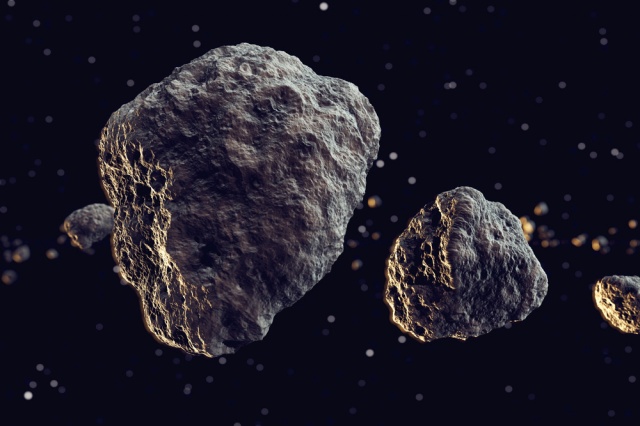
Obama signs new law: finders keepers is the new rule when it comes to asteroid mining

It’s a preemptive move to be sure, but when we are finally able to mine valuable resources from asteroids, rest assured that it’s fully legal to keep what you find. On Thursday, President Obama signed the U.S. Commercial Space Launch Competitiveness Act into law, which grants companies the rights to whatever they manage to pluck out of these extraterrestrial bodies. Effectively an extension of capitalism into space, the bill is one of the few during Obama’s presidency that received widespread support from the GOP, because apparently, nothing screams bipartisanship like asteroid mining.

Calling it “bipartisan, bicameral legislation,” Congressman Bill Posey of Florida called the law “a landmark for American leadership in space exploration.” A far departure from the 1967 Outer Space Treaty, which banned countries from “claiming or appropriating any celestial resource such as the Moon or another planet,” the new act paves the way for what some say could eventually become a multi-trillion dollar industry. Some estimates suggest that platinum filled asteroids could be worth as much as $50 billion. Unfortunately, the technology to take advantage of these resources does not yet exist.

This certainly hasn’t stopped the praise from rolling in, however. “This is the single greatest recognition of property rights in history,” said Eric Anderson, Co-Founder and Co-Chairman, Planetary Resources, Inc. “This legislation establishes the same supportive framework that created the great economies of history, and will encourage the sustained development of space.” Of course, the law doesn’t mean that anyone can lay claim to an entire celestial body (sticking a flag in something doesn’t make it yours), but now, individuals or corporations can claim property rights to whatever is found on these bodies.

In addition to its stance on asteroid mining, the bill also reaffirms and the United States’ role in the maintenance of the International Space Station. Whereas previous agreements necessitated American involvement until 2020, this latest bill requires that U.S. astronauts play a major role in ISS “through at least 2024.”

And furthermore, to ensure that more SpaceX type projects can emerge (and compete with China’s growing space program), the law also loosens regulations on space startups, allowing them greater freedoms in certain operations.

“Throughout our entire economy, we need to eliminate unnecessary regulations that cost too much and make it harder for American innovators to create jobs,” said presidential candidate Marco Rubio. “The reforms included here make it easier for our innovators to return Americans to suborbital space and will help the American space industry continue pushing further into space than ever before.”

Read more: http://www.digitaltrends.com/cool-tech/commercial-space-launch-competetiveness-act-2015-asteroid-mining/#ixzz3suQKzAKF

Albert Einstein’s special mark on the universe

By Jeffrey Bennett

It has been exactly 100 years since Albert Einstein presented his theory of general relativity to an audience of scientists on November 25, 1915. While virtually everyone has heard of Einstein and his theory, very few people have any idea of what the theory actually is.

This is a shame, not only because there is a great public thirst for understanding of it, but also because relativity is important, for at least four major reasons.

General relativity provides our modern understanding of space, time and gravity — which means it’s crucial to almost everything we do in physics and astronomy. For example, you cannot understand black holes, the expansion of the universe or the Big Bang without first understanding the basic ideas of relativity. Though few people realize it, Einstein’s famous equation E = mc2 is actually part of the theory of relativity, which means that relativity also explains how the sun shines and how nuclear power works.

A second reason everyone should know about relativity lies in the way it changes our perception of reality. Relativity tells us that our ordinary perceptions of time and space are not universally valid. Instead, space and time are intertwined as four-dimensional space-time.

In our ordinary lives, we perceive only three dimensions—length, width and depth—and we assume that this perception reflects reality. However, in space-time, the four directions of possible motion are length, width, depth and time. (Note that time is not “the” fourth dimension; it is simply one of the four.)

Although we cannot picture all four dimensions of space-time at once, we can imagine what things would look like if we could. In addition to the three spatial dimensions of space-time that we ordinarily see, every object would be stretched out through time. Objects that we see as three-dimensional in our ordinary lives would appear as four-dimensional objects in space-time. If we could see in four dimensions, we could look through time just as easily as we look to our left or right. If we looked at a person, we could see every event in that person’s life. If we wondered what really happened during some historical event, we’d simply look to find the answer.

To see why this is so revolutionary, imagine that you met someone today who deeply believed that Earth is the center of the universe. You would probably feel sorry for this person, knowing that his or her entire world view is based on an idea disproven more than 400 years ago.

Now imagine that you met someone who still believed that time and space are independent and absolute — which, of course, describes almost everyone — even though we’ve known that’s not the case for a century now. Shouldn’t we feel equally sorry for all who hold this modern misconception?

It seems especially unfortunate once you realize that the ideas of relativity are not particularly difficult to understand. Indeed, I believe we could begin teaching relativity in elementary school in much the same way that we teach young children about the existence of atoms, even though few will ever study quantum mechanics.

My third reason for believing relativity is important lies in what Einstein’s discovery tells us about human potential. The science of relativity may seem disconnected from most other human endeavors, but I believe Einstein himself proved otherwise. Throughout his life, Einstein argued eloquently for human rights, human dignity and a world of peace and shared prosperity. His belief in underlying human goodness is all the more striking when you consider that he lived through both World Wars, that he was driven out of Germany by the rise of the Nazis, that he witnessed the Holocaust that wiped out more than six million of his fellow Jews, and that he saw his own discoveries put to use in atomic bombs.

No one can say for sure how he maintained his optimism in the face of such tragedies, but I see a connection to his discovery of relativity. Einstein surely recognized that a theory that so challenged our perceptions of reality might have been dismissed out of hand at other times in history, but that we now live in a time when, thanks to the process that we call science, the abundant evidence for relativity allowed for its acceptance.

This willingness to make judgments based on evidence shows that we are growing up as a species. We have not yet reached the point where we always show the same willingness in all our other endeavors, but the fact that we’ve done it for science suggests we have the potential.

Finally, on a philosophical level, relativity is profound. Only about a month before his death in 1955, Einstein wrote: “Death signifies nothing … the distinction between past, present and future is only a stubbornly persistent illusion.” As this suggests, relativity raises interesting questions about what the passage of time really means.

Because these are philosophical questions, they do not have definitive answers, and you will have to decide for yourself what these questions mean to you. But I believe that one thing is clear. Einstein showed that even though space and time can independently differ for different observers, the four-dimensional space-time reality is the same for everyone.

This implies that events in space-time have a permanence to them that cannot be taken away. Once an event occurs, in essence it becomes part of the fabric of our universe. Every human life is a series of events, and this means that when we put them all together, each of us is creating our own, indelible mark on the universe. Perhaps if everyone understood that, we might all be a little more careful to make sure that the mark we leave is one that we are proud of.

So there you have it. Relativity is necessary to comprehend the universe as we know it, it helps us understand the potential we all share when we put our brains to work for the common good, and if we all understood it we might treat each other a little more kindly.

http://www.cnn.com/2015/11/25/opinions/bennett-einstein-theory-of-relativity/index.html

New progress in understanding what may give animals a magnetic sense: a protein that acts as a compass

Quick – can you tell where north is? Animals as diverse as sea turtles, birds, worms, butterflies and wolves can, thanks to sensing Earth’s magnetic field.

But the magnet-sensing structures inside their cells that allow them to do this have evaded scientists – until now.

A team led by Can Xie’s at Peking University in China has now found a protein in fruit flies, butterflies and pigeons that they believe to be responsible for this magnetic sense.

“It’s provocative and potentially groundbreaking,” says neurobiologist Steven Reppert of the University of Massachusetts who was not involved in the work. “It took my breath away.”

There used to be two competing theories about magnetic sense: some thought it came from iron-binding molecules, others thought it came from a protein called cryptochrome, which senses light and has been linked to magnetic sense in birds.

Xie’s group was the first to guess these two were part of the same system, and has now figured out how they fit together.

“This was a very creative approach,” says Reppert. “Everyone thought they were two separate systems.”

Xie’s team first screened the fruit fly genome for a protein that would fit a very specific bill.

The molecule had to bind iron, it had to be expressed inside a cell instead of on the cell membrane and do so in the animal’s head – where animals tend to sense magnetic fields – and it also had to interact with cryptochrome.

“We found one [gene] fit all of our predictions,” says Xie. They called it MagR and then used techniques including electron microscopy and computer modelling to figure out the protein’s structure.

They found that MagR and cryptochrome proteins formed a cylinder, with an inside filling of 20 MagR molecules surrounded by 10 cryptochromes.

The researchers then identified and isolated this protein complex from pigeons and monarch butterflies.

In the lab, the proteins snapped into alignment in response to a magnetic field. They were so strongly magnetic that they flew up and stuck to the researchers’ tools, which contained iron. So the team had to use custom tools made of plastic.

The team hasn’t yet tried to remove the MagR protein from an animal like a fruit fly to see if it loses its magnetic sense, but Xie believes the proteins work the same way in a living animal.

Although this protein complex seems to form the basis of magnetic sense, the exact mechanism is still to be figured out.

One idea is that when an animal changes direction, the proteins may swing around to point north, “just like a compass needle,” says Xie. Perhaps the proteins’ movement could trigger a connected molecule, which would send a signal to the nervous system.

Journal reference: Nature Materials, DOI: 10.1038/nmat4484

https://www.newscientist.com/article/dn28494-animal-magnetic-sense-comes-from-protein-that-acts-as-a-compass

Thanks to Kebmodee for bringing this to the It’s Interesting community.

Scots left reeling as Canadian whisky named world’s best

The Scots are renowned for their whisky but, for the second year in a row, whisky from another country has been named the best in the world.

Crown Royal Northern Harvest Rye, a Canadian malt whisky, was awarded 97.5 marks out of 100 in Jim Murray’s Whisky Bible, earning it the title of world whisky of the year.

Despite its stellar reputation in the whisky world, not a single Scottish whisky made the top five.

Jim Murray’s 2016 World Whiskies of the Year
1. Crown Royal Northern Harvest Rye (Canada) – £47 a bottle
2. Pikesville Straight Rye (USA) – £33 a bottle
3. Midleton Dair Ghaelach (Ireland) – £180 a bottle
4. William Larue Weller Bourbon (Bot.2014) (USA) – £65 a bottle
5. Suntory Yamazaki Mizunara (Bot.2014) (Japan) – £45 a bottle

Editor of Scotchwhisky.com Becky Paskin said: “While it’s disappointing that Scotch has been omitted from Murray’s top five again, it’s heartening to see that he’s included a real mix of whiskies from around the world that aren’t all selected from the luxury sphere.

“The absence of Scotch, however puzzling, has no bearing at all on the quality of whisky coming from Scotland. Interest in world whisky is increasing and drinkers are likely to want to experiment with the medley of styles and flavours available.

“It’s important to remember that, whether you agree with Murray’s top five or not, this is just one man’s opinion. My advice would be to go out and taste these whiskies for yourself.”

Despite not winning the coveted whisky of the year award, Scotland’s Glenfarclas 1957 Family Cask 2110 did win the single cask of the year award.

Whisky expert Murray tasted more than 1000 whiskies before deciding on the Crown Royal and called it a masterpiece: “Rye, that most eloquent of grains, not just turning up to charm and enthral but to also take us through a routine which reaches new heights of beauty and complexity.

“To say this is a masterpiece is barely doing it justice.”

Tom Sandham, one half of the Thinking Drinkers, said: “The news of a Canadian winner might surprise some, but it shouldn’t.

“The country has extraordinary whisky heritage. And rye is one of the original grains in North American whiskey production, it has long been re-asserting itself with connoisseurs and leading bartenders who use it in classic cocktails. So to see it break through here is evidence of the grains’s resurgent popularity.

“But remember this is only one view, and a nice bit of publicity for man, brand and whisky as a whole, but the only way you’ll determine what you like is if you try things. Lots of different things. The great thing about whisky is that a wider demographic is now engaging, which is excellent because there are hundreds of stunning whiskies being made all around the world right now.”

Yvonne Briese, Vice President of Crown Royal said: “Crown Royal Northern Harvest Rye showcases the rye whisky that has been such an integral component of the Crown Royal Deluxe blend since 1939. This is a testament to the unbelievable blending and distilling that’s been taking place in Gimli for over 75 years.

“We are thrilled that Crown Royal Northern Harvest Rye has been named World Whisky of the Year.”

Some whisky connoisseurs were sceptical of the win, with specialist whisky author Charles MacLean telling The Times the success of foreign winners was a marketing ploy: “You should compare like with like. These whiskies from around the world are all made to be different. Canadian whisky allows for all sorts of additives, such as prune juice to sweeten it.

“This is forbidden in Scotch, which has strictly defined terms of how it can be made. It must have the flavour derived only from the raw materials: barley, water and yeast. Nothing may be added.”

However, Murray defended his choice robustly: “Last year people were shocked when I gave [Japanese whisky] Yamazaki the award – until they tasted it. Then they saw it was not the affront to Scotch they first thought and something truly extraordinary.

“This year, doubtless there will be many more eyebrows raised because rarely is Canada mentioned when it comes to the world’s top whiskies. But, again, I have no doubt people finding the bottling I tasted will be blown away with this whisky’s uncompromising and unique beauty. It certainly puts the rye into Canadian rye.”

Coffee drinkers may live longer

Coffee lovers may live longer than those who don’t imbibe — with lower risks of early death from heart disease and neurological conditions such as Parkinson’s disease, a large U.S. study finds.

Researchers said the study, published online Nov. 16 in Circulation, adds to a large body of evidence on the good side of coffee.

People often think of coffee-drinking as a bad habit that they need to break, said study leader Dr. Frank Hu, a professor of nutrition and epidemiology at Harvard School of Public Health in Boston.

But, Hu said, many studies have linked moderate coffee intake to lower risks of developing various diseases — from heart disease and diabetes, to liver cancer, to neurological diseases such as Parkinson’s, multiple sclerosis and Alzheimer’s.

His team’s study, funded by the U.S. National Institutes of Health, adds another layer of evidence. It found that coffee drinkers were not only less likely to develop certain diseases — they also tended to live longer.

Over 30 years, nonsmokers who drank three to five cups of coffee a day were 15 percent less likely to die of any cause, versus nondrinkers. Specifically, they had lower rates of death from heart disease, stroke, neurological conditions and suicide.

Both regular coffee and decaf were linked to longer survival, the study found.

None of that proves coffee, itself, extends people’s lives or directly protects against certain diseases, Hu said. Other factors might explain the connection.

But, Hu added, his team did account for many of those factors. And the coffee benefit remained.

The findings are based on more than 200,000 U.S. doctors, nurses and other health professionals who were surveyed repeatedly over almost three decades. During that time, almost 32,000 study participants died.

It turned out that people who drank one to five cups of coffee at the outset had lower odds of dying during the study period when other lifestyle habits and certain health problems, such as high blood pressure and diabetes, were taken into account.

The relationship grew stronger when the researchers looked only at nonsmokers: Those who drank three to five cups of coffee a day were 15 percent less likely to die during the study period, compared with adults who didn’t drink coffee. Lower risks were even seen among the heaviest coffee drinkers (more than five cups a day), who had a 12 percent lower death risk than nondrinkers.

“The body of evidence does suggest coffee can fit into a healthy lifestyle,” Hu said.

That evidence, Hu noted, has already been incorporated into the latest U.S. dietary guidelines, which say that a healthy diet can include up to three to five cups of coffee a day.

But overall lifestyle is key, Hu said. That is, there’s a difference between a person who gets little sleep, then uses coffee to function during the day, and a person who sleeps well, exercises, and eats a balanced diet that includes some coffee.

Alice Lichtenstein, a spokesperson for the American Heart Association, agreed.

“This doesn’t mean you should start drinking coffee in the hopes of getting health benefits,” said Lichtenstein, who is also a professor of nutrition science and policy at Tufts University in Boston.

But, she added, the new findings build on years of evidence that coffee is not the bad guy many believe it is. “There’s this lingering idea that coffee must be bad for you because it’s enjoyable,” Lichtenstein said. “It’s almost like we’ve been trying to find something wrong with it.”

There are caveats, though. “You do need to be careful about what you’re putting in your coffee,” Lichtenstein pointed out. Some milk is fine, she said, but watch the sugar and heavy cream.

And why would coffee be related to health benefits? It’s not clear from this study, Hu said, but other research has suggested that compounds in coffee can reduce inflammation, act as antioxidants, and improve blood sugar regulation, among other things.

Also, when it comes to some neurological conditions, such as Parkinson’s disease, Hu said, there’s evidence that caffeine offers benefits.

SOURCES: Frank Hu, M.D., Ph.D., professor, nutrition and epidemiology, Harvard School of Public Health, Boston; Alice Lichtenstein, D.Sc., professor, nutrition science and policy, Tufts University, Boston; Nov. 16, 2015, Circulation, online

Read more at http://www.philly.com/philly/health/HealthDay705311_20151116_Coffee_Drinkers_May_Live_Longer.html#rPogcDb2tVXwEFwz.99