Massive sculpture relocated because people kept walking into it while texting


The statue by Sophie Ryder had to be moved because people on their phones were bumping into it.

By Sophie Jamieson

A massive 20ft statue of two clasped hands had to be relocated after people texting on their mobile phones kept walking into it.

The sculpture, called ‘The Kiss’, was only put in place last weekend, but within days those in charge of the exhibition noticed walkers on the path were bumping their heads as they walked through the archway underneath.

Artist Sophie Ryder, who designed the sculpture, posted a video of it being moved by a crane on her Facebook page.

The artwork was positioned on a path leading up to Salisbury Cathedral in Wiltshire.

Made from galvanised steel wire, The Kiss had a 6ft 4in gap underneath the two hands that pedestrians could walk through.

But Ms Ryder said people glued to their phones had not seen it coming.

She said on social media: “We had to move ‘the kiss’ because people were walking through texting and said they bumped their heads! Oh well!!”

Her fans voiced their surprise that people could fail to notice the “ginormous” sculpture.

Cindy Billingsley commented: “Oh good grief- they should be looking at the beautiful art instead of texting- so they deserve what they get if they are not watching where they are going.”

Patricia Cunningham said: “If [sic] may have knocked some sense into their heads! We can but hope.”

Another fan, Lisa Wallis-Adams, wrote: “We saw your art in Salisbury at the weekend. We absolutely loved your rabbits and didn’t walk into any of them! Sorry some people are complete numpties.”

Sculptor Sophie Ryder studied at the Royal Academy of Arts and is known for creations of giant mythical figures, like minotaurs.

The sculpture is part of an exhibition that also features Ryder’s large “lady hares” and minotaurs, positioned on the lawn outside the cathedral. The exhibition runs until 3 July.

http://www.telegraph.co.uk/news/uknews/12164922/Massive-sculpture-relocated-because-people-busy-texting-kept-walking-into-it.html

Lost Tapes Reveal Apollo Astronauts Heard Unexplained ‘Music’ On Far Side Of The Moon

The crew of an Apollo mission to the moon were so startled when they encountered strange music-like radio transmissions coming through their headsets, they didn’t know whether or not to report it to NASA, it’s been revealed.

It was 1969, two months before Apollo 11’s historic first manned landing on the moon, when Apollo 10 entered lunar orbit, which included traversing the far side of the moon when all spacecraft are out of radio contact with Earth for about an hour and nobody on Earth can see or hear them.

As far as the public knew, everything about the mission went smoothly.

Almost four decades went by before lost recordings emerged that revealed something unsettling that the three Apollo astronauts had experienced while flying above the far side of the moon.

The taped recordings contained “strange, otherworldly music coming through the Apollo module’s radio,” according to the upcoming Science Channel series, “NASA’s Unexplained Files.”

The conversation between the three astronauts indicated they heard sounds like they had never heard before:

“It sounds like, you know, outer space-type music.”

“You hear that? That whistling sound? Whooooooooo!”

“Well, that sure is weird music!”
The unexplained “music” transmission lasted almost an hour, and just before the astronauts regained radio contact with Earth, they discussed whether or not to tell Mission Control what they had experienced:

“It’s unbelievable! You know?”

“Shall we tell them about it?”

“I don’t know. We ought to think about it.”

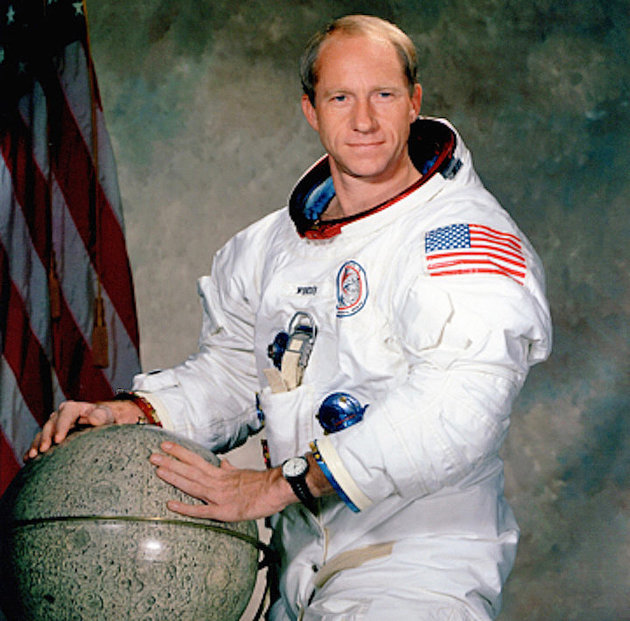
“The Apollo 10 crew was very used to the kind of noise that they should be hearing. Logic tells me that if there was something recorded on there, then there was something there,” Apollo 15 astronaut Al Worden says on the Science Channel program. “NASA would withhold information from the public if they thought it was in the public’s best interest.”

The transcripts of the Apollo 10 mission were classified and untouched in NASA’s archives until 2008, producing an ongoing debate as to the nature and origin of the strange sounds heard by the astronauts.

“You don’t hear about anything like that until years after the incident occurs, and then you kind of wonder, because it’s such an old memory of those things that you get concerned about if they were making something up or was there something really there? Because you never really know,” Worden told The Huffington Post.

“If you’re behind the moon and hear some weird noise on your radio, and you know you’re blocked from the Earth, then what could you possibly think?” Worden said.

“We’d had a lot of incidents where guys who flew in space saw and heard things that they didn’t recognize, and you wonder about all of that. I have a very open mind about what could’ve happened. It’s somebody’s hearsay evidence — it’s only a visual or audio event, which is hard to pin down. Recollection is one thing, but actual proof is something entirely different.”

http://www.huffingtonpost.com/entry/apollo-10-astronauts-reported-unexplained-music-at-moon_us_56c80662e4b0928f5a6c0679

The Largest Air Purifier Ever Built Sucks Up Smog And Turns It Into Gem Stones

air1

by Kelsey Campbell-Dollaghan

What’s 23 feet tall, eats smog, and makes jewelry for fun?

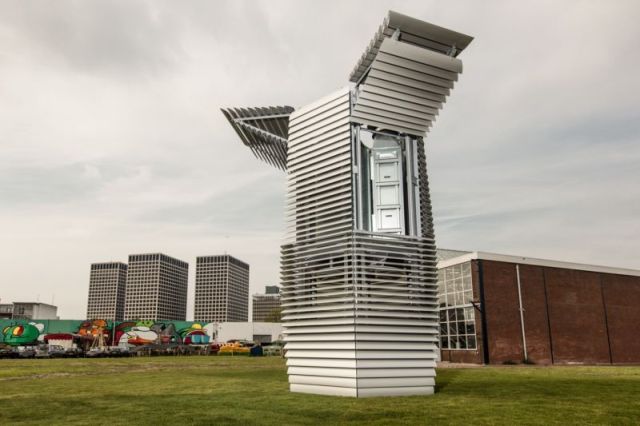
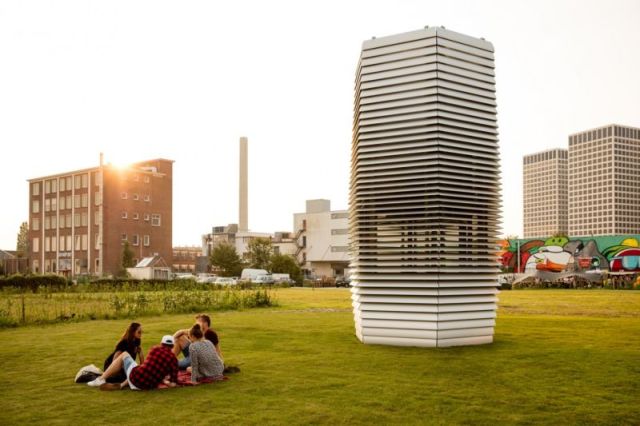
In Rotterdam this week, the designer Daan Roosegaarde is showing off the result of three years of research and development: The largest air purifier ever built. It’s a tower that scrubs the pollution from more than 30,000 cubic meters of air per hour—and then condenses those fine particles of smog into tiny “gem stones” that can be embedded in rings, cufflinks, and more.

Each stone is roughly equivalent to cleaning 1,000 cubic meters of air—so you’re literally wearing the pollution that once hung in the air around Roosegaarde’s so-called Smog Free Tower. In the designer’s words, buying a ring means “you donate a thousand cubic meters of clean air to the city where the Smog Free Tower is.”

The process taking place inside its walls is powered by 1,400 watts of sustainable energy, which is comparable to a water boiler, and the studio says it hopes to one day integrate solar PVs into the design to power the process—which works not so differently than some ionic air purifiers. Roosegaarde explains:

By charging the Smog Free Tower with a small positive current, an electrode will send positive ions into the air. These ions will attach themselves to fine dust particles. A negatively charged surface -the counter electrode- will then draw the positive ions in, together with the fine dust particles. The fine dust that would normally harm us, is collected together with the ions and stored inside of the tower. This technology manages to capture ultra-fine smog particles which regular filter systems fail to do.

http://www.stumbleupon.com/su/6GjtPr/:1R-Rmh@rp:bhW_+Lt$/gizmodo.com/the-largest-air-purifier-ever-built-sucks-up-smog-and-t-1729298355

Volleyball over the US-Mexico border fence

untitled

The frontier between the United States and Mexico is the busiest land border in the world. It is also among one of the world’s most heavily regulated and policed border zones—the arid climate of which is responsible for many migrant deaths each year.

But it’s also an area that occasionally lends itself to more cheerful pursuits—something you won’t hear about from a number of far-right US politicians, who prefer to frame the US-Mexico border as something like a war zone.

“Wallyball” is an annual tradition in the sister towns of Naco, Arizona, in the United States and Naco, Sonora, in Mexico. Every April, teams from either side of the border face off in this “fast-paced version of volleyball,” reports Rafa Fernandez De Castro for Fusion.

It’s called the “Fiesta Bi-Nacional,” and it’s intended to solidify positive transnational relations between Mexico and the US, despite tensions over migration and other issues. “Wallyball” has been an integral part of Fiesta Bi-Nacional since 1979, and has inspired similar competitions elsewhere along the US-Mexico border. Holiday-makers in the US city of San Diego and the Mexican city of Tijuana have taken up impromptu volleyball matches on the sandy beaches where both countries meet the Pacific Ocean.

“For us, it represents the celebration of the union of two countries,” José Lorenzo Villegas, mayor of Mexican Naco, told Reuters in 2007. “What’s unusual is that both the Mexican and US teams are playing at home, with the fence as the net,” he added.

http://www.stumbleupon.com/su/5qIq8k/:3mT7@T7v:aJuDN@@4/qz.com/484342/locals-are-using-the-us-mexico-border-fence-as-a-giant-volleyball-net

Fear of financial loss helps people exercise more.

By Morgan Manella

Companies that want their employees to exercise more might want to skip the promise of prizes or pats on the back. Instead, a new study shows, giving someone a financial incentive and then threatening to take it away might work better.

Workplace wellness programs are gaining popularity, and more than 80% of large employers are now using some form of financial incentive to increase physical activity, according a new study published in the Annals of Internal Medicine. This comes after the Centers for Disease Control and Prevention reported that more than half of adults in the United States do not reach the minimum recommended level of physical activity to see benefits to their health.

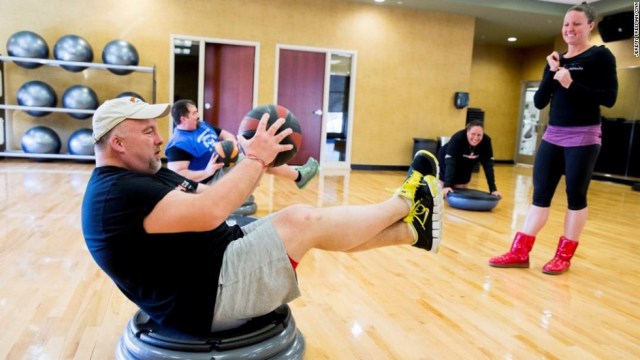
The study gave 281 people a 7,000 step-a-day goal that they were to keep up during a 13-week challenge. Researchers tested three financial incentive designs.

One group received $1.40 each day that they hit the 7,000-step goal. A second group was entered into a daily lottery, but participants were only eligible to collect a reward if they reached 7,000 steps the day before. The third group was given $42 upfront each month, and $1.40 was taken away each day the goal was not met. The control group received no money but did get some daily feedback.

The researchers found that the possibility of losing money led people to exercise more than the other incentives. It resulted in a 50% relative increase in the average amount of days participants achieved their physical activity goals.

“People are more motivated by losses than gains, and they like immediate gratification,” said study author, Dr. Mitesh Patel, an assistant professor in the Perelman School of Medicine and at the Wharton School at the University of Pennsylvania. “They want to be rewarded today, not next year or far into the future.”

The findings suggest that the way a financial incentive is framed is important to how effective it is — and it can influence the success of health promotion programs, according to the study.

“There is a large body of evidence in behavioral economics that has looked at ways of framing,” Patel said. “It’s the way our brains are wired that we tend to avoid wanting to lose things more than the benefit we get from gaining them. It makes people think like the money is theirs to lose from day one. By having skin in the game, it makes people more motivated, and we think we can leverage that in these types of programs.”

The study participants had an average BMI of 33.2, which classifies a person as obese, according to Patel.

“That is significant because most employers or wellness programs are designed to target people that are already motivated and people that tend to engage,” he said. “We wanted to target overweight and obese people that are more sedentary and have the most to benefit from these programs.”

In most programs, many participants will drop out quickly and only the motivated will stay involved, Patel said.

“In ours, we were pleasantly surprised that 96% stayed,” he said.

He attributes such high engagement rates in this study to the combination of design and technology. “The main takeaway is that the design of the incentive is critical to its success,” he said.

“Our study can help them [wellness programs] to design these incentives in a way that can be more effective and engage employees that have more to benefit, especially those that are obese, and to take into account that simple changes in the way we frame incentives can have a dramatic outcome in how we influence adults to change their behavior.”

http://www.cnn.com/2016/02/17/health/financial-incentive-exercise-goals/index.html

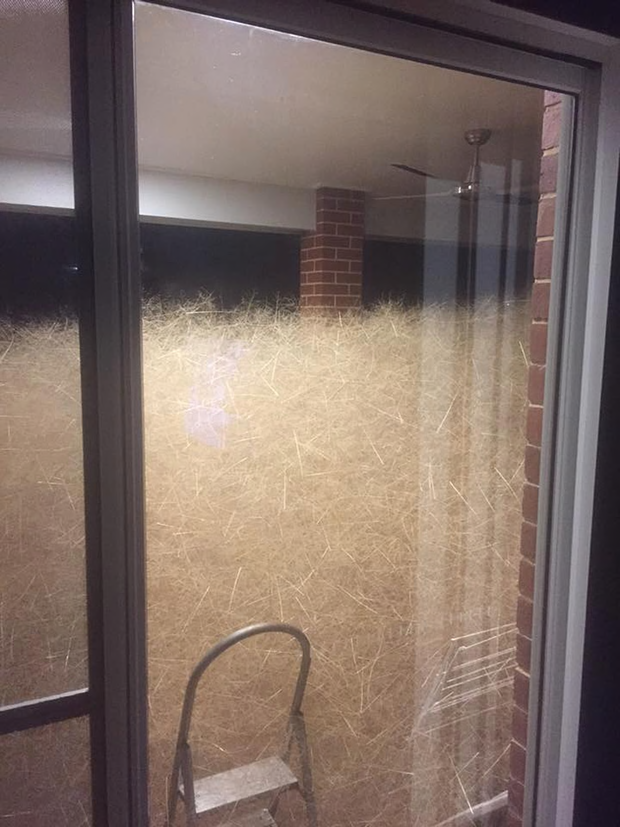
Fast-growing tumbleweed called hairy panic blows into Australian city

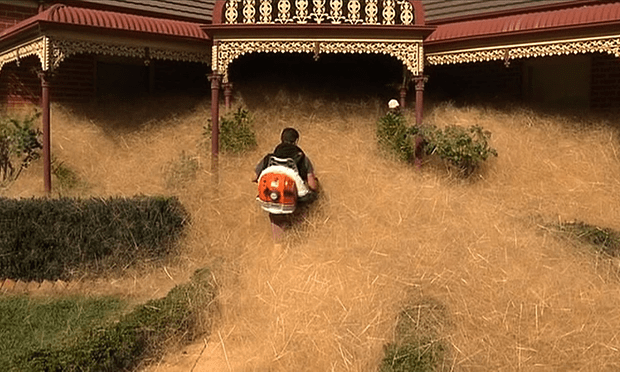
untitledResidents of a rural Australian city are frustrated by a fast-growing tumbleweed called hairy panic that is piling up outside their houses, covering lawns and blocking doors and windows.

Hairy panic is piling up outside several homes in Wangaratta in north-east Victoria – at times reportedly reaching roof height – forcing residents to clear it several times a day. About 20 residences on Bella Way, a new development hard against the fringe of farmland, have been particularly affected, with the grass blowing over from neighbouring fie

But authorities say they have limited powers to do anything about the problem.

Hairy panic – Panicum effusum – is a short-lived perennial native to inland Australia. Outbreaks of the weed take place across the country every year but Wangaratta has been hit particularly badly this year because of dry conditions.

Matt Thewlis‎ posted several images of his home covered in the grass to the council’s Facebook page: “Hope the person who owns the out-of-control paddocks in our area gets notified to do something because this is a joke and the whole estate is sick of it! … ask yourself this would you put up with this everyday?”

Thewlis and other residents who have posted publicly to the council page have been contacted over Facebook for comment.

A council spokesman told Guardian Australia there was not much that could be done “from an enforcement side of things, through local laws,” to control the tumbleweed’s spread, though it was investigating potential controls for next year. “The council has a very limited capacity to intervene, but we are attempting to work with residents and nearby farmers.”

On Friday morning street sweepers would “attempt to clean up the mess”, he said. “We don’t know how effective it’s going to be until we try.”

Though there was often hairy panic in Wangaratta, he said, it had been particularly bad this summer. “It’s widespread. It can happen in any town, at any time, and it does happen in Wangaratta. It just spreads from farm to farm.”

The council had received up to 30 complaints about the grass, though the spokesman clarified that not all were from residents affected by it. “Some people are just ringing to talk to us about it, which is fine.”

The spokesman said hairy panic would go wherever the wind blows, and clarified again that it was not something that the council “can stop from happening”.

Despite concerns raised by Wangaratta residents about the safety of their properties, the Country Fire Authority has advised that the fire risk of the grass is “relatively low”.

If eaten by farm animals in large quantities, it can cause photosensitisation or “yellow big-head”, the blistering of hairless or light-coloured areas. It poses no threat to pets.

fast-growing-tumbleweed-called-hairy-panic-blows-into-australian-city

Chemical Attraction: Why Mosquitos Zone In On Some People, But Not Others

by Tim Spector

Everyone who has ever been camping or walking in the wild with friends can’t have failed to notice how insects seem to prefer some people’s flesh to others. Some unlucky souls are totally covered in itchy red blotches and others are miraculously spared. Sometimes only some family members are affected.

My mother has never been bitten by a mosquito (though fleas like her) while my brother and I are often the targets.

Previous observations have shown a higher mosquito preference for larger people (who produce more CO2), beer drinkers and pregnant women, and although diet was often suspected as a factor, nothing in what we eat (even garlic) stood up to scrutiny.

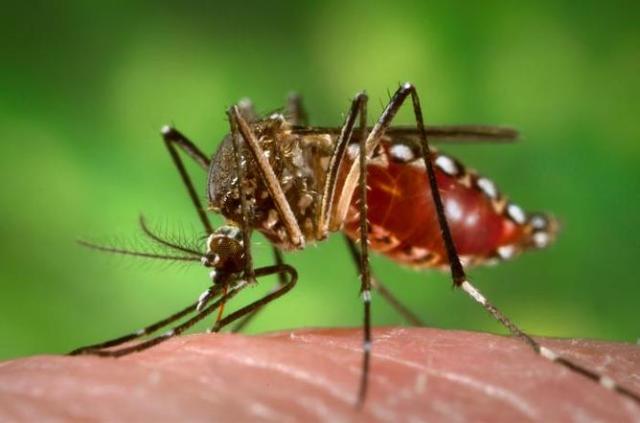
The authors of a new study in PLOS One claim to have found the answer. They studied the differences in attraction of skin odours to mosquitoes, specifically Aedes aegypti, in a group of brave volunteers drawn from a group of female identical and non-identical twins – part of the large national TwinsUK cohort that I set up 21 years ago. The reason for using both kinds of twin was to separate the effects of nature and nurture (or genes and environment). In humans this is the only way to get a good estimate of the contribution of genetics to the differences between people.

Our valiant twins put their hands into a specially constructed plexiglass sealed dome where the odours either attract or repel 20 female mosquitoes without being allowed to bite. Each subject was given an attractiveness score compared to the other hand at the other end of the dome. Sure enough the identical twins, who share all their genes, had consistently more similar scores compared to fraternal twins – showing a clear genetic component. This comparison estimated that 67% of the differences between people (called heritability) was down to their genes.

Repel With Smell

Why might this be? Many years ago in another twin study we showed that underarm body odour as perceived by human sniffers had a genetic basis – with huge variability in how strong smells were perceived. This showed that we have gene variations controlling both the odours we perceive and the chemical odours we produce. In this way we are similar to mosquitoes because they also have big differences in which odours and chemicals attract and repel them.

Different mosquitoes prefer different parts of our bodies to others. The species Aedes Gambiae prefers the odours of our hands and feet to other bits like groins and armpits. Some animals use their body odour to keep insects away and companies have been trying to unravel what the best chemicals are.

The twin study authors realised that the chemicals could come from glands in our skin or from the billions of microbes on the surface. They discounted the bacteria as a cause as the dogma is that bacteria can’t be influenced genetically. It turns out they were wrong.

Your Own Personal Microbes

We all have very different and unique microbial species in our mouths, guts and on our skin. We share only a small fraction of our microbial species with each other – but still have a unique microbial signature fingerprint. Until recently it was thought this variety was random or due to where we lived. But recent studies, again using UK twins, have shown the importance of genes in influencing which type of gut bacteria flourish inside us – and the same is likely to be true for our skin.

Our 100 trillion microbes outnumber our own human cells ten to one and it turns out we don’t pick them – they pick us – based on our genetic makeup. This means that, just like mosquitoes, certain microbes prefer to coexist with us and other find us rather unpleasant and settle elsewhere.

Our microbes produce many of our vitamins and chemicals in our blood, and far from being the bad guys, their diversity contributes to our health. They are also probably responsible for most of our smells and odours. Even regular hand washing can’t remove these bacteria.

The special smell many of us have between our toes comes from a bacteria called Brevibacteria linens. This is identical to the bacterial species that gives Limburger cheese its distinctive smell.

To demonstrate that bacterial species are the same wherever they grow a team of microbiologists at UCLA performed an unusual experiment. They have started making and eating cheese from human skin – and reportedly this gourmet belly-button food tastes just fine.

So, the next time you get bitten by a mosquito on the ankle – don’t blame bad luck or your cheap repellent – think of the amazing evolutionary match-making processes that hooked up your special mix of genes to a particular community of microbes that feed off your skin and produce a chemical that only certain species of mosquito find irresistible.

http://theconversation.com/chemical-attraction-why-mosquitos-zone-in-on-some-people-but-not-others-40705

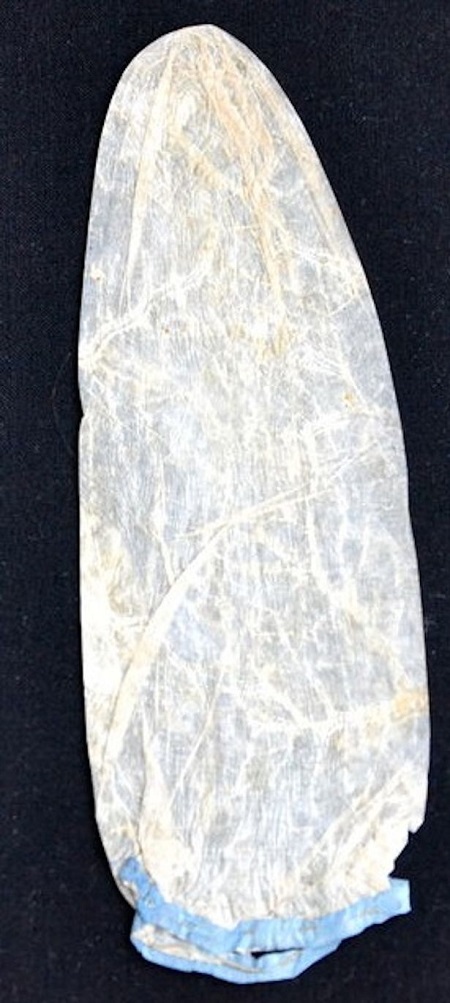
200 year old condom sells at auction

A condom which has been around since about 200 years ago was unveiled and put up for auction. It has astonishingly sold for a staggering £460 – but what it’s made from has raised a few eyebrows.

The prophylactic, thought to be in use in the 18th or 19th Century, is made from sheep intestine.

Sold for £462 online, such an old condom is a real rarity with only a few left in existence, most of which can only be found in museums. Condoms from the Middle Ages were made from the intestines of sheep, pigs, calves and goats. Because it was very expensive and time consuming to make such a condom, they were often used only by wealthy people.

Since the advent of inexpensive rubber condoms in the 19th Century, condoms from sheep intestine were no longer used.

During the auction, which was held on online auction website, Catawiki, there was much interest in the condom with a bidding war eventually seeing it sold for more than double its estimated value, making it the most expensive in the world. The condom, which was found in France, is a remarkable 19cm long. Other condoms that have been preserved from this time generally measure 15cm in length. The average length of modern day condoms is approximately 18cm long.

Catawiki wrote: “An ancient condom made of sheep gut is truly remarkable. In addition, the artefact provides further insight into our history and the way we have evolved over time.

“Therefore, during the auction there was a lot of interest from various museums.”

The site added: “What this person is going to do with the condom is not yet known.”

Eventually, the highest bid was made by a bidder from Amsterdam.

http://trisidal.com/this-condom-is-200-years-old-and-is-made-from-animal-intestines-see-photo/

China Telescope to Displace 9,000 Villagers in Hunt for Extraterrestrials

By EDWARD WONG

The Chinese government is relocating thousands of villagers to complete construction by September of the world’s biggest radio telescope, whose intended purpose is to detect signs of extraterrestrial life.

The telescope would be 500 meters, or 1,640 feet, in diameter, by far the largest of its kind in the world. It is called FAST, for Five-hundred-meter Aperture Spherical Telescope, and costs an estimated 1.2 billion renminbi, or $184 million.

The mass relocation was announced on Tuesday in a report by Xinhua, the state news agency. The report said officials were relocating 2,029 families, a total of 9,110 people, living within a three-mile radius of the telescope in the area of Pingtang and Luodian Counties in the southwestern province of Guizhou.

Officials plan to give each person the equivalent of $1,800 for housing compensation, the report said. Guizhou is one of China’s poorest provinces.

Forced relocations for infrastructure projects are common across China, and the people being moved by officials often complain both of the eviction from their homes and inadequate compensation. The Three Gorges Dam displaced more than one million people along the Yangtze River, and the middle route of the gargantuan South-North Water Diversion Project has resulted in the relocation of 350,000 people to make way for a series of canals.

The Chinese government has announced ambitious plans for its space program, at a time when the American one is in retreat. China aims to put an astronaut on the moon and a space station in orbit. The FAST project is another important element in the larger plan.

The telescope is being built in a wide depression among karst hills. The depression is far from cities and ideal for picking up radio transmissions, the Xinhua report said. Scientists began looking for a site in 1994 and finally settled on the Dawodang depression.

If the truth is out there, then some Chinese scientists are confident that the giant telescope will find it. The current largest operational radio telescope is the 300-meter-diameter Arecibo Observatory in Puerto Rico, but FAST in Guizhou will far surpass that.

Li Di, a chief scientist with the National Astronomical Observatories under the Chinese Academy of Sciences, told China Daily last year that “with a larger signal receiving area and more flexibility, FAST will be able to scan two times more sky area than Arecibo, with three to five times higher sensitivity.”

Last November, scientists successfully tested the telescope’s “retina,” which weighs 33 tons and is suspended 460 to 525 feet above the reflector dish, which was half-finished at the time, China Daily reported.

The telescope has 4,500 panels that are mostly triangular and whose sides measure 36 feet, the report said. Those create a parabolic shape. The panels move and, by doing so, alter the shape of the antenna, which is supposed to pick up radio signals from distant corners of the universe. Those signals would then be reflected to a focal point.

Mr. Li told China Daily that engineers were aiming to install all the panels by this June and complete debugging by September.

“Ultimately, exploring the unknown is the nature of mankind,” he said, adding that it was “as visceral as feeding and clothing ourselves.”

“It drives us to a greater future,” he said.

People who exercise at middle age might have bigger brains later on

Poor physical fitness in middle age might be associated with a smaller brain size later on, according to a study published in an online issue of Neurology.

Brains shrink as people age, and the atrophy is related to cognitive decline and increased risk for dementia, a researcher said, and exercise reduces that deterioration and cognitive decline.

In this study, more than 1,500 people at an average age of 40 and without dementia or heart disease took a treadmill test. Twenty years later, they took another test, along with MRI brain scans. The study found those who didn’t perform as well on the treadmill test — a sign of poor fitness — had smaller brains 20 years later.

Among those who performed lower, people who hadn’t developed heart problems and weren’t using medication for blood pressure had the equivalent of one year of accelerated brain aging. Those who had developed heart problems or were using medication had the equivalent of two years of accelerated brain aging.

Their exercise capacity was measured using the length of time participants could exercise on the treadmill before their heart rate reached a certain level. Researchers measured heart rate and blood pressure responses to an early stage on the treadmill test, which provides a good picture for a person’s fitness level, according to the study author Nicole Spartano, a postdoctoral fellow at the Boston University School of Medicine.

Physical fitness is evolving as a significant factor related to cognitive health in older age. A study published in May 2015 found that higher levels of physical fitness in middle-aged adults were associated with larger brain volumes five years later.

This study shows that for people with heart disease, fitness might be particularly important for prevention of brain aging, Spartano said.

“We found that poor physical fitness in midlife was linked to more rapid brain aging two decades later,” she said. “This message may be especially important for people with heart disease or at risk for heart disease, in which we found an even stronger relationship between fitness and brain aging.”

The researchers also found that people with higher blood pressure and heart rate during exercise were more likely to have smaller brain sizes 20 years later. People with poor physical fitness usually have higher blood pressure and heart rate responses to low levels of exercise compared to people who exercise more, Spartano said

“From other studies, we know that exercise training programs that improve fitness may increase blood flow and oxygen to the brain over the short term,” Spartano said. “Over the course of a lifetime, improved blood flow may have an impact on brain aging and prevent cognitive decline in older age.”

The study suggests promotion of physical fitness during middle age is an important step toward ensuring healthy brain aging.

“The broad message,” Spartano said, “is that health and lifestyle choices that you make throughout your life may have consequences many years later.”

http://www.cnn.com/2016/02/15/health/poor-fitness-smaller-brain/index.html