First-Ever In-Home Toilets Spotted for Ants

ants

Other than dung beetles, most animals try their best to avoid poop. Humans typically build entire rooms designed to flush the stuff away. The ick factor evolved for good reason: fecal matter is a great place for microorganisms to live and grow, some of which can lead to serious infection and illness.
Like us, many insects that live in colonies have evolved ways of keeping their nests and hives sanitary. Honeybees perform so-called defecation flights, in which they leave the nest to do their business. Some ants, like leaf-cutters, use their feces as manure for gardens that grow fungal food, but only certain “sanitation workers” are permitted to handle it. Ants in general are well known for their cleanliness—disposing of the dead outside the nest and leaving food scraps and other waste in special refuse chambers.

Thus, University of Regensburg biologist Tomer J. Czaczkes was surprised when he noticed dark patches accumulating in the corners of the white plaster nests in which his black garden ants, Lasius niger, lived. Over seven years of observations, he became convinced the dark patches were made of feces.
To confirm his suspicion, Czaczkes added artificial coloring to the ants’ food for 21 colonies. Sure enough, the dark patches started showing up in brilliant shades of red and blue. Because the piles of ant poo never contained food scraps, corpses or other debris, Czaczkes and his colleagues conclude that referring to these spots as “toilets” is apt. The results were detailed in the February issue of PLOS ONE.

No one is sure why black garden ants keep their feces inside the nest, especially given that Formicidae are otherwise fastidious housekeepers. Perhaps it is used for defense, for territory demarcation or as a building material. Or it could serve as a source of salt or other nutrients. Another possibility, according to Czaczkes, is that the waste is stored precisely because it is stinky. “Ants tell friend from foe apart by their smell,” he explains. “Perhaps newly emerged ants go to the toilet and sort of ‘bathe’ in it, to pick up the colony smell quickly.” Each explanation is plausible, so more research will be necessary to determine the best one.

“The next obvious step is a lot of boring observation, where I hope to catch the ants using the toilets,” he says. To covertly watch them do their business, Czaczkes will have to make nests with see-through lids and work under red light, which the ants cannot see. Onward, entomology.

http://www.scientificamerican.com/article/first-ever-in-home-toilets-spotted-for-ants/
Ice age bison DNA shows evidence of new route of human migration through the Rocky Mountains

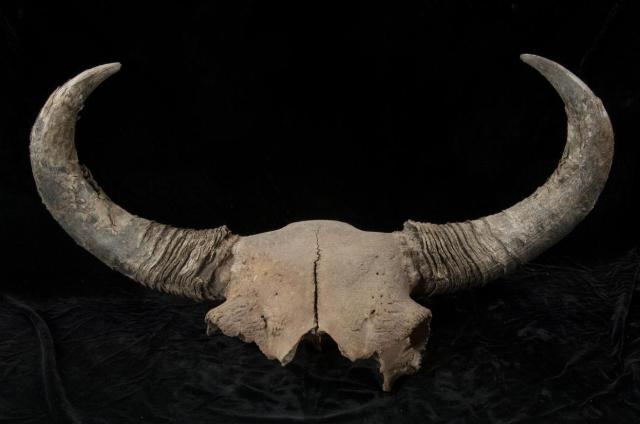
A 13,000-year-old bison fossil has shown the most likely migration route of some of the first native Americans.

DNA from the bison remains has narrowed down when an ice-free corridor opened up along the Rocky Mountains during the late Pleistocene.

That corridor was a vital route for migrations between what is now Alaska and Yukon in the far north and the rest of the North American continent.

Researchers had previously suspected this was the way migrating humans and animals must have travelled, but were unclear about how and when it was used.

But now, a new study published in Proceedings of the National Academy of Sciences, shows the route was fully open by about 13,000 years ago.

While this route was closed when the very first humans moved south of the ice sheets into North America around 15,000 years ago (they probably took a Pacific coastal route), it is thought it later became a well-travelled thoroughfare in both directions.

“The opening of the corridor provided new opportunities for migration and the exchange of ideas between people living north and south of the ice sheets,” said Peter Heintzman, of UC Santa Cruz, who led the DNA analysis.

His coauthor Beth Shapiro, also from UC Santa Cruz, has previously shown that bison populations north and south of the ice sheets were genetically distinct by the time the corridor opened.

So, armed with that knowledge, the researchers have been able track the movement of northern bison southward, and southern bison northward.

“The radiocarbon dates told us how old the fossils were, but the key thing was the genetic analysis, because that told us when bison from the northern and southern populations were able to meet within the corridor,” Heintzman said.

https://cosmosmagazine.com/life-sciences/ice-age-bison-dna-sheds-light-human-migration

Elon Musk says we’re all cyborgs almost certainly living within a computer simulation

Elon Musk has said that there is only a “one in billions” chance that we’re not living in a computer simulation.

Our lives are almost certainly being conducted within an artificial world powered by AI and highly-powered computers, like in The Matrix, the Tesla and SpaceX CEO suggested at a tech conference in California.

Mr Musk, who has donated huge amounts of money to research into the dangers of artificial intelligence, said that he hopes his prediction is true because otherwise it means the world will end.

“The strongest argument for us probably being in a simulation I think is the following,” he told the Code Conference. “40 years ago we had Pong – two rectangles and a dot. That’s where we were.

“Now 40 years later we have photorealistic, 3D simulations with millions of people playing simultaneously and it’s getting better every year. And soon we’ll have virtual reality, we’ll have augmented reality.

“If you assume any rate of improvement at all, then the games will become indistinguishable from reality, just indistinguishable.”

He said that even if the speed of those advancements dropped by 1000, we would still be moving forward at an intense speed relative to the age of life.

Since that would lead to games that would be indistinguishable from reality that could be played anywhere, “it would seem to follow that the odds that we’re in ‘base reality’ is one in billions”, Mr Musk said.

Asked whether he was saying that the answer to the question of whether we are in a simulated computer game was “yes”, he said the answer is “probably”.

He said that arguably we should hope that it’s true that we live in a simulation. “Otherwise, if civilisation stops advancing, then that may be due to some calamitous event that stops civilisation.”

He said that either we will make simulations that we can’t tell apart from the real world, “or civilisation will cease to exist”.

Mr Musk said that he has had “so many simulation discussions it’s crazy”, and that it got to the point where “every conversation [he had] was the AI/simulation conversation”.

The question of whether what we see is real or simulated has perplexed humans since at least the Ancient philosophers. But it has been given a new and different edge in recent years with the development of powerful computers and artificial intelligence, which some have argued shows how easily such a simulation could be created.

http://www.independent.co.uk/life-style/gadgets-and-tech/news/elon-musk-ai-artificial-intelligence-computer-simulation-gaming-virtual-reality-a7060941.html

This Bizarre Gunshot-Plugging Device Just Saved Its First Life


The XSTAT Rapid Hemostasis System

by George Dvorsky

An innovative sponge-filled dressing device recently saved the life of a coalition forces soldier who was shot in the leg. It’s the first documented clinical use of the product, known as XSTAT.

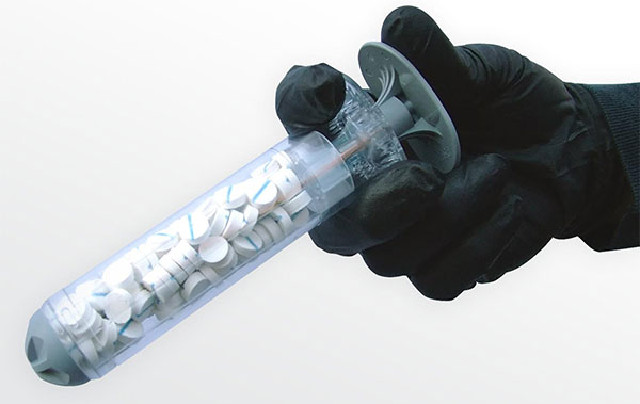
The device was approved for military use back in 2014, but this incident marks the first time the system has been used in a real-world situation. The hemostatic device, developed by RevMedx Inc., was used by a United States forward surgical team (FST) after it failed to stanch severe bleeding in a patient using standard techniques. The XSTAT Rapid Hemostasis System works by pumping expandable, tablet-sized sponges into a wound, stanching bleeding while a patient is rushed to hospital.

XSTAT is designed to treat severe bleeding in areas susceptible to junctional wounds, such as the axilla (the space below the shoulder where vessels and nerves enter and leave the upper arm) and groin. Once injected, the sponge-like tablets rapidly expand within the wound and exert hemostatic pressure to stop the bleeding. Each sponge contains an x-ray marker to confirm surgical removal after surgery.

In this first reported case, a soldier suffered a gunshot wound to the left thigh. After seven hours of unsuccessful surgery to stop the bleeding, the doctors decided to use XSTAT. Here’s a detailed description from the Journal of Emergency Medical Services:


The femoral artery and vein were transected and damage to the femur and soft tissue left a sizable cavity in the leg. After a self-applied tourniquet stopped the bleeding, the patient was transferred to an FST for evaluation and treatment. After proximal and distal control of the vessel was achieved, several hours were spent by the team trying to control residual bleeding from the bone and accessory vessels. Throughout the course of the roughly 7-hour surgery, multiple attempts at using bone wax and cautery on the bleeding sites were unsuccessfull and the patient received multiple units of blood and plasma. Eventually, the FST team opted to use XSTAT and applied a single XSTAT device to the femoral cavity— resulting in nearly immediate hemostasis. The patient was stabilized and eventually transported to a definitive care facility.

So in its first true test, the XSTAT system worked beautifully. Andrew Barofsky, the president and CEO of RevMedx, was clearly delighted in this initial result. “We are pleased to see XSTAT play a critical role in saving a patient’s life and hope to see significant advancement toward further adoption of XSTAT as a standard of care for severe hemorrhage in pre-hospital settings,” Barofsky said.

And it look likes Barofsky’s hope will soon come true. Late last year, the U.S. Food and Drug Administration approved XSTAT for use in the general population. Given this good first result, emergency responders should now have an added boost of confidence that this unorthodox device actually works.

http://gizmodo.com/this-bizarre-gunshot-plugging-device-just-saved-its-fir-1779606992?utm_source=feedburner&utm_medium=feed&utm_campaign=Feed%3A+gizmodo%2Ffull+%28Gizmodo%29

Fish can recognize human faces, study shows

by Jamie K. White

Can your pet fish recognize your face? A new study says, Yes, it probably can.

Researchers studying archerfish found the fish can tell a familiar human face from dozens of new faces with surprising accuracy.

This is a big, big deal. It’s the first time fish have demonstrated this ability.

Think about it: All faces have two eyes sitting above a nose and a mouth. And for us to be able to tell them apart, we need to be able to pick up the subtle differences in features.

We’re good at this because we are smart, i.e. we have large and complex brains. Other primates can do this too. Some birds as well.

But a fish? A fish has a tiny brain. And it would have no reason in its evolution to learn how to recognize humans.

So this study, published Tuesday in the journal “Scientific Reports,” throws on its head all our conventional thinking. It was done by scientists at University of Oxford in the U.K. and the University of Queensland in Australia.

And, for us, it raises many, many questions:

Does this mean my pet goldfish knows me? Do fish recognize each other? CAN DORY REALLY FIND NEMO?

To find out more, we talked to Dr. Cait Newport, a research fellow in Oxford University’s zoology department and co-author of the study.

What were the scientists trying to figure out?

The scientists wanted to know how well animals with simple brains do with facial recognition. A fish was a good choice. Their brains lack the section that we use for facial recognition. That made them perfect as subjects for an experiment to see if simple brains can perform complex tasks.

What’s an archerfish?

It’s a species of tropical fish. They spit jets of water from their mouth to knock down insects from branches. They’re the sharpshooters of the animal kingdom.

Why did scientists use archerfish?

Archerfish can indicate a choice clearly (the spitting) whereas other fish cannot. “There is no ambiguity in where they are shooting,” Newport said.

How did the experiment work?

Scientists presented the fish with two images of human faces and trained them to choose one by spitting their jets at that picture.

Wait, hold up. How do you ‘train’ an archerfish?

The old, time-tested way. Bribe them. When they spit at the image the scientists wanted them to spit at, they were rewarded with a pellet of food, Newport said.

How long did that take?

In some cases, only a few days. In others, up to two weeks. “Something like 60 to 90 trials,” Newport said.

How many people did it take?

A total of four (really smart) people: Newport and her co-authors Guy Wallis, Yarema Reshitnyk and Ulrike E Siebeck.

What did they do?

They presented the fish with the picture of the face they wanted the fish to learn and a bunch of new faces. Up to 44 new ones. The fish were able to pick the familiar face correctly 81% of the time.

Impressive. And then?

The researchers decided to make things a little harder. They took the pictures and made them black and white and evened out the head shapes. You’d think that would throw the fish for a loop. But no, they were able to pick the familiar face even then — and with more accuracy: 86%!

What will they test next?

They plan to test for other recognitions beyond just faces, Newport said.

Do fish only recognize human faces?

Humans use lots of devices to recognize people, including social cues. “Fish are not doing this,” Newport said. “For them, they are just looking for patterns.” That would answer the question whether Dory could find Nemo.

Finally, for the big one: Does my pet fish know me?

Possibly.

“There’s something like 30,000 species of fish. A blind fish is not going to be able to do this, sharks are fish and they can see color — so maybe,” Newport said.

Then she shared this observation.

When strangers walk into her lab, the fish “act skittish,” she said.

“When I walk in, they start spitting at me — many cases right in the eye.”

How’s that for accuracy?

http://www.cnn.com/2016/06/07/health/fish-human-face-recognition-study-trnd/

Fountain of youth? Dietary supplement may prevent and reverse severe damage to aging brain, research suggests


Jennifer Lemon, Research Associate, Department of Biology, McMaster University. A dietary supplement containing a blend of thirty vitamins and minerals–all natural ingredients widely available in health food stores–has shown remarkable anti-aging properties that can prevent and even reverse massive brain cell loss, according to new research. It’s a mixture scientists believe could someday slow the progress of catastrophic neurological diseases such as Alzheimer’s, ALS and Parkinson’s.

A dietary supplement containing a blend of thirty vitamins and minerals — all natural ingredients widely available in health food stores — has shown remarkable anti-aging properties that can prevent and even reverse massive brain cell loss, according to new research from McMaster University.

It’s a mixture scientists believe could someday slow the progress of catastrophic neurological diseases such as Alzheimer’s, ALS and Parkinson’s.

“The findings are dramatic,” says Jennifer Lemon, research associate in the Department of Biology and a lead author of the study. “Our hope is that this supplement could offset some very serious illnesses and ultimately improve quality of life.”

The formula, which contains common ingredients such as vitamins B, C and D, folic acid, green tea extract, cod liver oil and other nutraceuticals, was first designed by scientists in McMaster’s Department of Biology in 2000.

A series of studies published over the last decade and a half have shown its benefits in mice, in both normal mice and those specifically bred for such research because they age rapidly, experiencing dramatic declines in cognitive and motor function in a matter of months.

The mice used in this study had widespread loss of more than half of their brain cells, severely impacting multiple regions of the brain by one year of age, the human equivalent of severe Alzheimer’s disease.

The mice were fed the supplement on small pieces of bagel each day over the course of several months. Over time, researchers found that it completely eliminated the severe brain cell loss and abolished cognitive decline.

“The research suggests that there is tremendous potential with this supplement to help people who are suffering from some catastrophic neurological diseases,” says Lemon, who conducted the work with co-author Vadim Aksenov, a post-doctoral fellow in the Department of Biology at McMaster.

“We know this because mice experience the same basic cell mechanisms that contribute to neurodegeneration that humans do. All species, in fact. There is a commonality among us all.”

In addition to looking at the major markers of aging, they also discovered that the mice on the supplements experienced enhancement in vision and most remarkably in the sense of smell — the loss of which is often associated with neurological disease — improved balance and motor activity.

The next step in the research is to test the supplement on humans, likely within the next two years, and target those who are dealing with neurodegenerative diseases. The research is published online in the journal Environmental and Molecular Mutagenesis.

Journal Reference:
1.J.A. Lemon, V. Aksenov, R. Samigullina, S. Aksenov, W.H. Rodgers, C.D. Rollo, D.R. Boreham. A multi-ingredient dietary supplement abolishes large-scale brain cell loss, improves sensory function, and prevents neuronal atrophy in aging mice. Environmental and Molecular Mutagenesis, 2016; DOI: 10.1002/em.22019

https://www.sciencedaily.com/releases/2016/06/160602095204.htm

Fish trapped inside a jellyfish

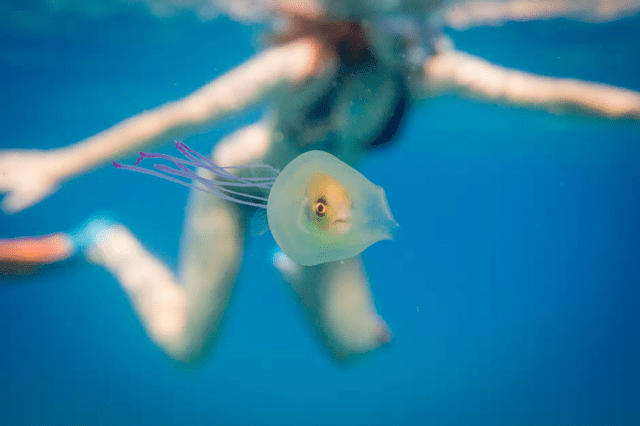
This unlucky fish was swallowed by a roaming jellyfish in waters off Byron Bay, Australia. The shot was captured by ocean photographer Tim Samuel, who says the fish was still alive and fighting to escape. ‘It was able to propel the jellyfish forward and controlled its movement to an extent. The jellyfish threw it off balance, though, and they would wobble around, and sometimes get stuck doing circles.’ Tim said “It was a tough decision, I definitely thought about setting it free, but in the end decided to just let nature run its course.”

Sharks Have Distinct Personalities, New Study Finds

Sharks of the same species can have different personalities, indicates a new study published in the Journal of Fish Biology.

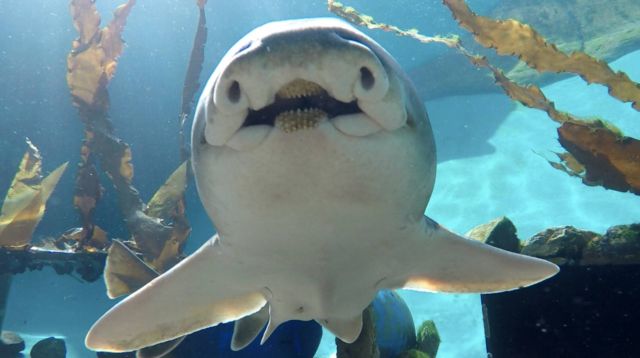
The study, led by Dr. Evan Byrnes of Macquarie University in North Ryde, Australia, examined interindividual personality differences between Port Jackson sharks (Heterodontus portusjacksoni).

Trials were designed to test the sharks’ boldness, which is a measure of their propensity to take risks, but also an influencer of individual health through its correlation with stress hormones and associated physiological profiles.

Port Jackson sharks were first introduced to a tank where they were provided with shelter, and timed to see how long it took for each shark to emerge from their refuge box into a new environment.

The second behavior test exposed each shark to handling stress, similar to handling by a fisherman, before releasing them again and observing how quickly they recovered.

The results demonstrated that each shark’s behavior was consistent over repeated trials, indicating ingrained behaviors rather than chance reactions.

That is, some sharks were consistently bolder than others, and the sharks that were the most reactive to handling stress in the first trial were also the most reactive in a second trial.

“This work shows that we cannot think of all sharks as the same,” Dr. Byrnes said.

“Each has its own preferences and behaviors, and it is likely that these differences influence how individuals interact with their habitat and other species.”

“We are excited about these results because they demonstrate that sharks are not just mindless machines. Just like humans, each shark is an individual with its unique preferences and behaviors,” said co-author Dr. Culum Brown, also from Macquarie University.

“Our results raise a number of questions about individual variation in the behavior of top predators and the ecological and management implications this may have. If each shark is an individual and doing its own thing, then clearly managing shark populations is much more complicated than we previously thought.”

“Understanding how personality influences variation in shark behavior – such as prey choice, habitat use and activity levels – is critical to better managing these top predators that play important ecological roles in marine ecosystems.”

_____

E.E. Byrnes & C. Brown. Individual personality differences in Port Jackson sharks Heterodontus portusjacksoni. Journal of Fish Biology, published online May 26, 2016; doi: 10.1111/jfb.12993

Gravediggers compete in race

Digging their way to the top, 18 two-man teams of Hungarian gravediggers displayed their skills Friday for a place in a regional championship to be held in Slovakia later this year.

Participants in the contest held in plot 37A of the public cemetery of the eastern Hungarian city of Debrecen were being judged on their speed but also getting points for style — the look of the finished grave mounds.

Janos Jonas, 63, who teamed with his son, Csaba, saw the competition run by the Hungarian Association of Cemetery Maintainers and Operators as a sort of last hurrah as he was just a few weeks from retirement.

“We didn’t have to prepare in any special way because we do this every day,” said Jonas, from the nearby village of Hosszupalyi. “This is good earth, quite soft and humid, just right for the event.”

Organizer Iren Kari said they hoped the race would help increase respect and recognition for the gravediggers’ profession and attract more people to the job, which is under threat, for example by the increasing popularity of cremations.

“These men see death every day. Sometimes people joke about them while they work, but gravediggers are human, too,” said Kari, who is advocating for gravediggers to get access to psychological support to better handle the strains of the job. “We are having difficulties finding replacements for our retiring employees. Young people today don’t like to dig and work.”

All contestants had shovels, rakes, axes and pickaxes to dig graves 0.8 meters (2 feet 7 inches) wide, 2 meters (6 feet 6 inches) long and 1.6 meters (5 feet 3 inches) deep, but no two teams seemed to use the same technique.

Some preferred to dig simultaneously, while others had one man digging while the other formed the dirt into neat piles around the gravesite. For safety reasons, like the collapse of a grave wall, only one member of each team was allowed to work in the grave after reaching a depth of 1 meter (3 feet 3 inches).

After every team finished digging — the fastest time was just over 34 minutes — there was a short rest and then the dirt was shoveled back into the graves, each topped with a burial mound about the size of a large casket.

“We take special pride in the burial mounds, on which we place the flowers and wreaths at the end of the funeral,” Jonas said, relating how while drinking on the job was strictly forbidden, relatives often gave gravediggers a bottle of palinka, a traditional Hungarian fruit brandy, as a gratuity.

Some teams wore white shirts, ties and elegant vests, while others were in t-shirts or overalls. One pair wore plastic coveralls, but everyone was sweating by the end of the race on a warm spring day.

“The hardest part of the job is to deal with the mourners,” said Debrecen gravedigger Laszlo Toth. “But it’s a good job, with good colleagues and a good environment.”

Toth, who won the event with teammate Janos Racz, will compete in a regional race planned to be held in November in Trencin, Slovakia.

http://bigstory.ap.org/1cc6ab423af94e74a246f93774ba3522

Bumblebees Use Vibrating Hairs to Detect Floral Electric Fields

Bumblebees use information from surrounding electric fields to make foraging decisions.

However, how they detect these fields has been a mystery – until now.

Mechanosensory hairs may explain how bumblebees sense electric signals transmitted by flowers, says a team of scientists at the University of Bristol, UK.

Focusing on the buff-tailed bumblebee (Bombus terrestris), Bristol scientists tested two potential mechanisms that would allow the insects to detect electric fields through the insulating medium of dry air: deflections of either the antenna or hairs.

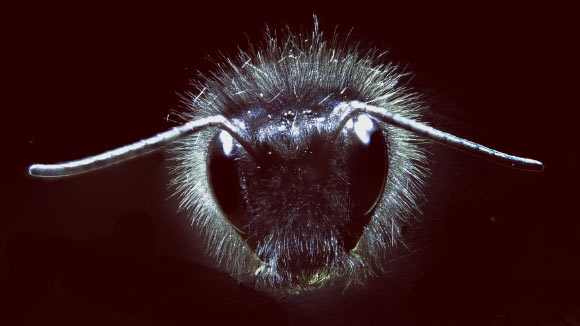
Using a laser to measure vibrations, they found that both the antenna and mechanosensory hairs deflect in response to an electric field, but the hairs move more rapidly and with overall greater displacements.

They then looked at the bumblebees’ nervous system, finding that only the hairs alerted their nervous system to this signal.

“This ability may arise from the low mass and high stiffness of bumblebee hairs, the rigid, lever-like motion of which resembles acoustically sensitive spider hairs and mosquito antennae,” the researchers said.

Noting that mechanosensory hairs are common in arthropods, they suggest that electroreception could be a widespread phenomenon that provides insects with a variety of currently unrecognized abilities.

“We were excited to discover that bumblebees’ tiny hairs dance in response to electric fields, like when humans hold a balloon to their hair,” said lead author Dr. Gregory Sutton from the University of Bristol’s School of Biological Sciences.

“A lot of insects have similar body hairs, which leads to the possibility that many members the insect world may be equally sensitive to small electric fields.”

“Scientists are particularly interested in understanding how floral signals are perceived, received and acted upon by bees as they are critical pollinators of our crops,” he added.

“Research into these relationships has revealed the co-evolution of flowers and their pollinators, and has led to the unraveling of this important network which keeps our planet green.”

The team’s findings have been accepted for publication in the Proceedings of the National Academy of Sciences.

http://www.sci-news.com/biology/bumblebees-hairs-detect-floral-electric-fields-03909.html?utm_source=feedburner&utm_medium=feed&utm_campaign=Feed%3A+BreakingScienceNews+%28Breaking+Science+News%29