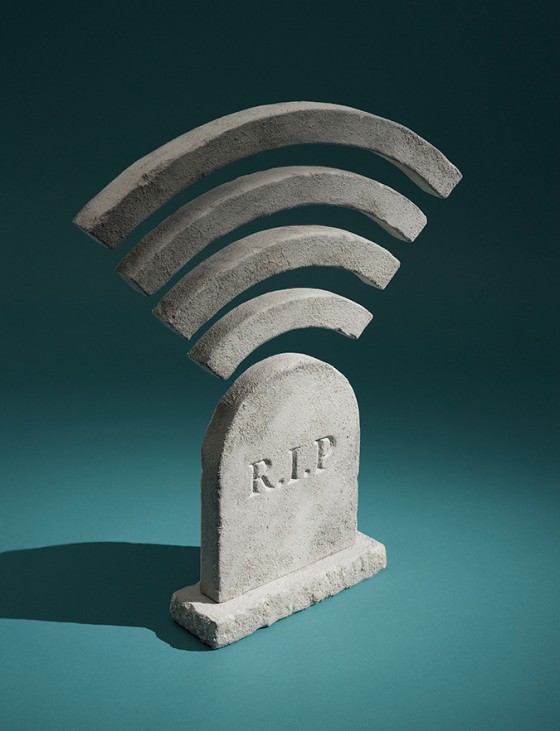
Why you should believe in the digital afterlife

by Michael Graziano

Imagine scanning your Grandma’s brain in sufficient detail to build a mental duplicate. When she passes away, the duplicate is turned on and lives in a simulated video-game universe, a digital Elysium complete with Bingo, TV soaps, and knitting needles to keep the simulacrum happy. You could talk to her by phone just like always. She could join Christmas dinner by Skype. E-Granny would think of herself as the same person that she always was, with the same memories and personality—the same consciousness—transferred to a well regulated nursing home and able to offer her wisdom to her offspring forever after.

And why stop with Granny? You could have the same afterlife for yourself in any simulated environment you like. But even if that kind of technology is possible, and even if that digital entity thought of itself as existing in continuity with your previous self, would you really be the same person?

Is it even technically possible to duplicate yourself in a computer program? The short answer is: probably, but not for a while.

Let’s examine the question carefully by considering how information is processed in the brain, and how it might be translated to a computer.

The first person to grasp the information-processing fundamentals of the brain was the great Spanish neuroscientist, Ramon Y Cajal, who won the 1906 Nobel Prize in Physiology. Before Cajal, the brain was thought to be made of microscopic strands connected in a continuous net or ‘reticulum.’ According to that theory, the brain was different from every other biological thing because it wasn’t made of separate cells. Cajal used new methods of staining brain samples to discover that the brain did have separate cells, which he called neurons. The neurons had long thin strands mixing together like spaghetti—dendrites and axons that presumably carried signals. But when he traced the strands carefully, he realized that one neuron did not grade into another. Instead, neurons contacted each other through microscopic gaps—synapses.

Cajal guessed that the synapses must regulate the flow of signals from neuron to neuron. He developed the first vision of the brain as a device that processes information, channeling signals and transforming inputs into outputs. That realization, the so-called neuron doctrine, is the foundational insight of neuroscience. The last hundred years have been dedicated more or less to working out the implications of the neuron doctrine.

It’s now possible to simulate networks of neurons on a microchip and the simulations have extraordinary computing capabilities. The principle of a neural network is that it gains complexity by combining many simple elements. One neuron takes in signals from many other neurons. Each incoming signal passes over a synapse that either excites the receiving neuron or inhibits it. The neuron’s job is to sum up the many thousands of yes and no votes that it receives every instant and compute a simple decision. If the yes votes prevail, it triggers its own signal to send on to yet other neurons. If the no votes prevail, it remains silent. That elemental computation, as trivial as it sounds, can result in organized intelligence when compounded over enough neurons connected in enough complexity.

The trick is to get the right pattern of synaptic connections between neurons. Artificial neural networks are programmed to adjust their synapses through experience. You give the network a computing task and let it try over and over. Every time it gets closer to a good performance, you give it a reward signal or an error signal that updates its synapses. Based on a few simple learning rules, each synapse changes gradually in strength. Over time, the network shapes up until it can do the task. That deep leaning, as it’s sometimes called, can result in machines that develop spooky, human-like abilities such as face recognition and voice recognition. This technology is already all around us in Siri and in Google.

But can the technology be scaled up to preserve someone’s consciousness on a computer? The human brain has about a hundred billion neurons. The connectional complexity is staggering. By some estimates, the human brain compares to the entire content of the internet. It’s only a matter of time, however, and not very much at that, before computer scientists can simulate a hundred billion neurons. Many startups and organizations, such as the Human Brain project in Europe, are working full-tilt toward that goal. The advent of quantum computing will speed up the process considerably. But even when we reach that threshold where we are able to create a network of a hundred billion artificial neurons, how do we copy your special pattern of connectivity?

No existing scanner can measure the pattern of connectivity among your neurons, or connectome, as it’s called. MRI machines scan at about a millimeter resolution, whereas synapses are only a few microns across. We could kill you and cut up your brain into microscopically thin sections. Then we could try to trace the spaghetti tangle of dendrites, axons, and their synapses. But even that less-than-enticing technology is not yet scalable. Scientists like Sebastian Seung have plotted the connectome in a small piece of a mouse brain, but we are decades away, at least, from technology that could capture the connectome of the human brain.

Assuming we are one day able to scan your brain and extract your complete connectome, we’ll hit the next hurdle. In an artificial neural network, all the neurons are identical. They vary only in the strength of their synaptic interconnections. That regularity is a convenient engineering approach to building a machine. In the real brain, however, every neuron is different. To give a simple example, some neurons have thick, insulated cables that send information at a fast rate. You find these neurons in parts of the brain where timing is critical. Other neurons sprout thinner cables and transmit signals at a slower rate. Some neurons don’t even fire off signals—they work by a subtler, sub-threshold change in electrical activity. All of these neurons have different temporal dynamics.

The brain also uses hundreds of different kinds of synapses. As I noted above, a synapse is a microscopic gap between neurons. When neuron A is active, the electrical signal triggers a spray of chemicals—neurotransmitters—which cross the synapse and are picked up by chemical receptors on neuron B. Different synapses use different neurotransmitters, which have wildly different effects on the receiving neuron, and are re-absorbed after use at different rates. These subtleties matter. The smallest change to the system can have profound consequences. For example, Prozac works on people’s moods because it subtly adjusts the way particular neurotransmitters are reabsorbed after being released into synapses.

Although Cajal didn’t realize it, some neurons actually do connect directly, membrane to membrane, without a synaptic space between. These connections, called gap junctions, work more quickly than the regular kind and seem to be important in synchronizing the activity across many neurons.

Other neurons act like a gland. Instead of sending a precise signal to specific target neurons, they release a chemical soup that spreads and affects a larger area of the brain over a longer time.

I could go on with the biological complexity. These are just a few examples.

A student of artificial intelligence might argue that these complexities don’t matter. You can build an intelligent machine with simpler, more standard elements, ignoring the riot of biological complexity. And that is probably true. But there is a difference between building artificial intelligence and recreating a specific person’s mind.

If you want a copy of your brain, you will need to copy its quirks and complexities, which define the specific way you think. A tiny maladjustment in any of these details can result in epilepsy, hallucinations, delusions, depression, anxiety, or just plain unconsciousness. The connectome by itself is not enough. If your scan could determine only which neurons are connected to which others, and you re-created that pattern in a computer, there’s no telling what Frankensteinian, ruined, crippled mind you would create.

To copy a person’s mind, you wouldn’t need to scan anywhere near the level of individual atoms. But you would need a scanning device that can capture what kind of neuron, what kind of synapse, how large or active of a synapse, what kind of neurotransmitter, how rapidly the neurotransmitter is being synthesized and how rapidly it can be reabsorbed. Is that impossible? No. But it starts to sound like the tech is centuries in the future rather than just around the corner.

Even if we get there quicker, there is still another hurdle. Let’s suppose we have the technology to make a simulation of your brain. Is it truly conscious, or is it merely a computer crunching numbers in imitation of your behavior?

A half-dozen major scientific theories of consciousness have been proposed. In all of them, if you could simulate a brain on a computer, the simulation would be as conscious as you are. In the Attention Schema Theory, consciousness depends on the brain computing a specific kind of self-descriptive model. Since this explanation of consciousness depends on computation and information, it would translate directly to any hardware including an artificial one.

In another approach, the Global Workspace Theory, consciousness ignites when information is combined and shared globally around the brain. Again, the process is entirely programmable. Build that kind of global processing network, and it will be conscious.

In yet another theory, the Integrated Information Theory, consciousness is a side product of information. Any computing device that has a sufficient density of information, even an artificial device, is conscious.

Many other scientific theories of consciousness have been proposed, beyond the three mentioned here. They are all different from each other and nobody yet knows which one is correct. But in every theory grounded in neuroscience, a computer-simulated brain would be conscious. In some mystical theories and theories that depend on a loose analogy to quantum mechanics, consciousness would be more difficult to create artificially. But as a neuroscientist, I am confident that if we ever could scan a person’s brain in detail and simulate that architecture on a computer, then the simulation would have a conscious experience. It would have the memories, personality, feelings, and intelligence of the original.

And yet, that doesn’t mean we’re out of the woods. Humans are not brains in vats. Our cognitive and emotional experience depends on a brain-body system embedded in a larger environment. This relationship between brain function and the surrounding world is sometimes called “embodied cognition.” The next task therefore is to simulate a realistic body and a realistic world in which to embed the simulated brain. In modern video games, the bodies are not exactly realistic. They don’t have all the right muscles, the flexibility of skin, or the fluidity of movement. Even though some of them come close, you wouldn’t want to live forever in a World of Warcraft skin. But the truth is, a body and world are the easiest components to simulate. We already have the technology. It’s just a matter of allocating enough processing power.

In my lab, a few years ago, we simulated a human arm. We included the bone structure, all the fifty or so muscles, the slow twitch and fast twitch fibers, the tendons, the viscosity, the forces and inertia. We even included the touch receptors, the stretch receptors, and the pain receptors. We had a working human arm in digital format on a computer. It took a lot of computing power, and on our tiny machines it couldn’t run in real time. But with a little more computational firepower and a lot bigger research team we could have simulated a complete human body in a realistic world.

Let’s presume that at some future time we have all the technological pieces in place. When you’re close to death we scan your details and fire up your simulation. Something wakes up with the same memories and personality as you. It finds itself in a familiar world. The rendering is not perfect, but it’s pretty good. Odors probably don’t work quite the same. The fine-grained details are missing. You live in a simulated New York City with crowds of fellow dead people but no rats or dirt. Or maybe you live in a rural setting where the grass feels like Astroturf. Or you live on the beach in the sun, and every year an upgrade makes the ocean spray seem a little less fake. There’s no disease. No aging. No injury. No death unless the operating system crashes. You can interact with the world of the living the same way you do now, on a smart phone or by email. You stay in touch with living friends and family, follow the latest elections, watch the summer blockbusters. Maybe you still have a job in the real world as a lecturer or a board director or a comedy writer. It’s like you’ve gone to another universe but still have contact with the old one.

But is it you? Did you cheat death, or merely replace yourself with a creepy copy?

I can’t pretend to have a definitive answer to this philosophical question. Maybe it’s a matter of opinion rather than anything testable or verifiable. To many people, uploading is simply not an afterlife. No matter how accurate the simulation, it wouldn’t be you. It would be a spooky fake.

My own perspective borrows from a basic concept in topology. Imagine a branching Y. You’re born at the bottom of the Y and your lifeline progresses up the stalk. The branch point is the moment your brain is scanned and the simulation has begun. Now there are two of you, a digital one (let’s say the left branch) and a biological one (the right branch). They both inherit the memories, personality, and identity of the stalk. They both think they’re you. Psychologically, they’re equally real, equally valid. Once the simulation is fired up, the branches begin to diverge. The left branch accumulates new experiences in a digital world. The right branch follows a different set of experiences in the physical world.

Is it all one person, or two people, or a real person and a fake one? All of those and none of those. It’s a Y.

The stalk of the Y, the part from before the split, gains immortality. It lives on in the digital you, just like your past self lives on in your present self. The right hand branch, the post-split biological branch, is doomed to die. That’s the part that feels gypped by the technology.

So let’s assume that those of us who live in biological bodies get over this injustice, and in a century or three we invent a digital afterlife. What could possibly go wrong?

Well, for one, there are limited resources. Simulating a brain is computationally expensive. As I noted before, by some estimates the amount of information in the entire internet at the present time is approximately the same as in a single human brain. Now imagine the resources required to simulate the brains of millions or billions of dead people. It’s possible that some future technology will allow for unlimited RAM and we’ll all get free service. The same way we’re arguing about health care now, future activists will chant, “The afterlife is a right, not a privilege!” But it’s more likely that a digital afterlife will be a gated community and somebody will have to choose who gets in. Is it the rich and politically connected who live on? Is it Trump? Is it biased toward one ethnicity? Do you get in for being a Nobel laureate, or for being a suicide bomber in somebody’s hideous war? Just think how coercive religion can be when it peddles the promise of an invisible afterlife that can’t be confirmed. Now imagine how much more coercive a demagogue would be if he could dangle the reward of an actual, verifiable afterlife. The whole thing is an ethical nightmare.

And yet I remain optimistic. Our species advances every time we develop a new way to share information. The invention of writing jump-started our advanced civilizations. The computer revolution and the internet are all about sharing information. Think about the quantum leap that might occur if instead of preserving words and pictures, we could preserve people’s actual minds for future generations. We could accumulate skill and wisdom like never before. Imagine a future in which your biological life is more like a larval stage. You grow up, learn skills and good judgment along the way, and then are inducted into an indefinite digital existence where you contribute to stability and knowledge. When all the ethical confusion settles, the benefits may be immense. No wonder people like Ray Kurzweil refer to this kind of technological advance as a singularity. We can’t even imagine how our civilization will look on the other side of that change.

http://www.theatlantic.com/science/archive/2016/07/what-a-digital-afterlife-would-be-like/491105/

Thanks to Dan Brat for bringing this to the It’s Interesting community.

New treatment protocol shows promise of improving cognition in patients with Alzheimer’s disease

Ten patients with early Alzheimer’s disease or its precursors showed improvement in memory after treatment with Metabolic Enhancement for NeuroDegeneration (MEND), a programmatic and personalized therapy protocol.

Researchers described results from the small trial, which used quantitative MRI and neuropsychological testing of participants before and after treatment, in the study published online in Aging.

“ The magnitude of the improvement is unprecedented,” researchers wrote, “providing additional objective evidence that this programmatic approach to cognitive decline is highly effective.”

Before starting the program, the 10 participants had well-defined mild cognitive impairment, subjective cognitive impairment, or had been diagnosed with Alzheimer’s disease. Their subsequent treatment consisted of a complex, 36-point therapeutic personalized program that included comprehensive changes in diet, brain stimulation, exercise, optimization of sleep, specific pharmaceuticals and vitamins, and multiple additional steps that affect brain chemistry.

Researcher Dale Bredesen, MD, a professor at the Buck Institute for Research on Aging and at the Easton Laboratories for Neurodegenerative Disease Research at UCLA, Los Angeles, believes the protocol’s broader-based approach is key to its apparent success in reversing cognitive decline.

“Imagine having a roof with 36 holes in it, and your drug patched one hole very well — the drug may have worked, a single ‘hole’ may have been fixed, but you still have 35 other leaks, and so the underlying process may not be affected much,” Dr. Bredesen said. “We think addressing multiple targets within the molecular network may be additive, or even synergistic, and that such a combinatorial approach may enhance drug candidate performance as well.”

Tests showed some participants “going from abnormal to normal,” Dr. Bredesen said.

In Aging , researchers describe the impact of MEND on all 10 patients, including:
•A 66-year-old man whose neuropsychological testing was compatible with a diagnosis of mild cognitive impairment. After 10 months on the MEND protocol, his hippocampal volume increased from the 17 th percentile for his age to the 75 th percentile, with an associated absolute increase in volume of nearly 12%.
•A 69-year-old entrepreneur with 11 years of progressive memory loss. After 22 months on the protocol, he showed marked improvements in all categories of neuropsychological testing, with long-term recall increasing from the 3 rd to 84 th percentile.
•A 49-year-old woman in the early stages of cognitive decline who, after 9 months on the protocol, no longer showed evidence on quantitative neuropsychological testing of cognitive decline.

Plans for larger studies are under way.

“Even though we see the far-reaching implications of this success,” Dr. Bredesen said, “we also realize that this is a very small study that needs to be replicated in larger numbers at various sites.”

http://www.psychcongress.com/article/mend-protocol-reverses-memory-loss-alzheimer%E2%80%99s-disease-27858

Suspected Female-to-Male Sexual Transmission of Zika Virus — New York City, 2016

A routine investigation by the New York City (NYC) Department of Health and Mental Hygiene (DOHMH) identified a nonpregnant woman in her twenties who reported she had engaged in a single event of condomless vaginal intercourse with a male partner the day she returned to NYC (day 0) from travel to an area with ongoing Zika virus transmission. She had headache and abdominal cramping while in the airport awaiting return to NYC. The following day (day 1) she developed fever, fatigue, a maculopapular rash, myalgia, arthralgia, back pain, swelling of the extremities, and numbness and tingling in her hands and feet. In addition, on day 1, the woman began menses that she described as heavier than usual. On day 3 she visited her primary care provider who obtained blood and urine specimens. Zika virus RNA was detected in both serum and urine by real-time reverse transcription–polymerase chain reaction (rRT-PCR) performed at the DOHMH Public Health Laboratory using a test based on an assay developed at CDC (1). The results of serum testing for anti-Zika virus immunoglobulin M (IgM) antibody performed by the New York State Department of Health Wadsworth Center laboratory was negative using the CDC Zika IgM antibody capture enzyme-linked immunosorbent assay (Zika MAC-ELISA) (2).

Seven days after sexual intercourse (day 6), the woman’s male partner, also in his twenties, developed fever, a maculopapular rash, joint pain, and conjunctivitis. On day 9, three days after the onset of his symptoms, the man sought care from the same primary care provider who had diagnosed Zika virus infection in his female partner. The provider suspected sexual transmission of Zika virus and contacted DOHMH to seek testing for the male partner. That same day, day 9, urine and serum specimens were collected from the man. Zika virus RNA was detected in urine but not serum by rRT-PCR testing at the DOHMH Public Health Laboratory. Zika virus IgM antibodies were not detectable by the CDC Zika MAC-ELISA assay performed at the New York State Department of Health Wadsworth Center. The CDC Arbovirus Disease Branch confirmed all rRT-PCR results for urine and serum specimens from both partners.

During an interview with DOHMH on day 17, the man confirmed that he had not traveled outside the United States during the year before his illness. He also confirmed a single encounter of condomless vaginal intercourse with his female partner (the patient) after her return to NYC and reported that he did not engage in oral or anal intercourse with her. The man reported that he noticed no blood on his uncircumcised penis immediately after intercourse that could have been associated either with vaginal bleeding or with any open lesions on his genitals. He also reported that he did not have any other recent sexual partners or receive a mosquito bite within the week preceding his illness.

Independent follow-up interviews with the woman and man corroborated the exposure and illness history. The patients were consistent in describing illness onset, symptoms, sexual history, and the woman’s travel. This information also was consistent with the initial report from the primary care provider.

The timing and sequence of events support female-to-male Zika virus transmission through condomless vaginal intercourse. The woman likely was viremic at the time of sexual intercourse because her serum, collected 3 days later, had evidence of Zika virus RNA by rRT-PCR. Virus present in either vaginal fluids or menstrual blood might have been transmitted during exposure to her male partner’s urethral mucosa or undetected abrasions on his penis. Recent reports document detection of Zika virus in the female genital tract, including vaginal fluid. A study on nonhuman primates found Zika virus RNA detected in the vaginal fluid of three nonpregnant females up to 7 days after subcutaneous inoculation (3), and Zika virus RNA was detected in specimens from a woman’s cervical mucous, genital swab, and endocervical swab collected 3 days after illness onset, using an unspecified RT-PCR test (4). Further studies are needed to determine the characteristics of Zika virus shedding in the genital tract and vaginal fluid of humans.

This case represents the first reported occurrence of female-to-male sexual transmission of Zika virus. Current guidance to prevent sexual transmission of Zika virus is based on the assumption that transmission occurs from a male partner to a receptive partner (5,6). Ongoing surveillance is needed to determine the risk for transmission of Zika virus infection from a female to her sexual partners. Providers should report to their local or state health department any patients with illnesses compatible with Zika virus disease who do not have a history of travel to an area with ongoing Zika virus transmission, but who had a sexual exposure to a partner who did travel.

Persons who want to reduce the risk for sexual transmission of Zika virus should abstain from sex or correctly and consistently use condoms for vaginal, anal, and oral sex, as recommended in the current CDC guidance (5). Guidance on prevention of sexual transmission of Zika virus, including other methods of barrier protection, will be updated as additional information becomes available (http://www.cdc.gov/zika).

Corresponding author: Sally Slavinski, sslavins@health.nyc.gov, 347-396-2672.

References
1.Lanciotti RS, Kosoy OL, Laven JJ, et al. Genetic and serologic properties of Zika virus associated with an epidemic, Yap State, Micronesia, 2007. Emerg Infect Dis 2008;14:1232–9. CrossRef PubMed
2.CDC. Zika MAC-ELISA: instructions for use. Atlanta, GA: US Department of Health and Human Services, CDC; 2016. http://www.fda.gov/downloads/MedicalDevices/Safety/EmergencySituations/UCM488044.pdf
3.Dudley DM, Aliota MT, Mohr EL, et al. A rhesus macaque model of Asian-lineage Zika virus infection. Nat Commun 2016;7:12204. CrossRef PubMed
4.Prisant N, Bujan L, Benichou H, et al. Zika virus in the female genital tract [Letter]. Lancet Infect Dis 2016. E-pub July 11, 20162016. CrossRef
5.Oster AM, Russell K, Stryker JE, et al. Update: interim guidance for prevention of sexual transmission of Zika virus—United States, 2016. MMWR Morb Mortal Wkly Rep 2016;65:323–5. CrossRef PubMed
6.Hills SL, Russell K, Hennessey M, et al. Transmission of Zika virus through sexual contact with travelers to areas of ongoing transmission—continental United States, 2016. MMWR Morb Mortal Wkly Rep 2016;65:215–6. CrossRef PubMed

Davidson A, Slavinski S, Komoto K, Rakeman J, Weiss D. Suspected Female-to-Male Sexual Transmission of Zika Virus — New York City, 2016. MMWR Morb Mortal Wkly Rep. ePub: 15 July 2016. DOI: http://dx.doi.org/10.15585/mmwr.mm6528e2

German police catch suspect after he can’t resist going outside to play Pokemon Go

German police say they’ve arrested an 18-year-old man who was wanted for evading a prison sentence after he ventured out to play the newly launched “Pokemon Go” smartphone game with friends.

Police in Trier, on Germany’s western border, said the group’s “peculiar behavior” as they played the game in the city on Friday prompted officers to check their papers.

The 18-year-old initially gave a false identity but police quickly established that there was an arrest warrant out for him. He was detained and is now serving a six-month prison sentence he had previously avoided serving — police wouldn’t specify for what.

http://bigstory.ap.org/15e655e1560d4f3d9d1a450d9cc61687

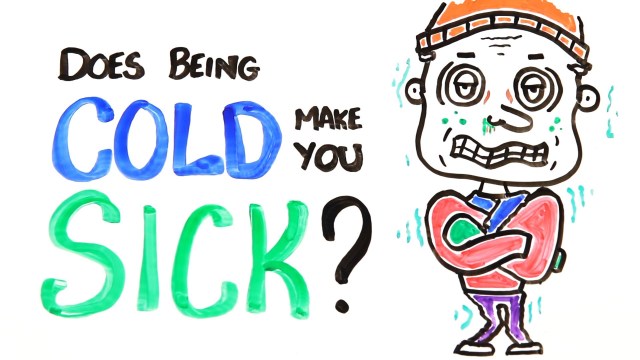
Why being cold might actually foster a cold

Scientists may be proving Mom right: Your odds of avoiding a cold get better if you bundle up and stay warm.

Warmer body temperatures appear to help prevent the cold virus from spreading, in multiple ways, researchers at Yale University found.

For the study, a team led by immunology professor Akiko Iwasaki examined human airways cells. These cells produce essential immune system proteins called interferons that respond to a cold virus.

The cells were infected with the virus in a lab and incubated at either a core body temperature of 98.6 degrees Fahrenheit or a cooler temperature of 91.4 degrees Fahrenheit.

Using mathematical models, the researchers found that when infected cells were exposed to healthy core body temperatures, the virus died off more quickly and wasn’t able to replicate as well.

Warmer body temperatures also seemed to help on another front. Iwasaki’s group reported that the activity of an enzyme called RNAseL — which attacks and destroys viral genes — was also enhanced at higher temperatures.

This new work adds to prior research by the Yale team. In that study, conducted in mice, Iwasaki’s group found that at several degrees below core body temperature, virus-fighting interferons were less able to do their job.

The cooler temperatures also enabled the cold virus to spread in the animals’ airway cells, the researchers said.

The combined research suggests that “there are three [immunological] ways to target this virus now,” Iwasaki said in a Yale news release.

Each of the pathways influence the immune system’s ability to fight the virus that causes the common cold. Iwasaki and her team believe the findings could provide new strategies for scientists working to develop treatments against the pesky illness.

The study was published July 11 in the Proceedings of the National Academy of Sciences.

https://consumer.healthday.com/respiratory-and-allergy-information-2/common-cold-news-142/science-shows-why-being-cold-might-foster-a-cold-712715.html

Thanks to Michael Moore for bringing this to the attention of the It’s Interesting community.
New fish species discovered in Alaska

Federal biologist Jay Orr never knows what’s going to come up in nets lowered to the ocean floor off Alaska’s remote Aleutian Islands, which separate the Bering Sea from the rest of the Pacific Ocean. Sometimes it’s stuff he has to name.

The National Oceanic and Atmospheric Administration biologist is part of a group that uses trawl nets to survey commercially important fish species such as cod in waters off Alaska. Sometimes those nets come up with things no one has seen before.

With co-authors, Orr has discovered 14 kinds of new snailfish, a creature that can be found in tide pools but also in the deepest parts of the ocean. A dozen more new snailfish are waiting to be named. Additional species are likely to be found as scientists expand their time investigating areas such as the Bering Sea Slope, in water 800 to 5,200 feet deep, or the 25,663-foot deep Aleutian Trench.

“I suspect we are just scraping the top of the distributions of some of these deep-water groups,” Orr said from his office in Seattle.

Orr and his colleagues measure the abundance of rockfish, flatfish and other “bottom fish” for the Alaska Fisheries Science Center, the research arm of the NOAA’s National Marine Fisheries Service. The center studies marine resources off Alaska and parts of the West Coast.

Five boats with six researchers each surveyed Alaska waters in late June. The teams trawl on the Bering Shelf every summer and in either Aleutian waters or the Gulf of Alaska every other year.

Their findings on fish abundance are fed into models for managing fish populations.

The scientists put down a 131-foot trawl net that captures whatever is along the ocean bottom. A ton of fish is a standard sample. Along with fish, they get clues to the seafloor habitat. Sponges, for example, indicate a hard seafloor, or substrate.

Fifteen years ago, research biologist Michael Martin suggested a small modification: a net just 2 to 3 feet wide at the front of the trawl net.

“We realized we didn’t have a really good picture of the substrate that we were trawling over, and we figured we were missing some things in the big meshes that the larger net had,” Orr said. “So one of the other guys here decided to put this little net on, mainly as a means to see what the substrate looked like.”

On one of the first hauls, the small net returned with a variety of small, soft-bodied fish, including snailfish, that likely would have fallen out or gotten mashed in the main net. Orr took a look and knew they had found something different.

As someone who studies fish, “I sort of knew what I was looking for and what was known out there,” he said. “The first ones that came up, I saw them right away and said, ‘We don’t know what these are. These haven’t been named.'”

Snailfish have no scales, feel gelatinous and look like fat tadpoles. Aristotle described a Mediteranean variety found in ancient Greece as “sea slugs.”

Many fish have pelvic fins on their bellies, just behind the gills. Most snailfish species, instead of pelvic fins, have a sucking disc that they use to cling to rocks.

Orr identified some new varieties that did not have a sucking disc. Another had a hardened bone in its head. Another had a projecting lower jaw. Others varied by shape, color or body parts, such as vertebrae.

“Nearly all of them have genetic characters that distinguish them, too,” Orr said.

He has wide latitude for giving new species both common and Latin names. A red, white and black snailfish with a big, bulbous nose struck him as funny-looking. He gave it the common name of “comic snailfish” and the Latin name Careproctus comus, after Comus, the god of comedy in Greek mythology.

Snailfish made headlines in 2014 when researchers recorded them swimming nearly 27,000 feet, or more than 4 miles, below the surface in the Marianas Trench, making them the deepest-dwelling vertebrate on the planet. The Marianas Trench is about 200 miles southwest of the Pacific island of Guam and is known as the deepest part of the world’s oceans.

A critical part of the work is on the species his agency actively manages. Orr helped distinguish the northern rock sole, which spawns and grows differently than other rock sole. Fishing at the wrong time could disrupt a population important to the seafood market.

“Ultimately we’re managing an ecosystem,” Orr said. “It’s really important to know what each of the elements are.”

http://bigstory.ap.org/6f677b05f94b4031b82b1c41aaab835b

Ghostly image captured in fatal accident photo

By Doug Criss

Many people think a Kentucky man captured a supernatural moment when he took a picture of a fatal motorcycle crash earlier this week.

Saul Vazquez said his father snapped the accident scene as he passed by it Tuesday afternoon from the cab of his truck.

The photo appears to show the faint outline of a figure hovering over the accident scene. The man involved in the motorcycle crash later died at the hospital.

He posted the pic on Facebook a few minutes later, and many commenters said the photo captures the dead man’s spirit leaving his body.

Vazquez told CNN affiliate WLEX the photo wasn’t altered.

http://www.cnn.com/2016/07/14/us/spirit-leaving-body-photo-trnd/index.html?campaign_id=A100&campaign_type=Email

CDC Reports 24% Increase in US Suicide Rates

by Tori Rodriguez, MA, LPC

Although there was a consistent reduction in US suicide rates from 1986 through 1999, the trend appears to have reversed during the most recent investigation period. A new report from the Centers for Disease Control and Prevention (1) reveals that suicide rates increased by 24% from 1999 to 2014, with the greatest increase observed in the latter half of that period.

The increase occurred among males and females in all age groups from 10-74. While rates for males still exceed those for females, the gap began to narrow during the most recent period. Among females, the rate increase was almost triple that of males: 45% vs 16%.

While the highest suicide rate was observed among men aged 75 and older, there was a reduction of 8% in this group from the previous report. There was a 43% increase among males in the 45-64 age group, making it the group with the greatest rate increase and the second-highest suicide rate among males. The second highest increase (37%) occurred among males aged 10–14, although this group had the lowest rate among all of the age groups.

As with males, the suicide rate also decreased among females in the 75 and over group, by 11%. The steepest increase (200%) occurred among females aged 10-14, though the actual number of suicides in this age group was relatively small (150 in 2014). The females with the highest suicide rates comprised the 45-64 age group, which had the second greatest increase (63%) since the previous period. For females in the age groups of 15-24, 25-44, and 65-74, rate increases ranged from 31% to 53%.

The most common cause of suicide in females was poisoning, which accounted for 34.1% of cases, while the use of firearms accounted for more than half of male suicides (55.4%). Cases involving some form of suffocation–including hanging and strangulation–increased among both males and females.

Though the report does not provide possible explanations for these trends, other recent findings offer clues about a host of variables that could be influencing rates in the middle age brackets in particular, with especially strong support for economic issues as a potential influence. A study published in 2015 in the American Journal of Preventive Medicine, for example, found that economic and legal problems disproportionately affected adults aged 40-64 who had committed suicide (2). Research reported in 2014 showed a robust link between suicide rates and unemployment rates in adults in middle-aged adults but not other age groups, and according to a 2011 CDC study, suicide rates increased during periods of economic recession and declined during economic growth among people aged 25-64 years (3,4).

A co-author of the 2014 and 2015 studies, Julie A. Phillips, PhD, of the Institute for Health, Health Care Policy and Aging Research at Rutgers University, has received a grant from the American Foundation of Suicide to investigate the numerous variables that could be influencing the trend in middle-aged adults.

Additionally, a randomized controlled trial published in 2016 in PLoS Medicine found promising results with a brief, low-cost treatment designed to address the main risk factor for suicide: previous attempts (5).

An approach called the Attempted Suicide Short Intervention Program (ASSIP) was shown to reduce subsequent attempts by 80% among patients admitted to the emergency department after a suicide attempt.

If you or someone you know is experiencing suicidal thoughts, contact the National Suicide Prevention Line at 1-800-273-TALK (8255) and visit online at http://www.suicidepreventionlifeline.org.

References

1. Curtin SC, Warner M, Hedegaard H. Increase in suicide in the United States, 1999–2014. NCHS data brief, no 241. 2016; Hyattsville, MD: National Center for Health Statistics.

2. Hempstead KA, Phillips JA. Rising suicide among adults aged 40-64 years: the role of job and financial circumstances. Am J Prev Med. 2015; 48(5):491-500.

3. Phillips JA, Nugent CN. Suicide and the Great Recession of 2007-2009: the role of economic factors in the 50 U.S. states. Social Science & Medicine. 2014; 116:22-31.

4. Luo F, Florence CS, Quispe-Agnoli M, et al. Impact of business cycles on US suicide rates, 1928-2007. Am J Public Health. 2011; 101(6):1139-46.

5. Gysin-Maillart A, Schwab S, Soravia L, Megert M, Michel K. A novel brief therapy for patients who attempt suicide: A 24-months follow-up randomized controlled study of the Attempted Suicide Short Intervention Program (ASSIP). PLoS Medicine. 2016; 13(3): e1001968.

http://www.psychiatryadvisor.com/suicide-and-self-harm/increase-in-suicide-rates-in-united-states-cdc/article/492762/?DCMP=EMC-PA_Update_RD&cpn=psych_md,psych_all&hmSubId=&hmEmail=5JIkN8Id_eWz7RlW__D9F5p_RUD7HzdI0&NID=1710903786&dl=0&spMailingID=14943637&spUserID=MTQ4MTYyNjcyNzk2S0&spJobID=820858811&spReportId=ODIwODU4ODExS0

New Dwarf planet discovered out past Neptune

A new dwarf planet has been discovered in the icy realms of space beyond Neptune, researchers said Monday.

An international team of astronomers spotted the tiny world using the Canada-France-Hawaii Telescope as part of the ongoing Outer Solar System Origins Survey.

“The icy worlds beyond Neptune trace how the giant planets formed and then moved out from the Sun. They let us piece together the history of our Solar System,” Michele Bannister of the University of Victoria in British Columbia said in a statement.

“But almost all of these icy worlds are painfully small and faint: it’s really exciting to find one that’s large and bright enough that we can study it in detail.”

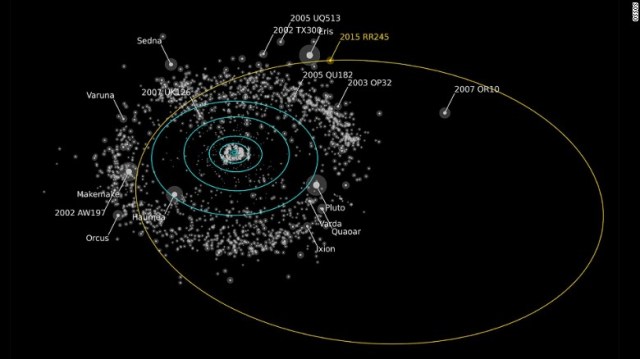
Planet RR245 is around 435 miles wide, just over 5% the width of the Earth, and has one of the largest orbits of any dwarf planet, taking an estimated 700 years to travel around the sun.

There are believed to be as many as 200 dwarf planets in the Kuiper Belt, the huge mass of comets, frozen rocks and other objects orbiting the sun beyond Neptune.

However, only five objects — Ceres, Pluto, Haumea, Makemake, and Eris — had previously been observed well enough to be sure they fit the classification for dwarf planet (and weren’t, say, mere planetoids, or moons of other trans-Neptunian objects).

“Worlds of this size are fascinating because they can potentially tell us about what makes an object go from being an unchanging lumpy mashed-together structure of ice and rock to having geological processes that separate and rearrange its material, as happens on Pluto,” says Bannister.

“The size of RR245 is not yet exactly known, as its surface properties need further measurement. It’s either small and shiny, or large and dull.”

http://www.cnn.com/2016/07/12/health/dwarf-planet-rr245-neptune-pluto/index.html?campaign_id=A100&campaign_type=Email

Holocaust Museum to visitors: Please stop catching Pokemon here

By Andrea Peterson

Almost everywhere you turn, it seems like people have their eyes glued to smartphone screens playing Pokemon Go. Since its launch last week, the app has quickly become a cultural phenomenon that has fans of all ages hunting around their neighborhoods for collectible digital creatures that appear on players’ screens almost like magic as they explore real-world locations.

But there’s at least one place that would really like to keep Pokemon out: the Holocaust Museum.

The Museum itself, along with many other landmarks, is a “PokeStop” within the game — a place where players can get free in-game items. In fact, there are actually three different PokeStops associated with various parts of the museum.

“Playing the game is not appropriate in the museum, which is a memorial to the victims of Nazism,” Andrew Hollinger, the museum’s communications director, told The Post in an interview. “We are trying to find out if we can get the museum excluded from the game.”

The Holocaust Museum’s plight highlights how apps that layer a digital world on top of the real one, or so-called augmented reality games, can come with unforeseen consequences and raises questions about how much control the physical owner of a space can exert as those two worlds intersect.

One image circulating online appears to show a player encountering an unsettling digital critter inside the museum: a poison gas-type Pokemon called Koffing floating by a sign for the museum’s Helena Rubinstein Auditorium. Clearly, it’s an awkward if not offensive thing to find in a place dedicated to making sure the world never forgets those killed in the gas chambers at Nazi death camps.

The image, which appears to have originated from a now deleted post on the photo-sharing site imgur, might be a hoax: That particular Pokemon didn’t appear nearby when this Post reporter visited the museum Monday afternoon, although the specific Pokemon that appears in each location does vary from time to time. Hollinger said that the museum is aware of and concerned about the potential Koffing appearance.

If a player really did encounter a Koffing inside the museum, it seems unlikely that Niantic Labs— the developers behind the game — would have made it show up there on purpose. But even the specter of that particular Pokemon spawning there raises questions about what sort of controls the game has in place to stop its fantasy world from causing distress in the real world, even if that distress is unintentional.

Niantic did not immediately respond to inquiries about the alleged Koffing sighting or if there was any way to honor the Holocaust Museum’s request to stop Pokemon from popping up inside its building.

Hollinger stressed that the museum is generally pro-technology and encourages visitors to use social media to share how their experiences with the exhibits moved them. “But this game falls very much outside that,” he said. Hollinger added that it seemed disrespectful, especially in more solemn parts of the complex like the Hall of Remembrance.

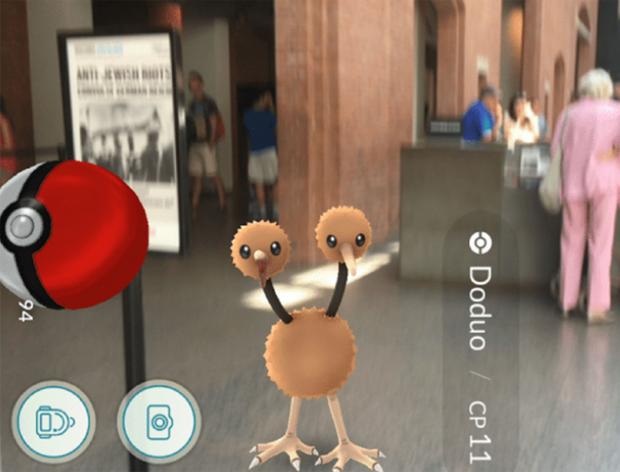
On Monday afternoon, there were plenty of people inside the museum who seemed to be distracted from its haunting exhibits as they tried to “catch ’em all.” A player even used a lure module, a beacon that attracts Pokemon to a specific PokeStop, on the museum’s marker — making double-headed bird-like creatures dubbed Doduos and rodent-like Rattatas practically swarm on users’ screens.

The player behind the lure, a 30-year-old visiting from North Carolina named Dustin who declined to share his last name with The Post for privacy reasons, was excited to catch a crustacean-like Krabby while waiting in the museum’s lobby with a group of friends to pick up tickets for a scheduled tour of the exhibits.

Although the museum is uncomfortable with its Pokemon infestation, most of the players building up their digital critter collection inside the building at least didn’t seem to mean any disrespect.

“It’s not like we came here to play,” said Angie, a 37-year-old member of Dustin’s huddle who also declined to share her last name for privacy reasons, “But gotta catch ’em all.”

https://www.washingtonpost.com/news/the-switch/wp/2016/07/12/holocaust-museum-to-visitors-please-stop-catching-pokemon-here/?campaign_id=A100&campaign_type=Email