How your face betrays your personality, health and intelligence

By David Robson

You might expect a great philosopher to look past our surface into the depths of the soul – but Ancient Greek thinkers were surprisingly concerned with appearance. Aristotle and his followers even compiled a volume of the ways that your looks could reflect your spirit.

“Soft hair indicates cowardice and coarse hair courage,” they wrote. Impudence, the treatise says, was evident in “bright, wise-open eyes with heavy blood-shot lids”; a broad nose, meanwhile, was a sign of laziness, like in cattle.

Sensuous, fleshy lips fared little better. The philosophers saw it as a sign of folly, “like an ass”, while those with especially thin mouths were thought to be proud, like lions.
Today, we are taught not to judge a book by its cover. But while it is wise not to set too much by appearances, psychologists are finding that your face offers a window on our deepest secrets. Even if you keep a stony poker face, your features can reveal details about your personality, your health, and your intelligence.

“The idea is that our biology, like genes and hormone levels, influences our growth, and the same mechanisms will also shape our character,” explains Carmen Lefevre at Northumbria University.

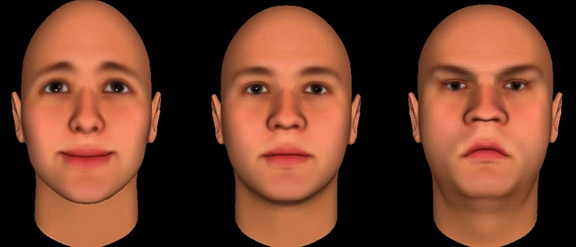
Consider the face’s bone structure – whether it is relatively short and wide or long and thin. Lefevre has found that people with higher levels of testosterone tend to be wider-faced with bigger cheekbones, and they are also more likely to have more assertive, and sometimes aggressive, personalities.

The link between face shape and dominance is surprisingly widespread, from capuchin monkeys – the wider the face, the more likely they are to hold a higher rank in the group’s hierarchy – to professional football players. Examining the 2010 World Cup, Keith Welker at the University of Boulder, Colorado, recently showed that the ratio of the width and height of the footballers’ faces predicted both the number of fouls among midfielders, and the number of goals scored by the forwards.

(To calculate this yourself, compare the distance from ear-to-ear with the distance between the top of your eyes, and your upper lip. The average ratio of width-to-height is around 2 – Abraham Lincoln was 1.93)
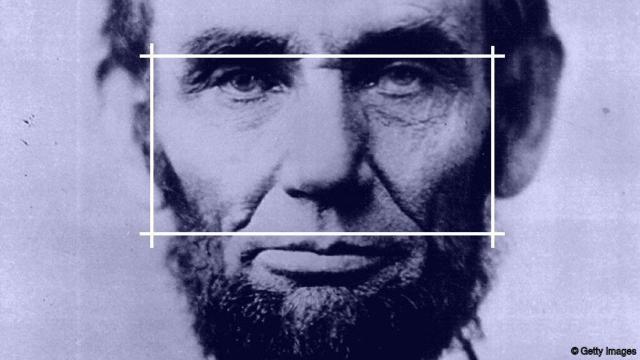
It may even clue you in to a politician’s motives. Using volunteers to rate former US presidents on different psychological attributes, Lefevre found that face shape seemed to reflect their perceived ambition and drive. John F Kennedy had a thicker-set face than 19th Century Chester Arthur, for instance. Such analyses of historical figures are perhaps best taken with a pinch of salt, however, and it has to be said that other traits, such as cooperation and intelligence, should be equally important for success.

As you might expect, your health and medical history are also written in your countenance – and the detail it offers is surprising. The amount of fat on your face, for instance, provides a stronger indication of your fitness than more standard measures, such as your body mass index. Those with thinner faces are less likely to suffer infections, and when they do, the illness is less severe; they also tend to have lower rates of depression and anxiety, probably because mental health is often closely related to the body’s fitness in general.

How could the plumpness of your cheeks say so much about you? Benedict Jones at the University of Glasgow thinks a new understanding of fat’s role in the body may help explain it. “How healthy you are isn’t so much about how much fat you have, but where you have that fat,” he says. Pear-shaped people, with more weight around the hips and bottom but slimmer torsos, tend to be healthier than “apples” with a spare tyre around the midriff, since the adipose tissue around the chest is thought to release inflammatory molecules that can damage the core organs. Perhaps the fullness of your face reflects the fatty deposits in the more harmful areas, Jones says. Or it could be that facial fat is itself dangerous for some reason.

Besides these more overt cues, very subtle differences in skin colour can also reveal your health secrets. Jones and Lefevre emphasise this has nothing to do with the tones associated with ethnicity, but barely-noticeable tints that may reflect differences in lifestyle. You appear to be in more robust health, for instance, if your skin has a slightly yellowish, golden tone. The pigments in question are called carotenoids, which, as the name suggest, can be found in orange and red fruit and veg. Carotenoids help build a healthy immune system, says Lefevre. “But when we’ve eaten enough, they layer in the skin and dye it yellow. We exhibit them, because we haven’t used them to battle illness.” The glow of health, in turn, contributes significantly to your physical attraction – more so, in fact, than the more overt tones that might accompany a trip to the tanning salon.

A blush of pink, meanwhile, should signal the good circulation that comes with an active lifestyle – and it might also be a sign of a woman’s fertility. Jones has found that women tend to adopt a slightly redder flush at the peak of the menstrual cycle, perhaps because estradiol, a sex hormone, leads the blood vessels in the cheek to dilate slightly. It may be one of many tiny shifts in appearance and behaviour that together make a woman slightly more attractive when she is most likely to conceive.

As Jones points out, these secrets were hiding in plain sight – yet we were slow to uncover them. At the very least, this knowledge helps restore the reputation of “physiognomy”, which has suffered a somewhat chequered reputation since Aristotle’s musings. Tudor king Henry VIII was so sceptical of the idea that he even banned quack “professors” from profiting from their readings, and its status took a second bashing in the early 20th Century, when it was associated with phrenology – the mistaken idea that lumps and bumps on your head can predict your behaviour.

But now the discipline is gaining credibility, we may find that there are many more surprises hiding in your selfies. Intriguingly, we seem to be able to predict intelligence from someone’s face with modest accuracy – though it’s not yet clear what specific cues make someone look smart. (Needless to say, it is not as simple as whether or not they wear glasses.) Others are examining the “gaydar”. We often can guess someone’s sexual orientation within a split-second, even when there are no stereotypical clues, but it’s still a mystery as to what we’re actually reading. Further research might explain exactly how we make these snap judgements.

It will also be interesting to see how the link between personality, lifestyle and appearance changes across the lifetime. One study managed to examine records of personality and appearance, following subjects from the 1930s to the 1990s. The scientists found that although baby-faced men tended to be less dominant in their youth, they grew to be more assertive as the years wore on – perhaps because they learnt to compensate for the expectations brought about by their puppyish appearance.

More intriguingly, the authors also found evidence of a “Dorian Gray effect” – where the ageing face began to reflect certain aspects of the personality that hadn’t been obvious when the people were younger. Women who had more attractive, sociable, personalities from adolescence to their 30s slowly started to climb in physical attractiveness, so that in their 50s they were considered better-looking than those who had been less personable but naturally prettier. One possibility is that they simply knew how to make the best of their appearance, and that their inner confidence was reflected on subtle differences in expression.

After all, there is so much more to our appearance than the bone structure and skin tone, as one particularly clever study recently demonstrated. The scientists asked volunteers to wear their favourite clothes, and then took a photo of their face. Even though the clothes themselves were not visible in the mugshots, impartial judges considered them to be considerably more attractive than other pictures of the participants. The finding is particularly striking, considering that they were asked to keep neutral expressions: somehow, the boosted self-esteem shone through anyway.

Our faces aren’t just the product of our biology. We can’t change our genes or our hormones – but by cultivating our personality and sense of self-worth, they may begin to mirror something far more important.

http://www.bbc.com/future/story/20150312-what-the-face-betrays-about-you

New study shows that brief hyperthermia treats depression

Whole-body hyperthermia is a promising antidepressant modality that works quickly and offers prolonged benefit, according to a study recently published in the online JAMA Psychiatry.

Researchers came to that conclusion after conducting a double-blind study that randomized 30 adults with major depressive disorder to either a single session of active whole-body hyperthermia or a sham treatment that mimicked all aspects of whole-body hyperthermia except its intense heat.

The sham condition was included to strengthen the study design.

“A prior open trial found that a single session of whole-body hyperthermia reduced depressive symptoms,” researchers wrote. “However, the lack of a placebo control raises the possibility that the observed antidepressant effects resulted not from hyperthermia per se, but from nonspecific aspects of the intervention.”

Among participants randomized to sham treatment in the new study, more than 70% believed they had received whole-body hyperthermia, researchers reported, suggesting the placebo was convincing.

When researchers looked at participants’ scores on the Hamilton Depression Rating Scale throughout the 6-week period following the session, they found participants who received active whole-body hyperthermia had significantly reduced scores compared to participants who received sham treatment. Adverse events were mild.

Psych Congress Steering Committee member Charles L. Raison, MD, discussed the findings prior to their publication during a session at last year’s U.S. Psychiatric and Mental Health Congress in San Diego.

“Like ketamine, like scopolamine, and other rapid treatments for depression that are of intense interest in psychiatry, hyperthermia shows the same effect,” he said. “It doesn’t take a week or 2 to work. People feel better very, very quickly, and the effects appear to persist for an extended period of time.”

– Jolynn Tumolo

References

Janssen CW, Lowry CA, Mehl MR, et al. Whole-body hyperthermia for the treatment of major depressive disorder: a randomized clinical trial. JAMA Psychiatry. 2016 May 12. [Epub ahead of print].

Lebano L. New data support whole body hyperthermia for rapid treatment of major depression. Psych Congress Network. 2015 Sept. 10.

http://www.psychcongress.com/article/hyperthermia-provides-significant-rapid-relief-depression-study-suggests-27981

Maine EBT phone number sends callers to sex line

Calling the phone number on the back of his electronic benefit transfer card to check his balance before taking his son to the grocery store this week, a Lewiston dad heard a perky, come-hither voice answer and figured he’d dialed the wrong number.

Only he hadn’t.

In a misprint on some cards, the number to report a lost or stolen card to the Maine Department of Health and Human Services is actually the number of a phone sex line for women.

It’s one digit off from the DHHS Customer Service number.

When called, the incorrect line immediately picks up and a recorded voice says: “Welcome to America’s hottest talk line. Ladies, to talk with interesting and exciting guys free, press 1 now. Press 1 now.” Then hangs up.

“It played over my (car) speaker. I was like, ‘Wow, I must have messed that number up somehow really bad,'” said Lj Langelier, 25. “I look at the card. I dial it the exact same way again and it keeps happening. I thought it was just hilarious.”

He ended up posting a video of the card and of himself making another call on Facebook.

DHHS spokesman John Martins said Friday afternoon that the department was aware the number “is off by one digit and therefore incorrect.”

“The defect has been corrected on all new EBT cards being issued,” he said. “We have a plan in place to replace all existing defective cards and have taken additional steps to strengthen our review process so this type of inadvertent error does not occur again.”

Martins said the department had been aware of the mistake “for some time.” It wasn’t clear how many cards contain the misprint.

“I do know that cards that have been produced for the last several months have been accurate,” he said.

Martins also added: “While we recognize that we are responsible for this inadvertent error, what we have learned is that it appears the company that operates this chat line searches for phone numbers that are very similar to widely published government phone numbers and buys them to take advantage of either consumers who misdial or an inadvertent error in publishing the number.”

Langelier said that after he discovered the wrong number on his card, he asked neighbors, “‘Let’s compare cards. Maybe it’s just mine.’ Theirs were the same.”

He believes he’s had the blue Pine Tree EBT card for six to 12 months. The back of the card has three spots for phone numbers that should be identical: one for retailer assistance, one for “if lost, call” in small print and one for customer service in large print.

Callers to the misprinted number who “press 1” are told they have to be 18 or over and directed to call a different number for the actual chats.

Langelier was initially hesitant to make the error public due to the stigma of people receiving welfare — pointing out that he works 40 hours a week despite a medical condition, his fianceé is in college and they have two children — but he ultimately decided it was too funny to ignore.

“I just wanted people to have a good laugh,” he said.

http://www.sunjournal.com/news/lewiston-auburn-maine/2016/07/15/maine-ebt-phone-number-sends-callers-sex-line/1959958

How the eyes betray your thoughts

By Mo Costandi

It’s sometimes said that the eyes are windows into the soul, revealing deep emotions that we might otherwise want to hide. The eyes not only reflect what is happening in the brain but may also influence how we remember things and make decisions.

Our eyes are constantly moving, and while some of those movements are under conscious control, many of them occur subconsciously. When we read, for instance, we make a series of very quick eye movements called saccades that fixate rapidly on one word after another. When we enter a room, we make larger sweeping saccades as we gaze around. Then there are the small, involuntary eye movements we make as we walk, to compensate for the movement of our head and stabilise our view of the world. And, of course, our eyes dart around during the ‘rapid eye movement’ (REM) phase of sleep.

What is now becoming clear is that some of our eye movements may actually reveal our thought process.

Research published last year shows that pupil dilation is linked to the degree of uncertainty during decision-making: if somebody is less sure about their decision, they feel heightened arousal, which causes the pupils to dilate. This change in the eye may also reveal what a decision-maker is about to say: one group of researchers, for example, found that watching for dilation made it possible to predict when a cautious person used to saying ‘no’ was about to make the tricky decision to say ‘yes’.

Watching the eyes can even help predict what number a person has in mind. Tobias Loetscher and his colleagues at the University of Zurich recruited 12 volunteers and tracked their eye movements while they reeled off a list of 40 numbers.

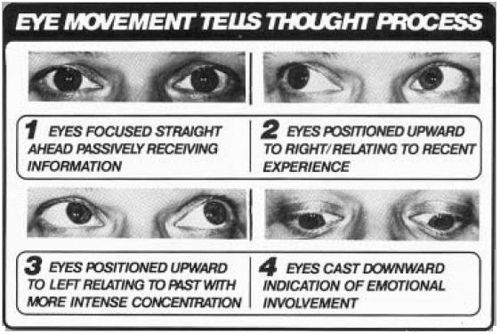
They found that the direction and size of the participants’ eye movements accurately predicted whether the number they were about to say was bigger or smaller than the previous one – and by how much. Each volunteer’s gaze shifted up and to the right just before they said a bigger number, and down and to the left before a smaller one. The bigger the shift from one side to the other, the bigger the difference between the numbers.

This suggests that we somehow link abstract number representations in the brain with movement in space. But the study does not tell us which comes first: whether thinking of a particular number causes changes in eye position, or whether the eye position influences our mental activity. In 2013, researchers in Sweden published evidence that it’s the latter that may be at work: eye movements may actually facilitate memory retrieval.

They recruited 24 students and asked each one to carefully examine a series of objects displayed to them in one corner of a computer screen. The participants were then told to listen to a series of statements about some of the objects they had seen, such as “The car was facing to the left” and asked to indicate as quickly as possible if each was true or false. Some participants were allowed to let their eyes roam about freely; others were asked to fix their gaze on a cross at the centre of the screen, or the corner where the object had appeared, for example.

The researchers found that those who were allowed to move their eyes spontaneously during recall performed significantly better than those who fixed on the cross. Interestingly, though, participants who were told to fix their gaze in the corner of the screen in which objects had appeared earlier performed better than those told to fix their gaze in another corner. This suggests that the more closely the participants’ eye movements during information encoding corresponded with those that occurred during retrieval of the information, the better they were at remembering the objects. Perhaps that’s because eye movements help us to recall the spatial relationships between objects in the environment at the time of encoding.

These eye movements can occur unconsciously. “When people are looking at scenes they have encountered before, their eyes are frequently drawn to information they have already seen, even when they have no conscious memory of it,” says Roger Johansson, a psychologist at Lund University who led the study.

Watching eye movements can also be used to nudge people’s decisions. One recent study showed – maybe worryingly – that eye-tracking can be exploited to influence the moral decisions we take.

Researchers asked participants complex moral questions such as “Can murder ever be justified?” and then displayed, on a computer screen, alternative answers (“sometimes justifiable” or “never justifiable”). By tracking the participants’ eye movements, and removing the two answer options immediately after a participant had spent a certain amount of time gazing at one of the two options, the researchers found that they could nudge the participants to provide that particular option as their answer.

“We didn’t give them any more information,” says neuroscientist Daniel Richardson of University College London, senior author of study. “We simply waited for their own decision-making processes to unfold and interrupted them at exactly the right point. We made them change their minds just by controlling when they made the decision.”

Richardson adds that successful salespeople may have some insight into this, and use it to be more persuasive with clients. “We think of persuasive people as good talkers, but maybe they’re also observing the decision-making process,” he says. “Maybe good salespeople can spot the exact moment you’re wavering towards a certain choice, and then offer you a discount or change their pitch.”

The ubiquity of eye-tracking apps for smartphones and other hand-held devices raises the possibility of altering people’s decision-making process remotely. “If you’re shopping online, they might bias your decision by offering free shipping at the moment you shift your gaze to a particular product.”

Thus, eye movements can both reflect and influence higher mental functions such as memory and decision-making, and betray our thoughts, beliefs, and desires. This knowledge may give us ways of improving our mental functions – but it also leaves us vulnerable to subtle manipulation by other people.

“The eyes are like a window into our thought processes, and we just don’t appreciate how much information might be leaking out of them,” says Richardson. “They could potentially reveal things that a person might want to suppress, such as implicit racial bias.”

“I can see eye-tracking apps being used for, say, supportive technologies that figure out what phone function you need and then help out,” he adds, “but if they’re left on all the time they could be used to track all sorts of other things. This would provide much richer information, and raises the possibility of unwittingly sharing our thoughts with others.”

http://www.bbc.com/future/story/20150521-how-the-eyes-betray-your-thoughts

Slow running is better in the long run

by JENN SAVEDGE

A new study has found that slower runners live longer than those who push the pace

For the study, which was published recently in the Journal of the American College of Cardiology, researchers surveyed about 5,000 people, including 1,100 runners and 4,000 people who identified themselves as “non-runners.” Participants in the non-running group did not engage in any type of regular exercise or strenuous activity.

Those in the “running” group were split into three groups depending upon how far, how fast and how often they ran. The study participants were men and women of various ages who were considered relatively healthy.

Researchers checked back with the group after 10 years and found (not surprisingly) that the runners had longer lifespans than their sedentary peers. But what was surprising was the longevity difference among the runners. Those with the lowest rate of death were the light joggers, folks who ran roughly two to three times per week for about 1 to 2.4 miles per session at a speed self-described as “slow.”

Next in line in terms of lifespan were the moderate runners, followed by the speedsters, who tied with the non-runners for highest mortality rate. That’s right, those who ran hard and fast had the same lifespan as those who never left the couch.

http://www.mnn.com/health/fitness-well-being/blogs/slow-running-better-for-your-health

Deputy fires “1 in a billion” shot into suspect’s gun barrel

Arapahoe County prosecutors on Wednesday, July 13, cleared a Jefferson County sheriff’s deputy in an off-duty shooting stemming from an attempted robbery in January.

Deputy Jose Marquez was shot in the shoulder and abdomen during the Jan. 26 attempted robbery in an apartment parking lot on East Adriatic Drive near Rangeview High School.

One of the suspects fled the scene and has not been identified. The other, Jhalil Meshesha, was wounded in the leg and later arrested, prosecutors said.

In a letter to Jefferson County Sheriff Jeff Shrader and Aurora Police Chief Nick Metz, Arapahoe County Deputy District Attorney Rich Orman said Marquez, who was off duty and not in uniform at the time of the robbery, acted appropriately.

“Deputy Marquez reasonably believed that his life was in danger and acted reasonably in shooting Meshesha, and that he used an appropriate level of physical force. I further find that Deputy Marquez’s actions were justified and he did not violate Colorado law,” the letter said.

Marquez told police he was visiting his girlfriend at her apartment when he went outside to grab something from his car. As he walked back, he saw two young men with masks on their face. One of the men told him to “give it up,” Marquez said, and pulled out a pistol.

Marquez said the two men fired first and he returned fire.


One of Marquez’s bullets struck Meshesha’s pistol, traveling straight down that gun’s barrel and disabling it. Police called the shot “one in a billion.”

http://www.aurorasentinel.com/news/jeffco-deputy-cleared-aurora-shooting/

People who need very little sleep

By Helen Thomson

What would you do if you had 60 days of extra free time a year? Ask Abby Ross, a retired psychologist from Miami, Florida, a “short-sleeper”. She needs only four hours sleep a night, so has a lot of spare time to fill while the rest of the world is in the land of nod.

“It’s wonderful to have so many hours in my day – I feel like I can live two lives,” she says.

Short-sleepers like Ross never feel lethargic, nor do they ever sleep in. They wake early – normally around four or five o’clock – raring to get on with their day. Margaret Thatcher may have been one – she famously said she needed just four hours a night, whereas Mariah Carey claims she needs 15.

What makes some people fantastically efficient sleepers, while others spend half their day snoozing? And can we change our sleeping pattern to make it more efficient?

In 2009, a woman came into Ying-Hui Fu’s lab at the University of California, San Francisco, complaining that she always woke up too early. At first, Fu thought the woman was an extreme morning lark – a person who goes to bed early and wakes early. However, the woman explained that she actually went to bed around midnight and woke at 4am feeling completely alert. It was the same for several members of her family, she said.

Fu and her colleagues compared the genome of different family members. They discovered a tiny mutation in a gene called DEC2 that was present in those who were short-sleepers, but not in members of the family who had normal length sleep, nor in 250 unrelated volunteers.

When the team bred mice to express this same mutation, the rodents also slept less but performed just as well as regular mice when given physical and cognitive tasks.

Getting too little sleep normally has a significant impact on health, quality of life and life expectancy. It can cause depression, weight gain and put you at greater risk of stroke and diabetes. “Sleep is so important, if you sleep well you can avoid many diseases, even dementia,” says Fu. “If you deprive someone of just two hours sleep a day, their cognitive functions become significantly impaired almost immediately.”

But why sleep is so important is still a bit of a mystery. The general consensus is that the brain needs sleep to do some housekeeping and general maintenance, since it doesn’t get much downtime during the day. While we sleep, the brain can repair cellular damage, remove toxins that accumulate during the day, boost flagging energy supplies and lay down memories.

“Clearly people with the DEC2 mutation can do the same cleaning up process in a shorter period of time – they are just more efficient than the rest of us at sleeping,” says Fu. “But how are they doing that? That’s the key question.”

Since discovering the DEC2 mutation, a lot of people have come forward claiming to only sleep a few hours a day, says Fu. Most of these had insomnia, she says. “We’re not focusing on those people who have sleeping issues that make them sleep less, we wanted to focus on people who sleep for a few hours and feel great.”

A positive outlook is common among all of the short-sleepers that Fu has studied. “Anecdotally,” she says, “they are all very energetic, very optimistic. It’s very common for them to feel like they want to cram as much into life as they can, but we’re not sure how or whether this is related to their mutations.”

Ross would seem to fit that mould. “I always feel great when I wake up,” she says. She has been living on four to five hours sleep every day for as long as she can remember.

“Those hours in the morning – around five o’clock – are just fabulous. It’s so peaceful and quiet and you can get so much done. I wish more shops were open at that time, but I can shop online, or I can read – oh there’s so much to read in this world! Or I can go out and exercise before anyone else is up, or talk to people in other time zones.”

Her short sleeping patterns allowed her to complete university in two and a half years, as well as affording her time to learn lots of new skills. For example, just three weeks after giving birth to her first son, Ross decided to use one of her early mornings to attempt to run around the block. It took her 10 minutes. The following day she did it again, running a little further. She slowly increased the time she ran, finally completing not one, but 37 marathons – one a month over three years – plus several ultramarathons. “I can get up and do my exercise before anyone else is up and then it’s done, out of the way,” she says.

As a child, Ross remembers spending very early mornings with her dad, another short-sleeper. “Our early mornings gave us such a special time together,” she says. Now, if she ever oversleeps – which she says has only ever happened a handful of times, her husband thinks she’s dead. “I just don’t lay in, I’d feel terrible if I did,” she says.

Fu has subsequently sequenced the genomes of several other families who fit the criteria of short-sleepers. They’re only just beginning to understand the gene mutations that lead to this talent, but in principle, she says, it might one day be possible to enable short sleeping in others.

Until then, are there any shortcuts to a more efficient night’s sleep for the rest of us? Neil Stanley, an independent sleep consultant, says yes: “The most effective way to improve your sleep is to fix your wake-up time in the morning.”

Stanley says that when your body gets used to the time it needs to wake up, it can use the time it has to sleep as efficiently as possible. “Studies show that your body prepares to wake up one and a half hours prior to actually waking up. Your body craves regularity, so if you chop and change your sleep pattern, your body hasn’t got a clue when it should prepare to wake up or not.”

You could also do yourself a favour by ignoring society’s views on sleep, he says. “There’s this social view that short sleeping is a good thing and should be encouraged – we’re always hauling out the example of Margaret Thatcher and top CEOs who don’t need much sleep. In fact, the amount of sleep you need is genetically determined as much as your height or shoe size. Some people need very little sleep, others need 11 or 12 hours to feel their best.”

Stanley says that a lot of people with sleep issues actually don’t have any problem sleeping, instead they have an expectation that they need to sleep for a certain amount of time. “If we could all figure out what kind of sleeper we are, and live our life accordingly, that would make a huge difference to our quality of life,” he says.

http://www.bbc.com/future/story/20150706-the-woman-who-barely-sleeps

One striking chart shows why pharma companies are fighting legal marijuana

By Christopher Ingraham

There’s a body of research showing that painkiller abuse and overdose are lower in states with medical marijuana laws. These studies have generally assumed that when medical marijuana is available, pain patients are increasingly choosing pot over powerful and deadly prescription narcotics. But that’s always been just an assumption.

Now a new study, released in the journal Health Affairs, validates these findings by providing clear evidence of a missing link in the causal chain running from medical marijuana to falling overdoses. Ashley and W. David Bradford, a daughter-father pair of researchers at the University of Georgia, scoured the database of all prescription drugs paid for under Medicare Part D from 2010 to 2013.

They found that, in the 17 states with a medical-marijuana law in place by 2013, prescriptions for painkillers and other classes of drugs fell sharply compared with states that did not have a medical-marijuana law. The drops were quite significant: In medical-marijuana states, the average doctor prescribed 265 fewer doses of antidepressants each year, 486 fewer doses of seizure medication, 541 fewer anti-nausea doses and 562 fewer doses of anti-anxiety medication.

But most strikingly, the typical physician in a medical-marijuana state prescribed 1,826 fewer doses of painkillers in a given year.

These conditions are among those for which medical marijuana is most often approved under state laws. So as a sanity check, the Bradfords ran a similar analysis on drug categories that pot typically is not recommended for — blood thinners, anti-viral drugs and antibiotics. And on those drugs, they found no changes in prescribing patterns after the passage of marijuana laws.

“This provides strong evidence that the observed shifts in prescribing patterns were in fact due to the passage of the medical marijuana laws,” they write.

In a news release, lead author Ashley Bradford wrote, “The results suggest people are really using marijuana as medicine and not just using it for recreational purposes.”

One interesting wrinkle in the data is glaucoma, for which there was a small increase in demand for traditional drugs in medical-marijuana states. It’s routinely listed as an approved condition under medical-marijuana laws, and studies have shown that marijuana provides some degree of temporary relief for its symptoms.

The Bradfords hypothesize that the short duration of the glaucoma relief provided by marijuana — roughly an hour or so — may actually stimulate more demand in traditional glaucoma medications. Glaucoma patients may experience some short-term relief from marijuana, which may prompt them to seek other, robust treatment options from their doctors.

The tanking numbers for painkiller prescriptions in medical marijuana states are likely to cause some concern among pharmaceutical companies. These companies have long been at the forefront of opposition to marijuana reform, funding research by anti-pot academics and funneling dollars to groups, such as the Community Anti-Drug Coalitions of America, that oppose marijuana legalization.

Pharmaceutical companies have also lobbied federal agencies directly to prevent the liberalization of marijuana laws. In one case, recently uncovered by the office of Sen. Kirsten Gillibrand (D-N.Y.), the Department of Health and Human Services recommended that naturally derived THC, the main psychoactive component of marijuana, be moved from Schedule 1 to Schedule 3 of the Controlled Substances Act — a less restrictive category that would acknowledge the drug’s medical use and make it easier to research and prescribe. Several months after HHS submitted its recommendation, at least one drug company that manufactures a synthetic version of THC — which would presumably have to compete with any natural derivatives — wrote to the Drug Enforcement Administration to express opposition to rescheduling natural THC, citing “the abuse potential in terms of the need to grow and cultivate substantial crops of marijuana in the United States.”

The DEA ultimately rejected the HHS recommendation without explanation.

In what may be the most concerning finding for the pharmaceutical industry, the Bradfords took their analysis a step further by estimating the cost savings to Medicare from the decreased prescribing. They found that about $165 million was saved in the 17 medical marijuana states in 2013. In a back-of-the-envelope calculation, the estimated annual Medicare prescription savings would be nearly half a billion dollars if all 50 states were to implement similar programs.

“That amount would have represented just under 0.5 percent of all Medicare Part D spending in 2013,” they calculate.

Cost-savings alone are not a sufficient justification for implementing a medical-marijuana program. The bottom line is better health, and the Bradfords’ research shows promising evidence that medical-marijuana users are finding plant-based relief for conditions that otherwise would have required a pill to treat.

“Our findings and existing clinical literature imply that patients respond to medical marijuana legislation as if there are clinical benefits to the drug, which adds to the growing body of evidence suggesting that the Schedule 1 status of marijuana is outdated,” the study concludes.

One limitation of the study is that it only looks at Medicare Part D spending, which applies only to seniors. Previous studies have shown that seniors are among the most reluctant medical-marijuana users, so the net effect of medical marijuana for all prescription patients may be even greater.

The Bradfords will next look at whether similar patterns hold for Medicaid.

https://www.washingtonpost.com/news/wonk/wp/2016/07/13/one-striking-chart-shows-why-pharma-companies-are-fighting-legal-marijuana/

Thanks to Kebmodee for bringing this to the It’s Interesting community.

Employees give CEO a new car after he shared the wealth

A gift from his employees — a new Tesla — was another big win for Gravity Payments CEO Dan Price, who beat back a lawsuit brought against him by his brother.

As Gravity Payments’ lawsuit saga wound to a close, CEO Dan Price had one more work surprise waiting for him — a brand new car.

A new Tesla to be specific, bought for him by Gravity employees.

Price and Gravity gained fame last year when the young CEO announced to much fanfare a plan to raise pay to $70,000 a year for all employees, after a phase-in period. Price said he would also make $70,000, dropping his salary from more than $1 million annually.

The news was quickly marred by the unearthing of a lawsuit, brought by brother and co-founder Lucas Price, which accused Dan of violating Lucas’ rights as a minority shareholder by paying himself too much and charging personal expenses to a corporate card. The lawsuit was served weeks before Dan Price said he came up with the minimum wage idea.

Price told the New York Times shortly after the announcement that he had listed his house on Airbnb to “make ends meet” as he adjusted to his new salary. Price’s home, which has a pool and three bedrooms, is still listed for $950 per night.

On Thursday, Price posted news of his new Tesla on Facebook, saying “Shocked. Still in disbelief. Never imagined this was possible. Gravity employees saved up and pitched in over the past six months and bought me my dream car.”

The post showed a photo of a poster signed by employees reading “Dan: Thank you for always putting the team before yourself.”

Gravity spokesman Ryan Pirkle said the gift was thought up and organized by Alyssa O’Neal, an employee who he said was one of the “most impacted” by the raise.

Fittingly, the starting price for a Tesla Model S is $70,000.

Pirkle said nearly every one of Gravity’s 135 employees contributed to the gift in some way.

Dan Price successfully contested the lawsuit after a three-week trial during which the brothers each presented evidence that attacked the other’s credibility. A judge ruled July 8 that Dan had not breached the contract in question, a 2008 document signed by the brothers that laid out the ownership structure and responsibilities of the company’s shareholders.

http://www.seattletimes.com/business/technology/gravity-payments-team-gets-ceo-a-gift/

Thailand tribe children who see with perfect clarity underwater

By Helen Thomson

“When the tide came in, these kids started swimming. But not like I had seen before. They were more underwater than above water, they had their eyes wide open – they were like little dolphins.”

Deep in the island archipelagos on the Andaman Sea, and along the west coast of Thailand live small tribes called the Moken people, also known as sea-nomads. Their children spend much of their day in the sea, diving for food. They are uniquely adapted to this job – because they can see underwater. And it turns out that with a little practice, their unique vision might be accessible to any young person.

In 1999, Anna Gislen at the University of Lund, in Sweden was investigating different aspects of vision, when a colleague suggested that she might be interested in studying the unique characteristics of the Moken tribe. “I’d been sitting in a dark lab for three months, so I thought, ‘yeah, why not go to Asia instead’,” says Gislen.

Gislen and her six-year old daughter travelled to Thailand and integrated themselves within the Moken communities, who mostly lived on houses sat upon poles. When the tide came in, the Moken children splashed around in the water, diving down to pick up food that lay metres below what Gislen or her daughter could see. “They had their eyes wide open, fishing for clams, shells and sea cucumbers, with no problem at all,” she says.

Gislen set up an experiment to test just how good the children’s underwater vision really was. The kids were excited about joining in, says Gislen, “they thought it was just a fun game.”

The kids had to dive underwater and place their heads onto a panel. From there they could see a card displaying either vertical or horizontal lines. Once they had stared at the card, they came back to the surface to report which direction the lines travelled. Each time they dived down, the lines would get thinner, making the task harder. It turned out that the Moken children were able to see twice as well as European children who performed the same experiment at a later date.

What was going on? To see clearly above land, you need to be able to refract light that enters the eye onto the retina. The retina sits at the back of the eye and contains specialised cells, which convert the light signals into electrical signals that the brain interprets as images.

Light is refracted when it enters the human eye because the outer cornea contains water, which makes it slightly denser than the air outside the eye. An internal lens refracts the light even further.

When the eye is immersed in water, which has about the same density as the cornea, we lose the refractive power of the cornea, which is why the image becomes severely blurred.

Gislen figured that in order for the Moken children to see clearly underwater, they must have either picked up some adaption that fundamentally changed the way their eyes worked, or they had learned to use their eyes differently under water.

She thought the first theory was unlikely, because a fundamental change to the eye would probably mean the kids wouldn’t be able to see well above water. A simple eye test proved this to be true – the Moken children could see just as well above water as European children of a similar age.

It had to be some kind of manipulation of the eye itself, thought Gislen. There are two ways in which you can theoretically improve your vision underwater. You can change the shape of the lens – which is called accommodation – or you can make the pupil smaller, thereby increasing the depth of field.

Their pupil size was easy to measure – and revealed that they can constrict their pupils to the maximum known limit of human performance. But this alone couldn’t fully explain the degree to which their sight improved. This led Gislen to believe that accommodation of the lens was also involved.

“We had to make a mathematical calculation to work out how much the lens was accommodating in order for them to see as far as they could,” says Gislen. This showed that the children had to be able to accommodate to a far greater degree than you would expect to see underwater.

“Normally when you go underwater, everything is so blurry that the eye doesn’t even try to accommodate, it’s not a normal reflex,” says Gislen. “But the Moken children are able to do both – they can make their pupils smaller and change their lens shape. Seals and dolphins have a similar adaptation.”

Gislen was able to test a few Moken adults in the same way. They showed no unusual underwater vision or accommodation – perhaps explaining why the adults in the tribe caught most of their food by spear fishing above the surface. “When we age, our lenses become less flexible, so it makes sense that the adults lose the ability to accommodate underwater,” says Gislen.

Gislen wondered whether the Moken children had a genetic anomaly to thank for their ability to see underwater or whether it was just down to practice. To find out, she asked a group of European children on holiday in Thailand, and a group of children in Sweden to take part in training sessions, in which they dived underwater and tried to work out the direction of lines on a card. After 11 sessions across one month, both groups had attained the same underwater acuity as the Moken children.

“It was different for each child, but at some point their vision would just suddenly improve,” says Gislen. “I asked them whether they were doing anything different and they said, ‘No, I can just see better now’.”

She did notice, however, that the European kids would experience red eyes, irritated by the salt in the water, whereas the Moken children appeared to have no such problem. “So perhaps there is some adaptation there that allows them to dive down 30 times without any irritation,” she says.

Gislen recently returned to Thailand to visit the Moken tribes, but things had changed dramatically. In 2004, a tsunami created by a giant earthquake within the Indian Ocean destroyed much of the Moken’s homeland. Since then, the Thai government has worked hard to move them onto the land, building homes that are further inland and employing members of the tribe to work in the National Park. “It’s difficult,” says Gislen. “You want to help keep people safe and give them the best parts of modern culture, but in doing so they lose their own culture.”

In unpublished work, Gislen tested the same kids that were in her original experiment. The Moken children, now in their late teens, were still able to see clearly underwater. She wasn’t able to test many adults as they were too shy, but she is certain that they would have lost the ability to see underwater as they got older. “The adult eye just isn’t capable of that amount of accommodation,” she says.

Unfortunately, the children in Gislen’s experiments may be the last of the tribe to possess the ability to see so clearly underwater. “They just don’t spend as much time in the sea anymore,” she says, “so I doubt that any of the children that grow up these days in the tribe have this extraordinary vision.”

http://www.bbc.com/future/story/20160229-the-sea-nomad-children-who-see-like-dolphins