‘Brain wi-fi’ shown to be able to reverse leg paralysis in a primate.

By James Gallagher

An implant that beams instructions out of the brain has been used to restore movement in paralysed primates for the first time, say scientists.

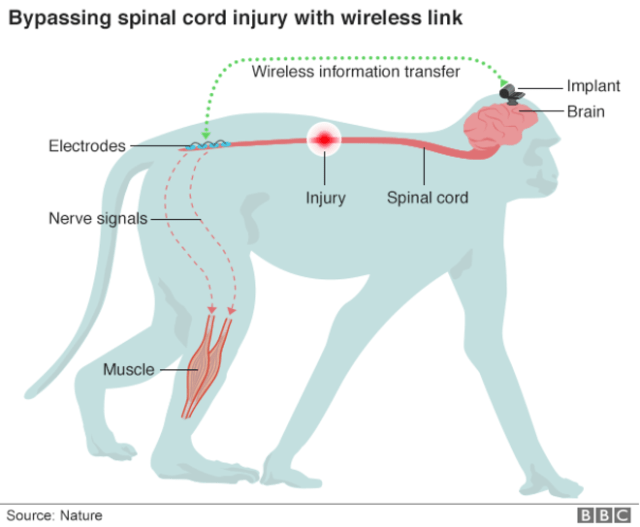
Rhesus monkeys were paralysed in one leg due to a damaged spinal cord. The team at the Swiss Federal Institute of Technology bypassed the injury by sending the instructions straight from the brain to the nerves controlling leg movement. Experts said the technology could be ready for human trials within a decade.

Spinal-cord injuries block the flow of electrical signals from the brain to the rest of the body resulting in paralysis. It is a wound that rarely heals, but one potential solution is to use technology to bypass the injury.

In the study, a chip was implanted into the part of the monkeys’ brain that controls movement. Its job was to read the spikes of electrical activity that are the instructions for moving the legs and send them to a nearby computer. It deciphered the messages and sent instructions to an implant in the monkey’s spine to electrically stimulate the appropriate nerves. The process all takes place in real time. The results, published in the journal Nature, showed the monkeys regained some control of their paralysed leg within six days and could walk in a straight line on a treadmill.

Dr Gregoire Courtine, one of the researchers, said: “This is the first time that a neurotechnology has restored locomotion in primates.” He told the BBC News website: “The movement was close to normal for the basic walking pattern, but so far we have not been able to test the ability to steer.” The technology used to stimulate the spinal cord is the same as that used in deep brain stimulation to treat Parkinson’s disease, so it would not be a technological leap to doing the same tests in patients. “But the way we walk is different to primates, we are bipedal and this requires more sophisticated ways to stimulate the muscle,” said Dr Courtine.

Jocelyne Bloch, a neurosurgeon from the Lausanne University Hospital, said: “The link between decoding of the brain and the stimulation of the spinal cord is completely new. “For the first time, I can image a completely paralysed patient being able to move their legs through this brain-spine interface.”

Using technology to overcome paralysis is a rapidly developing field:
Brainwaves have been used to control a robotic arm
Electrical stimulation of the spinal cord has helped four paralysed people stand again
An implant has helped a paralysed man play a guitar-based computer game

Dr Mark Bacon, the director of research at the charity Spinal Research, said: “This is quite impressive work. Paralysed patients want to be able to regain real control, that is voluntary control of lost functions, like walking, and the use of implantable devices may be one way of achieving this. The current work is a clear demonstration that there is progress being made in the right direction.”

Dr Andrew Jackson, from the Institute of Neuroscience and Newcastle University, said: “It is not unreasonable to speculate that we could see the first clinical demonstrations of interfaces between the brain and spinal cord by the end of the decade.” However, he said, rhesus monkeys used all four limbs to move and only one leg had been paralysed, so it would be a greater challenge to restore the movement of both legs in people. “Useful locomotion also requires control of balance, steering and obstacle avoidance, which were not addressed,” he added.

The other approach to treating paralysis involves transplanting cells from the nasal cavity into the spinal cord to try to biologically repair the injury. Following this treatment, Darek Fidyka, who was paralysed from the chest down in a knife attack in 2010, can now walk using a frame.

Neither approach is ready for routine use.

http://www.bbc.com/news/health-37914543

Thanks to Kebmodee for bringing this to the It’s Interesting community.
US military enhancing human skills with electrical brain stimulation


Study paves way for personnel such as drone operators to have electrical pulses sent into their brains to improve effectiveness in high pressure situations.

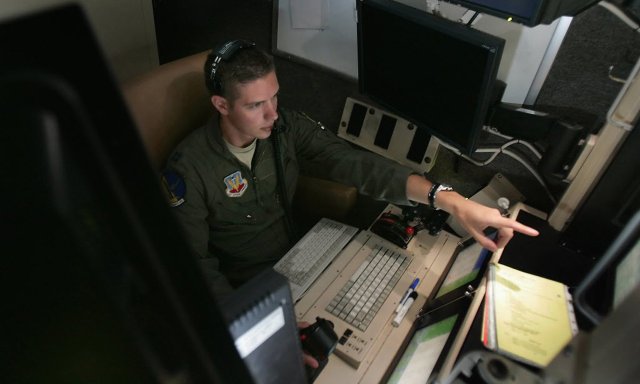
US military scientists have used electrical brain stimulators to enhance mental skills of staff, in research that aims to boost the performance of air crews, drone operators and others in the armed forces’ most demanding roles.

The successful tests of the devices pave the way for servicemen and women to be wired up at critical times of duty, so that electrical pulses can be beamed into their brains to improve their effectiveness in high pressure situations.

The brain stimulation kits use five electrodes to send weak electric currents through the skull and into specific parts of the cortex. Previous studies have found evidence that by helping neurons to fire, these minor brain zaps can boost cognitive ability.

The technology is seen as a safer alternative to prescription drugs, such as modafinil and ritalin, both of which have been used off-label as performance enhancing drugs in the armed forces.

But while electrical brain stimulation appears to have no harmful side effects, some experts say its long-term safety is unknown, and raise concerns about staff being forced to use the equipment if it is approved for military operations.

Others are worried about the broader implications of the science on the general workforce because of the advance of an unregulated technology.

In a new report, scientists at Wright-Patterson Air Force Base in Ohio describe how the performance of military personnel can slump soon after they start work if the demands of the job become too intense.

“Within the air force, various operations such as remotely piloted and manned aircraft operations require a human operator to monitor and respond to multiple events simultaneously over a long period of time,” they write. “With the monotonous nature of these tasks, the operator’s performance may decline shortly after their work shift commences.”

Advertisement

But in a series of experiments at the air force base, the researchers found that electrical brain stimulation can improve people’s multitasking skills and stave off the drop in performance that comes with information overload. Writing in the journal Frontiers in Human Neuroscience, they say that the technology, known as transcranial direct current stimulation (tDCS), has a “profound effect”.

For the study, the scientists had men and women at the base take a test developed by Nasa to assess multitasking skills. The test requires people to keep a crosshair inside a moving circle on a computer screen, while constantly monitoring and responding to three other tasks on the screen.

To investigate whether tDCS boosted people’s scores, half of the volunteers had a constant two milliamp current beamed into the brain for the 36-minute-long test. The other half formed a control group and had only 30 seconds of stimulation at the start of the test.

According to the report, the brain stimulation group started to perform better than the control group four minutes into the test. “The findings provide new evidence that tDCS has the ability to augment and enhance multitasking capability in a human operator,” the researchers write. Larger studies must now look at whether the improvement in performance is real and, if so, how long it lasts.

The tests are not the first to claim beneficial effects from electrical brain stimulation. Last year, researchers at the same US facility found that tDCS seemed to work better than caffeine at keeping military target analysts vigilant after long hours at the desk. Brain stimulation has also been tested for its potential to help soldiers spot snipers more quickly in VR training programmes.

Neil Levy, deputy director of the Oxford Centre for Neuroethics, said that compared with prescription drugs, electrical brain stimulation could actually be a safer way to boost the performance of those in the armed forces. “I have more serious worries about the extent to which participants can give informed consent, and whether they can opt out once it is approved for use,” he said. “Even for those jobs where attention is absolutely critical, you want to be very careful about making it compulsory, or there being a strong social pressure to use it, before we are really sure about its long-term safety.”

But while the devices may be safe in the hands of experts, the technology is freely available, because the sale of brain stimulation kits is unregulated. They can be bought on the internet or assembled from simple components, which raises a greater concern, according to Levy. Young people whose brains are still developing may be tempted to experiment with the devices, and try higher currents than those used in laboratories, he says. “If you use high currents you can damage the brain,” he says.

In 2014 another Oxford scientist, Roi Cohen Kadosh, warned that while brain stimulation could improve performance at some tasks, it made people worse at others. In light of the work, Kadosh urged people not to use brain stimulators at home.

If the technology is proved safe in the long run though, it could help those who need it most, said Levy. “It may have a levelling-up effect, because it is cheap and enhancers tend to benefit the people that perform less well,” he said.

https://www.theguardian.com/science/2016/nov/07/us-military-successfully-tests-electrical-brain-stimulation-to-enhance-staff-skills

Thanks to Kebmodee for bringing this to the It’s Interesting community.

Pain Sensitivity Can Be Socially Transmitted Via Olfactory Cues

by Tori Rodriguez, MA, LPC

The social transmission of emotions has been reported in several studies in recent years. Research published in 2013, for example, found that joy and fear are transmissible between people, while a 2011 study showed that stress — as measured by an increase in cortisol — can be transmitted from others who are under pressure.1,2 Results of a new study that appeared in Science Advances suggest that pain may also be communicable.3

“Being able to perceive and communicate pain to others probably gives an evolutionary advantage to animals,” study co-author Andrey E. Ryabinin, PhD, a professor of behavioral neuroscience at Oregon Health & Science University, told Clinical Pain Advisor. Such awareness may trigger self-protective or caretaking behaviors, for instance, that facilitate the survival of the individual and the group.
In the current study, Ryabinin and colleagues investigated whether “bystander” mice would develop hyperalgesia after being housed in the same room as “primary” mice who had received a noxious stimulus. In one experiment, the paws of primary mice were injected with complete Freund’s adjuvant (CFA), which, as expected, induced persistent hypersensitivity that was apparent for 2 weeks. Bystander mice who had been injected with phosphate-buffered saline (PBS) similarly demonstrated hypersensitivity throughout the same 2-week period.

Bystander mice also displayed acquired hypersensitivity in another set of experiments in which primary mice experienced pain related to withdrawal from morphine and alcohol. This suggests that the transfer of hyperalgesia is not limited to the effects of inflammatory stimuli. In addition, the transfer was consistent across mechanical, thermal, and chemical modalities of nociception.

Tests revealed that nociceptive thresholds returned to basal levels in both primary and bystander mice within 4 days, and the transferred hyperalgesia was not accounted for by familiarity, as the effects were similar between mice that were not familiar with the others and those that were.
Finally, the authors determined that the transfer of hyperalgesia was mediated by olfactory cues (as measured by exposing naïve mice to the bedding of hypersensitive co-housed mice), and it could not be accounted for by anxiety, visual cues, or stress-induced hyperalgesia.

Future research is needed to pinpoint the molecular messenger involved in the transfer of hyperalgesia, and whether a similar process occurs in humans.

“Here we show for the first time that you do not need an injury or inflammation to develop a pain state–pain can develop simply because of social cues,” said Dr Ryabinin. These findings have important implications for the treatment of chronic pain patients. “We cannot dismiss people with chronic pain if they have no physical pathology. They can be in pain without the pathology and need to be treated for their pain despite lack of injury.”

References
Dezecache G, Conty L, Chadwick M, et al. Evidence for Unintentional Emotional Contagion Beyond Dyads.PLoS One. 2013; 8(6): e67371.
Buchanan TW , Bagley SL, Stansfield RB, Preston SD. The empathic, physiological resonance of stress. Soc Neurosci. 2012; 7(2):191-201.
Smith ML, Hostetler CM, Heinricher MM, Ryabinin AE. Social transfer of pain in mice. Sci Adv. 2016; 2(10): e1600855.

http://www.psychiatryadvisor.com/anxiety/social-transfer-of-hyperalgesia/article/571087/?DCMP=EMC-PA_Update_RD&cpn=psych_md%2cpsych_all&hmSubId=&NID=1710903786&dl=0&spMailingID=15837872&spUserID=MTQ4MTYyNjcyNzk2S0&spJobID=902320519&spReportId=OTAyMzIwNTE5S0

German man’s wedding band lost in garden unearthed by carrot after wife dies

A retiree in Germany has struck gold in his garden, finding the wedding band he lost three years ago wrapped around a carrot. The 82-year-old lost the ring while gardening in the western town of Bad Muenstereifel.

The incident happened shortly after the man, whose name was not released, celebrated his golden wedding anniversary. The man’s wife reassured him at the time that the ring would eventually reappear.

She died six months before being proven right.

http://wgntv.com/2016/11/05/german-mans-wedding-band-lost-in-garden-unearthed-by-carrot-after-wife-dies/he

Bewildered Littleton, Colorado residents wonder why toilet paper is being spread all over town

At first glance, Littleton looks like ground zero for Halloween pranksters this year — toilet paper is strewn across street after street and block after block.

The messy look prompted a few irritated inquiries from residents on the city’s Facebook page this week, like this one from Madison Lucas: “This is UGLY!! All over Littleton!!” Or from Stephanie Gregory : “My kids and I thought it was vandalism.”

But the TP’ing scheme is actually the work of the city itself. Littleton is using bathroom tissue as part of an effort to seal the myriad cracks that plague road surfaces in this city. It is tackling 120 streets with this bottoms-up tactic.

“I was trying to decide if there was a homecoming parade and wind had blown decorations off a float,” said Nancy Worthington, who noticed the paper all over a street near Broadway and County Line Road the other day.

Once she got an explanation from the city, she determined that the pavement patching process is a “brilliant idea.”

The TP, applied with a paint roller, absorbs the oil from freshly laid tar as it dries, keeping it from sticking to people’s shoes or car and bike tires. With the paper’s protective abilities, asphalt isn’t tracked all over the city or splattered on wheel wells. And the biodegradable paper breaks down and disappears in a matter of days.

“Since my car is new, I didn’t want it to get damaged,” Worthington said.

Kelli Narde, a spokeswoman for Littleton, said the real benefit of using toilet paper is that it allows traffic to retake the road right after a crack is filled.

“It means traffic has better access because we don’t have to close down a street to do the sealing,” she said.

Littleton is not the first to take this approach to wiping out cracks on its roadways. Lincoln, Neb., is one of a number of cities across the United States that have already spun the center roll to address deteriorating asphalt.

“We use it so we can keep moving and get more done,” said Clay Engelman, a district supervisor in the city’s street and traffic operations division.

He said the tar sets in about 40 minutes but that with the paper in place as a protective and absorbent cover, traffic can hit the street right away. The one big lesson learned by Lincoln: don’t use two-ply bath tissue. Engelman said the upper ply doesn’t absorb the oil and ends up blowing into people’s yards.

Lincoln has used toilet paper in its crack-closing campaign since 2014; Littleton began using it last month.

It’s not clear how many communities in Colorado rip from the roll when it comes time to blot the crack. The state’s largest city doesn’t resort to toilet tricks for its road repairs, according to Denver Department of Public Works spokeswoman Heather Burke-Bellile.

“We’ve never used toilet paper for crack sealing!” she wrote in a particularly declarative e-mail.

Amy Ford, a spokeswoman for the Colorado Department of Transportation, said she hadn’t heard of the practice being used in the state before. But she was more than willing to express her feelings about Littleton’s lavatory-linked labors.

“CDOT feels that clean cracks help improve the smoothness of everyone’s experience (on our roads),” she said.

The agency actually includes TP in its list of “blotting” materials for sealant application. According to the 2014 “CDOT Hot Mix Asphalt Crack Sealing and Filling Best Practices Guidelines,” a material may be needed to “reduce or minimize tracking of the sealant by vehicle tires. Common blotting materials include toilet paper, talcum powder, limestone dust, sand, or proprietary, spray-applied detackifiers.”

Narde said Littleton had been pitched a number of expensive blotting products but that toilet paper — single-ply, mind you — works best.

“Even though it looks like a Halloween prank, it works and it’s very inexpensive,” she said.

Littleton TP’s its own streets as a way to fill its cracks — single-ply only

Where the bison roam: Herd treads again on tribal land

The men stood by the edge of the corral to mark the release of the first buffalo to run on the Wind River Indian Reservation in decades.

The sound of their drums mixed with their voices lifted in song and the 10 buffalo shifted nervously before finally they bolted and ran out onto the grassy plain.

The buffalos’ first free steps on the reservation on Thursday marked a homecoming that’s been decades in the making for members of the Eastern Shoshone Tribe.

Leslie Shakespeare, a member of the Eastern Shoshone Business Council, the tribe’s governing body, watched the buffalo move through the tall, parched yellow grass. “It’s very surreal, just seeing them released and seeing them run across the field here,” he said. “Seeing everybody’s emotions — a lot of people are real emotional.”

It’s been more than a century since buffalo wandered here, tribal members say. The federal government oversaw the extermination of enormous herds of buffalo in the late 1800s.

Jason Baldes, coordinator of the buffalo restoration effort for the Eastern Shoshone, said in a recent interview that the federal government encouraged the wanton slaughter of the buffalo after the cavalry’s defeat in 1876 at the Battle of Little Bighorn.

“So what happened to the buffalo similarly happened to native people,” Baldes said. “And then we are now on isolated pockets of our former territories. Indians were relegated to reservations, and buffalo you know essentially are in isolated, small populations in their former territories and essentially are not even considered a wildlife species. Only in places like national parks are they valued for their role ecologically.”

The 10 buffalo released Thursday are from a genetically pure strain the federal government maintains on a refuge in Iowa. The National Wildlife Federation and U.S. Fish and Wildlife Service have worked with the Eastern Shoshone on the restoration project.

Collin O’Mara, president of the Wildlife Federation, addressed the crowd at Thursdays’ release. He said an estimated 60 million buffalo roamed the West in the early 1800s only to drop to fewer than 100 at the turn of the last century.

“Partially it was for food, partially it was for meat but mainly it was for control of the land, to force tribes like the Shoshone to abandon their large ranges and be pushed onto reservations,” O’Mara said. “It is an injustice that for far too long has gone insufficiently acknowledged. I think what’s exciting today is that there’s a rebirth, a beginning.”

Matt Hogan, assistant regional director of the Fish and Wildlife Service, said there have been times through the years when the federal government has stood on the wrong side of the buffalo issue. “And it’s truly humbling but oh so proud to now stand on the right side of this issue and help restore bison to this landscape,” he said.

The Eastern Shoshone share the Wind River Indian Reservation with the Northern Arapaho Tribe. The two have separate governments, but own the reservation lands jointly.

Ronald Oldman, a member of the Northern Arapaho Tribal Council, said his tribe had considered restoring buffalo to reservation lands a few years ago but decided against it.

“I’m happy for the Shoshones to get their bison back here,” Oldman said in an interview this week. Asked whether his tribe plans to pursue the release of buffalo, he said, “It’s up to the people.”

Baldes said he hopes to see the buffalo released on Thursday ultimately lead to a herd of at least 1,000 animals. He said establishing such a herd on the reservation will allow children there to experience how their ancestors traditionally used the animals and share in understanding their spiritual importance.

“If we as human beings — human beings meaning Shoshone or Arapaho or non-native or the cattle industry — if we as human beings can get over our differences and see the importance of managing these creatures on a large landscape, then we can do it,” Baldes said.

http://bigstory.ap.org/2ce0ff00ce4a4459b7ae9e52e4a20381

Birds with bigger brains appear to be better able to avoid getting shot

by Jaymi Heimbuch

When a flock of geese fly into the air and a hunter takes aim, which bird is most likely to drop from the sky? A new study published in the journal Biology Letters shows that those birds with larger brains relative to their body size are less likely to be shot by hunters.

PhysOrg reports:

The researchers found that those birds with smaller brains (relative to the size of their bodies) were more likely to be shot and catalogued—as were males and larger birds in general. The team looked at a variety of factors such as organ size, body mass, gender, species, color, etc., and found one factor that stood out very clearly from the rest—birds with larger brains were 30 times less likely to be shot and killed. This, the team suggests, indicates that hunting is very likely having an evolutionary impact on animals that are hunted by humans. They do not believe that hunters are specifically targeting smaller species, it’s more likely that those with larger brains have learned to be wary of humans.

Brain size is of course not the only possible factor for which bird ends up on a hunter’s dinner table. But the ability to distinguish danger with more clarity than your compatriots certainly helps, and the researchers point out that brain size might be part of that ability.

Mysterious noise in the Arctic Ocean appears to be scaring away wildlife

igloolik-map_jpg_838x0_q80

by Russell McLendon

A strange “ping” is emanating from the Arctic Ocean, according to reports from hunters and boaters in Canada’s Nunavut territory. The noise has been occurring for months, dating back to summer, and it correlates with fewer sightings of marine animals nearby. Some local hunters worry it’s scaring away wildlife.

Also described as a hum or beep, the mysterious sound seems to come from the seabed in the Fury and Hecla Strait, a narrow channel in the Qikiqtaaluk Region of Nunavut. It’s a remote area, about 120 kilometers (75 miles) from the hamlet of Igloolik, located within a stretch of open water surrounded by sea ice. Known as a “polynya,” this type of habitat is normally a popular hangout for wildlife.

“That’s one of the major hunting areas in the summer and winter because it’s a polynya,” Nunavut legislator Paul Quassa tells the CBC. “And this time around, this summer, there were hardly any [animals]. And this became a suspicious thing.”

Concerned for local wildlife, Quassa recently addressed the Nunavut legislature about the sound, which he said is “emanating from the sea floor.” A community radio show has also received calls from people who say they’ve heard the ping, including some who reportedly heard it through the hulls of boats.

The reports inspired another legislator to visit the area, too, and while he says hearing loss may have prevented him from hearing the sound, he did notice the absence of animals. “That passage is a migratory route for bowhead whales, and also bearded seals and ringed seals,” George Qulaut tells the CBC. “There would be so many in that particular area. This summer there was none.”

Sound travels relatively well in the ocean, and marine mammals often rely heavily on their sense of hearing, including many dolphins and whales. Underwater sonar is known to cause serious problems for a variety of sea creatures, so if these reports are accurate, it would make sense for the sound to affect wildlife.

The source of the sound remains unknown, but several theories have surfaced. One suggests it’s related to sonar surveys by the Baffinland Iron Mines Corporation, which mines iron ore from Canada’s Baffin Island. The company tells the CBC it isn’t surveying in that area, though, and has no equipment in the water. Quassa says Nunavut hasn’t issued any local work permits that might explain the noise.

Another theory goes a very different direction, accusing Greenpeace of generating the ping on purpose to drive animals away from the polynya, thus protecting them from hunters. Yet Quassa says there’s no evidence the environmental group has ever used sonar to disrupt Inuit hunts, and Greenpeace also denies any involvement.

“Not only would we not do anything to harm marine life, but we very much respect the right of Inuit to hunt and would definitely not want to impact that in any way,” Greenpeace spokeswoman Farrah Khan tells the CBC.

All this attention finally got a response from Canada’s Department of National Defence (DND), which sent military aircraft to investigate the area this week.

“The Canadian armed forces are aware of allegations of unusual sounds emanating from the seabed in the Fury and Hecla Strait in Nunavut,” DND spokeswoman Ashley Lemire says in a statement. “The air crew performed various multi-sensor searches in the area, including an acoustic search for 1.5 hours, without detecting any acoustic anomalies. The crew did not detect any surface or subsurface contacts.”

The crew did, however, “observe two pods of whales and six walruses in the area of interest,” Lemire adds. That doesn’t necessarily mean the sound is gone, or that it isn’t affecting wildlife, but “at this time, the Department of National Defence does not intend to do any further investigations,” she says.

Speaking to the Nunavut legislature on Thursday, Quassa thanked the military but also expressed doubt that we’ve heard the last of this ping.

“We want to thank the Department of National Defence for doing an investigation right away,” he said in Inuktitut, according to the CBC. “I know that they will keep investigating this and they will be kept informed by the hunters as well. I encourage hunters to keep telling the Department of National Defence what they hear.”

The ocean has a long history of surprising people with strange noises, from eerie choruses of singing fish to large whistling waves that can be detected from space. Earlier this year, researchers detected a subtle “buzzing or humming” sound in the remote Pacific Ocean, and could only speculate about its source.

Even if such noises usually turn out to be natural and harmless, staying attuned to our natural environment is always a good idea, Quassa added. Strange sounds, sights and smells could provide an early warning of some undiscovered ecological problem, and people who live nearby are the first line of defense.

“Sometimes there are mysterious things, and there are people who report those mysterious things,” he said. “I want to thank them.”

http://www.mnn.com/earth-matters/wilderness-resources/blogs/mysterious-ping-arctic-ocean

Google’s AI DeepMind to get smarter by taking on video game Starcraft II

by Jeremy Kahn

Google’s DeepMind AI unit, which earlier this year achieved a breakthrough in computer intelligence by creating software that beat the world’s best human player at the strategy game Go, is turning its attention to the sci-fi video game Starcraft II.

The company said it had reached a deal with Blizzard Entertainment Inc., the Irvine, California-based division of Activision Blizzard, which makes the Starcraft game series, to create an interface to let artificial intelligence researchers connect machine-learning software to the game.

London-based DeepMind, which Google purchased in 2014, has not said it has created software that can play Starcraft expertly — at least not yet. “We’re still a long way from being able to challenge a professional human player,” DeepMind research scientist Oriol Vinyals said in a blog post Friday. But the company’s announcement shows it’s looking seriously at Starcraft as a candidate for a breakthrough in machine intelligence.

Starcraft fascinates artificial intelligence researchers because it comes closer to simulating “the messiness of the real world” than games like chess or Go, Vinyals said. “An agent that can play Starcraft will need to demonstrate effective use of memory, an ability to plan over a long time and the capacity to adapt plans to new information,” he said, adding that techniques required to create a machine-learning system that mastered these skills in order to play Starcraft “could ultimately transfer to real-world tasks.”

Virtual Mining

In the game, which is played in real-time over the internet, players choose one of three character types, each of which has distinct strengths and weaknesses. Players must run an in-game economy, discovering and mining minerals and other commodities in order to conquer new territory.A successful player needs to remember large volumes of information about places they’ve scouted in the past, even when those places are not immediately observable on their screen.

The player’s view of what an opposing player is doing is limited — unlike chess or Go where opponents can observe the whole board at one time. Furthermore,unlike in a game where players take turns, a machine-learning system has to deal with an environment that is constantly in flux. Starcraft in particular also requires an ability to plan both a long-term strategy and make very quick tactical decisions to stay ahead of an opponent — and designing software that is good at both types of decision-making is difficult.

Facebook, Microsoft

Researchers at Facebook Inc. and Microsoft Corp. have also published papers on ways to interface artificial intelligence systems with earlier versions of Starcraft. And some Starcraft-playing bots have already been created, but so far these systems have not been able to defeat talented human players.

Microsoft Chief Executive Officer Satya Nadella has taken swipes at Google’s focus on games in its AI research, telling the audience at a company event in Atlanta in September that Microsoft was “not pursuing AI to beat humans at games” and that Microsoft wanted to build AI “to solve the most pressing problems of our society and economy.”

Games have long-served as important tests and milestones for artificial intelligence research. In the mid-1990s, International Business Machines Corp.’s supercomputer Deep Blue defeated world chess champion Garry Kasparov on several occasions. IBM’s Watson artificial intelligence beat top human players in the game show Jeopardy in 2011, an achievement that showcased IBM’s strides in natural language processing. In 2015, DeepMind developed machine learning software that taught itself how to play dozens of retro Atari games, such as Breakout, as well or better than a human. Then, in March of 2016, DeepMind’s Alpha Go program, trained in a different way, defeated Go world champion Lee Sodol.

In the twenty years since Starcraft debuted, the game has acquired a massive and devoted following. More than 9.5 million copies of the original game were sold within the first decade of its release, with more than half of those being sold in Korea, where the game was especially popular. Starcraft II shattered sales records for a strategy game when it was released in 2010, selling 1.5 million copies within 48 hours. Pitting two players against one another in real-time, Starcraft was a pioneer in professional video game competitions and remains an important game in the world of e-sports, although its prominence has since been eclipsed by other games.

http://www.detroitnews.com/story/business/2016/11/05/deepmind-master-go-takes-video-game-starcraft/93370028/