Scientists identifiy the first evidence of ‘virtual particles’ hopping in and out of existence, which were first predicted in the 1930s


This diagram represents the the light of a neutron star passing through an area of space where vacuum birefringence, a theory of quantum electrodynamics, is occurring. The light’s magnetic and electric fields (red and blue arrows) are altered and aligned as they pass through the empty space near a neutron star, suggesting the intense magnetic field there creates virtual particles that affect the light.

About 400 light-years from here, in the area surrounding a neutron star, the electromagnetic field of this unbelievably dense object appears to be creating an area where matter spontaneously appears and then vanishes.

Quantum electrodynamics (QED) describes the relationships between particles of light, or photons, and electrically charged particles such as electrons and protons. The theories of QED suggest that the universe is full of “virtual particles,” which are not really particles at all. They are fluctuations in quantum fields that have most of the same properties as particles, except they appear and vanish all the time. Scientists predicted the existence of virtual particles some 80 years ago, but we have never had experimental evidence of this process until now.


SEEING THE INVISIBLE

How can we possibly see such a thing? One of the properties virtual particles have in common with actual particles is that they both affect light. In addition, intense magnetic fields are thought to excite the activity of virtual particles, affecting any light that passes through that space more dramatically.

So a team of astronomers pointed our most advanced ground-based telescope, the European Southern Observatory’s Very Large Telescope (VLT), at one of the densest objects we know of: a neutron star.

Neutron stars have magnetic fields that are billions of times stronger than our sun’s. Using the VLT, Roberto Mignani from the Italian National Institute for Astrophysics (INAF) and his team observed visible light around the neutron star RX J1856.5-3754 and detected linear polarization—or the alignment of light waves according to external electromagnetic influences—in the empty space around the star. This is rather odd, because conventional relativity says that light should pass freely through a vacuum, such as space, without being altered. The linear polarization was to such a degree (16 degrees to be precise) that the only known explanations are theories of QED and the influence of virtual particles.

“According to QED, a highly magnetized vacuum behaves as a prism for the propagation of light, an effect known as vacuum birefringence,” Mignani says. “The high linear polarization that we measured with the VLT can’t be easily explained by our models unless the vacuum birefringence effects predicted by QED are included.”


HOW DO YOU MEASURE SOMETHING THAT DOESN’T ALWAYS EXIST?

Vacuum birefringence was first predicted in the 1930s by Werner Heisenberg and Hans Heinrich Euler. It was an exciting time for the development of quantum mechanics, when many of the advanced theories still studied today were developed.

In the quantum realm, matter behaves very strangely to say the least. It violates both Newton’s classical laws of physics and Einstein’s theories of relativity and gravity. Matter can exist in two separate places at once. Entangled particles, separated by miles, can influence each other instantaneously. As far as we can tell, the smallest building blocks of matter exist with multiple, or even infinite properties, known as quantum states, until they are observed or measured.

Fortunately, we can model and even predict some quantum phenomena, and we do this using wave functions. A wave, such as a sine curve, is represented by an equation that has multiple correct values to make it a true mathematical statement. This same basic principle can be applied to physical models of particles that exist in different locations, or with different properties, or sometimes don’t exist at all. When the particles are measured, the wave function collapses, and the matter only exists with one set of properties like you would expect. The researchers were able to measure the virtual particles around a neutron star indirectly, by measuring the light that passes through them.

These concepts are so profound that Einstein and Niels Bohr famously debated, at length, whether the universe even exists as a tangible smattering of matter across the void, or if it is a fluid conglomerate of infinite possible realities until we observe it. The first experimental evidence of vacuum birefringence—absurdly strong electromagnetic forces tugging at the very foundations of matter—reminds us that this is still an open-ended question.

http://www.popularmechanics.com/space/a24076/neutron-star-particles-spring-into-existence/

Psilocybin Study Results Hailed as Potentially Groundbreaking Treatment for Anxiety and Depression

Two new randomized and controlled trials show that just one dose of psilocybin—the compound in psychedelic mushrooms—can produce dramatic and long-lasting improvements in depression and anxiety symptoms.

The findings, published in The Journal of Psychopharmacology, are being hailed as unprecedented and potentially transformative for the treatment of psychiatric disorders.

“These findings, the most profound to date in the medical use of psilocybin, indicate it could be more effective at treating serious psychiatric diseases than traditional pharmaceutical approaches, and without having to take a medication every day,” said George R. Greer, MD, Medical Director of the Heffter Research Institute, which funded and reviewed the studies.

Psych Congress Steering Committee member Andrew Penn, RN, MS, NP, CNS, APRN-BC, said that if the findings can be replicated in larger studies, “we may be living witnesses to an event in psychiatry that is no less significant than when Alexander Fleming discovered penicillin.”

“These studies represent a new dawn of hope for our profession and our ability to help some of our most desperate patients, those whose lives are disrupted not only by cancer, but by the existential distress of dying, not only find relief from their suffering, but to find meaning in their illness,” said Penn, Psychiatric Nurse Practitioner at Kaiser Permanente in Redwood City, California.

The 2 studies were led by researchers at Johns Hopkins University School of Medicine in Baltimore, Maryland, and the New York University (NYU) Langone Medical Center in New York City. The participants in both trials had life-threatening cancer diagnoses and related mood disturbances.

Fifty-one adults participated in the double-blind Johns Hopkins study. They received a capsule of psilocybin in what is considered a moderate or high dose (22 or 30 mg/70 kg) during 1 of 2 treatment sessions. At the other session, they received a low dose of psilocybin as a control.

Researchers reported they had considerable relief from their anxiety or depression symptoms for up to 6 months. About 80% of the participants continued to show clinically significant decreases in symptoms 6 months after the final treatment session.

“The most interesting and remarkable finding is that a single dose of psilocybin, which lasts four to six hours, produced enduring decreases in depression and anxiety symptoms, and this may represent a fascinating new model for treating some psychiatric conditions,” says Roland Griffiths, PhD, professor of Behavioral Biology in the Departments of Psychiatry and Behavioral Sciences and Neuroscience at the Johns Hopkins medical school.

The NYU double-blind crossover study involved 29 participants, who all received tailored counseling, a 0.3 mg/kg dose of psilocybin at one of 2 treatment sessions, and a vitamin placebo at the other session. Eighty percent of the participants experienced relief for more than 6 months, researchers reported.

“That a drug administered once can have this effect for so long is unprecedented. We have never had anything like it in the psychiatric field,” said Stephen Ross, MD, principal investigator of the NYU study and director of substance abuse services in the Department of Psychiatry at the Langone Medical Center.

Psych Congress co-chair Charles Raison, MD, said he has “had the privilege of being involved in the next stages of the work to explore whether psilocybin holds true potential for treating depression and anxiety.”

“This has given me an insider’s view of this area of research and from that perspective I think there is a very good chance that psychedelic medicines—which were abandoned long ago by psychiatry—may hold promise as some of the more powerful treatments for emotional disorders that we will identify in the 21st century,” said Dr. Raison, Professor of Human Development and Family Studies and of Psychiatry at the University of Wisconsin-Madison.

The Journal of Psychopharmacology published 11 commentaries with the study results, which generally support the research into psilocybin and its use in a clinical setting, according to a Johns Hopkins statement.

Penn noted that “few mental health professionals trained in the last 4 decades know anything about these drugs, beyond their use as an intoxicant.”

“When the sun set on psychedelic drug research amidst the hysteria of the ‘drug war’ begun in the 1960s, the promise of these compounds, including psilocybin, was almost lost to history,” Penn said.

– Terri Airov

http://www.psychcongress.com/article/psilocybin-study-results-hailed-potentially-groundbreaking

Jim Delligatti, Who Created the Big Mac, Dies at Age 98

As a McDonald’s Corp. franchisee in the Pittsburgh area, Jim Delligatti in the mid-1960s believed the burgers-and-fries menu needed something bigger and jazzier. He came up with the Big Mac, tested it in one of his restaurants and saw it swiftly become a national sensation, heralding an era of ever-increasing reliance on novelty in fast food.

Mr. Delligatti died Monday at his home in Fox Chapel, a suburb of Pittsburgh, his family said. He was 98 years old.

He came up with the idea for the Big Mac in 1965 and first served it at his Uniontown, Pa., McDonald’s outlet in 1967. The hamburger features two beef patties, a mildly tangy sauce, lettuce, cheese, pickles and onions slathered over a soft sesame-seed bun sliced into three layers. The original price was 45 cents, compared with an average of about $5 today. McDonald’s put the Big Mac on its national menu in 1968.

Mr. Delligatti acknowledged that the Big Mac was derived from double-deck hamburgers made popular by rival fast-food restaurants. “This wasn’t like discovering the lightbulb,” he told the Los Angeles Times in 1993. “The bulb was already there. All I did was screw it in the socket.” Even so, his initiative helped launch McDonald’s on a long-running diversification of a menu once limited to little more than basic hamburgers, fries, shakes and soft drinks.

The corporate headquarters initially opposed Mr. Delligatti’s plan to use a triple-deck bun with sesame seeds, said Michael Delligatti, one of his sons. But the elder Mr. Delligatti went ahead with the new bun anyway. Without it, he thought, the Big Mac would be too sloppy.

In recent years, the Big Mac’s appeal has faded as McDonald’s has struggled to find ways to entice customers back from rivals whose food is widely seen as fresher, healthier and hipper. The Big Mac “has gotten less relevant,” a top McDonald’s franchisee wrote in a memo to other operators in July. Only one in five millennials has tried a Big Mac, the memo said.

“We still sell lots of Big Macs,” said Michael Delligatti. He added that he didn’t oppose tinkering with the original formula, such as by adding Sriracha sauce.

Mr. Delligatti didn’t receive royalties on Big Mac sales. “All I got was a plaque,” he once said.

Michael James Delligatti was born Aug. 2, 1918, in Uniontown, about 45 miles south of Pittsburgh. His father worked as a shoe cobbler and candy maker. The younger Mr. Delligatti attended school in Uniontown and in Fairmont, W.Va., then served in the U.S. Army in Europe during World War II. After the war, he hitchhiked to California and found work in drive-in restaurants there.

In 1953, he and a partner opened Delney’s Drive-In Restaurant in Pittsburgh. Two years later, Mr. DelliGatti met Ray Kroc, founder of McDonald’s, at a restaurant trade show in Chicago. He became a franchisee of McDonald’s in 1957, opening an outlet in Pittsburgh, the first in western Pennsylvania.

Mr. Delligatti is survived by his wife, Ellie, two sons, five grandchildren and eight great grandchildren. His two sons and two of his grandchildren are McDonald’s franchisees. In all, the family owns and operates 21 McDonald’s restaurants in western Pennsylvania.

In 2007, the family opened a McDonald’s Big Mac Museum Restaurant in North Huntingdon, Pa., near Pittsburgh.

Mr. Delligatti also innovated by coming up with an early version of the chain’s breakfast offerings—hotcakes and sausages initially aimed at steelworkers returning home from overnight shifts.

He wasn’t alone among franchisees in coming up with a hit product. McDonald’s said other franchisees invented the Egg McMuffin and the Filet-O-Fish.

Mr. Delligatti’s charitable contributions included backing for the Ronald McDonald House in Pittsburgh, which provides a refuge for families traveling to the area to get medical care for their children.

http://www.wsj.com/articles/jim-delligatti-who-invented-the-big-mac-dies-at-age-98-1480522190

F.D.A. Agrees to New Trials for Ecstasy as Relief for PTSD Patients

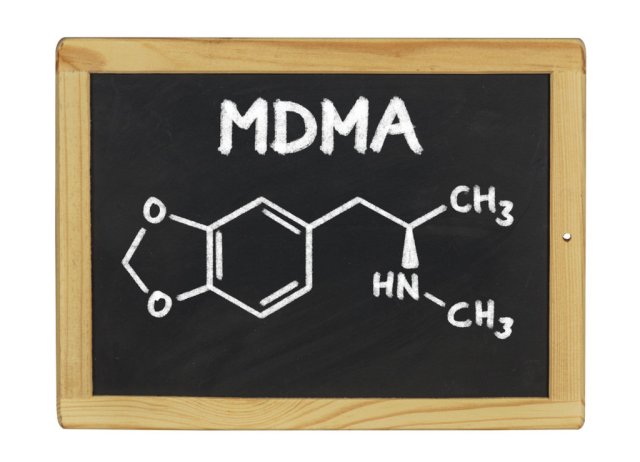
mdma

By DAVE PHILIPPS

After three tours in Iraq and Afghanistan, C. J. Hardin wound up hiding from the world in a backwoods cabin in North Carolina. Divorced, alcoholic and at times suicidal, he had tried almost all the accepted treatments for post-traumatic stress disorder: psychotherapy, group therapy and nearly a dozen different medications.

“Nothing worked for me, so I put aside the idea that I could get better,” said Mr. Hardin, 37. “I just pretty much became a hermit in my cabin and never went out.”

Then, in 2013, he joined a small drug trial testing whether PTSD could be treated with MDMA, the illegal party drug better known as Ecstasy.

“It changed my life,” he said in a recent interview in the bright, airy living room of the suburban ranch house here, where he now lives while going to college and working as an airplane mechanic. “It allowed me to see my trauma without fear or hesitation and finally process things and move forward.”

Based on promising results like Mr. Hardin’s, the Food and Drug Administration gave permission Tuesday for large-scale, Phase 3 clinical trials of the drug — a final step before the possible approval of Ecstasy as a prescription drug.

If successful, the trials could turn an illicit street substance into a potent treatment for PTSD.

Through a spokeswoman, the F.D.A. declined to comment, citing regulations that prohibit disclosing information about drugs that are being developed.

“I’m cautious but hopeful,” said Dr. Charles R. Marmar, the head of psychiatry at New York University’s Langone School of Medicine, a leading PTSD researcher who was not involved in the study. “If they can keep getting good results, it will be of great use. PTSD can be very hard to treat. Our best therapies right now don’t help 30 to 40 percent of people. So we need more options.”

But he expressed concern about the potential for abuse. “It’s a feel-good drug, and we know people are prone to abuse it,” he said. “Prolonged use can lead to serious damage to the brain.”

The Multidisciplinary Association for Psychedelic Studies, a small nonprofit created in 1985 to advocate the legal medical use of MDMA, LSD, marijuana and other banned drugs, sponsored six Phase 2 studies treating a total of 130 PTSD patients with the stimulant. It will also fund the Phase 3 research, which will include at least 230 patients.

Two trials here in Charleston focused on treating combat veterans, sexual assault victims, and police and firefighters with PTSD who had not responded to traditional prescription drugs or psychotherapy. Patients had, on average, struggled with symptoms for 17 years.

After three doses of MDMA administered under a psychiatrist’s guidance, the patients reported a 56 percent decrease of severity of symptoms on average, one study found. By the end of the study, two-thirds no longer met the criteria for having PTSD. Follow-up examinations found that improvements lasted more than a year after therapy.

“We can sometimes see this kind of remarkable improvement in traditional psychotherapy, but it can take years, if it happens at all,” said Dr. Michael C. Mithoefer, the psychiatrist who conducted the trials here. “We think it works as a catalyst that speeds the natural healing process.”

The researchers are so optimistic that they have applied for so-called breakthrough therapy status with the Food and Drug Administration, which would speed the approval process. If approved, the drug could be available by 2021.

Under the researchers’ proposal for approval, the drug would be used a limited number of times in the presence of trained psychotherapists as part of a broader course of therapy. But even in those controlled circumstances, some scientists worry that approval as a therapy could encourage more illegal recreational use.

“It sends the message that this drug will help you solve your problems, when often it just creates problems,” said Andrew Parrott, a psychologist at Swansea University in Wales who has studied the brains of chronic Ecstasy users. “This is a messy drug we know can do damage.”

Allowing doctors to administer the drug to treat a disorder, he warned, could inadvertently lead to a wave of abuse similar to the current opioid crisis.

During initial studies, patients went through 12 weeks of psychotherapy, including three eight-hour sessions in which they took MDMA. During the sessions, they lay on a futon amid candles and fresh flowers, listening to soothing music.

Dr. Mithoefer and his wife, Ann Mithoefer, and often their portly terrier mix, Flynn, sat with each patient, guiding them through traumatic memories.

“The medicine allows them to look at things from a different place and reclassify them,” said Ms. Mithoefer, a psychiatric nurse. “Honestly, we don’t have to do much. Each person has an innate ability to heal. We just create the right conditions.”

Research has shown that the drug causes the brain to release a flood of hormones and neurotransmitters that evoke feelings of trust, love and well-being, while also muting fear and negative emotional memories that can be overpowering in patients with post-traumatic stress disorder. Patients say the drug gave them heightened clarity and ability to address their problems.

For years after his combat deployments, Mr. Hardin said he was sleepless and on edge. His dreams were marked with explosions and death. The Army gave him sleeping pills and antidepressants. When they didn’t work, he turned to alcohol and began withdrawing from the world.

“I just felt hopeless and in the dark,” he said. “But the MDMA sessions showed me a light I could move toward. Now I’m out of the darkness and the world is all around me.”

Since the trial, he has gone back to school and remarried.

The chemist Alexander Shulgin first realized the euphoria-inducing traits of MDMA in the 1970s, and introduced it to psychologists he knew. Under the nickname Adam, thousands of psychologists began to use it as an aid for therapy sessions. Some researchers at the time thought the drug could be helpful for anxiety disorders, including PTSD, but before formal clinical trails could start, Adam spread to dance clubs and college campuses under the name Ecstasy, and in 1985, the Drug Enforcement Administration made it a Schedule 1 drug, barring all legal use.

Since then, the number of people seeking treatment for PTSD has exploded and psychiatry has struggled to keep pace. Two drugs approved for treating the disorder worked only mildly better than placebos in trials. Current psychotherapy approaches are often slow and many patients drop out when they don’t see results. Studies have shown combat veterans are particularly hard to treat.

In interviews, study participants said MDMA therapy had not only helped them with painful memories, but also had helped them stop abusing alcohol and other drugs and put their lives back together.

On a recent evening, Edward Thompson, a former firefighter, tucked his twin 4-year-old girls into bed, turned on their night light, then joined his wife at a backyard fire.

“If it weren’t for MDMA … ” he said.

“He’d be dead,” his wife, Laura, finished.

They both nodded.

Years of responding to gory accidents left Mr. Thompson, 30, in a near constant state of panic that he had tried to numb with alcohol and prescription opiates and benzodiazepines.

By 2015, efforts at therapy had failed, and so had several family interventions. His wife had left with their children, and he was considering jumping in front of a bus.

A member of a conservative Anglican church, Mr. Thompson had never used illegal drugs. But he was struggling with addiction from his prescription drugs, so he at first rejected a suggestion by his therapist that he enter the study. “In the end, I was out of choices,” he said.

Three sessions with the drug gave him the clarity, he said, to identify his problems and begin to work through them. He does not wish to take the drug again.

“It gave me my life back, but it wasn’t a party drug,” he said. “It was a lot of work.”

Google and Indian government partner for toilet-finder tool

by Matt Hickman

World Toilet Day, an annual United Nations-sanctioned day of observance drawing attention to the 2.4 billion people around the world without access to clean and safe sanitation, dropped this past weekend in typically splashy fashion: a Coldplay and Jay-Z concert, the unveiling of a Gates Foundation poop smell-blocking perfume and enough well-meaning potty puns to last well into the new year.

While World Toilet Day is global in scope, much of the awareness-raising, activism-inspiring action this year — aforementioned Coldplay and Jay-Z concert included — was centered around India, a country where an estimated 70 percent of households in both rural and urban areas don’t enjoy the luxury of having a functioning commode. For a majority of India’s 1.2 billion citizens, defecating and urinating in the open is the norm.

Similar to other developing nations, cellphones are far more prevalent than toilets in India. As backwards as this may seem to Westerners, it’s a reality for millions of Indian households. According to a 2012 census, 60 percent of Indian households surveyed have one or more mobile devices while only 36.4 percent of households have a toilet.

Given these statistics, a new partnership between Google and India’s Ministry of Urban Development (MoUD) seems like a match in clean sanitation heaven: the introduction of a Google Maps tool that points users in the direction of toilets that are clean, safe and open for public use. As reported by the International Business Times India, the toilet-finder tool is due to launch this month in Delhi, India’s second most populous city, before potentially becoming available in other major population cities, although the timeline is unclear.

How the app works

Of course, the tool, dubbed Google Toilet Locator, won’t solve India’s underlying toilet shortage problem or reverse cultural attitudes regarding al fresco urination. However, it does help on-the-go Delhi residents more easily find somewhere to go if need be. While we’ve written about urban toilet-finder apps in the past, those have been more or less spurred by convenience (and excessive drinking). Google Toilet Locator, piloted in a city of 25 million where public toilets are far and few between, is more driven by necessity

An unnamed official with the MoUD explains to the IBTimes India that the Google Toilet Locator will pull up all known public lavatories — sulabh shauchalays — across the National Capital Region along with harder-to-find loos located inside of shopping malls, gas stations, hospitals, etc. Listing both deluxe flush situations and standard no-frills squat options, the tool itself is integrated into Google Maps. Mobile users simply must open the app and enter one of numerous keywords in English or Hindi — “toilet,” “restroom,” “lavatory,” “swachhata,” “shauchalay,” etc. — and they’ll be directed to the nearest option based on their location.

Just like a restaurant or retail establishment, Delhi residents — and visitors — can use Google Toilet Locator to rate and comment on specific public restrooms, either providing a glowing recommendation or warning others to stay away.

Explains an official with the MoUD: “The system being put in place relies heavily on crowdsourcing, with people’s feedback helping fuel it. Therefore, if a person finds that a toilet is not clean, he or she can give it a bad review or rating, the facility for which is available on Google Maps.”

Considering that many Delhi residents who will be potentially using the app don’t have a toilet of their own at home, knowing if a public restroom is clean — or even open — is all the more important. Foreign tourists aside, for a large majority of folks using Google Toilet Locator, there isn’t the option of “holding it until I get home.”

Google Toilet Locator is just one of many events and initiatives launched in conjunction with World Toilet Day, which as is tradition, boasts an annual theme. This year, in order to spotlight the oft-overlooked link between economic livelihoods and sanitation, the theme is “Toilets and Jobs.”

For most, the topic of toilets and jobs usual revolves around ill-timed toilet paper shortages, privacy peccadilloes, rude noises or knowing to avoid the men’s room for at least 15 minutes after Ron from accounting goes in. For others, the workplace — and perhaps home, as well — might completely lack a clean, safe bathroom option. Poor sanitation has a direct link to economic well-being — that is, things like absenteeism, exhaustion and decreased productivity rise when employees don’t have access to a toilet at work or at home. In addition to impacting performance, the illnesses associated with poor sanitation keep workers off the job, sometimes temporarily and sometimes for good.

As the World Toilet Day website stresses, providing women with adequate and private bathroom facilities is of particular importance in developing areas.

And because it just wouldn’t be World Toilet Day without a video featuring dancing animated poos, here’s this year’s offering, which in keeping with the jobs theme, also features a variety of hard-working, life-saving “professional” toilets.

http://www.theverge.com/2016/11/16/13651882/google-maps-toilet-locator-india

Cat ownership linked to schizophrenia and other mental illness

A pair of new studies links childhood cat ownership and infection with the parasite Toxoplasma gondii (T. gondii) with later onset schizophrenia and other mental illness. Researchers published their findings in the online Schizophrenia Research and Acta Psychiatrica Scandinavica.

In the Schizophrenia Research study, investigators compared two previous studies that suggested childhood cat ownership could be a possible risk factor for schizophrenia or another serious mental illness with a third, even earlier survey on mental health to see if the finding could be replicated.

“The results were the same,” researchers reported, “suggesting that cat ownership in childhood is significantly more common in families in which the child later becomes seriously mentally ill.”

If accurate, the researchers expect the culprit to be infection with T. gondii, a parasite commonly carried by cats. At this point, though, they are urging others to conduct further studies to clarify the apparent link between cat ownership and schizophrenia.

The Acta Psychiatrica Scandinavica study was a meta-analysis of 50 previously published studies to investigate the prevalence of t. gondii infection in people diagnosed with psychiatric disorders compared with healthy controls.

In cases of schizophrenia, researchers said evidence of an association with T. gondii was “overwhelming,” CBS News reported. Specifically, people infected with T. gondii were nearly twice as likely to be diagnosed with schizophrenia as people never infected with the parasite, according to the report.

The meta-analysis also suggested associations between T. gondii infection and bipolar disorder, obsessive-compulsive disorder, and addiction. No association, however, was found for major depression.

—Jolynn Tumolo

References

1. Fuller Torrey E, Simmons W, Yolken RH. Is childhood cat ownership a risk factor for schizophrenia later in life? Schizophrenia Research. 2015 April 18. [Epub ahead of print].

2. Sutterland AL, Fond G, Kuin A, et al. Beyond the association. Toxoplasma gondii in schizophrenia, bipolar disorder, and addiction: systematic review and meta-analysis. Acta Psychiatrica Scandinavica. 2015 April 15. [Epub ahead of print].

http://www.psychcongress.com/article/studies-link-cat-ownership-schizophrenia-other-mental-illness

The mechanics of laughter

When the General Assembly of the United Nations proclaimed March 20 the International Day of Happiness, it was more than a frivolous feel-good holiday. The aim was to inspire 100 million to promote the universal goal of happiness and well-being around the world.

And while the U.N. admirably frames the day as way to talk about a more “inclusive, equitable and balanced approach” to the economic growth that can lead to more global happiness, we’re taking another approach. We’re talking laughter.

But there’s a funny thing about laughter: It’s so much more than an indication of happiness.

Laughing serves a social function. Some suggest that the first human laughter was a group ­gesture of relief at the passing of danger; and since laughter relaxes the biological fight-or-flight response, laughter may indicate trust in one’s company.

Likewise, many researchers think that laughter is connected to bonding.

“Laughter occurs when people are comfortable with one another, when they feel open and free. And the more laughter, the more bonding within the group,” says cultural anthropologist Mahadev Apte.

Behavioral neurobiologist and expert laughter researcher (that’s a thing) Robert Provine believes that laughter serves as a social signal. And indeed, other scientists concur; studies show that people are 30 times more likely to laugh in social settings than when they are alone.

The social science of laughter

Laughter is part of a universal human language. It is understood across cultures … and unlike words and syntax, which we have to learn, we are born with the capacity for giggles and tittering.

When we laugh, it happens unconsciously. We don’t think, “Hey, that’s funny, I’ll respond by laughing.” Although we can consciously be “in the moment” of our laughter, we can’t make true laughter just happen.

And while laughter isn’t always sparked by happiness, it often ends up there. Some experts believe that laughter is used to process things that are difficult to understand. Consider the nervous laughter during an intense event or the seemingly out-of-place laughter during funerals. These are the moments in life where things don’t make sense, and laughter is the behavior that evolved to respond to such times.

In these cases, maybe laughter can be best considered a defense against suffering and despair; as Psychology Today notes when addressing the topic of tittering, “If we can joke about a disappointing or traumatic event, we’ll often find ourselves feeling that what’s happened to us isn’t so bad and that we’ll be able to get through it.”

And then, happiness ensues.

Interestingly, researchers have found that a way a person laughs is a good indicator of his or her social power. People with high status tend to laugh louder and higher in pitch with fewer inhibitions, while people with lower status have laughter that is shorter, lower in pitch and more airy. The study, which was published in the Journal of Experimental Social Psychology, found that it observers can immediately pick up on someone’s social standing by listening to how he or she laughs.


Laughter and your brain

While we know that ce­rtain regions of the brain host certain functions, researchers have found that the production of laughter happens in various parts of our gray matter. The relationship between laughter and the brain is not fully understood, but some things are known. Although emotional responses are thought to be distinct to specific sections of the brain, laughter appears to be created by a circuit that runs through numerous areas. Furthermore, the limbic system — the complex network of nerves beneath the cerebral cortex that deals with instinct and mood — seems to be central in the process of laughing.

The average human laughs 17 times a day, and aside from stress-induced laughter, most laughter is a reaction to humor. Upon a funny scenario, more than a dozen facial muscles contract and the zygomatic major muscle becomes stimulated, resulting in a smile. The epiglottis interferes with the larynx and disrupts the respiratory system just enough so that air intake becomes irregular, making the laugher gasp.

When things really get going, the tear ducts are activated, leaving many of us laughing until we cry.

Provine did a study on the sonic structure of laughter and found that all human laughter consists of basic short notes repeated every 210 milliseconds. Laughter can be comprised of “ha”s or “ho”s, he says, but not both. Provine also says that we have a “detector” that reacts to laughter by triggering other neural circuits in the brain, which ends up generating more laughter. This explains how sometimes when we start laughing, we can’t stop; why this seems to happen so frequently in church and lecture halls has yet to be determined.

A wonderful thing about laughing – aside from just the pure pleasure of it – are the health benefits bestowed by the act; it can actually change your body. Consider the following:

It can stimulate your heart, lungs, muscles and endorphin release by enhancing your oxygen intake.

It relieves your stress response, leading to feelings of increased pleasantness.

It can tame tension by stimulating circulation and helping muscle relaxation, both of which help reduce some physical symptoms of stress.

It may improve your immune system. The Mayo Clinic tells us that negative thoughts “manifest into chemical reactions that can affect your body by bringing more stress into your system and decreasing your immunity.” Conversely, positive thoughts release neuropeptides that help conquer stress and possibly other stress-related illness.

It potentially soothes pain by encouraging the body to produce its own natural painkillers.

And perhaps loveliest of all; laughter is infectious. The simple act of laughing can help not only you, but those around you. It’s the best kind of contagion.

http://www.mnn.com/health/fitness-well-being/stories/happiness-101-the-mechanics-of-laughter

Pupil response to negative facial expressions predicts risk for depression relapse

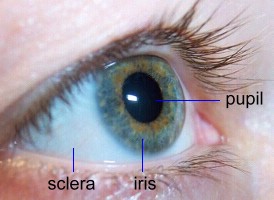
Pupil dilation in reaction to negative emotional faces predicts risk for depression relapse, according to new research from Binghamton University, State University of New York.

Researchers at Binghamton University, led by PhD student Anastacia Kudinova, aimed to examine whether physiological reactivity to emotional stimuli, assessed via pupil dilation, served as a biological marker of risk for depression recurrence among individuals who are known to be at a higher risk due to having previous history of depression. Participants were 57 women with a history of major depressive disorder (MDD). The researchers recorded the change in pupil dilation in response to angry, happy, sad and neutral faces. The team found that women’s pupillary reactivity to negative (sad or angry faces) but not positive stimuli prospectively predicted MDD recurrence.

“The study focuses on trying to identify certain markers of depression risk using measures that are readily accessible, reliable and less expensive,” said Kudinova. “It is something we can put in any doctor’s office that gives us a quick and easy objective measure of risk.”

Additionally, the researchers found that both high and low reactivity to angry faces predicted risk for MDD recurrence. These findings suggest that disrupted physiological response to negative stimuli indexed via pupillary dilation could serve as a physiological marker of MDD risk, thus presenting clinicians with a convenient and inexpensive method to predict which of the at-risk women are more likely to experience depression recurrence.

“It’s a bit complicated because different patterns of findings were found for pupil reactivity to angry versus sad faces. Specifically, really high or really low pupil dilation to angry faces was associated with increased risk whereas only low dilation to sad faces was associated with risk (high dilation to sad faces was actually protective),” said Brandon Gibb, professor of psychology at Binghamton University and director of the Mood Disorders Institute and Center for Affective Science.

Other contributors to this research include Katie Burkhouse and Mary Woody, both PhD students; Max Owens, assistant professor of psychology at the University of South Florida, St. Petersburg; and Greg Siegle, associate professor of psychiatry at the University of Pittsburgh School of Medicine.
The paper, “Pupillary reactivity to negative stimuli prospectively predicts recurrence of major depressive disorder in women,” was published in Psychophysiology.

https://www.binghamton.edu/mpr/news-releases/news-release.html?id=2448

Original pyramid found nestled inside two larger ones at Mayan ruins of Chichen Itza

Archaeologists have discovered what may be the original structure built at the pyramid of Kukulkan at the Mayan ruins of Chichen Itza, experts said Wednesday.

Last year, archaeologists using electrical imagining techniques found that the pyramid, which is also known as El Castillo, was built atop a subterranean river, or a cenote.

Archaeologists have long known that a smaller pyramid is encapsulated underneath the visible temple.

Researchers said Wednesday that they had detected an even smaller structure inside the other two structures. Using what is called tri-dimensional electric resistivity tomography, or “ERT-3D,” they found a 10-metre tall structure within the 20-metre tall ‘intermediate’ pyramid that was covered over by the last construction stage, perhaps around 900 A.D.

Archaeologist Denisse Lorenia Argote said “if we can research this structure in the future it could be important, because it could tell us about the first-period inhabitants” of the site.

Argote, of Mexico’s National Institute of Anthropology and History, said the first structure may be in the “pure Maya” style from between 500 and 800 A.D.

University of California, San Diego anthropology professor Geoffrey Braswell, who was not involved in the latest project but who has conducted research at Chichen Itza, said the discovery may be new, or may be a structure detected in the 1940s.

Braswell said that while digging into the intermediate-layer pyramid in the 1940s, one archaeologist found a third platform buried within it.

“The tunnel was unstable, so we know very little about this platform,” Braswell wrote. “It appears to be much smaller than the outer two pyramids, and is not perfectly aligned within them.”

The computer image distributed by the researchers also showed un underlying structure not quite aligned with the subsequent layers.

Braswell compared the Kukulkan pyramid to a Russian nesting doll, with each layer encapsulating another. But at the bottom, there may be more than one platform encapsulated.

“To make matters more complicated, ” Braswell wrote, “the third Russian doll moving in may actually be one of a set of several small dolls rattling around inside the same shell. We just do not know. ”

Rene Chavez, a researcher at the National Autonomous University’s Institute of Geophysics, said the early structure appeared to have a staircase and perhaps an altar at the top that may have just been filled in and preserved. The structure has been mapped, but it is not clear whether it will be excavated.

“Given that no one has excavated this structure … it is difficult to say with certitude if it is one of the oldest buildings at the site,” Braswell said. “But this is quite possible.”

http://www.vancouversun.com/news/world/original+pyramid+found+nestled+inside+larger+ones+mayan+ruins/12399722/story.html

Fijian ants grow their own plant cities and farm tropical fruits

By Alice Klein

Ants beat us to it. A Fijian ant first started planting fruit crops 3 million years ago, long before human agriculture evolved.

The ant – Philidris nagasau – grows and harvests Squamellaria fruit plants that grow on the branches of various trees.

First, the ants insert seeds of the fruit plant in the cracks in tree bark. Workers constantly patrol the planting sites and fertilise the seedlings, probably with their faeces.

As the plants grow, they form large, round hollow structures at their base called domatia that the ants live in instead of building nests. When the fruit appears, the ants eat the flesh and collect the seeds for future farming.

Guillaume Chomicki at the University of Munich, Germany, and his colleagues discovered that each ant colony farmed dozens of Squamellaria plants at the same time, with trails linking each thriving hub. The connected plant cities often spanned several adjacent trees.

The researchers found that Squamellaria plants are completely dependent on the ants to plant and fertilise their seeds. At the same time, Philidris nagasau ants cannot survive without the food and shelter provided by the plants. The Fijian phenomenon is the first documented example of ants farming plants in a mutually dependent relationship.

Trees in nearby Australia have been observed with similar-looking ant-filled plants growing along their branches, but no one has known why, says Simon Robson at James Cook University in Australia. The plants are from the same family as Squamellaria, suggesting they have the same symbiotic farming relationship with ants.

Chomicki’s team also conducted a genetic analysis to study the history of the Fijian ant-plant interactions. The results showed that the ants lost their ability to build nests around 3 million years ago, at the same time as the plants developed roots that could grow in bark. This signals the beginning of the mutual relationship, which emerged when Fiji and Australia were still connected.

Brainy ants
Only a handful of other species have been found to farm their food. For example, Yeti crabs cultivate bacteria on their claws and sloths grow algae gardens on their fur. Ants have been known to cultivate fungi, but this is the first time they have been found to plant crops in such a mutualistic manner.

The fact that ants have developed such sophisticated food production skills confirms the impressive teamwork of ants, says Kirsti Abbott at the University of New England, Australia.

“Ants are a lot smarter than we think they are – we call them superorganisms because they form networks that are much like our brains,” she says. “The information flow among ant colonies is just insane compared to human social systems, so this finding does not surprise me in the slightest.”

Journal reference: Nature Plants, DOI: 10.1038/nplants.2016.181

https://www.newscientist.com/article/2113410-fijian-ants-grow-their-own-plant-cities-and-farm-tropical-fruits/