Faceless fish not seen since 1873 now re-discovered off the coast of Australia

A “faceless” deep-sea fish not seen for more than a century has been rediscovered by scientists trawling the depths of a massive abyss off Australia’s east coast, along with “amazing” quantities of rubbish.

The 40cm fish was rediscovered 4km below sea level in waters south of Sydney by scientists from Museums Victoria and the Australian government’s Commonwealth Scientific and Industrial Research Organisation (CSIRO) on the weekend.

Dr Tim O’Hara, the chief scientist and expedition leader, who is a senior curator of marine invertebrates at Museums Victoria, said it was the first time the fish had been seen in waters off Australia since 1873, when one was dredged up by a British ship near Papua New Guinea.

“This little fish looks amazing because the mouth is actually situated at the bottom of the animal so, when you look side-on, you can’t see any eyes, you can’t see any nose or gills or mouth,” O’Hara said via satellite phone from the research vessel Investigator on Wednesday. “It looks like two rear-ends on a fish, really.”

The world-first survey of commonwealth marine reserves stretching from northern Tasmania to central Queensland began on 15 May. On board the Investigator research vessel for the month-long voyage are 27 scientists, 13 technicians and 20 crew.

Samples of animals and sediment have been collected from the bottom of the abyss each day by a metal sled-style device attached to 8km of thick wire. A video camera has also been trailed behind the ship to capture footage from the depths.

Finds have included bright red spiky rock crabs, spectacular bioluminescent sea stars and gigantic sea spiders as big as a dinner plate.

“The experts tell me that about a third of all specimens coming on board are new totally new to science,” O’Hara said. “They aren’t all as spectacular as the faceless fish but there’s a lot of sea fleas and worms and crabs and other things that are totally new and no one has seen them ever before.”

Di Bray of Museums Victoria told the ABC that the rediscovery of the faceless fish was a highlight of the “awesome stuff” thrown up by the study so far.

“On the video camera we saw a kind of chimaera that whizzed by – that’s very, very rare in Australian waters,” she said. “We’ve seen a fish with photosensitive plates that sit on the top of its head, tripod fish that sit up on their fins and face into the current.”

“A lot” of the species found would prove to be previously undiscovered, she predicted.

“We’re not even scratching the surface of what we know about our abyssal plain fishes.”

Equally “amazing”, O’Hara said, was the quantity of rubbish that researchers had dredged up.

“There’s a lot of debris, even from the old steam ship days when coal was tossed overboard,” he said. “We’ve seen PVC pipes and we’ve trawled up cans of paints.

“It’s quite amazing. We’re in the middle of nowhere and still the sea floor has 200 years of rubbish on it.”

In February, scientists reported “extraordinary” levels of toxic pollution in the 10km-deep Mariana trench, one of the most remote and inaccessible places on the planet.

Data from the survey of the eastern abyss would allow scientists to collect baseline data about its biodiversity and would likely be used to measure the impacts of climate change in the coming decades.

The research voyage is due to conclude on 16 June.

https://www.theguardian.com/environment/2017/may/31/faceless-fish-missing-for-more-than-a-century-rediscovered-by-australian-scientists

Nasa partner Robert Bigelow says he is ‘absolutely convinced’ aliens are currently living on Earth

One of Nasa’s partners has said that he is “absolutely convinced” aliens exist – and that they are living on Earth right now.

Robert Bigelow, an entrepreneur who is working closely with Nasa on future space missions, has suggested that he knows that our planet has an alien presence that is “right under our noses”.

Mr Bigelow made the announcement during an episode of the show 60 Minutes that focused on his work with the space agency.

His company, Bigelow Aerospace, is developing an expendable craft for humans that can inflate and might provide the space habitats of the future.

They have already been tested out in journeys to the International Space Station. And the two organisations are working on further co-operation.

But during that episode Mr Bigelow began to talk about his belief in aliens – and his claim that UFOs have come to Earth and extraterrestrials have an “existing presence” here.

“I’m absolutely convinced [that aliens exist],” he told reporter Lara Logan. “That’s all there is to it.”

Asked by Ms Logan whether he also thought that UFOs had come to Earth, he said he did.

“There has been and is an existing presence, an ET presence,” Mr Bigelow said. “And I spent millions and millions and millions – I probably spent more as an individual than anybody else in the United States has ever spent on this subject.”

Ms Logan then asked if Mr Bigelow thought it was “risky” to say that he believes such things. He said that he doesn’t care what people think because it wouldn’t “change the reality of what I know”.

Mr Bigelow didn’t give any details about whether the research and private space travel that he is funding had revealed anything about aliens to him.

But he said that the hugely expensive work his company and Nasa are doing won’t be required to meet them – he said that people “don’t have to go anywhere”, because the aliens are “right under people’s noses”.

https://www.independent.co.uk/news/science/nasa-robert-bigelow-aliens-extraterrestrials-earth-aerospace-space-international-station-a7763441.html

Thanks to Kebmodee for bringing this to the It’s Interesting community.

How to Save Your Digital Soul


With a selfie and some audio, a startup called Oben says, it can make you an avatar that can say—or sing—anything.

by Rachel Metz

I’ve met Nikhil Jain in the flesh, and now, on the laptop screen in front of me, I’m looking at a small animated version of him from the torso up, talking in the same tone and lilting accented English—only this version of Jain is bald (hair is tricky to animate convincingly), and his voice has a robotic sound.

For the past three years, Jain has been working on Oben, the startup he cofounded and leads. It’s building technology that uses a single image and an audio clip to automate the construction of what are sort of like digital souls: avatars that look and sound a lot like anyone, and can be made to speak or sing anything.

Of course it won’t really be you—or Beyoncé, or Michael Jackson, or whomever an Oben avatar depicts—but it could be a decent, potentially fun approximation that’s useful for all kinds of things. Maybe, like Jain, you want a virtual you to read stories to your kids when you can’t be there in person. Perhaps you’re a celebrity who wants to let fans do duets with your avatar on a mobile or virtual-reality app, or the estate of a dead celebrity who wants to continue to keep that person “alive” with avatar-based performances. The opportunities are endless—and, perhaps, endlessly eerie.

Oben, based in Pasadena, California, has raised about $9 million so far. The company is planning to release an app late this year that lets people make their own personal avatar and share video clips of it with friends.

Oben is also working with some as-yet-unnamed bands in Asia to make mobile-based avatars that will be able to sing duets with fans, and last month it announced it will launch a virtual-reality-enabled version of its avatar technology with the massively popular social app WeChat, for the HTC Vive headset.

For now, producing the kind of avatar Jain showed me still takes a lot of time, and it doesn’t even include the body below the waist (Jain says the company is experimenting with animating other body parts, but mainly it’s “focusing on other things”). While the avatar can be made with just one photo and two to 20 minutes of reading from a phoneme-rich script (the more, the better), a good avatar still takes Oben’s deep-learning system about eight hours to create. This includes cleaning up the recorded audio, creating a voice print for the person that reflects qualities such as accent and timbre, and making the 3-D visual model (facial movements are predicted from the selfie and voice print, Jain says). While speaking sounds pretty good, the singing clips I heard sounded very Auto-Tuned.

The avatars in the forthcoming app will be less focused on perfection but much faster to build, he says. Oben is also trying to figure out how to match speech and facial expressions so that the avatars can speak any language in a natural-looking way; for now, they’re limited to English and Chinese.

If digital copies like Oben’s are any good, they will raise questions about what should happen to your digital self over time. If you die, should an existing avatar be retained? Is it disturbing if others use digital breadcrumbs you left behind to, in a sense, re-create your digital self?

Jain isn’t sure what the right answer is, though he agrees that, like other companies that deal with user data, Oben does have to address death. And beyond big questions, there are potentially big business opportunities in that issue. The company’s business model is likely to be, in part, predicated on it: he says Oben has been approached by the estates of numerous celebrities, some of them long dead, some recently deceased.

https://www.technologyreview.com/s/607885/how-to-save-your-digital-soul/

Researchers at MIT have developed robots that can teach eachother new things.

One advantage humans have over robots is that we’re good at quickly passing on our knowledge to each other. A new system developed at MIT now allows anyone to coach robots through simple tasks and even lets them teach each other.

Typically, robots learn tasks through demonstrations by humans, or through hand-coded motion planning systems where a programmer specifies each of the required movements. But the former approach is not good at translating skills to new situations, and the latter is very time-consuming.

Humans, on the other hand, can typically demonstrate a simple task, like how to stack logs, to someone else just once before they pick it up, and that person can easily adapt that knowledge to new situations, say if they come across an odd-shaped log or the pile collapses.

In an attempt to mimic this kind of adaptable, one-shot learning, researchers from MIT’s Computer Science and Artificial Intelligence Laboratory (CSAIL) combined motion planning and learning through demonstration in an approach they’ve dubbed C-LEARN.

First, a human teaches the robot a series of basic motions using an interactive 3D model on a computer. Using the mouse to show it how to reach and grasp various objects in different positions helps the machine build up a library of possible actions.

The operator then shows the robot a single demonstration of a multistep task, and using its database of potential moves, it devises a motion plan to carry out the job at hand.

“This approach is actually very similar to how humans learn in terms of seeing how something’s done and connecting it to what we already know about the world,” says Claudia Pérez-D’Arpino, a PhD student who wrote a paper on C-LEARN with MIT Professor Julie Shah, in a press release.

“We can’t magically learn from a single demonstration, so we take new information and match it to previous knowledge about our environment.”

The robot successfully carried out tasks 87.5 percent of the time on its own, but when a human operator was allowed to correct minor errors in the interactive model before the robot carried out the task, the accuracy rose to 100 percent.

Most importantly, the robot could teach the skills it learned to another machine with a completely different configuration. The researchers tested C-LEARN on a new two-armed robot called Optimus that sits on a wheeled base and is designed for bomb disposal.

But in simulations, they were able to seamlessly transfer Optimus’ learned skills to CSAIL’s 6-foot-tall Atlas humanoid robot. They haven’t yet tested Atlas’ new skills in the real world, and they had to give Atlas some extra information on how to carry out tasks without falling over, but the demonstration shows that the approach can allow very different robots to learn from each other.

The research, which will be presented at the IEEE International Conference on Robotics and Automation in Singapore later this month, could have important implications for the large-scale roll-out of robot workers.

“Traditional programming of robots in real-world scenarios is difficult, tedious, and requires a lot of domain knowledge,” says Shah in the press release.

“It would be much more effective if we could train them more like how we train people: by giving them some basic knowledge and a single demonstration. This is an exciting step toward teaching robots to perform complex multi-arm and multi-step tasks necessary for assembly manufacturing and ship or aircraft maintenance.”

The MIT researchers aren’t the only people investigating the field of so-called transfer learning. The RoboEarth project and its spin-off RoboHow were both aimed at creating a shared language for robots and an online repository that would allow them to share their knowledge of how to carry out tasks over the web.

Google DeepMind has also been experimenting with ways to transfer knowledge from one machine to another, though in their case the aim is to help skills learned in simulations to be carried over into the real world.

A lot of their research involves deep reinforcement learning, in which robots learn how to carry out tasks in virtual environments through trial and error. But transferring this knowledge from highly-engineered simulations into the messy real world is not so simple.

So they have found a way for a model that has learned how to carry out a task in a simulation using deep reinforcement learning to transfer that knowledge to a so-called progressive neural network that controls a real-world robotic arm. This allows the system to take advantage of the accelerated learning possible in a simulation while still learning effectively in the real world.

These kinds of approaches make life easier for data scientists trying to build new models for AI and robots. As James Kobielus notes in InfoWorld, the approach “stands at the forefront of the data science community’s efforts to invent ‘master learning algorithms’ that automatically gain and apply fresh contextual knowledge through deep neural networks and other forms of AI.”

If you believe those who say we’re headed towards a technological singularity, you can bet transfer learning will be an important part of that process.

These Robots Can Teach Other Robots How to Do New Things

Julius Youngner, Polio Vaccine Pioneer, Dies at 96

By SAM ROBERTS

Julius Youngner, an inventive virologist whose nearly fatal childhood illness destined him to become a medical researcher and a core member of the team that developed the Salk polio vaccine in 1955, died on April 27 at his home in Pittsburgh. He was 96.

His death was confirmed by his son, Dr. Stuart Youngner.

Dr. Youngner was the last surviving member of the original three-man research team assembled by Dr. Jonas Salk at the University of Pittsburgh to address the polio scourge, which peaked in the United States in the early 1950s when more than 50,000 children were struck by it in one year. Three other assistants later joined the group.

Dr. Salk credited his six aides with major roles in developing the polio vaccine, a landmark advance in modern medicine, which he announced on April 12, 1955.

The announcement — that the vaccine had proved up to 90 percent effective in tests on 440,000 youngsters in 44 states — was greeted with ringing churchbells and openings of public swimming pools, which had been drained for fear of contagion. Within six years, annual cases of the paralyzing disease had declined from 14,000 to fewer than 1,000.

By 1979, polio had been virtually eliminated in developed nations.

“I think it’s absolutely fair to say that had it not been for Dr. Youngner, the polio vaccine would not have come into existence,” Dr. Salk’s son, Peter L. Salk, president of the Jonas Salk Legacy Foundation and a visiting professor at the University of Pittsburgh Graduate School of Public Health, said in an email.

While Dr. Youngner, who was 34 at the time, remained at the university and made further advances in virology, he and other members of the team remained embittered that Dr. Salk had not singled them out for credit in his announcement speech.

The printed version was prefaced with the phrase “From the Staff of the Virus Research Laboratory by Jonas E. Salk, M.D.,” and a United Press account quoted him as crediting his original three assistants, who had joined him as early as 1949 — Dr. Youngner, Army Maj. Byron L. Bennett and Dr. L. James Lewis — as well as three others.

“The really important thing to recognize is that the development of the polio vaccine at the University of Pittsburgh was a team effort,” Dr. Peter Salk wrote.

He added, “There is no question that my father recognized the importance of the team, and if there were circumstances in which that wasn’t adequately expressed, I would feel that it needs to be expressed now and very clearly so.”

In 1993, Dr. Youngner crossed paths with Dr. Salk for the first time since Dr. Salk left for California in 1961. According to “Polio: An American Story” (2005), by David M. Oshinsky, Dr. Youngner raised the 1955 announcement speech in confronting Dr. Salk.

“Do you remember whom you mentioned and whom you left out?” the book quoted him as saying to Dr. Salk. “Do you realize how devastated we were at that moment and ever afterward when you persisted in making your co-workers invisible?”

Asked later, though, whether he regretted having worked for Dr. Salk, Dr. Youngner replied: “Absolutely not. You can’t imagine what a thrill that gave me. My only regret is that he disappointed me.”

Dr. Youngner’s contribution to the team was threefold.

He developed a method called trypsinization, using monkey kidney cells to generate sufficient quantities of the virus for experiments and production of the vaccine. He also found a way to deactivate the virus without disrupting its ability to produce antibodies. And he created a color test to measure polio antibodies in the blood to determine whether the vaccine was working.

He later contributed research to understanding interferon as an antiviral agent in the treatment of cancer and hepatitis; to the development (with Dr. Samuel Salvin) of gamma interferon, which is used against certain infections; and to advances that resulted in vaccines for Type A influenza and (with Dr. Patricia Dowling) equine influenza.

“As a direct result of his efforts, there are countless numbers of people living longer and healthier lives,” Dr. Arthur S. Levine, the University of Pittsburgh’s senior vice chancellor for the health sciences and dean of its medical school, said in a statement.

Julius Stuart Youngner was born on Oct. 24, 1920, in Manhattan and raised in the Bronx, where he survived lobar pneumonia, a severe infection of the lungs. His father, Sidney Donheiser, was a businessman. His mother was Bertha Youngner. He took her surname when his parents divorced.

After graduating from Evander Childs High School in the Bronx at 15, he earned a bachelor’s degree in English with a minor in biology from New York University in 1939 and a master’s and doctorate of science in microbiology from the University of Michigan.

Drafted into the Army in World War II, he worked on the Manhattan Project at Oak Ridge, Tenn., and at the University of Rochester, testing the toxicity of uranium salts. He said he learned of the project’s goal of building an atomic bomb only when it was dropped on Japan.

He was working at the National Cancer Institute, part of the National Institutes of Health, when the University of Pittsburgh hired him as an assistant professor in 1949 to assist Dr. Salk. He was a professor of microbiology and medical genetics at the university School of Medicine and chairman of the department of microbiology (biochemistry and microbiology were added later) from 1966 until his retirement in 1989.

His first wife, the former Tula Liakakis, died in 1963. Besides their son, Stuart, a psychiatry and bioethics professor at Case Western Reserve University in Cleveland, Dr. Youngner is survived by his wife, the former Rina Balter; a daughter, Lisa, an artist, also from his first marriage; three grandchildren; and a half brother, Alan Donheiser.

Dr. Youngner’s infectious curiosity, as a colleague characterized it, generated hundreds of scholarly papers and more than 15 patents. He was president of the American Society for Virology from 1986 to 1987.

When he was 7, Dr. Youngner nearly died from the pneumonia he had contracted when bacteria ate through his chest and infected a rib. An effective vaccine for pneumonia and antibiotics would not be invented for nearly two decades.

“So they strapped my legs to a table, and two nuns held my arms and another held my head and they prayed while they operated on me,” he recalled in an oral history interview in the early 1990s with the National Council of Jewish Women. “To this day I can remember the feeling of the saw on that rib.

“Later in life, when I had to have some minor surgery,” he said, “I put it off for years because I was so affected by this episode.”

Wild crows seem to obey ‘do not enter’ signs


Crows can’t read, but the signs have still apparently curbed their habit of stealing insulation material from a university building in Japan.

by Russell McLendon

Crows are incredibly clever birds. Some species use tools, for example. Some also recognize human faces, even “gossiping” about who’s a threat and who’s cool. Crows can hold long-term grudges against people they deem dangerous, or shower their allies with gifts. Oh, and they can solve puzzles on par with a 7-year-old human.

With wits like this, it’s little wonder crows have adapted to live in human cities around the world. Yet despite all their uncanny displays of intelligence, a recent example from Japan is eyebrow-raising even for these famously brainy birds.

Wild crows had learned to raid a research building in Iwate Prefecture, stealing insulation to use as nest material. But as the Asahi Shimbun reports, they abruptly quit after a professor began hanging paper signs that read “crows do not enter.”

The idea was suggested by a crow expert from Utsunomiya University, and has reportedly worked for the past two years. This doesn’t mean the crows can read Japanese, but it may still shed light on their complex relationship with people.

The building in question is the International Coastal Research Center (ICRC), part of the University of Tokyo’s Atmosphere and Ocean Research Institute in Otsuchi. The ICRC was founded in 1973 to promote marine research around the biodiverse Sanriku Coast, but its building was heavily damaged by the 2011 Great East Japan earthquake and tsunami, which flooded all three stories. Nearby houses were all destroyed, the Asahi Shimbun reports, and many residents have moved elsewhere.

Repairs later allowed temporary use of the third floor, but the first and second floors were just cleared for warehouse space. While the University of Tokyo has plans to rebuild the center and restart its research, that “is expected to cost a substantial amount of money and several years of time,” according to the ICRC website.

The crows began their raids on the damaged building in spring 2015, according to Katsufumi Sato, a behavioral ecologist and ethology professor at the University of Tokyo. Once inside, they would find insulated pipes, tear off chunks of insulation and then fly away, leaving behind feathers and droppings as clues of their crime.

“Crows take it for their nests,” Sato tells Shimbun staff writer Yusuke Hoshino.

Hoping for a simple solution, ICRC staff sought advice from Sato, who in turn asked his friend Tsutomu Takeda, an environmental scientist and crow expert at Utsunomiya University’s Center for Weed and Wildlife Management. When Takeda suggested making signs that tell crows to stay out, Sato says he thought it was a joke. But he gave it a try, and crows quit raiding the ICRC “in no time at all,” Hoshino writes.

Sato remained skeptical, assuming this was a temporary coincidence, but the crows stayed away throughout 2015, even though the building still had openings and still had insulation inside. He put up the paper signs again in 2016, and after another year without crow attacks, he kept up the tradition this spring. Crows can still be seen flying around nearby, Hoshino points out, but their raids seem to have ended.

So what’s going on? Crows can’t read, but could they still somehow be getting information from the signs? As the BBC documented a decade ago, some urban crows in Japan have learned to capitalize on traffic lights, dropping hard-to-crack nuts into traffic so cars will run over them, then waiting for the light to turn red so they can safely swoop down and grab their prize. That’s impressive, albeit not quite the same.

Takeda offers a different explanation. The crows aren’t responding to the signs at all, he says; they’re responding to people’s responses. People might normally ignore common urban wildlife like crows, but these warnings — while ostensibly directed at crows themselves — draw human attention to the birds. As ICRC staff, students and visitors see the strange signs, they often look up at the crows and even point at them.

“People gaze up at the sky [looking for crows], you know,” Takeda says.

For clever birds that pay close attention to people, that’s apparently eerie enough to make the ICRC seem unsafe. It’s worth noting this is anecdotal, not a scientific study, and there may be another reason why the crows stopped their raids. But given how closely it correlated with the new signs, and how perceptive crows can be, Takeda’s plan is being credited with cheaply and harmlessly keeping the birds at bay.

If nothing else, this is a reminder to appreciate these intelligent birds living all around us, even in cities we built for ourselves. But since crows are sometimes a little too good at exploiting urban environments, it’s also a helpful reminder of how much a dirty look can accomplish. Sato, now a believer in Takeda’s unorthodox strategy, hopes more people will come to the ICRC and gawk at the local crows.

http://www.mnn.com/earth-matters/animals/blogs/crows-do-not-enter-signs-japan

Listen to the Surprisingly Goofy Voice of a Neanderthal

by Molly McBride Jacobson

When we imagine Neanderthals, we typically picture them like much dirtier, hairier versions of ourselves. Imaginative depictions of Homo neanderthalensis usually mean fur pelts, cave paintings, heavy clubs, and grunting. Lots of grunting.

But maybe that’s wrong. In the BBC documentary Neanderthal: The Rebirth a team of scientists investigated Neanderthals’ skeletal remains to recreate how they moved and behaved. For this segment, the BBC employed renowned voice coach Patsy Rodenburg to examine a model of a Neanderthal’s vocal tract and theorize what their voice might have sounded like. It’s not at all what you thought it was. A short voice box, huge ribs, a wide nasal cavity, and a thick, heavy skull made for a sound that was… well, just watch.

A lost love letter finds its recipient after 72 years

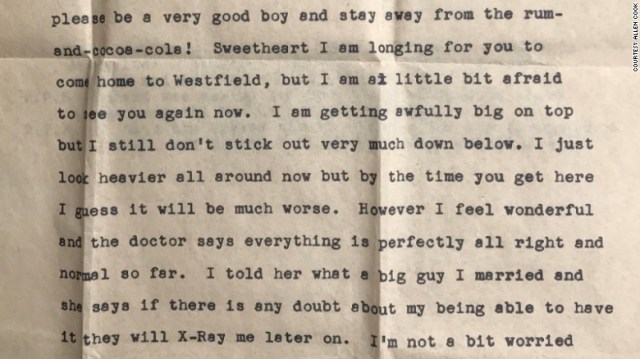
Allen Cook and his daughter Melissa were renovating her house in Westfield, New Jersey, this week when they found a crack in one of the ceilings. What they discovered within turned out to be part of a beautiful, heartwarming love story.

“The envelope was old and yellow. It has never been opened. It was unbelievable when my son-in-law started reading it. In the letter she was talking about the baby she was going to have,” Allen Cook told CNN.

The story — which could be straight out of a great movie plot about love and its mysterious ways — begins in 1945.

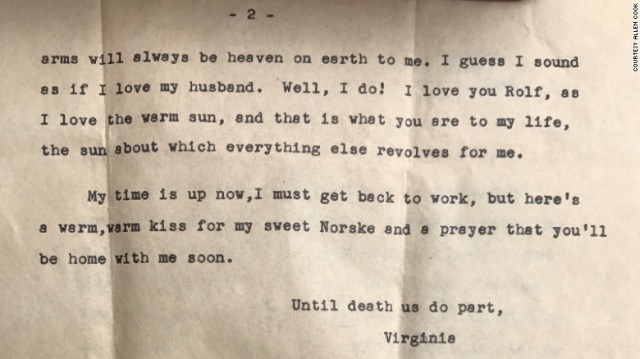
Dated May 4 of that year, the typed letter was written by a woman named Virginia to her husband, Rolf Christoffersen. At the time, he was a sailor in the Norwegian navy.

The envelope was marked “return to sender” and never found its way to her husband — until this week. Allen’s daughter used the Internet to find the phone number of someone named Rolf Christoffersen and gave him a call, leading her to his son in Santa Barbara, California.

“Someone called me at my office. They just Googled my name because I have the same name as my father. Melissa asked me where I grew up and I told her. She told me she had the letter. This is how I found out,” Christoffersen’s son, 66, told CNN.

The younger Christoffersen wasn’t yet born when his mother Virginia wrote the letter, but he says her words are very special to him. His mother, who died six years ago this week, wrote about her love for her husband.

“I love you Rolf, as I love the warm sun, and that is what you are for my life, the sun about which everything else revolves for me,” she wrote.

Seventy-two years later, her words were finally heard by her husband. Christoffersen immediately called his father, who is now 96 and also lives in California, and read the letter to him over the phone.

“I was so surprised after all these years. I was very happy to find out that a letter like that existed. I am still very emotional,” the elder Christoffersen told CNN.

The long-lost letter is believed to have fallen through a crack in the upstairs floor of the house, where the Christoffersens used to live. Finally received just before Mother’s Day, it is now another tangible connection to Virginia Christoffersen.

“It’s Mother’s Day and reading her words reminded me just what a wonderful person she was and how much she loved us,” her son said, through tears.

http://www.cnn.com/2017/05/12/us/love-letter-delivered-72-years-later-trnd/index.html

First-Ever LSD Microdosing Study Will Pit the Human Brain Against AI

by Daniel Oberhaus

Amanda Feilding used to take lysergic acid diethylamide every day to boost creativity and productivity at work before LSD, known as acid, was made illegal in 1968. During her downtime, Feilding, who now runs the Beckley Foundation for psychedelic research, would get together with her friends to play the ancient Chinese game of Go, and came to notice something curious about her winning streaks.

“I found that if I was on LSD and my opponent wasn’t, I won more games,” Feilding told me over Skype. “For me that was a very clear indication that it improves cognitive function, particularly a kind of intuitive pattern recognition.”

An interesting observation to be sure. But was LSD actually helping Feilding in creative problem solving?

A half-century ban on psychedelic research has made answering this question in a scientific manner impossible. In recent years, however, psychedelic research has been experiencing something of a “renaissance” and now Feilding wants to put her intuition to the test by running a study in which participants will “microdose” while playing Go—a strategy game that is like chess on steroids—against an artificial intelligence.

Microdosing LSD is one of the hallmarks of the so-called “Psychedelic Renaissance.” It’s a regimen that involves regularly taking doses of acid that are so low they don’t impart any of the drug’s psychedelic effects. Microdosers claim the practice results in heightened creativity, lowered depression, and even relief from chronic somatic pain.

But so far, all evidence in favor of microdosing LSD has been based on self-reports, raising the possibility that these reported positive effects could all be placebo. So the microdosing community is going to have to do some science to settle the debate. That means clinical trials with quantifiable results like the one proposed by Feilding.

As the first scientific trial to investigate the effects of microdosing, Feilding’s study will consist of 20 participants who will be given low doses—10, 20 and 50 micrograms of LSD—or a placebo on four different occasions. After taking the acid, the brains of these subjects will be imaged using MRI and MEG while they engage in a variety of cognitive tasks, such as the neuropsychology staples the Wisconsin Card Sorting test and the Tower of London test. Importantly, the participants will also be playing Go against an AI, which will assess the players’ performance during the match.

By imaging the brain while it’s under the influence of small amounts of LSD, Feilding hopes to learn how the substance changes connectivity in the brain to enhance creativity and problem solving. If the study goes forward, this will only be the second time that subjects on LSD have had their brain imaged while tripping. (That 2016 study at Imperial College London was also funded by the Beckley Foundation, which found that there was a significant uptick in neural activity in areas of the brain associated with vision during acid trips.)

Before Feilding can go ahead with her planned research, a number of obstacles remain in her way, starting with funding. She estimates she’ll need to raise about $350,000 to fund the study.

“It’s frightening how expensive this kind of research is,” Feilding said. “I’m very keen on trying to alter how drug policy categorizes these compounds because the research is much more costly simply because LSD is a controlled substance.”

To tackle this problem, Feilding has partnered with Rodrigo Niño, a New York entrepreneur who recently launched Fundamental, a platform for donations to support psychedelic research at institutions like the Beckley Foundation, Johns Hopkins University, and New York University.

The study is using smaller doses of LSD than Feilding’s previous LSD study, so she says she doesn’t anticipate problems getting ethical clearance to pursue this. A far more difficult challenge will be procuring the acid to use in her research. In 2016, she was able to use LSD that had been synthesized for research purposes by a government certified lab, but she suspects that this stash has long since been used up.

But if there’s anyone who can make the impossible possible, it would be Feilding, a psychedelic science pioneer known as much for drilling a hole in her own head (https://www.vice.com/en_us/article/drilling-a-hole-in-your-head-for-a-higher-state-of-consciousness) to explore consciousness as for the dozens of peer-reviewed scientific studies on psychedelic use she has authored in her lifetime. And according to Feilding, the potential benefits of microdosing are too great to be ignored and may even come to replace selective serotonin reuptake inhibitors, or SSRIs as a common antidepressant.

“I think the microdose is a very delicate and sensitive way of treating people,” said Feilding. “We need to continue to research it and make it available to people.”

https://motherboard.vice.com/en_us/article/first-ever-lsd-microdosing-study-will-pit-the-human-brain-against-ai

Interesting Facts About the History of Mother’s Day

By Brian Handwerk, National Geographic

Various forms of Mother’s Day have been around for more than a century, with different figures and organizations doing battle over who really founded the holiday.

The story of the modern holiday—which is celebrated this Sunday in the United States and many other nations—is rife with controversy, conflict, and consumerism run amok. Some strange-but-true facts you probably don’t know:

1. Mother’s Day started as an anti-war movement.

Anna Jarvis is most often credited with founding Mother’s Day in the United States.
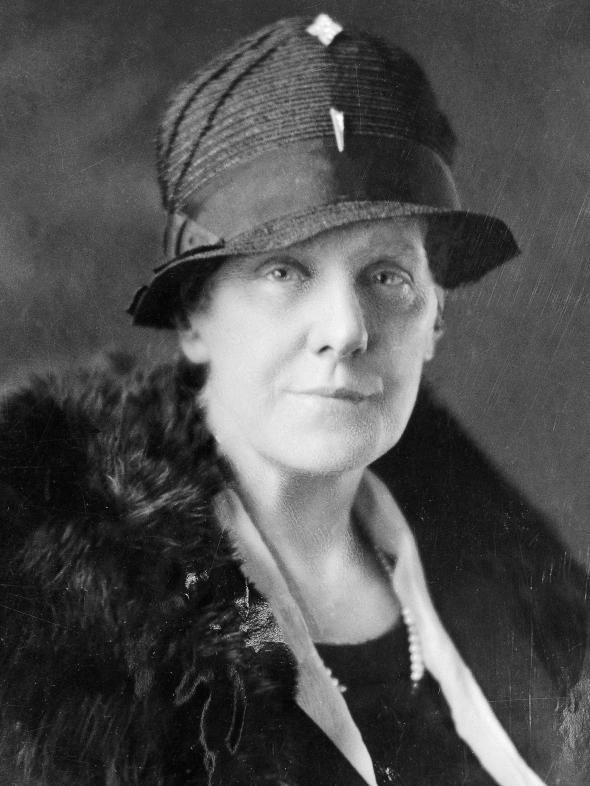
Designated as the second Sunday in May by President Woodrow Wilson in 1914, aspects of that holiday have since spread overseas, sometimes mingling with local traditions. Jarvis took great pains to acquire and defend her role as “Mother of Mother’s Day,” and to focus the day on children celebrating their mothers.

But others had the idea first, and with different agendas.

Julia Ward Howe, better known for writing “The Battle Hymn of the Republic,” promoted a Mothers’ Peace Day beginning in 1872. For Howe and other antiwar activists, including Anna Jarvis’s mother, Mother’s Day was a way to promote global unity after the horrors of the American Civil War and Europe’s Franco-Prussian War.

“Howe called for women to gather once a year in parlors, churches, or social halls, to listen to sermons, present essays, sing hymns or pray if they wished—all in the name of promoting peace,” said Katharine Antolini, an historian at West Virginia Wesleyan College and author of Memorializing Motherhood: Anna Jarvis and the Struggle for Control of Mother’s Day.

Several American cities including Boston, New York, Philadelphia, and Chicago held annual June 2nd Mothers’ Day services until roughly 1913, Antolini says.

These early Mother’s Day movements became popular only among peace activist groups and faded when other promoters took center stage.

2. A former football coach promoted an early version of Mother’s Day—and was accused of “kidnapping” the holiday.

Frank Hering, a former football coach and faculty member at University of Notre Dame, also proposed the idea of a Mother’s Day before Anna Jarvis. In 1904 Hering urged an Indianapolis gathering of the Fraternal Order of Eagles to support “setting aside of one day in the year as a nationwide memorial to the memory of Mothers and motherhood.”

Hering didn’t suggest a specific day or month for the observance, though he did note a preference for Mother’s Day falling on a Sunday. Local “aeries” of the Fraternal Order of Eagles took up Hering’s challenge. Today the organization still bills Hering and the Eagles as the “true founders of Mother’s Day.”

Anna Jarvis did not like the thought of Mother’s Day having a “father” in Hering. She blasted him in an undated 1920s statement entitled “Kidnapping Mother’s Day: Will You Be an Accomplice?”

“Do me the justice of refraining from furthering the selfish interests of this claimant,” Jarvis wrote, “who is making a desperate effort to snatch from me the rightful title of originator and founder of Mother’s Day, established by me after decades of untold labor, time, and expense.”

Antolini says that Jarvis, who never had children, was acting partly out of ego: “Everything she signed was Anna Jarvis, Founder of Mother’s Day. It was who she was.”

3. FDR designed a Mother’s Day stamp. Or at least he tried.

Woodrow Wilson wasn’t the only president to put his stamp on Mother’s Day. Franklin Delano Roosevelt personally designed a 1934 postage stamp to commemorate the day.

The president co-opted a stamp that was originally meant to honor 19th-century painter James Abbott McNeill Whistler and featured the artist’s famed “Whistler’s Mother” portrait , of Anna McNeill Whistler. FDR surrounded the iconic maternal image with a dedication: “IN MEMORY AND IN HONOR OF THE MOTHERS OF AMERICA.”

Anna Jarvis didn’t approve of the design and refused to allow the words “Mother’s Day” to appear on the stamp—so they never did. “Overall, she thought the stamp ugly,” Antolini says.


4. Mother’s Day’s founder hated those who fundraised off the holiday.

Since Mother’s Day’s early years, some groups have seized on it as a chance to raise funds for various charitable causes—including mothers in need. Anna Jarvis hated that.

“She called those charities Christian pirates,” Antolini said. “Today most of us would think it was wonderful to use the day to raise funds to support poor mothers or families of World War I veterans or another worthy group but she hated them for that.”

Much of the reason why, Antolini says, is that in the days before charity watchdog organizations Jarvis simply didn’t trust fundraisers to deliver the money to the people it was supposed to help. “She resented the idea that profiteers would use the day as just another way of making money,” Antolini says.


5. The mother of Mother’s Day lost everything in fight to protect her holiday.

It didn’t take long for Anna Jarvis’s Mother’s Day to get commercialized, with Jarvis fighting against what it became.

“To have Mother’s Day the burdensome, wasteful, expensive gift day that Christmas and other special days have become, is not our pleasure,” she wrote in the 1920s. “If the American people are not willing to protect Mother’s Day from the hordes of money schemers that would overwhelm it with their schemes, then we shall cease having a Mother’s Day—and we know how.”

Jarvis never profited from the day, despite ample opportunities afforded by her status as a minor celebrity. In fact, she went broke using what monies she had battling the holiday’s commercialization.

In poor health and with her emotional stability in question, she died penniless at age 84 after living the last four years of her life in the Marshall Square Sanitarium, Antolini says.

6. Courts Heard “Custody Battles” Over Mother’s Day

Anna Jarvis always considered Mother’s Day her intellectual and legal property and wasn’t afraid to lawyer up in its defense.

She included a warning on some Mother’s Day International Association Press releases: “Any charity, institution, hospital, organization, or business using Mother’s Day names, work, emblem, or celebration for getting money, making sales or on printed forms should be held as imposters by proper authorities, and reported to this association.”

Antolini says it’s difficult to determine from scattered court documents just how litigious Jarvis was, but a 1944 Newsweek article reported that she once had as many as 33 simultaneously pending Mother’s Day lawsuits.

7. Flowers are an original tradition that endures (sort of).

The white carnation, the favorite flower of Anna Jarvis’s mother, was the original flower of Mother’s Day.

“The carnation does not drop its petals, but hugs them to its heart as it dies, and so, too, mothers hug their children to their hearts, their mother love never dying,” Jarvis explained in a 1927 interview.

The most popular flower choice today seems to be “mom’s favorite.”

http://news.nationalgeographic.com/2015/05/150507-mothers-day-history-holidays-anna-jarvis/