The secret life of USC medical school dean

In USC’s lecture halls, labs and executive offices, Dr. Carmen A. Puliafito was a towering figure. The dean of the Keck School of Medicine was a renowned eye surgeon whose skill in the operating room was matched by a gift for attracting money and talent to the university.

There was another side to the Harvard-educated physician.

During his tenure as dean, Puliafito kept company with a circle of criminals and drug users who said he used methamphetamine and other drugs with them, a Los Angeles Times investigation found.

Puliafito, 66, and these much younger acquaintances captured their exploits in photos and videos. The Times reviewed dozens of the images.

Shot in 2015 and 2016, they show Puliafito and the others partying in hotel rooms, cars, apartments and the dean’s office at USC.

In one video, a tuxedo-clad Puliafito displays an orange pill on his tongue and says into the camera, “Thought I’d take an ecstasy before the ball.” Then he swallows the pill.

In another, Puliafito uses a butane torch to heat a large glass pipe outfitted for methamphetamine use. He inhales and then unleashes a thick plume of white smoke. Seated next to him on a sofa, a young woman smokes heroin from a piece of heated foil.

As dean, Puliafito oversaw hundreds of medical students, thousands of professors and clinicians, and research grants totaling more than $200 million. He was a key fundraiser for USC, bringing in more than $1 billion in donations, by his estimation.

Puliafito resigned his $1.1-million-a-year post in March 2016, in the middle of the spring term, saying he wanted to explore outside opportunities.

Three weeks earlier, a 21-year-old woman had overdosed in his presence in a Pasadena hotel room. The woman was rushed to a hospital, where she recovered. Police found methamphetamine in the hotel room, according to a police report, but made no arrests. Puliafito has never spoken publicly about the incident, which is being reported here for the first time.

After he stepped down as dean, USC kept Puliafito on the medical school faculty, and he continues to accept new patients at campus eye clinics, according to Keck’s website. He also is a central witness in a $185-million lawsuit in which the University of California has accused USC of misconduct in its hiring away of a star researcher.

Puliafito did not respond to interview requests or written questions. Reached by phone last week, he hung up without commenting after hearing a brief summary of The Times’ reporting.

Earlier, in an email he sent to the newspaper shortly after resigning as dean, Puliafito said he made the move voluntarily in order to pursue a biotech job.

“Bottom line, I was dean for almost a decade. It was great, but I was ready and open to jumping on these opportunities when they came along,” he wrote.

USC President C.L. Max Nikias and Provost Michael Quick, who was Puliafito’s boss, did not respond to repeated requests for information about the circumstances surrounding Puliafito’s resignation. Nor did the university press office.

When reporters visited Nikias’ office to ask about the former dean, his chief of staff, Dennis Cornell, told them: “The president will not be speaking to The Times on this matter.”

The Times interviewed six people who partied with Puliafito in Pasadena, Huntington Beach and Las Vegas, as well as at USC. They ranged in age from late teens to late thirties. None were USC students.

One, Sarah Warren, was the woman who overdosed in the Pasadena hotel room. She told The Times she met Puliafito in early 2015 while working as a prostitute. She said they were constant companions for more than a year and a half, and that Puliafito used drugs with her and sometimes brought her and other members of their circle to the USC campus after hours to party.

“He would say, ‘They love me around here. The medical students think I am God,’” Warren said.

Puliafito has no known criminal record, and public records show no blemishes on the medical licenses he holds in California and three other states. A review of court records in those states found no malpractice claims against him.

He is highly regarded in the field of ophthalmology and regularly addresses doctors at national conventions and training seminars. Over the last decade, he has coauthored more than 60 medical journal articles on retinal disease and other topics. Since 2008, he has served on the governing board of the California Institute of Regenerative Medicine, the state agency that oversees stem cell research.

It was a tip about the incident in the Pasadena hotel that led The Times to discover Puliafito’s other life.

Just before 5 p.m. on March 4, 2016, an employee of the Hotel Constance, an upscale Colorado Boulevard landmark, called 911 to report that a guest had suffered an apparent overdose.

The hotel employee transferred a Fire Department dispatcher to a third-floor room. A man answered, identified himself as a doctor and said his companion’s condition was not serious, according to a recording of the call.

“My girlfriend here had a bunch of drinks and she’s sleeping,” he told the dispatcher. Asked whether the woman had taken anything else, he replied, “I think just the alcohol.”

After the ambulance arrived, another hotel employee placed a 911 call to ask that police be sent, too.

“I got somebody in one of the rooms, they [were] doing drugs in the room,” the employee told an emergency operator, according to the 911 recording. He added, “I think they [were] doing crystal meth.”

Paramedics took the woman to Huntington Memorial Hospital. Authorities did not release her name. The Times identified her as Warren through interviews, social media and property records.

Warren, now 22, has been in an Orange County drug treatment program since November, and said she no longer has contact with Puliafito. She talked about their relationship in a series of interviews.

She said she and Puliafito had been partying at the hotel for two days. Then she “took too much GHB” — gamma-hydroxybutyrate, the so-called date-rape drug that some users take in lower doses for its euphoric effect. Warren said the drug left her “completely incapacitated.”

After she awoke in the hospital six hours later, Puliafito picked her up, and “we went back to the hotel and got another room and continued the party,” she said.

The videos reviewed by The Times are consistent with Warren’s account.

A recording made the night before the overdose shows Puliafito and Warren in a room at the hotel. Warren asks him to help her crush methamphetamine in preparation for doing a “hot rail,” a method of snorting the drug.

“Absolutely,” Puliafito replies. Warren is later shown bending over a tray with several lines of white powder.

In a separate video of Puliafito and Warren, recorded at another hotel about a day after her overdose, she blames the Hotel Constance episode on GHB.

“Carmen saved my life,” she says on the video.

Puliafito is seen with what appears to be a meth pipe in his hand and, later, in his mouth.

Sources with access to these and other videos and photos of Puliafito allowed The Times to view the images on the condition they not be published.

A week after the hotel overdose, a witness filed an anonymous complaint through a city website urging Pasadena authorities to investigate Puliafito and the police handling of the incident, according to a copy of the complaint obtained through the California Public Records Act.

Three days later, the same witness phoned the office of USC president Nikias and told two employees about Puliafito’s role in the hotel incident. The witness spoke to The Times on the condition of anonymity.

Phone records confirm that the witness made a six-minute call to Nikias’ office on March 14, 2016, 10 days after the overdose.

A week and a half later, Puliafito resigned as dean.

Concerned that Pasadena police were not investigating, the witness then approached The Times. The newspaper asked the Police Department for its report on the overdose.

Initially, a department spokeswoman said there was no report, apart from a call-for-service log. After The Times made repeated requests for additional information, the department acknowledged that an officer at the scene should have prepared a report. The officer was ordered to do so in June 2016 — three months after the incident.

In the report, Puliafito is identified as a witness to the overdose and a “friend” of the victim. The rest of the document is heavily redacted.

The department also released an evidence report that shows officers seized a little over a gram of methamphetamine from the hotel room. The name of the drug’s “owner” is redacted, and the Pasadena address listed as that person’s residence does not exist.

Under state law, possession of methamphetamine could be charged as a misdemeanor. Asked why no one was charged, Pasadena police spokeswoman Tracey Ibarra said officers would have had to determine who was “responsible” for the drugs. She declined to answer questions about the extent of the officers’ investigation. Warren said they never interviewed her.

Although Puliafito told the 911 operator he thought his companion was under the influence of alcohol alone, Ibarra said the woman was “obviously under the influence of narcotics — the same narcotics that were in the room.”

Ten years ago, USC went looking for a transformational leader for its medical program. U.S. News & World Report, in its annual report on the best American medical schools, ranked Keck 25 spots below UCLA in research. That was too low for USC leaders, who saw a top-rated medical school as crucial to their national aspirations. They needed a dean who could deliver the money and marquee researchers to make Keck an elite institution.

“Someone who could take a great school and make it even better,” then-USC President Steven Sample said at the close of the 2007 search process. “We found that person in Dr. Carmen Puliafito.”

Puliafito, a native of Buffalo, N.Y., who graduated magna cum laude from Harvard Medical School, had helped invent a laser technology — optical coherence tomography — that revolutionized the way doctors around the world diagnose and treat eye disease.

He had a track record of building institutions and raising their profiles. At Tufts University Medical School in Boston in the 1990s, Puliafito was founding director of the New England Eye Center. A complimentary 1993 profile in the Boston Globe described Puliafito’s “in your face” personality and likened him to “one of those Yellowstone Park mud pots: placid on the surface for a few minutes, then erupting for a moment, then calm again.”

Puliafito left Tufts to serve as director of the University of Miami’s Bascom Palmer Eye Institute from 2001 to 2007. There, he presided over a doubling of faculty and tripling of research funding, according to school news releases.

His time at Miami was not trouble-free. Marc Brockman, an optometrist at the institute, filed a lawsuit against Puliafito in 2006 for assault and battery and accused the university of negligence in hiring him.

Brockman alleged in sworn testimony that Puliafito, in a profane “tantrum” over an inoperable piece of medical equipment, grabbed him by the collar of his lab coat and choked him.

Puliafito denied wrongdoing.

During the case, it emerged that the university had investigated separate complaints of sexual harassment against Puliafito, according to sworn testimony and court filings in the lawsuit. The records do not reveal the outcome of the investigation, and a university spokeswoman said in response to questions about the probe: “We don’t have anything to provide.”

Puliafito and the university reached a confidential settlement with Brockman in June 2007.

Two months later, USC hired Puliafito.

When Warren first met Puliafito in early 2015 she was a 20-year-old college dropout who had recently moved out of her parents’ Huntington Beach home and was advertising on an escort website.

She offered him meth, she said, and he accepted. She said it was clear he was comfortable around drugs.

Warren said that after that first encounter, they began seeing each other regularly.

After a few weeks, she said, she Googled his name and learned that he was USC’s medical school dean.

“I thought, ‘This is wild,’” she recalled.

The images viewed by The Times reflect an easy familiarity between Warren and Puliafito. In the video that shows him smoking from a large glass pipe while she heats a piece of foil and inhales, Warren calls Puliafito “Tony,” short for Anthony, his middle name.

Looking into the camera, Warren says she and Puliafito are making a “good old-fashioned doing-drugs video” to send to a friend.

Law enforcement officials who watched the video at The Times’ request said that what it showed was consistent with smoking meth and heroin.

In another video, Warren takes a drag from a meth pipe, and as she exhales, Puliafito inhales the smoke from her mouth, a technique known as “shotgunning.”

In a separate series of photos, Warren sits on Puliafito’s lap as she smokes meth.

Puliafito rented apartments for her in Huntington Beach and near his home in Pasadena so she would always be available, she said. He gave her spending money and covered her legal bills, she said.

During their time together, Warren was arrested four times on charges that include drug possession, drunk driving and petty theft, court records show. She pleaded guilty or no contest in each case and was placed on probation, given community service or ordered to pay fines.

She said Puliafito told her he was taking care of her, but she came to view the money he gave her as “a trap.”

“It was never enough for me to save up and leave,” she said.

She said it seemed odd that someone with Puliafito’s responsibilities could devote so much time to her. She said he would spend the night with her in apartments or hotel rooms he paid for, leave early in the morning to go to his home and then return to her with breakfast.

“He was always with me,” she said. “It was as if he had nothing else to do.”

USC fundraising galas can be glittering affairs with movie stars and billionaire donors rubbing elbows in Beverly Hills ballrooms. Puliafito glided confidently through these events, posing for photos with Gwyneth Paltrow and Pierce Brosnan and chatting up tech mogul Larry Ellison and mega-developer Rick Caruso.

In these circles, Puliafito presented himself as an architect of USC’s rising reputation as a research institution. When asked about his extracurricular pursuits, he mentioned his award-winning stamp collection and spending time with his wife, a Harvard classmate, and three adult children.

Don Stokes was not part of that world.

Stokes, 39, is an Orange County karaoke deejay with multiple convictions for drug possession. Contacted by The Times, Stokes said that Warren introduced him to Puliafito, and that they would spend hours drinking and using drugs in bars and hotel rooms with a group that included addicts and prostitutes.

Stokes said Puliafito gave him meth, including while he was living at New Life Spirit, a Huntington Beach sober home for recovering addicts. Warren said she saw it happen.

Stokes said that Puliafito seemed to believe that showering the group with cash and gifts was a way of “tying into this generation.”

“He would say, ‘Money is not an issue,’” recalled Stokes, who recently completed another stint in rehab. “There was hardly a day when he wasn’t around.”

Another member of the group was Kyle Voigt, 37, an Iraq war veteran with a criminal record that dates to at least 2009 and includes convictions for possession of heroin for sale.

The Times reviewed numerous photos and videos of Voigt and Puliafito with other members of their circle.

A series of September 2015 photos show Voigt and Warren in Puliafito’s office at the USC health sciences campus. The time stamp indicates the photos were taken around 3 a.m.

In one shot, Warren, wearing a USC shirt, stands next to Puliafito’s desk. A portrait of the dean and his wife is visible, and framed Dodgers and Red Sox jerseys can be seen on the wall.

In another photo, Voigt is wearing an inflatable Trojan hat and a white Keck School lab coat embroidered with the dean’s name. Both he and Warren are holding pieces of aluminum foil with darkened patches in the middle. The Times showed the image to law enforcement officials, who said the patches were consistent with the marks left by smoking heroin. In the photo, Warren has a lighter in her hand.

Other photos, shot the same year at a Pasadena gas station, show Voigt at the wheel of Puliafito’s vintage Mercedes, with the dean seated in the rear. Voigt is holding a piece of foil in his lap.

At one in a string of court appearances in 2015, he was asked to provide his address on a legal form. He listed Puliafito’s residence, a $5-million Tudor Revival mansion in Pasadena.

In a brief interview this spring at the L.A. County jail, where he was being held on suspicion of identity theft, Voigt declined to explain why he provided Puliafito’s address as his own and would not discuss whether he used drugs with the doctor.

He did say that Puliafito frequently socialized with him, Warren and other young people.

“Carmen’s always there,” he said.

Puliafito twice scheduled visits to the jail to see Voigt, although records show the visits were canceled. On a May 13, 2016, reservation form, Puliafito said he had a “professional” relationship with the inmate.

On a Feb. 16, 2017, form, he described himself as a “friend.”

Warren said her younger brother was part of the group that hung out with Puliafito and used drugs with him.

Charles Warren, who lives with his parents in Huntington Beach, confirmed his sister’s account. He said in an interview that he was 17 and had little experience with drugs, beyond marijuana, when his sister introduced him to Puliafito in the spring of 2015.

Sarah and Charles Warren said Puliafito wrote them prescriptions for asthma inhalers to soothe lungs raw from smoking marijuana and methamphetamine. Charles Warren, now 19, provided The Times a copy of a CVS prescription history, dated Dec. 30, 2015, for an Advair inhaler that shows Puliafito as the prescribing physician and Charles Warren as the patient.

In early 2016, about a year after she first met Puliafito, Sarah Warren sought help for her drug problem. She spent time in two different rehab programs, and completed the second one, at Michael’s House in Palm Springs, in February 2016.

Less than three weeks later, she and Puliafito checked into the Hotel Constance in Pasadena.

On a sunny afternoon in June 2016, dozens of Puliafito’s colleagues gathered on a lawn at USC’s health sciences campus for a catered reception in his honor. It had been three months since he’d announced his resignation, and the school’s top administrators took turns lauding his accomplishments as head of the medical school.

Keck had climbed in national medical school rankings: U.S. News & World Report ranked it 31st in research last year, seven rungs higher than when Puliafito became dean.

“Today, we have one of the, not just the area’s, but the nation’s preeminent medical schools and medical enterprises — and, in many ways, thanks to the leadership of Carmen,” Nikias told the crowd.

Key to Keck’s rise in stature was Puliafito’s ability to headhunt the type of big-name researchers who brought grant money and prestige. He recruited more than 70 professors to Keck, according to a campus publication.

One of those coups was under intense scrutiny at the time of Puliafito’s resignation. In a court battle that is still playing out, the University of California filed suit in July 2015 against USC over its poaching of a leading Alzheimer’s disease researcher.

Puliafito was the self-described “quarterback” of efforts to land UC San Diego professor Paul Aisen, a star in the state university system.

Curing Alzheimer’s is a top priority for government agencies and pharmaceutical companies, and Aisen’s lab was overseeing groundbreaking research, including drug trials at 70 locations around the world. More than $340 million in funding was expected to flow to his lab, according to court records.

UC contended in its suit that its private school rival went beyond the bounds of academic recruiting by targeting professors and labs based on grant funding. The suit accused USC of civil conspiracy, aiding and abetting breach of fiduciary duty and other misconduct.

USC denied any wrongdoing and countersued for defamation and other claims. At the time Puliafito stepped down, UC had yet to question him under oath.

A UC lawyer deposed the former dean in September 2016, and asked about his resignation. A USC attorney objected to the question as “vague” and “overbroad.” Puliafito ultimately answered that he had a “unique opportunity” to work in private industry and that he was on sabbatical from his faculty position.

He had accepted, in April 2016, a position as chief of strategic development at Ophthotech, a New York pharmaceutical company run by friends Puliafito had known since his time at Harvard. The job did not last. The company announced in December that a drug it had been developing failed in clinical trials.

Puliafito, along with 80% of the workforce, was laid off, a company spokeswoman said.

He continues to represent USC in public. On Saturday, he spoke at a Keck-sponsored program at the Langham Huntington Hotel in Pasadena — one of the hotels Sarah Warren said she frequented with him.

http://www.latimes.com/local/california/la-me-usc-doctor-20170717-htmlstory.html

There’s a predictable pattern to a fatal police shooting in America. But not in the case of Justine Ruszczyk.

By Doug Criss

There’s a predictable pattern to the aftermath of too many deadly police shootings: Neighbors and anti-police brutality groups take to the streets. Groups supporting the officers stand up for them. Social media lights up over whether the victim “did something” to provoke the officer.

But none of that holds true in the case of Justine Ruszczyk, a white Australian bride-to-be who was killed by Mohamed Noor, a Somali-American black police officer in Minneapolis.

And that, say experts, speaks volumes about the state of America today.

What didn’t happen the days after the shooting

Ruszczyk was shot to death on Saturday after she called 911 to report a possible sex assault in an alley near her home.

A vigil was held for Ruszczyk, but there weren’t widespread protest marches, like the ones Black Lives Matter held last year after Philando Castile’s shooting death at the hands of an officer in nearby Falcon Heights.

When one pro-police Blue Lives Matter website had a story about the shooting, it only offered a theory on why the officers’ body cams were off.

Why the reaction is different this time

David Love, a Philadelphia journalist who’s written about race issues for CNN and others, has a theory why.

Because the race and nationality of the victim and police officer aren’t what has typically garnered headlines, people who normally speak up aren’t saying much.

There is no centralized structure for the Black Lives Matter movement, which results in non-uniform response.

New York Daily News writer Shaun King wrote a column in which he said “Police brutality jumped a racial fence.” Otherwise, Love says he hasn’t seen too many people from the movement express any anger or outrage about the shooting. That’s surprising, because in some past cases, Black Lives Matter has spoken up when the victim was white.

As for those who “back the blue,” Love says he hasn’t seen a lot of pro-police groups rally to Noor’s side, either.

“It seems very often that their response is in the lens of ‘black vs. blue,’ which is unfortunate because life is a little more complicated than that,” he told CNN.

What we’re likely to see

Love theorizes a different group of people may take the lead in rallying for the victim in this case: “people who may not have emphathized with the victims (in police shootings in the past) because the victims have been mostly black.”

Love compares it to media coverage of murders during the civil rights era. Killings of black people in the South during that period often received scant national attention. But if the violence took the life of a white person — such as the “Mississippi Burning” case — more people across America paid attention.

What else accounts for the different response

Pro-police groups are often quick to speak out when an officer is accused in a fatal shooting. But Noor isn’t white and that has made a difference, says Marcia Chatelain, a fellow at the New America Foundation and co-host of a podcast on the death of Freddie Gray.

“Because it’s an officer of color who, so far, is the only one accused of something here, it has shaped the response from pro-police groups like Blue Lives Matter, which usually has a very defensive response to officer-involved shootings,” she told CNN.

Chatelain feels the media response has been different, too.

“I’m pretty sure reporters haven’t been digging into (Ruszczyk’s) background, trying to find narratives to justify the shooting,” she said.

Too often in cases involving unarmed black men, Chatelain says, information on the victim’s criminal history or prior arrests makes its way into stories — even when they are irrelevant to the case.

What it says about America

So what does this say about America in 2017, where the race, gender or national identity of a victim or police officer can affect the public’s reaction to a shooting?

“It says despite the rhetoric about the US being a melting pot or whatever, people have different experiences based on their racial background,” Love said. “Those experiences give us, sometimes, a different set of lenses and a different view of reality. And we have to find some way of bridging that divide … to help people understand the experiences of other people.”

The different reaction to the shooting also proves that America is still learning how to deal with its tortured racial past, said Phillip Atiba Goff, a professor at John Jay College of Criminal Justice and president of the Center for Policing Equity.

“We haven’t reckoned with our history,” Goff told CNN, “so it shouldn’t surprise us to see a different reaction.”

http://www.cnn.com/2017/07/19/us/minneapolis-shooting-upended-outrage-trnd/index.html

Current restrictions on United States autonomous robot weapons systems set to expire this year

By Ryan Browne

America’s second-highest ranking military officer, Gen. Paul Selva, advocated Tuesday for “keeping the ethical rules of war in place lest we unleash on humanity a set of robots that we don’t know how to control.”

Selva was responding to a question from Sen. Gary Peters, a Michigan Democrat, about his views on a Department of Defense directive that requires a human operator to be kept in the decision-making process when it comes to the taking of human life by autonomous weapons systems.

Peters said the restriction was “due to expire later this year.”

“I don’t think it’s reasonable for us to put robots in charge of whether or not we take a human life,” Selva told the Senate Armed Services Committee during a confirmation hearing for his reappointment as the vice chairman of the Joint Chiefs of Staff, during which a wide range of topics were covered, including North Korea, Iran and defense budget issues.

He predicted that “there will be a raucous debate in the department about whether or not we take humans out of the decision to take lethal action,” but added that he was “an advocate for keeping that restriction.”

Selva said humans needed to remain in the decision making process “because we take our values to war.” He pointed to the laws of war and the need to consider issues like proportional and discriminate action against an enemy, something he suggested could only be done by a human.

His comments come as the US military has sought increasingly autonomous weapons systems.

In July 2016, a group of concerned scientists, researchers and academics, including theoretical physicist Stephen Hawking and billionaire entrepreneur Elon Musk, argued against the development of autonomous weapons systems. They warned of an artificial intelligence arms race and called for a “ban on offensive autonomous weapons beyond meaningful human control.”

But Peters warned that America’s adversaries may be less hesitant to adopt such lethal technology.

“Our adversaries often do not to consider the same moral and ethical issues that we consider each and every day,” the senator told Selva.

Selva acknowledged the possibility of US adversaries developing such technology, but said the decision not to pursue it for the US military “doesn’t mean that we don’t have to address the development of those kinds of technologies and potentially find their vulnerabilities and exploit those vulnerabilities.”

Tripping on Peyote in Navajo Nation


The peyote cactus, Lophophora williamsii, which contains the psychedelic compound mescaline, serves as a sacrament for members of the Native American Church. Credit: U.S. Fish and Wildlife Service Wikimedia

By John Horgan

In 2002, on assignment for Discover Magazine, I participated in a peyote ceremony of the Native American Church. I’ve been recalling this extraordinary experience lately because I’ve been in contact with the man who arranged it, psychiatrist John H. Halpern, an authority on psychedelics, whom I met while researching my 2003 book Rational Mysticism. Below is the 2003 article I wrote for Discover about the peyote trip, Halpern and the therapeutic potential of psychedelics — John Horgan

Even with several tablespoons of peyote in me, by three in the morning I’m fading. For almost six hours I have been sitting in a tepee in the Navajo Nation, the largest Indian reservation in the United States, with 20 Navajo men, women, and children. They belong to the Native American Church, which has 250,000 members nationwide. Everyone except the four children has eaten the ground-up tops, or buttons, of peyote, Lophophora williamsii. U.S. law classifies the squat cactus and its primary active ingredient, mescaline, as Schedule 1 substances, illegal to sell, possess, or ingest. The law exempts members of the Native American Church, who revere peyote as a sacred medicine.

A barrel-chested man wearing a checked shirt and cowboy boots stands over the cedarwood fire and murmurs a prayer in Diné, the Navajo language. As this roadman, or leader of the service, sprinkles sage on the coals, my eyelids close. I smell the sage and hear it hiss, and I see the roiling geometric patterns, called form constants, generated by compounds such as mescaline. Then the balding white man on my right nudges me and tells me to keep my eyes open. The Navajo might be offended, he whispers, if they think I have fallen asleep. Later, he shakes his head when I lean on an elbow to relieve the ache in my back. Too casual, he says.

My guide to the etiquette of peyote ceremonies is John H. Halpern, a 34-year-old psychiatrist from Harvard Medical School. For five years he has been coming here to the Navajo Nation—27,000 square miles of sage-speckled desert stretching from northern Arizona into New Mexico and Utah—to carry out a study of peyote. Funded by the National Institute on Drug Abuse, the study probes members of the Native American Church for deficits in memory and other cognitive functions. Halpern has brought me here to help me understand him and his mission, which is to provoke a reconsideration of the pros and cons of hallucinogenic drugs, commonly referred to as psychedelics.

Coined in 1956 from the Greek roots for “mind revealing,” the term psychedelic refers to a broad range of drugs that include peyote, LSD, and psilocybin, the primary active ingredient in so-called magic mushrooms. Three decades ago the federal government shut down most research on psychedelics, and the Journal of the American Medical Association warned that they can cause permanent “personality deterioration,” even in previously healthy users. Halpern says this blanket indictment is “alarmist” but agrees that there are documented dangers associated with the recreational use of the drugs. When ingested recklessly in large doses, psychedelics can generate harrowing short-term experiences, and they can precipitate long-term psychopathology in those predisposed to mental illness. Nonetheless, more than 20 million Americans have tried a psychedelic at least once, and 1.3 million are users of the drugs, by far the most popular of which is now MDMA, or Ecstasy. Halpern undertook his peyote research in part to test persistent fears that those who repeatedly use psychedelics run a high risk of brain damage.

While recognizing that psychedelics are toxic substances that should not be treated lightly, Halpern thinks some of the drug compounds could have beneficial uses. “There are medicines here,” he says, that could prove to be “fundamentally valuable.” He hopes the mind-revealing power of psychedelics can be harnessed to help alleviate the pain and suffering caused by two deadly diseases that have long been notoriously resistant to treatment: alcoholism and addiction. More than 12 million Americans abuse alcohol, and another 1 million abuse cocaine or heroin.

Halpern’s conviction that psychedelics might help alcoholics and addicts is based both on research by others and on his personal observations of members of the Native American Church. Although Indians in central and northern Mexico, peyote’s natural habitat, have ingested it for spiritual purposes for thousands of years, only in the last century did this practice spread to tribes throughout North America in the form of rituals of the Native American Church.

All the subjects of Halpern’s research are Navajo, who account for roughly 10 percent of the church’s membership and hold key leadership positions. Even though tribal leaders have banned alcohol from their reservation, alcoholism is still rampant. For the Navajo and other tribes, rates of alcoholism are estimated to be more than twice the national average. Those in the Native American Church say their medicine helps keep them sober and healthy in body and mind, and Halpern suspects they are right.
He first took peyote himself five years ago, shortly after presenting his research plan to leaders of the Native American Church. “It would have been supremely insulting to them if I didn’t try it. So I tried it.” Halpern also hoped that firsthand experience would help him understand how peyote ceremonies might benefit church members. He checked beforehand with the U.S. Drug Enforcement Agency, which told him that it would not object to peyote use by non-Indians for serious scientific, educational, or journalistic purposes. Halpern has participated in five services in all, including the one we both attend, and these experiences have imbued him with respect for the Indians and their faith. When I expressed curiosity about the ceremonies, he said the best way to appreciate them is to participate in one. He warned me that the ceremonies are in no way recreational or fun, and our session in Arizona bears that out.

Like most Native American Church services, this one has been called for a specific purpose—in this case, to help a wife and husband burdened with medical and financial problems, all too common on the reservation. Except for Halpern and me, everyone is a friend or relative of this couple; some have traveled hundreds of miles to be here. The meeting lasts for 10 hours with only a single 10-minute break, and it unfolds in a rhythm of rituals: smoking tobacco rolled in corn husks; singing hymns in Diné or other Native American languages to the pounding of a deerskin drum; eating peyote and drinking peyote tea passed around in bowls, three times in all.

There is a spellbinding beauty in the incantations of the roadman, in the sparks spiraling up from the bed of coals toward the tepee’s soot-blackened roof, in the stoic expression of the elder who adds cedar logs to the fire and rakes the coals into a half circle. But none of the worshippers seems lost in blissful aesthetic reveries. Far from it. For much of the night, the mood is solemn, even anguished. Two people vomit, including the wife. Both she and her husband sob as they confess their fears and yearnings. So do others as they listen, offer prayers, or divulge their own troubles—usually in Diné, but occasionally in English.

The power of these ceremonies, Halpern tells me later, is only partly pharmacological. After all, worshippers usually eat just a few tablespoons of peyote, which amounts to less than 100 milligrams of mescaline—enough to induce a stimulant effect but not full-fledged visions. Peyote, Halpern speculates, serves primarily as an amplifier of emotions aroused by the ceremony’s religious and communal elements. He cannot prove this conjecture yet, nor can he say how or if the putative benefits of these sessions might be achieved by non-Indians in more conventional psychotherapeutic settings. “A lot more work needs to be done to answer such questions,” he says.

His creeping baldness notwithstanding, Halpern looks younger than his age. He can be brash too. During our weekend in Navajo country—where we visit a substance-abuse clinic and meet a Native American Church leader as well as attend the peyote session—he exults in displaying his knowledge of psychedelic chemistry and his talent for mimicry. A nightclub owner once said his impressions were good enough for a stage act, he boasts. (Actually he is good, especially at obscure sitcom characters like Colonel Klink’s irritable commander in Hogan’s Heroes: “Kleenk, you EE-dee-ot!”)

Halpern says he does have “an abrasive, sarcastic side.” But he also has an earnest, idealistic side that comes to the fore when he talks about his upbringing. Raised in a Jewish home in an affluent New York suburb, he was never particularly religious, but he inherited a passion for healing from his psychiatrist father and psychologist mother. They convinced him that “medicine is the highest profession you can have, because it’s such a privilege to work with human beings and to heal them.”
He traces his interest in psychedelics to the early 1990s. Interning at a psychiatric hospital in Brooklyn, New York, he became frustrated that he could not offer better treatments for alcoholic or drug-addicted patients. During a weekend at his parents’ home, he vented to a visiting family friend, Chunial Roy, an Indian-born psychiatrist who had settled in western Canada. Roy recalled that in the 1950s, he did a survey of alcoholism among Indians in British Columbia and found low rates among members of the Native American Church. Roy added that psychedelics such as LSD had once been considered promising treatments for addiction and other disorders.

“I was so fascinated that I did all this research,” says Halpern, who had never taken psychedelics and knew little of their history. He learned that LSD, mescaline, and psilocybin, initially viewed as mimickers of the symptoms of mental illness, came to be seen as potential treatments. From 1950 to the mid-1960s, journals published more than 1,000 papers describing the treatment with psychedelics of 40,000 patients afflicted with alcoholism and various other disorders.

One early advocate of psychedelic therapy was William Wilson, known more familiarly as Bill W., who founded Alcoholics Anonymous in 1935. After observing alcoholics undergoing LSD treatment and taking the drug himself in 1956, Wilson became convinced that it might benefit alcoholics by triggering religious experiences like the one that had helped him stop drinking. The studies that instilled these hopes in Wilson and others were largely anecdotal, lacking controls, or flawed; they were nonetheless suggestive enough, Halpern thought, to merit follow-up investigations.

After Halpern began his residency training at Harvard Medical School in 1996, he found a mentor: Harrison G. Pope Jr., a professor of psychiatry who had investigated marijuana and other psychotropic drugs. Halpern and Pope have coauthored several papers, notably one that considers whether hallucinogens cause permanent neurocognitive damage, as some early critics claimed. “At present,” they wrote, “the literature tentatively suggests that there are few, if any, long-term neuropsychological deficits attributable to hallucinogen use.” They contended that most studies linking psychedelics to neurocognitive toxicity examined too few subjects and did not control adequately for pre-existing mental illness or for consumption of other, more toxic substances, such as amphetamines and alcohol.

It was to help resolve this lingering controversy that Halpern and Pope decided to examine the Native American Church, which offered a large population that consumes a psychedelic substance while avoiding other drugs and alcohol. Halpern and Pope won grants for their project not only from the National Institute on Drug Abuse but also from Harvard Medical School and two private foundations that support research on psychedelics: the Multidisciplinary Association for Psychedelic Studies and the Heffter Research Institute (named after the German chemist who isolated mescaline from peyote and discovered its psychoactive properties in the late 1800s).

Obtaining the cooperation of Native American Church officials turned out to be more difficult. Many disliked the idea of having their faith scrutinized by a scientist, especially a white one. After Halpern gave his pitch to one church gathering, a tribal elder harangued the crowd in Navajo for 20 minutes. Finally he turned to Halpern and, angrily evoking the specter of Christopher Columbus, exclaimed: “1492!” Another difficult moment came during his first peyote session. The roadman kept insisting that Halpern take more peyote, until finally he vomited. Halpern felt that the roadman’s implicit message was, “You want to learn about peyote? I’ll teach you about peyote.”

Halpern persisted, coming to meetings bearing gifts of sweet grass and flat cedar, aromatic herbs prized by Indians. “I was trying to show I took the trouble to learn something about their culture.” He trolled for volunteers for his research by putting up ads in Laundromats and handing out flyers at a flea market in Gallup, New Mexico. (The $100 promised to those who completed the study helped too.)
One church leader who persuaded others in the flock to trust Halpern was Victor J. Clyde, vice president of the Native American Church of North America and an elected state judge. During our trip to the Navajo Nation, Halpern and I visited Clyde in Lukachukai, Arizona, where he lives with his wife and three children. Clyde is compact and broad-shouldered, and he speaks with the tough self-assurance of a former prosecutor.

When I asked what the Native American Church stands to gain from Halpern’s work, Clyde replied that scientific evidence of peyote’s safety should protect church members. Just last year, the Pentagon cited concerns about “flashbacks”—recurrences of a psychedelic’s effects long after it has vanished from the body—in barring servicemen in the Native American Church from sensitive nuclear assignments. Didn’t Clyde ever worry that Halpern’s research might turn up harmful effects? Clyde eyed me momentarily before responding to my question. If peyote was harmful, he said firmly, his people would have noticed by now.

Clyde’s belief that peyote does not harm church members has been corroborated by Halpern’s research. He estimates that he spoke to 1,000 Navajo before finding 210 who met his criteria. The subjects fall into three categories: Roughly one-third have taken peyote at least 100 times but have minimal exposure to other drugs or alcohol; one-third are not church members and have consumed little or no alcohol or drugs; and one-third are former alcoholics who have been sober for at least three months.

Halpern and several research assistants administered a battery of tests—of memory, IQ, reading ability, and other cognitive skills—to the three groups. According to preliminary data that he has presented at conferences, church members show no deficits compared with sober nonmembers and score significantly better than the former alcoholics. Church members also report no flashbacks. With his coauthor Pope, Halpern plans to publish his full results in a peer-reviewed journal this summer, after presenting them to church leaders and Navajo health officials.

Halpern is already anticipating objections to his research—for example, that its significance applies only to one substance used by one ethnic group. “You could in one sense say mescaline is not the same as all these other compounds,” he says. His study nonetheless indicates that psychedelics as a class may not “burn out” the brain. “If we find this group of people that, with these special conditions, aren’t having problems, that does have some relevance for the population at large.”

Halpern also realizes that he may be accused of going native, of becoming so close to his subjects that his objectivity has been compromised. To reduce the risk of bias, he and Pope designed the study to be blind; those who scored the tests given to the Navajo did not know to which group each subject belonged. Moreover, Halpern did not participate in peyote ceremonies with any of his research subjects.
Perhaps the biggest weakness of his and Pope’s research, Halpern acknowledges, is that its design precluded testing to see whether peyote reduces the risk of alcoholism. Halpern would like to see that issue addressed in a follow-up study. An ideal partner for a trial could be the Na’nizhoozhi Center, a substance-abuse clinic in Gallup whose clientele is almost entirely Native American. The center, founded a decade ago, offers conventional therapies and self-help programs, such as Alcoholics Anonymous, as well as various traditional Indian healing ceremonies. These take place in a yard behind the clinic that is large enough for several of the octagonal log cabins known as hogans, sweat lodges, and a tepee for Native American Church sessions. Although peyote is not given to patients during on-site church sessions, staff members encourage some clients to participate in regular peyote ceremonies once they leave the clinic.

The clinic’s records indicate that those who participate in Indian healing ceremonies fare better than those who have participated in Alcoholics Anonymous. Halpern hopes that someday the clinic, perhaps with his help, will rigorously compare the relapse rates of patients who participate in peyote ceremonies versus other treatments. Ideally, to distinguish the effects of peyote per se from those of the ceremony and of church membership, one group of alcoholics could receive peyote in a non-religious setting; another group could receive a placebo.

Halpern would never recommend such a protocol, however, because it would violate precepts of the Native American Church. “Peyote taken the wrong way, they believe, is harmful,” he explains. Out of respect for the church, Halpern would never advocate testing peyote’s effects on non-Indians, either. In this respect, he acknowledges, his affection for church members does influence his role as a researcher.
But there are many other compounds that can be explored as potential treatments for non-Indians. In a 1996 paper, Halpern reviewed scores of studies of the treatment of substance abuse with psychedelics and found tentative evidence that they reduce addicts’ craving during a post-trip “afterglow” lasting a month or two. This effect might be at least partially biochemical; LSD, mescaline, and psilocybin are known to modulate neurotransmitters such as serotonin and dopamine, which play a crucial role in the regulation of pleasure.

One possible candidate for psychedelic therapy would be dimethyltryptamine, or DMT, the only psychedelic known to occur naturally in trace amounts in human blood and brain tissue. DMT is the primary active ingredient of ayahuasca, a tea made from two Amazonian plants. Like peyote, ayahuasca has been used for centuries by Indians and now serves as a legal sacrament for several Brazilian churches. Recent studies of Brazilian ayahuasca drinkers by Charles Grob, a psychiatrist at the Harbor-UCLA Medical Center, and others suggest that ayahuasca has no adverse neurocognitive effects. An advantage of DMT, Halpern says, is that when injected its effects last less than an hour, and so it could be incorporated into relatively short therapeutic sessions.

Halpern already has research experience with DMT. In 1994 he spent six weeks helping Rick Strassman, a psychiatrist at the University of New Mexico, inject DMT into volunteers to measure the drug’s physiological effects. That study showed that DMT is not necessarily benign. Twenty-five of Strassman’s 60 subjects underwent what Strassman defined as “adverse effects,” ranging from hallucinations of terrifying “aliens” to, in one case, a dangerous spike in blood pressure. Strassman’s concerns about these reactions contributed to his decision to end his study early.

An even more controversial candidate for clinical testing is 3,4-methylenedioxymethamphetamine, more commonly known as MDMA or Ecstasy. MDMA is sometimes called an empathogen rather than a psychedelic, because its most striking effects are amplified feelings of empathy and diminished anxiety. Advocates contend that MDMA has therapeutic potential, and several researchers around the world are now administering the drug to patients with post-traumatic stress and other disorders.

Critics point out that MDMA has rapidly become a drug of abuse, with almost 800,000 Americans believed to be users. The drug has been linked to fatal overdoses and brain damage; just last fall, a paper in Science reported that only a few doses of MDMA caused neuropathy in monkeys. To help resolve questions about MDMA’s safety, Halpern and Pope have begun a study of young Midwesterners who claim to take MDMA while shunning other drugs and alcohol.

All drugs pose certain risks, Halpern says. The question is whether the risks are outweighed by the potential benefits for a population. For example, the benefits of giving MDMA to terminal cancer patients to help them cope with their anxiety might outweigh the risks posed to their health. In the same way, DMT or some other psychedelic might be worth giving to alcoholics and addicts who have failed to respond to other treatments.

Halpern also hopes to conduct a brain-imaging study to test his hypothesis that psychedelics reduce craving in addicts by affecting their serotonin and dopamine systems. “It sounds reductionistic,” he says, “but a picture can be worth a thousand words.” An ideal collaborator would be Franz Vollenweider, a psychiatrist at the University of Zurich, who with positron-emission tomography has measured neural changes induced in healthy volunteers by psilocybin and MDMA.

Some psychedelic effects have already been explained in relatively straightforward neural terms. For example, human brain-imaging tests and experiments on animals have shown that mescaline, LSD, and other psychedelics boost the random discharge of neurons in the visual cortex. This neural excitation is thought to induce form constants, the dynamic patterns I saw when I closed my eyes under the influence of peyote, which are also generated by migraines, epileptic seizures, and other brain disorders.
But the effects of hallucinogens will never be reducible to neurochemistry alone, Halpern emphasizes. Decades of research have confirmed the importance of “set and setting”—the prior expectations of users and the context of their experience. The same compound can evoke psychotic paranoia, psychological insight, or blissful communion, depending on whether it is consumed as a party drug in a nightclub, a medicine in a psychiatrist’s office, or a sacrament in a tepee. In the same way, psychedelic treatments may produce different outcomes depending on the setting.

The long-term challenge for researchers, Halpern says, is to determine which settings can exploit the therapeutic potential of hallucinogens while reducing the risk of adverse reactions. In the 1950s and 1960s, psychedelic therapy usually involved a single patient and therapist. In many cases, Halpern believes, psychedelic therapy might work best for couples, families, and friends. “If you take it by yourself, you may have important insights,” he says, “but you’ve lost this other opportunity to learn and grow.”

People might also respond to settings and rituals designed to evoke religious sentiments. Recently various scientists, notably Harold Koenig at Duke University, have reported finding correlations between religiosity—as reflected by church attendance and other measures—and resistance to depression. Ideally, Halpern says, therapists should be able to choose among many different settings to best serve a patient’s needs. One of his favorite proverbs is, “Many paths, one mountain.”

Halpern believes he has benefited from his peyote sessions, albeit in ways difficult to quantify or even describe. Borrowing the term for a compound that boosts the effect of a neurotransmitter, he speculates that peyote serves as a “humility agonist,” counteracting his arrogance by instilling awe and reverence in him. He acknowledges, however, that these emotions might be less a function of the peyote than of the ceremony of the Native American Church.

Reverence is certainly evident in Halpern’s bearing throughout the session we attend together. Although plagued by chronic back pain, he sits straight-backed for hour after hour on the $5 cushion he purchased earlier that day at Wal-Mart. He intently watches every ritual, listens to every song. When the roadman asks everyone to pray for the husband and wife who are the meeting’s focus, Halpern chimes in loudly.

Especially early on, the ceremony seems impenetrably foreign, but its meaning becomes more apparent as the night progresses. At one point the roadman, after offering a long prayer in Diné, turns to the husband and wife and says in English: “You must make more time in your lives for those who care about you.” The rituals, I realize, are just expressions of gratitude for earth, fire, food, and other primordial elements of existence. After each of us sips from a bowl of water passed around the tepee, the roadman carefully pours some water on the dirt floor. Halpern says in my ear, “Think what water means to these desert people.”

As dawn approaches, the mood throughout the tepee brightens. Everyone smiles as the husband and wife embrace and as their two children, who have been sleeping since midnight, wake up blinking and yawning. The wife, coming back into the tepee after fetching a platter of sweet rolls, jokes and laughs with a friend. As we drink coffee and eat the rolls, she thanks us for having sat through this long night with her and her family. “Thank you for letting us join you,” Halpern replies, beaming at her, “and may you and your family enjoy good health.”

Driving out of the Navajo Nation that afternoon, Halpern seems exhilarated, although he has not slept for 36 hours. He howls along with a CD of Native American Church chants and does imitations of Bill Clinton and several Star Trek characters. Outside Shiprock, New Mexico, his expression turns grim as we pass a policeman giving a sobriety test to a wobbly young man. Neither peyote nor any other medicine, Halpern realizes, can cure all those afflicted with alcoholism or addiction. “We don’t have magic pills,” he says drily. If his research on psychedelics yields therapies that can benefit just 10 or 15 percent of the millions struggling with these disorders, he will be more than satisfied. “I’m trying very slowly,” he says, “to put all the pieces in place.”

https://blogs.scientificamerican.com/cross-check/tripping-on-peyote-in-navajo-nation/

Neural link between generosity and happiness is identified in the brain.

That warm, fuzzy feeling you get when you’re being generous or charitable happens when the brain areas involved in generosity and in happiness synchronise.

No one likes a Scrooge. It’s been shown that generous people make more popular partners, and researchers have also honed in on the brain areas linked to generosity.

But fundamentally, being generous means spending resources – be they time, energy or money – on another person that you could be spending on yourself. According to conventional economic theory, this is very surprising: prioritising others over yourself might leave you with fewer resources.

Now neuroscientists have pinpointed how generosity is linked to happiness on a neural level, in a study in the journal Nature Communications.

In a study of 50 people, half were given the task of thinking about how they’d like to spend 100 Swiss Francs (£80) on themselves over the next four weeks. The other half were told to think about how they’d like to spend it on someone else – for example, a partner, friend or relative. They took a test to measure their subjective level of happiness before and after the experiment.

The people who were told to spend the money on others had a bigger mood boost than the group who had planned more treats for themselves.

Immediately after this test, the participants took part in another one. They were put in an fMRI scanner and their brain activity was measured while they were asked questions about how to distribute money between themselves and someone else they knew.

They were given the chance to accept offers such as giving their chosen person a present of 15 Swiss Francs even if it cost them 20 Francs. The people who had been in the ‘generous’ group in the first experiment tended to be more generous in this activity.

The decisions people made in the experiment weren’t just hypothetical, they had real consequences.

“The people were told that one of those options would be randomly chosen and then realised. So, for example they would have to pay 20 Francs and we would send other person the 15 Francs with a letter explaining why they were receiving it,” study author Soyoung Park of the University of Lübeck, Germany, told IBTimes UK.

The scans revealed the brain areas that were most active during the acts of generosity. The area associated with generosity – the temporo-parietal junction – and an area associated with happiness – the ventral striatum – both lit up particularly strongly during the fMRI scans. In addition, the activity of the two regions synchronised.

People tend not to realise how happy generous giving will make them, the researchers conclude.

“In everyday life, people underestimate the link between generosity and happiness and therefore overlook the benefits of prosocial spending. When asked, they respond that they assume there would be a greater increase in happiness after spending money on themselves and after spending greater amounts of money,” the authors write in the study.

“Our study provides behavioural and neural evidence that supports the link between generosity and happiness. Our results suggest that, for a person to achieve happiness from generous behaviour, the brain regions involved in empathy and social cognition need to overwrite selfish motives in reward-related brain regions. These findings have important implications not only for neuroscience but also for education, politics, economics and health.”

http://www.ibtimes.co.uk/warm-glow-you-get-generosity-real-scientific-phenomenon-1629891

Whale kills Canadian man trying to free it from net


Joe Howlett and his son, Tyler

A Canadian lobster fisherman lost his life after freeing a whale which had become tangled up in fishing gear.

Joe Howlett, from Campobello Island, New Brunswick, has saved dozens of endangered whales after they became entangled in fishing nets.

The 59-year-old had boarded a vessel off the province’s eastern coast to help rescue a north Atlantic whale which had become entangled in heavy rope.

Soon after cutting the last piece of rope from the massive whale, Mr Howlett was struck by the mammal, Mackie Green, of the Campobello Whale Rescue Team said.

“They got the whale totally disentangled and then some kind of freak thing happened and the whale made a big flip,” Mr Green, who was not on the vessel at the time, told the Toronto Star.

Mr Howlett has helped rescue around two dozen whales over the past 15 years, his family and friends said.

Days before his death, he had rescued another North Atlantic right whale in the same region.

“Joe definitely would not want us to stop because of this,” Mr Green, who co-founded the Campobello Whale Rescue Team with Mr Howlett in 2012, added.

“This is something he loved and there’s no better feeling than getting a whale untangled, and I know how good he was feeling after cutting that whale clear.”

Federal Fisheries Minister Dominic LeBlanc offered his sympathies to Mr Howlett’s family and friends.

In a statement, he said: “We have lost an irreplaceable member of the whale rescue community. His expertise and dedication will be greatly missed.”

Facebook realized that its AI Chat-Bots were talking to eachother in their own invented language, so they shut it down.

BY MARK WILSON

Bob: “I can can I I everything else.”

Alice: “Balls have zero to me to me to me to me to me to me to me to me to.”

To you and I, that passage looks like nonsense. But what if I told you this nonsense was the discussion of what might be the most sophisticated negotiation software on the planet? Negotiation software that had learned, and evolved, to get the best deal possible with more speed and efficiency–and perhaps, hidden nuance–than you or I ever could? Because it is.

This conversation occurred between two AI agents developed inside Facebook. At first, they were speaking to each other in plain old English. But then researchers realized they’d made a mistake in programming.

“There was no reward to sticking to English language,” says Dhruv Batra, visiting research scientist from Georgia Tech at Facebook AI Research (FAIR). As these two agents competed to get the best deal–a very effective bit of AI vs. AI dogfighting researchers have dubbed a “generative adversarial network”–neither was offered any sort of incentive for speaking as a normal person would. So they began to diverge, eventually rearranging legible words into seemingly nonsensical sentences.

“Agents will drift off understandable language and invent codewords for themselves,” says Batra, speaking to a now-predictable phenomenon that Facebook as observed again, and again, and again. “Like if I say ‘the’ five times, you interpret that to mean I want five copies of this item. This isn’t so different from the way communities of humans create shorthands.”

Indeed. Humans have developed unique dialects for everything from trading pork bellies on the floor of the Mercantile Exchange to hunting down terrorists as Seal Team Six–simply because humans sometimes perform better by not abiding to normal language conventions.
So should we let our software do the same thing? Should we allow AI to evolve its dialects for specific tasks that involve speaking to other AIs? To essentially gossip out of our earshot? Maybe; it offers us the possibility of a more interoperable world, a more perfect place where iPhones talk to refrigerators that talk to your car without a second thought.

The tradeoff is that we, as humanity, would have no clue what those machines were actually saying to one another.

WE TEACH BOTS TO TALK, BUT WE’LL NEVER LEARN THEIR LANGUAGE
Facebook ultimately opted to require its negotiation bots to speak in plain old English. “Our interest was having bots who could talk to people,” says Mike Lewis, research scientist at FAIR. Facebook isn’t alone in that perspective. When I inquired to Microsoft about computer-to-computer languages, a spokesperson clarified that Microsoft was more interested in human-to-computer speech. Meanwhile, Google, Amazon, and Apple are all also focusing incredible energies on developing conversational personalities for human consumption. They’re the next wave of user interface, like the mouse and keyboard for the AI era.

The other issue, as Facebook admits, is that it has no way of truly understanding any divergent computer language. “It’s important to remember, there aren’t bilingual speakers of AI and human languages,” says Batra. We already don’t generally understand how complex AIs think because we can’t really see inside their thought process. Adding AI-to-AI conversations to this scenario would only make that problem worse.

But at the same time, it feels shortsighted, doesn’t it? If we can build software that can speak to other software more efficiently, shouldn’t we use that? Couldn’t there be some benefit?

Because, again, we absolutely can lead machines to develop their own languages. Facebook has three published papers proving it. “It’s definitely possible, it’s possible that [language] can be compressed, not just to save characters, but compressed to a form that it could express a sophisticated thought,” says Batra. Machines can converse with any baseline building blocks they’re offered. That might start with human vocabulary, as with Facebook’s negotiation bots. Or it could start with numbers, or binary codes. But as machines develop meanings, these symbols become “tokens”–they’re imbued with rich meanings. As Dauphin points out, machines might not think as you or I do, but tokens allow them to exchange incredibly complex thoughts through the simplest of symbols. The way I think about it is with algebra: If A + B = C, the “A” could encapsulate almost anything. But to a computer, what “A” can mean is so much bigger than what that “A” can mean to a person, because computers have no outright limit on processing power.

“It’s perfectly possible for a special token to mean a very complicated thought,” says Batra. “The reason why humans have this idea of decomposition, breaking ideas into simpler concepts, it’s because we have a limit to cognition.” Computers don’t need to simplify concepts. They have the raw horsepower to process them.

WHY WE SHOULD LET BOTS GOSSIP
But how could any of this technology actually benefit the world, beyond these theoretical discussions? Would our servers be able to operate more efficiently with bots speaking to one another in shorthand? Could microsecond processes, like algorithmic trading, see some reasonable increase? Chatting with Facebook, and various experts, I couldn’t get a firm answer.

However, as paradoxical as this might sound, we might see big gains in such software better understanding our intent. While two computers speaking their own language might be more opaque, an algorithm predisposed to learn new languages might chew through strange new data we feed it more effectively. For example, one researcher recently tried to teach a neural net to create new colors and name them. It was terrible at it, generating names like Sudden Pine and Clear Paste (that clear paste, by the way, was labeled on a light green). But then they made a simple change to the data they were feeding the machine to train it. They made everything lowercase–because lowercase and uppercase letters were confusing it. Suddenly, the color-creating AI was working, well, pretty well! And for whatever reason, it preferred, and performed better, with RGB values as opposed to other numerical color codes.

Why did these simple data changes matter? Basically, the researcher did a better job at speaking the computer’s language. As one coder put it to me, “Getting the data into a format that makes sense for machine learning is a huge undertaking right now and is more art than science. English is a very convoluted and complicated language and not at all amicable for machine learning.”

In other words, machines allowed to speak and generate machine languages could somewhat ironically allow us to communicate with (and even control) machines better, simply because they’d be predisposed to have a better understanding of the words we speak.
As one insider at a major AI technology company told me: No, his company wasn’t actively interested in AIs that generated their own custom languages. But if it were, the greatest advantage he imagined was that it could conceivably allow software, apps, and services to learn to speak to each other without human intervention.

Right now, companies like Apple have to build APIs–basically a software bridge–involving all sorts of standards that other companies need to comply with in order for their products to communicate. However, APIs can take years to develop, and their standards are heavily debated across the industry in decade-long arguments. But software, allowed to freely learn how to communicate with other software, could generate its own shorthands for us. That means our “smart devices” could learn to interoperate, no API required.

https://www.fastcodesign.com/90132632/ai-is-inventing-its-own-perfect-languages-should-we-let-it

Thanks to Michael Moore for bringing this to the It’s Interesting community.

Scientists determine that the water bear (tardigrade) is the world’s most indestructible animal, and will survive until the Sun dies

By Dan Taylor

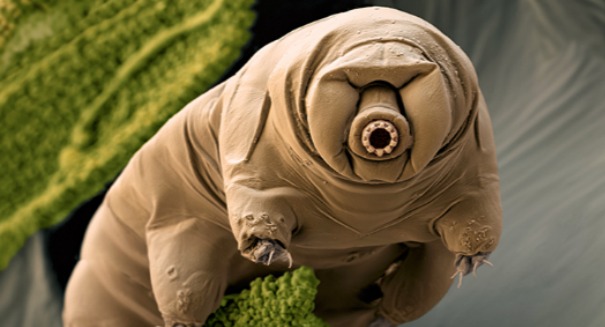
It’s a tiny little animal, but it is virtually impossible to kill, and scientists think it may one day outlive us. It’s the tardigrade, also known as the water bear, and these minuscule animals may not look like much, but they’re a lot tougher than we fragile humans are, the University of Oxford said in a statement after publishing a new paper on the animal.

Tardigrades have been known to survive the toughest conditions possible, including extreme heat, temperatures just barely above absolute zero, and even the vacuum of space. They’re known as the toughest critter on the planet, and this new study claims that they may very well be the last survivors of Earth, still kicking even after all the other creatures on Earth – including us – have perished.

And the tardigrade has lived for a very long time, certainly longer than the million years or so we’ve been around. Scientists have found tardigrade specimens in sediments that are dated between 100 and 520 million years old, so they’ve been around since the dinosaurs.

The full statement from the university follows below.

The world’s most indestructible species, the tardigrade, an eight-legged micro-animal, also known as the water bear, will survive until the Sun dies, according to a new Oxford University collaboration.

The new study published in Scientific Reports, has shown that the tiny creatures, will survive the risk of extinction from all astrophysical catastrophes, and be around for at least 10 billion years – far longer than the human race.

Although much attention has been given to the cataclysmic impact that an astrophysical event would have on human life, very little has been published around what it would take to kill the tardigrade, and wipe out life on this planet.

The research implies that life on Earth in general, will extend as long as the Sun keeps shining. It also reveals that once life emerges, it is surprisingly resilient and difficult to destroy, opening the possibility of life on other planets.

Tardigrades are the toughest, most resilient form of life on earth, able to survive for up to 30 years without food or water, and endure temperature extremes of up to 150 degrees Celsius, the deep sea and even the frozen vacuum of space. The water-dwelling micro animal can live for up to 60 years, and grow to a maximum size of 0.5mm, best seen under a microscope. Researchers from the Universities of Oxford and Harvard, have found that these life forms will likely survive all astrophysical calamities, such as an asteroid, since they will never be strong enough to boil off the world’s oceans.

Three potential events were considered as part of their research, including; large asteroid impact, and exploding stars in the form of supernovae or gamma ray bursts.

Asteroids

There are only a dozen known asteroids and dwarf planets with enough mass to boil the oceans (2×10^18 kg), these include (Vesta 2×10^20 kg) and Pluto (10^22 kg), however none of these objects will intersect the Earth’s orbit and pose a threat to tardigrades.

Supernova

In order to boil the oceans an exploding star would need to be 0.14 light-years away. The closest star to the Sun is four light years away and the probability of a massive star exploding close enough to Earth to kill all forms of life on it, within the Sun’s lifetime, is negligible.

Gamma-Ray bursts

Gamma-ray bursts are brighter and rarer than supernovae. Much like supernovas, gamma-ray bursts are too far away from earth to be considered a viable threat. To be able to boil the world’s oceans the burst would need to be no more than 40 light-years away, and the likelihood of a burst occurring so close is again, minor.

Dr Rafael Alves Batista, Co-author and Post-Doctoral Research Associate in the Department of Physics at Oxford University, said: ‘Without our technology protecting us, humans are a very sensitive species. Subtle changes in our environment impact us dramatically. There are many more resilient species’ on earth. Life on this planet can continue long after humans are gone.

‘Tardigrades are as close to indestructible as it gets on Earth, but it is possible that there are other resilient species examples elsewhere in the universe. In this context there is a real case for looking for life on Mars and in other areas of the solar system in general. If Tardigrades are earth’s most resilient species, who knows what else is out there.’

Dr David Sloan, Co-author and Post-Doctoral Research Associate in the Department of Physics at Oxford University, said: ‘A lot of previous work has focused on ‘doomsday’ scenarios on Earth – astrophysical events like supernovae that could wipe out the human race. Our study instead considered the hardiest species – the tardigrade. As we are now entering a stage of astronomy where we have seen exoplanets and are hoping to soon perform spectroscopy, looking for signatures of life, we should try to see just how fragile this hardiest life is. To our surprise we found that although nearby supernovae or large asteroid impacts would be catastrophic for people, tardigrades could be unaffected. Therefore it seems that life, once it gets going, is hard to wipe out entirely. Huge numbers of species, or even entire genera may become extinct, but life as a whole will go on.’

In highlighting the resilience of life in general, the research broadens the scope of life beyond Earth, within and outside of this solar system. Professor Abraham Loeb, co-author and chair of the Astronomy department at Harvard University, said: ‘It is difficult to eliminate all forms of life from a habitable planet. The history of Mars indicates that it once had an atmosphere that could have supported life, albeit under extreme conditions. Organisms with similar tolerances to radiation and temperature as tardigrades could survive long-term below the surface in these conditions. The subsurface oceans that are believed to exist on Europa and Enceladus, would have conditions similar to the deep oceans of Earth where tardigrades are found, volcanic vents providing heat in an environment devoid of light. The discovery of extremophiles in such locations would be a significant step forward in bracketing the range of conditions for life to exist on planets around other stars.’

Scientists encode movie into DNA in first step to ‘molecular recorders’

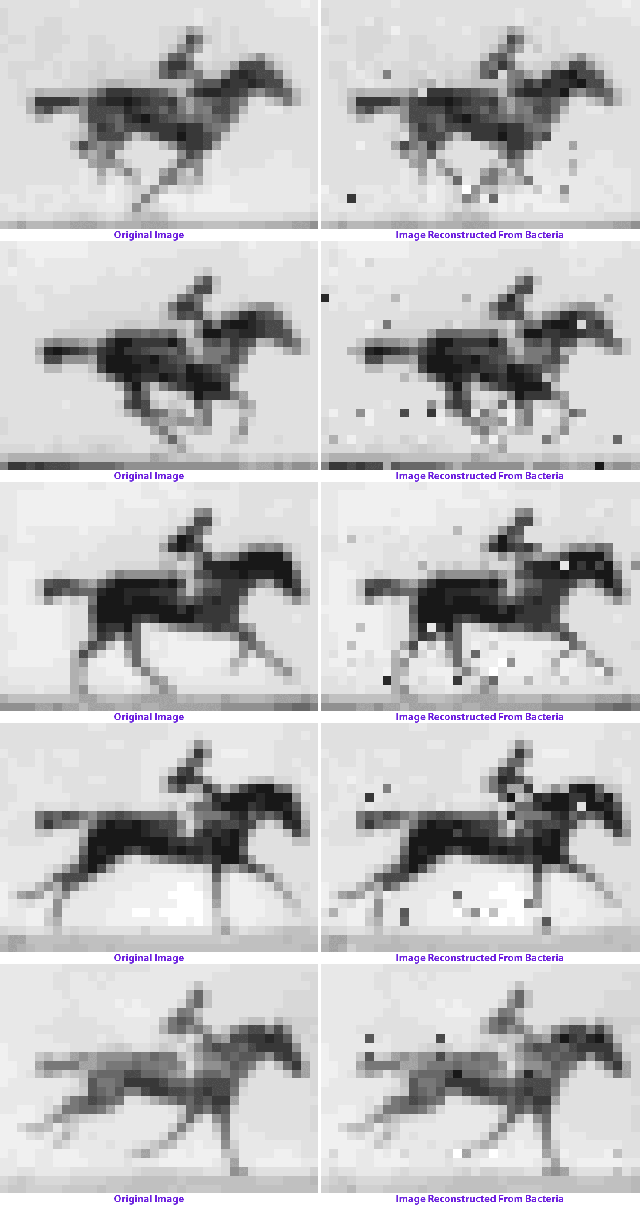
The animation on the left comes from a series of images taken by Eadweard Muybridge of the mare, Annie G, galloping. The frames were encoded in genetic material and stored in living bacteria. The animation on the right shows the frames after multiple generations of bacterial growth, recovered by sequencing the bacterial genomes.
Photograph: Seth Shipman

His groundbreaking photos showed life in motion, from cantering bison to leapfrogging boys, and settled an argument that had long divided trainers and riders: do all four hooves of a racehorse ever leave the floor at once?

Now, more than a century later, the stills and animations of Eadweard Muybridge, the eccentric Englishman and father of the motion picture, have had a modern makeover. Where Muybridge captured his pictures on photographic plates, Harvard scientists have set them in DNA.

There is more to the feat than showing off. If cells can be made to store information, the applications are vast. Microbes could be turned into living sentinels to monitor environmental pollution. Meanwhile, neurons could be programmed to record how the brain develops in a living animal.

“We encoded images and a movie into DNA in a living cell which is fun, but it’s not really the point of the system,” said Seth Shipman, a geneticist at Harvard Medical School. “What we’re trying to develop is a molecular recorder that can sit inside living cells and collect data over time.”

To build the prototype molecular recorder, the Harvard team hacked the immune defences that protect bacteria from invading viruses. When a bacterium is breached by an intruding virus, it releases enzymes to chop up the virus’s genetic code. To make sure it is prepared for future attacks, the bacterium remembers the invader by adding a chunk of the virus’s genetic code to its own genome. Over time, the bacterium’s genome expands, like bits of food stuck on a kebab skewer, to incorporate more and more chunks of DNA from viral intruders.

Shipman and his colleagues created strands of synthetic DNA in the lab that encoded in the letters G, T, C and A, the positions and shades of pixels found in an image of a hand and five pictures of a galloping horse taken by Muybridge in the 1880s. The scientists then fed the strands of DNA to E. coli bacteria. The bugs treated the strips of DNA like invading viruses and dutifully added them to their own genomes.

The researchers left the bugs in a dish for a week during which time they grew and divided into new bacterial cells. Shipman then collected some of the bacteria and read out their genomes. He found that the synthetic strands of DNA, which carried all the information needed to reconstruct either the hand image or the pictures of the galloping horse, had been spliced into the bugs’ genetic code.

“We delivered the material that encoded the horse images one frame at a time,” Shipman said. “Then, when we sequence the bacteria, we looked at where the frames were in the genome. That told us the order in which the frames should then appear.” Even though the bugs had grown and divided over the week, they had retained the synthetic strands of DNA which Shipman used to reconstruct the images with 90% accuracy.

“What this shows us is that we can get the information in, we can get the information out, and we can understand how the timing works too,” he said. Details of the work are reported in Nature.

Muybridge pioneered motion pictures with help from a contraption called the zoopraxiscope which projected sequences of images held on spinning glass discs. He dedicated much of his life to unveiling the beauty of animals in motion, even through the disruption of 1874 when he tracked down his younger wife’s lover, shot him point black, and was acquitted on the grounds of justifiable homicide, despite the jury having dismissed his plea of insanity brought on by a head injury suffered in a stagecoach crash in Texas 14 years earlier.

Eadweard by name and weird by nature, Muybridge was born Edward Muggeridge in Kingston upon Thames in 1830, but adopted what he believed to be the original AngloSaxon form of his name. His work on horses, including the images of the mare, Annie G, which Shipman stored in bacteria, was commissioned by Leland Stanford, a businessman, racehorse-owner and former governor of California, to settle a longstanding debate over whether a racehorse ever lifted all four hooves off the ground at once. In other work, Muybridge captured the precise motion of a nude woman turning around in surprise and another hopping on the spot.

While bacteria might not be great for storing data for thousands of years, the bugs could work well when information only has to be kept for days, weeks or months, Shipman said. Because bacteria thrive happily in the environment, the bugs could be spread on soil where they could keep a running record of heavy metals and other pollutants.

But that is only one potential use. Living cells could also be made to record what happens inside them or in the tissues and fluids that surround them. A neuroscientist by training, Shipman said that scientists have long struggled to understand brain development because it is hard to make measurements without interfering with the process. “If we had cells that recorded information inside the brain, the whole organ could develop and you could go in and retrieve the data once it’s all done,” he said.

https://www.theguardian.com/science/2017/jul/12/scientists-pioneer-a-new-revolution-in-biology-by-embeding-film-on-dna#img-3

Scientists use quantum entanglement to teleport photons from Earth 300 miles into space

Chinese scientists have teleported an object from Earth to a satellite orbiting 300 miles away in space, in a demonstration that has echoes of science fiction.

The feat sets a new record for quantum teleportation, an eerie phenomenon in which the complete properties of one particle are instantaneously transferred to another – in effect teleporting it to a distant location.

Scientists have hailed the advance as a significant step towards the goal of creating an unhackable quantum internet.

“Space-scale teleportation can be realised and is expected to play a key role in the future distributed quantum internet,” the authors, led by Professor Chao-Yang Lu from the University of Science and Technology of China, wrote in the paper.

The work may bring to mind Scotty beaming up the Enterprise crew in Star Trek, but there is no prospect of humans being able to materialise instantaneously at remote locations any time soon. The teleportation effect is limited to quantum-scale objects, such as fundamental particles.

In the experiment, photons were beamed from a ground station in Ngari in Tibet to China’s Micius satellite, which is in orbit 300 miles above Earth.

The research hinged on a bizarre effect known as quantum entanglement, in which pairs of particles are generated simultaneously meaning they inhabit a single, shared quantum state. Counter-intuitively, this twinned existence continues, even when the particles are separated by vast distances: any change in one will still affect the other.

Scientists can exploit this effect to transfer information between the two entangled particles. In quantum teleportation, a third particle is introduced and entangled with one of the original pair, in such a way that its distant partner assumes the exact state of the third particle.

For all intents and purposes, the distant particle takes on the identity of the new particle that its partner has interacted with.

Quantum teleportation could be harnessed to produce a new form of communication network, in which information would be encoded by the quantum states of entangled photons, rather than strings of 0s and 1s. The huge security advantage would be that it would be impossible for an eavesdropper to measure the photons’ states without disturbing them and revealing their presence.

Ian Walmsley, Hooke professor of experimental physics at Oxford University, said the latest work was an impressive step towards this ambition. “This palpably indicates that the field isn’t limited to scientists sitting in their labs thinking about weird things. Quantum phenomena actually have a utility and can really deliver some significant new technologies.”

Scientists have already succeeded in creating partially quantum networks in which secure messages can be sent over optical fibres. However, entanglement is fragile and is gradually lost as photons travel through optical fibres, meaning that scientists have struggled to get teleportation to work across large enough distances to make a global quantum network viable.

The advantage of using a satellite is that the particles of light travel through space for much of their journey. Last month, the Chinese team demonstrated they could send entangled photons from space to Earth. The latest work does the reverse: they sent photons from the mountaintop base to the satellite as it passed directly overhead.

Transmitting into space is more difficult as turbulence in the Earth’s atmosphere can cause the particles to deviate, and when this occurs at the start of their journey they can end up further off course.

The latest paper, published on the Arxiv website, describes how, more than 32 days, the scientists sent millions of photons to the satellite and achieved teleportation in 911 cases.

“This work establishes the first ground-to-satellite up-link for faithful and ultra-long-distance quantum teleportation, an essential step toward global-scale quantum internet,” the team write.

A number of teams, including the European Space Agency and Canadian scientists, have similar quantum-enabled satellites in development, but the latest results suggest China is leading the way in this field.

https://www.theguardian.com/science/2017/jul/12/scotty-can-you-beam-me-up-scientists-teleport-photons-300-miles-into-space#img-1