Praying mantises wearing tiny glasses help researchers discover new type of 3D vision

by Lacy Cook

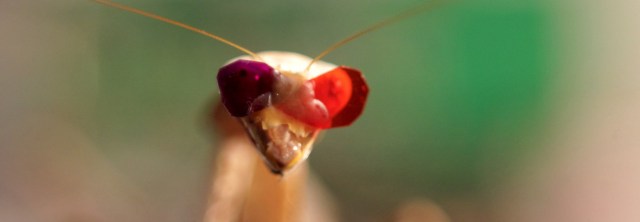
This praying mantis isn’t just wearing minuscule 3D glasses for the cute factor, but to help scientists learn more about 3D vision. A Newcastle University team discovered a novel form of 3D vision, or stereo vision, in the insects – and compared human and insect stereo vision for the very first time. Their findings could have implications for visual processing in robots.

Humans aren’t the only creatures with stereo vision, which “helps us work out the distances to the things we see,” according to the university. Cats, horses, monkeys, toads, and owls have it too – but the only insect we know about with 3D vision is the praying mantis. Six Newcastle University researchers obtained new insight into their robust stereo vision with the help of small 3D glasses temporarily attached to the insects with beeswax.

The researchers designed an insect 3D cinema, showing a praying mantis a film of prey. The insects would actually try to catch the prey because the illusion was so convincing. And the scientists were able to take their work to the next level, showing the mantises “complex dot-patterns used to investigate human 3D vision” so they could compare our 3D vision with an insect’s for the first time.

According to the university, humans see 3D in still images by matching details of the image each eye sees. “But mantises only attack moving prey so their 3D doesn’t need to work in still images. The team found mantises don’t bother about the details of the picture but just look for places where the picture is changing…Even if the scientists made the two eyes’ images completely different, mantises can still match up the places where things are changing. They did so even when humans couldn’t.”

The journal Current Biology published their work online last week. Lead author Vivek Nityananda, a behavioral ecologist, described the praying mantis’ stereo vision as “a completely new form of 3D vision.”

Future robots could benefit from these findings: instead of 3D vision based on complex human stereo vision, researchers might be able to take some tips from praying mantis stereo vision, which team member Ghaith Tarawneh said probably doesn’t require a lot of computer processing since insect brains are so small.

Praying mantises wearing tiny glasses help researchers discover new type of 3D vision

Strange Inheritance Comes To Laguna Beach Physician

by Ashley Ludwig

What would you do if you discovered your long lost uncle worked undercover in the take-down of mobster Al Capone? Laguna Beach’s own Dr. Marty Dolan learned of such a thing when he discovered crates of investigative papers in a crawlspace of his family’s New Jersey home. Those documents, shared with FOX Business Network in the series “Strange Inheritance with Jamie Colby” will premiere Monday, Feb. 12 at 6 p.m. Pacific.

“I didn’t know what (the papers) were about, because I was young when he passed away,” Dolan said. “He’d show up periodically to visit my grandmother. He had deep-set eyes. He had this fedora and overcoat, even in the summer.”

Dolan’s uncle was Mike Malone, a career Internal Revenue Service agent who passed away in 1960. His documents, case files and notes were lost to the dust in that attic until Dolan inherited them. After his initial bewilderment, and a lot of research, Dolan has had a hand in uncovering the truth behind some of the most famous cases in U.S. legal history including the take-down of Al Capone’s gang and the Lindbergh Baby kidnapping.

For 47 years, his uncle Mike Malone gave everything to the Treasury department. He lived an obscure double life, often undercover, but the notes and files he kept under the roof of the family house have added details never before known about criminal cases of the 1920s and 30s. Those files were put away until Dolan retired, when the research of his family legacy became his primary hobby.

With the help of the internet, Dolan learned that his uncle worked for the T-Men part of the U.S. Treasury Department, a crime fighting unit used once the Supreme Court declared income from illicit activity was taxable.

Dolan learned that his uncle worked undercover as a mob-boss named “Mike Lepito,” and was reported to have infiltrated Capone’s organization and even lived at Capone’s headquarters collecting evidence toward the infamous tax evasion sentence. According to the files, Malone helped take down Al Capone, as well as Waxey Gordon, Nucky Johnson–all of “Boardwalk Empire” fame.

Malone also helped to solve the Crime of the Century that was the 1930 kidnapping and murder of the 20-month old Lindbergh baby. Forensic accounting of the $50,000 ransom aided in the apprehension of Bruno Richard Hauptmann, found guilty of the crime and executed in 1936.

According to Strange Inheritance, Dolan’s inheritance is a “bonanza” to researchers.

Dolan is hoping that what he has in his possession will honor his uncle, whom he is attempting to have a posthumous Presidential Medal of Freedom given in his name.

Watch FOX Business Network “Strange Inheritance with Jamie Colby” Monday, Feb. 12 at 6 p.m. Pacific.

Thanks to Jody Troupe for bringing this to the It’s Interesting community.

Miami releases bacteria-infected mosquitoes to help fight Zika virus

by Jennifer Kay

Mosquitoes are a year-round downside to living in subtropical Miami, but millions of bacteria-infected mosquitoes flying in a suburban neighborhood are being hailed as an innovation that may kill off more bugs that spread Zika and other viruses.

Miami-Dade County Mosquito Control and Habitat Management Division is releasing non-biting male mosquitoes infected with teh naturally occurring Wolbachia bacteria to mate with wild female mosquitoes.

The bacteria are not harmful to humans but will prevent any offspring produced when the lab-bred mosquitoes mate with wild female mosquitoes from surviving to adulthood. This drives down the population of Aedes aegypti mosquitoes that thrive in suburban and urban environments and can spread Zika, dengue fever and chikungunya.

During a six-month field trial approved by the U.S. Environmental Protection Agency, over half a billion of the mosquitoes bred by Kentucky-based MosquitoMate will be released in a suburban neighborhood split by long, narrow canals near the University of Miami, said South Miami Mayor Philip Stoddard.

Miami-Dade County is testing MosquitoMate’s insects as a potential mosquito-control method about 10 miles southwest of Miami’s hip Wynwood neighborhood, where health officials confirmed the first local Zika infections spread by mosquitoes on the U.S. mainland in July 2016.

Stoddard, a zoology professor at Florida International University, said he volunteered his city for the trial, wanting to keep the outdoor cafes in his city from becoming another ground zero for a mosquito-borne virus outbreak.

“All those diseases are still a concern,” he said. “They’re still in the Caribbean and could move to the mainland to cause problems.”

By the end of 2016, Florida health officials had confirmed 1,456 Zika infections in the state, including 285 cases spread by mosquitoes in Miami-Dade County. Just two local Zika infections were reported in Florida last year, including one Miami-Dade case.

If MosquitoMate’s bugs perform well in South Miami, Wolbachia could be added to regular mosquito control operations as a long-term preventative strategy, said Bill Petrie, Miami-Dade County’s mosquito control chief.

“It’s not a silver bullet,” he said. “You’d want to integrate it into your existing methods.”

It would not replace naled, the pesticide sprayed from airplanes during the 2016 outbreak, angering Miami residents concerned the chemicals were more dangerous than Zika. Health officials credited naled among other aggressive response efforts with stopping the outbreak.

MosquitoMate’s technology appears low-tech in the field. Infected mosquitoes are shipped weekly in cardboard tubes — similar to the ones used in paper towel rolls — from Lexington, Ky.

Each tube contains a thousand mosquitoes. In a demonstration Thursday in a city park, a cloud of mosquitoes burst from one end when a black netting cover was removed; a firm shake sent any stragglers flying out.

The trial will study how far the mosquitoes fly, how long they live in the area, and how many Aedes aegypti eggs hatch compared to untreated areas, MosquitoMate founder Stephen Dobson said.

Results from a similar trial near Key West last year are awaiting publication, he said.

Last year, the EPA approved permits for MosquitoMate to sell a related mosquito species, known as the “Asian tiger mosquito,” infected with Wolbachia as a pest control service in 20 states and Washington, D.C. Those mosquitoes also can carry viruses, but experts consider them less of a threat for triggering outbreaks than Aedes aegypti.

http://www.orlandosentinel.com/news/os-modified-mosquitoes-20180208-story.html

New evidence that traumatic brain injury increases the risk of dementia 3 decades later

by Tessa Gregory

Traumatic brain injury (TBI) has been associated with dementia, but the association has not been studied over a long period of time. Anna Nordström and Peter Nordström from Umeå University in Sweden recently published a study in PLOS Medicine that investigates this gap in knowledge.

In the new study, the researchers tracked all diagnoses of dementia and TBI in Swedish nationwide databases from 1964 through 2012. They used the data to make comparisons within three groups of patients. In one group, 164,334 people with TBI were compared with control participants who did not have TBI. In the second group, 136,233 people with TBI who were later diagnosed with dementia were compared with control participants who did not develop dementia, and in a third group, the researchers studied 46,970 sibling pairs with one sibling having a TBI.

The researchers found that in the first year after TBI, the risk of dementia increased by four- to sixfold. Thereafter, the risk decreased rapidly but was still significant more than 30 years after the TBI.

“The results indicate that a TBI could increase the risk for dementia even more than 30 years after the incident,” the authors say. “To our knowledge, no previous prospective study with similar power and follow-up time has been reported.”

Reference: Nordström A, Nordström P (2018) Traumatic brain injury and the risk of dementia diagnosis: A nationwide cohort study. PLoS Med 15(1): e1002496. https://doi.org/10.1371/journal.pmed.1002496

http://researchnews.plos.org/2018/01/30/diagnosing-dementia-brain-damage-linked-to-increased-dementia-risk-for-decades-after-injury/

People with depression use language differently

From the way you move and sleep, to how you interact with people around you, depression changes just about everything. It is even noticeable in the way you speak and express yourself in writing. Sometimes this “language of depression” can have a powerful effect on others. Just consider the impact of the poetry and song lyrics of Sylvia Plath and Kurt Cobain, who both killed themselves after suffering from depression.

Scientists have long tried to pin down the exact relationship between depression and language, and technology is helping us get closer to a full picture. Our new study, published in Clinical Psychological Science, has now unveiled a class of words that can help accurately predict whether someone is suffering from depression.

Traditionally, linguistic analyses in this field have been carried out by researchers reading and taking notes. Nowadays, computerised text analysis methods allow the processing of extremely large data banks in minutes. This can help spot linguistic features which humans may miss, calculating the percentage prevalence of words and classes of words, lexical diversity, average sentence length, grammatical patterns and many other metrics.

So far, personal essays and diary entries by depressed people have been useful, as has the work of well-known artists such as Cobain and Plath. For the spoken word, snippets of natural language of people with depression have also provided insight. Taken together, the findings from such research reveal clear and consistent differences in language between those with and without symptoms of depression.

Content
Language can be separated into two components: content and style. The content relates to what we express – that is, the meaning or subject matter of statements. It will surprise no one to learn that those with symptoms of depression use an excessive amount of words conveying negative emotions, specifically negative adjectives and adverbs – such as “lonely”, “sad” or “miserable”.

More interesting is the use of pronouns. Those with symptoms of depression use significantly more first person singular pronouns – such as “me”, “myself” and “I” – and significantly fewer second and third person pronouns – such as “they”, “them” or “she”. This pattern of pronoun use suggests people with depression are more focused on themselves, and less connected with others. Researchers have reported that pronouns are actually more reliable in identifying depression than negative emotion words.

We know that rumination (dwelling on personal problems) and social isolation are common features of depression. However, we don’t know whether these findings reflect differences in attention or thinking style. Does depression cause people to focus on themselves, or do people who focus on themselves get symptoms of depression?

Style
The style of language relates to how we express ourselves, rather than the content we express. Our lab recently conducted a big data text analysis of 64 different online mental health forums, examining over 6,400 members. “Absolutist words” – which convey absolute magnitudes or probabilities, such as “always”, “nothing” or “completely” – were found to be better markers for mental health forums than either pronouns or negative emotion words.

From the outset, we predicted that those with depression will have a more black and white view of the world, and that this would manifest in their style of language. Compared to 19 different control forums (for example, Mumsnet and StudentRoom), the prevalence of absolutist words is approximately 50% greater in anxiety and depression forums, and approximately 80% greater for suicidal ideation forums.

Pronouns produced a similar distributional pattern as absolutist words across the forums, but the effect was smaller. By contrast, negative emotion words were paradoxically less prevalent in suicidal ideation forums than in anxiety and depression forums.

Our research also included recovery forums, where members who feel they have recovered from a depressive episode write positive and encouraging posts about their recovery. Here we found that negative emotion words were used at comparable levels to control forums, while positive emotion words were elevated by approximately 70%. Nevertheless, the prevalence of absolutist words remained significantly greater than that of controls, but slightly lower than in anxiety and depression forums.

Crucially, those who have previously had depressive symptoms are more likely to have them again. Therefore, their greater tendency for absolutist thinking, even when there are currently no symptoms of depression, is a sign that it may play a role in causing depressive episodes. The same effect is seen in use of pronouns, but not for negative emotion words.

Practical implications
Understanding the language of depression can help us understand the way those with symptoms of depression think, but it also has practical implications. Researchers are combining automated text analysis with machine learning (computers that can learn from experience without being programmed) to classify a variety of mental health conditions from natural language text samples such as blog posts.

Such classification is already outperforming that made by trained therapists. Importantly, machine learning classification will only improve as more data is provided and more sophisticated algorithms are developed. This goes beyond looking at the broad patterns of absolutism, negativity and pronouns already discussed. Work has begun on using computers to accurately identify increasingly specific subcategories of mental health problems – such as perfectionism, self-esteem problems and social anxiety.

That said, it is of course possible to use a language associated with depression without actually being depressed. Ultimately, it is how you feel over time that determines whether you are suffering. But as the World Health Organisation estimates that more than 300m people worldwide are now living with depression, an increase of more than 18% since 2005, having more tools available to spot the condition is certainly important to improve health and prevent tragic suicides such as those of Plath and Cobain.

https://theconversation.com/people-with-depression-use-language-differently-heres-how-to-spot-it-90877

New study suggests that living in dim light can affect our brains

By Andy Henion

Spending too much time in dimly lit rooms and offices may actually change the brain’s structure and hurt one’s ability to remember and learn, indicates groundbreaking research by Michigan State University neuroscientists.

The researchers studied the brains of Nile grass rats (which, like humans, are diurnal and sleep at night) after exposing them to dim and bright light for four weeks. The rodents exposed to dim light lost about 30 percent of capacity in the hippocampus, a critical brain region for learning and memory, and performed poorly on a spatial task they had trained on previously.

The rats exposed to bright light, on the other hand, showed significant improvement on the spatial task. Further, when the rodents that had been exposed to dim light were then exposed to bright light for four weeks (after a month-long break), their brain capacity – and performance on the task – recovered fully.

The study, funded by the National Institutes of Health, is the first to show that changes in environmental light, in a range normally experienced by humans, leads to structural changes in the brain. Americans, on average, spend about 90 percent of their time indoors, according to the Environmental Protection Agency.

“When we exposed the rats to dim light, mimicking the cloudy days of Midwestern winters or typical indoor lighting, the animals showed impairments in spatial learning,” said Antonio “Tony” Nunez, psychology professor and co-investigator on the study. “This is similar to when people can’t find their way back to their cars in a busy parking lot after spending a few hours in a shopping mall or movie theater.”

Nunez collaborated with Lily Yan, associate professor of psychology and principal investigator on the project, and Joel Soler, a doctoral graduate student in psychology. Soler is also lead author of a paper on the findings published in the journal Hippocampus.

Soler said sustained exposure to dim light led to significant reductions in a substance called brain derived neurotrophic factor – a peptide that helps maintain healthy connections and neurons in the hippocampus – and in dendritic spines, or the connections that allow neurons to “talk” to one another.

“Since there are fewer connections being made, this results in diminished learning and memory performance that is dependent upon the hippocampus,” Soler said. “In other words, dim lights are producing dimwits.”

Interestingly, light does not directly affect the hippocampus, meaning it acts first on other sites within the brain after passing through the eyes. Yan said the research team is investigating one potential site in the rodents’ brains – a group of neurons in the hypothalamus that produce a peptide called orexin that’s known to influence a variety of brain functions. One of their major research questions: If orexin is given to the rats that are exposed to dim light, will their brains recover without being re-exposed to bright light?

The project could have implications for the elderly and people with glaucoma, retinal degeneration or cognitive impairments.

“For people with eye disease who don’t receive much light, can we directly manipulate this group of neurons in the brain, bypassing the eye, and provide them with the same benefits of bright light exposure?” Yan said. “Another possibility is improving the cognitive function in the aging population and those with neurological disorders. Can we help them recover from the impairment or prevent further decline?”

http://msutoday.msu.edu/news/2018/does-dim-light-make-us-dumber/

Kratom

by MARY JO DILONARDO

Fans of the herb kratom say it offers pain relief, calms anxiety, and can help ease opioid withdrawal symptoms. However, a new report from the Food and Drug Administration says the popular herbal substance acts like a prescription-strength opioid and is associated with several dozen deaths.

What exactly is this polarizing botanical drug?

What is kratom?
Kratom is a tropical tree (Mitragyna speciosa) related to coffee that is native to Southeast Asia. Leaves from the tree have been used for centuries as a traditional remedy for pain.

The leaves can be eaten raw, but are usually crushed and made into a powder. The powder is then consumed in capsules, smoked or brewed in teas.

According to the U.S. Drug Enforcement Administration, consumption of kratom in low doses produces simulating effects. However, in large amounts it acts as a sedative, and can lead to psychotic symptoms, as well as psychological and physiological dependence.

Why there is concern
The DEA includes kratom on its Drugs of Concern list (substances that aren’t regulated by the Controlled Substances Act, but that could pose risks to people who abuse them), and the National Institute of Drug Abuse has identified kratom as an emerging drug of abuse.

Between 2010 and 2015, the Centers for Disease Control and Prevention noted a tenfold increase in calls about kratom to poison control centers across the U.S., from 26 to 263. About 42 percent of those cases involved non-life-threatening symptoms that required some treatment. About 7 percent were classified as major and life-threatening.

In the February 2018 report, FDA Commissioner Scott Gottlieb, M.D. said, “There is no evidence to indicate that kratom is safe or effective for any medical use. And claiming that kratom is benign because it’s ‘just a plant’ is shortsighted and dangerous. After all, heroin is an illegal, dangerous, and highly-addictive substance containing the opioid morphine, derived from the seed pod of the various opium poppy plants.”

Gottleib warned of potential side effects including changes in neurologic and cardiovascular function. He also cited 44 reported deaths “associated with the use of kratom.”

Consumer Reports points out other possible dangers associated with kratom:

Kratom has been found to be laced with opioids, including tramadol and hydrocodone.
There’s little research about drug interactions, and users are mixing kratom with legal and illegal drugs, which can be dangerous.
Some users who have turned to kratom to kick an opioid addiction have become hooked on kratom instead.
It kratom legal?
In 2016, the DEA announced plans to list kratom as a Schedule 1 substance, which would add it to the ranks of LSD, heroin, marijuana and ecstasy. The plan would have essentially banned kratom, but the DEA changed course and instead gave the public a chance to comment.

Now, the substance is mostly legal in the U.S., depending on where you live. According to the American Kratom Association, several cities, counties and seven states (Alabama, Arkansas, Indiana, Rhode Island, Tennessee, Vermont and Wisconsin) and the District of Columbia have banned or seriously restricted the use of kratom.

While supporters are working hard to keep kratom legal, the DEA and detractors argue that the substance is not safe.

“We’ve learned a tragic lesson from the opioid crisis,” Gottleib said. “That we must pay early attention to the potential for new products to cause addiction and we must take strong, decisive measures to intervene.”

https://www.mnn.com/health/fitness-well-being/stories/what-kratom-and-it-dangerous

Mind-controlling molecules (ampulexins) from wasp venom could someday help Parkinson’s patients

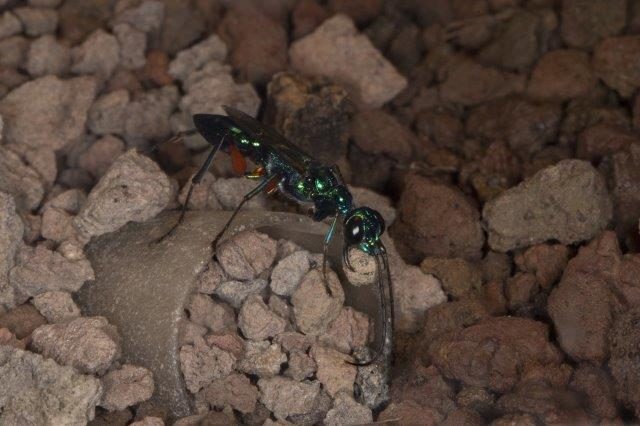
After being stung by a parasitic wasp, the American cockroach loses control of its behavior, becoming host to the wasp’s egg. Days later, the hatchling consumes the cockroach alive. While this is a gruesome process for the cockroach, scientists now report in ACS’ journal Biochemistry the discovery of a new family of peptides in the wasp’s venom that could be key to controlling roach minds, and might even help researchers develop better Parkinson’s disease treatments.

Scientists have long studied venoms, such as that of the wasp, seeking out novel and potent molecules to treat disease, among other applications. In the case of the enigmatic wasp Ampulex compressa, it uses its venom in a two-pronged approach against the cockroach, with an initial sting to the thorax to paralyze the front legs and a subsequent sting directly to the brain. This second sting causes the roach first to vigorously groom itself, then to fall into a state of lethargy, allowing the wasp to do whatever it wants. This immobile state resembles symptoms of Parkinson’s disease, and both may be related to dysfunction in the dopamine pathway. In this study, Michael E. Adams and colleagues wanted to identify the ingredients in wasp venom that dictate this behavior.

The researchers milked wasps for their venom and then analyzed the components using liquid chromatography and mass spectrometry. They identified a new family of alpha-helical peptides and named them ampulexins. To test their function, the team injected the most abundant venom peptide into cockroaches. Afterward, the bugs needed, on average, a 13-volt electric shock to the foot to get them moving, while an average of 9 volts sufficed prior to the injection, suggesting the peptides help the wasp immobilize its prey. Future work will focus on identifying cellular targets of ampulexins, and potentially generating a useful animal model for the study of Parkinson’s disease treatments.

The authors acknowledge funding from the United States-Israel Binational Science Foundation, the University of California, Riverside Office of Research and Economic Development and the University of California Agricultural Experiment Station.

https://www.acs.org/content/acs/en/pressroom/presspacs/2018/acs-presspac-february-7-2018/mind-controlling-molecules-from-wasp-venom-could-someday-help-parkinsons-patients.html

Superdense wood is lightweight and strong as steel, and could be used to build bridges and cars


A new wood-compacting process crushes the gaps between cell walls in natural wood (porous structure seen in the scanning electron microscopy image, left), making the densified wood (right) as strong as steel.

Newly fabricated superstrong lumber gives a whole new meaning to “hardwood.”

This ultracompact wood, described in the Feb. 8 Nature, is created by boiling a wood block in a water-based solution of sodium hydroxide and sodium sulfite. The chemicals partially strip the wood of substances called lignin and hemicellulose, which help give wood its structure and rigidity. Then the block gets squeezed between metal plates heated to 100° Celsius at a pressure of 5 megapascals — about 50 times the pressure of sea-level atmosphere. That squashes the gaps between the cell walls in the wood, shrinking the block to about 20 percent its original thickness and making it three times denser.

Researchers found that the densified wood could withstand being stretched or pulled 11.5 times harder than its natural counterpart without breaking. That makes it about as strong as steel, even though it’s more lightweight. Stainless steel pellets fired from an air gun and moving at 30 meters per second easily busted through a typical wooden plank, but got lodged in a stack of densified wood sheets with the same total thickness.

Chemicals used to process the wood work for various tree species and don’t pose any significant pollution concerns, says study coauthor Teng Li, a mechanical engineer at the University of Maryland in College Park. So this condensed wood could provide an ecofriendly alternative to steels or alloys for constructing buildings or bridges. It could also be used to manufacture more lightweight, fuel-efficient cars or trains, Li says.

J. Song et al. Processing bulk natural wood into a high-performance structural material. Nature. Vol. 554, February 8, 2018, p. 224. doi: 10.1038/nature25476.

Superdense wood is lightweight, but strong as steel

Potential Drug Target for Bipolar Disease Identified

Bipolar Disorder (BD) is a multifactorial brain disorder in which patients experience radical shifts in mood and undergo periods of depression followed by periods of mania. It has been known for some time that both environmental and genetic factors play important roles in the disease. For instance, being exposed to high levels of stress for long periods, and especially during childhood, has been associated with the development of BD.

Immediate early genes (IEGs) are a class of genes that respond very rapidly to environmental stimuli, and that includes stress. IEGs respond to a stressor by activating other genes that lead to neuronal plasticity, the ability of brain cells to change in form and function in response to changes in the environment. Ultimately, it is the process of neuronal plasticity that gives the brain the ability to learn from and adapt to new experiences.

One type of protein produced by IEGs is the so-called Early Growth Response (EGR) proteins, which translate environmental influence into long-term changes in the brain. These proteins are found throughout the brain and are highly produced in response to environmental changes such as stressful stimuli and sleep deprivation. Without the action played out by these proteins, brain cells and the brain itself cannot appropriately respond to the many stimuli that are constantly received from the environment.

Effective neuronal plasticity also depends on neurotrophins, which are regulatory factors that promote development and survival of brain cells. Brain-derived neurotrophic factor (BDNF) is the neurotrophin mostly found in the brain. It has been extensively investigated in BD patients and has been suggested as a hallmark of BD. Indeed, some studies have shown that the levels of BDNF in the serum of BD patients are reduced whenever patients undergo a period of depression, hypomania, or mania. Other studies have shown that regardless of mood state, BD patients present reduced levels of BDNF. Overall, changes in BDNF levels seem to be a characteristic found in BD patients that may contribute to the pathophysiology of the disease.

Now an international team of researchers from Universidade Federal do Rio Grande do Sul in Brazil, University of Arizona College of Medicine in the United States and McMaster University in Canada have published an article connecting the dots between these two players to explain the impaired cellular resilience observed in BD that in the grand scheme of things may relate to the impaired resilience presented by BD patients to respond to events, including stress.

In a previous study done by the group in 2016, one type of IEG gene known as EGR3, that normally responds to environmental events and stressful stimuli, was found repressed in the brain of BD patients, suggesting that when facing a stressor, the EGR3 in BD patients does not respond to the stimulus appropriately. Indeed, BD patients are highly prone to stress and have more difficulties dealing with stress or adapting to it if compared to healthy individuals. What the research group is now suggesting is that both EGR3 and BDNF may each play a critical role in the impaired cellular resilience seen in BD, and that each of these two genes may affect each other’s expression in the cell. “We believe that the reduced level of BDNF that has been extensively observed in BD patients is caused by the fact that EGR3 is repressed in the brain of BD patients. The two molecules are interconnected in a regulatory pathway that is disrupted in BD patients,” says Fabio Klamt, leading author of the article entitled “EGR3 immediate early gene and the brain-derived neurotrophic factor in bipolar disorder” and published on February 5th in the journal Frontiers in Behavioral Neuroscience.

The authors also add that the fact that EGR3 responds very quickly to environmental stimuli renders the molecule a potential drug target. “It is possible to imagine that EGR3 may be modulated in order to increase its expression and that of BDNF, which may have a positive impact on BD patients,” says Bianca Pfaffenseller, a scientist working at Hospital de Clínicas de Porto Alegre, in Brazil, and the first author of the study.

The idea that mental disorders should be seen as any other chronic disease in which the underlying biology plays an important role has replaced the old descriptions of mental illnesses as the result of bad psychological influences. As Nobel prize laureate Eric Kandel has said, “all mental processes are brain processes and therefore all disorders of mental functioning are biological diseases.” The perspective article authored by Fabio Klamt and colleagues supports this view by offering new insights into the underlying biology of this lifelong and devastating mental disorder affecting millions of people worldwide.

This article has been republished from materials provided by Universidade Federal do Rio Grande do Sul. Note: material may have been edited for length and content. For further information, please contact the cited source.

Reference
Pfaffenseller, B., Kapczinski, F., Gallitano, A., & Klamt, F. (2018). EGR3 immediate early gene and the brain-derived neurotrophic factor in bipolar disorder. Frontiers in Behavioral Neuroscience, 12, 15.

https://www.technologynetworks.com/genomics/news/potential-drug-target-for-bipolar-identified-297204?utm_campaign=Newsletter_TN_BreakingScienceNews&utm_source=hs_email&utm_medium=email&utm_content=60440362&_hsenc=p2ANqtz-89oHJTQFUqboYjSURU_IOr9bzx6r5zFJCMV1mEAzlZHgi02vXuuEgb5JNs196HT9b7QaknWb1xraugbZ8U_bITr6Kw-A&_hsmi=60440362